Charles DarwinBiblio.com
1 160 résultats
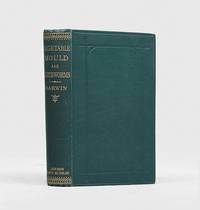
1882feb02685<p>1882. First French Edition of Vegetable Mould and Worms by Charles Darwin<br /><br />Role des vers de terre dans la formation de la terre végétale</p><p>Used book For more details and availability please contact me</p> C. Reinwald hardcover
1882180981London: John Murray 1882. First edition sixth printing following the first of the previous year with a contemporary albumen portrait photograph of Darwin mounted to the front free endpaper verso. The photograph heavily faded was taken by Herbert Rose Barraud 1845-1896 and was the last portrait taken before Darwin's death in 1882. Provenance: Stephen C. Massey. Octavo. Original green cloth spine lettered in gilt brown endpapers. Contemporary inscription to front free endpaper; 20th-century bookplates of Esme Nicoll née Bowker in both her maiden and married names. Slight lean to spine a little toned. A very good copy. Freeman 1362. hardcover
1887AQ28006London: John Murray 1887. In three volumes. ix 1 395 1; 4 393 1; iv 418pp. With a portrait frontispiece to each volume. Original publisher's green cloth ruled and lettered in gilt to spines. A trifle rubbed. Hinges exposed armorial bookplates of Bernard Lord Coleridge to FFEPs scattered spotting. With a 4pp A.L.S. tipped-in to FFEP of Vol. II: 'Dear Mr. Rockstro I have to thank you for two most kind letters. It is very good of to value the book so highly - I am glad to hear of the big book and the flute for which as my first love I still have much affection. I often wish I had been taught other things as well as I was taught by you - there are but few who teach well I find. I have not forgotten that your day is Saturday but I am so seldom in town - I hope I find you at home someday. Yours ever sincerely F. Darwin'. The first edition of Francis Darwin's 1848-1925 monumental memoir of his father naturalist geologist and originator of the theory of natural selection Charles Darwin 1809-1882; with a contemporary letter in Francis's hand addressed to his former music tutor flautist Richard Shepherd Rockstro. Provenance: Bernard John Seymour Coleridge second Baron Coleridge 1851-1927 lawyer and Liberal politician grandson of poet John Taylor Coleridge. . First edition. 8vo. John Murray hardcover
18506543London: Unpublished 1850. Hardcover. Very Good. Manuscript notebook by a committed poultry breeder reader and customer of Darwin's poulterer and dealer in live birds John Baily with a letter from Baily about 'confinement' of birds. In this fascinating work W Stone keeps copious notes of John Baily's published observations on poultry most dated to the early 1850s as well as inserting a letter from Baily and a fine printed broadside advertisement. At the other end of the manuscript is a lengthy fair copy of David Ramsay Hay's study of colour theory. Quarto-sized notebook half calf over brown marbled boards lacking backstrip binding perfectly sound 1834 fleur de lys watermarked paper. Writing from one end of the manuscript Stone begins with brief notes on 'Baileys Reg.d Poultry Fountain' and one of Baily's published works The Dorking Fowl. This is followed by 56 pages of legal 'Articles of Agreement' between 'R.B.' and 'E.B.' apparently pre-Victorian. The meat of the manuscript comes in the 'Miscellaneous' section dated to 1852 which begins with a brief entry on 'Food for silk worms' a series of inserted printed pages on poultry breeding some annotated followed by a fine illustrated broadside advertisement for a 'Poultry House' built by Robert Richardson of London 38x23cm folded across a double spread. In manuscript there follows 'The Poultry-yard by Boswell review of' and lengthy commonplace notes many initialled 'John Baily' and dated on aspects of poultry manure breeding hybrids 'Descriptive Points &c. Dorking' and other ducks 'Incubation Natural and Artificial' the hatching of 6 emus 'at Knowsley in 1851 by Cautelo's hydro incubator. bought by the Antwerp Zoological Soc.y' 'Sale and Produce of Eggs' and a note of the values achieved by ducks in Dorking. There is a manuscript article from 1839 on the 'Eccaliobion' with the comment 'Dr. P of M. told me that in his country Wales they put eggs under ducks in preference.' with around 15 pages of manuscript explanation of Natural Incubation with tipped in steel engravings of incubating chicks which cites various sources including 'Mr William Yarrell' whom Darwin credits in one of his letters for introducing him to Baily and a section on 'Disease prevention and cure'. The letter from Baily to 'W Stone' is written on headed paper 'Baily 113 Mount Street' and explains a misapprehension on the part of Stone about an article published by Baily on the 'confinement' of foul in London 'The atmosphere of London is counted not so good as that of the country.' and is signed 'John Baily' with further notes below. Starting from the other end of the manuscript there is a 46 page fair copy of the introduction and first four chapters of the 1838 edition of David Ramsay Hay's The Laws of Harmonious Colouring with hand drawn renderings of the printed diagrams that are interspersed through the text most showing colour combinations. John Baily is referred to by Darwin in several of his letters; Darwin's accounts reveal that he bought frequently from Baily though he complained about Baily's reluctance to sell Darwin 'dead birds'. Collates: pp66 poultry; pp46 colour theory; pp57 legal Very Good Please contact Christian White Rare Books Ltd for more information or images of this item 1850 Unpublished hardcover
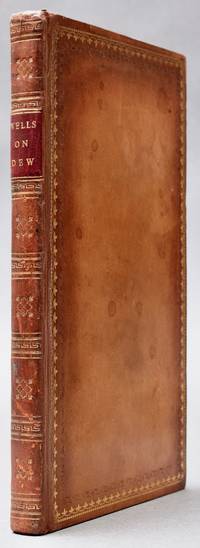
1815BB2499London: printed for Taylor and Hessey No. 93 Fleet Street 1815. Full Calf. Fine. Second Edition of this classic of meteorology first published in 1814 which revolutionized the understanding of ventilation in public places and for which Wells was awarded the Rumford Medal of the Royal Society. Demy 8vo 212 x 127mm: 4150pp. Beautifully bound in contemporary calf spine richly gilt in six compartments covers framed in blind and gilt red leather lettering piece gilt Prussian blue end papers. Manuscript presentation to title page: "To Dr. James Jackson from the Author" with Jackson's engraved armorial book plate to front paste-down. A gorgeous example tightly bound and generally clean throughout. Lowndes 2871 "A valuable little work". Garrison-Morton 1604. Norman 2199 and Christies 848. Blocker p. 416. Waller 12191. Knight p. 191 "Perhaps more important than any writings on induction by philosophers was the splendid example of inductive reasoning by William Charles Wells. . . . his Essay on Dew was rapidly recognized as a classic.". Wells was born in Charleston South Carolina but left America at the start of the Revolution for London where he became physician to St. Thomas's Hospital. In the autumn of 1811 he began a series of researches in the Surrey garden of his friend James Dunsmore comparing the formation of dew under varying conditions of temperature humidity weather cloud cover season and time of day. He concluded that dew results from the condensation of air in contact with objects cooled by radiating their heat into the cloudless night sky. "His researches . . . were of major importance in the development of the science of ventilation particularly in its relation to relative humidity and the influence of the latter on the comfort of the occupants of factories ships theatres etc." Garrison-Morton Wells's inquiry into the nature of dew was widely cited in the 1830s as an outstanding example of inductive scientific inquiry. Sir John Herschel used it as the primary illustration in his Discourse on the study of Natural Philosophy calling the theory "one of the most beautiful specimens we can call to mind of inductive experimental enquiry lying within a moderate compass." In 1836 the Encyclopedia Metropolitana reported "We know of no work in our day which has been more universally admired than the Treatise of Dr. Wells certainly none that practically exemplifies in a purer and better form the admirable inductive system which it was the object of Bacon to teach." John Tyndall and William Whewell also praised it. N. B. With few exceptions always identified we only stock books in exceptional condition carefully preserved in archival removable mylar sleeves. All orders are packaged with care and posted promptly. Satisfaction guaranteed. Fine Editions Ltd is a member of the Independent Online Booksellers Association and we subscribe to its codes of ethics. printed for Taylor and Hessey, No. 93, Fleet Street unknown
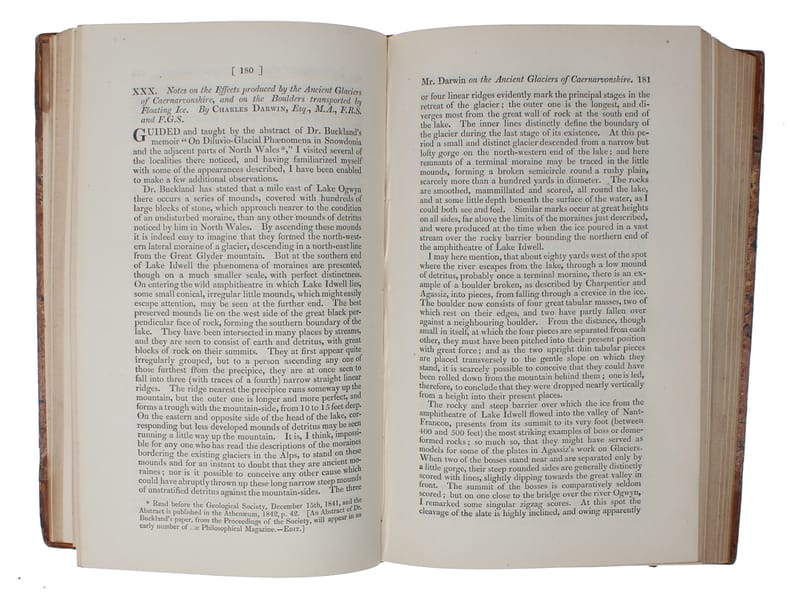
184260134London, University of London, 1842. 8vo. In contemporary half calf. In ""The London, Edinburgh, and Dublin Philosophical Magazine and Journal of Science"", Vol. XXI. July - December, entire volume offered. Spine with wear and lacking bits of the leather especially affecting front hinge. Leather brittle. Front hindge loose. Exlibris pasted on to pasted down front end-paper. Internally nice and clean. [Darwin's paper:] Pp. 180-88. [Entire volume: viii, 568 pp.].
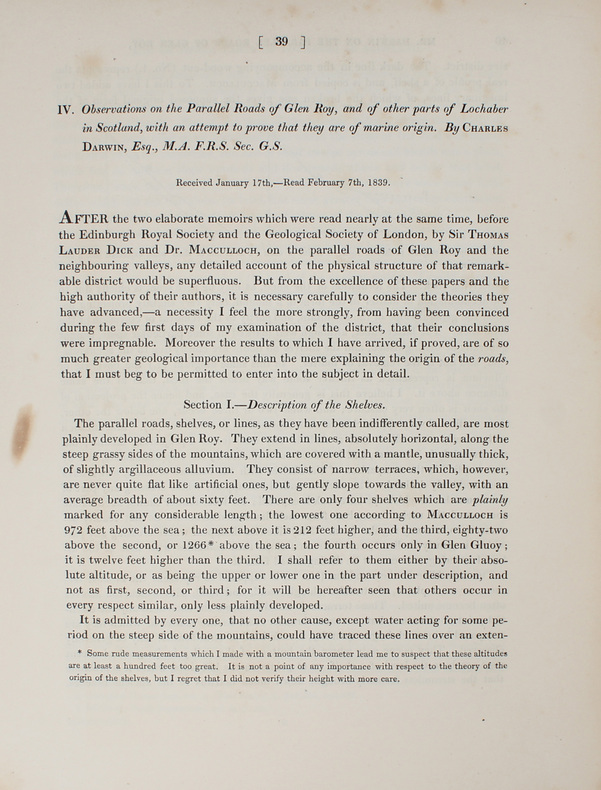
183954344(London, Richard and John E. Taylor, 1839). 4to. Without wrappers. Extracted from ""Philosophical Transactions of the Royal Society of London."", 1839, Part I. Pp. 39-81 and 2 plates. (1 engraved map and 1 lithographed plate). Both plates with a few brownspots.
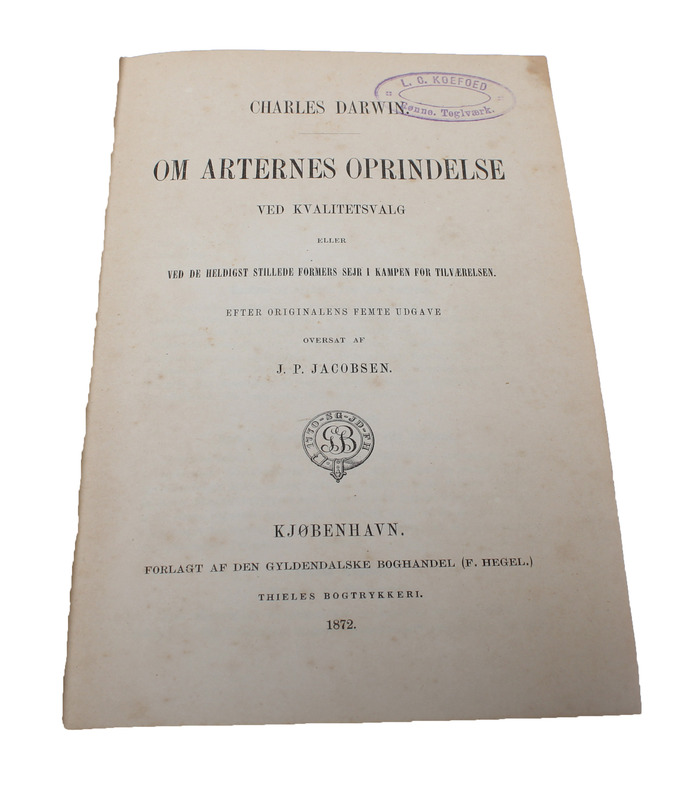
187247264Kjøbenhavn, Gyldendalske Boghandel (F. Hegel), 1872. Contemp. hcalf. Spine gilt and with gilt lettering. Spine slightly rubbed. Corners a bit bumped. (10),XIII,605,(1) pp. and 1 folded plate. A few faint brownspots to the first leaves.
187252105Kjøbenhavn, Gyldendalske Boghandel (F. Hegel), 1872. 8vo. Bound in contemporary half calf with 4 raised bands and gilt lettering to spine. Spine rubbed. A few light brownspots throughout. Otherwise a fine and clean copy. (10), XIII, 605, (1) + 1 plate.
184260134London University of London 1842. 8vo. In contemporary half calf. In "The London Edinburgh and Dublin Philosophical Magazine and Journal of Science" Vol. XXI. July - December entire volume offered. Spine with wear and lacking bits of the leather especially affecting front hinge. Leather brittle. Front hindge loose. Exlibris pasted on to pasted down front end-paper. Internally nice and clean. Darwin's paper: Pp. 180-88. Entire volume: viii 568 pp. <br/><br/><em>First appearance of Darwin’s paper on the effects produced by the glaciers of Caernarvonshire. In 1831 Charles Darwin came to Cwm Idwal and failed to perceive the evidence of glaciation there. In 1842 Darwin then went on to describe the glaciation of Cwm Idwal in some detail. He recorded both his first visit with the Cambridge geologist Adam Sedgwick and his second more aware visit in his autobiography: “Next morning we started for Llangollen Conway Bangor and Capel Curig. This tour was of decided use in teaching me a little how to make out the geology of a country. Sedgwick often sent me on a line parallel to his telling me to bring back specimens of the rocks and to mark the stratification on a map. On this tour I had a striking instance of how easy it is to overlook phenomena however conspicuous before they have been observed by any one. We spent many hours in Cwm Idwal examining all the rocks with extreme care as Sedgwick was anxious to find fossils in them; but neither of us saw a trace of the wonderful glacial phenomena all around us; we did not notice the plainly scored rocks the perched boulders the lateral and terminal moraines. Yet these phenomena are so conspicuous that as I declared in a paper published many years afterwards in the ‘Philosophical Magazine’ Darwin 1842 a house burnt down by fire did not tell its story more plainly than did this valley. If it had still been filled by a glacier the phenomena would have been less distinct than they now are. Darwin 1887†“By 1842 not only had Darwin travelled widely Herbert 1991 but Agassiz 1840 had published his theory of glaciation. Darwin was also then apprised of the arguments of the geologist William Buckland. Buckland was known for his penchant for eating every variety of animal a trait which his son inherited Burgess 1967: Chapter 1; Chorley et al. 1964: 100–118; see also Lewry 2008 but he also developed highly significant ideas on glaciation and the limitations of the diluvial theory Chorley et al. 1964: 207–210. A key realization is that water-lain flood deposits are normally laid down in stratified layers with the coarser material below the fine while the glacial deposits are unstratified and mixed in size. Thus in contrast to his earlier 1831 lack of glacial observation†Trudgill Do theories tell us what to see The 19th-century observations of Darwin Ramsay and Bonney on glacial features Darwin wrote: “Guided and taught by the abstract of Dr. Buckland’s memoir ‘On Diluvio-Glacial Phænomena in Snowdonia and the adjacent parts of North Wales’ I visited several of the localities there noticed and . I have been enabled to make a few additional observations. Dr. Buckland has stated that a mile east of Lake Ogwyn there occurs a series of mounds covered with hundreds of large blocks of stone which approach nearer to the condition of an undisturbed moraine than any other mounds of detritus noticed by him in North Wales. By ascending these mounds it is indeed easy to imagine that they formed the north-western lateral moraine of a Trudgill 559 Downloaded from ppg.sagepub.com at PENNSYLVANIA STATE UNIV on September 16 2016 glacier descending in a north-east line from the Great Glyder mountain. But at the southern end of Lake Idwell the phænomena of moraines are presented though on a much smaller scale with perfect distinctness. From the present paper p. 180†Darwin then gives a detailed description of the glacial features: “On entering the wild amphitheatre in which Lake Idwell lies some small conical irregular little mounds which might easily escape attention may be seen at the further end. The best preserved mounds lie on the west side of the great black perpendicular face of rock forming the southern boundary of the lake. They have been intersected in many places by streams and they are seen to consist of earth and detritus with great blocks of rock on their summits. They at first appear quite irregularly grouped but to a person ascending any one of those furthest from the precipice they are at once seen to fall into three with traces of a fourth narrow straight linear ridges. The ridge nearest the precipice runs someway up the mountain but the outer one is longer and more perfect and forms a trough with the mountain-side from 10 to 15 feet deep. On the eastern and opposite side of the head of the lake corresponding but less developed mounds of detritus may be seen running a little way up the mountain. It is I think impossible for any one who has read the descriptions of the moraines bordering the existing glaciers in the Alps to stand on these mounds and for an instant to doubt that they are ancient moraines; nor is it possible to conceive any other cause which could have abruptly thrown up these long narrow steep mounds of unstratified detritus against the mountain-sides. From the present paper p. 180†</em> hardcover
183954344London Richard and John E. Taylor 1839. 4to. Without wrappers. Extracted from "Philosophical Transactions of the Royal Society of London." 1839 Part I. Pp. 39-81 and 2 plates. 1 engraved map and 1 lithographed plate. Both plates with a few brownspots. <br/><br/><em>First appearance of Darwin's investigations of the geological phenomenon of the so-called "Parallel Roads" in Scotland."The first published description of the Parallel Roads was by Thomas Pennant in 1771 in his book A Tour of Scotland. This work was far from scientific but during the 19th century Glen Roy played an important role in the development of geological and geomophological theories of landscape evolution.1 Initially the 'Roads' were believed to be lake or marine shorelines. How they were formed in an area that was now high above the sea and without signs of a closed lake bed was a mystery. Initially it was thought that the shorelines were of marine origin and formed during a period when the sea reached levels of the Parallel Roads. Among the proponent of this theory were both Charles Darwin and Charles Lyell.2 It was in particular Darwin who was impressed by the geology of Glen Roy. In 1838 he wrote to Lyell "I wandered the mountains in All directions and examined that most extraordinary district. I think without any exceptions not even the first volcanic island the first elevated beach or the passage of the Cordillera as so interesting to me as this week. It is far the most remarkable area I ever examined. . I can assure you Glen Roy has astonished me".3 Darwin and Lyell proved to be wrong in this matter." Jan Oosthoek. Freeman 1653. </em> unknown
187252105Kjøbenhavn Gyldendalske Boghandel F. Hegel 1872. 8vo. Bound in contemporary half calf with 4 raised bands and gilt lettering to spine. Spine rubbed. A few light brownspots throughout. Otherwise a fine and clean copy. 10 XIII 605 1 1 plate. <br/><br/><em>The Scarce first Danish edition translated from the 5. edition of Darwin's monumental "On the Origin of Species". "In 1872 the book was translated into Danish by the young botanist J. P. Jacobsen. He was soon to become a celebrated novelist famous for Marie Grubbe - A Lady of the Seventeenth Century 1876 and Niels Lyhne 1880. In the early 1870's however he was still dedicated to science. In 1873 he received the University of Copenhagen's Gold Medal for his work on desmids single-celled green freshwater algae. The Descent of Man was also translated by Jacobsen and appeared in 1874-75. "In the early 1870s With the Danish translation the literary critic Georg Brandes started promoting Darwin's ideas as part of his liberal ideology and soon Darwinism became the mark of a new generation of intellectuals. Both the Steenstrup circle and the Brandes circle held Darwin in high esteem but made completely different attributions to his theory. Consequently they both decided to raise money separately for the same Darwin. Darwin had borrowed the collection of barnacles from the Zoology Museum in Copenhagen with the help of Steenstrup. As a compliment Darwin sent him a signed copy of the Origin. Steenstrup acknowledged Darwin as an important fellow naturalist but like many of his colleagues at the University of Copenhagen he never accepted evolutionary theory. The initial scientific reaction to Darwin's work on evolution by means of natural selection was respectful but made few converts. memorial in 1882. Independently Darwinism transformed as it became part of popular culture. "Kjærsgaard Darwinism comes to DenmarkFreeman: 643. PMM 344 - first edition </em> hardcover
187247264Kjøbenhavn Gyldendalske Boghandel F. Hegel 1872. Contemp. hcalf. Spine gilt and with gilt lettering. Spine slightly rubbed. Corners a bit bumped. 10XIII6051 pp. and 1 folded plate. A few faint brownspots to the first leaves. <br/><br/><em>Scarce first Danish edition of "On the Origin of Species" 1859.Freeman: 643. </em> unknown
189929274London: John Murray 1899. 2 volumes. Second edition eighth impression a very early reissue of an important edition revised. With illustrations throughout. 8vo original polished green cloth gilt lettered and decorated on the spines paneled in blind on the covers. xiv 473 1; x 495 32 catalogue pp. A very handsome set beautifully preserved and unusually fresh in the original bright and unfaded cloth still with the gilt bright and strong in colour a tight and clean copy. A HANDSOME SET OF THIS HIGHLY IMPORTANT WORK. The second edition is very important in that Darwin made a number of corrections but more importantly he reworked Chapter XXVII on Pangenesis. This work "represents the only section of Darwin's big book on the origin of species which was printed in his lifetime and corresponds to its first two intended chapters. It contains in Chapter XXVII his provisional hypothesis of pangenesis; one which he thought was new but has a long back history" Freeman 877. <br> The first work to truly discuss the actual origin and development of species as an accepted scientific method.<br> The second part of his 'big book' was not published until 1875 under the title NATURAL SELECTION. It was in this work that Darwin attempted his finalization of the understanding or pangenesis and an explanation of acquired characteristics and hereditary resemblance. These subjects were near to impossible to explain in Darwin’s time as scientific methodology and technology had simply not developed to the point at which finite and provable studies on genes and chromosomes could be explored. John Murray hardcover
189133824London: Smith Elder & Co. 1891. Third edition 8vo xiv 648 pp. 2 folding maps and 5 folding plates including a hand coloured geological section light staining to the top edge of the plates at the end as folded hinges slightly cracked but sound. Original gilt titled green cloth mild rubbing to spine ends. Originally published 1842-6 in 3 volumes - Coral Reefs Volcanic Islands and South America this volume combining the latter two parts. Freeman 282. London: Smith, Elder & Co. unknown
1877015021John Murray London 1877. First Edition. Hardcover. Very Good Condition/No Dust Jacket. Size: 7 5/8" x 5 1/2". Text body is clean and free from previous owner annotation underlining and highlighting. G. Gift binding Full leather with gilt decoration along the edges of the boards and along the spine five raised bands a black leather and a red leather spine label marbled end papers gilt inner dentelles 352 pages. Wear at corners and spine ends boards have light scratches previous owner's name label Erastus Corning 2nd 1909-1983 Mayor of Albany NY on front paste down several pages uncut. Quantity Available: 1. Shipped Weight: 2 lbs 11 oz. Category: Science & Technology; Pictures of this item not already displayed here available upon request. Inventory No: 015021. . John Murray hardcover
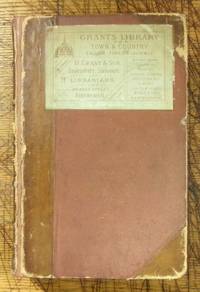
1860132John Murray 1860. Hard Cover. Good. Second edition of the journals from Darwin's 5 year voyage on the HMS Beagle. It has been rebacked with leather preserving the original quarter leather boards and spine which had become separated. Original endpapers have some foxing and ghosting. Pastedown on front cover advertising for R Grant and son of Edinburgh. Text is clean and unmarked but there appears to be faint remainder spray on the edges. It was the observations on this trip which began when Darwin was 22 that paved the way for his theory of natural selection and evolution. John Murray unknown
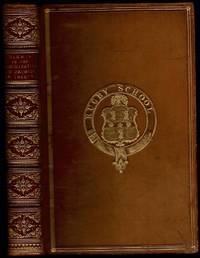
1862MS0012<p>vi3651 pages with one folding plate and 33 woodcuts in text without the advertisements. Small octavo 7 1/2" 4 3/4" bound in full 19th-century calf spine gilt stamped spine in five compartments divided by double gilt fillets with Rugby School coat of arms to cover. Marbled end pages. Clark: 180-181; Freeman 800; Norman 595 First edition.</p><p><em>Fertilisation of Orchids</em> is a book by English naturalist Charles Darwin published on 15 May 1862 under the full explanatory title<em> On the Various Contrivances by Which British and Foreign Orchids Are Fertilized by Insects and On the Good Effects of Intercrossing</em>. Darwin's previous book On the Origin of Species had briefly mentioned evolutionary interactions between insects and the plants they fertilized and this new idea was explored in detail. Field studies and practical scientific investigations that were initially a recreation for Darwin—a relief from the drudgery of writing—developed into enjoyable and challenging experiments. Aided in his work by his family friends and a wide circle of correspondents across Britain and worldwide Darwin tapped into the contemporary vogue for growing exotic orchids.</p><p>The book was his first detailed demonstration of the power of natural selection and explained how complex ecological relationships resulted in the coevolution of orchids and insects. The view has been expressed that the book led directly or indirectly to all modern work on coevolution and the evolution of extreme specialisation. It influenced botanists and revived interest in the neglected idea that insects played a part in pollinating flowers. It opened up the new study areas of pollination research and reproductive ecology directly related to Darwin's ideas on evolution and supported his view that natural selection led to a variety of forms through the important benefits achieved by cross-fertilization. Although the general public showed less interest and sales of the book were low it established Darwin as a leading botanist. Orchids was the first in a series of books on his innovative investigations into plants.</p><p><strong>Condition: </strong>Some scuffing to leather points rubbed. Provenance: H.M. Fitzgerald owner's name dated December 1869; Seddon H. Chadwick owner's name dated May 1943 to front end paper else very good.</p> John Murray hardcover
188960362Fagerstrand pr. Høvig, Bibliothek for de tusen hjem, (1889). 8vo. 3 volumes all in publisher's original embossed cloth-bindings with gilt lettering to spines and front boards. Very light wear to extremities, corners bumped, an overall excellent set. 445, (1) pp. 456 pp." 488 pp. + 3 Frontispieces.
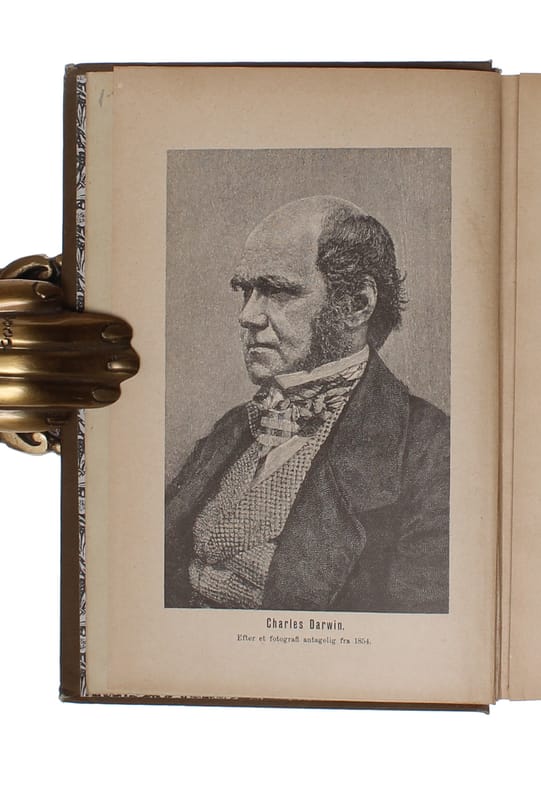
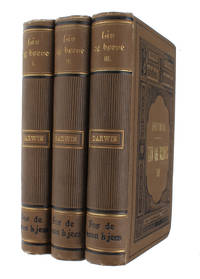
188960362Fagerstrand pr. Høvig Bibliothek for de tusen hjem 1889. 8vo. 3 volumes all in publisher's original embossed cloth-bindings with gilt lettering to spines and front boards. Very light wear to extremities corners bumped an overall excellent set. 445 1 pp.; 456 pp.; 488 pp. 3 Frontispieces. <br/><br/><em>The rare first Norwegian translation of Darwin's "The life and letters of Charles Darwin including an autobiographical chapter" - being the first translation of any of Darwin's works into Norwegian "Origin" was translated into Norwegian in 1890.A complete Danish translation of the work has never been published and the first Swedish translation did not appear until 1959. Due to the similarities between Danish Swedish and Norwegian this edition in effect introduced Darwin's letters and autobiography to Scandinavia.Martin Simon Søraas is listed as translator on all three title-pages whereas Freeman lists Peder Jacobsen Ulleland as having translated vol. 1. and Martin Simon Søraas as having translated vol. 2 and 3. Ulleland is listed in Freeman as having translated vol. 1 because he initiated a translation but only finished volume 1. Sørensen the publisher quickly discovered that Ulleland did not have the required skills as a translator and Sørensen fired him. Eventually Søraas was hired and translated all three volumes.Freeman 1528 </em> hardcover
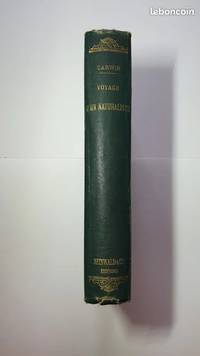
1875feb02731<p>1875. First French Edition of The Voyage of the Beagle and selection in relation to sex by Charles Darwin.<br /><br />Voyage d'un naturaliste autour du monde</p><p>Used book For more details and availability please contact me</p> C. Reinwald hardcover
188828746London: John Murray 1888. 2 volumes. Second edition sixth thousand a very early printing of this important edition revised. With all Illustrations as called for throughout. 8vo publisher’s original green cloth decorative borders in blind on the covers the spine lettered and decorated with a small tool and ornate bands at the spine tips in gilt. xiv 473 1; x 495 32 ad catalogue pp. An excellent set especially well preserved and quite fine bright and clean unusually so in fact it is still partially unopened and with only a small abrasion to the free-fly being the only evidence of use. Finding these in such nice condition is rare for academic books. A FINE SET SCARCE IN THIS CONDITION AND AN IMPORTANT WORK. The second edition is very important in that Darwin made a number of corrections but more importantly he reworked Chapter XXVII on Pangenesis. This work "represents the only section of Darwin's big book on the origin of species which was printed in his lifetime and corresponds to its first two intended chapters. It contains in Chapter XXVII his provisional hypothesis of pangenesis; one which he thought was new but has a long back history" Freeman 877. <br> The first work to truly discuss the actual origin and development of species as an accepted scientific method.<br> The second part of his 'big book' was not published until 1875 under the title NATURAL SELECTION. It was in this work that Darwin attempted his finalization of the understanding or pangenesis and an explanation of acquired characteristics and hereditary resemblance. These subjects were near to impossible to explain in Darwin’s time as scientific methodology and technology had simply not developed to the point at which finite and provable studies on genes and chromosomes could be explored. John Murray hardcover
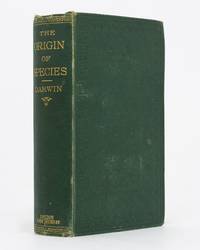
1875137070London: John Murray 1875. Hardcover. Very Good. London John Murray 1875 'Sixth edition with additions and corrections Fifteenth Thousand'/ 1872/ 1859. Octavo xxii 458 pages plus a folding diagram. Green cloth stamped in gilt and blind; covers a little rubbed marked and flecked with slight wear to the extremities; scattered foxing generally very light and a few marks internally; tiny tear to the top margin of five consecutive leaves pages 65-74 expertly sealed; a few other minor signs of age and use; a very good copy. The sixth edition was the first to use the term 'evolution' and to drop the word 'On' from the title. It was also a cheaper popular edition with smaller format and type. This copy is from a later printing but before Darwin's final changes were introduced in the 'Eighteenth Thousand' issued in 1876 Freeman page 80. Not least Chapter VII was entirely new to the sixth edition 'Miscellaneous Objections to the Theory of Natural Selection' pages 168-204. <p>Freeman 398; see Peckam Morse editor: 'The origin of species by Charles Darwin: a variorum text' 1959 page 22. John Murray hardcover
184440321BRAUNSCHWEIG: Friedrich Vieweg u. Sohn 1844. Primera edición alemana.- 4º.- Lomera y puntas pergamino de época lomera con tejuelo.- 2 tomos en 1 volumen.- I: XVI.- 319 páginas.- II: 301 páginas.- Ilustraciones entre texto más un mapa plegado fuera de texto de Sur América. Primera edición alemana del viaje de Charles R. Darwin en la expedición como naturalista a bordo del H.M.S. Beagle entre 1831 y 1836 dando la vuelta al mundo. Traducida por el Dr. Ernst Dieffenbach. Investigando nociones de geología entomología disección de invertebrados marinos etc. Saliendo de Plymouth van a Tenerife Cabo Verde Bahia Rio de Janeiro Monterideo Falkland Islands Valparaiso Callao Galapagos Sydney Hobart King George's Soward Mauritius Cape Town Bahia Azores y otra vez Plymouth. Sabin 18650 Friedrich Vieweg u. Sohn unknown
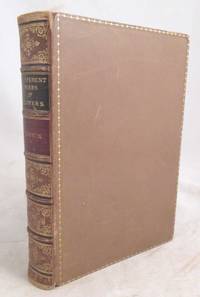
1888677london: John Murray 1888. Later printing. Leather_bound. Very Good. Contemporary three quarter leather binding by Mudie. seventeenth thousand 519 pages including index plus i to ix preface. Beautiful /leather binding with raised bands to spine. Gilded lettering ruled lines and design to spine with the title on a black leather .background. Attractive marbled boards and endpapers. Tan calf leather in good condition - some surface loss to the corner pieces . All page ends also marbled - the pages edges are quite perfect with a noticeable gloss to them. <br/><br/> John Murray hardcover