Deshayes, G[erard] P[aul]Antiquariat.de

21 245 résultats
190518042AB[Paris?], Juin 1905. 7 n.n. Bll. + 17 Tafeln + 8 n.n. Bll. + 26 Tafeln. Lose Blattsammlung in priv. Hlwd.-Schuber., Abbildung
192621258Stuttgart, Franckh`sche Verlagshandlung (Kosmos, Gesellschaft der Naturfreunde), 1926. Band I (1). Mit 20 ganzseitigen Tafeln und 169 Abbildungen im Text, 1926, 272 Seiten / Band II (2). Mit 33 ganzseitigen Tafeln und 269 Abbildungen im Text, 1927, 365 Seiten / Band III (3). Mit 35 ganzseitigen Tafeln und 241 Abbildungen im Text, 1927, 364 Seiten / Band IV (4). Mit 33 ganzseitigen Tafeln und 231 Abbildungen im Text, 1929, 335 Seiten / Band V (5 ). Mit 23 ganzseitigen Tafeln und 157 Abbildungen im Text, 1931, 267 Seiten mit alphabetischen Gesamtregister. Beilagen in Lasche auf dem Hinterdeckel: 1. Faltplakat "Stammbaum des Menschen" (Format: 31 x 48 cm); 2. Broschüre "Der Mensch als Industriepalast", XI Seiten mit Erläuterung der Zeichen und Farben zu der Wandtafel (großes Plakat) und zum Stammbaum des Menschen; 3. Eine Papp-Brille rot/blau; 4. Riesenplakat "Der Mensch als Industriepalast" (Format: 48 x 96 cm, auf Buchgröße zusammengefaltet). Halbleinen mit Leinenecken und goldgepr. Rückentitel. Vorsätze von Band 1-4 gemustert, von Band 5 in schlichtem grau. 26 x 18 cm. [9 Warenabbildungen]
186411758ABWien, K.k. Hof- u. Staatsdruckerei, 1864. 4°. Titelblatt + 79 Tafeln [ca. 24 x 31 cm]. Priv. Lwd. der Zeit., Abbildungsbeispiele
In 4° (24×17 cm); (4), 236 pp. e 39 c. di tav. fuori testo, alcune più volte ripiegate tutte poste alla fine del volume. Legatura settecentesca in piena pergamena rigida con i piatti foderati con carta marmorizzata agli inizi dell’ottocento. Dorso a tre nervi. Titolo in oro su fascetta in pelle chiara al dorso realizzato in epoca ottocentesca. Fregio editoriale inciso al frontespizio con motto “Il più bel Fiore ne coglie”. Le ultime due carte presentano un’antica integrazione al margine bianco inferiore, del tutto ininfluente, realizzato solo per far coincidere il margine inferiore di queste tavole a quello delle altre. Poche macchioline di foxing e leggerissime bruniture, in genere nel margine esterno bianco di alcune carte ma nel complesso esemplare in buone-ottime condizioni di conservazione. Esemplare completissimo. Presente anche la tavola 29 spesso assente. Due incisioni nel testo rappresentanti insetti. Terza edizione, in verità seconda in italiano (dopo un’edizione uscita le 1668 con numero minore di tavole, uscì una seconda edizione in latino), preferita alle altre, in quanto è quella con il maggior numero di tavole. Una delle opere più celebri del grande medico, naturalista e letterato italiano, Francesco Redi (Arezzo, 18 febbraio 1626 – Pisa, 1º marzo 1697). Considerato il fondatore della biologia sperimentale e uno dei padri della parassitologia moderna. “I suoi studi, fra i quali quelli intorno alla generazione spontanea e al veleno delle vipere, rivestono particolare importanza nella storia della scienza moderna, per la loro opera di demolizione di alcune teorie di stampo aristotelico a favore di un’attività sperimentale e per la loro applicazione in campo medico di una pratica terapeutica di impostazione ippocratica, costruita su regole di prevenzione e sull’uso di rimedi esclusivamente naturali e su precetti di vita equilibrata… Particolarmente importanti sono le sue “Esperienze Intorno alla Generazione degl’Insetti” del 1668, nato da una lettera a Carlo Dati, in cui confutò la teoria della generazione spontanea, allora generalmente accettata, con un approfondito studio sperimentale della riproduzione delle mosche”. L’opera contribuì in modo definitivo ad screditare il dogma aristotelico sulla generazione spontanea degli insetti. I suoi esperimenti e le sue osservazioni microscopiche vennero poi in seguito riprese, sviluppate e concluse da Pasteur e da Spallanzani. “Sotto forma di lettera indirizzata a Carlo Dati, segretario dell’Accademia della Crusca e accademico del Cimento, l’opera che condurrà Redi alla notorietà espone le conclusioni raggiunte a seguito di molte esperienze “fatte di fresco […] intorno al nascimento di que’ viventi che infino al dì d’oggi da tutte le scuole sono stati creduti nascere a caso [corsivo mio] e per propria lor virtude senza paterno seme” (Esperienze intorno alla generazione degl’insetti [1668], a cura di W. Bernardi, 1996, p. 75). “Redi’s masterpiece is considered to be ‘Esperienze intorno alla generazione degl’Insetti’ (1668), in which he disproved the doctrine of spontaneous generation in insects, inherited from Aristotle and still considered dogma. The microscope revealed in insects an organization as marvelous as it was unsuspected. Redi prepared and observed the egg-producing apparatus in insects, and he also used the microscope to good advantage in observing the morphological elements characteristic of the eggs of each species” (DSB XI, p. 341).D. Pandi, Bibl. delle opere di F. Redi p. 3 ‘Raro’; Nissen ZBI, 3319. Prandi n°9 “raro”; Poggiali I n°552; Michel-Michel VII 16; Nissen I 3319; Krivatsy 9449; British mus. cat. XVII cent. Italian II 726. Manca a Gamba, Razzolini, Choix. Opera rara, completa ed in buone-ottime condizioni di conservazione.
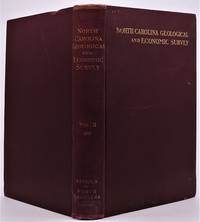
1907008929Raleigh NC: North Carolina Geological and Economic Survey 1907. Book. Very Good Plus. Cloth. First Edition. Small 4to. SCARCE in current commerce. xi 453 1 pages with 21 plates 16 of them color lithograph plates of fish and 188 figures in text. E.M. Uzzell and Co. Raleigh printers and binders. Very Good Plus no jacket bound in red cloth with gilt lettering. cloth a bit faded at bottom of spine light rubbing to boards interior clean bright and unmarked. North Carolina Geological and Economic Survey Hardcover
1902101890BBParis, Mendel, o. J. (1902 ?). Gr.-8°. 228 S., [2] Bl., 7 S. mit zahlr. teils ganzs. Abb. u. 8 montierten Orig.-Photographien (Gelatine-Silber-Abzüge) auf Tafeln. OKart.
18917170AHamburg, Druckerei Actien-Ges., (1891). 4°. XIX, 316 S. Mit 40 Chromotafeln. Gepr., ill. OLn.bd. mit Deckel- und RVg. [4 Warenabbildungen]
2 volumes in 8 de I. frontispice, XII, 322 pages et 36 planches hors-texte ; et de II. (6), 327 pages et 1 planche demi-basane verte de l'époque, dos lisse orné (coins, coiffes et coupes frottés) 1870, 1870, , 2 volumes in 8 de I. frontispice, XII, 322 pages et 36 planches hors-texte ; et de II. (6), 327 pages et 1 planche, demi-basane verte de l'époque, dos lisse orné (coins, coiffes et coupes frottés), Première édition. Durant trente ans, la France connut une baisse très importante dans sa production de tissus de soie, due à une maladie inconnue touchant la chenille du bombyx du mûrier. En 1865, le Ministre de l'agriculture chargea Louis Pasteur d'étudier ce phénomène. Celui-ce se rendit dans le sud de la France, lieu d'élevage des vers, et effectua des recherches sur la maladie pendant 5 ans. Dans cet ouvrage, Pasteur fait un compte-rendu des différentes recherches et expériences menées sur les maladies des vers à soie. Il explique que la mort des spécimens est due à deux maladies différentes qu'il appelle pébrine et flacherie. L'une est causée par un parasite et l'autre est due à l'environnement. Les deux affections sont héréditaires et contagieuses. Il indique enfin les moyens pour éradiquer la maladie notamment en enlevant les oeufs et les larves contaminées et en faisant attention aux conditions environnementales dans lesquelles sont placées les spécimens. C'est au travers de cette étude et de celle du charbon que Pasteur démontre le premier qu'une maladie est liée à un agent pathogène déterminé. Norman 1657 ; En français dans le texte, 272 ; et Garrisson & Morton, 2481
Copenhagen, Bianco Lunos, 1842. 4to. Bound in the original boards with silver stained papercovers. Some nicks to backstrip. Margins of covers having the silver-staining toned down (oxidation). Edges gilt. As it is printed on ""vellum-paper"" and edges gilt, it is probably one of the gift copies, but unsigned. IV, 76 pp. and 3 double-page, folded lithographed plates with many figs. Light marginal browning to plates, otherwise fine.
1983ZB262819University of Chicago 1983-1994. volumes 1-9 uniformly bound hardcovers ex library else text clean & bindings tight. - If you are reading this this item is actually physically in our stock and ready for shipment once ordered. We are not bookjackers. Buyer is responsible for any additional duties taxes or fees required by recipient's country. Photos available upon request. University of Chicago hardcover
196448789London, Academic Press, 1964. 8vo. In the original grey printed wrappers. In ""Journal of Theoretical Biology"", Volume 7, Number 1, July 1964. Entire issue offered. A very fine and clean copy. Pp. 1-16"" Pp. 17-52. [Entire volume: 170, (2) pp.].
175538533London, 1755. 8vo. Bound in a very nice cont. full mottled calf binding with five raised bands to richly gilt spine. Front hinge a bit weak, upper capital w. minor loss. Internally very nice and clean. LXII, 390 pp.
Paris, Gauthier-Villars, 1900. 4to. No wrappers. In: ""Comptes Rendus Hebdomadaires des Séances de L'Academie des Sciences"", Tome 130, No 13. Titlepage and half-title to tome 130 included. Pp. (809-) 864. (Entire issue offered). De Vries paper: pp. 845-847. Clean and fine.
London, Academic Press, 1964. 8vo. In the original grey printed wrappers. In ""Journal of Theoretical Biology"", Volume 7, Number 1, July 1964. Entire issue offered. A very fine and clean copy. Pp. 1-16" " Pp. 17-52. [Entire volume: 170, (2) pp.].
London, 1755. 8vo. Bound in a very nice cont. full mottled calf binding with five raised bands to richly gilt spine. Front hinge a bit weak, upper capital w. minor loss. Internally very nice and clean. LXII, 390 pp.
1775176048angezeigt und beschrieben wird. Aus dem Französischen übersetzt von Carl Christoph Oelhafen von Schöllenbach. Band 1 (von 3). Nürnberg, Adam Wolfgang Winterschmidt, 1775. Kl.-4to. (24,5 : 20,5 cm). Mit gestochenem Frontispiz, 40 Kupfertafeln u. 1 ganzs. typograph. "Stammtafel" der Erdbeere. XVI, 202 S. Brauner Halblederband d. Zt. mit Rückenvergoldung, 2 geprägten Rückenschildern, Sprenkelpapierbezügen u. Rotschnitt; unt. Deckelecken etw. beschabt, ob. Kapital mit kl. Fehlstelle. [10 Warenabbildungen]
1907340503E. Jespersen, København 1878-1907. IV, 306, VII sider med 17 plancher, heraf adskillige håndkolorerede - 360, XX sider med 33 plancher; heraf adskillige håndkolorerede - 131, IX sider med 7 plancher - 105 sider med 9 plancher - 34, IV sider. med 3 plancher - 30, II sider med 3 plancher, IV, 306, VII Seiten mit 17 Tafeln, teils handkoloriert ? 360, XX Seiten mit 33 Tafeln, teils handkoloriert ? 131, IX Seiten mit 7 Tafeln ? 105 Seiten mit 9 Tafeln ? 34, IV Seiten. mit 3 Tafeln - 30, II Seiten mit 3 Tafeln, Groß 4° (38 x 29 cm), marmorierte Halbledereinbände der Zeit mit Rückentitel und marmoriertem Schnitt, Einbände leicht berieben und bestoßen, Papier minimal gebräunt und ganz vereinzelt leicht braunfleckig, insgesamt gute und innen saubere Exemplare, (marmorerede halvlæderbind af perioden med rygtitel, bind let gnidet og stødt, papir minimalt brunet og meget lejlighedsvis lidt brunplettet, generelt gode kopier og ren indvendig),
17681786Regensburg, Keyser, 1768-1770. Erste Ausgabe. - BM, NH IV, 1823; Nissen, ZBI 3639. - Etwas fleckig, ein Kupfer oben mit ergänztem Abriß. - Die berühmten frühen Schneckenversuche des Pastors und Naturkundlers Jacob Christian Schäffer (1718-1790). - Mit allen drei Teilen selten, selbst in großen Bibliotheken fast immer inkomplett.
4to [27 x 21 cm]; 2 volumes, xvii, [x], 103 [i]; xii, 206 pp, 40 engraved plates, some folding, in volume I including frontis & plate of Cuff's aquatic microscope, 63 engraved plates in volume II (only 62 called for), some of the plates in vol I by Ehret. contemporary full calf, gilt decorated, gilt title lettering on leather spine labels, joints cracked but firm, few leaves in volume II with light stain, scattered minor spotting, good plate impressions, endpaper bookplate of Edward Henry Scott, very good. The two volumes are in matching bindings with volume 1 and 2 on spine although issued separately, each complete. The second volume was edited by Daniel Solander after Ellis had died. The first volume also has the description of a large Marine Polye taken near the north pole by the whale fishers in the summer of 1753. For the first volume see Freeman 1131: 'plate 38 absent in many, plate 39 in most copies'. Both are present here, plate 39 being the microscope plate, being the earliest depiction of Cuff's aquatic microscope (see Clay & Court, History of the Microscope, p66-68). 'In 1754 he became a fellow of the Royal Society, and in the following year established his reputation as one of the most acute observers of his time by the publication of An Essay Towards a Natural History of the Corallines. . . . imperfectly comprehended by Linnaeus, he established the animal nature of this group of organisms'. Linnaeus described him as a 'bright star of natural history', and 'the main support of natural history in England'. Nissen 1281, 590. British Museum Cat. 523. Knight, Natural Science Books in English: 'Ellis's handsome volumes on corals and zoophytes'. Knight, Zoological Illustration p. 103: 'the classic work was done by John Ellis in his Essay towards a natural history of the Corallines, of 1755. . . he persuaded Ehret, the great botanical artist, to accompany him, there to draw from nature. . . The book duly contains delicate engravings from these drawings'.
Pagine: 9000 Circa . Illustrazioni: Environ 300 planches gravées en noir. . Formato: 8° . Rilegatura: 29 Cartonati con piatti marmorizzati, dorsi in pelle con incisi fregi, autore, numero volume e serie . Stato: Buono . Caratteristiche: Foto disponibili . Note epoca: 1832
18649904ABWien, K.k. Hof- u. Staatsdruckerei, 1864. 4°. Titelblatt + 78 Tafeln [ca. 24 x 31 cm]. Lose Blattsammlung in priv. HLwd.-Mappe.
16108199Frankfurt a. M.: Johann Bringern (Druck) / Conrad Corthoy (Verlag), 1610. 4°, Pergamenteinband d.Zt., handschriftl. Rückenschild, [6 Bll.] / 616 S. / [16 Bl.], zahlreiche Ill. [Kupfer]
1839623112Berlin, Sander'sche Buchhandlung (G. E. Reimer), 1839. XVIII, 270 S. Mit 2 (statt 4) gefalteten Kupfertafeln. Marmorierter Pappband d. Zeit (berieben u. bestoßen, Schabstellen an Ecken u. Kanten nachgefärbt). [2 Warenabbildungen]
Due voll. in -8°, pp. (2), VIII, 492, (2); (2) VIII, 574, (2); illustrazioni nel testo; legatura in tela editoriale con fregi in oro ai piatti e titoli al dorso. Prima edizione in volume di questo importante lavoro del filosofo e scienziato inglese, considerato un caposaldo dell’evoluzionismo: questo è un’esemplare della seconda tiratura fatta contestualmente alla prima e al frontespizio porta la dicitura “Stereotyped-Second Thousand”). Lo stesso Darwin avrebbe sostenuto, dopo aver letto il lavoro, che la coniazione spenceriana “sopravvivenza del più adatto” (in quest’opera impiegata per la prima volta) fosse preferibile alla sua “selezione naturale”. Il tentativo di Spencer è di armonizzare le teorie di Darwin, introdotte poco tempo prima, con il meccanismo individuato da Lamarck di “carattere acquisito”. I “Principles of Biology” uscì a dispense prima di essere riunito in questi due volumi, dispense pubblicate fra il ’64 e il ’67, ed è parte del progetto di “Synthetic Philosophy” intorno al quale il pensatore inglese lavorò tra il 1862 e il 1893, un progetto da intendersi anche come editoriale, e del quale questi due volumi costituiscono la seconda parte (dopo i “First Principles”. Questa copia comprende, in entrambi i volumi, il prospetto del progetto nonché l’informazione dell’editore sulle altre opere di Spencer. Sono comprese anche le appendici, fatto non comunissimo. First edition (but “second thousand”) of this important work by the english scientist, it’s considered a cornerstone of the evolutionism. The Spencer’s effort was to put together the Darwin theories with these of Lamarck.