REYNOLDS HOLE (S.), WILLIAMS (A. H.)Livre Rare Book
20 126 résultats
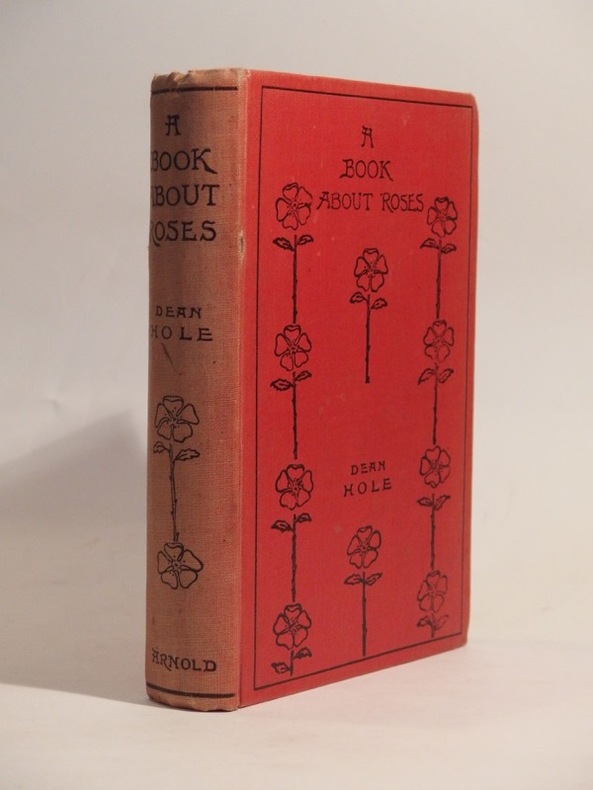
8863London, Edward Arnold, 1913. In-8, (12)-324 pp., cartonnage éditeur illustré rouge (dos passé) / publisher's pictorial red hardcover (sunned back).
8vo., First Edition, with 16 fine coloured plates,free endpapers faintly spotted; original series binding of patterned paper boards, a very good, bright, crisp copy in unclipped dustwrapper, the latter chafed at head and tail of backstrip. King Penguin 57. SCARCE IN THIS CONDITION.
Cm. 43, pp. (16) + 24 tavole a colori fuori testo. Leg. edit. in mezza tela verde con titoli in oro e piatti interamente decorati con motivi floreali a colori. Protezione orig. in plastica e custodia in cartoncino. Perfetto stato di conservazione. Edizione unica e stampata su carta Ventura in 250 copie. La presente non porta firma dell'artista e numerazione. Bella raccolta di tavole eseguite da una delle massime artiste botaniche del '900. Quest'ultima fu in gioventù grande imprenditrice nel campo dell'alimentazione congelata e... "pioneer of boil-in-the-bag porridge".
197030320Cairo, 1970. Royal8vo. 114 pp., 1 fold. map.
Cairo, 1970. Royal8vo. 114 pp., 1 fold. map.
185913815Simpkin Marshall & Co. London 1859. 2nd edition. V.g./No Jacket. Publisher's navy cloth Some abrasion to tip of spine and front hinge but a tidy copy overall. Simpkin, Marshall & Co., London hardcover
1817015272Stratfod-upon-Avon: J. Ward 1817. Two volumes bound in one small thick octavo illustrated with eight hand-coloured plates by James Sowerby pp x 795i endpapers marked otherwise very clean internally there is a cracking and weakness at pages 328/9 which could lead to a gathering coming loose bound in a simple Victorian pebble cloth slightly worn with a slight tear to the spine head. RARE. An appendix was published four years later. Thomas Purton was a surgeon who practised in London and in Alcester. He is particulalrly remembered for his mycological collections. This work was praised by Sir James Smith for its accuracy but a little damned by Sir Charles Hastings for "its interminable additions corrections and appendices". It is nevertheless a work of great detail and charm. First Edition. Cloth. Good. Illus. by James Sowerby. J. Ward Hardcover
1960BF45413n.d (1960?) xvi, 550 p., many hundred illustrations, 4to, cloth (plastified). Library stamps.
1811BF076421811 27 p., 2 (1 folded) engraved pls, 4to, disbound (no covers). Last page in photocopy. Published in: Transactions of the Linnean Society.
8vo [25 x 16.5 cm]; [ii], iii, 130 pp, 6 plates including frontis from photos, 2 folding colored maps in rear pocket, index. original heavy paper printed wraps, signature in upper title margin, few penciled notes in margin, spine a bit chipped, very good. A picture of this book is available upon request by email. Published as memoir 126, biological series. The work includes the geology, physiography, climate, history of botanical exploration, oxylophytes, calcicoles, glossary of terms, species, bibliography, list of new species and varieties, taxonomic revisions, etc.
1995106417<p>2 Vols. 8vo cloth gilt title on spine 517 655 pp. Clean and sturdy in fine condition overall. Excllent set reprinted from the 1958 first edition. Contains a detailed list of botanical titles beginning from the 12th century. Volume one covers works from 1150 to 1700. The second and slightly larger volume covers works from 1701 to 1800. </p> Martino Publishing,
In 8 (cm 13,5 x 21), pp. 28. Brossura editoriale con lieve mancanza al piatto anteriore. Catalogo delle specie di piante alpine vendute da questo vivaio di Salisbury (Inghilterra). NON sono presenti illustrazioni. Conservato all'interno foglio dattiloscritto ripiegato con messaggio per i clienti ed elenco di piante.
1835BG425871835 16 p., no covers (as issued).
1995106417<p>2 Vols. 8vo cloth gilt title on spine 517 655 pp. Clean and sturdy in fine condition overall. Excllent set reprinted from the 1958 first edition. Contains a detailed list of botanical titles beginning from the 12th century. Volume one covers works from 1150 to 1700. The second and slightly larger volume covers works from 1701 to 1800. </p> Martino Publishing, books
First edition, 8vo (170 x 110 mm), vi, [2], 9-149, [3]pp., with the final advert leaf and list of 40 subscribers which includes Sir Joseph Banks, Lord Bute, Daines Barrington Lettsom, and Thomas White, folding plan, orig. boards, rubbed, uncut, paper spine chipped, but still a very good copy in original state, uncut. In 1777 William Curtis (1746-1799) began to lay out a Botanic Garden at Lambeth Marsh, 'somewhat more than an acre in extent, situated to the north west of the Magdalen hospital'. This enterprise Curtis made known to the public in 1778 with the publication of his Proposals for opening by subscription, a botanic garden, to be called the "London Botanic Garden". He closed this pamphlet with the statement: 'The garden to be opened the 1st of January, 1779.' The garden was duly opened In 1783 "to members of the public at a subscription of one guinea a year and had a library for their use. To stock it Curtis received plants "from his Majesty's matchless collection of plants in the Royal Gardens at Kew," from the Chelsea Physic Garden and from the private gardens of Pitcairn, Fothergill, John Coakley Lettsom, Sir Joseph Banks and many others, and also the nurserymen L,, Gordon Malcolm, Davies, Loddiges and Grimwood."?Henrey. Curtis published this catalogue of the London Botanical Gardens and dedicated it to the two principal patrons of the undertaking. Daines Barrington (1727-1800), the noted lawyer, antiquary, and naturalist, and Thomas White (1724-97), a brother of Gilbert White of Selborne. Provenance: Contemporary ink ownership signature of G. N. Hall; presentation inscription from J. Rayner to Miss Starr, 1952. This catalogue is rare in commerce and has the leaf C2 which is often wanting; Henrey, 591.
First edition, part I all published, 8vo (190 x 115 mm), [12], 116pp., with the half-title and half-title, 5pp. list of subscribers, original boards, uncut, spine a little chipped, but still a very nice copy. This private botanical garden was originally opened by William Curtis in 1779 at Lambeth, but due to smoke pollution, he moved the plants to the larger gardens in Brompton. According to the Survey of London, "in 1789 William Curtis, the author of Flora Londinensis and the founder of The Botanical Magazine, took over from Rubergall as tenant and moved the botanical garden which he had opened in Lambeth in 1779 to this spot. The Brompton Botanic Garden, as it was known, covered about three and a half acres, almost exactly conforming to the area which is now occupied by the streets and houses on the hospital's estate, while the remaining four and a half acres to the north were used for experiments in agriculture. After Curtis's death in 1799 his partner William Salisbury kept the garden here until 1808 when he moved it to Sloane Street, Chelsea. He continued to use the ground at Brompton for a nursery, however, until 1829 when he was succeeded there by David Ramsay, whose establishment was known as the Queen's Elm or Swan Lane nursery." Rare; JISC locating just 3 copies (Oxford, Kew and Royal Horticultural Society Libraries).
2 vols. in one, [2], 206; viii, [1], 10-698, [2] pp., contemporary calf, a little rubbed, green label on spine, a good copy.
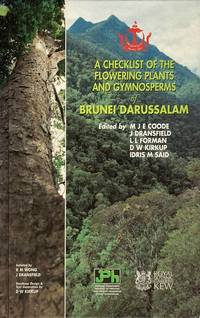
199638084Ministry of Industry and Primary Resources 1996. 1st edition. Fine/No Jacket. Pictorial hard covers Scarcely used. Ministry of Industry and Primary Resources hardcover
200737645Royal Botanic Gardens Kew /Conabio 2007. 1st edition. Fine/No Jacket. Paper covers As new. Royal Botanic Gardens Kew /Conabio unknown
200732074CONABIO 2007. 1st edition. Fine/No Jacket. Paper covers As new. CONABIO unknown
199425236Royal Botanic Gardens Kew 1994. 1st edition. Fine/No Jacket. Paper covers Scarcely used. Royal Botanic Gardens Kew unknown
Firenze, 1994, stralcio con copertina posticcia muta, pp. 851/860 con due figure. - !! ATTENZIONE !!: Con il termine estratto (o stralcio) intendiamo riferirci ad un fascicolo contenente un articolo di rivista, sia che esso sia stato stampato a parte utilizzando la stessa composizione sia che provenga direttamente da una rivista. Le pagine sono indicate come "da/a", ad esempio: 229/231 significa che il testo è composto da tre pagine. Quando la rivista di provenienza non viene indicata é perchè ci è sconosciuta. - !! ATTENTION !!: : NOT A BOOK : “estratto” or “stralcio” means simply a few pages, original nonetheless, printed in a magazine. Pages are indicated as in "from” “to", for example: 229/231 means the text comprises three pages (229, 230 and 231). If the magazine that contained the pages is not mentioned, it is because it is unknown to us.
2010BP299542010 161 p., num. figs, paperbound. Thesis.
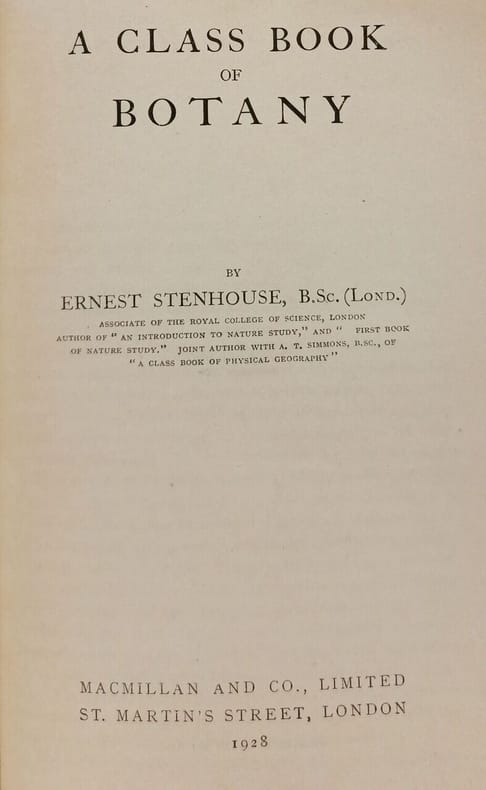
1928100154319Macmillan and Co. Limited 1928 in8. 1928. Cartonné.
8vo [21.5 x 14 cm]; includes 9 original papers by Spruce, folding partly colored map, plate of Utricularia Peltata, Spruce, from Linn. Society Journal Botany Vol. IV, 1845. contemporary half calf, with gilt title lettering 'Opuscula; R. S.' on leather spine label, marbled boards rubbed, contents of papers listed hand-written on endpaper, initials RS in ink on margin of first paper, marginal notes & corrections, very good. A The papers by Richard Spruce included here are: The Musci and Hepaticae of Teesdale, Trans. Bot. Society of Edinburgh, 1844 (pp 65-89); On Several Mosses new to the British Flora, London Journal of Botany, 1845 (pp1-27); On Five New Plants from Eastern Peru, Linnaean Society, 1859 (pp191-204); On the Mode of Branching of Some Amazon Trees, Linn. Soc., 1861, (pp 3-51); Notes of a Visit to the Cinchona Forests on the Western slope of the Quiteian Andes, Linn Journal, 1859, (176-192); On the Mountains of Llanganati in the Eastern Cordillera of the Quitonian Andes, offprint (?, or possibly earlier printing, has a few hand corrections) from Royal Geographical Society of London, 1861 (1-21, with folding engraved map, partly colored showing his routes); On the River Purus, a Tributary of the Amazon, no publisher stated, June 13, 1864 (1-13); Notes on the Valleys of Piura and Chira in Northern Peru and on the Cultivation of Cotton Therein, London, Her Majesty's Stationery Office, 1864 (pp 1-81). In addition there is only part of his paper, Report on the Expedition to Procure Seeds and Plants of the Cinchona Succirubra, or Red Bark Tree, London 1861, pages 85-112 only, the rest being removed but pages 104-111 being a note by Spruce on Cinchona Succirubra, Pavon and allied species, dated 1861 and pages 111-112 being a note by Clements R. Markham , respected author who wrote two books on obtaining Cinchona seeds and plants for planting in India to develop a cure for malaria. There is also a paper by Daniel Oliver, 'Descriptions of New Species of Utricularia from South America, 1859 (pp 169-176). Mark Honigsbaum in his book Valverde's Gold, 2004, on the exploration in eastern Ecuador for Incan gold, refers extensively to Spruce's work, especially that on Llanganati Mountains and he reproduced Spruce's map described above in his book but in much reduced size. The manuscript notes in parts of this work may be in Spruce's hand but this is not verified. Spruce was one of the great plant hunters of the Amazon region, collecting over seven thousand botanical specimens, many of which were previously unknown. Spruce was in the Amazon region at the same time as Bates and Wallace, and all three lived on the earnings from specimens sent back to England. In 1860, Spruce collected some 600 cinchona plants and thousands of seeds in Ecuador for raising in India for the production of quinine as a cure for malaria. The Royal Geographical Society elected him an honorary fellow in 1866 for his fine work. The Linnaean Society also made him an associate. Spruce was a great influence on the work of Darwin, Wallace, Richard Schultes and others. The author's 'Notes of a Botanist on the Amazon & Andes; being records of travel on the Amazon and its Tributaries, the Trombeta, Rio Negro, Uapes, etc. . to the Orinoco, the eastern side of the Andes of Peru and Ecuador and the shores of the Pacific during 1849-1864' was published in 1908 after his death, by Alfred Russell Wallace, and remains a classic work of travels in South America and especially Amazonia.