20 127 résultats
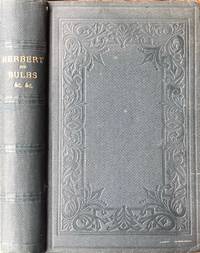
8vo [23 x 15 cm]; xix, 344pp, frontis, numerous illustrations from drwgs, index, the second part is in two column format. original blue cloth with gilt decorations and title lettering on front cover and spine, small stain on front cover, edges rubbed, lightly foxed on few pages, interior clean and very good. A picture of this book is available upon request by email. 'In Alpine Flowers, his principles of good alpine gardening, in natural conditions in a properly constructed rock garden, preceded Reginald Farrer by thirty-seven years' (Mea Allen in William Robinson). Robinson was the most important garden writer of his period, this being his third book. He describes his journey observing plants and gardens in a section called Some Notes of a Journey in the Alps of Europe and the Rocky Mountains of N. W. America. He includes lists of plants for different conditions, and describes numerous species throughout the book. The first edition of this work was in 1870, this edition with an extensive new introduction and new material added, additional species described, etc, and in a larger format. Massachusetts Horticultural Society 268.
8°, con 64 tavv. color. Contenenti 311 figure, leg. ed. t. tela, con inc. floreale in oro al piatto ant. , fioriture e qualche forellino di tarlo.
2 voll. in-4, pp. XII, 152; 140, 8, elegante leg. t. tela edit. con impress. a secco alle cornici dei piatti, e motivo floreale impresso in oro al centro. Con 108 tavv. complessive (mm. 260x180) inc. in litogr. e a colori raff. specie di piante alpine descritte scientificamente nel testo. Esempl. molto fresco con le tavv. pulite e ben protette dalle veline orig.
187230030London, Bell and Dodley, bell & sons, 1872-74. Royal8vo. 2 orig. full cloth. Richly gilt. First vol. in green pictorial cloth. Sec. vol. in blue cloth, gilt. Spineends worn. Some scratches to covers and backs. XXII,152(4),140 pp. and 108 (54+54) fine handcoloured engraved plates by A.F. Lydon, all with tissue-guards. Slightly brownspotted, mainly vol. 1 and mainly marginal. Some prvious owners names and a historical note on p. 2 in ink.
London, Bell and Dodley, bell & sons, 1872-74. Royal8vo. 2 orig. full cloth. Richly gilt. First vol. in green pictorial cloth. Sec. vol. in blue cloth, gilt. Spineends worn. Some scratches to covers and backs. XXII,152 (4),140 pp. and 108 (54+54) fine handcoloured engraved plates by A.F. Lydon, all with tissue-guards. Slightly brownspotted, mainly vol. 1 and mainly marginal. Some prvious owners names and a historical note on p. 2 in ink.
4to [25.5 x 17.5 cm]; 2 volumes, viii, 152; [iii], 140 pp, 108 colored lithographed plates (chromolithographs), each with tissue guard, general index, systematic index. orig pictorial cloth, elaborate decoration in gilt & black on front covers & spines, front coves with mounted oval color plate as issued, all edges gilted, about 20 plates in volume II with dampstain, mostly marginal, light edge rubbing, else near fine. A The attractive plates, several of which are of lady's slipper orchids, were printed by Fawcett of Driffield from paintings by Lydon. The two volumes constitute the complete set, each volume being issued separately, the first volume being successful it was decided to issue a second series, which is why most sets found are with the second edition of the first volume. Nissen 2186. British Museum Natural History 2361. Massachusetts Horticultural Society 346. Jackson 119. Horticultural Society of New York 238.
In 24, pp. 396 con ill. n.t. di F. Vellan n.t. Br. ed. Interessante raccolta erboristica con catalogo di piante ed erbe.
66374aafSarnen, Landenberg Druckerei AG, 1972, in-8vo, 243 S. + Beilagen: 1 gefaltete Vegetationskarte 1:5000 und 2 Tafeln, Original-Leinenband.
17907650BBFrankfurt, 1790. 8°. 60 S. Broschur der Zeit.
buono stato, a cura dell'Istituto per il Commercio Estero (ICE) Roma e Stazione Sperimentale di Ortofrutticoltura, Milano illustrazioni b.n. n.t. e 10 tavole a colori f.t.
(Pisa) 1978, 8vo stralcio con copertina posticcia muta, pp. 233/250 con 4 illustrazioni e 2 tavole. - !! ATTENZIONE !!: Con il termine estratto (o stralcio) intendiamo riferirci ad un fascicolo contenente un articolo di rivista, sia che esso sia stato stampato a parte utilizzando la stessa composizione sia che provenga direttamente da una rivista. Le pagine sono indicate come "da/a", ad esempio: 229/231 significa che il testo è composto da tre pagine. Quando la rivista di provenienza non viene indicata é perchè ci è sconosciuta. - !! ATTENTION !!: : NOT A BOOK : “estratto” or “stralcio” means simply a few pages, original nonetheless, printed in a magazine. Pages are indicated as in "from” “to", for example: 229/231 means the text comprises three pages (229, 230 and 231). If the magazine that contained the pages is not mentioned, it is because it is unknown to us.
Firenze, 1974, estratto pp. 105/112 con due tav. f.t. - !! ATTENZIONE !!: Con il termine estratto (o stralcio) intendiamo riferirci ad un fascicolo contenente un articolo di rivista, sia che esso sia stato stampato a parte utilizzando la stessa composizione sia che provenga direttamente da una rivista. Le pagine sono indicate come "da/a", ad esempio: 229/231 significa che il testo è composto da tre pagine. Quando la rivista di provenienza non viene indicata é perchè ci è sconosciuta. - !! ATTENTION !!: : NOT A BOOK : “estratto” or “stralcio” means simply a few pages, original nonetheless, printed in a magazine. Pages are indicated as in "from” “to", for example: 229/231 means the text comprises three pages (229, 230 and 231). If the magazine that contained the pages is not mentioned, it is because it is unknown to us.
In 8, pp. 123 + (1). Intonso. Mancanza al marg. sup. del p. ant. Br. ed. Estratto dal giornale Malpighia, 1892-93.
Bella incisione della seconda metà del '700 che mostra diverse piante marine.<BR>TECNICA: Incisione su rame DIMENSIONI FOGLIO: cm 17x19,5 DIMENSIONI INCISIONE: cm 12x17,5 EPOCA: seconda metà del XVIII secolo In buone condizioni, qualche fioritura e usura marginale. Nice print of the second half of XVIII century showing different sea plants. In good conditions, foxings. TECHNIQUE: copper engraving LEAF SIZE: cm 17x19,5 PRINT'S SIZE: cm 12x17,5 PERIOD: second half of XVIII century In good conditions some foxing and worn edge
Firenze, 1925, stralcio con copertina posticcia muta, pp. 100/107 - !! ATTENZIONE !!: Con il termine estratto (o stralcio) intendiamo riferirci ad un fascicolo contenente un articolo di rivista, sia che esso sia stato stampato a parte utilizzando la stessa composizione sia che provenga direttamente da una rivista. Le pagine sono indicate come "da/a", ad esempio: 229/231 significa che il testo è composto da tre pagine. Quando la rivista di provenienza non viene indicata é perchè ci è sconosciuta. - !! ATTENTION !!: : NOT A BOOK : “estratto” or “stralcio” means simply a few pages, original nonetheless, printed in a magazine. Pages are indicated as in "from” “to", for example: 229/231 means the text comprises three pages (229, 230 and 231). If the magazine that contained the pages is not mentioned, it is because it is unknown to us.
Tavola botanica tratta dal monumentale Hortus Romanus Juxta Systema Tournefortianum Paulo Strictius Distributus A Georgio Bonelli Monregalensi In Subalpinis, Publico Medicinae Professore: Specierum Nomina Suppeditante, Praestantiorum, Quas Ipse Selegit, Adumbrationem Dirigente Liberato Sabbati Maevaniensi In Umbria Chirurgicae Professore, Et Horti Custode; Adjectis Unicuique Volumini Rariorum Plantarum Tabulis C. Aere Incisis. Tom. I. (- Tom. VII.) L’opera viene stampata a Roma durante l’arco di ben 22 anni e da diversi editori: a spese di Bouchard e Gravier: Paolo Giunchi, 1772-1780-Tipografia Salomoni, 1784-Giovanni Zempel, 1793. Prima edizione di questa monumentale opera di botanica, sicuramente la più vasta e riccamente illustrata tra quelle prodotte in Italia fino ad allora. Intorno al 1770 gli editori francesi Bouchard e Gravier, avendo intenzione di dare alle stampe un catalogo illustrato dell’Orto botanico di Roma, ne proposero la direzione al medico piemontese Giorgio Bonelli (1724-1782), allora docente presso l’università romana. La cura della preparazione dei campioni per l’apparato iconografico fu invece affidata a Liberato Sabbati (1714-1778), un farmacista umbro, che era allora custode dell’Orto medesimo. Il primo volume uscì nel 1772 con una ricca introduzione del Bonelli, in cui questi fornisce un resoconto dei più recenti sviluppi della botanica e dei nuovi sistemi di classificazione e adduce poi i motivi della sua preferenza per il sistema elaborato da Joseph Pitton de Tournefort, a suo avviso più semplice e adatto all’apprendimento. Per ragioni ignote Bonelli abbandonò tuttavia l’impresa. Nel 1774, a partire dal secondo volume, essa fu presa in mano e poi condotta a termine da Niccolò Martelli (1735-1829), docente di botanica della Sapienza. Questi dette all’opera un’impostazione più linneana, pur continuando ad avvalersi della collaborazione di Liberato Sabbati fino alla sua morte, che avvenne nel 1778 al termine della pubblicazione dei primi cinque volumi. Il suo posto fu quindi preso dal figlio Costantino Sabbati. L’Hortus romanus contiene la classificazione delle varie specie di piante ospitate nell’Orto Botanico di Roma, che, stando a quanto affermato nella Horti Romani brevis historia che apre il primo volume, fu fondato a metà del Quattrocento sotto il pontificato di Niccolò V. In realtà i primi orti botanici italiani furono quelli creati a Padova e a Pisa intorno al 1545. L’Orto Romano sorse poco tempo dopo e, ampliatosi più volte, nel 1660 fu trasferito dalla sede vaticana al Gianicolo, dove ancora oggi si trova. La maggior parte delle tavole numerate non sono firmate, ma alcune sono firmate come incise da Magdalena Bouchard Il primo volume è dedicato dagli editori, Joannes Bouchard et Joannes Josephus Gravier, al Papa Clemente XIV; il secondo, al Cardinale Bernis; il terzo, al Cardinale Zelada; il quarto, al Cardinale Giraud. Il sesto volume è dedicato - dall'autore, Nicolaus Martelli - al cardinale Boncompagni. Acquaforte, finemente colorata a mano in epoca, in perfetto stato di conservazione. Bibliografia K. Nissen, Die botanische Buchillustration, 2 v. & suppl. (1951-1966); Great Flower Books p. 51. Hunt 629. Cleveland Botanical 509. Dunthorne 45. Pritzel 976. Nissen, BBI 200. Stafleu & Cowan TL2 634. Botanical plate from the Hortus Romanus Juxta Systema Tournefortianum Paulo Strictius Distributus A Georgio Bonelli Monregalensi In Subalpinis, Publico Medicinae Professore: Specierum Nomina Suppeditante, Praestantiorum, Quas Ipse Selegit, Adumbrationem Dirigente Liberato Sabbati Maevaniensi In Umbria Chirurgicae Professore, Et Horti Custode; Adjectis Unicuique Volumini Rariorum Plantarum Tabulis C. Aere Incisis. Tom. I. (- Tom. VII.) The work was printed in Rome over a period of 22 years and by different publishers: at the expense of Bouchard and Gravier: Paolo Giunchi, 1772-1780-Tipografia Salomoni, 1784-Giovanni Zempel, 1793. First edition of this monumental work of botany, certainly the most extensive and richly illustrated among those produced in Italy until then. Around 1770, the French editors Bouchard and Gravier, having the intention of printing an illustrated catalog of the Botanical Garden of Rome, proposed the direction to the Piedmontese doctor Giorgio Bonelli (1724-1782), then a professor at the University of Rome. The care of the preparation of samples for the iconographic apparatus was instead entrusted to Liberato Sabbati (1714-1778), an Umbrian pharmacist, who was then custodian of the Garden itself. The first volume was published in 1772 with a rich introduction by Bonelli, in which he gives an account of the most recent developments in botany and new systems of classification and then gives the reasons for his preference for the system developed by Joseph Pitton de Tournefort, in his opinion simpler and more suitable for learning. For unknown reasons Bonelli abandoned the enterprise. In 1774, starting with the second volume, it was taken over and then completed by Niccolò Martelli (1735-1829), professor of botany at the Sapienza. Martelli gave the work a more Linnean approach, while continuing to use the collaboration of Liberato Sabbati until his death in 1778 at the end of the publication of the first five volumes. His place was taken by his son Costantino Sabbati. The Hortus romanus contains the classification of the various species of plants housed in the Botanical Garden of Rome, which, according to what is stated in the Horti Romani brevis historia that opens the first volume, was founded in the mid-fifteenth century under the pontificate of Nicholas V. In reality, the first Italian botanical gardens were created in Padua and Pisa around 1545. The Roman Garden arose shortly thereafter and, expanded several times, in 1660 was transferred from the Vatican to the Janiculum, where it is still located today. Most of the numbered plates are unsigned, but a few are signed as engraved by Magdalena Bouchard The first volume is dedicated by the publishers, Joannes Bouchard et Joannes Josephus Gravier, to Pope Clement XIV; the second, to Cardinal Bernis; the third, to Cardinal Zelada; the fourth, to Cardinal Giraud. The sixth volume is dedicated - by the author, Nicolaus Martelli - to Cardinal Boncompagni. Etching, with fine contemporay colouring, good condition. References K. Nissen, Die botanische Buchillustration, 2 v. & suppl. (1951-1966); Great Flower Books p. 51. Hunt 629. Cleveland Botanical 509. Dunthorne 45. Pritzel 976. Nissen, BBI 200. Stafleu & Cowan TL2 634.
1997RO60092586YUG, S.A. 1997. In-8. Broché. Bon état, Couv. convenable, Dos satisfaisant, Intérieur frais. 112 pages. Premier plat illustré en couleurs. Couverture rempliée. Nombreuses illustrations et photos en noir et blanc dans et hors texte. Texte en espagnol.. . . . Classification Dewey : 580-Botanique
183731520London: James Ridgway 1837. V.g./No Jacket. Publisher's cloth gilt title on spine Donor's inscription on ffep. A very well preserved copy in original publisher's navy cloth with impressed design and gilt title on spine. Lower corners bumped. London: James Ridgway hardcover
1949BO-38Stanford CA.: American Plant Life Society 1949. Classic illustrated taxonomic treatise on the Tribe Amarylleae including the seven genera; Lepidopharynx Worsleya Amaryllis Linn Placea Griffinia Ungernia and Lycoris; detailed descriptions of the species; if required their grouping into subgenera under each genus and the arrangement of the genera into three subtribes. Contains important work on nomenclature including detailed proofs. 194 pgs. Illustrated with 15 plates and 3 figures. Frontispiece is plate 1: Amaryllis belladonna Linn. Minor slight creases on lower edge. No spine creases or cracks. Minimal shelfwear. First Edition. Original Wraps. Very Good. American Plant Life Society Paperback
1993BG455291993 x, 265 p., numerous figures, 1 large folded map in rear pocket, hardbound. Very good copy.
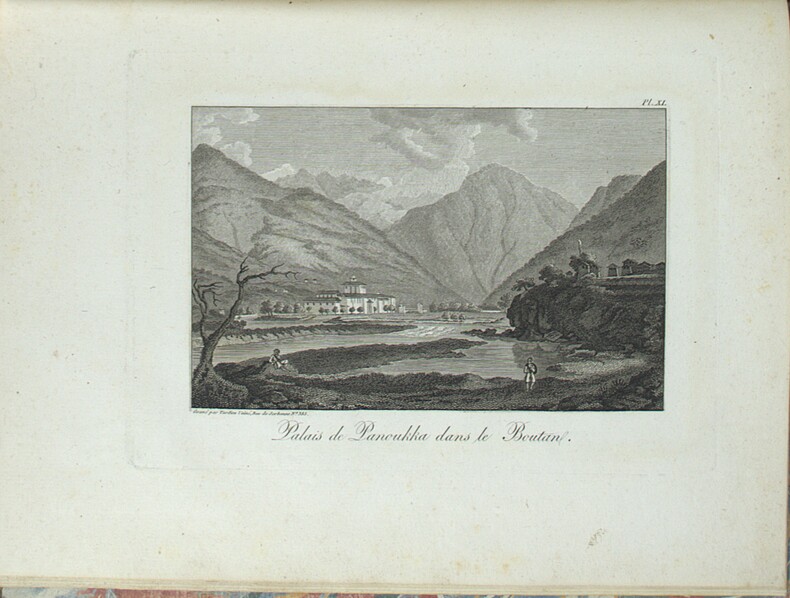
1800PHO-2272Paris, F. Buisson, An IX (1800). Atlas seul relié demi cuir, dos lisse orné avec pièce de titre et tomaison. Frottements, manque à la pièce de titre, accrocs aux coiffes, petites rousseurs au titre et liste des planches. Illustré de 15 planches hors texte dont une carte de la route de Buxadeouar à Tassisudon dans le Boutan et de Tassisudon à Teschou-Loumbou dans le Thibet.
Mm 170x 240 Brossura originale illustrata di 112 pp. Atti dei "Convegni Nazionali di Erboristeria" , Gualdo Tadino, 15 Ottobre 1989/13-14 Ottobre 1990. Libro in ottime condizioni.
Forlì, 1966, stralcio con copertina posticcia muta, pp. 202/211 con una foto a colori f.t - !! ATTENZIONE !!: Con il termine estratto (o stralcio) intendiamo riferirci ad un fascicolo contenente un articolo di rivista, sia che esso sia stato stampato a parte utilizzando la stessa composizione sia che provenga direttamente da una rivista. Le pagine sono indicate come "da/a", ad esempio: 229/231 significa che il testo è composto da tre pagine. Quando la rivista di provenienza non viene indicata é perchè ci è sconosciuta. - !! ATTENTION !!: : NOT A BOOK : “estratto” or “stralcio” means simply a few pages, original nonetheless, printed in a magazine. Pages are indicated as in "from” “to", for example: 229/231 means the text comprises three pages (229, 230 and 231). If the magazine that contained the pages is not mentioned, it is because it is unknown to us.
Firenze, 1952, stralcio con copertina posticcia muta, pp. 494/496 - !! ATTENZIONE !!: Con il termine estratto (o stralcio) intendiamo riferirci ad un fascicolo contenente un articolo di rivista, sia che esso sia stato stampato a parte utilizzando la stessa composizione sia che provenga direttamente da una rivista. Le pagine sono indicate come "da/a", ad esempio: 229/231 significa che il testo è composto da tre pagine. Quando la rivista di provenienza non viene indicata é perchè ci è sconosciuta. - !! ATTENTION !!: : NOT A BOOK : “estratto” or “stralcio” means simply a few pages, original nonetheless, printed in a magazine. Pages are indicated as in "from” “to", for example: 229/231 means the text comprises three pages (229, 230 and 231). If the magazine that contained the pages is not mentioned, it is because it is unknown to us.