4 181 résultats
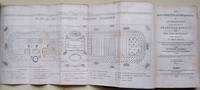
184633512Cincinnati: L'Hommedieu & Co 1846. 68 4 xix pp. plus three plates. Modern three-quarter morocco and marbled boards spine gilt top edge gilt. Bookplate and bookseller's label on front pastedown. Some toning.<br/> <br/>The charter and by-laws for the Cincinnati Horticultural Society with reports and transactions from its meeting during the first three years of its existence.<br/> <br/>"Regional growers sought to share knowledge and capitalize on their collective prestige by organizing the Cincinnati Horticultural Society. Founded in 1843 by local businessmen-growers the society was an active group of urban boosters several of whom were also leading winemakers. Under the society's guidance wine making flourished. A period of major expansion of the Cincinnati wine industry marked the decades after 1842 the year in which Nicholas Longworth stumbled onto his formula for 'sparkling Catawba' a much more palatable and popular beverage than his previous 'Cincinnati hock'" - Hannickel.<br/> <br/>Erica Hannickel "Empires of the Vine: Wine Culture in America" Philadelphia: University of Pennsylvania Press 2013 p. 103. L'Hommedieu & Co unknown books
1846WRCAM52412Cincinnati: L'Hommedieu & Co. 1846. 684xix pp. plus three plates. Modern three-quarter morocco and marbled boards spine gilt t.e.g. Bookplate and bookseller's label on front pastedown. Some toning. Very good. The charter and by-laws for the Cincinnati Horticultural Society with reports and transactions from its meeting during the first three years of its existence. "Regional growers sought to share knowledge and capitalize on their collective prestige by organizing the Cincinnati Horticultural Society. Founded in 1843 by local businessmen-growers the society was an active group of urban boosters several of whom were also leading winemakers.Under the society's guidance wine making flourished. A period of major expansion of the Cincinnati wine industry marked the decades after 1842 the year in which Nicholas Longworth stumbled onto his formula for 'sparkling Catawba' a much more palatable and popular beverage than his previous 'Cincinnati hock'" - Hannickel. Erica Hannickel "Empires of the Vine: Wine Culture in America" Philadelphia: University of Pennsylvania Press 2013 p.103. L'Hommedieu & Co. hardcover books
184633512Cincinnati: L'Hommedieu & Co 1846. 8vo. 8 1/8 x 5 1/4 inches. 68 4 xix pp. plus three plates. Modern three-quarter morocco and marbled boards spine gilt top edge gilt. Bookplate and bookseller's label on front pastedown. Some toning.<br/> <br/> The charter and by-laws for the Cincinnati Horticultural Society with reports and transactions from its meeting during the first three years of its existence.<br/> <br/> "Regional growers sought to share knowledge and capitalize on their collective prestige by organizing the Cincinnati Horticultural Society. Founded in 1843 by local businessmen-growers the society was an active group of urban boosters several of whom were also leading winemakers. Under the society's guidance wine making flourished. A period of major expansion of the Cincinnati wine industry marked the decades after 1842 the year in which Nicholas Longworth stumbled onto his formula for 'sparkling Catawba' a much more palatable and popular beverage than his previous 'Cincinnati hock'" - Hannickel.<br/> <br/> Erica Hannickel "Empires of the Vine: Wine Culture in America" Philadelphia: University of Pennsylvania Press 2013 p. 103. L'Hommedieu & Co unknown
1900600254New York, (ca 1900). 4°. M. zahlr. Abb. X, 610, XIV S. Ill. OLwdbd.
Two Volumes. Illustrated with numerous photographs and figures. Small 4to. Original full green cloth bindings, lettered and decorated in gold. Hardbound. Arthur George Tansley (1871-1955), English botanist, a pioneer in the science of plant ecology. He coordinated a large project to map the vegetation of the British Isles. In this work Tansley showed how vegetation is affected by soil, climate, the presence of wild and domesticated animals, previous land management, and contemporary human activities. He also reviewed all known accounts of British flora and then linked the two themes, thereby demonstrating which factors are important in influencing the various types of vegetation. Very nice set. **PRICE JUST REDUCED! PLANTS W132
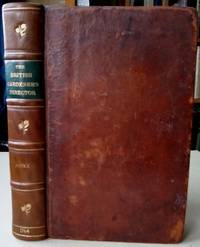
1764019061Edinburgh: A. Kincaid & J. Bell; R. Fleming 1764. Octavo pp iv 443 7 some age-toning throughout a little soiling here and there pages 331-362 stained in the lower margin otherwise firm and tight internally with no tears contemporary calf rubbed and a little worn and creased neatly rebacked with a new spine raised bands and green title label new endpapers. Blanche Henrey 883 mentioning that not all copies of this edition have the two plates and ours does not. In effect the third edition though the preceeding two have the title "The Scots Gardiners Director". Sir James Justice 1698 - 1763 was a Scottish horticulturalist/gardener. His works on gardening were distributed in much of Britain and Ireland. He reportedly had a passion for botanical experiments which he pursued at the expense of his finances and family. Indeed the later miniaturist John Kay wrote that tulipomania was the cause of him parting with his estate at Crichton and the purchase of a smaller one. His divorce and expulsion from the Fellowship in the Royal Society has been blamed on the expenses he put into greenhouses and soil mixtures. He is nevertheless a noted figure in Scottish gardening with a claim to be the father of it. The genus Justicia is named for him. Full-Leather. Good. A. Kincaid & J. Bell; R. Fleming Hardcover
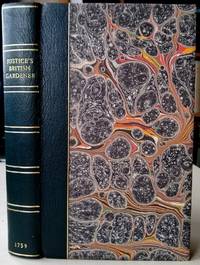
1759019062Edinburgh: R. Fleming 1759. Octavo pp iv 412 some age-toning throughout the title page and the final page rather foxed otherwise extremely firm and tight internally with no tears rebound in a very smart dark green quarter morocco and marbled boards. Blanche Henrey 878. Sir James Justice 1698 - 1763 was a Scottish horticulturalist/gardener. His works on gardening were distributed in much of Britain and Ireland. He reportedly had a passion for botanical experiments which he pursued at the expense of his finances and family. Indeed the later miniaturist John Kay wrote that tulipomania was the cause of him parting with his estate at Crichton and the purchase of a smaller one. His divorce and expulsion from the Fellowship in the Royal Society has been blamed on the expenses he put into greenhouses and soil mixtures. He is nevertheless a noted figure in Scottish gardening with a claim to be the father of it. The genus Justicia is named for him. First Edition. Quarter leather. Very Good. R. Fleming Hardcover
0282669248.Gpaperback. Good. Access codes and supplements are not guaranteed with used items. May be an ex-library book. paperback
271p. 8vo. Paperback. Nice copy. Pollan tells the story of four domesticated species - the apple, the tulip, marijuana, and the potato, and describes how each has thrived by satisfying humankind's most basic desires. PLANTS W130
1791017068St Paul's Churchyard London: J. Johnson 1791. Two volumes bound in one. Volume 1 - Second edition 1791. Volume 2 - Third edition 1791. Blanche Henrey 470 . Illustrated with two engraved allegorical frontispieces 18 engraved plates one of them folding - the Cypripedium plate which is often lacking - and two hand-coloured quarto pp xii 214 126 ii; x 197 both frontispieces and title pages browned and with some offsetting from plate to title the plates of the Portland Vase and the Fertilisation of Egypt similar this last plate by Blake after Fuseli; the remaining botanical plates clean lacking the corner of page 171/2 a relevant pencilled note at the base of one page a few pages with foxing but otherwise very clean and sound internally with the armorial bookplate of the Dowdeswell family Pull Court Worcestershire on the front endpaper together with a shelf label and a small newspaper clipping; the hand-colouring on the two plates is particularly attractive and there is also an extra engraved plate fixed to the verso of the first titlepage - a portrait of Darwin engraved by Haughton after Rawlinson - this has caused a little waving of the paper; contemporary full calf a little rubbed and scuffed rebacked the old spine laid down and with some wrinkling. Still a good sound copy. The first poem The Economy of Vegetation celebrates technological innovation scientific discovery and offers theories concerning contemporary scientific questions such as the history of the cosmos. The more popular Loves of the Plants promotes revises and illustrates Linnaeus's classification scheme for plants. One of the first popular science books the intent of The Botanic Garden is to pique readers' interest in science while educating them at the same time. By embracing Linnaeus's sexualized language which anthropomorphizes plants Darwin intended to make botany interesting and relevant to the readers of his time. Darwin emphasizes the connections between humanity and plants arguing that they are all part of the same natural world and that sexual reproduction is at the heart of evolution ideas that his grandson Charles Darwin would later turn into a full-fledged theory of evolution. This evolutionary theme continues in The Economy of Vegetation which contends that scientific progress is part of evolution and urges its readers to celebrate inventors and scientific discoveries in a language usually reserved for heroes or artistic geniuses. Darwin's attempt to popularize science and to convey the wonders of scientific discovery and technological innovation through poetry helped initiate a tradition of popular science writing that continues to the present day. Full Leather. Good. J. Johnson Hardcover
1816017034Paternoster Row London: Longman Hurst Rees Orme & Brown 1816. Two volumes. Illustrated with a folding plan in the first volume 12mo measures 180mm x 108mm the first volume is partly unpaginated the second volume is 4 211 i slight age-toning and the occasional blemish the frontispiece is awkwardly folded and along with the title page a bit browned but otherwise clean and sound internally half calf and boards rubbed lacking most of the spine labels with the tiny armorial bookplate of William Booth Grey - the son of George Harry Grey 1737 MP for Staffordshire in 1761 and succeeded as the 5th Earl of Stamford 30 May 1768. He is considered to be the artist of two plant collages in the style of Mary Delany acquired by the British Museum in 2008. RARE. William Salisbury botanical nurseryman has been erroneously described as a brother of Richard Anthony Salisbury. In the preface he states that from 1791 he was employed by the Board of Agriculture in conducting experiments on the growth of plants ; he may have been previously engaged as a nurseryman. In 1797 he was gardener to J. Symmons F.R.S. at Paddington House Paddington and in the same year entered into partnership with William Curtis at his garden at Queen's Elm Brompton. After Curtis's death in 1799 he removed the garden to Cadogan Place Sloane Street where he held botanical classes. He died in 1823. The site is now the private gardens of Cadogan Place. First Edition. Half-Leather. Good. Longman, Hurst, Rees, Orme & Brown Hardcover
1821017740London: James Ridgway 1821. Octavo pp ii 528 slight age-toning but otherwise surprisingly clean internally bound in a recent brown quarter calf and cloth very slightly rubbed. Later editions of the book were published under the title 'A Hothouse and Greenhouse Manual Or Botanical Cultivator' but this first edition is very scarce. Sweet was a prominent botanist and gardener of his day. He published both expensive colour plate works and also practical manuals such as this. This is one of the earliest books to contain so much specific information on propagation. First Edition. Quarter calf and cloth. Very Good. James Ridgway Hardcover
pp. viii, 272 + Frontis. Illustrated with numerous photographs. 8vo. Original cloth backed binding. Original dust jacket, worn. Hardbound. First published in 1923 as 'A Little Book of Perennials.' **This copy used for the McFarland 1958 edition, second printing. Illustrations and pages marked. Front fly leaf states "cuts stored in cellar, in cage - 6/3/59. 6 Boxed plates stored in cellar in cage - 1/21/64. No cover. Cut Room Jun 4, 1959". This copy was used in the printing office of J. Horace McFarland (1859-1948). McFarland was one of the first Americans to sound the call for environmental and scenic protection. In 1878, at age nineteen, McFarland opened his printing business and began to publish gardening and seed catalogs. Realizing that woodcuts did not adequately represent the plants, he started to explore the use of photography. By 1894, he was experimenting with color photography and his company had become America's premier publisher of gardening catalogs, with what may have been the first color photographs produced in the US. The success of his publishing business provided McFarland with wealth and security, and freed him to engage extensively in the philanthropy and civic activism he loved. He was recognized as a master gardener whose books and photographs on roses, trees and other subjects were famous across the United States. He wrote more than a dozen books on roses and made the American Rose Society a world-renowned institution. As president, he established a method of rose identification and registration that is still in use today. He was widely known as "Mr. Rose" and was a founder and president of the American Rose Society, which had an international impact on the propagation of roses. His home and garden in the Bellevue Park section of Harrisburg was an internationally famous testing ground for hundreds of new plant species. It contained 5,000 plants including varieties of roses. PLANTS W132
Back pastedown cracked, cover corners bumped and worn, spine worn top/tail, down edges.
Cartonnage de l'?diteur. 318 pages. Rousseurs.
4to [28 x 22 cm]; [xii], 332, [viii] pp, hundreds of illustrations from drwgs, tables, bibliog, glossary, index. original cloth-backed boards, gilt spine title lettering, dj (price inked out, worn), some spotting on outer edge, endpaper, boards a little warped. A picture of this book is available upon request by email. This is the first complete sourcebook of bamboo, covering everything from research and experimentation, culture, history, to a whole bamboo catalog such as acupuncture, blowguns, bridges, dolls, kites, sandals, ships, violins, windmills, shelter, bamboo crafts and construction. There are sections on bamboo in art, music, philosophy as well as practical sections on varieties of plants, uses, cultivation. Very well-illustrated.
1900023265London: L. Upcott Gill 1900. Well illustrated with over 700 text engravings very thick octavo pp viii 1198 13 pages publisher's advertisements top edge gilt very slight age-toning several pages have been clumsily opened leaving slightly rough edges and occasional very minor loss of page margin page 159/160 has a tear into the text without loss the front hinge is cracked and there is weakness through to page vi due to the extreme weight of the book original publisher's embossed cloth a little bleached on both covers towards the front edge otherwise very good. An amazing book with a great deal of information on just about every aspect of late-Victorian horticulture. SCARCE. A heavy book - extra postage may be necessary. First Edition. Cloth. Good. L. Upcott Gill Hardcover
1987125473Leipzig, Edition, 1987. 4°. M. zahlr. (teils farb.) Abb. 2 Bl., 272 S. OLwd. St. a. Vorsatz.
Gardening with vertically challenged plants. Superbly illustrated. Dust jacket rubbed
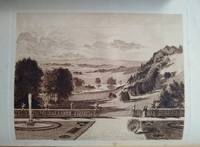
018120Norwood; Stationers' Hall Court London: The Author; Simpkin Marshall Hamilton Kent & Co Ltd Quarto illustrated with 22 plates pp 4 116 deckle-edged top edge gilt endpapers a bit foxed and age-toned the ten sepia plates are foxed on their versos but the plates thenselves show only very faint traces the blank pages facing the plates have a little offsetting there is a marginal tear to the plate facing page 37 green cloth slightly scuffed the corners rubbed the spine slightly pulled at head and tail. Overall though still a very presentable copy. SCARCE. The book contains 22 leaves of plates. Ten of these are etched views of gardens or features of garden scenery one of them named as a view of Keszthely. The other ten are lithographed plans two facing each other between pp. 54 and 55 uncoloured and eight including two double-page spreads mounted on stubs with beige and green tint. Among these are plans of the Buxton Pavilion grounds Stoke Cemetery Keszthely and Yeaton Peverey. Milner succeeded his father Edward Milner as director of the Crystal Palace School of Gardening for the prospectus of which see Gardeners' Chronicle 2 April 1881 p. 437. It has been inferred by some that some of the content is based on Edward Milner's works as well as H.E. Milner's own; for example the plate facing p. 63 resembles the landscape garden designed by Edward Milner at Rangemore Hall Staffordshire. First Edition. Cloth. Very Good. The Author; Simpkin, Marshall, Hamilton, Kent & Co Ltd Hardcover
1868008888Boston: J.E. Tilton and Company 1868. Book. Good condition. Hardcover. First Edition. Octavo 8vo. viii 384 pages of text. Hardcover binding; leather spine and corners with marbled paper-covered boards. Front board is detached and leather is moderately rubbed at the extremities. First and final several pages of text have a large stain on them but the vast majority of the text remains clean. Illustrated with numerous woodcuts. Previous owner's name "E. N. Badger" on front endpaper. Previous owner's bookplate affixed neatly to front endpaper. J.E. Tilton and Company Hardcover books
180658818Philadelphia: Printed by B. Graves No. 40 1806. Thick 8vo. v 1 648 18 index pp. With 1 text diagram for planting Hyacinth bulbs 1 large folding table “Of the progress of vegetation in Pennsylvania compared with that of the some of the famous wine countries of Europe.†Contemporary full tree calf gilt & red morocco spine label gilt ruling on spine chipping head of spine tidemark through lower corner of textblock from wicking occasional slight foxing very light interior uniform toning 1 closed tear at gutter margin of large folding table still a good copy w/ former ownership bookplate & shelf no. on front pastedown. First edition of the first notable horticultural work and nursery seed catalogue printed in the United States by this Irish-American nurseryman who corresponded and traded specimens with President Thomas Jefferson at Monticello as well as cultivated specimens collected during the Lewis & Clark expedition. McMahon before 1765-1816 immigrated from Ireland during political unrest and by 1802 had established his popular nurseries including greenhouses experimental gardens and hot houses near the Germantown Turnpike between Philadelphia and Nicetown. These contained useful and ornamental plants adapted to the American climate and in this detailed volume he outlines month-by-month the instructions for erecting and laying out the plants their cultivation and has incorporated as appendix detailed catalogues of 18 separate classes for available specimens. Eventually McMahon was able to cultivate and began selling a variety of plants collected from the Lewis & Clark Expedition including a fragrant currant Ribes odaritissimum and he also successfully cultivated Osage orange trees Maclura pomifera which were among the most celebrated specimens. The book became a classic work in the United States reprinted in 11 editions from 1806 to 1857 and urged American gardeners to incorporate indigenous species into their ornamental plantings. See: Hedrick History of Horticulture in America to 1860 1988; Alexander Brey Bernard M’Mahon History of Early American Landscape Design National Gallery of Art 2022. Printed by B. Graves, No. 40, unknown
18679337New York: William Wood & Co 1867. New Edition Revised and Enlarged. 8vo each part separately paginated 152 212 166pp. Indices. Engravings and woodcut vignette illustrations by S. Edwards Todd. Publisher's purple cloth spine lettered and decorated in gilt. Boards soiled and faded spine dulled. Hinges starting but sound and clean internally. Very good. <br /> <br /> Nicely illustrated edition in original cloth of this comprehensive American horticultural work from Thomas Bridgeman 1786-1850. Bridgeman was born in England and emigrated to the U.S. in 1824 opening a seed store. He authored several other titles on gardening. <br /> <br /> Both the first edition of 1866 and this enlarged 1867 edition are surprisingly scarce. William Wood & Co unknown
1359597522.Ghardcover. Good. Access codes and supplements are not guaranteed with used items. May be an ex-library book. hardcover
With 10 tipped-in coloured plates and 32 illustrations from photographs. 446 pages. Not dated. Dedication to a previous owner on front free endpaper dated 1928. Small nick on side of spine, wear to top/tail of spine and cover corners. Some foxing on title page margins.