[Antonio del Campo ??]Biblio.com
Estudio Biográfico de D. Angel de los Ríos y Ríos
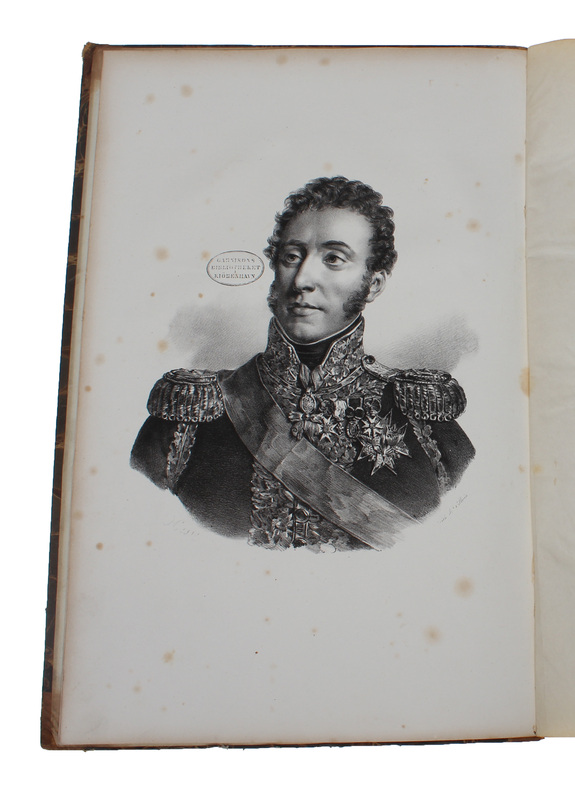
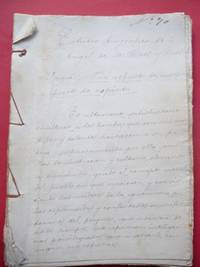
190015.0249s.a. aprox. 1900. Cosido. 16.5x22.5. unknown
Carmichael Alonso Libros · Espagne600,00 €
200 résultats
1892057537A. Denys reliure Rigide Bruxelles 1892 324 pages en format 22 - 29.5 cm - reliure rigide en percaline au dos avec titre en dorure - illustrations
1890057514A. Denys reliure Rigide Bruxelles 1890 374 pages en format 22 - 29.5 cm - reliure rigide en semi cuir avec titre en dorure - illustrations - quelques rousseurs
190015.0249s.a. aprox. 1900. Cosido. 16.5x22.5. unknown
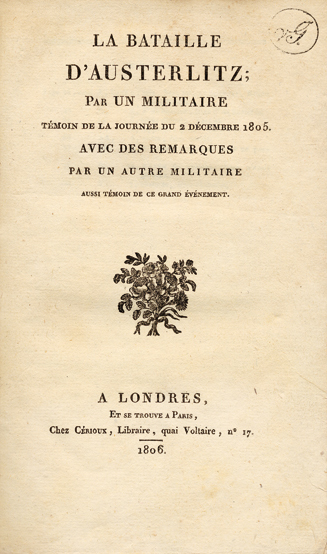
180615664Londres et Paris, Cérioux, 1806 ; in-8 ; demi-veau glacé marron clair à petits coins, dos à faux-nerfs décoratifs dorés, fleurons-soleils dorés, pièce de titre rouge (reliure de l'époque) ; 123 pp., (1 bl.), (1) f. d'errata.
184411584Paris, Maison (Lyon, Imprimerie Louis Perrin), 1844 ; in-8, broché ; (4), VII, (1 bl.), 292 pp., (1) f. d’errata, couverture beige très clair.
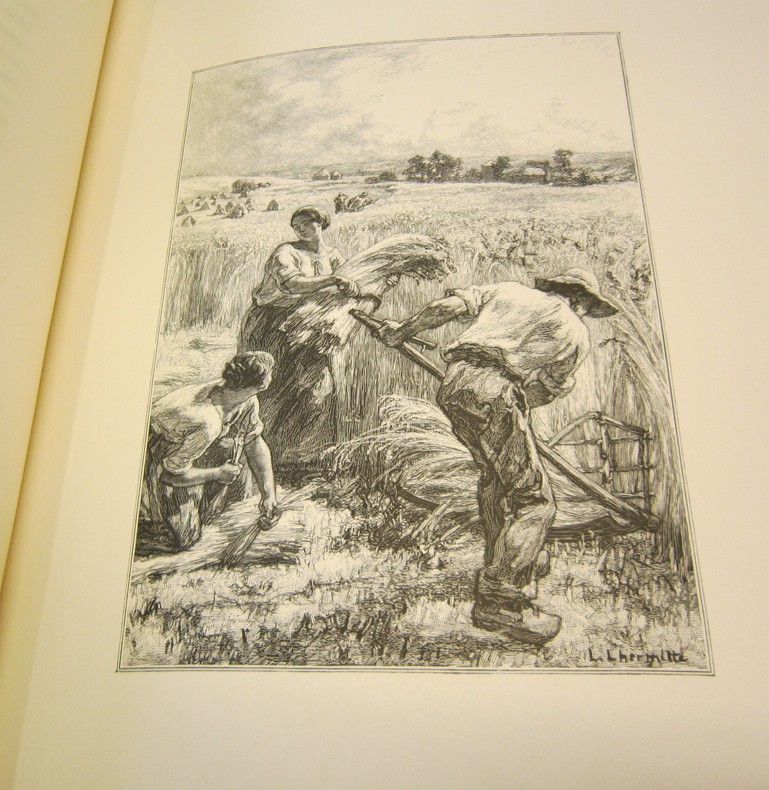
1888003352Paris, Librairie Artistique - R. Launette et Cie. in-4 (32,3 x 24 cm), 237 pp., reliure d'époque demi-chagrin vert, dos à cinq nerfs orné de fers champêtres, couverture illustrée conservée (mais pas le dos). Ouvrage illustré de compositions et dessins de Léon Lhermitte, gravures sur bois de Clément Bellenger. Tirage total à 600 exemplaires, celui-ci numéroté sur vélin blanc pour le texte, les gravures hors texte étant sur papier vélin de cuve teinté. Dédicace de l'auteur imprimée au début du volume : "A Madame la baronne Nathaniel de Rothschild, ce livre de nature et d'art est respectueusement offert, André Theuriet". Exemplaire exempt de rousseurs ou de piqûres, mais dos uniformément passé.
182459399Paris Cordier 1824. Folio. Contemp. hcalf. Raised bands. Spine a bit rubbed. Stamp on title-page. title-vignette. Lithographed portrait as frontispiece. 82 pp. 2 plates 1 engraved and handcoloured map 40 x 51 cm. "Carte d'Espagne pour servir. par Ch. Picquet". Printed on thick paper. A long dedication-letter in French inserted giving the volume to the Danish King Frederik VI 10 July 1825 probably signed Louis Antoine the editor. With the crowned gilt monogram of King Frederik VI on upper board. hardcover
182459399Paris, Cordier, 1824. Folio. Contemp. hcalf. Raised bands. Spine a bit rubbed. Stamp on title-page. title-vignette. Lithographed portrait as frontispiece. (82) pp., 2 plates, 1 engraved and handcoloured map (40 x 51 cm.) ""Carte d'Espagne pour servir... par Ch. Picquet"". Printed on thick paper. A long dedication-letter in French inserted, giving the volume to the Danish King (Frederik VI) 10 July 1825, probably signed Louis Antoine (the editor). With the crowned gilt monogram of King Frederik VI on upper board.
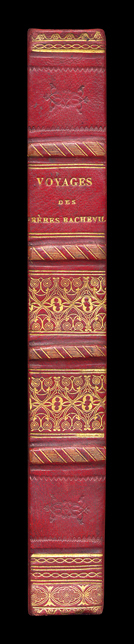
182215861Paris, Béchet Ainé et chez le Capitaine Bacheville, 1822 ; in-8 ; demi-veau glacé grenat à petits coins, dos à quatre nerfs plats décorés encadrant le titre et deux caissons décorés "à la cathédrale", palette et roulettes décoratives dorées, fleurons et roulettes à froid, tranches marbrées (reliure de l'époque) ; XII, 432, (2) pp., frontispice lithographié par G. Engelmann montrant les frères Bacheville se séparant pour toujours en Turquie d'Europe.
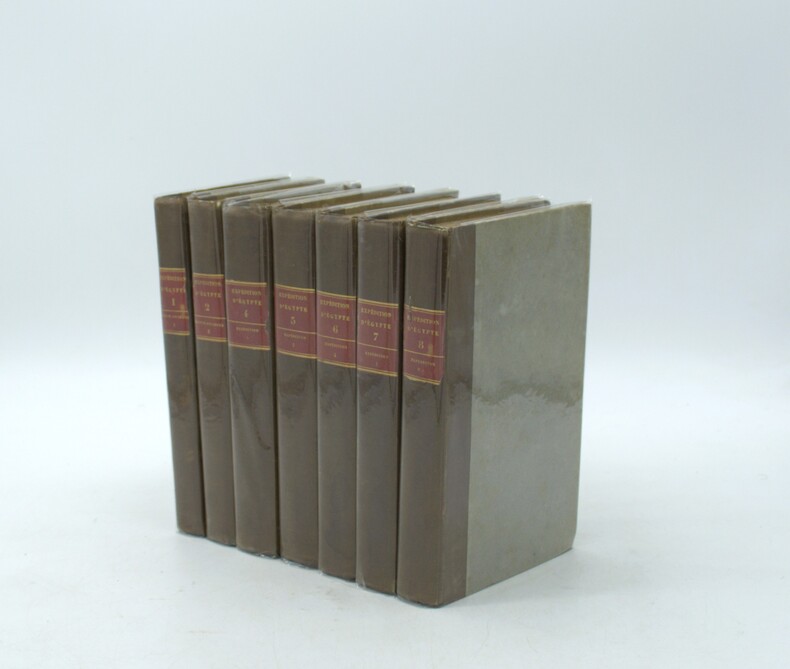
1830PHO-2172Paris, A.-J. Dénain, 1830–1836. Ensemble de 7 volumes in-8 de texte sur 10, comprenant les tomes I, II, IV, V, VI, VII et VIII (manquent les tomes III, IX et X ; sans les volumes d’atlas). Demi toile postérieure, pièce de titre et tomaison cerise, petits frottements, quelques rousseurs. Illustré de 131 portraits des principaux personnages ayant participé à l’expédition, dessinés par Dutertre
1897170872Dehra Dún India: Surveyor General of India 1897. One of the greatest difficulties felt at the outset of the Tirah Campaign was the lack of topographical information Rare map issued on the eve of the Tirah Campaign; 750 copies were printed at the Office of the Trigonometrical Branch Survey of India in August 1897 two months before the outbreak of hostilities. Printed on linen and clearly intended for use in the field attrition rates would have been high: we have traced no copies among institutional libraries. In October 1897 one of the largest operations on the North-West Frontier involving 35000 troops under Lieutenant-General Sir William Lockhart was launched against the Afridi and Orakzai in the Tirah. "The two tribes had attacked several forts but also captured posts in the Khyber Pass which bordered the north of their territory. As Lockhart's main force crossed the Samana Mountains it found its route blocked by 12000 tribesmen occupying a steep ridge at Dargai" National Army Museum. Lockhart's troops suffered heavy casualties in the open ground in front of the Afridi positions but in a famous action the heights were stormed by the 1st Gordon Highlanders and 1st/2nd Gurkhas to the sound of Piper George Findlater's bagpipes. Lockhart's force then fought its way into Tirah and from its fortified camp at Maidan columns fanned out to pacify the surrounding valleys and regain control of the Khyber Pass. The expedition lasted until January 1898. As Captain H. L. Nevill points out in Campaigns on the North-West Frontier 1911 "one of the greatest difficulties felt at the outset of the Tirah Campaign was the lack of topographical information Many of the parts about to be invaded had never been visited by Europeans". An 1897 map entitled Rough Map of Tirah and Surrounding Country scale 1 inch = 2 miles measuring 930 x 60 mm issued at Simla by the Intelligence Branch is known only by the copy at the British Library. Photozincographed map printed on linen unfolded 740 x 1020 mm; folded 260 x 200 mm; scale 1 inch = 2 miles. Housed in a custom green cloth flap case gilt-lettered spine. Creased where folded peripheral toning some soiling on verso yet this remains in very good condition. hardcover
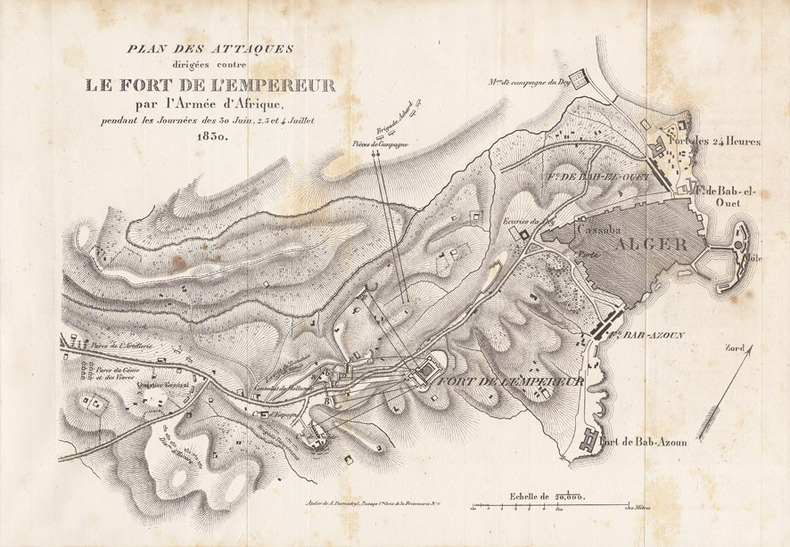
183017233Paris, Ladvocat ; Marseille, Camoin ; Toulon, Laurent, 1830 ; (4), II pp. , (1) f. blanc, 406 pp. , (1) f. errata, très grand plan dépliant lithographié de Alger, Djezair, avec le port, les fortifications, etc.suivi de : [Fernel, commandant] Campagne d'Afrique en 1830, avec le portrait du Dey d'Alger, le tableau de l'organisation de l'armée, et d'un plan des travaux du siège. Paris, Théophile Barrois et Benjamin Duprat, 1831 ; (4), VII, 133 pp. , (1) f. , 5 pp. soit 10 tableaux dépliants, plus dépliant des attaques.Reliés en un volume in-8, demi veau glacé fauve, dos lisse à faux nerfs dorés, titre et fleurons dorés (reliure de l'époque).
1856006302Boston: John P. Jewett & Co. 1856. Book. Very Good. Leather. First Edition. 24mo - over 5" - 5¾" tall. This was the platform for the first national Presidential election 1856 with a Republican candidate John C. Frémont. A RARE publication in its own right Rare Book Hub notes last copy appearing in a dealer catalog in 1970. This copy rendered unique and historically significant by the original owner's addition of 78 blank pages which he mostly filled with pasted in contemporaneous newspaper clippings including 7 pp. of the Democratic Party Platform of 1856. Other significant clippings are headed: The Sanford Letter Wash. Aug. 21 1848 2 pp.; Kansas Affairs-Official Instructions to Gov. Geary and Gen. Smith Wash. Sept.3 1856; Kansas Slave Code 4 pp.; Who Are the Disunionists ; 4th of July Toasts in South Carolina: The White Man Shall Be a Slave If a Laborer: Slaves Horses and other Cattle a Sale by J.B. Sproull & Co. 1855; and The Buchanan Democracy Hate Freedom. Overall approximately 40 newspaper clippings pasted in with some marginal writings and notations in ink in the handwriting of the original owner who although unnamed appears to have resided in Greene Co. OH and was most definitely a Republican ! Very Good bound in sewn brown leather 78 blank pp. with contemporary newspaper articles pasted onto most of the blank pages; the Republican Party Platform 36 pp.; Declaration and Constitution 32 PP. Whenever any other copy of the 1856 Platform comes to market it is unlikely to be as intriguing to historians and collectors as this copy. John P. Jewett & Co. Hardcover
1856006302Boston: John P. Jewett & Co. 1856. This was the platform for the first national Presidential election 1856 with a Republican candidate John C. Frémont. A RARE publication in its own right Rare Book Hub notes last copy appearing in a dealer catalog in 1970. This copy rendered unique and historically significant by the original owner's addition of 78 blank pages which he mostly filled with pasted in contemporaneous newspaper clippings including 7 pp. of the Democratic Party Platform of 1856. Other significant clippings are headed: The Sanford Letter Wash. Aug. 21 1848 2 pp.; Kansas Affairs-Official Instructions to Gov. Geary and Gen. Smith Wash. Sept.3 1856; Kansas Slave Code 4 pp.; Who Are the Disunionists ; 4th of July Toasts in South Carolina: The White Man Shall Be a Slave If a Laborer: Slaves Horses and other Cattle a Sale by J.B. Sproull & Co. 1855; and The Buchanan Democracy Hate Freedom. Overall approximately 40 newspaper clippings pasted in with some marginal writings and notations in ink in the handwriting of the original owner who although unnamed appears to have resided in Greene Co. OH and was most definitely a Republican ! Very Good bound in sewn brown leather 78 blank pp. with contemporary newspaper articles pasted onto most of the blank pages; the Republican Party Platform 36 pp.; Declaration and Constitution 32 PP. Whenever any other copy of the 1856 Platform comes to market it is unlikely to be as intriguing to historians and collectors as this copy. First Edition. Leather. Very Good. 24mo - over 5" - 5¾" tall. John P. Jewett & Co. Hardcover books
185721645Paris, Perrotin, 1857 ; 9 tomes in-8°, demi-veau glacé rouge, dos lisse à faux nerfs dorés, fleurons romantiques à froid (reliure de l’époque) ; 454 ; 413 ; 520; 481 ; 400; 431 ; 419 ; 441 ; 456 pp., portrait du duc de Reischtadt en couleurs, portrait du duc de Raguse, 4 fac-similés, 1 tableau dépliant et 2 cartes dépliantes.
188915949Paris, A. Le Vasseur, 1889 ; in-4 ; large demi-maroquin à coins bleu marine, dos à nerfs, titre doré, tête dorée sur témoins, couverture illustrée et dos conservés, non rogné (V. Champs) ; XVI, 518, (2) pp.
1802PHO-2073S.L (Paris), sd (1802), un volume folio (565x410mm) comprenant 131 planches (143, manque les pl. 10-14-24-27-33-41-54 bis -76-81-84-90-91). Demi basane fauve, auteur et titre au dos (reliure moderne), réparations sur les bordures de 3 planches. Quelques rousseurs
187563022Paris, G. Masson, 1875, in-4, de (4), XV, (1), 385, (3) pages et 16 planches, cartonnage de l'époque à la bradel, pièces de titre vertes, Première édition, rare. 16 planches montées sur onglets donnant 48 photographies originales contrecollées (et non 45 comme signalé par erreur sur la page de titre) ; figures sur bois dans le texte. Premier et seul mémoire publié : Physiologie de la respiration chez les oiseaux; anatomie de l'appareil pneumatique-pulmonaire, des faux diaphragmes, des séreuses et de l'intestin chez le poulet. Superbe exemplaire, non coupé, aux tirages très bien conservés, de cette oeuvre précoce d'Histoire Naturelle illustrée par la photographie. Couverture rigide
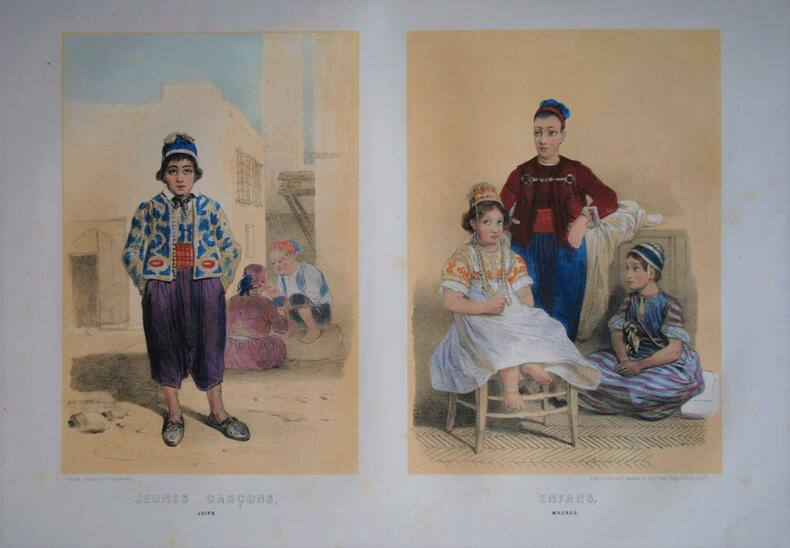
1843P1-3DA Paris, Chez J. Delahaye Éditeur, 1843. 1er Volume , 1ere partie , Province d’Alger : I. XIV-(2f.)-80pp , illustré de 51 planches et 2 cartes coloriés aux contours , un frontispice teinté , un titre chromo lithographié en couleur . Plat cassé , dos frotté , tache sur les 18 premiers feuillets ( en s’amenuisant) , 6 planches brunies , 2 légèrement brunies , quelques rousseurs . 3eme Volume , 4eme partie : Province de Constantine : IV. (2f.)-42 pp , illustré de 16 planches , 1 planche brunie , quelques rousseurs . 5eme partie : Races algériennes, monnaies, flore d'Algérie : (2f.)-21-18-16-(1f.) , illustré de 3 planches (sur 6) de races algériennes dont 1 en couleurs (enfants) et 10 planches de botaniques en couleurs , 2 planches brunies dont une légèrement. Plats frottés avec manque de papier , dos frotté , manque au dos , coins usés plus 103 lithographies à deux teintes de vues et portraits dont 1 en double exemplaire, 2 cartes in fine qui correspondent aux planches des 1ere , 2eme et 3 partie. Importante mouillure en marge supérieure touchant parfois le haut de la lithographie, rousseurs (une douzaine de planches uniformément roussies), une planche volante. La partie lithographiée conserve toutefois assez fréquemment sa fraîcheur. In-folio à l’italienne, broché, couverture manquante. Au total un titre chromo lithographié compris dans la pagination et 133 planches lithographiées à fond teinté dont 1 en couleur , 2 cartes et 10 planches de flore à plusieurs sujets coloriés.
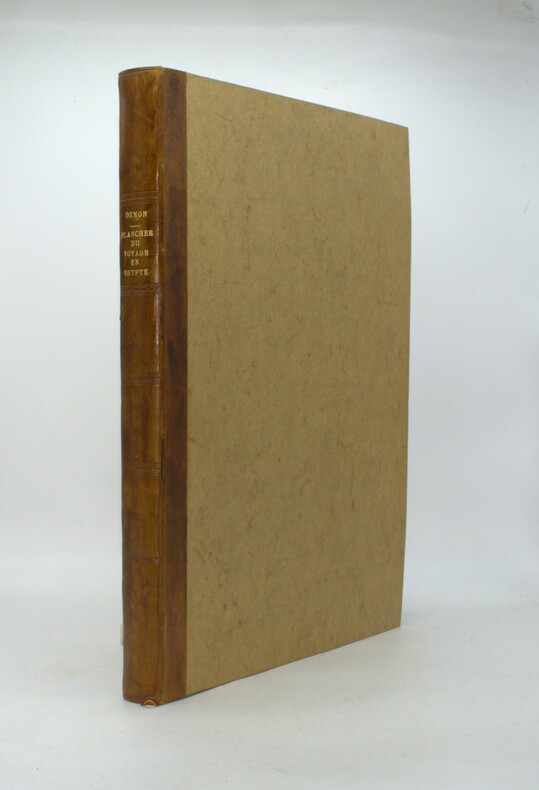
1829PHO-1464Paris, Henri Gaugain et Cie -Caillou., 1829. 2 volumes de texte in-8, et un atlas grand in-folio (440x600),illustré du portrait de Vivant Denon en frontispice gravé par Garnier d'après R. Lefèvre et de 143 planches dont deux cartes., relié demi-veau époque , dos lisse avec titre et tomaison , coins usés ,frottements aux plats , frottements, coiffes usées et traces de réparations (atlas) , peu de rousseurs dans le texte .
1851STLD0090München, Cotta (1851). Quer-Folio, 1 lithogr. Titel, 24 lithogr. Taf. m. Textblättern, OHLn., stärker berieb., Ecken u. Kanten berieben, vord. Deckel fleckig. Blätter leicht stockfleckig, Textbll. tlw. zerknittert, randrissig u. staubrandig. Die Abbildungen zeigen Szenen aus dem italienischen Aufstand gegen die Habsburger: Reitergefechte, Straßenkämpfe, Belagerungen in norditalienischen Städten. Lipperheide Qc 20.
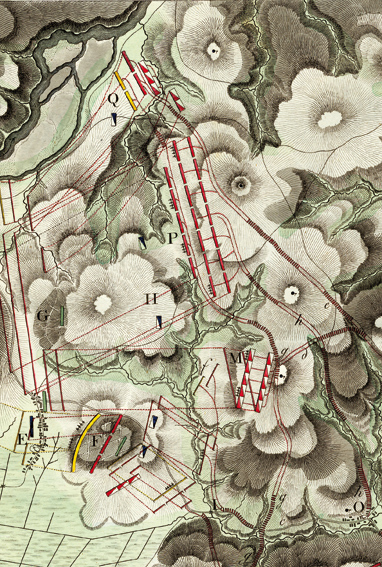
180815548Wien, Aus der Kaiserl. Königl. Hof-Und Staatsdruckerey (Vienne, Imprimerie de la Cour et de l'État), 1808 ; in-folio ; bradel de papier marbré, pièce de titre vert foncé (reliure de l'époque) ; (4), 169 pp., 25 cartes et plans gravés par Johann Renard, Kilian Parheimer, Ant. Benedict et Heironymus Benedicti, entièrement aquarellés, 1 accompagnée de 2 détails et 5 avec des détails mobiles qui permettent de suivre les mouvements dans le temps.
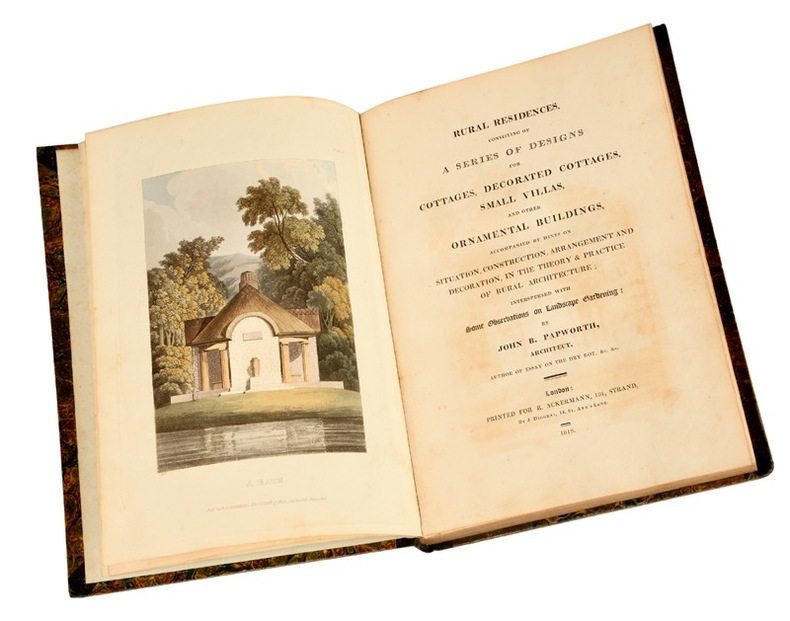
181821571London, Diggens pour Ackermann, 1818 ; petit in-4°, demi-veau vert foncé, dos à nerfs décoré de fleurons à froid et de palettes, filets et titre dorés, roulette décorative à froid d’une part et d’autre du dos (reliure romantique de l’époque) ; VIII, 106, [4] pp. et 27 planches hors-texte très finement aquarellées, avec les plans.
1843PHO-2292Paris, Chez J. Delahaye Éditeur, 1843. Cinq parties reliées en 3 volumes in-folio demi basane brune à coins, dos lisse cloisonné de filets or, titre doré (Koenig). Quelques planches roussies, comme toujours, petites rousseurs.
18142677Hunthill House Scotland 1814. 4to 230 x 185 mm. 10 233 4 pp. Written in an italic hand in English with occasional corrections or additions in a different hand on wove paper watermarked Budgen & Wilmott / 1812. Four unnumbered pages of French text at front and four at back the latter dated 27 May 1814 in a different hand apparently the author's on different paper with no visible watermark. Very good; some occasional spotting. Contemporary red straight-grained morocco gilt edges scuffed and scraped joints strained head of spine chipped. A first-hand unpublished memoir by a French army officer of the terrible Peninsular War. The narrator was one of few survivors of the surrender of French forces after the Battle of Bailén in July 1808. The background to this event was Napoleon's attempt to complete the isolation of England from the continent by sending a French army into the Iberian Peninsula to seize the coast of Portugal and occupy Spain. Napoleon later referred to the Peninsular War characterized by appalling cruelty on both sides as the 'Spanish ulcer'; it was to be one of the primary factors in his downfall. Although written in a matter-of-fact tone the details of this memoir are searing. General Pierre Dupont de l'Étang was charged with securing French control of the major cities in Spain. Dupont's 20000 men had initial success but as they penetrated deeper into Spain they faced increasing resistance. The present diary traces the route and experiences of Dupont's army to its furthest point of penetration into Spain: Córdoba. There after a particularly bloody and cruel occupation the army was forced to withdraw and was soon overwhelmed. Dupont surrendered his army at Bailén. Originally promised safe passage most of the French were slaughtered immediately after their surrender. The start of the Peninsular War marks the commencement of the memoir written by H. de Montvaillant an officer from Montpellier who was serving in the second Corps d'Observation of the Gironde placed under the direction of General Dupont. Although the starting date of the campaign is generally accepted as March 1808 by Montvaillant's account the French had already occupied the town of Vittoria 50 miles west of Pamplona by Dec. 22 1807. By January 9 1808 French troops had advanced to south of Burgos heading toward Valladolid. At every stopover small detachments were left behind to guard the roads thereby diminishing the strength of the army as it travelled. Spanish guerrilla activity took a toll on the troops; so much so that the author records that the troops had to "redouble our vigilance and take measures the most severe ever adapted to ensure our safety" p. 58. On Feb. 16 they entered Medina del Campo on their way to Madrid. Montvaillant records his impressions of the city its palaces and inhabitants. Toledo was the next destination where he notes a visit to the palace library and the suppression of an uprising led by monks. By the end of May the French had occupied Consuegra and entered La Carolina in Andalusia. It is at this point that the narrative takes on an ominous tone. About to enter Seville Montvaillant notes a change in circumstances in the countryside and the inhabitants. The population is abandoning villages and fleeing. He records that the senior officers assumed that the army would only be harassed by small bands of "brigands" p. 84 a far cry from the massive insurgency that it encountered: "We learned that the insurgents each day gathered strength and that the Junta of Seville was determined to stop us in our march. The following days we got to the little town Baylen Bailén in whose plains two months afterwards our destiny was decided" p. 86. The French attacked and sacked the city of Córdoba: "Neither tears promises or humble supplications could arrest the thirst for pillage." p. 89; discipline was nonexistent and the drunkenness and looting continued for eight days. Soon after Montvaillant is ordered back to the village of Alcolea not far from Bailén to guard a bridge crossing. While there he discovers the slaughter of the French sick and wounded who had been left along the line of march while the main body of General Dupont's troops had taken Córdoba. The army had moved back to Andujar near Bailén and encamped. Montvaillant records that the general staff soon realized that the French were now outnumbered and that the opposition had organized itself. Dupont's army was isolated without hope of reinforcement or re-supply defending a garrison at the village of Andújar situated on a flat plain in the scorching sun. The narrative is now of troop dispositions losses tactical mistakes errors of the general staff and increasing difficulties. Dupont's surrender came on July 20 1808. The officers were segregated from the defeated army before being escorted supposedly to France. Most of the remaining army was slaughtered within days. Montvaillant records the details of his months-long "death march" southwards to the coast finally arriving at Jerez de la Frontera near Cádiz to await embarkation to France. This never occurred. The officers' captors kept them in Jerez having discovered that the ruling Junta of Seville had abrogated the surrender treaty and that the inhabitants were waiting to massacre the French on their approach to Cádiz. Montvaillant now fills his account with anecdotes of captivity and of the officers' horrendous treatment at the hands of their escorts and guards. He is unclear as to exact dates but it seems that the French captives were held at Jerez until mid-December before being hastily driven aboard ships to sail for the Balearic Islands p. 141. A severe storm intervened and they were blown off course to Africa finally coming to port at Gibraltar; several days later they were already back in Andalusia at Málaga. Then after more storms and much sailing they finally made the Balearics where they were exiled to the desert island of Cabrera. There some 4400 surviving men and officers were forced to survive as best they could p. 148. Almost 250 officers were collected from this exile after a month and taken to the capital Palma. Imprisoned there though in better conditions than previously this group of officers waited; nearly half would be massacred during a riot and assault on the prison by the inhabitants of Palma. By March 1809 only 140 of the original 250 rescued officers were alive and were returned to Cabrera where the living conditions were desperate pp. 155-165. Despite this the officers were able to conjure up distractions. There is an account of theater productions dances and the jealousy and bickering among those playing female roles in these performances. Montvaillant comments that the theatrical chronicle of Cabrera would make quite a book. Eventually the officers were placed aboard an English ship. On August 4 when they were off Cape Palos near Cartagena there were rumors of a prisoner exchange which again did not occur. After several weeks aboard the English ship Montvalliant and his companions were disembarked at Portsmouth. He continued on to Salisbury then embarked again for Leith en route to his final destination in Scotland Jedburgh where he remained in exile until the accession of Louis XVIII in 1814. The text is written in an occasionally stilted English. Eight pages of notes in French by the author are inserted four at the beginning using wax seals to insert the bifolium and four at the end dated May 27 1814. The French preface consists of a romanticized fictionalized account of the author's Scottish sojourn including a temptress fairy and concluding with the author's promise to never forget his friends in Scotland. The English text is preceded by the title-leaf and a one-page dedicatory poem introduced by a statement that these "`Recollections' in an English Garb are presented by the sincerest of Friends to the Author" and dated Hunt Hill 1 January 1814. The first of the four final pages in French provides some information about the history of the manuscript the remaining pages contain literary notes including translations into French of poems by Robert Burns and Sir Walter Scott. According to these comments the diary was originally written in French and was translated into English by the narrator's benefactors in Jedburgh. During his years of exile Montvaillant had befriended a well-off family Rutherford the owners of nearby Hunthill House to whose three young daughters he became deeply attached. Without them he claims he would not have survived the loneliness of his exile. To pay them homage and in acknowledgement of his gratitude he dedicated his memoir to them. His friends retained the original French version as a valued keepsake of their friend and an engrossing biographical narrative and presented him with this translation which he brought back to France planning to render it anew into French to share with his family and close friends. The annotations in the text appear to be the author's. He emphasizes that he plans to keep the manuscript unpublished; perhaps the memories were too painful. unknown books