CERVANTES SAAVEDRA, Miguel de (Jacob Campo WEYERMAN translator; Antoine COYPEL illustrator).Biblio.com
4 280 résultats
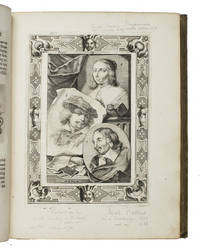
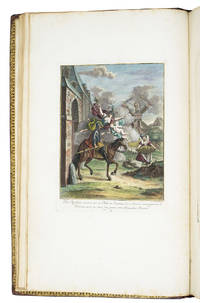
1746M2HB4ES5PXB4The Hague: Pieter de Hondt 1746. Contemporary richly gold-tooled dark red morocco by the so-called Van Damme bindery in Amsterdam sewn on 7 supports each board with Van Dammes typical hourglass- or vase- or flask-shaped central cartouche with a starry sky on a black ground here showing a short-stemmed chalice or goblet with fire or flame-like leaves like a snake plant Dracaena trifasciata in the cartouche and a basket of flowers topping the cartouche the whole in an elaborate frame built up from hundreds of impressions of numerous small tools the spine-title in gold on a black ground in the 2nd of 8 compartments each of the other 7 with flowers other decorations and a small flower in a pot gilt edges. With a tissue guard-leaf before each plate. Large folio 42 x 27 cm. Title in red and black with an engraved vignette Quixote and the windmill and 31 engraved illustration plates all coloured by a contemporary hand heightened with gold and set in in a gilt frame. Further with large woodcut initials and tailpieces and each text page in an ornamental frame built up from typographic ornaments the frames not in the 4to issue. Very rare large-paper copy of the first and only edition of a "free and joyous" Dutch translation of Cervantes's Don Quixote with 31 rococo style plates in spectacular contemporary hand colouring and with gold highlights. The plates have been engraved by leading Dutch artists Bernard Picart 12 Jacob van der Schley 13 Pierre Tanjé 5 and Simon Fokke 1 after paintings by leading French artists Antoine Coypel 25 Charles-Nicolas Cochin 2 Pierre-Charles Trémolières 2 François Boucher 1 and Jacques-Philippe le Bas 1. The impressions are crisp and the hand colouring is bright and of the highest quality with subtly graded tones and highlights in gold. Antoine Coypel 1694-1752 responsible for the design of most of the illustrations was one of the most important French history painters of the early 18th century. His Don Quixote paintings are highlights in his oeuvre and can be found in several museum collections.The Dutch edition was translated by Jacob Campo Weyerman 1677-1747 one of the foremost Dutch authors of the Enlightenment who was known for his merry style. He added to this edition a Dutch translation of the biography of Cervantes by Gregorio Mayans 1737 and explanatory texts to the plates. De Hondt issued the present edition in at least three formats: 4to folio on ordinary paper and folio on large paper. The present copy is the large-paper folio issue which is indeed very rare: several libraries have folio editions on ordinary paper usually about 35 cm tall but we have not located a copy of the large folio issue in any library. The only other large-paper copy we have been able to trace is slightly smaller.Cervantes's Don Quixote first published in Spanish 1605-1615 was first translated into Dutch in the early 17th century and went through several editions until 1732. Engraved prints after Coypel's famous Don Quixote paintings started circulating in 1734. De Hondt took this opportunity to publish a new Dutch translation with the Coypel illustrations and some others. He asked Weyerman who was already a famous writer but was imprisoned for slander to translate the text. He also commissioned new plates after Coypels paintings from the leading Dutch engravers. This came together in what became a masterpiece of rococo book production and the present hand-coloured copy of the large folio issue is the outstanding result.The Van Damme bindery was the "most important Amsterdam workshop of the 18th century" and is praised for the "high quality of its work" Storm van Leeuwen: 89 bindings are attributed to it. Although its earliest dated binding is from 1747 the present work and two others in similar Van Damme bindings in the British Library were printed in 1746 so these bindings may be among Van Dammes earliest work made in or soon after that year. Three of the six Van Damme bindings in the British Library as well as several examples in Storm van Leeuwen have a similar cartouche with a black interior but none includes the present vase or goblet of flames or flame-like leaves: we have not identified the patron.The boards are very slightly rubbed the corners and head and foot of the spine have been reinforced. A few small spots in the foot margin of the title page and slight browning of the paper of 2 quires. Otherwise in very good condition.l Arents Cervantes in het Nederlands 27: "Kneppelhout nr. 2587 gr. fol. rood verg. marok. verg. op sn. Zeer fraai ex. op gr. papier. Het titelvignet en de 30 prtn. allen alleruitmuntendst uit de hand gekl. en met goud afgezet. In oud-Holl. prachtbd. van rood marokyn. De rug verg. in afdeel. De platten met een zeer breed verguldsel randwerk en verg. middenfig. op zwart leder. Verg. op sn. Gekocht door Hr. Elte voor fl. 420."; Cohen & De Ricci 216 "superbes illustrations; livre tres recherche"; Van Gorp pp. 161-162; Mededelingen van de Stichting Jacob Campo Weyerman 18 1995 passim; Rius I 806; STCN 197115810 8 copies; Marleen de Vries Aanzet tot een bibliografie van Jacob Campo Weyerman 1990; cf. for the binding: Storm van Leeuwen I pp. 460-499. Pieter de Hondt, unknown
162183(Hanau), (1813-1814) 40 x 55,5 cm, Gouache sur papier contrecollée, cadre de bois.
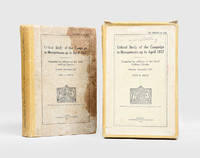
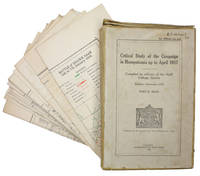
1925185029Calcutta: Government of India Press 1925. The ground enormously favoured the defence First edition of this detailed campaign history issued for official use only and complete as a two-part set. Nine sets are held institutionally but we have traced only a standalone copy of Part II in recent commerce. Comprehensive in scope the work was compiled for officers studying military strategy and tactics and was intended to be read alongside the published volumes of Brigadier-General F. J. Moberly's History of the Great War: The Campaign in Mesopotamia 1914-1918. "Where on point of fact the story is at variance with the version given in the official history it has been allowed to stand unaltered nor have the criticisms been changed in any way" introduction. The contents grew out of a 1923 tour of the Mesopotamian battlefields by personnel from the Staff College Quetta and several chapters were contributed by the military strategist and historian Major General Sir Wilkinson Dent Bird. Chapter XXV offers insightful reflections on the affect of terrain and geography on the prosecution of the war. This point is also stressed by plates reproducing aerial battlefield photographs that were taken specially by the RAF. The table of contents for Part II calls for 26 maps but the 26th "Explanation of the method of giving map co-ordinates" was likely either never issued or only issued with a few copies. It is not included in the set held in the India Office records at the British Library nor in the other copy traced in commerce. Our copy similarly has only 25. Sets are recorded at the British Library Imperial War Museum King's College London the London Library Texas A&M SUNY Potsdam Stellenbosch Defence Science and Technology Group Australia and UNSW Canberra Academy the map volume incomplete. WorldCat also lists a holding at Calgary but this seemingly includes Part I only. 2 vols octavo. Part I: 20 half-tone plates that facing p. 186 not called for: "Part of Sinn Abtar Redoubt Looking East". Part II: 25 maps some folding. Part I: Original drab boards yellow cloth backstrip spine and front cover lettered in black. Part II: Original light yellow linen map case printed title label. Front free endpaper and map case with ownership signature of Captain A. G. Armstrong 8th Indian Infantry Brigade which served in the Mesopotamian Campaign; occasional pencil sidelining likely his internally. Volume and case worn as expected for this type of material but sturdy Part I with browning and staining to front cover and at places internally the maps in Part II with edge wear and creasing from evident use a few small splits: a very good set. Not in Wells. hardcover
Signed, without inscription, by both authors upon half-title page. [xiv], 382 pages. Footnotes. Index. "Offers an utterly persuasive prophecy about a new American era that will begin just after the millennium." - dust jacket. Yellow high-lighting to eight pages. Light overall wear. Binding tight. Dust jacket now preserved in archival-grade Brodart. Today, Neil Howe applies the Strauss-Howe generational theory with consulting companies he founded with Strauss, who passed away in 2007. Book
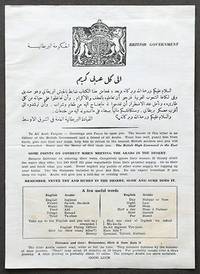
1940170773London: British High Command in the East c.1940-43. Greetings and Peace be upon you A rare chit for RAF pilots to carry during the North Africa Campaign 1940-3 in case of being lost or captured. Written for the benefit of British personnel in the field the focus is simple and concise. The first paragraph in English and Arabic presents a simple greeting asking for hospitality. The following gives points of conduct such as "remove footwear before entering their tents" and "do not expect breakfast if you sleep the night. Arabs will give you a mid-day or evening meal". A word list includes translations of "friend" "food" "tired" and "enemy". The document was colloquially known as a "goolie chit" a "throwback from an earlier war when Royal Flying Corps pilots in India and Mesopotamia needed security in the form of a document that promised a reward to anyone who would bring a British aviator back to British lines. It was so called because local tribesmen in the area were said to turn over aviators to the women who castrated them for use as servants" Feast. We have encountered two other issues: one slightly simplified British issue and an American issue carried by all pilots and crewmen of the Twelfth Air Force with a message from President Roosevelt instead of the British High Command in the East. Quarto single-sheet 244 x 173 mm text in Arabic and English on recto only edge-mounted on thick black card within white card mount all on laminate board presented in dark oak frame with conservation acrylic glazing 353 x 280 mm. Vignette of the Great Seal of the Realm at head. Backed on coarse linen minor foxing sometime folded. A very good example of a fragile publication. "Notes for Communicating with Arabs" IBCC Digital Archive document 25543; Sean Feast Coming Down 1988. unknown
First and only edition. Title-page (with large lithographed image of a country house) plus one hundred gorgeous lithographs by Victor Petit, each depicting a a country house or related structure, such as a gazebo, belvedere, pavillion, etc. COMPLETE. Printed on very fine bright white wove paper. Aside from being an architectural and art-historical document of the first order of importance, this set of lithographs is a work of great artistic merit and beauty. Folio. LOOSE AS ISSUED IN THE ORIGINAL PRINTED CLOTH-BACKED BOARD PORTFOLIO, WITH CLOTH TIES. Portfolio case a bit worn but still solid. Plates FINE AND BRIGHT. An incredibly fresh set. Rare and important.
1843PHO-2292Paris, Chez J. Delahaye Éditeur, 1843. Cinq parties reliées en 3 volumes in-folio demi basane brune à coins, dos lisse cloisonné de filets or, titre doré (Koenig). Quelques planches roussies, comme toujours, petites rousseurs.
197355752Washington DC: GPO 1973. fair to good. 17000 approx. complete 30-vol. set wraps illus. charts some fold-out tables footnotes some fading and wrinkling to spines. Complete 30-volume set of the Watergate hearings including 26 volumes of hearing transcripts 1 volume of indexes 2 volumes of appendices and 1 volume final report. Contents include Books 1-9 Phase I: Watergate investigation 9 volumes; Books 10-12 Phase II: Campaign practices 3 volumes; Book 13 Phase III: Campaign financing; Books 14-17 Milk fund investigation 4 volumes; Books 18-19 Use of incumbency-responsiveness program 2 volumes; Books 20-24 The Hughes-Rebozo investigation and related matters 5 volumes; Book 25 Supplemental material on campaign practices and finances; Book 26 Appendix to the Hughes-Rebozo Investigation and exhibits relating to chapter 8 of the final report; volume 27: Indexes to the Public Hearings; volumes 28-29: Appendix to theHearings Legal Documents Relating to the Select Committee Hearings Part Iand Part II; volume 30: The Final Report Report No. 93-981. Small piecesmissing to base of spine in a few volumes some soiling and small stains tosome covers some pages discolored volume 18 has volume number written on spine and ink comment and soiling on front cover and some ink marks on a few pages. Approximately 17 000 pages of the seminal investigation of Presidential conduct on the 20th century forecasting the later Clinton investigations but perhaps rising to a higher level than the investigationsat the end of the century. GPO paperback
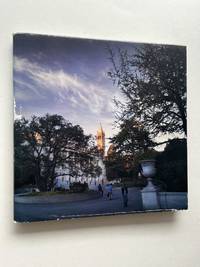
2053Berkeley: University Relations 2008. First edition. Hardcover. Fine/Very good. An uncommon photo book that commemorates the launch of the Campaign for UC Berkeley in 2008 highlighting the campus in pictures and in words from renown alumni and others. This is Joan Didion's copy with a university notecard to her laid in from one "Mary Kay" likely someone in University Relations. It reads in full: "Dear Joan Greetings from Berkeley! We have found yet another way to use your inspirational words about Berkeley. The enclosed book include the summary of your essay in 'There Was Light'--the version you approved for the television spot--as well as another well-used quote of yours at the end of the book. Should you ever want to read your essay again there are many people who have asked about it and would love to hear you read it again--or for the first time. I continue to follow your work and life and admire your strength and optimism. I hope this note finds you filled with hope for the new year. With warmest regards Mary Kay." There Was Light: An Autobiography of a University: Berkeley 1868-1968 referenced in the note was published in 1970 and featured essays about the university from thirty-one notable alumni including Didion. She attended Berkeley from 1953-1956 and went on to become one of California's greatest chroniclers as literary journalist and essayist. See photos for the pages that hold Didion's words. A short quarto in denim blue cloth with the title stamped on the front board; dark blue endpapers and a transparent page guarding the half-title; 130 pages. A short introduction from Chancellor Robert J. Birgeneau on the photo-illustrated jacket's front flap. The jacket depicts the campus's famous Sather Tower The book is fine; the jacket is very good with rubbing to all edges and some faint dampstaining at the center of its spine mainly visible from the jacket's interior and with no discernible effect on the book itself. An incredible UC Berkeley association copy and keepsake; we dare say this would make a one-of-a-kind graduation gift. University Relations hardcover
1729ABC_45605The Hague widow of E. Boucquet H. Scheurleer F. Boucquet J. de Jongh 1729 vols. 1-3; 1729. 4to. Dordrecht Ab Blussé & son 1769 vol. 4. Contemporary blind-tooled vellum with manuscript titles on spines. Sprinkled edges. With an engraved frontispiece title pages in red and black and with engraved vignettes a folding portrait of Willem Karel Hendrik Friso 1711-1751 Prince of Orange and from 1747 hereditary Stadtholder Willem IV a portrait of the author 40 engraved plates by Houbraken with multiple portraits of artists on each plate 1 plate with a night scene 1 mezzotint and 118 engraved vignettes. 4 volumes. 16 412 6; 4 412 6 4 446 4. First edition of richly illustrated biographies of more than 100 Dutch painters male and female still of interest for the history of Dutch art. The author Jacob Campo Weyerman 1677-1747 was one of the foremost Dutch authors of the Enlightenment and was known for his merry style. For this history of Dutch art he leans on Houbraken's De groote schouburgh der Neder-lantsche konstschilders en schilderessen 1718-1721.The first three parts were all published in 1729; the fourth - 40 years later - is mainly devoted to the painters from the Art Academy at The Hague. All 40 plates with artists' portraits the frontispiece 2 other portraits and the night scene are in the first 3 volumes the later volume 4 has no plates. The lavish vignettes throughout the volumes are worth mentioning as well mostly executed by Picart and apparently made for the present publication.The plates seem to be from a rare early state avant la lettre: all other copies we have seen have lettering on the plates but the present copy has the information written on the plates in ink. The title-page lettering seems to be very slightly moved compared to other copies but positions of the quire signatures all match. Perhaps this was a first impression or proof.From the library of Belgian artist/curator Philippe Jacques van Brée 1786-1871 with his owner's inscription on the front paste-down of each volume: "P.J. van Bréé". He was curator of the Royal Museum of Fine Art in Brussels from 1831-1861.With a few neat annotations in pencil in the margins of the plates and a small tear in the foot margin of a text page. Vellum slightly thumbed. Otherwise in very good condition.l Kunst op schrift 243-245; Arntzen/ Rainwater H129. ABE CAT Art History hardcover
In-folio (mm 304x205). Pagine [12], 152, [2] con 2 tavole in una carta fuori testo. Numerose figure incise in legno nel testo, anche a piena pagina. Stemma mediceo al frontespizio e grande marca dello stampatore in fine. Piccoli strappi e lacune riparati al frontespizio, rimontato, altro strappo marginale riparato alle carte ff3-ff4 e alla tavola fuori testo in fine, lievi ma ampie gore d'acqua lungo il volume. Legatura inglese settecentesca in pieno vitello spruzzato con cornice a motivi floreali impressa a secco ai piatti e titoli dorati su tassello al dorso. Ex-libris Macclesfield al contropiatto anteriore.
8701Paris, Lithographie du Ministère de la Marine, 1862. 1 volume in folio (30*46 cm), 125 pp., enrichi de 13+45 planches à pleine page légendées, décrites et commentées sur la page opposée. La page de titre est salie et tachée, ainsi que 2 feuillets internes (pp. 62-63). Déchirures restaurées sur les 2 derniers feuillets, sinon très bon état, reliure moderne plein cuir noir.
1925ABC_47726Calcutta: Government of India Press 1925. Original tan cloth map-case with original printed label to cover. 25 of 26 folding maps sketches etc. as always lacking the "Explanation of the Method of giving Map Co-ordinates adopted in Chapters XIII and XX". An excellent set of maps documenting the battlefields of the Mesopotamian Campaign of WWI: "In the Autumn of 1923 a tour of the Mesopotamian battlefields was undertaken by the instructors and students of the Staff College Quetta and the course of the campaign and the principal operations were studied on the spot" Introduction Part I not present. Printed at the Survey of India Offices Dehradun the maps cover the major sites of the conflict. Maps of note include a simplified version of the sought-after "Lower Mesopotamia" War Office map an elegant map of the Battle of Ctesiphon and a detailed map of Sheikh Saad and Kut-Al-Amara which includes an interesting note on the burgeoning cartography of the area: "The first map with any pretensions to accuracy was not produced till the summer of 1916". Designated "For Official Use Only" this study is uncommon. There are no print-run details given in the text volume but the markings on the maps suggest that there may have been 1000 copies produced. LibraryHub locates three copies at King's College London the London Library and the British Library. WorldCat adds seven more with three in North America three in Australia and one in South Africa.Without the text volume Part I and lacking 1 maps as usual. Some spotting and closed tears to several of the smaller maps printed on thin paper larger folding maps in very good condition. Map-case rubbed with some wear and splits to extremities. Ownership inscription of R. T. Holland to front cover. Government of India Press, hardcover
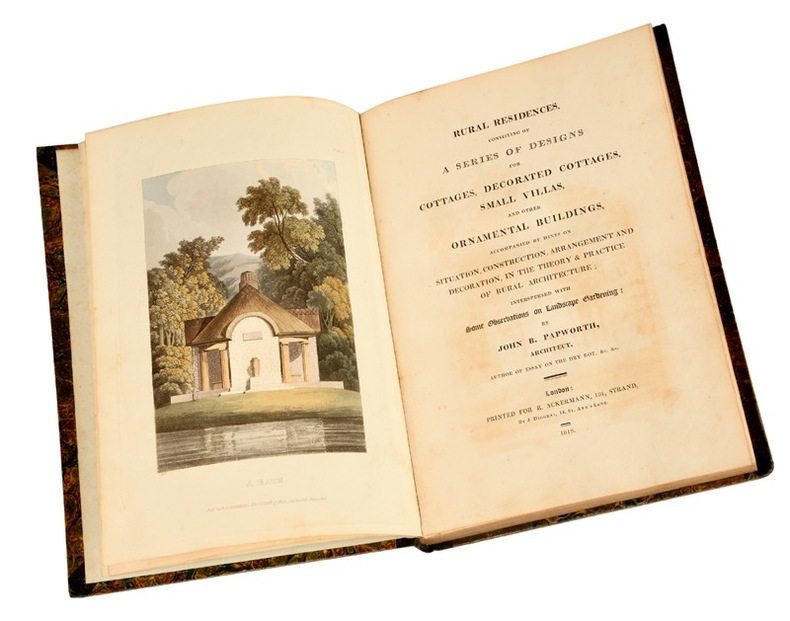
181821571London, Diggens pour Ackermann, 1818 ; petit in-4°, demi-veau vert foncé, dos à nerfs décoré de fleurons à froid et de palettes, filets et titre dorés, roulette décorative à froid d’une part et d’autre du dos (reliure romantique de l’époque) ; VIII, 106, [4] pp. et 27 planches hors-texte très finement aquarellées, avec les plans.
9911Pont-à-Mousson, Lithographie Artistique de la Lorraine, Haguenthal, Imprimeur-Editeur - Paris, Librairie Générale, Religieuse et Classique Guérin-Muller et Cie, Libraires-Editeurs, MDCCCLXII (1862). 1 volume in-folio, format oblong, page de titre et 16 gravures lithographiques en noir et blanc, chacune accompagnée d'une page de texte explicatif. Les 2 couvertures illustrées en couleurs n'ont malheureusement pas été conservées, page de titre légèrement salie, sinon très bon état. L'ouvrage a été relié plein cuir moderne bordeaux. 1 album folio oblong, 16 lithographic plates in black and white, each with a text leaf, without the illustrated cover boards, a very good copy rebound in modern full leather.
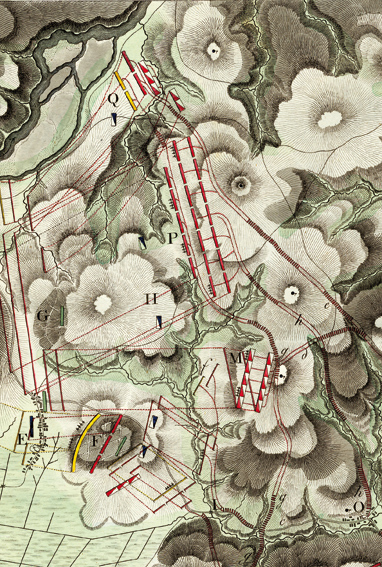
180815548Wien, Aus der Kaiserl. Königl. Hof-Und Staatsdruckerey (Vienne, Imprimerie de la Cour et de l'État), 1808 ; in-folio ; bradel de papier marbré, pièce de titre vert foncé (reliure de l'époque) ; (4), 169 pp., 25 cartes et plans gravés par Johann Renard, Kilian Parheimer, Ant. Benedict et Heironymus Benedicti, entièrement aquarellés, 1 accompagnée de 2 détails et 5 avec des détails mobiles qui permettent de suivre les mouvements dans le temps.
Interessante opera del 1595 sulla storia dell'Ungheria scritta dal notaio veneziano Giovanni Nicolo Doglioni (1548-1629). Doglioni perse la sua famiglia durante l'epidemia di peste del 1576. Si ritirò a vita privata e scrisse storie di Venezia, Belluno e quest'opera, considerata come la prima storia moderna dell'Ungheria. L'autore inizia con la descrizione del paese, il clima, gli abitanti e la lingua. Prosegue con la storia a partire dalla sua occupazione da parte dei romani, gli unni nel IV secolo e l'invasione dei magiari per concludersi con la battaglia di Giurgevo nel 1595 quando Sigimondo Bathery principe di Transilvania venne sconfitto dall'Impero Ottomano. L'opera è in particolare apprezzata per l'accurata descrizione delle campagne turche nel XVI secolo. Subito dopo la carta b4 la mappa ripiegata dell'Ungheria di Girolamo Porro, cartografo ben conosciuto per aver lavorato con Ruscelli e Porcacchi. Antico manoscritto ai contropiatti, al verso dell'ultima pagine e all'ultima carta bianca. In buone condizioni. Copertina in piena pergamena seicentesca con titolo manoscritto al dorso in buone condizioni generali con lievi usure ai margini e dorso. Rottura alla cerniera anteriore. Legatura in buone condizioni ma corpo del libro staccato al piatto posteriore. Pagine in buone condizioni con fioriture e gore d'umidità marginali. Piccolissimo segno di tarlo al margine di piegatura delle prime 25 pagine e da pag. 71 riparato con applicazione di carta da pag. 25 fino a pag. 70 e da p. 89 fino a 102 senza perdita di testo; al margine superiore da pag. 168 alla fine riparato con applicazione di carta senza perdita di testo. In 8 cm 22,5x16,5. Pp. (32)+209+(2). Peso Kg. 0,322. Interesting work of 1595 about the history of Hungary written by the notary from Venice Giovanni Nicolo Doglioni (1548-1629). Doglioni lost all his family during plague epidemic of 1576. He retired and wrote histories of Venice, Belluno and this work, considered as the first modern history of Hungary. The author begins with the description of country, climate, inhabitants and language. Then history from its occupation by romans, huns of IV century and invasion of magyars. It ends witht he battle of Giurgevo in 1595 when Sigimondo Bathery prince of Transilvania was defeated by Ottoman Empire. The work is particularly appreciated for the accurate descriptions of turkish Campaigns in XVI century. After page b4 folded map of Hungary by Girolamo Porro, cartography well known because he worked with Ruscelli and Porcacchi. Antique manuscript in the counterplates, in the verso of the last page and in the last endpage. In good conditions. Full parchment cover of 17th century with handwritten title in the spine in good general conditions lightly worn in the extremities. Crack in front hinge. Binding in good conditions but the body of the book detached in the back plate. Pages are in good conditions with foxing. Very little worming in the folding edge of the first 25 pages and repaired with application of paper from pag. 25 until pag. 70 and from p. 89 until 102 with no loss of text; in the upper edge from pag. 168 to the end repaired with application of paper with no loss of text. In 8 cm 22,5x16,5. Pp. (32)+209+(2). Weight Kg. 0,322
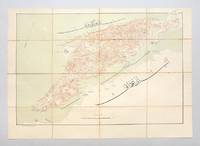
1915138323Istanbul: Erkan- Harbiye-i Umumiye Matbaas 1915. Grasping Gallipoli A rare example untraced institutionally of Ottoman military cartography conveying information on physical geography anchorages and the layout of key towns for the purposes of defensive planning. Compared to most Ottoman maps this offered the granular perspective necessary to mount an effective and ultimately successful operational defence of the peninsula and it was in all likelihood the most detailed map available to von Sanders and senior Ottoman commanders at the start of the campaign. Areas of the peninsula including the north-eastern and south-western fringes are shown with much gentler elevations and gradients than was actually the case. It is unclear whether copies fell into enemy hands but general misconceptions over the topography of the peninsula proved the undoing of much of the Allied advance during 1915. While most of the northern tip of the Ottoman empire is unfilled the map identifies features relevant to the ferrying of troops across the Dardanelles including coastal settlements rivers and landing sites. Colour lithograph 560 x 790 mm in 16 sections and mounted upon linen as issued folding away to 42 x 200 mm. Contemporary colour crayon annotations on verso. Light foxing along folds a few sections slightly lifting at corners occasional staining: a very good example. unknown
Bella raccolta di Lacerba. Ril in mezza tela. Completo anno 1913. Completo anno 1915. Anno 1914 dal n.16 al n. 23. Nel n. 21 e' presente il rarissimo manifestino sul Referendum. futurismo futurism marinetti papini campana boccioni carra lacerba
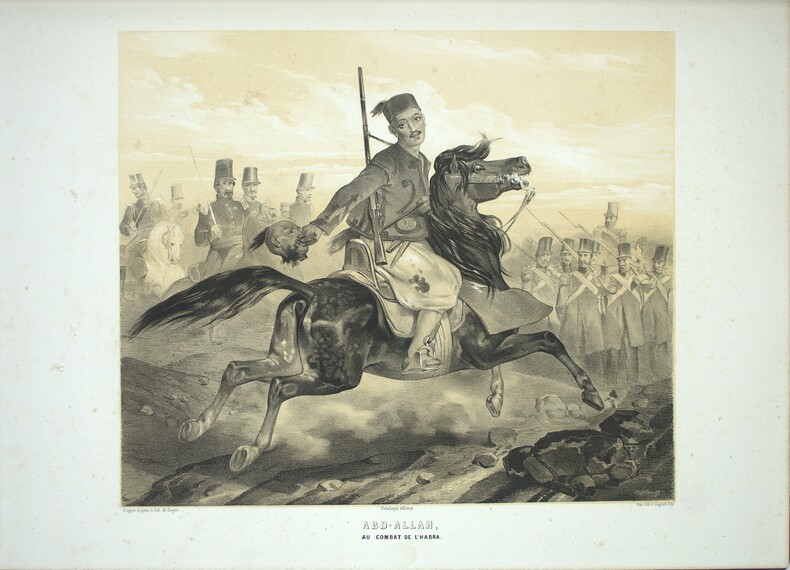
1851STLD0090München, Cotta (1851). Quer-Folio, 1 lithogr. Titel, 24 lithogr. Taf. m. Textblättern, OHLn., stärker berieb., Ecken u. Kanten berieben, vord. Deckel fleckig. Blätter leicht stockfleckig, Textbll. tlw. zerknittert, randrissig u. staubrandig. Die Abbildungen zeigen Szenen aus dem italienischen Aufstand gegen die Habsburger: Reitergefechte, Straßenkämpfe, Belagerungen in norditalienischen Städten. Lipperheide Qc 20.
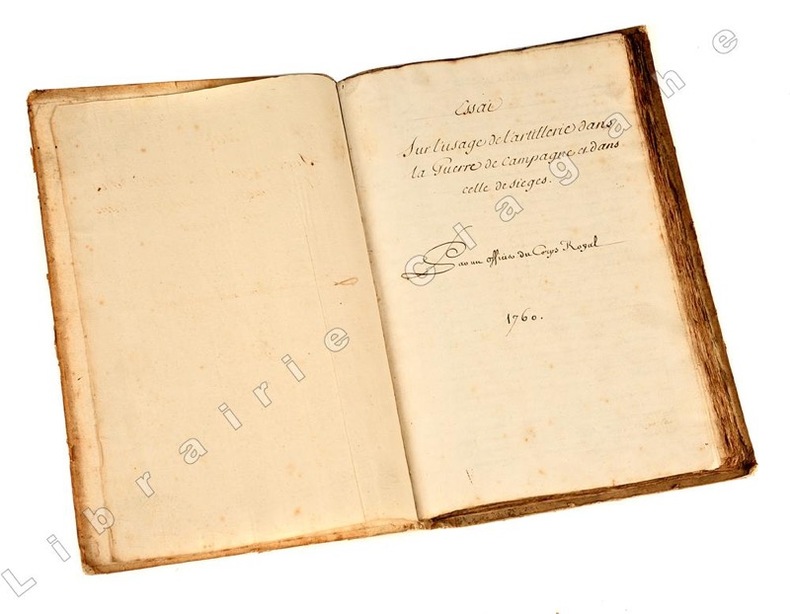
21404In folio (367 mm), demi-vélin de l’époque, 137 pp. d’une belle écriture, bien lisible et 3 plans aquarellés dépliants.
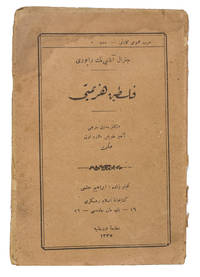
1919ABC_47443Istanbul: Matbaa-yi Orhaniye 1919. Original publisher's orange printed paper wrappers. 8vo ca. 18.5 x 12.5 cm. With the Turkish text printed using Arabic script. First and only edition of a report about the Sinai and Palestine campaign 1915-1918 in Ottoman Turkish translation. This second half of this campaign was led by General Edmund Henry Hynman Allenby 1st Viscount Allenby 1861-1936. He commanded the Egyptian Expeditionary Force EEF then part of the British army against the Ottoman Empire in the conquest of Palestine in 1917-1918. The EEF succeeded in capturing Beersheba Jaffa and Jerusalem in late 1917 as well as the Jordan valley and Northern Palestine in 1918. The present work is a translation of Allenby's reports which cover the period between December 1917 when the British entered Jerusalem and September 1918 when General Allenby started a new campaign resulting in the capture of Damascus and Aleppo. The report begins with operations to make Jaffa and Jerusalem safe against Turkish counterattacks and continues with Allenby's succesful attacks on Jericho the Jordan Valley and As-Salt. The EEF won numerous other battles in the region before the Armistice of Mudros ended the campaign in October 1918. Allenby then became the High Commisioner in Egypt and Sudan from 1919-1925.With an inscription on the title page and on the back wrapper. With a water stain on the head margin throughout including the wrappers the spine is somewhat torn but the wrappers are still connected. Somewhat browned throughout the edges of the leaves are frayed the leaves are folded and loose in the wrappers as issued. Otherwise in good condition.l WorldCat 777059280 3 copies; Özege 5787; cf. The campaign in Palestine: General Allenby's official report of the fighting north of Jerusalem up to September 18 1818. In: Current history 1916-1940 vol. 9 1 part 2 1919 pp. 167-172. Matbaa-yi Orhaniye, unknown
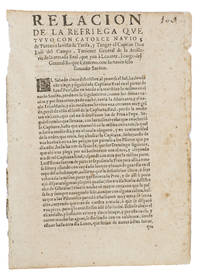
1638ABC_49378Madrid: Diego Diaz de la Carrera 1638. Folio 28 x 20 cm. With a small woodcut decorated initial on the first page. Rare imprint giving news of the sea engagement between a Spanish vessel and fourteen Ottoman ships; the careful detail in which the author narrates the events - number of pieces of artillery shot damages suffered in the ship flags displayed the difficulty of navigation during the evening and others - is remarkable. The Spanish went back to Gibraltar when heard news of the sinking of one of the 14 Ottoman ships. Luis del Campo sailed under order of General Roque Centeno 1568-1641 who would be Captain General of the fleet of the Indies.With contemporary manuscript foliation in the upper outer corners of the leaves. Minor spotting and toning else fine.l Palau 258139; USTC 5027326 5 copies; WorldCat 433988753 460969014 5 copies. Diego Diaz de la Carrera, unknown
Grande folio (490 x 320 mm), frontespizio, 52 cc. (incl. 5 carte di testo e 47 fogli con 49 tavole). Le tavole includono un ritratto calcografico del dedicatario dell'opera Cardinal Pietro Ottoboni, pro-nipote del papa Alessandro VIII disegnato da Pietro Lucatelli, 29 tavole disegnate e incise da Pietro Sancti Bartoli (4-8, 24- 45, 49, 50). Leggere fioriture, normalemente non prossime alle incisioni; legatura in piena pelle coeva con minori difetti alle cuffie e agli angoli. Bella copia, completa e genuina. Lo stampatore é indicato al colophon: 'Ex Typographia Io: Francisci de Buagnis'.
8704Paris, Dépôt de la Marine, 1863. 1 volume in plano, reliure demi-toile, petites décirures sans gravité sur le dos, très bon état des planches. Atlas de 8 planches et cartes dont 1 en couleurs. Cet atlas se réfère à l'Expédition de Chine de 1860. Il a été dressé d'après les Documents Officiels sous la Direction du Lieutenant Pallu et publié par ordre de S.E. Monsieur le Comte P. de Chasseloup-Laubat, Sénateur, Ministre de la Marine et des Colonies. Atlas en très bon état.