4 433 résultats
24124Without date or place but apparently written in Mesopotamia in late 1916. This poem is said to be an earlier work by ‘A Tommy’ the pseudonymous author of the collection ‘If I Goes West’ published in London by Harrap in 1918. WorldCat has no entries to support a second claim: that the present poem was published in 1917 with the subtitle ‘Verses written by a “Tommy†who has fought suffered and triumphed in Mesopotamia and is still on active service there’. While there is no indication that the poem has ever been published in its entirety extracts from it appeared in ‘The Bystander’ 27 November 1916; and ‘The Near East’ 6 July 1917; the latter headed ‘An Alphabet from Mesopotamia’ being preceded by the following: ‘A member of our Fighting Forces in Mesopotamia has composed some verses which he entitles “ The Alphabet of Mesopotamia.†Through the kindness of a correspondent we are allowed to reproduce here some specimens’. There may also be a reference in Catherine W. Reilly’s 1978 bibliography ‘English Poetry of the First World War’. Duplicated typescript titled ‘ALPHABET OF MESOPOTAMIA.’ 2pp foolscap 8vo. Text complete on two leaves of air mail paper glued together. Apparently contemporary and with the look of an item that has been handed around the mess room. Twenty-six four-line stanzas: one for each letter of the alphabet apart from a joint stanza for S and T and ending with an ‘ENVOI’. The first stanza reads: ‘ “A†Was an apple that grew so they say In the Garden of Eden down Qurnah way Till Eve came along and ate it one day And got thrown out of Mesopotamia.’ The poem includes the following stanzas: ‘ “F†Stands for Fritz who flies in the sky To bring down the brute we’ve many a try But the shells that we shoot seem to all pass him by And fall --- on Mesopotamia.’ ‘ “J†Is the jam with the label that lies And states that in Paris it won the first prize But out here we use it for catching the flies That swarm in Mesopotamia.’ ‘ “U†Is the Lake we call Umm-el-Brahm And guards our flanks from all possible karm sic And waters Gorringe’s Barley Farm In the middle of Mesopotamia.’ ‘ “V†Is the Victory we won at Dujailah I heard of it first from a friend who’s a sailor Who read it in Reuter’s on board a mahela On the Tigris in Mesopotamia.’ ‘ “W†Stands for the wonder and pain With which we regard the infirm and insane Old Indian Generals who guide the campaign Which we’re waging in Mesopotamia.’ ‘ “Y†Is the yearning we feel every day For a passage to Basra and thence to Bombay If we get there we’ll see that we stay right away From this wilderness - Mesopotamia.’ Without date or place, but apparently written in Mesopotamia in late 1916. unknown
197446S.l. [Paris], s.d. (1797) gravure in-12 de 14,5 x 11,5 cm, en feuille, fixée sur papier fort.
197414S.l. [Paris], s.d. (1802) cartouche (25 et 19 cm de diamètre), en feuille, fixée sur papier fort.
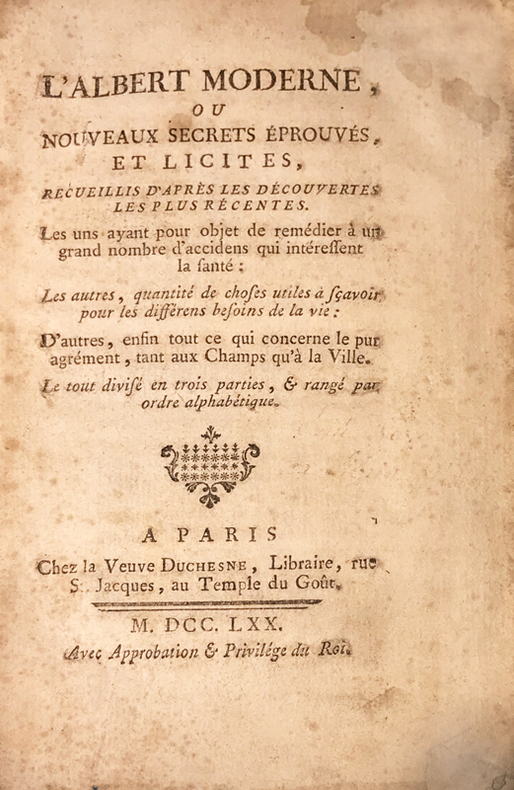
177011006Paris, Veuve Duchesne, 1770 ; in-12 ; cartonnage rigide de papier marbré bleu, étiquette manuscrite au dos, non rogné ; XXII pp. (y compris le titre), (1) f., 384 pp.
260Tours, Alfred Mame et Fils, Editeurs, 1885. 1 volume in-12, 239pp., reliure modeste demi-basane très frottée (cachets de bbliothèque municipale), frontispice.
188015.0248s.a. aprox. 1880. Cosido. 16x22. unknown
190015.0249s.a. aprox. 1900. Cosido. 16.5x22.5. unknown
181093à Épinal, de la fabrique de Pellerin, S.d. 60 x 40 cm, Imagerie populaire in-folio au bois gravé sur vélin mince, mise en couleurs au pochoir,
182259Paris, chez le capitaine Bacheville ; Corréard, libraire ; Ponthieu, libraire ; Imprimerie de David, 1822, in-8, broché ; VIII- 401 pp. et 1 p. de table, portrait lithographié de Antoine en frontispice (dans la deuxième édition, le frontispice montre les frères Bacheville se séparant pour toujours, en Turquie d'Europe), couverture muette de papier gris.
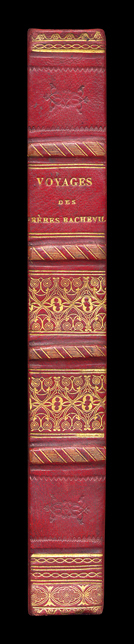
182215861Paris, Béchet Ainé et chez le Capitaine Bacheville, 1822 ; in-8 ; demi-veau glacé grenat à petits coins, dos à quatre nerfs plats décorés encadrant le titre et deux caissons décorés "à la cathédrale", palette et roulettes décoratives dorées, fleurons et roulettes à froid, tranches marbrées (reliure de l'époque) ; XII, 432, (2) pp., frontispice lithographié par G. Engelmann montrant les frères Bacheville se séparant pour toujours en Turquie d'Europe.
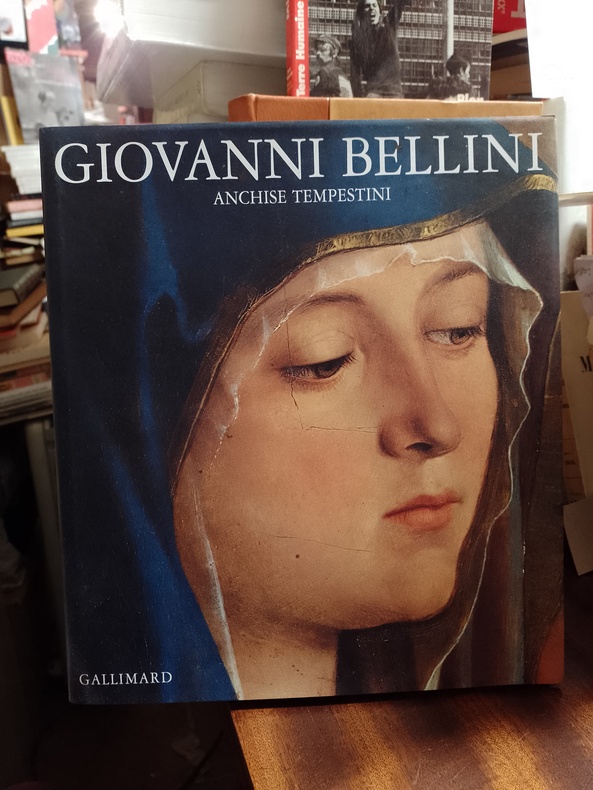
2000PEINTTTT00125Paris, Gallimard, "Maîtres de l'art", 2000, 25,5 x 29, 196 pages sous percaline éditeur et jaquette illustrée. Traduit de l'italien par Margarita del Campo. Iconographie couleurs.
31110P., Hachette, 1946, in 8° broché, 315 pages ; couverture illustrée.
53359P., Hachette, 1946, in 8° broché, 315 pages ; couverture illustrée ; quelques pages mal coupées, entrainant une déchirure sans manque à plusieurs pages.
55412P., Flammarion (Collection "Hier et Aujourd'hui"), 1933, petit in 8° broché, 128 pages ; couverture illustrée (fanée) ; quelques piqûres.
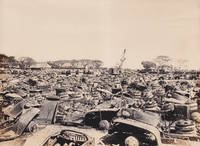
1942222242Japan. 1942. Black and white photograph with an explanatory slip in Japanese. The photograph measures 20 x 14.5cm; the slip measures 16 x 11cm. Edges of photograph little browned slightly affecting image reverse of slip evenly browned with one edge little abraded not affecting text overall a good pair. A view of a sea of abandoned materiel in Rangoon supposedly jettisoned by retreating Commonwealth forces under a scorched earth policy. The shells of trucks appear to make up the bulk of the scrap - wheel hubs and grilles litter the foreground while stacks of car bodies can be seen in the background. <br> <br>The capture of Rangoon by the Imperial Japanese Army proved to be a significant blow to Allied logistics efforts in China and Southeast Asia. Rangoon had served as the starting point for the critical Burma Road and its capture by Japan was seen at the time as a major strategic victory. Japanese planners had hoped that the fall of Rangoon would prove to be the death knell for Chiang Kai-shek's government in Chongqing still doggedly holding out after nearly six years of continuous warfare. These hopes failed to come to fruition however as supplies were instead airlifted and re-routed along the Ledo/Stilwell Road in Assam and Kachin. <br> <br>With Rangoon under its control Japanese forces were able to sweep across the vast majority of the rest of the colony with the notable exception of its northernmost reaches. By 1943 Japan had established sufficient control to establish the State of Burma as a puppet regime led by Ba Maw. With Burma as a foothold the Indian National Army under Subhas Chandra Bose were also able to establish their own pro-Japanese statelet later that same year. . unknown
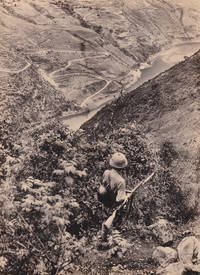
1942222243Japan. 1942. Black and white photograph with an explanatory slip in Japanese. The photograph measures 20 x 14.5cm; the slip measures 16 x 11cm. Reverse of photograph lightly browned and slightly foxed in a few spots not affecting image slip also evenly browned on reverse and little creased overall a good pair. A view of a Japanese foot soldier armed with his Arisaka Type 99 and bayonet surveying the Nujiang/Salween Valley and River following what is claimed to have been a successful crossing. On the opposite bank a convoy of trucks can be seen winding their way along a dirt track leading away from the shoreline through a patchwork of terraced farms. The remnants of the Huitong Bridge having been destroyed by defending Chinese troops can be seen at the bottom of the valley. <br> <br>Although the explanatory slip included with the image declares the operation to have been a roaring success with a valiant crossing made and the road to Kunming and Chongqing opened by all credible reports the Salween Campaign proved to be a tactical stalemate for Imperial Japanese forces. Although the IJA had indeed been able to reach the Salween River a successful crossing was never made as National Revolutionary Army troops had taken up an entrenched defensive position prior to their arrival. Ultimately the IJA were dislodged by the NRA in 1944-45 with the assistance of Joseph Stilwell. . unknown
162183(Hanau), (1813-1814) 40 x 55,5 cm, Gouache sur papier contrecollée, cadre de bois.
181108Épinal, de la fabrique de Pellerin, S.d. (ca 1830) 40 x 60 cm, Imagerie populaire in-folio au bois gravé sur vélin mince, mise en couleurs au pochoir
206426à Paris, Chez les Marchands de Nouveautés, (ca 1797) 10,5 x 15,8 cm à la cuvette,
238197in-8, demi-basane brune, dos lisse, filets dorés, tranches marbrées (reliure de l'époque). Mors et coiffes supérieurs abîmés.
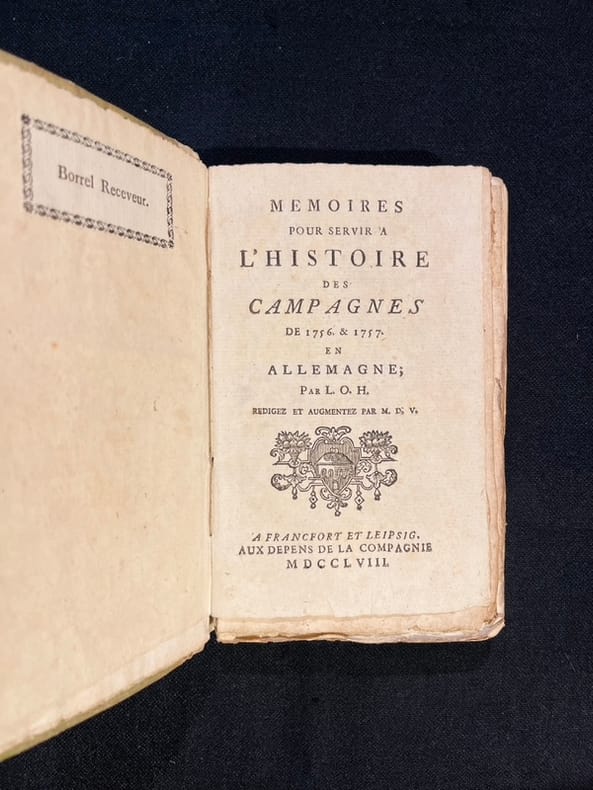
175821322A Francfort et Leipsig, aux dépens de la Compagnie, 1758. In-8 de [4]-48 ; 32; 96-64 pages, demi-vélin à coins, titre inscrit à la plume sur le dos. Non rogné.
214686Avignon, Imprimerie de Seguin frères, 1809 in-8, 110 pp., un f. vierge, pp. 111-214, demi-basane fauve granitée, dos lisse orné de guirlandes dorées, pièce de titre brique, tranches jaunes (reliure de l'époque).
161180Paris, Imprimerie Royale, 1824 fort vol. in-4, LI-[3]-630 pp., broché sous couverture d'attente de papier crème. Manque de papier sur la première couverture, des mouillures parfois importantes.
12767Paris, L'Illustration, 3 Novembre 1901. 1 Journal in folio, 16 pp.de textes et photos + 10 pp. d'annonces publicitaires. Nombreuses reproductions photographiues relatives au siège de Pékin par les Boxeurs (Les 55 jours de Pékin), très bon état, malgré la pliure central du Journal.
11858Shanghai, 1900. 1 large map, 48*44 cm, depicting the military operations during the Boxers Events. Operations against the Chinese position on the Lu-tai Canal, 13th July 1900 - Route of Russian-German Relief Column 23rd June 1900 - Operations against the Native city, 13ty July 1900. - Line of Defense around Settlements