202 résultats
1890057514A. Denys reliure Rigide Bruxelles 1890 374 pages en format 22 - 29.5 cm - reliure rigide en semi cuir avec titre en dorure - illustrations - quelques rousseurs
1882R150164680MEGARD.. 1882. In-8. Cartonnage d'éditeurs. Etat d'usage, Couv. légèrement passée, Dos frotté, Rousseurs. 154 pages. Frontispice en noir et blanc.. . . . Classification Dewey : 840-Littératures des langues romanes. Littérature française
188763220Paris, E. Plon, Nourrit et Cie, o. J. (1887). Qu.-4°. Mit zahlr. farb. Illustrationen. 47 (1) S., Illustr.-OLwd.
184411584Paris, Maison (Lyon, Imprimerie Louis Perrin), 1844 ; in-8, broché ; (4), VII, (1 bl.), 292 pp., (1) f. d’errata, couverture beige très clair.
1867MILI0683Paris, Bachelier, Imprimeur-Libraire du Bureau des Longitudes 1845/Paris, Gauthier-Villars 1867. quer-4°, 46 (+4) Schlachten-Kupferstiche mit erläut. Text, HLdr. d. Zt., leicht berieben, Ecken etwas bestoß., kl. Klebe-Et. am vord. Deckel u. am Rückenschwanz, einige Taf. mit Eselsohren. U. a. Schlacht von Marengo, Austerlitz, Wagram, Waterloo, Toulouse, Malplaquet, Kollin, Friedland u. Hanau. [3 Warenabbildungen]
1845MILI0682Paris, Bachelier, Imprimeur-Libraire du Bureau des Longitudes 1845. quer-4°, 46 (+4) Schlachten-Kupferstiche mit erläut. Text, HLdr. d. Zt., berieben, abgewetzt, Ecken bestoß., Rü. rissig mit Fehlst. am unt. Kap., kl. Klebe-Et. am vord. Deckel, innen mehrf. gestemp., vord. Gelenk geringf. beschäd. U. a. Schlacht von Marengo, Austrlitz, Wagram, Waterloo, Toulouse, Malplaquet, Kollin, Friedland u. Hanau. [3 Warenabbildungen]
1818zy25Magimel, Anselin et Pochard Broché 1818 In-8 (14 x 21,5 cm), broché, 352 pages, 4 tableaux dépliants ; reliure fragile, dos fendu, manques et déchirures sur les bords des plats, tampons de bibliothèque à l'intérieur, en l'état. Livraison a domicile (La Poste) ou en Mondial Relay sur simple demande.
1817jj5804Adrien Egron, imprimeur de son Altesse Royale le Duc d'Angoulême, rue des Noyers, n°37 Relié 1817 In-8 (13,5 x 20,8 cm), reliure demi peau à coins, dos à 5 nerfs orné de fers dorés, gardes couleur, xvj-167 pages ; quelques pages légèrement défraîchies, très bon état général. Livraison a domicile (La Poste) ou en Mondial Relay sur simple demande.
185721645Paris, Perrotin, 1857 ; 9 tomes in-8°, demi-veau glacé rouge, dos lisse à faux nerfs dorés, fleurons romantiques à froid (reliure de l’époque) ; 454 ; 413 ; 520; 481 ; 400; 431 ; 419 ; 441 ; 456 pp., portrait du duc de Reischtadt en couleurs, portrait du duc de Raguse, 4 fac-similés, 1 tableau dépliant et 2 cartes dépliantes.
187323489Paris Michel Lévy 1873 3 Vol In-12 deuxième édition, revue et augmentée , 372 - cat éd + 362 + 464, volumes mal restaurés, rousseurs, le vol 3 est cassé , cachets de bibliothèque, vendu pour le texte pas si courant en édition ancienne
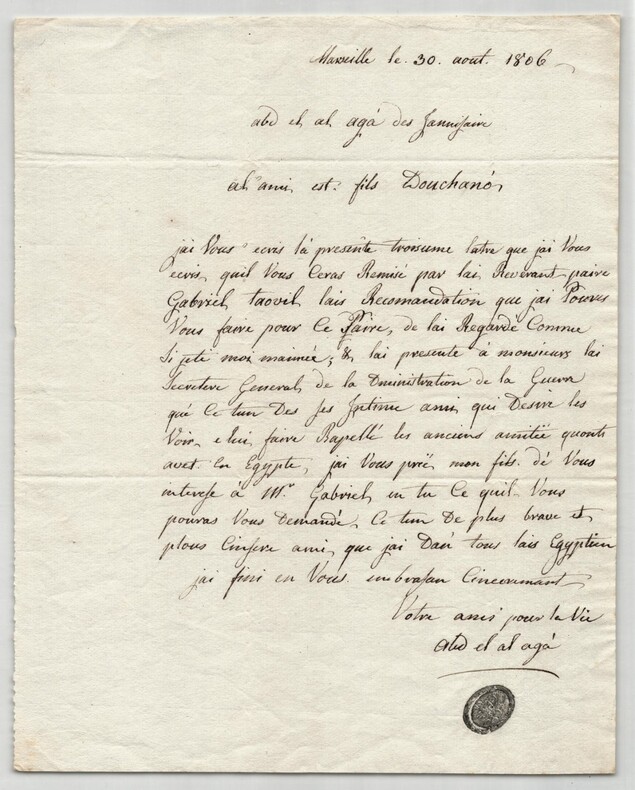
1806boz_006457Michel Abdelal, Agha des Janissaires du Caire - Les exilés de la Campagne d'Égypte - Rare lettre signée - Recommandation du Père Gabriel Taouil - Marseille - Sceau Oriental - 1806 Lettre signée de l'ancien commandant suprême des Janissaires du Caire, Michel Abdelal Aga, datée du 30 Août 1806 à Marseille. Rédigée à l'encre brune sur un feuillet de papier vergé filigrané, avec présence d'un superbe sceau oriental humide à l'encre noire. Cette lettre adressée à "ami et fils Douchanoi", probablement le jeune ingénieur Louis Duchanoy, vétéran de la Commission des sciences et des arts d'Égypte, est une vibrante lettre de recommandation. Rédigée dans un français phonétique caractéristique des élites orientales ralliées à l'Empire, Abdelal Aga annonce à son correspondant l'arrivée du Révérend Père Gabriel Taouil (« taovil »), un prêtre exilé d'Égypte. Il prie Duchanoy d'introduire ce prêtre auprès du Secrétaire Général de l'Administration de la Guerre afin de raviver les souvenirs de la Campagne d'Égypte : « lui faire Rapellé les anciens amitiés qu'on avet en Egypte ». Il décrit ce prêtre comme l'un de ses amis les plus sincères parmi « tous les Egyptiens ». Dimensions : 20 x 25,2 cm État : Très bel état de conservation. Voir photos pour plus de détails. Nombre de pages : 1 page Envoi soigné dans un emballage rigide et étanche.
18762750578Burgos.: Imprenta Provincial. 1876. Hardcover. Cubierta deslucida. Good. 24 cm. 220 p. Encuadernación en tapa dura. Imp. Provincial . Cubierta deslucida. Imprenta Provincial. hardcover
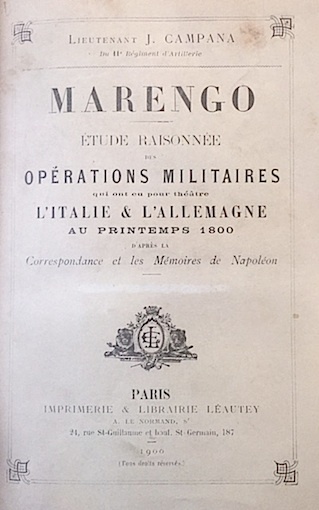
190011961Léautey Paris 1900 1 vol. In-8 de 2 ff.n.ch. 216 pp., cartonnage bradel papier de l'époque, pièce de titre, couverture imprimée conservée.
18142677Hunthill House Scotland 1814. 4to 230 x 185 mm. 10 233 4 pp. Written in an italic hand in English with occasional corrections or additions in a different hand on wove paper watermarked Budgen & Wilmott / 1812. Four unnumbered pages of French text at front and four at back the latter dated 27 May 1814 in a different hand apparently the author's on different paper with no visible watermark. Very good; some occasional spotting. Contemporary red straight-grained morocco gilt edges scuffed and scraped joints strained head of spine chipped. A first-hand unpublished memoir by a French army officer of the terrible Peninsular War. The narrator was one of few survivors of the surrender of French forces after the Battle of Bailén in July 1808. The background to this event was Napoleon's attempt to complete the isolation of England from the continent by sending a French army into the Iberian Peninsula to seize the coast of Portugal and occupy Spain. Napoleon later referred to the Peninsular War characterized by appalling cruelty on both sides as the 'Spanish ulcer'; it was to be one of the primary factors in his downfall. Although written in a matter-of-fact tone the details of this memoir are searing. General Pierre Dupont de l'Étang was charged with securing French control of the major cities in Spain. Dupont's 20000 men had initial success but as they penetrated deeper into Spain they faced increasing resistance. The present diary traces the route and experiences of Dupont's army to its furthest point of penetration into Spain: Córdoba. There after a particularly bloody and cruel occupation the army was forced to withdraw and was soon overwhelmed. Dupont surrendered his army at Bailén. Originally promised safe passage most of the French were slaughtered immediately after their surrender. The start of the Peninsular War marks the commencement of the memoir written by H. de Montvaillant an officer from Montpellier who was serving in the second Corps d'Observation of the Gironde placed under the direction of General Dupont. Although the starting date of the campaign is generally accepted as March 1808 by Montvaillant's account the French had already occupied the town of Vittoria 50 miles west of Pamplona by Dec. 22 1807. By January 9 1808 French troops had advanced to south of Burgos heading toward Valladolid. At every stopover small detachments were left behind to guard the roads thereby diminishing the strength of the army as it travelled. Spanish guerrilla activity took a toll on the troops; so much so that the author records that the troops had to "redouble our vigilance and take measures the most severe ever adapted to ensure our safety" p. 58. On Feb. 16 they entered Medina del Campo on their way to Madrid. Montvaillant records his impressions of the city its palaces and inhabitants. Toledo was the next destination where he notes a visit to the palace library and the suppression of an uprising led by monks. By the end of May the French had occupied Consuegra and entered La Carolina in Andalusia. It is at this point that the narrative takes on an ominous tone. About to enter Seville Montvaillant notes a change in circumstances in the countryside and the inhabitants. The population is abandoning villages and fleeing. He records that the senior officers assumed that the army would only be harassed by small bands of "brigands" p. 84 a far cry from the massive insurgency that it encountered: "We learned that the insurgents each day gathered strength and that the Junta of Seville was determined to stop us in our march. The following days we got to the little town Baylen Bailén in whose plains two months afterwards our destiny was decided" p. 86. The French attacked and sacked the city of Córdoba: "Neither tears promises or humble supplications could arrest the thirst for pillage." p. 89; discipline was nonexistent and the drunkenness and looting continued for eight days. Soon after Montvaillant is ordered back to the village of Alcolea not far from Bailén to guard a bridge crossing. While there he discovers the slaughter of the French sick and wounded who had been left along the line of march while the main body of General Dupont's troops had taken Córdoba. The army had moved back to Andujar near Bailén and encamped. Montvaillant records that the general staff soon realized that the French were now outnumbered and that the opposition had organized itself. Dupont's army was isolated without hope of reinforcement or re-supply defending a garrison at the village of Andújar situated on a flat plain in the scorching sun. The narrative is now of troop dispositions losses tactical mistakes errors of the general staff and increasing difficulties. Dupont's surrender came on July 20 1808. The officers were segregated from the defeated army before being escorted supposedly to France. Most of the remaining army was slaughtered within days. Montvaillant records the details of his months-long "death march" southwards to the coast finally arriving at Jerez de la Frontera near Cádiz to await embarkation to France. This never occurred. The officers' captors kept them in Jerez having discovered that the ruling Junta of Seville had abrogated the surrender treaty and that the inhabitants were waiting to massacre the French on their approach to Cádiz. Montvaillant now fills his account with anecdotes of captivity and of the officers' horrendous treatment at the hands of their escorts and guards. He is unclear as to exact dates but it seems that the French captives were held at Jerez until mid-December before being hastily driven aboard ships to sail for the Balearic Islands p. 141. A severe storm intervened and they were blown off course to Africa finally coming to port at Gibraltar; several days later they were already back in Andalusia at Málaga. Then after more storms and much sailing they finally made the Balearics where they were exiled to the desert island of Cabrera. There some 4400 surviving men and officers were forced to survive as best they could p. 148. Almost 250 officers were collected from this exile after a month and taken to the capital Palma. Imprisoned there though in better conditions than previously this group of officers waited; nearly half would be massacred during a riot and assault on the prison by the inhabitants of Palma. By March 1809 only 140 of the original 250 rescued officers were alive and were returned to Cabrera where the living conditions were desperate pp. 155-165. Despite this the officers were able to conjure up distractions. There is an account of theater productions dances and the jealousy and bickering among those playing female roles in these performances. Montvaillant comments that the theatrical chronicle of Cabrera would make quite a book. Eventually the officers were placed aboard an English ship. On August 4 when they were off Cape Palos near Cartagena there were rumors of a prisoner exchange which again did not occur. After several weeks aboard the English ship Montvalliant and his companions were disembarked at Portsmouth. He continued on to Salisbury then embarked again for Leith en route to his final destination in Scotland Jedburgh where he remained in exile until the accession of Louis XVIII in 1814. The text is written in an occasionally stilted English. Eight pages of notes in French by the author are inserted four at the beginning using wax seals to insert the bifolium and four at the end dated May 27 1814. The French preface consists of a romanticized fictionalized account of the author's Scottish sojourn including a temptress fairy and concluding with the author's promise to never forget his friends in Scotland. The English text is preceded by the title-leaf and a one-page dedicatory poem introduced by a statement that these "`Recollections' in an English Garb are presented by the sincerest of Friends to the Author" and dated Hunt Hill 1 January 1814. The first of the four final pages in French provides some information about the history of the manuscript the remaining pages contain literary notes including translations into French of poems by Robert Burns and Sir Walter Scott. According to these comments the diary was originally written in French and was translated into English by the narrator's benefactors in Jedburgh. During his years of exile Montvaillant had befriended a well-off family Rutherford the owners of nearby Hunthill House to whose three young daughters he became deeply attached. Without them he claims he would not have survived the loneliness of his exile. To pay them homage and in acknowledgement of his gratitude he dedicated his memoir to them. His friends retained the original French version as a valued keepsake of their friend and an engrossing biographical narrative and presented him with this translation which he brought back to France planning to render it anew into French to share with his family and close friends. The annotations in the text appear to be the author's. He emphasizes that he plans to keep the manuscript unpublished; perhaps the memories were too painful. unknown books
18221084061822 Lyon, de l'imprimerie de S. Darnaud, place Louis-le-Grand, façade du Rhône, n° 8 - 1822 - Petit in-8 broché - 154 pages + table des matières
1886yk487Librairie Militaire de L. Baudoin et Cie Relié 1886 In-12 (10,8 x 16 cm), reliure demi-peau, dos à 5 nerfs, VI-172 pages ; mouillures sur la couverture conservée, par ailleurs bon état. Livraison a domicile (La Poste) ou en Mondial Relay sur simple demande.
1843RO30109489MARCHANT. 1843. In-8. Relié demi-cuir. Bon état, Couv. défraîchie, Dos satisfaisant, Intérieur frais. Environ 300 pages.. . . . Classification Dewey : 792-Théâtre
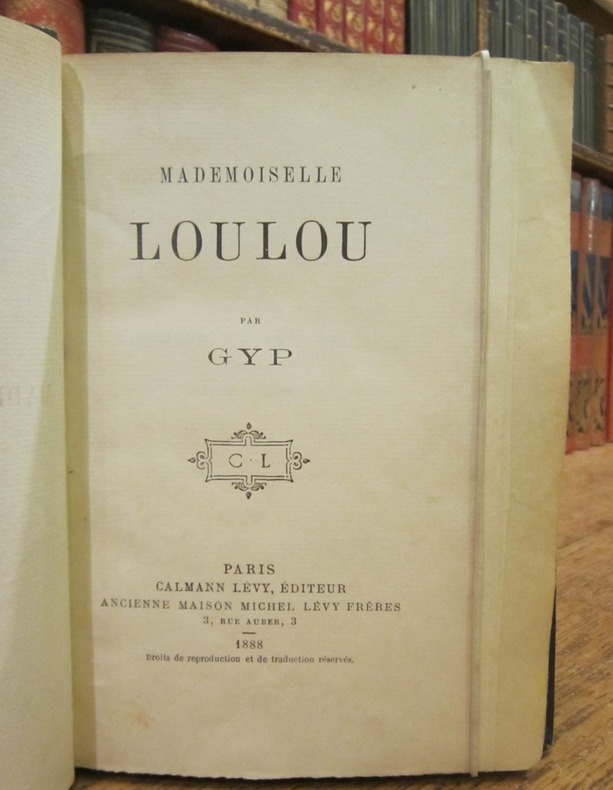
1888000156Paris Calmann-Lévy 1888
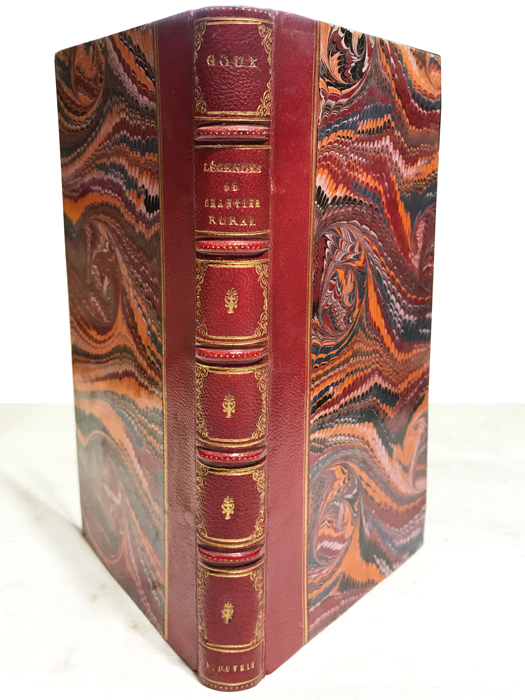
18732013Paris, Librairie de la maison rustique, 1873 ; in-8, demi-chagrin rouge cerise, dos à nerfs, caissons très décorés, fleurons décoratifs dorés, titre doré, tranches mouchetées et vernies au blanc d'oeuf (reliure de l'époque) ; XIV pages (avant-propos, dédicace), 175 pages.
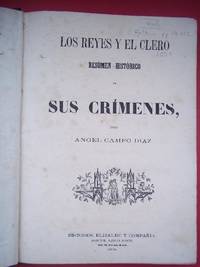
186846.197Madrid: Editores Elizalde y Compañía 1868. 1ª ed. Holandesa piel. 22x30.2. Editores, Elizalde y Compañía hardcover
187027946Paris J. Rothschild 1870 Une lithographie Originale, colorée et glaçée à la main d'époque à la gomme arabique, Format : 45 centimètres de haut par 35 centimètres de large, sur papier blanc, imprimé en bas à gauche sous la gravure : de Moltzheim inv. et Del. + imprimé en bas à droite sous la gravure : Imp. Aug. BRY Paris + imprimé au centre dessous la gravure : 1855 - ARTILLERIE DE MONTAGNE EN BATTERIE (tenue de campagne en Algérie) - J. Rothschild Editeur, tirée de : "L'Artillerie Française Costumes - Uniformes - Matériel Depuis Le Moyen Age Jusqu'A Nos Jours Ouvrage orné de 64 Planches en couleur reproduites d'après les Originaux Appartenant A Sa Majesté L'Empereur Et Publié Sous Ses Auspices" par Auguste de Moltzheim, 1870 Paris: J. Rothschild, Éditeur,
182322181Paris 1823 une lettre de 2 pages, sur papier velin ligné, format : 20,5 x 32,5 cm, manuscrite à l'encre brune sur les deux pages, lettre adressée à MR MORIN, LIEUTENANT D'ARTILLERIE, envoyée par LE BARON HUREL MARECHAL DE CAMP (COMMANDANT LES TROUPES A SEU D'URGEL - CAMPAGNE D'ESPAGNE 1823), signature manuscrites du Baron HUREL avec le cachet de cire rouge à ses armes, PARIS 1823,
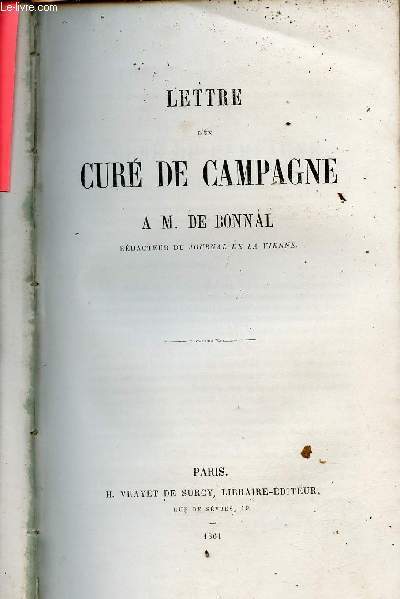
1861R320129309H.Vrayet de Surcy. 1861. In-8. En feuillets. Etat d'usage, Livré sans Couverture, Dos satisfaisant, Intérieur acceptable. 31 pages - livré sans couverture.. . . . Classification Dewey : 846-Lettres, correspondance littéraire
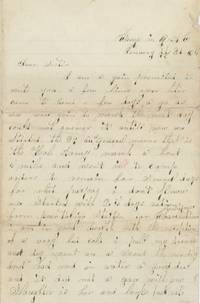
1865List2724South Carolina 1865. Single letter measuring 7.5 x 10 inches folded one double-sided sheet with stampless envelope. Near fine with light normal wear. George Harpole Vannada 1844–1928 was a private promoted to corporal in Company I of the 25th Indiana Infantry Regiment during the Civil War. The 25th Infantry was a volunteer regiment mustered in August 1861 and mustered out in July 1865. At the time of Vannada’s writing the Regiment was involved in the Campaign of the Carolinas – led by General Sherman this campaign would culminate in the Army of the South’s unconditional surrender and effectively end the war.<br /> <br /> Vannada writes that his regiment had “started with 25 days rations from pocotaligo staton for i supose Charleston.†On the way they had encountered:<br /> <br /> “a few Johneys i.e. Confederates not far off i have heard sevrel cannons to day we will be botherd with them all the way to Charleston between here and Buford they had a fort a bout evry 3 miles they wood stop and fire a few shots and then get up a bug for the next fortâ€.<br /> By “Buford†Vannada probably means Beaufort South Carolina which had been occupied by Union forces since November 1861. At this point the Savannah area had been essentially a refugee camp for freed people for several years and Sherman’s Special Field Orders No. 15 which settled them in the nearby South Carolina Sea Islands—the “forty acres and a mule†order—came in response to their request for stewardship over the land. Vannada remarks on Sherman’s order:<br /> <br /> “Gen Foster has been on Buford Iland for 2 years and now Sherman has comand of his troops i think they will get off now this Iland they have to give to the Niggars to setle on that is all that have famlies 40 acre to the manâ€.<br /> <br /> Vannada also accurately forecasts despite the fact that “we don’t often get any papers here to see what is goin on†that there “is some talk of peace down here but i think it is sevrel months off yetâ€. unknown