Flores, JohnBiblio.com
10 063 résultats
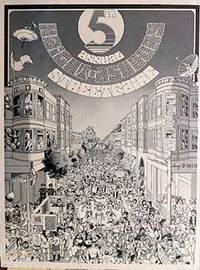
51-2050San Francisco: 1982. 25 x 18.5 inches. Pinholes in corners. Original monochrome printing. Reused in 1997: "my fourth and last contest winner: the 20th Anniversary posterwhich I originally designed in 1982 as a Fifth Annual Poster a black & white imagethat I subsequently scanned colorised and manipulated to include a smallcaricature of myself and my previous winning posters in one of the booths in the scene San Francisco: 1982 unknown
gu3185Liebig Chromolithographie "6 chromolithographies publicitaires (7,3 x 11 cm) éditées par la marque Liebig, série complète ""langage des fleurs"", comprenant les vignettes suivantes : le souci - peine, séparation ; la fleur de grenadier - union ; la balsamine - vivacité ; la marguerite - m'aimez-vous ? ; hortensia - froideur ; le lilas - première émotion ; bel état. Livraison a domicile (La Poste) ou en Mondial Relay sur simple demande."
Singer, Jonathan M; KressIn Pristine Condition. unknown
2024x-3031674391Springer Nature 2024. Hardcover. New. 300 pages. 9.25x6.10x8.80 inches. Springer Nature hardcover
2006LFA-126743659Un ouvrage de 96 pages, format 90 x 150 mm, illustré, broché couverture couleurs, publié en 2006, Editions Libris, collection "Les Miniguides nature des Parcs nationaux de France", bon état
1532307810.Ghardcover. Good. Access codes and supplements are not guaranteed with used items. May be an ex-library book. hardcover
Very Good Turkish, Ottoman (1500-1928) Original notebook in marbling wrappers. Slight chippings on the cover's extremities. Demy 8vo. (21 x 16 cm). In Ottoman script (Old Turkish with Arabic letters) text with Latin titles. [84] blank pages, color, and b/w ills. Scarce, richly illustrated Ottoman and a rare botanical manuscript on gardening, featuring as well the European flower cultivation of Turkish and Middle Eastern flowers. The manuscript starts with an introduction on gardening and floriculture and mentions trees and proper soils, tree and flower planting methods, pine trees, etc. In the "flowers" section, detailed descriptions on floriculture of Daisy, Begonia, Chrysanthemum, Dianthus, Hydrangea, Souvenir de la Malmaison, Oeillet Marguerite, Geant de Nice, Nicotinia, Generaria, Frimula, Calcealaire, Hyacinthus, Istanbul Lâlesi [i.e. Tulip, or Pauble de Constantinople], Albus, Bulbocodium, Bicalor Empress, Bicalor Emperor, Penoncul, Freesia, Ixia [i.e. Lillies], Cyclamen, Glaieul colvillei, Sparaxis, Cycl. Persicum, Iris, Azalea, Giroffe, Lobelias, Meuflia (Snapdragons), Silene, Gloximia, etc. and 19 numbered illustrations which are hand-drawn in color and b/w show the gardening and decorative elements in English and French styles.
6209418295.Gpaperback. Good. Access codes and supplements are not guaranteed with used items. May be an ex-library book. paperback
1223443London; New York: Society for Promoting Christian Knowledge; E. & J.B. Young n.d. 12mo; good/none; blue cloth spine with gilt title; ex libris signature; some shelf wear and bumping; text block clean; 158 pp.; frontispiece and engraved plates; light general toning; spine sunned; edges and corners chipping and wear; else good. 1223443. Rockville Non-Retail Listings. Society for Promoting Christian Knowledge; E. & J.B. Young unknown books
20066538ABPortland, OR, Timber Press, 2006. 23 cm. 327 S. mit zahlr. farb. Abb. Illustrierter Originalkarton (Softcover), Fadenheftung. Neuwertiges Exemplar.
8vo (185 x 115 mm), iv, 121, [1]pp., very clean internally, cont. calf, boards with gilt rolled tool border, marbled endpapers, a little scuffed and rubbed, the spine dulled, a.e.g. One of the leading nursery gardens in Scotland, originally founded around 1729 by Robert Dickson of Hassandeanburn and later moving to Edinburgh. This catalogue is of particular interest "both for the extraordinary number of plates listed and also for those named which are still considered as rarities, many of them America". Provenance: Ownership signature of Lady Hope of front-free endpaper. JISC locates copies at the BL, National Library of Scotland and Kew; Not listed on OCLC. Cox, A History of Gardening in Scotland. p.166.
1967013157Lehre: J. Cramer 1967. Originally published in 1895. Facsimile reprint 101 plain plates rather poorly reproduced large quarto pp 6 68 the slightest signs of wear to the cloth otherwise a very good copy. SCARCE. . Cloth. Very Good. J. Cramer Hardcover
2004Q-031025096XZondervan 2004-03-16. Hardcover. New. New. In shrink wrap. Looks like an interesting title! Zondervan hardcover
2009Q-0310283507Zondervan 2009-03-29. Paperback. New. New. In shrink wrap. Looks like an interesting title! Zondervan paperback
0984589880.Gpaperback. Good. Access codes and supplements are not guaranteed with used items. May be an ex-library book. paperback
165528459First or early editions. Various places and publishers 1655-1897 1655. See Beverly Seaton The Language of Flowers A History. University Press of Virginia 1995. A detailed description of the collection is available via pdf on our website on the catalogues page. The Language of Flowers phenomenon flourished for almost eighty years beginning in France in the early 19th century. As both potent and subtle symbols in Western culture flowers are found in religious texts poetry heraldic and emblematic literature from the classical period and early Christianity through medieval literature and the enlightenment. In the early 19th century books were written and published for the first time under titles such as Abécédaire de Flore ou Langage des Fleurs 1811 Oracles de Flore 1816 Emblemes de Flore et des Végéaux 1819 and Le Langage des Fleurs 1819. With those publications the language of flowers and its exploration of floral symbolism in communication - usually as a language of love and romance - gained acceptance and popularity. During its nascent years in France the language of flowers had a relatively limited affluent audience but once publishers saw the potential for profit and obtained the ability to print and illustrate books on a large scale they began to publish language of flowers texts in the popular formats of literary annuals gift books and almanacs. By 1830 the genre was widely available to a new world of fervent book buyers and readers in the working and middle classes. The vogue for language of flowers books was so prevalent that it became the subject of parodies and satires by among others Frederick Marryat and J. J. Grandville. Herman Melville was a devotee of symbolic flower language and referred to it in Mardi and Pierre and poems written to his wife Lizzie. The core of this collection of language of flowers titles was assembled by Doris Ann Elmore a French teacher in San Francisco and lifelong Francophile. The collection is unusual for its scope. The collection is for sale en bloc. First or early editions. Various places and publishers, 1655-1897 unknown
165528459First or early editions. Various places and publishers 1655-1897 1655. See Beverly Seaton The Language of Flowers A History. University Press of Virginia 1995. A detailed description of the collection is available via pdf on our website at www.brickrow.com on the catalogues page. The Language of Flowers phenomenon flourished for almost eighty years beginning in France in the early 19th century. As both potent and subtle symbols in Western culture flowers are found in religious texts poetry heraldic and emblematic literature from the classical period and early Christianity through medieval literature and the enlightenment. In the early 19th century books were written and published for the first time under titles such as Abécédaire de Flore ou Langage des Fleurs 1811 Oracles de Flore 1816 Emblemes de Flore et des Végéaux 1819 and Le Langage des Fleurs 1819. With those publications the language of flowers and its exploration of floral symbolism in communication - usually as a language of love and romance - gained acceptance and popularity. During its nascent years in France the language of flowers had a relatively limited affluent audience but once publishers saw the potential for profit and obtained the ability to print and illustrate books on a large scale they began to publish language of flowers texts in the popular formats of literary annuals gift books and almanacs. By 1830 the genre was widely available to a new world of fervent book buyers and readers in the working and middle classes. The vogue for language of flowers books was so prevalent that it became the subject of parodies and satires by among others Frederick Marryat and J. J. Grandville. Herman Melville was a devotee of symbolic flower language and referred to it in Mardi and Pierre and poems written to his wife Lizzie. The core of this collection of language of flowers titles was assembled by Doris Ann Elmore a French teacher in San Francisco and lifelong Francophile. The collection is unusual for its scope. The collection is for sale en bloc. <br/><br/> First or early editions. Various places and publishers, 1655-1897 unknown books
10687231-nnew. unknown
10687231like new. unknown
2007Q-1405126221Wiley-Blackwell 2007-10-22. Hardcover. New. In shrink wrap. Looks like an interesting title! Wiley-Blackwell hardcover
2011x-0470658266Blackwell Pub 2011. Paperback. New. 1st edition. 560 pages. 9.50x6.50x1.25 inches. Blackwell Pub paperback
2007__1405126221Blackwell Pub 2007. Hardcover. New. 1st edition. 560 pages. 10.00x7.00x1.50 inches. Blackwell Pub hardcover
2006DADAX0470658266Wiley-Blackwell 2006-09-20. 1. paperback. New. 6.69x1.26x9.61. Buy with confidence. Excellent Customer Service & Return policy. Wiley-Blackwell paperback
B9780470658260Paperback / softback. New. A Companion to Latina/o Studies is a collection of 40 original essays written by leading scholars in the field dedicated to exploring the question of what 'Latino/a' is. paperback
A9780470658260Paperback / softback. New. A Companion to Latina/o Studies is a collection of 40 original essays written by leading scholars in the field dedicated to exploring the question of what 'Latino/a' is. paperback