Flores, Tom; O'Connor, BobBiblio.com

4 925 résultats
2005Q-0071439145McGraw-Hill 2005-12-22. Paperback. New. In shrink wrap. Looks like an interesting title! McGraw-Hill paperback
2023__0323859372Elsevier Science Ltd 2023. Paperback. New. 2nd edition. 800 pages. 9.25x7.50x1.50 inches. Elsevier Science Ltd paperback
2024SKU0574316Elsevier Science 2024-02-07. paperback. Good. 8x1x10. Textbook May Have Highlights Notes and/or Underlining BOOK ONLY-NO ACCESS CODE NO CD Ships with Tracking Elsevier Science paperback
2024SKU0621823Elsevier Science 2024-02-07. paperback. New. 8x1x10. New Textbook Ships with Tracking Elsevier Science paperback
2013SONG0123969727Elsevier Science 2013-12-17. 1. hardcover. Used: Good. 7.60x1.50x9.40. Buy with confidence. Excellent Customer Service & Return policy. Elsevier Science hardcover
2024Adhya-9780323859370ELSEVIER 2024. Paperback. New. ELSEVIER paperback
2024Adhya-9780323859370ELSEVIER 2024. Paperback. New. ELSEVIER paperback
0123969727.Ghardcover. Good. Access codes and supplements are not guaranteed with used items. May be an ex-library book. hardcover
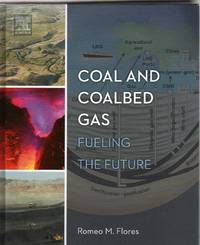
2013057361Elsevier Science 2013. 1st Edition . Hardcover. As New. First Edition. As New! <br/> <br/> Elsevier Science hardcover
2013__0123969727Elsevier Science Ltd 2013. Hardcover. New. 1st edition. 720 pages. 9.25x7.50x2.00 inches. Elsevier Science Ltd hardcover
2013DADAX0123969727Elsevier Science 2013-12-17. 1. hardcover. New. 7.60x1.50x9.40. Buy with confidence. Excellent Customer Service & Return policy. Elsevier Science hardcover
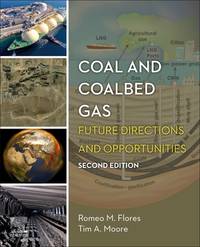
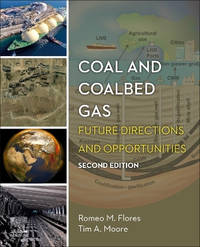
A9780323859370Paperback / softback. New. Coal and Coalbed Gas: Future Directions and Opportunities Second Edition introduces the latest in coal geology research and the engineering of gas extraction. Importantly the second edition examines how over the last 10 years research has both changed focus and where it is conducted. This shift essentially depicts "a tale of two worlds"—one half Western Europe North America moving away from coal and coalbed gas research and production towards cleaner energy resources and the other half Asia–Pacific region Eastern Europe South America increasing both research and usage of coal. These changes are marked by a precipitous fall in coalbed gas production in North America; however at the same time there has been a significant rise in coal and coalbed gas production in Australia China and India. The driver for higher production and its associated research is a quest for affordable energy and economic security that a large resource base brings to any country like Australia’s first large-scale coalbed gas to liquid natural gas projects supplying the demand for cleaner burning LNG to the Asian-Pacific region. Since the last edition of this book global climate change policies have more forcibly emphasized the impact of methane from coal mines and placed these emissions equal to or even more harmful than CO2 emissions from fossil fuels in general. Governmental policies have prioritized capture use and storage of CO2 burning coal in new highly efficient low emission power plants and gas pre-drainage of coal mines. The Organization for Economic Cooperation and Development OECD countries and China are also introducing new research into alternative non-fuel uses for coal such as carbon fibers nanocarbons graphene soil amendments and as an unconventional ore for critical elements. New to this edition: Each chapter is substantially changed from the 1st edition including expanded and new literature citations and reviews important new data and information new features and materials as well as re-organized and re-designed themes. Importantly three new chapters cover global coal endowment and gas potential groundwater systems related to coalbed gas production and biogenic gas generation as well as the changing landscape of coal and coalbed gas influenced by global climate change and net-zero carbon greenhouse gas emissions. FOREWORD When I reviewed the first edition of this book my initial thought was "Do we need another book on coal geology" and then I read it and realised "Yes we need this book" and my students downloaded copies as soon as it was available. So now we come to 2023 and a lot has happened in the past decade. For a different reason we might ask if we still need this book or even coal geoscientists and engineers as the world aims for rapid decarbonisation of the energy sector and a reduction of coal as a feedstock for industrial resources like steel manufacture. Natural gas is earmarked as a transition fuel to enable the shift to renewables. In some basins the source of that gas is directly from coalbed gas production or from conventional reservoirs that were charged by coal and terrestrial organic source rocks. Although the transition is escalating there are projections that coal will remain part of our future even after 2050 and can also provide alternative non-fuel resources e.g. critical elements and carbon-based nanomaterials. Between now and then we’d best ensure that we extract and utilise coal and coalbed gas as efficiently and safely as possible that we mitigate any environmental and social impact of the process and that we improve our certainty of predicting the behaviour of the material and material impacts. To do this we need to understand coal as a material and the inherent variability of its quality and behaviour as a source rock and host of coalbed gas. One can change the technologies but not the geological ground conditions or coal character of the targeted resource. The authors have taken on this ambitious endeavour during their careers and have attempted to capture their knowledge gained from first-hand experience in countries around the world and comprehensive review of published material within this book. At least three generations of knowledge are drawn upon here. Tim Moore was a student of both Romeo Flores and his supervisor John Ferm who was the "Warrior of Gentleness" when it came to coal research teaching and supervision. This book also reflects the broad and multidisciplinary aspects of coal geology and coal science and provides the tenets for one to understand different disciplines and how they interact to form an integrated view of the resource—technically economically and politically. Each chapter takes the reader through different concepts first setting the scene by examining the status of coal and coalbed gas in a carbon-conscious world then looking at the science behind coal as a source of gas and as a reservoir- in its own right. Further reading leads to learning about geological settings and the processes through time that led to present-day endowments around the globe and this theme continues throughout the book with detailed examples from different countries. Personally I like the emphasis on the depositional environments that lead to peat accumulation and preservation—it’s all about the ingredients—which leads nicely into the world of coal macerals and minerals and why they matter. Coalification and its role in changing the chemistry and material properties of coal is covered from a reservoir perspective as is the role of biogenic processes. These have produced some of the enormous gas resources we exploit today and could also provide a future circular economy for neo-biogenic gas. The role of groundwater in this past and potentially future endeavour is presented along with possible adverse effects where there is unexpected communication with regional and local aquifers and surface assets that detract from environmental and social licence. In addition to describing the geology and engineering technologies required to explore for access and utilise these resources the book also provides insights into geostatistical and economic modelling for reserves estimation and challenges as reservoirs become more geologically and politically complex for extraction and alternatively for injection and carbon sequestration. The final chapters revisit and integrate concepts presented in the book in order to examine global gas production and the geographic shifts in production and research that have occurred over the past decades. The also show how government and the market play a role and project future trends. The authors provide discussion points for the outlook of coal as a fuel feedstock in a carbon-constrained world and the ongoing search for options and alternative non-fuel uses of coal while highlighting the important role that coal and coalbed gas still play during the transition period and beyond. There is much to learn from this book which is based on decades of observing and interpreting patterns and trends in coal and coal-bearing basins. There is a growing trend towards using machine learning and artificial intelligence to find patterns in data and provide solutions. I’d suggest that domain intelligence such as that provided in this book is critical to supervising this process and is required for understanding and validating the outputs upon which many decisions are made and will continue to be made in the future. So yes we need this book and I invite you to read learn and form your own ideas. If you find any gaps—write about them. Joan S. Esterle Emeritus Professor Vale Chair of Coal Geosciences The University of Queensland AustraliaMay 2023 paperback
0123969727New. Never used book unknown
2014Adhya-9780123969729Elsevier 2014. Paperback. New. Elsevier paperback
2014Adhya-9780123969729Elsevier 2014. Paperback. New. Elsevier paperback
1801340269.Ghardcover. Good. Access codes and supplements are not guaranteed with used items. May be an ex-library book. hardcover
1801340285.Ghardcover. Good. Access codes and supplements are not guaranteed with used items. May be an ex-library book. hardcover
2019228862Victoria University Press. Fine in Fine dust jacket. 2019. Hardcover. 1776562097 . 8vo 8" - 9" tall; 558 pages . Victoria University Press hardcover
2024009424UK: Bloodaxe Books. A fine UK First Edition - First Printing hardback in a fine unclipped dustjacket fitted with a removable clear mylar sleeve - All my books are always securely packed with plenty of bubblewrap in professional boxes and promptly dispatched within 2-3 days - SIGNED BY THE AUTHOR - Pictures available upon request. . Fine. Hardcover. 1st Edition. 1st Printing. 2024. Bloodaxe Books hardcover
5660347like new. unknown
1436324114.Ghardcover. Good. Access codes and supplements are not guaranteed with used items. May be an ex-library book. hardcover
0786440341.Gpaperback. Good. Access codes and supplements are not guaranteed with used items. May be an ex-library book. paperback
1928003177London: Collins 1928. With stories and articles by Percy F Westerman Leonard Louth Garry Allen Sir Vyell Vyvyan and many more.192pp. Not Signed. Circa 1928 First Edition. Pictorial Cover. Very Good/No Jacket. Illus. by Black and White and Colour iIlustrations . 4to - over 9¾" - 12". Hardback. Collins Hardcover
1528096703.Gpaperback. Good. Access codes and supplements are not guaranteed with used items. May be an ex-library book. paperback
1333842937.Gpaperback. Good. Access codes and supplements are not guaranteed with used items. May be an ex-library book. paperback