21 158 résultats
19871943Cambria CA: Self-Published. VG/NONE. 1987. First Edition. Softcover; First Printing. Some very light rubbing to wrappers. ; Binding has appearance of an unused unread book. Wraps half title dedication chapter facing pages several other pages and rear endpaper illustrated with author's drawings. 11 pages of black and white photographs from the author's albums. ; Trade PB; Drawings and photographs; 8vo; 126 pages; David Dodd Hand 1900-1986 artist cartoonist animator director producer was one of the early Disney animators. After working on many Disney shorts from 1930 to 1932 he began directing many of the animated shorts. Then in 1937 David Hand was the Supervising Director for the very first animated feature length film Snow White and the Seven Dwarfs. In 1942 he was the Supervising Director for Bambi another breakthrough animated feature film for Walt Disney. The author worked very closely with Walt though it was not always a pleasant task. David Hand was considered to be Walt Disney's right hand man by both studio insiders and the press. In 1943 he was the Animation Supervisor for the wartime Disney classic Victory Through Airpower. David left the Disney Studio in 1944 and headed for England to establish an animation studio for the Rank Organization. He built a respectable animation enterprise from scratch and produced the films in the Musical Paint Box and the Animaland series. This is truly the inside story of the early days of animation innovation by Walt Disney and one of his closest most trusted artists. Privately published by the author's widow it is a unique and very hard to find original source of the behind-the-scenes workings of the studio during the 1930s and 1940s which is referenced in other books about Disney. Includes a complete filmography of the author's work at Disney from 1930 to 1944. . Self-Published paperback
17926457London: A. Hamilton. Good with No dust jacket as issued. 1792. First Edition Thus. First Printing. Leather. Two full leather volumes spines in six compartments separated by gilt borders and decoration gilt lettering on red labels in one compartment. Junius is the pseudonym of the still unidentified author of a series of letters contributed to Henry Sampson Woodfall's Public Advertiser a popular English newspaper of the day between January 21 1769 and January 21 1772. Junius' aims were to discredit the ministries of the Duke of Grafton and subsequently of Lord North and to draw attention to the political influence of George III who was trying to establish his own "personal government" by selecting his ministers from a group of subservient friends. Junius used ferocious sarcasm in attacking the public and private lives of Grafton and his associates the Duke of Bedford the Earl of Bute and Lord Mansfield. Finally in his 35th letter he attacked King George himself causing a storm of indignation and prompting the government in 1770 to unsuccessfully prosecute the printer Woodfall for seditious libel for having printed the letter. Junius' views were those of a radical Whig and an ardent supporter of William Pitt Earl of Chatham who had been succeeded in office by Grafton in 1768. But Junius failed in his aims for the ineffectual Grafton's fall in 1770 merely signaled the advent of Lord North's ministry. Apart from their significance as a literary controversy and their importance in the history of the freedom of the press Junius' letters are notable for their style and the unsolved mystery of their authorship. They display little stylistic variety and their tone hardly ever changes from that of sustained personal invective and of bitter merciless sarcasm but the writing has a fine boldness and liveliness an urgency and blunt eloquence that still arrest the reader. Many attempts to discover Junius' identity have been made including claims for Sir Philip Francis the chief candidate; William Petty-Fitzmaurice 2nd Earl of Shelburne later 1st Marquess of Lansdowne; and Laughlin Macleane who was Shelburne's undersecretary. Some 45 other candidates have been proposed less convincingly. Current opinion favors Sir Philip Francis. Expertly refurbished former owner's name in an extremely elegent hand on each title page library bookplates on each fep and a number written in the lower margin of the first text page of each volume no other indications of library identification corners bumped and worn hinges strong pages supple both volumes appear unread. VERY GOOD. . Ex-Library. 12mo - over 6¾" - 7¾" tall. xxxiv 227; 259 37 pp . A. Hamilton hardcover
190416470Victor CO: Press of Victor Daily Record 1904. First edition. Hardcover. Very Good . Brown boards with gold stamped illustration. Brown & beige endpapers. 248 pages. Frontis portrait of author has fine tissue guard. Title page comes after the index of contents and list of illustrations which shows copyright applied for March 1904. Then at bottom of title page is the purple stamp "Copyrighted 1904 by Mrs. Emma F. Langdon". One fold-out illustration of the gold mining plant several photos. Brown cloth has a 1/4" rub on spine and light rubbing at tips and corners. A light wrinkle to the pages otherwise clean straight and unmarked. <br/><br/> Press of Victor Daily Record hardcover
186693Munchen: Rudolph Oldenbourg. Very Good with no dust jacket. 1866. Second Edition. Half-Leather. 70 plates on heavy paper plus over 300 smaller illustrations. 404pp. Some light foxing & darkening to the pages but overall the interior would grade fine. Spine is leather with a handwritten label. Covers are paper over boards rubbed at the corners. Text is in German. Handbook for coalgas lighting and the history of same.; 9x11 1/2 . Rudolph Oldenbourg hardcover
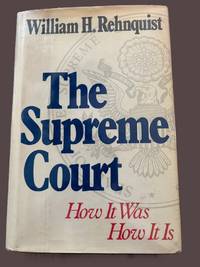
200183xoxNew York: Alfred a Knopf Inc 2001. Book. Very Good. Hardcover. Signed by Authors. 1st Edition. WILLIAM H. REHNQUIST AUTOGRAPHED "The SUPREME COURT" 1987 1st edition. Cover to cover in very good condition ~minor edgewear to Brodart protected dust jacket. Alfred a Knopf Inc Hardcover
1984248G1295USA: Friendly Press Inc. 1984. Book. Illus. by Bronstein Steve Photography. Very Good. Hardcover. Signed by Authors. First Edition. Folio - over 12" - 15" tall. 205 pages. Index. Signed and inscribed by author upon front free endpaper. "The benchmark study of what many experts consider to be the golden age of creativity in American advertising. The story of that creative revolution - that saga of talent audacity and poetic ego - is faithfully told in this exciting and precise study by someone who watched it and somehow understood" - from dust jacket. Printed on glossy stock. Wonderfully illustrated primarily in colour. Clean bright and unmarked with light wear. Dust jacket now preserved in glossy new archival-grade Brodart cover. An inspirational gift for anyone competing in the advertising industry. Friendly Press, Inc. Hardcover
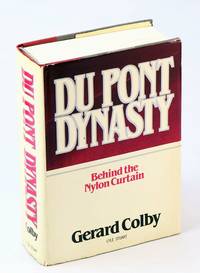
1984311j2491USA: Lyle Stuart Inc. Good in Good dust jacket. 1984. Second Edition. Hardcover. 0818403527 . In this book "I have tried with admittedly humble resources to explain what the Du Ponts and their extraordinary history mean for American society its past and its future." - Foreword. "Prentice-Hall drastically slashed the print run and advertising budget of this book despite it having met its advance sales target and won wide acceptance in national reviews. The almost immediate and reportedly unprecedented cancellation by BOMC Book of the Month Club of a book under such circumstances would have a chilling impact on most publishers and Prentice-Hall was no exception. They allowed the book to go out of stock while demand for it remained high and ultimately let it go out of print altogether." - Foreword. This was discovered only after the author took Du Pont and Prentice-Hall to federal court. One of twenty-three books selected for inclusion on the "Forbidden Bookshelf" a project of Mark Crispin Miller Nancy Howell Lee and others to "look deep into the darker trends and episodes in US history". 968 pages. Footnotes. Index. Black and white photographic plates. Unmarked with average wear. Unclipped dust jacket now in glossy new archival-grade protection. A worthy example of this important and revealing study. ; 8vo - over 7¾" - 9¾" tall; Du Pont Dupont Family E.I. Du Pont De Nemours & Company History Chemical Industry United States Social Economic Conditions Nylon CIA Privished Title Forbidden Bookshelf Wilmington Delaware Nuclear Power Fuel Savannah . Lyle Stuart Inc. hardcover
1980512H1287New York: Harper & Row 1980. Book. Fine. Hardcover. Signed by Authors. Reprint. 8vo - over 7¾" - 9¾" tall. Signed by author upon front free endpaper. 239 pages. Index. "Deals with strategies needed to transform rapid changes into opportunities; to turn the threat of change into productive and profitable action that contributes positively to society economy and the individual." - from dust jacket. Book clean bright and unmarked with negligible wear. Light wear to dust jacket now preserved in archival-grade Brodart. An excellent copy. Harper & Row Hardcover
1995524j0861British Columbia: Footprint Publishing. Very Good in Very Good dust jacket. 1995. First Edition. Hardcover. 0969162154 . "With an extensive history introducing this 456 glossy page volume of 466 colour photographs that depict the railway from the 1950s to the early 1990s the chapters on the PGE and BCR show the evolution of the railway over the years in chronological sequence." - dust jacket. Lavishly produced. Illustrated endpapers. Clean bright and unmarked with very light wear. Binding tight. Gentle undulations to text. Dust jacket preserved in glossy new archival-grade Brodart. A wonderful example of this superb feast for the eyes of any serious rail fan. Oblong 29 x 26.5cm. 2.4kg.; Maps; Sm 4to . Footprint Publishing hardcover
196242902574London: Routledge & Kegan Paul Ltd. 1962. Reprint. Hardcover. Good in No Dust Jacket dust jacket. "The central aim of this study is to make a systematic survey of the interrelations between the different parts of the material structure of the process of production and the way in which it will adapt itself to changing conditions." - p 3. Chapter titles include: The Scope of the Inquiry; Equilibrium Analysis and the Capital Problem; The Significance of Analysis in Real Terms; The Relation of This Study to the Current Theories of Capital; The Nature of the Capital Problem; The Duration of the Process of Production and the Durability of Goods - Some Definitions; Capital and the 'Subsistence Fund'; The Output Function and the Input Function; The Continuous Process of Production; The Position of Durable Goods in the Investment Structure; The Productivity of Investment; Planning for a Constant Output Stream; Compound Interest and the Instantaneous Rate of Interest; The Marginal Productivity of Investment in the Rate of Interest; Input Output and the Stock of Capital in Value Terms; The Marginal Value Product of Investment - The Problem of Attribution Imputation; Time Preference and its Effects with Constant Returns on Investment; Time Preference and Productivity - Their Relative Importance; The General Conditions of Equilibrium; The Accumulation of Capital; The Effect of the Accumulation of Capital on the Quantities Produced and on Relative Prices of Different Commodities; The Adjustment of the Capital Structure to Foreseen Changes; The Effects of Unforeseen Changes and in Particular of Inventions; The Mobility of Capital; 'Saving' 'Investment' and the 'Consumption of Capital'; Factors affecting the Rate of Interest in the Short Run; Long-run Factors Affecting the Rate of Interest; Differences Between Interest Rates - Conclusions and Outlook. Fourth impression of the 1941 first Routledge edition. 454 pages including bibliography three appendices index of authors cited and index of definitions of some technical terms. Clean tight and unmarked with moderate wear to original navy cloth. Bit of foxing to fore- and top edges. Clear gilt lettering upon backstrip. Minor indentation midway down backstrip. A sound example. Sraffa 2442.; 8vo - over 7¾" - 9¾" tall; Hayek Friedrich A. The Pure Theory of Capital . Routledge & Kegan Paul Ltd. hardcover
18851897London: W.H. Allen & Co. 1885. First edition. Hardcover. Good. Original brown cloth hardcover with gilt spine titles. A good-only copy. External description: corners and spine tips rounded and bumped with minor fraying at the extremities of the corners. Some bumping as well to the board edges where they extend beyond the textblock. Rubbed lightened spot to the center of the spine column and darkening ot the top of the boards and the top edge of the textblock. Interior description: Front pastedown with two erasure spots - brown papers lightened and scuffed from the erasure. Front hinge is split with paper exposing the binding web - still relatively solid. The rear hinge is starting but not as advanced as the front. Darkening to the edges of the back of the free endpapers from the dark brown endpaper coloring coming through. Some light soil at the half-title. Frontispiece plates graphs and maps intact including two large folding maps bound in at rear and an extending graph in the supplements. One of the folded maps has a long tear at the binding edge. Binding feels solid and sturdy although cupping the spine will always be recommended with a book of this size and weight. Advert for the European publisher's catalog affixed to the rear pastedown. The pages are bright and clean majorly free of the foxing that generally plagues books of this time period. A well-kept copy inspite of the wear at the hinges and board edges. 637 pp. <br/><br/> W.H. Allen & Co. hardcover
1934201H0009Canada: The National Home Monthly. Good. 1934. First Edition. Single Issue Magazine. 76 pages. Features: Ceylon Tea Bureau ad inside front cover features colour painting of Laurentian Scene by F. S. Coburn; The Way to Solvency - famous Canadian monetary reformer G.G. McGeer makes his case for changes to the Bank of Canada; Super one-page colour ad for Heinz canned beans and spaghetti; Fantastic one-page colour-photo Chipso ad features Mrs. John Boyle Jr. and her children Mercedes John and Patricia; Sometime We'll Meet short story; Bloomin' Idol short story; Afghanistan Destined for Conflict - a most prophetic photo-illustrated article; Children of the Heather short story; The Haunted Yashiki Japanese short story; Pinch-Hitting for Sir Galahad short story; Dogs in My Life - illustrated article by Diana Thorne; Gesso Craft; One-page photo-ad for Pond's cold cream features Miss Frederica Vanderbilt Webb and Mrs. Reginald Vanderbilt; Two-page photo-ad for Fleischmann's XR Yeast features large photo of Dr. R.E. Lee; Little Rambles in Hollywood; Great one-page Lux soap ad features photo of Ginger Rogers; Illustrated fashion article; Cookery article; Beauty article; Wow! one-page full-colour photo of NHL hockey player Charlie Conacher of the Toronto Maple Leafs on the ice; Colour Old Dutch cleanser ad on back cover; and more. Includes blank subscription form and envelope. Average wear. Unmarked. A sound copy of this extraordinary issue.; Folio - over 12" - 15" tall; The National Home Monthly Magazine November 1934 - Heroic Canadian Monetary Reformer Gerald Grattan McGeer Bank of Canada Fiat Money Currency Paper National Debt Ceylon Tea Bureau ad inside front cover features colour painting of Laurentian Scene by F . The National Home Monthly unknown
1988355c9808USA: Newsweek. Fair. 1988. First Edition. Single Issue Magazine. Great cover photo of Steve Jobs plus a color-photo-illustrated article describing his comeback with NeXT computer. 84 pages. Address label and faint cup ring on front cover. Unmarked with somewhat above-average wear. A sound vintage copy. ; Magazine; 4to - over 9¾" - 12" tall; Newsweek Magazine October 24 1988 News Week Steve Jobs Cover . Newsweek unknown
1942852a0475USA: The F. & M. Schaefer Brewing Co. 1942. Book. Good. Hardcover. First Edition. 4to - over 9¾" - 12" tall. Excellent black and white archival illustrations. Oblong glossy red boards measure 10.5" high by 13.5" wide and feature gilt medallions upon front board. Binding intact. Average wear. Unmarked. Sound copy. The F. & M. Schaefer Brewing Co. Hardcover
1960443j0304Princeton New Jersey: D. Van Nostrand Company Inc. Fair with no dust jacket. 1960. First English Edition. Hardcover. "A compilation of essays many reprinted from European economic journals on subjective value theory a priori theorems the science of human action the methodology of economics and so on. First English translation of the 1933 German first edition." - Greaves & McGee B-10. Includes a new Preface by the author. xxiii 1 239 pp. Index. Former library copy with average wear and usual markings. No dust jacket. Binding intact. A sound reference copy. ; The William Volker Fund Series in the Humane Studies; 8vo . D. Van Nostrand Company, Inc. hardcover
1964307009Boston Mass. : Baker Library Harvard Graduate School of Business Administration by Augustus Kelley NY 1964. Reprint. Hardcover. Very good copies all in the original gilt-blocked cloth. Slight suggestion only of dust-dulling and rubbing to the spine bands and panel edges. Remains particularly well-preserved overall; tight bright clean and strong. Contents; Vol. 1. Catalogue covering material published through 1776 with data upon cognate items in other Harvard libraries -- vol. 2. Catalogue supplement covering material published through 1776 with data upon cognate items in other Harvard libraries -- vol. 3. Catalogue 1777-1817 giving data also upon cognate items in other Harvard libraries -- vol. 4. Catalogue 1818-1848 giving data also upon cognate items in other Harvard libraries -- vol. 5. Catalogue supplement 1473-1848 giving data also upon cognate items in other Harvard libraries.Subjects; Harvard University. Library.Kress Library of Business and Economics. Kress Library of Business and Economics ; Catalogs.Economics ; Bibliography ; Catalogs. Business ; Bibliography ; Catalogs.Economics ; Bibliography ; Catalogs. Business ; Bibliography ; Catalogs.Economics Bibliography [Boston, Mass.] : Baker Library Harvard Graduate School of Business Administration by Augustus Kelley, NY hardcover
16800A Paris, Chez la veuve Saugrain & P. Prault, 1714. 5 parts in 1. 184 pp.; 192 pp.; 140 pp.; 168 pp.; 32, (20) pp. 4to. Contemporary calf, spine gilt with raised bands, label with gilt lettering, somewhat damaged at foot of spine, lightly rubbed. Not in Kress; not in Goldsmiths; not in Gavet. - Copy from the library of Balincourt-Cabrières, with engraved bookplate, and with many contemporary marginal annotations on a number of leaves.
17830Cologne (Amsterdam), P. du Marteau, 1677. 2 volumes in 1. (12), 13-360 pp.; 165, (2) pp. 12mo. Contemporary overlapping vellum. Bourgeois & André 2969; Sauvy, Livres saisis à Paris, p. 5; Le Bucher bibliographique, 525; not in Kress; not in Goldsmiths; not in Einaudi; INED 1073. Augmented edition. The second part has its own separate title-page: Reflexions sur le IV & V Chapitres de la Politique de France de Monsieur P.H. Marquis de C. Ou il censure le clergé de Rome, & les Huguenots. Par le Sieur de L'Ormegigny. A Cologne, Chez Pierre du Marteau, 1677. Upon its first publication in 1669, also anonymously and outside France, the identity of the author was discovered and he was put in the Bastille (for 15 days). The author may be considered as a precursor of Vauban and Castel de Saint Pierre for his revolutionary ideas of reforming the tax system, and for his ideas concerning the clergy, commerce and protestants, etc. 'In Colbert's time Paul Hay, marquis de Chatelet, and forerunner of Vauban, pointed out that extreme poverty conducted to death and disease and thus served to depeople rural regions; that tax reforms were necessary to improve economic conditions. Although he opposed the association of rural with urban workers, on the ground that the former would become insolent and acquire corrupt customs, he asserted, like Colbert, that man's happiness is the end of 'la politique.' He condemned the expulsion of the Huguenots as unchristian' (Spengler, French predecessors of Malthus, p. 12). Spengler also points to the fact that this work inspired some of Vauban's ideas on taxation. See also: Vignes, Origines de la dîme de Vauban. The Réflexions added under the pseudonym of Ormegregny are by Pierre Dumoulin. They deal with the two chapters concerning the clergy and the protestants.
Octavo. Pp. 152. Half-title present. Nice publisher's device to title, large decorative head-piece. Foot- and shoulder notes. Hardcover, bound in contemporary half calf and handsome marbled boards, gilt-ruled spine, green morocco label lettered in gilt, all edges sprinkled blue. Overall a fine, handsome copy (some browning to endpapers). ~ First edition. Attributed to Fabre de Charrin (Barbier, Dict. des ouvrages anonymes, v. 4, col. 644). KVK lists only 5 copies: Union Catalog Italy; Austrian National Library; British Union Catalog; and French and German Union Catalogs. Union Catalog of Canada lists a copy in microform.
18578A Amsterdam, Chez M.M. Rey, 1764. Title printed in red and black, with title-vignette. xvi, 328 pp. 8vo. Contemporary marbled calf, spine gilt in compartments, label with gilt lettering, a bit rubbed, spine-ends somewhat worn. Goldsmiths 10051; Higgs 3090; Weulersse i, p. xix; Stourm, p. 107; Menger p. 544; cf.: INED 87; Renouvin, Assemblées provinciales, pp. 31-36; Lichtenberger, Le Socialisme au XVIIIe siècle, pp. 93-103; Conlon 64:512; not in Kress; not in Einaudi; Mattioli 76, but the 1784 edition; Le Bucher Bibliographique, 481. First edition of this remarkable work. The original title was to be: "Jusqu'ou la démocratie peut s'étendre dans un Etat monarchique", but this was changed into the title under which the book is now known. The text was substantially modified for the French market and the text also made more moderate, but even after these alterations the book was and remained forbidden and prosecuted. In this book, D'Argenson tries to establish the principles of democratic and municpal government and he is considered by Lichtenberger as one of the forerunners of the great social and economic reforms of later ages. Although written as early as 1737, the author's theories have already much in common with those of the Physiocrats. The work was severely prosecuted in France, but M.M. Rey printed at least three issues during the years 1764-1765. René-Louis de Voyer de Paulmy, Marquis d'Argenson (1694-1757), French writer on economic and political subjects. The main principle in d'Argenson's philosophy was universal liberalism- 'not too much government' (pas trop gouverner). In politics the 'democracy' which he wished to 'admit into the monarchic state' depended primarily on the abolition of inherited distinctions between the estates and on the decentralization of administration. In the economic sphere he demanded the cessation of all interference with the production and circulation of goods (G. Weulersse in ESS, vol. 2, p. 182). 'En matière sociale et politique les idées de d'Argenson sont à la fois hardies, brutales et timorées ..... d'Argenson tend vers une sorte de socialisme imposé et surveillé par une aristocratie qui n'en prendrait que ce qu'elle voudrait' (Mornet, Les Origines Intellectuelles de la Révolution Française).
4244Paris, A la librairie Orientale de Dondey-Dupré, 1834. xxiii, (1), 392 pp. 8vo. Contemporary half calf, marbled boards, spine gilt in compartments, gilt lettering, a bit rubbed. Goldsmiths 28497; not Einaudi; not in Kress. First edition of Isoard's translation of the second part of Babbage's Economy of Machinery and Manufactures - the domestic and political economies of manufactures - published just a year after Biot's first translation into French. This translation is taken from the important third edition containing the final text of the classic treatise on the economics of the manufacturing industry. Isoard's translation differs from the translation by Edouard Biot. While Biot chose to translate the entirety of Babbage's work, Isoard was more selective, with the aim of reaching a wider and more varied readership than Biot. He therefore dropped technical chapters on mechanics, translated much of the technical vocabulary into layman's terms, and rearranged many of the paragraphs in order to improve the continuity of each subject. The Economy of Machinery and Manufactures was Babbage's 'brilliant and utterly original foray into political economy ... Adam Smith had analysed the sources of increases in labour productivity to be found in the division of labour: Babbage took this fundamental principle of economic growth and applied it to the individual firm. His obvious first-hand knowledge of a wide variety of industrial and business processes, combined with general analysis of production systems, made the work a tour de force. At a time of anxiety and ambiguity over the reception of new technology, he also offered authoritative policy statements on a wide range of machinery issues, including patent reform, export of machinery, crises of over production, and technological unemployment. The book's intellectual position in relationship to political economy was not, however, easily apparent, and few apart from J.S. Mill and Karl Marx appreciated its significance to their discipline' (Maxine Berg in the introduction to the Pickering Masters edition of Babbage's works, 1989).
Cinque volumi (25 cm); completo. Vol 1: 1861-1870 (di XV-335 pagine); Vol 2: 1871-1880 (di XI-393 pagine); Vol 3: 1881-1890 (di XI-464 pagine); Vol 4: 1891-1900 (di XII-409 pagine); Vol 5: 1901-1914 (di XII-523 pagine). Buona legatura coeva in mezza tela, tassello di titolo al dorso, piatti marmorizzati. Ottime condizioni per questo set completo e raro in questa prima edizione. E' considerato il miglior studio sull'economia italiana dopo l'Unità. (NB- Spedizione con Paccocelere in Italia - International shipping will require additional postage; please inquire)
Due volumi in 8vo grande (17x26 cm) di (4)-387-(5) pagine e 403-(5) pagine. In barbe. Brossura originale azzurra della collana (Raccolta degli Economisti toscani) in cornice tipografica; dorso mancante restaurato e muto. Un'etichetta alle pp. di titolo. Tra i titoli dei contributi pubblicati nei due volumi: Pensiero sopra i vitalizj, Sull'aggiottaggio, Sul debito pubblico, Sulla Costituzione immaginata dal Granduca, La Toscana nel 1792, Lettera a Matteo Biffi Tolomei, ecc. Sul Gianni, riformatore delle finanze toscane, economista di notevole livello e ministro, resta notevole il ritratto umano che ne da il Granduca Pietro Leopoldo nel 1773: "uomo di talento, accorto e lesto, di capacità negli affari dei consigli, e delle finanze", ma anche "di testa calda, vendicativo" nonostante le "vedute buone"; "odiato universalmente", perché "fautore di novità e perché sparla e tratta male la gente disprezzando tutti"; "ottimo per il suo impiego" e per "essere sentito in tutte le cose di finanze ma senza mettervelo mai: sarebbe questo però il suo desiderio". E concludeva: "bisogna servirsene di molto per stangare, ascoltarlo, ma non seguitare né fidarsene" (Vieri Becagli,DBI).
Quattro volumi in 12o. di (8)-411pp; (4)-343pp; (4)-331pp; (4)-396pp. Piena pelle dell’epoca, con rozzo restauro a due dei dorsi; qualche alone alla fine del IV tomo. Ex libris "Antonio Cupertino de Miranda". Seconda edizione della più importante opera del Serionne, che rifiuta le tesi dei fisiocratici sulla produzione e le tasse. La scoperta dell’America ha stimolato la produzione, il commercio e anche l’incremento della popolazione europea. Higgs 47071; Ined 12; Einaudi 55.
16041Bruxelles, 1789. 149, (2) pp. 8vo. Modern half morocco. Cioranescu 40562; not in INED; not in Kress; not in Goldsmiths; not in Martin & Walter. Second edition, first published in October 1788. Linguet had printed, in the 116th number of his Annales, a proposal for fiscal reform which he had first publicized in his Annales in 1778 and 1779, an exepient for terminating once and for all the chronic state of financial crisis that had precipitated Louis's capitulation to the aristocrats. The king ignored Linguet's lesson in political and economic pragmatism. Financiers and capitalists were up in arms against it, as was the Paris parlement. This body condamned the 116th number of the Annales to be lacerated and burned at the foot of the grand staircase in the courtyard of the Palais de Justice. Linguet, in rage, published his La France plus qu'angloise in October 1788 and included in it a thinly veiled warning to the king that his next blunder, a fatal one, would be to retreat headlong into the arms of aristocratic reactionairies more English in their pretensions to exercising legislative supremacy than Commons or Lords. This move would signal disaster for the monarchy, as it would alienate the Third Estate from the throne as well as from the aristocratic party, driving it into isolation, and from there into independence and the revolution. At the same time, Linguet was educating the Third Estate in this work: how to recognize their rights and act in their own best interest. For an extensive analysis of this work see: D. Gay Levy, The ideas and Careers of Simon-Nicolas-Henry Linguet, pp. 243-4.