21 159 résultats
16421(Paris, 1789). With three tables, of which 2 on 1 folding leaf. 56 pp. 8vo. Modern half morocco. Kress B.1553; not in Goldsmiths; not in Einaudi; INED 4742; Stourm, p. 173; Martin & Walter, Anonymes, 1914; Tourneux, iii, 13715; Duveen & Klickstein 251. First edition. This interesting report details the continuous pressure on the Caisse which the government maintained during 1788-1789 to make ever increasing funds available to them -against the judgement of the administrators of that body and, eventually, against its clearly defined statutes (Duveen & Klickstein).
23848Paris, Imprimerie de Madame Veuve Bouchard-Huzard, 1865. 24 pp. 8vo. Modern boards, original green printed covers preserved. First edition. The author was 'entrepreneur de peinture' and after founding the 'Maison Leclaire' was the first in France to grant workers a share in the profits of the company. The system of Leclaire served as a model for Louis Blanc in the 4th edition of his 'Organisation du travail' (1845).The earliest example of co-partnership comes from France. In 1843 a master painter of Paris, Edme-Jean Leclaire, divided among his permanent hands (43 out of about 300 employed) the sum of 12,266 francs. The scheme met with approval and up till 1870 this " kernel," as he called it, of permanent workmen, who were members of the firm's mutual provident society, continued to take their share of the increasing profits. At no time did the members of the mutual provident society amount to more than a third of those employed. In 1870 the profitsharing was extended to all the men employed, for however short a time, and upon this basis it has continued as " Brugniot, Cros et Cie. (ancienne maison Leclaire)."
4571A Soissons, et se trouve à Paris, Chez P.G. Simon, 1764. With woodcut device on title. (2), 76 pp. 8vo. Modern marbled boards, red label with gilt lettering (Laurenchet). Kress 6201; Einaudi 3362; Higgs 3306; Mattioli 1971; INED 2877 (edition 1765); Weulersse, i, xxvii; not in Goldsmiths; Granier, Bibliographie Charitable, 1330; not in Dada. Very rare first edition. Guillaume François Le Trosne (1728-1780) joined the physiocrats in 1764, contributing articles to their journals, and writing works defending their ideas. 'He became one of the most lucid exponents of the physiocratic doctrine; his views express most clearly the evolution of the school. At first an enthusiastic, inflexible adept of the abstract physiocratic system, he nevertheless evidenced a preference for practical questions, as reflected in his La liberté du commerce des grains, toujours utile et jamais nuisible (Paris, 1765).In this work, Le Trosne condemns the vagabond as a parasite on, and an enemy of, society. 'Only in politics did he remain absolutely faithful to absolutism ..... and hostile to democracy, that 'bizarre and monstrous' government which he doubtless pictured in the form of the violent popular demonstrations against the dealer in wheat or as personified by the vagabonds who had set fire to one of the farms of the magistrate' (ESS). Discusses the current situation in France, measures, legal and otherwise, taken to combat or remedy the situation, discusses the distinction to be made between vagabonds and beggars, and discusses possible solutions, one of which is condamning vagabonds to the galleys, and ends with a project for beggars and ways to combat mendicity. 'Ils provoquent le renchérissement de la main-d'oeuvre, car leur oisiveté diminue le nombre des travailleurs; ils favorisent encore l'augmentation des tailles' (INED: They cause the increase of cost of manpower, of labour, as their idleness reduces the number of workers; they rather favor the increase of the "tailles" (a tax)" (our translation)).
26339A Londres, 1767. 2 volumes. (4), 496 pp.; (4), 528 pp. 8vo. Contemporary marbled calf, spine richly gilt with raised bands, labels with gilt lettering, sprinkled edges, marbled endpapers, some minor defects to joints but a very nice copy. Conlon 67:1044; Einaudi 3420; Goldsmiths 10377; Higgs 4251; INED 2930; Kress 6459. Usually described as the first edition, this probably is the second edition, preceded, in the same year, by an edition set from different type, having a different pagination and collation, and with errata. It still remains a scarce and important book by this predecessor of Marx. The Théorie des Loix civiles is Linguet's Magnum Opus in which he refocused earlier reflections on history, retrospective cultural anthropology, law, political economy, and public administration, and integrated them into a theory of the origins of society, the organization of its institutions and cultural superstructures, and the dynamics and directions of its development. It is a refutation of Montesquieu and the Physiocrats, and one of the major achievements of early socialist thinking. Linguet's book was highly praised by Marx, particularly because of the thesis Linguet developed in the second book, 'On the Origin of Laws.' Linguet wrecked Montesquieu's illusory 'Esprit des Lois' with a single word: the 'esprit des lois is property.' 'Moreover, occupying himself almost entirely with the fate of living people, workers and peasants, and analyzing the mechanism of their condition, Linguet stands much nearer to the modern industrial socialists than to the first French socialist school, and he is one of the few writers before 1789 of whom could be said with good reason that he is more a predecessor of Karl Marx than an ancestor of Fourier or Cabet!' (Lichtenberger, Le Socialisme au XVIIIe siècle, pp. 288-305).In Linguet's perception that economic facts are more important in the life of the individual than political background Linguet was far in advance of any other thinker of his age. When in his Théorie des Loix civiles, perhaps his most important work, he declared that men could not be really free if "they must go upon their knees to a rich man to gain from him permission to increase his wealth," he was crudely foreshadowing the doctrine of surplus value. His fame died before him, but his ideas had an important influence on Karl Marx (see Encyclopedia of the Social Sciences, vol 9, pp. 488-489).
198215675[Ca. 1982. 111 S. Mit zahlr., meist farb. Abb. i. Text u. a. Taf. OKart.
E.O. In 8vo di 103 pagine con uno schema ripiegato ft (+18 pp di elenco dei libri dell'editore Paschoud). Brossura muta. In barbe. Prima edizione di questo volume dell'economista e agronomo svizzero che in 13 lettere esamina la situazione economica e politica inglese. Il successo di questo volume lo spinse poi a pubblicare, nel 1823 e 1826 altre quattro simili Lettere.
23416A Paris, Chez Le Clerc, A Charleville, Chez Raucourt, 1786. xviii, (2), 492 pp. 12mo. Contemporary marbled calf, spine gilt with raised bands, label with gilt lettering, two very light and minor defects to sides. Goldsmiths 13195; Camus 2220 (for the 1736 edition of Masson's work); not in Kress; Einaudi 3788 (1736 edition); not in Mattioli. This work is a new edition, considerably enlarged and rearranged by Le Clerc, 'syndic de la librairie', of Masson's Instruction sur les Lettres de Change, the 1739 edition and which was first published in 1736.
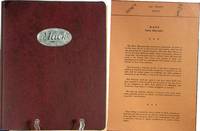
192716778Long Island City NY: Mack Pricing Department. Very Good. 1927. First Edition. Soft Cover. Typed Pages bound with staples and placed loosely in brown folder with silver Mack Emblem. April 1927. Pricing Department International Motor Company. Long Island City New York. This booklet is divided into two sections parts list No. 79 "AC" winch equipment and parts list No. 80 "AB" winch equipment. 17 pages of b/w plates and drawings with their mounting parts. First and last two pages have fore-edge wear with a staple hole. A few small mended edge tears. Automotive Mack Trucks; Drawings &B/W Plates; 4to 11" - 13" tall . (Mack) Pricing Department paperback
189311039Torino: Ermanno Loescher 1893. 1893. Good. - Small quarto 9-5/8 inches high by 6-3/4 inches wide rebound without original wraps in dark green cloth titled in gilt with decorations in gilt on the spine. The covers are slightly warped & the binding is bumped & rubbed affecting the titling. The head of the spine is chipped & frayed. 167 pages plus errata/corrigenda page. The pastedowns & endpapers are darkened & there is scattered foxing & light staining. Good. <p>First edition. The text is in Italian.<p>The book is inscribed by the author but the inscription & signature have been partially cut off in rebinding.<p>"This interesting work proposes to examine by the light of scientific criticism the theory of Malthus and the principal objections that have been brought against it. The author turns his attention first to pointing out the irrefutability of the biological tendency as Malthus has shown it and the necessity which devolves upon political economy to recognize it as a fundamental law. Lebrecht does not ignore the objections raised by various writers against this tendency; on the contrary he estimates them with praiseworthy impartiality; yet after careful examination he believes that they are not destructive of the theory.He does not deny that the coefficient of procreation is essentially economic and that poverty is one of its potent factors; yet he affirms that the prolific action of poverty can be remedied by moral influences. From a review of the book by Achille Loria and Cornelia H. B. Rogers in "Annals of the American Academy of Political and Social Science Vol. 4 May 1894 p. 134.<p>Rare. Torino: Ermanno Loescher, 1893. paperback
17305Paris, Chez Migneret, 1802. 3 volumes. x (misnumbered xii), 349, (1) pp.; (4), 322, (2) pp.; (4), 335, (1) pp. 8vo. Contemporary tree calf, spines gilt in compartments, red label and gilt lettering, gilt ornamental border on sides. Kress B.4568; INED 3230bis; not in Goldsmiths; not in Einaudi. First edition. The first volume deals with political science; volume two with population and economics, the colonies and slavery, agriculture and commerce; the third volume deals with finances, mendicity and prisons. The work was published on the occassion of the peace of Amiens with the hope of establishing a rapprochement between France and England. It is interesting to note that the absence of a commercial agreement with the peace of Amiens is considered to be one of the causes of its failure within little more than a year and that Mondénard deals with the subject of economics and commerce in relation to the peace of Amiens (see: Coquelin & Guillaumin, vol. 2, p. 199, and the Historical Dictionary of Napoleonic France, 1799-1815, p. 16).'Ouvrage principal de Mondénard. Celui-ci, émigré en Angleterre, le publia anonymement à son retour. Conservateur, farouche défenseur de la propriété et de la grande culture, il s'en prend aux excès de la Révolution mais accepte quelques-uns de ses principes. Idées justes, notamment sur les rapports entre la machine et l'emploi' (INED). - Some scribbling on half-title of first volume, handwritten name and date on title of first volume.
Pubblicazione in 4to (21x29 cm) di 12+8 pagine. Qualche fioritura. Senza copertina. Memoria anonima, ma attribuibile a mons. Tosti, tesoriere nel decennio messo sotto accusa (probabilmente dal nuovo ministro delle Finanze Angelo Galli). Da Enc. Treccani: “Secondo fonti coeve mons. A. Tosti, tesoriere generale dal 1834 al '45, tenne il Galli in disparte e gli dimostrò scarsa stima senza validi motivi. Proprio in questi anni, probabilmente anche a causa delle tensioni con il tesoriere, si registrano evidenti segni di disordine nell'amministrazione, come il ritardo e la sospensione nella compilazione dei bilanci generali, del tutto assenti nel decennio 1835-44. Questo stato di cose ebbe termine solo con la nomina del nuovo tesoriere, mons. G. Antonelli, che nel luglio del 1845 ordinò al G. di compilare il bilancio relativo alla gestione del decennio suddetto.”. La memoria difende l'operato di Tosti, con un prospetto di spese che giustifica (con la lotta al colera e alle carestie) le uscite straordinarie delle casse pontificie.
196510075Hamburg, Hans Christians, (1965). 68 S. Mit Abb. u. Vign. im Text und Fotos a. Taf. 23,5 cm. Marmor. OPp. mit Titelschild a. VDeckel.
19352080502106913438Not Available 1935. Soft Cover. Fine. The book is in fine condition. Not Available paperback
174161030(No place, nor printer), 1741. 8vo. In contemporary full mottled calf with five raised bands and gilt lettering to spine. Small paper-label pasted on to top of spine. All edges coloured in red. A nice and clean copy. (16), 367 pp.
17212A Paris, Chez Panckoucke, 1765. 4 works bound in 1 volume. (8), 135 pp.; 15, (3) pp.; 14 pp.; 30 pp. 8vo. Contemporary marbled calf, spine gilt in compartments, gilt coat of arms of Aurengre on both sides, slightly worn and bumped. First work: INED 3360; Conlon 73:1090; Kress 6958; Goldsmiths 10954; Higgs 5713; not in Einaudi. First edition. 'It has been noted that Necker retired from active direction of his bank in 1772. From that date his goal was evidently a career in the government. The appearance a year later of his Eloge de Colbert was widely recognized as his bid for the post of finance minister, as well as his reform program if appointed. He entered the book in competition for the prize of eloquence annually offered by the Académie française. The Academy conferred the prize on the Eloge de Colbert after it was read to them by d'Alembert in August 1773. (.....) the Eloge de Colbert is an important document in Necker's political and ministerial career. It provides an introduction to the themes he was to expound later. It also indicates the nature of his ambition, for he unveiled himself in it' (Robert D. Harris, Necker. Reform Statesman of the Ancien Régime, pp. 47ff.)- Handwritten name in blank outer margin of title-page.Second work: Conlon 69:648.First edition.Third work: Conlon 73:950.First edition.Fourth work: Conlon 65:962.First edition.- For the coat of arms of the "Famille d'Aurengre" on the binding see: Olivier, xi, pl. 1106.
18542(Paris?), 1758. Vignette on title. (2), vi, (4), 565, (1, advertisment), lxiii, (1, blank), (1, errata) pp. 8vo. Contemporary marbled calf, spine gilt with raised bands. INED 3400bis; Higgs 1869; Perry, From Theology to History, appendices 11 (listing a 12mo edition only); Sauvy, Quelques démographes ignorés, 362 ff; Conlon 58:966; not in Kress; not in Goldsmiths; not in Einaudi. First edition. According to Sauvy the work was originally published as Paradoxes intéressans sur la cause et les effets de la révocation de l'Edit de Nantes, le dépopulation et la répopulation du royaume, l'intolérance civile et rigoureuse d'un gouvernement, pour servir .... and 'sur certains exemplaires, le titre est modifié Apologie de Louis XIV.' According to Conlon however, the Paradoxes intéressans.... is the re-edition of the present work. Caveirac, fanatically intolerant, furnished the Bishops of Languedoc, consulted by Voyer d'Argenson, with the arguments calculated to reject the alleviation of the fate of the Protestants. The principal reason given for this softening being the depopulation and impoverishment which resulted from the revocation of the Edict of Nantes, the abbot was led to study the general problem of depopulation and he did so with care. We find ourselves, then, not before a scholar seeking truth, but before an advocate seeking the argument necessary for a demonstration" (Sauvy, op.cit, our translation).'L'auteur fait un grand étalage d'érudition et de science en matière d'économie politique. La Dissertation offre des recherches curieuses' (Michaud). The Lettre d'un patriote was written by Antoine Court. - Very good copy.
1939905207Philadelphia: R.L. Polk & Co. 1939. Local Pennsylvania alphabetical listing of business concerns and Householders occupants of office buildings & other business places; buyers guide; illustrated in black & white; Ads.374pp. First Edition. Hard Cover. VG/No Jacket. R.L. Polk & Co. Hardcover
17598A Paris, Chez la veuve Desaint, 1780. xv, (1), 955, (1, errata), 6 pp. 4to. Contemporary catspaw calf, spine gilt with raised bands, gilt triple fillets on sides, marbled edges, a very nice copy. Kress B.305; Goldsmiths 11963; not in Einaudi; not in INED. First edition of this classic in the history of weights and measures. 'At the aera of its publication this very learned work was universally admitted to be the most complete and important that had appeared on the subjects of which it treats; and though materially affected by the changes which have taken place in the interval, especially the introduction of the metrical system into France, it continues to be held in high estimation. Exclusive of the subjects which properly belong to a treatise on Metrology, it embraces a great variety of curious and profound discussions upon collateral topics, which, though they have added considerably to the bulk, have greatly increased its interest and value' (McCulloch, p. 137).'Ouvrage capital, qui a servi de canevas à tous ceux qui ont paru depuis sur le même sujet. Malgré le nombre prodigieux de Métrologies générales et particulières qu'a fait naitre l'introduction de nouveau système métrique, celle de Paucton et loin d'avoir perdu son utilité: les logarithmes dont il accompagne chacune de ses évaluations donnent le moyen de faire aisément toutes les réductions dont on peut avoir besoin et de reconnaître les fautes d'impression' (Michaud, vol. 32, p. 272).
In 12° di (2)-X-(12)-223pp + 14pp manoscritte aggiunte al termine. Pelle del tempo, mancanze a un angolo e alla cuffia, un angolo piegato; dorso liscio ornato.--- Edizione originale di questa opera che non è soltanto uno dei numerosi manuali di cambio dell'epoca, ma un vero e proprio riassunto delle teorie economiche mercantiliste e un piccolo trattato sulle variazioni dei cambi e la svalutazione. Da pag 1 a pag. 43 infatti si trova una Théorie des Changes che parte da un capitolo dedicato alla Origine de la Monnoie per poi trattare tutti i problemi connessi alla moneta e al cambio: Monnoye réelle et Monnoye de Change; Opération du pair réel des monnoies; Causes de la variation du Change; Examen du transport des espèces, ecc.- Dopo le varie Reduction des Changes nelle varie piazze europee ed il capitolo finale sugli Arbitrages, le pagine manoscritte aggiornano i calcoli di cambio al 13 aprile 1776.
17615Paris, 1649. 2 volumes in 1. 32 pp.; 32 pp. 4to. Modern boards. Moreau 652; Kress 788; Goldsmiths 1019; INED 4055; not in Einaudi. First edition of this very rare pamphlet offering thoughts on the power of the king in financial matters and on the organisation of the collecting of the taxes. 'Très remarquable pamphlet' (Moreau). See for an elaborate account of the man and his works Dictionnaire de Théologie Catholique, xii, 2e partie, col. 2042-2044. - Very rare, especially with the second part.
22892No place, 1787. 24 pp. 8vo. Modern boards, label with gilt lettering on spine. Barbier iii, col. 178; not in Kress; not in Goldsmiths; not in Einaudi; not in INED. First edition. 'Tendante à augmenter à la fois la production des bois & les revenus de S(a) M(ajesté).'The author was a French officer in the service of the king of Naples, he returned into the services of the French state during the Revolution (1796), became préfet of the Indre-et-Loire and then 'directeur de la librairie'. A number of his writings are listed in Martin & Walter and INED, but not the present text.
Un volumetto (9x14,5 cm) di 112-(2) pagine. In lingua francese. Traduit de l'anglais et publié par la Société d'Encouragement dans la province de Liège. Brossura editoriale con titolo alla copertina. Rara traduzione di una delle Introductory Lectures on Political Economy dell'economista inglese.
Un volume in 8o di 253 pagine. Buona mezza pelle recente, rossa. Il pamphlet contro le tasse e il sistema amministrativo napoleonico scritto da Walsh, di Baltimora, ebbe grande successo e ne furono stampate dieci edizioni, tra gli Stati Uniti e l'Inghilterra, in quel 1810. Alcune bibliografie considerano quella di Londra la prima edizione, altri indicano come eo quella di Baltimora.
21349A Paris, Chez Cardin Besongne, 1649. With large vignette on title. 32 pp. 4to. Modern boards. Moreau 652; Kress 788; Goldsmiths 1019; INED 4055; not in Einaudi; not in Mattioli. First edition of this very rare pamphlet offering thoughts on the power of the king in financial matters and on the organisation of the collecting of the taxes. 'Très remarquable pamphlet' (Moreau). See for an elaborate account of the man and his works Dictionnaire de Théologie Catholique, xii, 2e partie, col. 2042-2044. - Somewhat spotted throughout. Rare.
169560976A cologne, 1695. 12mo. In contemporary full calf with four raised bands and richly gilt spine. Small paper-label pasted on to top of spine. Light weat to extremities. With loss of leather to head of spine, showing headbands. Internally nice and clean. (22), 333 pp. + frontispiece.