21 161 résultats
192346862London, The Economist Office, 1923 Small folio. Bound with the originalwrappers in comtemporary half calf. Entire volume 97, July - December, 1923, of The Economist. Binding with wear, otherwise fine and clean. Pp. XII, 1172, (2).
193746863London, The Economist Office, 1937. Small folio. Bound with the original wrappers in comtemporary half calf. Entire volume 129, October - December, 1937, of The Economist. Wear to capitals, otherwise fine and clean. Pp. XII, 668, 17-25.
193846864London, The Economist Office, 1938. Small folio. Bound with the original wrappers in comtemporary half calf. Entire volume 132, July - September, 1938, of The Economist. Wear to extremities, internally fine and clean. Pp. VIII, 624, 17-24.
193846866London, The Economist Office, 1938. Small folio. Bound with the original wrappers in comtemporary half calf. Entire volume 133, October - December, 1938, of The Economist. Wear to capitals, otherwise fine and clean. Pp. VIII, 736,17-28.
London, The Economist Office, 1923. Small folio. Bound in comtemporary half calf. Entire volume 96, January - June, 1923, of The Economist. Binding with wear, otherwise fine and clean. Pp. XII, 1480.
London, The Economist Office, 1923 Small folio. Bound with the originalwrappers in comtemporary half calf. Entire volume 97, July - December, 1923, of The Economist. Binding with wear, otherwise fine and clean. Pp. XII, 1172, (2).
London, The Economist Office, 1937. Small folio. Bound with the original wrappers in comtemporary half calf. Entire volume 129, October - December, 1937, of The Economist. Wear to capitals, otherwise fine and clean. Pp. XII, 668, 17-25.
London, The Economist Office, 1938. Small folio. Bound with the original wrappers in comtemporary half calf. Entire volume 132, July - September, 1938, of The Economist. Wear to extremities, internally fine and clean. Pp. VIII, 624, 17-24.
London, The Economist Office, 1927. Small folio. Bound with the original wrappers in comtemporary half calf. Entire volume 104, July - September, 1927, of The Economist. Wear to extremities, two holes through front board, one of them affecting first 30 pages. Pp. XII, 1368.
London, The Economist Office, 1938. Small folio. Bound with the original wrappers in comtemporary half calf. Entire volume 133, October - December, 1938, of The Economist. Wear to capitals, otherwise fine and clean. Pp. VIII, 736,17-28.
Very Good Turkish, Ottoman (1500-1928) Original wrappers. Roy. 8vo. (23 x 16 cm). In Ottoman script (Old Turkish with Arabic letters). 94 p., richly illustrated. The first and only edition of this rare Turkish illustrated book including the lecture notes for the Turkish military schools, on the principles of establishing a factory and industrialization, given by Kagitçi, who was the pioneer of the Ottoman / Turkish paper industry, who defended the thesis that a national paper industry should be established in Turkey and that there are all kinds of possibilities to achieve this in the period, who served as an "Industry Teacher" in the Military Academy Command High School of Materials between 1927-1934. This is one of the first works on its field in the rising early Republican Turkey in the period, including Ahmet Hamdi's book "Fabrikacilik" [i.e. Fabrication] published in 1919, and supporting the industrial breakthrough that was initiated after the proclamation of the Republic. Kagitçi went to Germany to study papermaking with the permission of the institution he worked for. He worked in the pulp and paper mills of Hannoversche Papierfabriken Alfeld-Gronau Company in Germany at the end of 1925. He went to France in 1926 and served as a worker in the pulp, paper, and cardboard factories of Papeteries de France. After learning the watermark technique in Lyon and the pulp deposition techniques in Metz, from the source and by practice, he enrolled in the Institute of Papermaking, affiliated with the Faculty of Science of the University of Grenoble. Mehmed Ali Bey, who completed his education at the institute with first place in 1927, returned to Turkey with the title of "Paper Engineer". The projects of a factory that will produce paper, cardboard, packaging paper, newsprint and cigarette paper in Turkey were prepared under his management. Özege 5356.; Not in OCLC.
8pp., drop-head title, the advertisement is for 'The beauties and deformities of Fox, North, and Burke', first published in the same year. 3 Works bound in one, cont. half, calf, marbled boards, joints cracked. The prospectus is particularly rare with ESTC locating just the National Library of Scotland copy (imperfect) in the UK and 5 copies in North America.
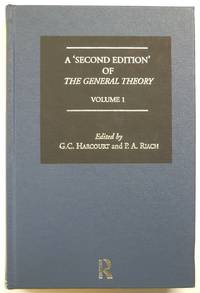
1997545119London: Routledge 1997. Hardcover with printed front board no dust jacket in very good condition. From the collection of Professor Victoria Chick of University College London a Post Keynesian economist known for her essays on monetary theory banking and methodology whose pencil marginalia remains extant. Light shelf wear only binding is sound and pages are otherwise clear. LW. Hardcover. Very Good/No Dust Jacket. Used. Routledge Hardcover
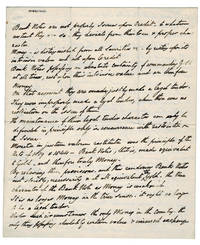
100986<p>London 19th Century. . Very good. - 4-pages detailing Lord Overstone's densely penned argument defending the 1844 Bank Act on 8-7/8 inch high by 7-1/4 inch stationery with a crest embossed in blind at top left of the first page. The manuscript in Overstone's hand is not signed. As the primary architect of the Act Overstone lays out his principles sometimes in a question & answer format.</p><p>"Bank Notes are not properly issued upon Credit: to whatever extent they are so they deviate from their true and proper character. Money - is distinguished from all Securities etc. by resting upon its intrinsic value and not upon Credit. Bank Notes possessing an absolute certainty of commanding Gold at all times rest upon their intrinsic value and are therefore Money.'What was the necessity for altering the system of credit issues as they existed before 1844'. Answer. Credit Issues are not Money - they may or they may not carry with them the command of real value - to make them legal tender is unjust & dishonest it is a bad & inexpedient form for the adjustment of transactions. By changing the character of these Credit Issues - and making them Issues of certain value - we have substituted honest Money for the dishonest semblance of it - and thus given the Country that which it can justly compel all parties to receive in discharge of Debts.'Bank Notes really convertible' Answer: There lies the gist of the whole question. The convertibility must not rest upon the discretion of the parties issuing - that is Credit. But upon the certainty that the thing into which the Bank Note is to be converted is held in readiness for that purpose. That is Money. 'then he will run off etc' Answer: No doubt he will run off into the brambles & thorns & pitfalls of deposits credits bills of exchange etc. But follow him seize him collar him drag him back into the open field and the broad daylight - and then say to him - Sir. You have passed a dishonest delusion upon the public - You have issued as Money a great number of paper promises to pay Money whenever called upon - and you have done so without taking the necessary precautions to render the non fulfillment of that promise absolutely impossible.Therefore if you please Sir give us your hands. We must tie them behind your back with the Act of 1844. And now you may go and play the fool amongst credits capital Bills of Exchange for as much as you like. Men may trust you who choose - they do it of their free will and at their own risk. But what we make them take as Money they shall be well assured will under every possible contingency produce to them the Hard Cash on their demand". As a finale Overstone turns to drama: "Exeunt. Tooke. cursing swearing and abusing. / Wilson. equivocating tossing figures about in all directions and invariably turning them upside down. / with a long train of followers some blind some halt some lame - most of them waddling - one half of them frightened at their own shadow - the other half putting their hands into their neighbors pockets. / Restat. John Bull. solus. counting carefully to see that he has as many Sovereigns in one pocket as he has Bank Notes in the other."</p><p>Folded several times horizontally and vertically with an annotation identifying the manuscript as by Overstone discreetly penciled at the top of the first page. There is an additional vertical annotation faintly penned in red over a few words at right of the last page though not affecting the legibility to the text. Very good.</p><p>Samuel Jones Loyd Lord Overstone 1796-1883 was a British banker and leader of the "Currency School". The "Currency Rule" proposed that the bank should hold 100% gold reserves on note issues making bank notes the same as currency. He virtually authored the 1844 Bank Charter Act "Peel's Act". The Banking Act tied the issuing of notes strictly to gold reserves. Loyd succeeded his father as head of the Jones Loyd & Co. bank in 1844.</p><p>James Wilson 1805-1860 was the editor of The Economist. He was the leader of the "Banking School" which argued against strict limitations on the issuing of bank notes.</p><p>Thomas Tooke 1774-1858 was a prominent British economist who was also a leading figure in the "Banking School".</p> [London], 19th Century.
1945BUS0031Toronto ON Canada: Canadian Banker's Association. Very Good with no dust jacket. 1945. First Edition. Cloth. 122 pp. Spine sunned. Corners rubbed. Bank stamp on ffep. A series of memoranda prepared for general managers and bank officials in connection with the 1944 revisions of Canada's Bank Act. Provides a statement of the fundamentals of banking theory.; 8vo - over 7¾" - 9¾" tall . Canadian Banker's Association hardcover
20095832187Routledge 2009. This is an ex-library book and may have the usual library/used-book markings inside.This book has soft covers. In fair condition suitable as a study copy. Please note the Image in this listing is a stock photo and may not match the covers of the actual item450grams ISBN:9780415547017 Routledge paperback
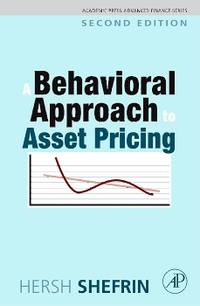
20089141854Elsevier 2008. This is an ex-library book and may have the usual library/used-book markings inside.This book has hardback covers. Clean from markings In good all round condition. No dust jacket. Please note the Image in this listing is a stock photo and may not match the covers of the actual item1050grams ISBN:9780123743565 Elsevier hardcover
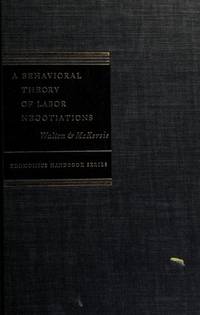
7098374McGraw-Hill 1965. This is an ex-library book and may have the usual library/used-book markings inside.This book has hardback covers. In poor condition suitable as a reading copy. No dust jacket. Front hinge split. Please note the Image in this listing is a stock photo and may not match the covers of the actual item900grams ISBN:0070680493 McGraw-Hill hardcover
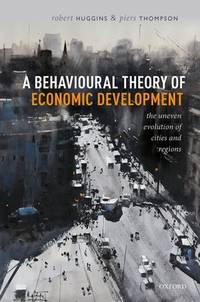
20214146033Oxford University Press 2021. This is an ex-library book and may have the usual library/used-book markings inside.This book has hardback covers. In good all round condition. No dust jacket. Please note the Image in this listing is a stock photo and may not match the covers of the actual item750grams ISBN:9780198832348 Oxford University Press hardcover
19808624234Arthur Andersen & Co 1980. This is an ex-library book and may have the usual library/used-book markings inside.This book has hardback covers. Book contains pen markings. In poor condition suitable as a reading copy. Re-bound by library. Please note the Image in this listing is a stock photo and may not match the covers of the actual item650grams ISBN:0875631797 Arthur Andersen & Co hardcover
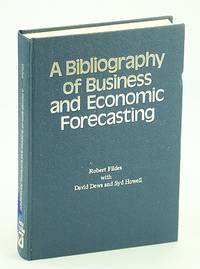
1981324H1866USA: Facts on File 1981. Book. Good. Hardcover. First Edition. vi 424 pages. "Contains over 4000 items journal articles and books. The entries are key worded according to a very carefully chosen structure which allows easy access to some 500 topics of research. Consequently it is possible to use this work as a 'first resort' for a very wide range of forecasting problems in business and economics." - from Introduction. Usual library markings. Moderate wear. A sound copy of this informative reference. Facts on File Hardcover
vi, 424 pages. "Contains over 4,000 items, journal articles and books. The entries are key worded according to a very carefully chosen structure, which allows easy access to some 500 topics of research. Consequently, it is possible to use this work as a 'first resort' for a very wide range of forecasting problems in business and economics." - from Introduction. Usual library markings. Moderate wear. A sound copy of this informative reference. Book
Second edition, 316pp., limited to 350 copies, frontis., 7 plates, orig. cloth.
54pp., orig. printed wrappers, uncut.
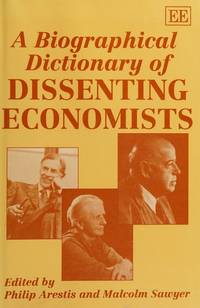
19929283834Edward Elgar 1992. This is an ex-library book and may have the usual library/used-book markings inside.This book has hardback covers. Clean from markings. In fair condition suitable as a study copy. No dust jacket. Please note the Image in this listing is a stock photo and may not match the covers of the actual item1150grams ISBN:1852783311 Edward Elgar hardcover