Aretino PietroABAA

638 résultats
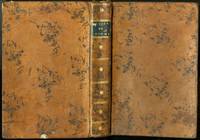
1609046398Paris: Matreo il Maestro 1609. Later Edition. Hardcover Vellum. Very Good Condition. 3 volumes in contemporary limp vellum remains of ties some discoloration to vellum occasional creasing to a few early leaves end papers rumpled and a little torn the third book is lacking the final two pages of the table ends at M generally fine otherwise. 6 books bound in 3. 6 283; 10 325; 8 362; 8 296; 8 338 6; 8 301 leaves.<br/><br/>One of the most singular figures in the Renaissance Aretino was a poet playwright schemer satirist and pornographer who made a career out of infiltrating the highest levels of society and then alternately satirizing them in his writings or blackmailing them. For a time his patron was Cardinal Giulio de' Medici and he mocked Popes and would be popes but in time he settled in Venice - the Anti-Rome. Ariosto called him "the scourge of Princes". He is remembered most for his satires and his letters which detail conversations with both the great names of the day as well as regular folk both women and men. His ability to manipulate the reader of his letters - which were carefully chosen and probably always meant for publication - by constructing a compelling narrative with himself as central protagonist - changed epistolary collections forever. Size: Octavo 8vo. Quantity Available: 1. Shipped Weight: Under 1 kilo. Category: History; Erotica. Inventory No: 046398. Matreo il Maestro hardcover books
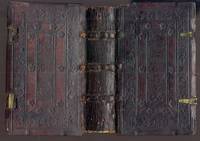
1536044194Cologne: Eucharii 1536. Hardcover Full Leather. Very Good Condition. Full contemporary elaborately stamped calf over wood boards depicting the muses worn scattered worn holes remains of clasps boards expertly reattached but cords broken; attractive decorative endpapers. An attractively printed and bound copy of Orosius's influential work on the history of the pagan peoples. Early color to the title vignette and some of the historiated initials. Some early notes and underlining in red and black scattered discolortation title a little soiled and with an old signature. lxviii 567pp. Scarce imprint just 3 in Worldcat. Not in Adams. Size: Octavo 8vo. Quantity Available: 1. Shipped Weight: Under 1 kilo. Category: History; Antiquarian & Rare. Inventory No: 044194. <br/><br/> Eucharii hardcover books
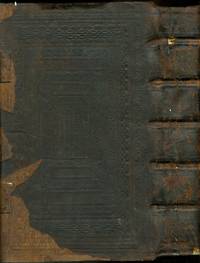
1582045463Geneva: Jacob Stoer 1582. First Edition. Hardcover Full Leather. Very Good Condition. Full contemporary rolled calf over wooden boards. Calf dry and degraded missing in spots wood worn at the edges with some loss. Remains of clasps; binding still quite sound. Light age toning to pages scattered creases and minor flaws generally very clean internally. Attractively printed with historiated initials head and tail pieces and a vignette portrait of Livy. 14 623 29 leaves. Adams 1355 Graesse IV 234. The first French edition of the complete Livy and a monumental work of Renaissance scholarship. It was also printed in an octavo edition by Stoer in 3 volumes also 1582 and reprinted in folio by Chouet in 1607. Size: Folio. Quantity Available: 1. Shipped Weight: 2-3 kilos. Category: History; Antiquarian & Rare. Inventory No: 045463. <br/><br/> Jacob Stoer hardcover books
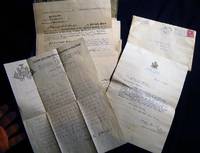
191323286Farmingdale Nassau Co. L.I. N.Y.: Not Published 1913. Archive consists of 8 documents including: Aug. 7 1913 typed letter signed on State of NY Executive Chamber letterhead to Edward H.L. Smith St. James L.I. ".establishment of the New York State School of Agriculture on Long Island is a work of which New York State should be justly proud.it affords me great pleasure to appoint you as a Trustee.Very sincerely your friend signed in pen Wm. Sulzer" William Sulzer 1863 - 1941 Governor of NY at the time first and only NY governor to be impeached - this with the original mailing envelope; August 19 1913 on printed New York State School of Agriculture on Long Island letterhead TL signed by the board member from Brooklyn Franklin H. Hooper inquiring about the appointment of Smith and further explaining that Smith was to take the place of Ezra A. Tuttle of Eastport and asking him of all this directly ".because of the complicated situation which exists at present in Albany." F.H. Hooper 1851 - 1914 considered one of the main proponents of the founding of the school and a prominent Brooklyn NY & national educator; with a copy of the Aug. 23rd 1913 completed and signed Oath of Office of Smith witnessed and notarized; and the Aug. 26 letter regarding the office signed by Mitchell May the Sec. of State of NY; On Aug. 28 Franklin Hooper acknowledges the receipt of the letter of appointment & oath & gives notification of the next Board meeting with mailing envelope; with the October 15th 1913 8-page typed document signed "Estimate of Money Needed for Running Expenses of the New York State School of Agriculture on Long Island from January 1st 1914 to January 1st 1915" prepared by A.A. Johnson and signed by him in ink at the introductory passage and which gives a detailed budget for the school various departments salaries the demonstration farm and more in the original blue paper over-folder; a December 16 1913 typed letter 2 pages signed by Hooper writing to all the Board which declares that ".on Thursday December 11 representatives of the State Comptroller and of the State Attorney General went to Farmingdale and that Messrs. Mott Smith and Ruland were on that day paid by the State Comptroller for their three farms respectively in pursuance of the contract as made by the Board of Trustees of the school and the three vendors.thereby completing the transaction for the purchase of lands for the school. It is now possible for members of the Board of Trustees to enter upon the lands and to prepare to use them for the purposes of the school." and with further information regarding the surveying of the property and a February 5 1914 TLS by Hooper to Smith regarding information to be sent to Lathrop Brown; the letters with old fold lines light wear and in very good condition; envelopes worn stained used; overall in very good condition and an excellent group of letters regarding the historical foundation of the school at Farmingdale the oldest public institution of higher education on Long Island. Manuscript. Not Bound. Very Good. Not Published Paperback books
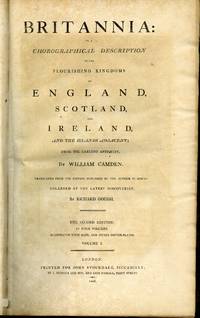
1806046466London: John Stockdale 1806. Second Edition. Hardcover Full Leather. Very Good Condition. 4 volumes in contemporary leather bindings rebacked with the spines laid back down inner joints strengthened with cloth tape. Modest browning and foxing occasional light stains and wear to page edges some offsetting but generally clean and a very good copy overall. With 104 engraved plates 57 maps mostly folding and a 1 paginated folded chart. ccvi 415 1 blank2 ; iv 518 2; iv 527 1 blank 29 1 blank; iv 570 30pp. Brunet I 1511. <br/><br/>The second edition of Gough's Britannia the first was published in 1789. "bien préférable aux précedentes" Brunet. Size: Folio. 4-volume set complete. Quantity Available: 1. Shipped Weight: Over 3 kilos. Category: History; Geography & Maps. Inventory No: 046466. John Stockdale hardcover books
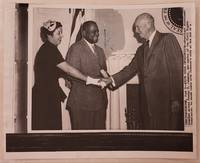
16373Civil Rights Movement Four First Edition government reports related to the Civil Rights movement in the United States. The reports cover issues such as the ongoing struggles to desegregate schools problems with voter suppression for African-Americans and the ongoing struggles for equality. Comes with 2 original press photos of the Civil Rights Committee with President Eisenhower in 1959 and photo of new members the following year. This collection documents racial inequality in the 50's and 60"s that the government sought to address.<br/><br/>Two reports on the "Civil Rights Hearings before the Congressional Committee on Civil Rights": the 1959 report details proposed bills to strengthen the Civil Rights Act of 1957 and addresses issues such as Poll Taxes and the violent ways that white segregationists intimidated Black students from integrating such as making threats to bomb schools. The 1963 document includes a statement from President Kennedy that recognizes the progress made yet outlines priorities for Civil Rights legislation in the US including: voting rights and integrated education. "Civil rights USA: Public Schools Southern States 1963 North Carolina" details the barriers that President Kennedy spoke about with many examples of de facto segregationist policies in public schools. Many of these issues were addressed in the monumental Civil Rights Act of 1964 yet the "Hearing Before the United States Commission on Civil Rights" from 1966 includes over 600 pages of testimony regarding the ongoing fight for racial equality in the US with maps charts graphs and photographic illustrations throughout to support various testimony. All in very good condition with original wrappers; some minor soiling and discoloration. unknown books
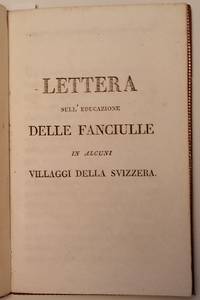
183063Bergamo: Dalla Stamperia Mazzoleni 1830. 24mo. 130 x 85 mm 5 1/8 x 3 1/4 inches. 32 24 pp. Contemporary red morocco gilt-tooled borders and spine. A lovely copy. First edition. Superb copy of this seemingly unrecorded volume designed to raise funds for the maintenance of girls' schools north of Bergamo near the Swiss border. It is published by the 'Pia opera di Santa Dorotea' an Italian movement founded in 1815 to provide education for female orphans. The volume contains two separately paginated parts each in the form of a letter. The first describes in a cheerful style the work of the schools the directors and assistants all female and the flavor of the education the girls receive; all the girls learn to read and write and educated in virtues of piety and charity. Contrasting the petulance nascent malice and puerile nature of many girls with that of those in the care of the Santa Dorotea schools the author notes that 'the education of these peasant girls is a miracle.' The author describes some of the highlights of the school year including the feast of St. Tecla 'a spectacular event'. At the end of the first part there is an advertisement for the charity's publication Pia opera di Santa Dorotea Bergamo 1830. The second part consists of a dialogue between the author of the first letter and two potential donors to the charity who after more discussion about the administration of the schools agree to make a donation. Not in cited in NUC SBN or OCLC. 63. [Dalla Stamperia Mazzoleni] unknown books
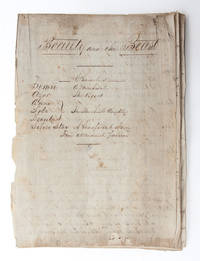
18543249N.P 1854. Complete 28 page handwritten manuscript play prompt drawn directly from Julia Corner's 1854 adaptation of Beauty and the Beast. Stitched at spine and holding though some pages are loose or delicate. Occasional staining largely confined to margins or rear blanks. Composed in one woman's hand in ink throughout with what appears to be a much younger girl's annotation in pencil to the final pages. The text throughout corresponds with Corner's book with the exception of stage directions occasionally being abbreviated or simplified. We have been unable to locate the "Miss Lacy's School" mentioned in the younger girl's note.<br/><br/>Julia Corner the daughter of a printer became a prolific children's author in her time; and her adaptation of Beauty and the Beast was hailed for "creating quite a sensation among all the middling-size children" according to Eliza Cook's Journal from that year. At a time when there was debate about the morality of performance and theater Corner was noted for "wisely sympathizing with child-natures and she declares her belief in the propriety and profit of theatrical amusement among children"; and Eliza Cook's Journal documents instances of girls in particular gravitating toward the play "settling all the characters for all available friends" and performing at home or school Cook Vol 10. Here we see first-hand evidence of this phenomenon: girls in a ladies' school taking on roles and acting them out for classmates. Further research into the school its location and its class of girls would be enlightening -- uncovering for example if there were multiple prompts for girls who could not access Corner's text whether the manuscripts were done as a handwriting exercise in addition to the performance or whether one individual simply copied this play out as a souvenir of the event. The hand used throughout is elegant and well-trained -- seemingly a grown woman whose spelling corresponds with contemporary American rather than British expectations. <br/><br/>The choice of a fairy tale like Beauty and the Beast also deserves study as it promotes particular feminine qualities -- including respect for authority filial affection and self-sacrifice and modesty -- even within the darker setting of fairies sorcery and punishment. <br/><br/>A unique opportunity for research in fields including but not limited to the trans-continental transmission of fairy tales girls' education the history of performance didactic literature and performance in schools gender studies and paleography. unknown books
1562046899Antwerp: Bellerum 1562. Second Edition. Hardcover Vellum. Good Condition. Old colored vellum worn lacking front endpaper title browned and stained mild browning and a few light stains scattered marginalia in an early hand; generally clean. The second edition of the abridgment of Magnus's important history of the Northern people. 8 192 leaves with in text illustration throughout.<br/><br/>Magnus's history of Sweden and the North was enormously successful and popular and was translated early on into Italian German English and Dutch. It describes much folklore and customs not recorded elsewhere - including the first description of making the questionable Northern delicacy lutefisk. Size: Octavo 8vo. Quantity Available: 1. Shipped Weight: 2-3 kilos. Category: Travel & Places; History. Inventory No: 046899. Bellerum hardcover books
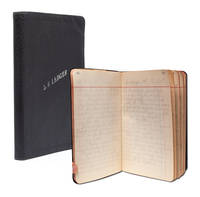
19274222Southern U.S. 1927. Small ledger bound in pebbled leather over card measuring 7.5 x 4.5 inches. With events taking place across Tennessee Virginia Washington DC North Carolina and other Southern states this journal is comprised of 118 handwritten pages unfolding across a decade. The ledger was clearly a plaything of Ethel and her siblings in earlier years as they have left childish handwriting and notes dated 1911 to the pastedowns and endpapers. However the main content unfolds from 1916-1927 as Ethel claims the book for her diary and leaves us an account of how a girl moved from her teenage years and into womanhood while the world radically changed around her.<br/><br/>Ethel's tone in her opening entry is a reminder that teenage angst and ennui are not new inventions. "April 25 1916. I write this on a Wednesday. Nothing happened. Same old thing school school school." Despite feeling the sameness of her days it doesn't take long for Ethel to open up about the variety of experiences and feelings that really do shape her time. Revivals and Red Cross meetings take up multiple evenings after school; and she loves to read as an escape novels include escapist and sensational romances like George Barr's Nedra 1905 though she describes it as "same old life reading." By 1918 she also starts attending Patriotic Meetings as she reports "Germany's advancing" a concise announcement that is surrounded by news of boys she knows joining their companies and a string of weddings in advance. Global realities hit on the same week she begins school again in September for her observation "first week of school Don't think the lessons will be very hard" is immediately followed by reports of larger hardships a month later: "All the schools are closed on account of the flu. Several people have died with it. Duey Hines was buried yesterday she died in Richmond.in a hospital.Marton Sneed was buried yesterday.he died in Charlotte of Flu." Ultimately the flu grips her in a way the war cannot. "Friday 22 November 1918 Celebrated Armistice.School was opened after five weeks. We went to school for three weeks then it was closed again. December 3 1918. Tuesday all five of us down with the flu." Her December 5 entry is a string of named of friends who died of flu or are badly ailing and she does not write again until the new year.<br/><br/>The entries of 1919 reflect a new level of maturity in Ethel's hand and her voice; as a young woman she now has more freedom and more mobility and she seems rejuvenated by drives and visits with friends new dresses and fashions picnics and shows. Several nearby locations have moving picture shows which seem to replace the Revivals in her heart and her schedule. As she and her friends prepare for commencement in June she reports getting class rings and regalia and a spate of friends' weddings. And then. "January 6 1920. School turned out for the flu Tuesday. A good many cases in town. Uncle Tom sick for two weeks. The flu is awfully bad the people are opening an emergency hospital in our Sunday school." Amidst the tragedy and seeking scapegoats the town erupts in racial violence. "March 8 1920. Arnold's store burned down.negro boy killed last night." In the years the follow Ethel reports courtships getting a job and becoming a modern working woman. She reflects very little on how she was able to gain this freedom but clearly enjoys building a life of her own. <br/><br/>A research rich diary with opportunities for studying the transmission of the 1918 flu and its various spikes the role of troops moving through communities in spreading disease the historical relationship between pandemic and education the role of suffrage in expanding women's education employment travel opportunities and genealogy. unknown books
1559046914Venice: Paul Manutium Aldus 1559. Hardcover Half Vellum. Very Good Condition. 18th century vellum backed boards worn at corners and a bit soiled title page stained an torn with loss in a few spots and a paper repair in the gutter; scattered staining and foxing elsewhere but generally clean small wormtrail in the lower margin at the end of the index touching a few letters. Still about very good overall - two volumes bound as one separate title for part two the index. 28 1-976 numbered columns i.e. 488 pages 36 132 pp. Index volume dated 1558; Ahmanson-Murphy 575<br/><br/>Pliny both compiled current knowledge of the world citing over 400 authorities and added to it himself . Not just the model for all encyclopedias to follow it is the ur-book of reference the model for an eclectic boundlessly useful assortment of human knowledge. "Over and over again it will be found that the source of some ancient piece of knowledge is Pliny Printing and the Mind of Man 5 Size: Folio. Quantity Available: 1. Shipped Weight: Under 1 kilo. Category: History; Antiquarian & Rare. Inventory No: 046914. Paul Manutium (Aldus) hardcover books
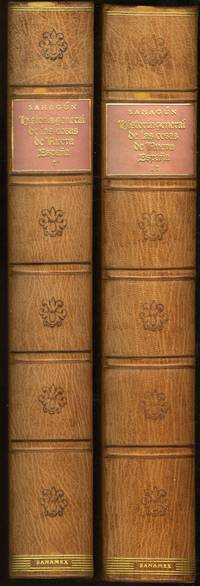
1982046529Mexico: Fomento Cultural Banamex 1982. First Edition. Hardcover Quarter Leather. Near Fine Condition. Quarter calf over red silk marbled endpapers. One of 500 sets slight sunning to cloth slipcases split to cloth on one edge of one slipcase spines faintly sunned. A lovely set. Incorporating text and images from the original manuscript of the Historia known as the Florentine Codex. xviii4 355; 6359-745 1pp and 80 color plates outside of the pagination. Size: Folio. Quantity Available: 1. Shipped Weight: 2-3 kilos. Category: History; Inventory No: 046529. Fomento Cultural Banamex hardcover books
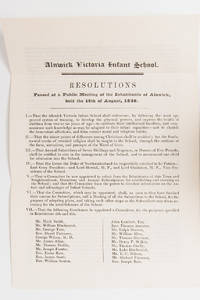
18382596Alnwick: M. Smith 1838. First edition. Fine. 3 page pamphet measuring 152 x 228mm. Trifolded with ownership signature of Wm. Dickson Esq to rear blank. Else an exceptionally clean and seemingly untouched copy of this rare pamphlet advocating for improvements in the early education of children. The only copy known on the market this title does not appear in the modern auction record or at any institutions according to OCLC.<br/><br/>A proposal and prospectus for an Infant School to serve the town of Alnwick and improve the overall level of education within the community. The pamphlet clarifies that the Duke of Northumberland is confirmed as the school's patron; and it outlines how donations and subsciptions from the town will add to the school's endowment. But more importantly it focuses on the communal benefits that will come from citizens' support for children's education regardless of their class. Touting the successes of other Infant Schools in England and abroad in providing "well-regulated nurseries for the children of the poorer classes" the committee also explains that " the most approved system of training will develop the physical powers and improve the health of children from two to six years of age -- to cultivate their intellectual faculties and communicate such knowledge as may be adapted to their infant capacities." The committee asserts that when the larger population begins sending children to school those children will be endowed with a desire to learn and "those attending will feel it as a punishment to be kept from the School" because school "is to the children what the actual business of life is to the man. Here the feelings are manifested and the character is developed" so that infants grow to intelligent and responsible members of the populace. Notably the committee also points out the short term benefits of developing an education system. "To the parents themselves many advantages will accrue from these Schools. Not only will their minds be relieved from much anxiety for the safety of their children but the mother free during the day from the necessity of watching over them will have an opportunity now denied to her of contributing by her labour to their support or of devoting more time to the promotion of their comfort at home." This acknowledgment reveals an important shift in thinking about the economic role of mothers and about women's need for time to accomplish their own work. A rare and important example of the spread of early childhood education and the arguments for its expansion. Fine. M. Smith unknown books
1595044181Paris: Pierre Mettayer 1595. Early Edition. Hardcover Half Leather. Very Good Condition. 4 volumes bound in 2 rebound in modern half red leather over decorative paper in an antique style. Old library stamps to title index and occasionally to the top right corner. Slight soiling to title quite clean otherwise and an attractive and attractively printed copy. Monstrelet meant to carry on the work of Froissart and extended the Chronicles from 1400-1444. Additions were pieced together and tacked onto the end of his work extending it to 1515. Monstrelet who was present when Joan of Arc was interrogated by Philip the Good includes a great deal of primary source material that otherwise would have been lost to history. 12 328 3 leaves; 8 195 10 130 124 10 leaves. Size: Folio. 4-volume set complete. Quantity Available: 1. Shipped Weight: Over 3 kilos. Category: History; Antiquarian & Rare. Inventory No: 044181. <br/><br/> Pierre Mettayer hardcover books
16993Photo Album Women Education Album from student at Wellesley College filled with 143 original silver gelatin print photographs. Chronicles a young woman's educational path from high school through college and onto her later work as a teacher. Dated 1911-1919. Photos of various sizes from 2 x 3" to 4 x 9.5". Original black cloth boards. 9 x 12". 100 pages. Many photographs of Wellesley College its campus and traditions. Photo of Lake Waban and the campus chapel. Image of a house labeled "Wellesley 1911-1912" placed in album next to photo with 3 young women with their arms full of books standing outside the same house labeled "Students". 6 women bundles in hats and coats on a snowy street: "Off for math exam". Others show young women reading books and studying outside eating meals together and enjoying campus life. Includes 5 photos of the "Senior Hoop Rolling" tradition on May Day 1912. Photos of friends lovingly labeled with nicknames such as Chub Selina Honey and Marion. Includes photos from many locations around upstate New York including the Hudson Valley and Finger Lakes regions: Frontenac Point Minnewaska Mohonk and Yankee Lake. Also photos from Digby a small town in Nova Scotia Canada. In addition to the images of Wellesley there are photos of several other academic institutions. Images of academic interiors labeled Drawing Room Mr. Wilson's Room Assembly Room Physics Lab Library and Hall at M.H.S. Group photo of a 16 boys wearing "M" shirts and 3 coaches posing with a trophy and banner reading: "OCIAA Relay Race 1912". Building labeled "Harmony Hall" next to a photo of 14 women with the caption "Inmates of H.H. 1913". 2 large group photos with women in white dresses and a banner "ETA Clionian" one labeled 1914. The ETA Clionian Sorority was active on the SUNY New Paltz campus then a state teachers' college. Later photos appear to be from when the album owner transitioned from being a student to working as a teacher. Young groups of children are photographed together with the handwritten captions "Primary" or "Intermediates". One photo shows a school production with many children on a decorated stage wearing Pilgrim costumes. Building labeled Quassaick Hall. I page detached. Very good condition. unknown books
18223447Great Britain 1822. Comprised of 78 manuscript pages of mathematical definitions tables methods and exercises in a single hand with the ownership signature of Elizabeth Young and a running date made intermittently to the footers. Blue paper vernacular binding measuring 8 x 12 inches and stitched at spine; later tape reinforcement. Elizabeth's metric measurements and English currency reveal her to be a student somewhere in the UK. Though the commonness of her name prevents us from locating her specifically in genealogy records the manuscript she left behind reveals much about her.<br/><br/>Elizabeth's notebook is composed in a meticulous cursive hand with neat headers each dated and her name to many of the footers. Section each have a definition leading into rules and from there into word problems and calculations. Each new section progresses in complexity requiring Elizabeth to conduct longer calculations and combine a variety of arithmetical methods multiplication division addition subtraction. Some of these are generic questions about distance or weight; but others urge the student to devotion even as she works in a logical field "How many Hours Minutes and Seconds elapsed since the birth of Christ which is 1808 years ago assuming 365 days to a year". Some put Elizabeth in contact with the world of commerce and supply chain "The yearly export of Brandies from France is said to amount to 25000 tons. What is the value of this quantity at 5s6p per Gallon". Still others prepare her for the maintenance and management of a household or a business "If a servant's wages be 12.12 for 52 weeks how much is that a year" or "If 1728 Elegant wine glasses were bought for £65.2s how must they be sold per dozen or per glass to gain Ten Guineas by the sale of the whole".<br/><br/>A portion of seven pages near the center of the book offers a telling anomaly. While it continues in Elizabeth's neat hand these entries from January-February 1822 list goods purchased by community members from merchants several of whom are women. If these are a part of a school exercise they do not show the marks of it. Rather they appear to be Elizabeth making real-life notations keeping track of accounts for herself or someone else. In this sense the word problems she records and practices are being applied in her own life.<br/><br/>An exceptional document Elizabeth's notebook has research possibilities including but not limited to the history of education in the UK and trans-Atlantic comparisons the history of women's education the effects of class on girls' education mathematics approaches to teaching math to girls historical measurements women in business paleography and women's and gender studies. unknown books
1580046178Geneva: Johannes Laon 1580. First Edition. Hardcover Full Leather. Very Good Condition. Half red morocco by Lhuinte light wear at edges and hinges first few and scattered other pages including title faded likely from being washed Some minor foxing and soiling. Several paper repairs to margins occasional small edge tears and few closed tears in text few holograph annotations hole in the eye of the Savonarola portrait on B3 with minor affect to text on verso small hole in text on C4 repaired paper loss with affect to border of Paulus Fagius portrait on G2. Still quite clean and attractive overall. 37 portraits and 54 frames with names for future portraits and 44 emblems at the rear. 318pp A mixture of Protestant biography and emblem book - one of the first uses of the emblem book for Reformation purposes the first was Montenay's Emblemmes ou devises Chrestiennes 1571. Size: Quarto 4to. Quantity Available: 1. Shipped Weight: Under 1 kilo. Category: History; Antiquarian & Rare. Inventory No: 046178. <br/><br/> Johannes Laon hardcover books
18503448Great Britain 1850. Comprised of 88 manuscript pages of mathematical definitions tables methods and exercises in a single hand with the ownership signature of "Caroline Waters Age 16 yrs" to the front endpaper. Marbled paper vernacular binding measuring 8 x 12 inches and stitched at spine. Caroline's metric measurements and English currency reveal her to be a student somewhere in the UK. Though the commonness of her name and the absence of a specific date prevents us from locating her in genealogy records the manuscript she left behind reveals much about how and why girls of her age and class were being taught arithmetic.<br/><br/>Caroline's elegant practiced hand suggests that she is a member of the rising middle class and the opening of the book suggests that she is a beginning to intermediate mathematician. At the top of the first page she defines Arithmetic as "the art of computing by numbers" which "has five principal sic rules for this purpose viz. Numeration Subtraction Addition Multiplication and Division." Using this definition she divides her notebook into a section for each providing a definition for that principle plus clear-cut examples of its use in both Simple and Compound formats. Numeration Subtraction and Addition are grouped together at the front; and after these sections conclude Caroline enters in Practical Questions in Compound Addition and Subtraction. These involve word problems involving the exchange of money and the calculation of wet and dry weights cloth measurements and time. She then mirrors this with Multiplication and Division before adding sections on Decimal Fractions more Practical Questions and sections on Federal Money and Simple Interest.<br/><br/>The organization of the manuscript suggests that Caroline copied it out for continued reference where sections are easy to locate and problems clearly illustrate each of the principles. And the emphasis in sample problems on currency conversion monetary exchange and banking implies that her family in some way wanted her to be aware of these concepts.<br/><br/>An exceptional and rich document Caroline's notebook is a rich resource for study including but not limited to the history of women's education middle class education women's domestic use of mathematics women in business paleography genealogy gender studies. unknown books
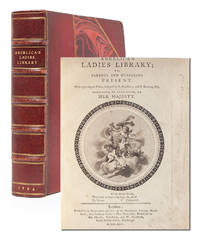
17943526London: Printed for J. Hamilton 1794. First edition. Finely bound in half morocco over marbled boards ruled in gilt. All edges brightly gilt. Marbled endpapers. Lower front corner skinned. Light offsetting to endpapers. Faint gift inscription to outer margin of title. Header of titlepage shaved close without any loss to text with textblock wide margined and clean. Pages measure approximately 190 x 150mm. Collating 2 vi 440: bound without half title else complete including engraved title and eight plates designed by Angelica Kauffman a founding member of the Royal Academy of Arts. A surprisingly unfoxed and wider-margined copy than is typically found of this compilation of early educational works designed to help usher girls into adulthood.<br/><br/>"These sheets were penned by some of the most amiable and well informed subjects of these realms and intended as affectionate legacies of those noble and worthy persons to their amiable offspring for whom they had such tender regard.to point out whatever was desirable and just in forming and perfecting the virtues of the female character."  Thus John Hamilton brings together a series of 16 pieces on women's education and etiquette by authors including Dr. Gregory Lady Pennington the Marchioness of Lambert John Dryden and Lady Ann Bothwell. Using illustrations by a well-known female artist who was cutting edge in her own time as a founding member of the Royal Academy of Arts the Ladies Library was purposely suited and adapted for the use of the Female Sex" and for their parents who might want to guide girls into responsible and intelligent womanhood.<br/><br/>ESTC T88185. Printed for J. Hamilton unknown books
18703389United Kingdom 1870. Geography notebook of Mary Barker: Quarter black roan over marbled boards measuring 9 x 7 inches. Comprised of a calligraphic title and frontis plus 59 hand drawn-and-colored maps done by a young woman in her first three years of teacher training. Throughout Mary annotates on the margins which year and term she is in and occasionally notes that the map was drawn "From Memory"; and each map has penciled corrections and assessments. <br/><br/>with Geography notebook of Allison Jane Gillespy: Quarter cloth over marbled boards. Calligraphic title page and 35 intricately hand drawn maps from the British Empire Europe and the Middle East. <br/><br/>A pairing of beautiful and research-worthy notebooks documenting teacher training in the late nineteenth century as well as providing a look into how geographies changed across time and how British educators were being trained to perceive and educate the young about other parts of the world and how they connected to the British empire. With nearly 100 pages combined the notebooks offer scholars important comparative opportunities and means for better understanding the rising number of women educators and authors publishing works that engaged geography and international cultures during the Victorian era.<br/><br/>"The Wesleyan Methodists had a school for ministers' daughters at Trinity Hall Southport.which admitted both boarders and day girls.to educate ministers daughters and train teachers" Roach. Pupil teacher programs like the one Mary Barker was enrolled in had become a popular method of producing teachers at a time when the public's access to education expanded and the demand for instructors was at a high. Such programs functioned like an apprentice system taking a senior pupil typically thirteen years old and putting her in a five year assistantship to her own instructor. Pupil teachers typically took on responsibility for teaching lower classes observing their superiors educate the more advanced students and completing their own educations. By the 1870s these programs had become standardized to ensure proper preparation for instructors Robinson. <br/><br/>Mary's maps trace this process. As she moved from her first to her third year in this notebook the quality and care she puts into her work improves. Her handwriting and attention to detail matures. And her assessments move from Fair to Good and Very Good. Maps in the notebook include nearby locales such as Ireland Scotland and the British Isles as a whole; European nations including Sweden Norway and Prussia as well as eastern Europe and Russia. Mary also maps out "Arabia" and the "Chinese Empire" as well as "Further India" revealing a wide array of changing borders and shifting cultural attitudes. <br/><br/>While Allison does not leave any marker of her class age or school the level of intricacy in her maps suggests she was a senior student or finished instructor. These appear to be fair copies not done from memory but prepared as examples for students or as teaching aids.<br/><br/>Together the two provide a comparative opportunity to study the history and politics of mapping nineteenth century girls' education pedagogy and pedagogical training and geography. unknown books
16759Women's Education Movement. Pamphlet/ Volume 14 of 17: Acts for the State of Massachusetts January 12th Session 1804 Incorporation of Bradford Academy Containing the original incorporation of Bradford Academy. Bradford opened as the first coeducational institution in Massachusetts but due to overwhelming interest from parents of girls with no other option for education Bradford soon transitioned to become the first all-female academy in Massachusetts and among the first in the United States in 1836. Only three examples of these early Incorporation Acts could not be found among Institutional Collections according to OCLC Worldcat. <br/><br/>Women's colleges proliferated in the mid- to late- 19th century to fill the void created by their exclusion from most institutions of higher education. The prevailing notion that women were too delicate for a rigorous academic education was openly challenged when Elizabeth Cady Stanton spoke at the Seneca Falls Convention of 1848 "Man's intellectual superiority cannot be a question until woman has had a fair trial.When we shall have had our colleges our professions our trades for a century a comparison then may be justly instituted." Young women were quick to step up to the challenge; as quickly as female colleges opened they filled up. But this document predates Seneca Falls by 40 years and Bradford was among the very first institutions to educate women in the United States. unknown books
1592046070Geneva: Henri Stephanus Estienne 1592. Second Edition. Hardcover Full Leather. Very Good Condition. Two volumes in one the Arrianus bound first and published in 1575. The second but first complete edition of Arrianus Estienne published the first in 1551 before the Iberica and Hannibalica sections had been found and added 72 pages of annotations. Contemporary armorial calf rebacked early on - loss tover y bottom of spine surface scratches old bookplate to added endppaers some browning and chipping to pages old repair to verso of Arrianus title page scattered minor foxing and staining - but a very good copy overall of two important Estienne histories both printed in Greek with Latin translation in two columns. 12.1986810; 12x2767172 342pp. Size: Folio. Quantity Available: 1. Shipped Weight: Over 3 kilos. Category: History; Antiquarian & Rare. Inventory No: 046070. <br/><br/> Henri Stephanus (Estienne) hardcover books
1725046782Dublin: Thomas Hume 1725. First Edition. Hardcover Full Leather. Very Good Condition. Contemporary calf rebacked one corner repaired leather a little dry but sound soiling to endpapers occasional slight foxing quite clean otherwise. Two volumes bound in one dated 1725 and 1724 respectively. 14 260pp i.e. 262pp 2 86 13pp. Extensive errata in preliminaries pages 5-6 numbered 4-4 with corresponding errors in pagination. ESTC T141098 Size: Folio. 2-volume set complete. Quantity Available: 1. Shipped Weight: 1-2 kilos. Category: History; Inventory No: 046782. Thomas Hume hardcover books
15151NIGHTINGALE Florence. Collection of 32 pieces celebrating the first 50 years of nursing education which made nursing into the first respected medical profession for women. This collection includes a First Edition of Nightingale's influential guide Notes on Nursing 1859 and a handwritten Nightingale letter with wonderful content on her training school and hospital followed by many more tactile and visual pieces from the period ranging from approximately 1880-1930 when women entered the first official nursing programs to obtain theoretical education on disease prevention and antisepsis practical training in patient-centered care and certification and accolades for their excellent work. <br/><br/>While nursing was initially considered a volunteer service the founding of the Nightingale School of Nursing in 1862 caused rapid changes developing nursing into a true medical profession. Programs opened worldwide basing their training on the "Nightingale Principles" that emphasized patient-centered care through systemic cleanliness and stemming of infection in hospitals. The first time these important ideas were placed in print was in Nightingale's 1859 Notes on Nursing¸ a guide to patient care within the hospital and community which has remained relevant to the present day. A First Edition of Nightingale's Notes on Nursing published before even her training hospital was founded is included with this collection. A wonderful early letter on St. Thomas Hospital the site of Nightingale's first training school which she wrote in 1864 shortly after its founding is included here are well. In this letter Nightingale laments that "poor St. Thomas is in such a "fix & has so many bad friends that he ought to keep all his good ones." She is no doubt referring to the back-handed business deal that led to the hospital's moved to an abandoned music hall with sub-par hygiene for nine years starting shortly after her training program had found its home there. She discusses the immediate effects on her own students "I should never have placed my Probationers at St. Thomas but that Mr Whitfield & Mrs Wardroper were there.and when St Thomas' with its ample income has not contributed one farthing to but has profited by the Services of my Training School." Nightingale herself championed the creation of a new building and helped design it for modern standards of safety and hygiene. Among the first programs to model itself after Nightingale's example wertr the Spelman Nursing Program founded in 1886 and the Johns Hopkins School of Nursing in 1889. In order to distinguish nurses' uniforms from those of servants the programs instructed nurses to wear pocketed aprons for carrying tools and the schools provided ruffled caps that were easy for patients to identify in hospital hallways. An early vintage cap from circa 1880 is included in this collection.<br/><br/>By the turn of the century nursing education had aligned with university criteria and rigorous training became mandatory. In 1902 the U.S. and New Zealand initiated standard requirements for registered nurses to pass medical examinations; and by 1909 the University of Minnesota was the first to award a bachelor's degree in nursing. In 1919 the U.K. passed the Nursing Act requiring all nurses to join a registry; and in 1923 Yale University School of Nursing became the first autonomous college in the field. Such programs required women to take 2-3 years of medical coursework and pass certification exams. As is evident by this collection's handwritten nursing class notebook these women gained intensive knowledge about anatomy nutrition and disease. The notes in this collection include anatomical drawings as well as detailed information on "the practice of hygiene important in care of patient.how to prevent infection.uses to body of food and amount of food needed by individual patient" based on condition and diagnosis. It comes with a very rare 1911 "The Trained Nurse" booklet which contains educational matter on sexual and dental hygiene for patients to lower the risk of infection as well as information about a nurse's commitment to her training program. OCLC Worldcat lists no other known copies.<br/><br/>After completing classes nursing students apprenticed in their program's hospital until graduation. Instructors and administrators continued to value the use of uniforms and they made the clothing more functional for women whose daily tasks ranged from explaining doctors' diagnoses and treatments during consultations to the dressing of wounds. While uniforms evolved to become more streamlined they still bore visual signs of a student's experience and accomplishments. The nursing cap continued to be the most recognizable sign of entrance to the profession and getting her cap was a formal right of passage to a young nurse. Women only obtained the cap during a ceremony in which nurses from the program pinned the caps to the new nurses' heads. As students rose through the ranks and ultimately graduated they would receive a nursing lapel pin showing their entrance into a specialized field. This collection includes each of these important pieces: a white vintage nursing cap and lapel pin. In addition it contains a handwritten journal with beautiful colored handdrawn illustrations poems and diary entries by a nurse during her hospital training.<br/><br/>The women who graduated from nursing programs had met the mandatory benchmarks; indeed these women also often exceeded requirements and won honors for their work. Celebrating these landmark accomplishments this collection includes a set of 5 turn of the century graduation invitations an early commencement booklet with individual nursing graduation photos 3 early diplomas for women graduating from nursing programs 8 class photos and 7 individual female graduate portraits. The photos visually document the collective changes that these nurses' uniforms underwent across the decades as well as the women's pride in obtaining their degree. The collection also contains a "Champion of Head Nurses" trophy awarded to a young nurse for her leadership within her new hospital.<br/><br/>As this collection shows these women's educations led them to become proud and dedicated professionals excited to apply their knowledge in ways that made a difference. University of Pennsylvania "American Nursing" p. 1-11. "A Nurse's World" p.1. Heineman "Timelines in American Women's History" p. 219. unknown books
1791045038Paris: Buisson 1791. First Edition. Hardcover Full Leather. Very Good Condition. 2 volumes bound in one in contemporary mottled calf; worn leather chipped at the head of the spine scattered mild foxing small stain to first title. Complete with the half titles reuniting the two parts of Paine's treatise on democracy and revolution that were published a year apart. There are two editions dated May 1791 on the title page with no clear priority between them. The first part was translated from the original English edition that was almost immediately edited and softened. Paine was a star in France an enlightenment philosopher of the first order and a frequent guest along with the likes of Franklin Jefferson and Adam Smith at the salon at the Hôtel de la Monnaie. "The government tried to suppress it but it circulated more briskly.Rights of Man can be seen for what it is: the textbook of radical thought and the clearest of all expositions of the basic principles of democracy." Printing and the Mind of Man xii 227pp; iv 16 224pp. Howe P-31 and 32 The English ed. PMM 241 the English ed. Size: Octavo 8vo. Previous owner's book-plate inside front cover. Quantity Available: 1. Shipped Weight: Under 1 kilo. Category: Philosophy; History. Inventory No: 045038. <br/><br/> Buisson hardcover books