Solis Antonio deABAA
638 résultats
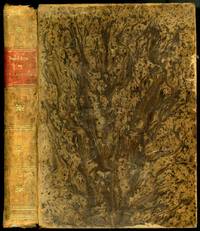
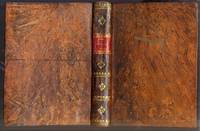
1684044178Madrid: Bernardo de Villa-Diego 1684. First Edition. Hardcover Full Leather. Good Condition. Later tree calf light wear at the edges quite sound and attractive. Lacking the front blank and the frontispiece title torn with significant loss at the edges and laid back down. generally mild but pervasive soiling and foxing and a number of tears with loss and repairs to the fore edge of the pages: on page 301/2 with loss of a couple of words 135/6 287/8 221/2 and 269/70 touching a few letters 187/8 touching a few letters and additionally an unrepaired tear with no loss in the gutter page 11/12 with a long unrepaired tear touching a few letters and the gloss 5/6 touching a few letters and 543/4 with a tear on the bottom corner losing a word and a few letters; last two index pages with loss at edges old notes to rear blank. Some other minor loss at the edges which may obscure some glosses scattered stains small tears etc. Otherwise complete 32-548-15 p with pagination errors of 26-27 repeated 382-3 repeated and 399-400 absent. A flawed but essentially complete copy of the first edition the only edition printed in Solís's lifetime. Translated into French Italian English Danish and German the Historia was an enormously influential history of the Spanish conquest of Mexico as well as a much imitated piece of prose. Sabin 86446. Size: Folio. Quantity Available: 1. Shipped Weight: 1-2 kilos. Category: History; Antiquarian & Rare. Inventory No: 044178. <br/><br/> Bernardo de Villa-Diego hardcover books
1586046648Paris: Nicolas Bonfons 1586. Early Edition. Hardcover rebound in leather. Near Fine Condition. Jean Rabel. Two parts bound as one dated 1586 and 1588 in modern ca. late 19th c. full red morocco gilt rules spine decorated in gilt in compartments gilt turn ins edges gilt; faint dulling to spine bookplate of E. Delicourt - a lovely binding in a matching leather trimmed slipcase. Fifth Bonfons edition first appearance of the second book with the woodcuts by Rabel. 16 212; 4 119 3 leaves. 56 woodcuts of tombs in the second part. Lightly washed faint occasional foxing neatly trimmed when rebound. Adams C 2695 Brunet II 307 Graesse II 276 Mortimer 156 Size: Octavo 8vo. Illustrator: Jean Rabel. Quantity Available: 1. Shipped Weight: Under 1 kilo. Category: History; Antiquarian & Rare. Inventory No: 046648. Nicolas Bonfons hardcover books
192121397El Paso Texas: Not Published 1921. The collection includes over 150 dated and signed letters written to and a few items from Dr. Lucinda DeLeftwich Templin 1888-1969 author historian & collector ".one of El Paso's best-loved and most distinguished educators - in 1916 she took her undergraduate and Master's at U. of Missouri and became Dean of Lindenwood College in St. Charles MO. did doctoral work at Harvard and Columbia and took over as principal at the Radford School in 1927 at the time called El Paso School for Girls; Dr. Templin interested Mr. and Mrs. G. A. Radford of Webster Grove Mo. in the school and the Radfords paid off the mortgage provided an endowment fund that insured the institution's stability and the name of the school was changed in honor of these benefactors. During Dr. Templin's administration Radford School grew to a nationally accredited school for girls in the Southwest and when she retired in 1967 the 22-acre campus had more than $1000000 in physical improvements and was debt-free. Dr. Templin had also completed plans for construction of a $400000 library and museum on property owned by the school; she was a member of the nation's leading educational organizations and honorary societies named consistently to Who's Who in America and Who's Who in American Education; author of numerous publications most of which were concerned with the field of education. The above material from her obituary; This wide-ranging diverse collection has three intertwining themes - letters concerning Dr. Templin's ongoing interest in education and educational materials for her school letters which relate to the business and academic part of Radford and letters of reference for applicants and correspondence which relates to the creation of her War Museum where she collected military autographs uniforms photographs paraphernalia weapons from around the world. A sampling of what is found here chronological order: 1921 Dr. James G. Kiernan writing about some autographs he was sending to Templin - he was famous for the earliest-known use of the word heterosexual in the United States; 1921 Ellen Shaw Barlow writing in relation to the national Committee on Prisons and Prison Labor requesting Templin's presence for a meeting of the Committee on the Care and Training of Delinquent Women and Girls; 1926 Roy Franklin Nichols 1896-1973 American historian and a Pulitzer Prize winner writing regarding one of Templins' publications; 1928 Breckinridge Long 1881 - 1958 diplomat and politician served in the administrations of Woodrow Wilson and Franklin Delano Roosevelt on Democratic National Committee letterhead - regarding a portrait of Rev. John Breckinridge his great-grandfather Templin was sending in appreciation of his " defense of Religious Freedom "; Federico de Onis Sánchez 1885 - 1966 Spanish writer and literary critic taught Spanish literature at Columbia University in New York concerning a recommendation of one of his students for a position at Radford ; educator John L. Bergstresser; Jessie H. Humphries Associate Dean Texas Womens University; Butler Ames 1871-1954 American politician engineer soldier and businessman; Richard Fenner Burges 1873-1945 Texas legislator and conservationist; Alice Mildred Burgess; William Blair Roberts 1881-1964 Episcopal Suffragan Bishop South Dakota; Katharine Denworth president of Bradford Academy regarding an article on sororities in colleges; N. Floyd Templin of the Ohio House of Representatives writing on Templin family genealogical matters; John G. Barry consulting mining geologist and engineer of El Paso regarding an educational alliance between the Radford School and the Texas College of Mines; Arthur L Burroughs publisher writing about the subject of grammar in education; Harriet M. Chase of the National Education Assoc.; Jack Braveheart regarding a talk on the American Indian; Ivan Lee Holt Methodist bishop of St. Louis; Cornelia McKinne Stanwood of the Sarah Dix Hamlin School San Francisco; Joseph Dorfman economic historian at Columbia Univ. asking Templin about her studies with Thorstein Veblen; an interesting 2-page letter from Dr. J. Travis Bennett of El Paso regarding the setting-out of a chart for the physical examination and reportage on condition of applicants to Radford with suggestions; Bertha Baur 1858-1940 directed the Cincinnati Conservatory of Music; A.F. Kuhlman Assoc. Dir. University of Chicago regarding research work on childrens' reading habits information; Dr. William S. Gray 1885-1960 American educator and literacy advocate also of U. of Chicago on the same subject; Sallie Caldwell Teachers College Columbia University regarding early learning & English curriculum materials; Mrs. Florence F. Osgood of the Neshobe camp for girls in Vermont requesting an alliance with Radford School; U.S. Army major later colonel Livingston Watrous; Colonel D.C. Pearson New Mexico Military Institute; Ruth Elliott of Wellesley College; Chris P. Fox sheriff El Paso regarding falling down on the job for police protection near the school; Brent N. Rickard American Smelting & Refining Works; Louise Traxell Greeley Dean of Women at U. of Wisconsin Madison; Lieutenant Colonel Joseph P. Aleshire Fort Bliss Texas; Mrs. L.J. Calvocoressi Chairman of the Women's Auxiliary of the Greek War Relief Assoc.; Lt. Col. later major-general Ray. T. Maddocks; Robert E. McKee Sr. 1889-1964 major U.S. contractor engineer builder; Columbia Broadcasting System program press information director George Crandall; Colonel later Brig. General Charles G. Sage; Elmer Davis 1890 1958 news reporter author the Director of the United States Office of War Information during World War II and a Peabody Award recipient; William McChesney Martin Jr. 1906-1998 ninth and longest-serving Chairman of the United States Federal Reserve serving from April 2 1951 to January 31 1970 under five Presidents; Bernard Hoffman 1913 - 1979 American LIFE magazine photographer and documentary photographer first American photographer on the ground at Hiroshima and Nagasaki after the atomic bomb was dropped in 1945; Alfred E. Stearns Chairman Overseas Schools Committee; Colonel Hugh J. Deeney Chief of the Adjutant General Division; Col Harold R. Turner first commander of White Sands Missile Proving Ground; Guy Sylvestre Jean-Guy Sylvestre OC FRSC 1918 -2010 Canadian literary critic librarian and civil servant; Rear Admiral Barry Kennedy Atkins 1911 -2005 officer of the United States Navy best known for his achievements as a destroyer captain in World War II; R. Burdell Bixby prominent Republican of NY State; Robert W. Hamilton justice of the Texas Supreme Court regarding a Radford school girl reference; Colombian world federalist Santiago Gutiérrez; M.S. Sundaram Head of Education Indian embassy; Raymond L. Telles Jr. b. 1915 was the first Mexican-American Mayor of a major American city El Paso Texas 3 letters; Ángela Acuña de Chacón Chilean who served as commissioner 1960-1972 on the Inter-American Commission on Human Rights; William G. Stark Consul General of Canada; Rene Mascarenas Miranda Municipal President mayor of Juarez; Gordon Llewellyn Allott 1907-1989 Republican politician; Mrs. William Barclay Parsons president of the National Council of Women of the United States; John Koehler Gerhart 1907 - 1981 United States Air Force four star general; J. T. Rutherford 1921 - 2006 United States Representative from Texas; R. G. Follis Chairman of Board. Standard Oil Company of California; Robert John Morris 1914-1996 President of the University of Dallas American anti-Communist activist 2 notes; Karl Robin Bendetsen 1907 -1989 remembered primarily for his role as architect of the internment of Japanese Americans during World War II; Elmer Ellis 1901 - 1989 American educator and fourteenth president of the University of Missouri; historian C.L. Sonnichsen; Marshall S. Carter Deputy Director of Central Intelligence CIA; Millicent C. McIntosh 1898-2001 fourth dean of Barnard College 1947-1952 and the College's first president - this is the last letter dated 1962 and in it Dr. Templin is asking for McIntosh to help with providing a successor to the headship at Radford - Templin was soon to retire and died relatively soon afterwards. Some of the letters and notes are very short with limited content; others more voluminous.Additional materials include: letters to another Templin family member from Scott Wike Lucas 1892 - 1968 two-term Democratic United States Senator 1939-1951 from Illinois and Joel Bennett Clark 1890 -1954 better known as Bennett Champ Clark Democratic United States Senator from Missouri from 1933 until 1945 later a United States federal judge; and a few other letters; an undated letter to Templin from pianist Ola Gulledge; a two -page undated letter on The American School Foundation Mexico letterhead; a few letters from Frank S. Ross Major Gen. U.S. Army regarding the Templin War Museum project; a clipped signature of Alvan Tufts Fuller 1878 -1958 and one of John Kieran; and a unidentified sepia-tone matte-finish photograph circa 1920s that may be Dr. Templin or perhaps a friend; a few of the items with the original mailing envelopes; many letters with old adhesive residue from being mounted at some time some with old tape marks in the corners some of the items trimmed as if to accommodate in a smaller frame or album not here; old fold lines ageing; some with corner-attrition due to being removed; in overall good to very good condition and an interesting group of material encompassing the rich educational business and personal life of this well-known Texas woman educator whose contacts spanned the United States and the world. . Unique. Not Bound. Very Good. Not Published Paperback books
15265Extensive correspondence collection 1920-1940s. 66 letters by various authors mostly women native to the Indian sub-continent all very unusual in the fact that they are highly educated and in the midst of further studies or early in their careers decades prior to Indian Independence. The letters are addressed to a young teacher Probha who was former classmate to most of the writers as well as a few to her sister Rani or to both and follows them as they finish school enter teacher training college and ultimately fan out over India as bearers of a new generation of independent Indian women. In 1931 Indian female literacy hovered at just under 3% making the experiences of these forerunners and their correspondence incredibly rare.<br/> <br/>Prior to Indian Independence from Britain Gandhi called for uplifting the status of women through education and recognition of their inherent worth as human beings. Determined to inculcate the equality of the sexes into Indian culture Gandhi publicly did household tasks that were traditionally women's work and declared that "the future is with women." Indeed other activists also equated India's independence with new freedoms for women. However by 1931 Indian female literacy hovered under 3% and was often lower in the rural provinces where schools were few child marriage was prevalent and patriarchal norms dominated society. On the cusp of vast cultural change educated women and female schoolteachers and professionals were the rare exception. <br/> <br/>These letters record the interactions between a rare group of highly educated women their thirst for personal and financial independence as well as their conflicting feelings regarding the traditions that defined their lives and restricted them. Their nexus was the Queen Victoria Girls' High School in Agra a small city in the rural northern province of Uttar Pradesh most notable for being the home of the world famous Taj Mahal a symbol of reverence to a much-loved wife of antiquity and of honor to the traditional woman. In its tall shadow young sisters Probha and Rani Thomas attended high school at "QVHS" in the late 1920s-early 1930s where lifelong friendships developed with female students Libawati Ivy Monica Lila Mercy Winnie among others. Most of them became teachers where the extraordinary nature of their achievement stood in stark relief to the lot of most other women "This year only one out of five girls has passed from our village schools." As their lives continued and they spread across the country education became the uniting factor that drove the young women forward and brought them back to each other. "Probha what are you going to do now I am going back to old Q.V. to become a teacher and I am feeling very sad as my dear old class girls won't be there. All these past years seem like a dream. So soon the parting took place.No more Tenthies no more H.M. Club. All have faded like a passing cloud.I shall never find such a jolly set again Probha. This future seems very hard." They were witness to an extraordinary moment in history when the world was changing particularly for women and with their education they are in a unique position to describe the change "It is funny that when it is time for us to be silent we have to look after our visitors and perform useless ceremonies-someday we'll change but not yet." One recalls a train ride in which she sat near "a bold Gandhi's follower.In his eloquent poetical language he was telling people that he had been to jail and was saying that for the love of country he can endure anything." Probha and Rani's father a judge had lessons for them about the danger of Revolutionary activities when one of their friends gets involved "Arel De is intelligent and emotional but he has no self control.You may write to him but make it plain that you will drop correspondence if he writes politics again. He is either already on Police books or will soon be." Though they shied away from direct involvement in politics they encapsulated Indian women's liberation in the early century: striving after independent employment deferring marriage yet with respect for their elders. In one letter Monica sadly reports to Probha "I am not coming back to school. Although I am feeling very bad but yes father has done what is good for me. I asked many times to let me go but he forced me to stay here." And in another poignant letter "Lovey" writes "Rani sis do you remember once we were talking about this problem of getting married Now very soon I shall be facing it. John wants to settle down after my working for one year only & I wish to work for at least two years. I think I shall have to do my parents will decide. Please pray that I may get a chance of working for at least two years."<br/> <br/>In tone the women are warm and sisterly to an extent not found in letters of Western cultural origin and also profoundly honest in reporting to one another their successes and failures; a good or bad test score the struggle to study while encountering difficulties such as lack of clean drinking water and large snakes and even having the security of their families placed on their young shoulders "May God help me. May I pass in the 3rd division only for it is difficult time for us two sisters. Our father's money is nearly spent and if I pass I go for training. Please remember us in your prayers that we may soon become independent." As one of the young women finds out who goes back to QVHS as a student teacher life becomes more complicated as time goes on "My examination result is so bad.my poor mother is working so hard at home. It was too much to disappoint her.I know you would ask me but why have you done so badly The only answer I can give you is that I got 7 periods a week to teach & being a slow writer the notes of lessons & the preparation took all my study time." What they share is a clarify on the value of their education to all their future lives: "All the Normal Students High School and the middle candidates.tell each one of them that I wish them a very brilliant success. Tell them that I remember each one of them in my prayers that they all may pass in the 1st Division with scholarships."<br/> <br/>Cultural references show the writers and recipients of these letters were generally native of India although they often went by Western cognoms. A few of the letters from British servicemen or coworkers offer an interesting perspective on intercultural understanding and friendship in the days when Indian Independence loomed so closely on the horizon. A serviceman befriended by Probha writes "In those days we were very ignorant. We knew nothing at all of the country or the people and their ways and customs. I think we were most surprised to find that you spoke English.We were astounded to see such bad conditions existed for some people and very upset to find such a feeling of bitterness between our two peoples." Reflecting the dichotomy inherent to the lives of these girls several letters are from their mother who simultaneously pushes them on to achieve independence and reminds them of their cultural anchor. anxious for them and resolute that they will have every opportunity possible. An intelligent woman in her own right Probha's mother offers advice on her exams "Your last quarterly should have had better marks. I wrote a few little hints in my last letter. Please keep them in mind.I'll send your saris in a day or two.I couldn't get even a bit of voil in the bazaar. There was no chance of getting it from any out station. I've used the bits I had at home.I pray God to be with my baby & help her to be a true hearted & brave soldier." <br/> <br/>The letters are in English except for a few brief passages in Hindi as English was the primary language of education and commerce prior to Independence. A few are from an object of romance; a male teacher who courts Probha with poetry but does not succeed in convincing her to give up her freedom as a single woman. A rare archive of letters from an extremely uncommon cross-section of pre-Independence society: the forerunner of the modern educated and independent woman of India. unknown books
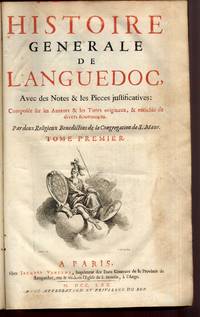
1730043619Paris: Jacques Vincent 1730. First Edition. Hardcover Full Leather. Good Condition. 5 volumes in contemporary gilt calf worn dry hinges and joints split boards attached but precariously in a few cases. Scattered browning internally and occasional creased pages spine labels bookplates and old embossed theological library stamps to title but generally clean and unmarked otherwise. 36 plates many folding and 4 maps hand colored in outline. Published 1730-1745. Size: Folio. 5-volume set complete. Quantity Available: 1. Shipped Weight: Over 3 kilos. Category: History; Antiquarian & Rare. Inventory No: 043619. <br/><br/> Jacques Vincent hardcover books
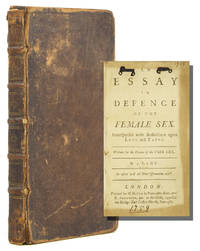
175013363London: printed for C. Hitch in Paternoster-Row and R. Akenhead jun. at the Globe opposite the Bridge-End Coffee-House Newcastle 1750. Fifth edition. 6 149 1 ad pp. 1 vols. 12mo. Contemporary calf. neatly rebacked flyleaves removed some light browning or spotting mostly marginal ink date 1759 at foot of title page a few pen or pencil marks on title and in margins. Fifth edition. 6 149 1 ad pp. 1 vols. 12mo. First published in two editions in 1696 and reprinted in 1697 1721 and the present edition ca. 1750 with changing subtitles. Variously attributed to Mary Astell Judith Drake and H. Wyatt.<br/>The present edition includes an ad for The Universal Library kept by Newcastle bookseller R. Akenhead jun. The date is conjectured from the R. Akenhead junior imprint which surfaces briefly in two other works dated 1750.<br/>A curious note on the verso of the dedication explains the lack of a subscriber's list. Apparently most of the "generous Encouragers" did not want to have their names included so "no List is printed lest Offence might be given."<br/><br/>The author observes: "we are taught only our Mother-Tongue or perhaps French which is now very fashionable and almost as familiar amongst Women of Quality as Men; whereas the other Sex by means of a more extensive Education to the Knowledge of the Roman and Greek Languages have a vaster Field for their Imaginations to rove in and their Capacities thereby enlarged."<br/><br/>RARE. ESTC T123106 BL NLS Smith College; Wing A 4058 printed for C. Hitch in Paternoster-Row, and R. Akenhead, jun. at the Globe, opposite the Bridge-End Coffee-House, Newcastle unknown books
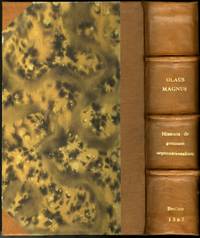
1567046211Petri: Heinrich 1567. Early Edition. Hardcover Half Leather. Very Good Condition. Modern half leather over marbled boards author penned to page edge lacking any blanks and lacking the full page map of Northern Europe with a facsimile tipped in. Collijn in his Swedish Bibliography suggested that the map was printed and inserted separately and only in some copies of the Basel edition. First Basel and Second Latin edition a reprint of the Rome edition of 1555. Illustrated with small woodcuts throughout. Dampstain to upper right from around page 500 on a few scattered dampstains modest foxing - generally a clean copy. 96 854 2 pp. Brunet III 1302. Magnus's history of Sweden and the North was enormously successful and popular and was translated early on into Italian German English and Dutch. It describes much folklore and customs not recorded elsewhere - including the first description of making the questionable Northern delicacy lutefisk. Size: Folio. Quantity Available: 1. Shipped Weight: 2-3 kilos. Category: Travel & Places; History. Inventory No: 046211. <br/><br/> Heinrich hardcover books
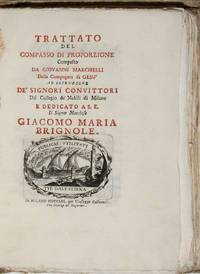
17595386Milan: Giuseppe Galeazzi 1759. Hardcover. Near Fine. 8vo 20.2 x 14.4 cm. XXII pp. 352 pp. 8 ff. with 1 large 40 x 50 cm folding plate containing 5 illustrations; title-page printed in red and black engraved device on title. Bound in contemporary publisher's binding title in ink on spine. Minor edge wear minor staining to lower cover. Quires C and E loosening internally very fresh and clean retaining deckle at fore-edge and bottom edge toning to plate marginal paper flaw and rear reinforcement of crease to plate otherwise an excellent copy. Rare first and sole edition of this treatise on the proportional compass written by the Jesuit Giovanni Marchelli. The work was expressly written for the use of Marchelli's mathematics pupils in the Jesuit College of Milan and thus provides interesting evidence for the use of scientific instruments in Jesuit education. The text offers an advanced understanding of Galileo's landmark instrument and coming from a Jesuit it is perhaps notable that Galileo's "invention" of the instrument is so candidly celebrated. The proportional compass or 'sector' in fact combines two separate instruments one for making observations by adding a quadrant to its arms the other to calculate various measures like proportion trigonometry and squares and cube roots. Its several scales permit easy and direct solutions for problems in surveying gunnery and navigation. Conceived as a universal instrument the device was adapted for a variety of pedagogical purposes far more diverse than Galileo's sector ranging from pure geometry to such practical operations as taking measurements for the architectural orders p. 11 converting currency and calculating interest p. 42 performing various 'rule-of-three' operations such as the dissolution of business partnerships p. 53 surveying passim and the construction of Napier tables p. 73. The compass scales are well illustrated and the text includes tables giving the positions of the various markings. The large folding plate provides diagrams "for constructing Galileo's quadrant" that show with great refinement exactly where the markings on the quadrant's arm and tangent are to be engraved. The final chapter deals with military problems such as the determination of the caliber of cannon balls. OCLC locates copies at Adler Planetarium Michigan Oklahoma Woodstock Theological. De Backer-Sommervogel V.525 4; Cinti 177; Carli-Favaro 128; Tomash II.M34. <br/> <br/> Giuseppe Galeazzi hardcover books
1588044443Seville: Fernando Diaz 1588. First Edition. Hardcover Full Leather. Very Good Condition. Later tree calf worn front hinge split rear starting front endpaper torn at the top corner as is the title with an old repair and manuscript UZIA in the title to replace the missing letters. A few paper repairs in the margins touching a few letters a few short tears with no real loss scattered pencil marks and a few minor marginal marks in an old hand. One group of pages trimmed a little close with loss of some text to the table on leaf 53 of the genealogy of the Kings of Austria. Generally minor scatterd foxing browning and staining - mostly quite clean. Magnificently illustrated throughout with armorial devices - first and only edition of an outstanding work on the Andalusian aristocracy. 10 348 ff. Argote de Molina great humanist and librarian also edited the first Spanish book on hunting 1582 and a history of the embassy sent by Henry III of Castille in 1403--1406 to the Court of Tamerlaine at Samarkand 1582. Graesse A195 noting that the title page is often lacking. Size: Quarto 4to. Quantity Available: 1. Shipped Weight: 2-3 kilos. Category: History; Antiquarian & Rare. Inventory No: 044443. <br/><br/> Fernando Diaz hardcover books
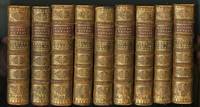
1604045016Ambrosium & Hieronymum Drouart 1604. Second Edition. Hardcover Full Leather. Very Good Condition. 5 volumes bound in 9 in contemporary calf. Worn at the edges and corners spines a little dry but intact and attractive overall. Volume 1 with a single title page some copies were apparently bound with a second title page noting Estienne the publisher of the Folio edition. Old bookplates inside covers ownership marks and stamps to titles and first pages occasionally trimmed a little close on the top edge just touching the running title scattered minor pencil marks light dampstain to the corners of a section of vol vii but otherwise clean and a very good set overall. This is the second edition of Thou's history published 1604-1608 and the first octavo edition. It was published just after the Folio edition a few months after for the first volumes and almost simultaneously thereafter. The first two octavo volumes corresponding to the first folio volume and printed in 1604 identified here as Pars I and Partis Primae Tomus II is bound in four volumes as is the second volume published in two octavo volumes in 1606 and corresponding to the Folio volume also published in 1606. They are identified as Tomus Secundi Pars Prima and Tomi Secundi Pars altera. The final volume identified as Libri VI is bound in one and published in 1608 the Folio edition was published in 1607-8. Because Thou was editing and changing his systems of identification as he published the books the naming system is a little odd - this final volume follows the third and fourth octavo volumes and not the first two in how it is numbered. 1005pp index; 1013 index; 958 index; 886 index; 501 privilege index. Kinser pages 10-20. Graesse VII 147. Thou's history is one of the great monuments of Renaissance history and in its scientific factual take on events was much more a work of the enlightenment than the counter-reformation. As a result and despite some minor changes from the first edition all of the later books dealing with the wars of religion and other topics ended up on the Index Librorum Prohibitorum in 1609. A 1620 edition collected all of the history and added Thou's Mémoires. Size: Octavo 8vo. 9-volume set complete. Quantity Available: 1. Shipped Weight: Over 3 kilos. Category: History; Antiquarian & Rare. Inventory No: 045016. <br/><br/> Ambrosium & Hieronymum Drouart hardcover books
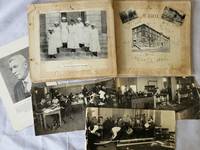
16425Historically Black College. 1923. Photo and Memory Album disbound. Lane College. Jackson Tennessee. Album belonging to 1923 graduate Lessie Belle Spann. 90 pages front and back majority filled on 8"x8" pre-printed My Graduation Journal leaves. A detailed and engaging record of Spann's senior year and graduation including numerous photos of campus and friends along with her own hand-written commentary and pen-and-ink embellishments. Some photos cut and pasted within hand-made decorative motifs. Supplemented by ink dedications from her co-graduates as well as programs and artifacts pasted in from the year's events and photo prints of her professors cut and pasted as well. Early HBCU albums are rare especially with such extensive photo and written documentation.<br/><br/>Lane College was originally founded in 1882 as a high school to make "teachers and preachers" of the newly freed slaves. Its founder was Bishop Isaac Lane one of those newly freed slaves who quickly rose in the Colored Methodist Episcopal Church after Emancipation. His founding makes Lane one of the earliest black-founded and run HBCUs. In 1923 at the time of this album Lane was still living and active in the church and the College President was his son James Franklin Lane who is featured in this album in printed photos and other references. Like most of the early HBCUs founded in the wake of the Civil War Lane's early mission focused on primary and secondary education and shifted to higher education in the early 20th century. In the early 1920s a college education was still a goal out of reach for most African Americans due to widespread discrimination economic inequality and the inherent inequality of opportunity endemic in the "separate but equal" doctrine of the 1896 Supreme Court case Plessy v. Ferguson. Historically black colleges and universities played a huge role in advancing equal education opportunities for African Americans including providing the education of 80% of all black American doctors dentists and Federal judges and leading in awarding black Americans with degrees in life sciences physical sciences mathematics and engineering. This album comes with two large approx. 4"x9" inch panoramic photos of students at work in physics and chemistry laboratories. <br/><br/>The owner of this album Lessie Belle Spann was born one of six children to parents Mary Ellen and John Wilson Spann and grew up in Tennessee near to Lane College. Her father was born in 1865 in reconstruction era Mississippi. As a 1923 graduate Spann gave the graduation Oration and was also the class historian. Spann has pasted at least 72 silver gelatin print photographs into this album many of them cut down to portraits from a larger size as well as numerous printed photos likely cut out of a school yearbook. The album pages are detailed and largely complete. One page is ripped down the middle put present. The entire album has been disbound and presents without boards or binding. Original double-punched holes provide an easy method for rebinding or storage. Rare and early artifact of an HBCU unusually complete. unknown books
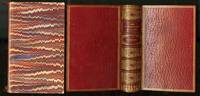
1487046404Milan: Antonius Zarotus 1487. Second Edition. Hardcover Full Leather. Very Good Condition. 19th century red morocco gilt hinges and spine rubbed and a little weak but still generally sound and attractive. Added marbled endpapers and a description of the edition and a note on the binding penned on added blank endpapers. The second edition of Tacitus much improved by Puteolanus from the first with the editio princeps of The Life of Agricola. Once thought to have been printed in the 1470s but now usually pegged as 1487. Likely washed though gently except for the first and final leaves Agricola leaves 176-187 with a dampstain in the margin final two leaves darkened. Four small wormtrails in last section leavs 121-end two trails in the textblock but generally very unobtrusive. Top edge gilt and trimmed slightly when rebound leaf numbers penciled lightly and neatly in the inner gutter.<br/><br/>Five 6 line and one 2 line initial colored in early or contemporary color 37 lines set in a fine Roman typeface often compared to Jenson and assumed to be set by him at one point 187 leaves with the blanks at 160 and 176 but lacking the final blank. <br/><br/>Graesse T7 Dibdin Bibl. Spenc. v2 461 Brunet V 633 Goff T7 ISTC it00007000<br/><br/>Provenance: With the label of A.C.C. Brodribb but likely from his father C.W. Brodribb who wrote and published in The American Library Annual a poem describing this volume laid in with a penciled date for the binding of 1855; an inscription on an added endpaper bears the same date. Also laid in is a 1949 letter to A.C.C. Brodribb Esq. from L.A. Sheppard at The British Museum describing the volume which he likely inherited following his father's death in 1945 Size: Folio. Antonius Zarotus hardcover books
15274Women's Early Education. Report of the Commission Charged to examine memoirs relative to the education of women. Third Subject. - Morality. By Mr. Philis - Reporter. 1827. Paper boards. Folio size 13 in x 8.5 in. 68 pages of handwritten script in black ink. In this manuscript one of the earliest formal debates on the value of education for women the author radically concludes that formal education for women should be universally accessible: "We think that in whatever condition heaven has placed a woman" the author argues "from the daughter of the Prince to that of the most humble of the subjects there should be a similarity of ideas. When they are wisely explained the elements of Language and Calculations are they not necessary and indispensable to women in all stations" The author then reverses the very argument used against women's education-- that it is unnatural since motherhood is the only suitable destiny for women-- by arguing that education is exactly suited to "what nature formed women to be". "She knows she was created to fulfill duties and penetrated with a sense of those she has to perform she makes all she possesses of enlightened ideas talents and fortune concur in accomplishing them. This is what nature formed women to be and such a well directed education would make her. This is what would make a good mother of a family who would well know how to form daughters worthy of imitating her." Education in fact is as naturally suited to women as motherhood and ought to be the province of adult women and girls alike regardless of age or opportunity-- an ideal still worth fighting for even nearly two centuries later. <br/><br/>It begins with a deceptively leading question: "What is the sort of education most suitable to Woman and the most proper to render them capable of fulfilling their destination as Mothers of families"Although the opening query is limited by modern standards formal education for many children-boys and girls alike-was not considered necessary in this period let alone for adult women with responsibilities in the home. The argument that education would serve women in their motherly duties was a crucial tool for advocates of womens' enfranchisement. The Commission judges three memoirs submitted on this topic and this forms the structure of the manuscript: "The Education Best Adapted to Form A Good Mother of A Family Is That Received at Home"; "It is Well Known That The Bad Education Of Women Does More Harm Than That of Men Because the Want of Good Conduct in Man Proceeds Frequently From The Education They Received From Their Mother ."; and "To Instruct the Children One Must Enlighten the Mothers". Thus the manuscript is valuable not only for its radical ideals but for its historical benefit as an overview of attitudes towards women's education at the turn of the 20th century. Just one year prior in 1826 the first public high schools were opened for girls in New York and Boston; it would be another 13 years until the first woman earned a college Bachelor's degree.  Cover boards worn with light soiling and scattered stains. Even toning and light soiling throughout. Very good to good condition. unknown books