42 032 résultats
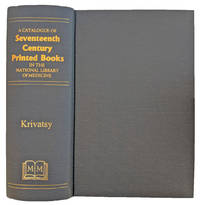
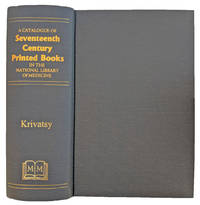
2000EEG1380Mansfield CT:: Martino c. 2000. 2000. 4to. xiv 1315 1 pp. Index. Gray gilt-stamped cloth. Very good. EXTRA POSTAGE WILL APPLY. Martino, [c. 2000]. hardcover
2000EEG1381Mansfield CT:: Martino c. 2000. 2000. 4to. xiv 1315 1 pp. Index. Gray gilt-stamped cloth. Very good. EXTRA POSTAGE WILL APPLY. Martino, [c. 2000]. hardcover
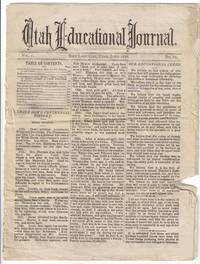
70916Ephemera. Very Good Minus. 16pp. Four leaves of paper measuring 15 1/2 x 10 1/2 inches folded vertically through the center. Self wraps. With a small open tear to the fore-edge margins of the pages which obscures a bit of the text and other more benign sporadic small closed and open tears to the edges. Subjects include Territorial Items Hints to Young Teachers The Centennial International Exhibition Intemperance among others. With contemporary advertisements at the rear for Walker House F. Auerbach & Bro G. F. Brooks Dealer in Staple Groceries and Adolph Hauerbach Practical Watchmaker. unknown
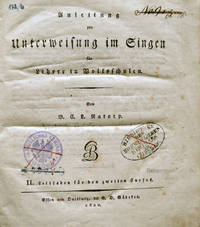
182012201Essen Duisburg: G.D. Baedeker 1820. Quarto. Contemporary marbled boards with portion of original printed wrappers laid down red paper label to spine with titling in ink. x 160 pp. <br /> <br /> Binding worn. Some foxing mostly marginal throughout; creasing to outer upper corners; occasional staining not affecting text. With contemporary ownership notations to front free endpaper dated 1820; ex-libris handstamps and some ink markings to title leaf. First Edition of the second part of this early influential work on instruction of singing for children. Scarce. The first part was published in 1813. Eitner v. 8 pp. 149-150. Fétis v. 6 pp. 283-284. <br /> <br /> Of interest to the evolution of music education in America further developed by 19th century theorists Lowell Mason and his contemporaries. G.D. Baedeker unknown
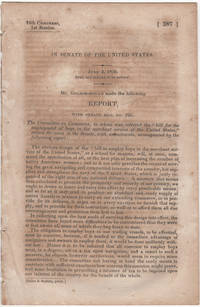
183643119Washington D.C.: Gales & Seaton print. 1836. First edition. Removed. A very good- copy with darkened leaves removed from a larger volume. 10 pp. 8vo. 24th Congress 1st Session No. 387. The Committee on Commerce to whom was referred the "bill for the employment of boys in the merchant service of the United States" return the same to the Senate with amendments accompanied by the following report. The bill sought to add protections for boys in the attempt to have more young men trained for the sea. A typical response for comment was: "The merchants of Baltimore have frequently experienced great inconvenience and sometimes have been subjected to expensive and injurious delays in their mercantile operations in consequence of the scarcity of seamen. The proposed measure in the opinion of your memorialists will not only greatly increase the number of this valuable class of men but by affording to them the advantage of early education and long training in their profession will render them far more efficient and will raise up a body of skillful seamen who in time of peace will be sufficient for the supply of the merchant service and in the event of war will prove an important auxiliary to the navy of the United States. Your memorialists therefore beg leave respectfully to urge the adoption of this measure."<br /> <br /> Robert Henry Goldsborough 1779-1836was Senator from Maryland from 1813-1819 and 1835-1836. Gales & Seaton, print. unknown
198653921Vancouver WA: Washington State School for the Deaf 1986. 4to. 77 i.e. 116 pp. Photo illustrations text illustrations numerous plates. Photo-illustrated softcovers NF copy. First edition of this remarkably scarce and informative history of the development of the Washington State School for the Deaf in Vancouver detailing its founding by the Washington Territorial legislature in 1886 as the School for the Deaf Blind and Feeble-minded its’ subsequent growth after the succeeding decades including agricultural projects vocational programs sports teams physical plant and more. Washington State School for the Deaf], paperback
19598064Swansea 1959. 14.5 cm x 24 cm. 37pp. Staplebound illustrated glossy cover with staining and mild edgewear historical illustrations and photographs throughout very good. unknown
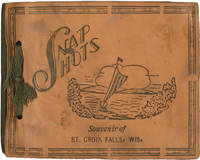
1940154291St. Croix Falls WI: N.p. 1940. Vintage string bound photograph album containing 31 black-and-white snapshot photographs including four hand-tinted in blue and yellow documenting a school costume day. Manuscript ink annotation to the inside front cover provides the date and album title: "Dress-Up-Day Pictures / April 5 1940". <br /> <br /> Many photographs with manuscript ink annotation captions to the bottom edges identifying the subjects. <br /> <br /> The outfits run the gamut: while some teens opted for simple cross-dressing costumes many were more creative dressing as cowboys hula girls hoboes married couples and the like. Notably unusual costumes include an ice box Life Magazine a beer barrel a telephone directory several rolls of Tums and a record player with a paper sign noting the record title as Rhapsody in Blue. A humorous assortment. <br /> <br /> Photographs generally 2.5 x 3.5 inches. Mounted on black cardboard album leaves rectos and versos. Near Fine. N.p. unknown
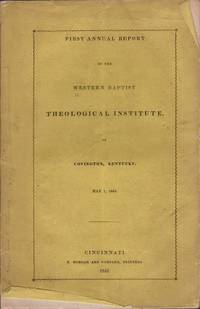
184333589Cincinnati: E. Morgan and Company Printers 1843. First Edition. Wraps. Good. Wraps. 22 pages. Yellow covers with printed title on the front wrap. Ex-institutional copy from the Western Reserve Historical Society with an embossed stamp on the title page. "Withdrawn" written in black over the stamp. Light soiling to the covers. Some margin marks in the text. A good copy. Scarce. 3 copies located in OCLC. Despite an excellent start the Western Baptist Theological Institute proved very fragile. The institute was established to serve western Baptist both those from the north and the south. The issue of slavery however divided the western Baptists from the very founding. Reverend Patterson the institute’s president also served on the National Board of Foreign Missions. This board published a number of articles indicating that slavery should not be tolerated in the Baptist faith. This association between Patterson and abolitionism caused much concern among the institutes southern trustees and students. On May 8 1845 Baptists delegates from the southern states met in Augusta Georgia and formally established the Southern Baptist Convention. This split would have grave consequences for the Western Baptist Theological Institute.<br /> <br /> Several southern members of the board of trustees asked Dr. Patterson to publicly state his opinions on abolitionism. He refused to do so. Instead Patterson left Covington and was replaced by Dr. S.W. Lynd. In 1848 a southern member of the board introduced a resolution that spoke of slavery as divinely inspired. The resolution was defeated. The four southern board members who voted for the resolution were undaunted. These members without consent of the rest of the board lobbied for the passage of a bill at the Kentucky General Assembly in Frankfort. The bill called for the appointment of 16 new members to the Board of the Western Baptist Theological Institute. In addition all future trustees were required to be Kentucky citizens. The bill became law.<br /> <br /> The northern members of the board were stunned by this obvious attempt to take control of the institute. They were particularly angry because most of the funds that had donated to the institute were donated by northerners and because most of the students were from the north. The northern members of the board fought to strike down the new law. Eventually the Kenton Court of Appeals declared the law null and void. The abolitionist controversy and the split between factions on the board took its toll on the institute. Donations plummeted along with the student enrollment. In 1855 the board decided to close the Western Baptist Theological Institute. Both factions agreed to a sale of all the property with the proceeds being divided equally.<br /> <br /> In August 1855 the Main building of the institute was sold to W. Scott. Mr. Scott operated a small female college and preparatory school in the building for several years. During the Civil War the hospital was utilized as a convalescent hospital for wounded Union soldiers. In 1867 the building was purchased by the Sisters of the Poor of St. Francis. The sisters relocated their St. Elizabeth Hospital to the site. St. Elizabeth Hospital occupied the building until 1914 when the current hospital was completed. In 1916 the main building of the Western Baptist Theological Institute was razed and Wadsworth Electric Company was built on the site. Ware Orie S. “Western Baptist Theological Institute†In the Papers of the Christopher Gist Historical Society Vol. I p. 43-49; James W.C. “A History of the Western Baptist Theological Institute†In the Collection of the KCPL; Licking Valley Register May 25 1842 p. 3 June 4 1842 p. 3 May 31 1845 August 23 1845 p. 1; Covington Journal August 24 1849 p. 3 November 22 1851 p. 2 August 12 1854 p. 2; Kentucky Post November 24 1916 p. 1. E. Morgan and Company, Printers unknown
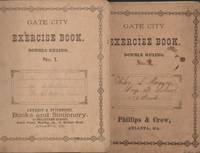
188333729Atlanta: Lovejoy & Pitchford; Phillips & Crew 1883. Manuscript. Fair. Manuscripts. Exercise books double ruled used for numerous handwritten arithmetic spelling exercises and writing. Covers detached on three of the five exercise books with the rear cover missing on the blue book. Light toning and some soiling to the exercise books and the examination papers. One of the term papers still has the original ribbon. Wiley Morgan was a student at Ivy Street School in Atlanta. A nice collection of handwritten school work that has survived through the ages. Lovejoy & Pitchford; Phillips & Crew unknown
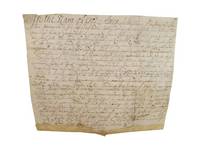
1711000908Oxfordshire: No Publisher 1711. Copy of a will on vellum approximately 240mm x 205mm. Old fold creases slightly browned and slightly rubbed lacking seal to foot. Will of William a plasterer from Stanton Harcourt Oxfordshire leaving bequests to educate poor children of Kidlington twenty pounds Cassington twenty pounds Eynsham twenty pounds Standlake thirty pounds and Stanton Harcourt thirty pounds. He enjoins the trustees of his will 'to take care of the six score pounds given to ye poor children of the five towns be carefully sett forth and I do give them one whole yeare's interest of the six score pounds next after my decease'. First Edition. Unbound. Good. 8vo Oblong. Manuscript. No Publisher Paperback
1929027182Annapolis: U S Naval Academy 1929. First Edition . Blue Cloth. Very Good . 4 Color Plates By Andrew Wyeth b/w Photos Throughout. 534 Pp. Brown Cloth Gilt And Stamped In Blind Top Edge Gilt Illustrated Endpapers. Four Color Plates After Wyeth With Glassine Guards. Clean Hinges Intact No Names Or Marks Small "Mother" Printed In Gilt At Lower Right Of Front Cover. <br/> <br/> U S Naval Academy hardcover
50433Philadelphia: Penn Monthly 1878. Offprint. First separate edition. Octavo. Sewn pamphlet; printed blue paper wrappers; 12pp; errata slip bound in after final leaf of text. Rear wrapper neatly detached; old tide-line to upper margin of front wrapper; text tight and unmarked - a Good complete and sound copy. Signed in type and end of text by Charles F. Dunbar. Article reprinted from the April 1878 issue of Otis Kendall's Penn Monthly in which Stillé's original article had appeared two months earlier. Dunbar an eminent Harvard economist answers the criticisms of Stillé then provost of the University of Pennsylvania who had taken issue with the profferment of the Harvard Preliminary Examination for Women in the city of Philadelphia. Stillé's argument appears to have been based as much on parochialism as criticism of the exam's content; he was at this time working to raise the profile of Penn among elite American universities and resented the incursion of Harvard onto Penn's home turf. But Stillé evinces more than a little snobbery to say nothing of chauvinism in his assertion that ".no hot-house treatment which forces a precocious and unnatural development can ever produce that fruit which is the support and comfort of human life" - an assertion which Dr. Dunbar answers somewhat caustically: "These truths are well-worn and not denied but if they serve in connection any other purpose than that of a modest rhetorical embellishment it is because the relate to some fancied system quite different from that under discussion." <br /> <br /> Despite widespread criticisms similar to the ones ably answered by Dunbar in the present essay The Harvard Examinations for Women - quite stringent covering a wide range of subjects and requiring their subjects to answer in at least two languages other than English - eventually became a national standard for the accreditation of young women who were unable whether for reasons of gender or circumstance to attend four-year universities. Stillé meanwhile became one of the University of Pennsylvania's historical icons; ".the extraordinary progress begun in his administration initiated the great expansion that was to continue under his immediate successors." DAB. The pamphlet appears uncommon - though widely catalogued in WorldCat nearly all holdings examined appear to be digital copies of the original held at Harvard's Schlesinger Library. unknown
186063213London: Published for the Society at the Depository Gray’s Inn Road 1860. 12mo. viii 176 pp. plus 6 pp. publisher’s ads. Numerous text illustrations diagrams floor plans. Recent black cloth gilt lettering & ruling on spine light uniform interior toning a few leaves w/ slight creasing still VG bright copy. Fifth edition revised & expanded of this compact manual on domestic economy designed as a succinct education tool for girls in Victorian Era training schools including descriptions on house design heating ventilation cleanliness cooking food & drink household finances and even managing livestock. Tegetmeier and the Committee possibly with influence from Florence Nightingale’s essay “Cassandra†1852 that women should be receiving far more training and information in medicine and surgery for possible future employment in nursing and other related fields. Tegetmeier 1816-1912 was a noted naturalist domestic animal breeder beekeeper and frequent correspondent with Charles Darwin receiving mention in both the groundbreaking Origin of Species as well as The Descent of Man on his studies and efforts in sexual selection and inheritance experiments through the 1860’s. Worldcat locates 3 copies British Library DLC NLM; See: Veak Exploring Darwin’s Correspondence: Some Important but Lesser Known Correspondents and Projects 2003; Sayaka Nakagomi English Middle-Class Girls’ High Schools and ‘Domestic Subjects’ 1871-1914 2016; Amanda Serpi The Education of Women in the Victorian Era 2024. Published for the Society, at the Depository, Gray’s Inn Road, hardcover
191763214Chicago: Forbes & Co. 1917. 8vo. 221 ppp. plus 3 pp. publisher’s ads. Text illustrations & diagrams. Blue publisher’s cloth green lettering & decoration on front cover & spine minor soiling spotting slightly cocked minor sunning to spine still G copy. Revised edition of this uncommon work on sex education and medical instruction for women issued during the Progressive Era in order to provide the latest concise and necessary information to young women who typically received little education or medical information on their sexual organs bodies and potential dangers. Lowry 1878-1945 was a leader in health reform and served as Acting Chief for the Bureau of Hospitals for the Dept. of Health in World War I and in this work details the dangers of sexually transmitted diseases incest masturbation rape abortion inter-racial pregnancies and more. Forbes & Co., hardcover
179261094London: Printed for W. Osborne and Mozley and Co. Gainesborough 1792. 12mo. xii 374 pp. Woodcut-engraved vignette on title. Contemporary calf backed in vellum gilt & red morocco spine label worn scuffing edgewear wear to corners w/o 4 plates still a good sound reference copy. Revised & expanded edition of this popular work first compiled by Anne Fisher 1719-1778 who not only ran “The Printing Press†with her husband Thomas Slack but also operated Fisher’s School for girls in St. Nicholas churchyard Newcastle presumably educating all nine of their daughters as well. This pioneering educator and successful author is perhaps best remembered as the first female Grammarian and her New Grammar which was first published in 1745 would eventually see 40 different editions. Her educational textbooks including this volume as well as the New English Tutor New English Exercise Book and An Accurate New Spelling Dictionary were a significant contribution to education for young women in the 18th- and 19th-Centuries. See: Sarah Collins Barbara Crosbie Adrian Green Matthew Grenby & Helen Williams Symposium on Anne Fisher Literary & Philosophical Society in Newcastle Dec. 10 2019. Printed for W. Osborne, and Mozley and Co., Gainesborough, hardcover
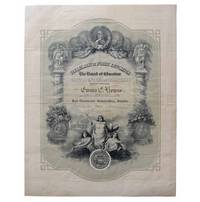
18901290San Francisco: Britton & Rey 1890. Good. 23" x 18". Linen-backed cream broadside printed in green with name written in calligraphy and ink signatures. Signed by Britton & Rey in the plate. Horizontal fold lines; edges reinforced with clear archival tape; minor soil to borders. The large elaborately illustrated diploma of one Emma E. Bower graduation class of 1890 from the San Francisco Commercial School. The illustration framing the text features a trio of women at the bottom presumably representing knowledge the arts and wisdom with an eagle and a portrait of the city in the background; two columns labeled "Poesie" and "Philosophy" wrapped in banners bearing the names Fulton Watt Galilei Michel Angelo Guttenberg and Daguere with portraits of Shakespeare and Humboldt at each of their respective bases; and wreathed vignettes at the top of Franklin Newton and Morse.The San Francisco Commercial School later became the High School of Commerce. Britton & Rey unknown
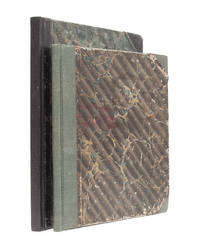
18905955Kutztown PA 1890. Quarter roan over marbled boards measuring 8 x 6.25 inches and comprised of 73 pages of manuscript text including a mixture of notes passed between friends on the verso of the final leaf and on the rear pastedown. Spine largely perished with boards and textblock held together by cords. Several leaves neatly excised towards rear. Containing notes from Fannie Hottenstein's courses in teacher training the present volumes offer researchers a range of study topics including the history of pedagogy and women's increasingly visible place in American education; the book also is a valuable resource for examining how educated young women were thinking through their own lives and roles -- as individuals and as a generation. <br /> <br /> Trained in one of the most educationally progressive states at the time Fannie Hottenstein was one of a generation of women who could more widely dream about and pursue more independent lives than their matriarchs. Historically Pennsylvania had been a vanguard for public and progressive education. "In his 1830 address to the state legislature Governor George Wold championed the cause of universal public education" as a scaffold for "the security and stability of the individual privileges we have inherited from our ancestors" Explore History. Before the decade was over "more than 1000 local school districts under a single statewide system of instruction" had been founded working to regularize "educational standards curriculum and instructional credentials" in tandem with the 1857 Normal School Act which founded "a network of ten state academies to prepare public school teachers" Explore History. Fannie attended one of these preparing for a career in education that would give her a new level of social and economic independence. <br /> <br /> Much of Fannie's notebook reflects the kind of rigorous work required to teach middle and high school students. Contents include for example three pages of facts on basic Botany; fifteen pages on the practice of Logic in writing and debate including an extensive section on presenting proper Opposition accompanied by text book page numbers; and five pages on pedagogical methods for helping students develop curiosity and drive it forward into productive study. There are additional fairly staid essay samples on topics such as Influence and Gentleness. Yet it is in the thirteen page essay We Girls that sparks of Fannie's individuality ambition and independence show. In it she reveals how much contact she has had with the period's literature on women's rights and suffrage; she shows her familiarity with anti-feminist arguments in opposition to women like her; and she powerfully expresses her hopes not only for her generation but the ones that follow.<br /> <br /> Fannie opens: "It is a recognized fact that the degree of civilization of every nation is marked by the social position of woman. Indeed one of the most prominent features of the progress of civilization is her gradual elevation in society and the clear perception and recognition of her rights. In the earlier ages of the world when the sphere of her influence was bounded by the narrow prejudices of the opposite sex her happiness as well as her mental improvement and social rank depended more on what was done for her at the hands of men than on what she could do for herself. All this is changed now." Fannie praises the hard-won changes women accomplished in accessing education and job training; and she touts how many opportunities are available for women to dream about and pursue. This does not mean she's unaware of the challenges that continue -- particularly from men. "We have to contend with the prejudice sometimes entertained against us that our highest destiny in life is to be a pretty piece of furniture in a handsome parlor. Men who entertain this notion we girls must always urge to get their furniture somewhere else." To those who accuse women of being too emotional and insufficiently intellectual she also has a response. "Our aim must be to develop and perfect our entire nature mental social and moral" she argues. Only by embracing both thinking and feeling as strengths can any individual -- man or women she contends -- succeed. Women are in a unique position to embrace both. <br /> <br /> A truly rich document which also includes brief notes among Fannie and her friends about their flirtations and recent purchases of accessories at the end gives insight into the development of a young woman who would go on to live what she preached. According to the US Census of 1900 Fannie remained single and lived in a boarding house working as an office stenographer. unknown
185260524Albany: Gray Sprague & Co. Joel Munsell printer 1852. First Edition. Octavo. Printed self-wrappers; 311pp. Removed with trace of adhesive residue at bound edge lacking cover wrappers if issued else fresh and unmarked Very Good or better. <br /> <br /> The author now mostly remembered as one of America's leading early hymnodists here stresses the importance of moral and practical education for women to achieve ".the formation of pure and elevated tastes" and develop a "moral sense" and "conscience." See SABIN 9277 for another issue. BIBLIOTHECA MUNSELLIANA p.54. Gray, Sprague & Co. [Joel Munsell, printer] unknown
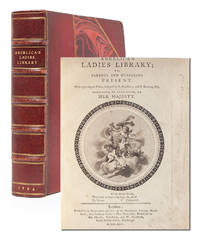
17943526London: Printed for J. Hamilton 1794. First edition. Finely bound in half morocco over marbled boards ruled in gilt. All edges brightly gilt. Marbled endpapers. Lower front corner skinned. Light offsetting to endpapers. Faint gift inscription to outer margin of title. Header of titlepage shaved close without any loss to text with textblock wide margined and clean. Pages measure approximately 190 x 150mm. Collating 2 vi 440: bound without half title else complete including engraved title and eight plates designed by Angelica Kauffman a founding member of the Royal Academy of Arts. A surprisingly unfoxed and wider-margined copy than is typically found of this compilation of early educational works designed to help usher girls into adulthood.<br /> <br /> "These sheets were penned by some of the most amiable and well informed subjects of these realms and intended as affectionate legacies of those noble and worthy persons to their amiable offspring for whom they had such tender regard.to point out whatever was desirable and just in forming and perfecting the virtues of the female character." Thus John Hamilton brings together a series of 16 pieces on women's education and etiquette by authors including Dr. Gregory Lady Pennington the Marchioness of Lambert John Dryden and Lady Ann Bothwell. Using illustrations by a well-known female artist who was cutting edge in her own time as a founding member of the Royal Academy of Arts the Ladies Library was purposely suited and adapted for the use of the Female Sex" and for their parents who might want to guide girls into responsible and intelligent womanhood.<br /> <br /> ESTC T88185. Printed for J. Hamilton unknown
18703389United Kingdom 1870. Geography notebook of Mary Barker: Quarter black roan over marbled boards measuring 9 x 7 inches. Comprised of a calligraphic title and frontis plus 59 hand drawn-and-colored maps done by a young woman in her first three years of teacher training. Throughout Mary annotates on the margins which year and term she is in and occasionally notes that the map was drawn "From Memory"; and each map has penciled corrections and assessments. <br /> <br /> with Geography notebook of Allison Jane Gillespy: Quarter cloth over marbled boards. Calligraphic title page and 35 intricately hand drawn maps from the British Empire Europe and the Middle East. <br /> <br /> A pairing of beautiful and research-worthy notebooks documenting teacher training in the late nineteenth century as well as providing a look into how geographies changed across time and how British educators were being trained to perceive and educate the young about other parts of the world and how they connected to the British empire. With nearly 100 pages combined the notebooks offer scholars important comparative opportunities and means for better understanding the rising number of women educators and authors publishing works that engaged geography and international cultures during the Victorian era.<br /> <br /> "The Wesleyan Methodists had a school for ministers' daughters at Trinity Hall Southport.which admitted both boarders and day girls.to educate ministers daughters and train teachers" Roach. Pupil teacher programs like the one Mary Barker was enrolled in had become a popular method of producing teachers at a time when the public's access to education expanded and the demand for instructors was at a high. Such programs functioned like an apprentice system taking a senior pupil typically thirteen years old and putting her in a five year assistantship to her own instructor. Pupil teachers typically took on responsibility for teaching lower classes observing their superiors educate the more advanced students and completing their own educations. By the 1870s these programs had become standardized to ensure proper preparation for instructors Robinson. <br /> <br /> Mary's maps trace this process. As she moved from her first to her third year in this notebook the quality and care she puts into her work improves. Her handwriting and attention to detail matures. And her assessments move from Fair to Good and Very Good. Maps in the notebook include nearby locales such as Ireland Scotland and the British Isles as a whole; European nations including Sweden Norway and Prussia as well as eastern Europe and Russia. Mary also maps out "Arabia" and the "Chinese Empire" as well as "Further India" revealing a wide array of changing borders and shifting cultural attitudes. <br /> <br /> While Allison does not leave any marker of her class age or school the level of intricacy in her maps suggests she was a senior student or finished instructor. These appear to be fair copies not done from memory but prepared as examples for students or as teaching aids.<br /> <br /> Together the two provide a comparative opportunity to study the history and politics of mapping nineteenth century girls' education pedagogy and pedagogical training and geography. unknown
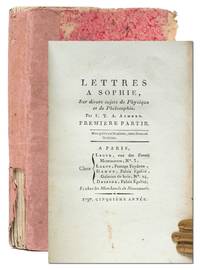
17977223Paris: Leger 1797. First edition. Octavo. xxvi 2 96 2 pp. Part one only - the planned part two was never published. Publisher's pink pastepaper wrappers with pink paper spine. Binding somewhat loose. Edges untrimmed. Very clean and fresh throughout. A Very Good copy of a rare work on physics for women unrecorded in OCLC.<br /> <br /> This guide to physics and philosophy for women is one of the many works on women's education written during the Revolutionary period in France when a stronger interest in women's education began to arise. The letters cover topics including optics velocity and magnetism. Leger unknown
18503448Great Britain 1850. Comprised of 88 manuscript pages of mathematical definitions tables methods and exercises in a single hand with the ownership signature of "Caroline Waters Age 16 yrs" to the front endpaper. Marbled paper vernacular binding measuring 8 x 12 inches and stitched at spine. Caroline's metric measurements and English currency reveal her to be a student somewhere in the UK. Though the commonness of her name and the absence of a specific date prevents us from locating her in genealogy records the manuscript she left behind reveals much about how and why girls of her age and class were being taught arithmetic.<br /> <br /> Caroline's elegant practiced hand suggests that she is a member of the rising middle class and the opening of the book suggests that she is a beginning to intermediate mathematician. At the top of the first page she defines Arithmetic as "the art of computing by numbers" which "has five principal sic rules for this purpose viz. Numeration Subtraction Addition Multiplication and Division." Using this definition she divides her notebook into a section for each providing a definition for that principle plus clear-cut examples of its use in both Simple and Compound formats. Numeration Subtraction and Addition are grouped together at the front; and after these sections conclude Caroline enters in Practical Questions in Compound Addition and Subtraction. These involve word problems involving the exchange of money and the calculation of wet and dry weights cloth measurements and time. She then mirrors this with Multiplication and Division before adding sections on Decimal Fractions more Practical Questions and sections on Federal Money and Simple Interest.<br /> <br /> The organization of the manuscript suggests that Caroline copied it out for continued reference where sections are easy to locate and problems clearly illustrate each of the principles. And the emphasis in sample problems on currency conversion monetary exchange and banking implies that her family in some way wanted her to be aware of these concepts.<br /> <br /> An exceptional and rich document Caroline's notebook is a rich resource for study including but not limited to the history of women's education middle class education women's domestic use of mathematics women in business paleography genealogy gender studies. unknown
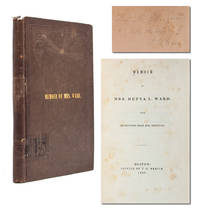
18434025Berkeley: T.R. Marvin 1843. First edition. Very Good . Original publisher's cloth binding with gilt to front board. Minor loss of cloth to crown of spine. Faint residue of removed library label to spine and front board. Peach endpapers. Light scattered foxing as is typical of the period. Inscribed on the front endpaper by Ward's husband the compiler: "Reverend Mr. Ellingwood with the respects of J.W. Ward." Bookplate on the front pastedown reveals that the recipient Rev. Ellingwood went on to donate the volume to the Theological Seminary of Bangor Maine. A scarce and important example of a published American elegiac volume produced in this case by an eminent family to mourn the loss of an educated woman. Memoirs is unrecorded by OCLC and has never appeared at auction. <br /> <br /> In their marriage James Wilson Ward and Hetta Lord Hayes Ward united two prominent Northeastern families. A senator and Congregationalist minister James descended from the founders of Plymouth and had attended Andover and Amherst. Hetta the daughter of a judge and niece of a Dartmouth president was herself a graduate of Miss Grant's Seminary Academy. The present volume released "exclusively for private circulation among the friends of the deceased" is a testament to Hetta's value not as a daughter who married well or a wife who effectively managed a house but as a companion an intellectual and an individual. In this sense it deconstructs the period's expectations of separate spheres or hierarchy between sexes. With an opening letter by Susan Hayes Hetta's mother as well as a copy of the eulogy conducted by her husband the book reveals vast details about who Hetta was as a person. Both describe her as tender and affectionate; but time and again emphasis is placed on her mind. Though Hetta was skillful with a needle as a child according to her mother "her numberless questions interested and surprised me.She acquired a fondness for poetry.She became as much interested in the in the study of the exact sciences as in the works of imagination making herself acquainted with the higher branches of Mathematics Algebra Geometry etc." James similarly eulogizes his wife. What becomes clear is that he is grieving the loss of a companion and equal. "If we have found a friend of distinguished excellence and for years rejoiced with that friend in mutual interchange and warm affections it is natural when death intervenes and separates us from the dear object of our love to contemplate their virtues.First characteristic which I would notice which she possessed in an eminent degree is an ardent love of truth.She possessed great powers of abstraction.She saw with great clearness the point of an argument and was quick to distinguish between sophistry.She loved to trace the workings of the human mind." Not satisfied simply to have their own testaments to Hetta's extraordinary mind the compilers included to the last half of the book a collection of her own poetry and prose.<br /> <br /> A scarce work in a genre underappreciated in American literature and history. Such coterie publications of intimate mourning were uncommon for the time particularly for a woman.<br /> <br /> National Cyclopedia of American Biography 148. Very Good . T.R. Marvin unknown
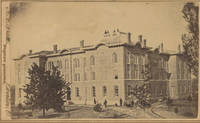
1868List1022Oberlin 1868. Albumen photographs 2 ½ x 3 ½ inches on larger mounts. Some fading to one of the photographs other image with excellent contrast near fine condition overall. Near Fine. An uncommon early pair of views of the Second Ladies’ Boarding House at Oberlin College in the 1860s taken at a time when Oberlin was one of few coeducational colleges having first admitted women in 1837. Oberlin’s Second Ladies Hall was built in 1861-1863 and featured Itlianate architecture and a rooftop balcony. The building was opened for student accommodations in 1865. The first floor held an assembly room a reading room a dining room parlors and stewards’ quarters. The second and third floors housed 100 women. The building was destroyed by a fire in 1889. unknown