CHARTON (Edouard) - LE MAGASIN PITTORESQUE 1833-1882.Livre Rare Book
4 881 résultats
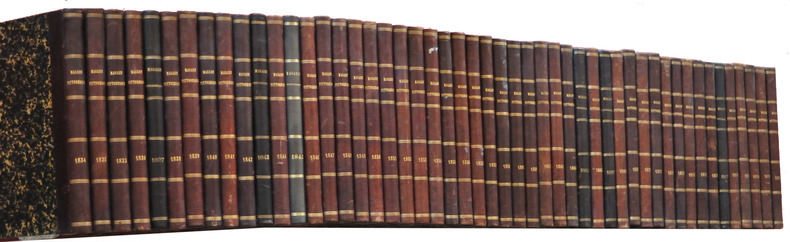
183346404463Paris, Le Magasin Pittoresque, 1833-1882 ; 50 volumes in-4, demi-basane brune, dos lisses ornés, titre et année en lettre dor. au dos, filets dorés, tranches jaspées. (Reliures de l’époque). RARISSIME COLLECTION COMPLÈTE DE LA PREMIÈRE SÉRIE EN RELIURES UNIFORMES. Edouard Charton (Sens 1807 - Versailles 1890) a commencé sa carrière de publiciste dans les revues saint-simoniennes Le Globe et Le Journal de la doctrine de Saint-Simon. Il rompt avec les Saint-Simoniens en 1831 et fonde Le Magasin Pittoresque en 1833 avec l’imprimeur saint-simonien Lachevardière sur le modèle du Penny magazine anglais. D’abord hebdomadaire, la revue devient mensuelle en 1850 puis bi-mensuelle. Le premier numéro annonce le projet : “Le Magasin pittoresque, revue illustrée bon marché, a pour ambition d’intéresser et d’instruire, tout en les distrayant, ceux qui n’ont ni les moyens financiers ni les loisirs de le faire”. Les articles sont confiés aux plus grands spécialistes, chaque livraison aborde les différents domaines du savoir : Beaux-Arts, sciences et techniques, géographie, archéologie, etc. Charton assumait seul le contenu de la revue, corrigeant chaque article avant publication. Dans cette première série aucun article n’est signé mais les collaborateurs sont connus : Darondeau, Reynaud, Souvestre, Carnot, Cazeaux, Charton, Fortoul, Aicard, V. de Joncières, Pauline Roland, R. Töpffer, Transon, Alby, Urbain, Alexandre de Saint-Chéron, Morville ou encore George Sand, Camille Flammarion ou Eugène Delacroix. Le succès de cette revue fut considérable dès les premiers numéros et suscita de nombreuses vocations, ainsi l’égyptologue François Joseph Chabas (1817-1882), un négociant en vins à Châlons-sur-Saône qui découvre l’égyptologie en 1852 dans le Pittoresque, grâce aux articles de Nestor Lhôte. Sand, Balzac ou encore Zola revendiquent cette revue didactique comme source importante de leur œuvre.Mais c’est en tant que revue illustrée que Le Magasin Pittoresque demeure inégalée, Charton considérait qu’une illustration abondante et de qualité était essentielle à son projet d’éducation populaire. Pour donner une si nombreuse illustration en maintenant un prix modique, Charton fit appel à la gravure sur bois qui avait presque disparu en France à cette époque. Les graveurs français ne pouvant fournir tant de planches à une revue hebdomadaire, il fit appel pour les premiers numéros à des graveurs anglais. Par la suite, grâce au succès de la revue, les ateliers parisiens revinrent à ce genre délaissé. Parmi les illustrateurs Grandville a donné de nombreux dessins (voir à ce sujet Renonciat Grandville p. 295) ou encore G. Doré (v. H. Leblanc Catal. de l'Oeuvre de G. Doré. p. 227)Le Magasin Pittoresque a occupé l’essentiel de la vie d’Edouard Charton. Bien que sa revue n’ait jamais abordé les questions politiques il était un Républicain fervent et fut élu dans l’Yonne à deux reprises en 1848 et 1871. Il fut aussi l’un des fondateurs de la revue d’actualité l’Illustration en 1842.Rare collection complète de cette première série en reliure uniforme de l’époque. Bel exemplaire frais, les reliures sont en bon état.
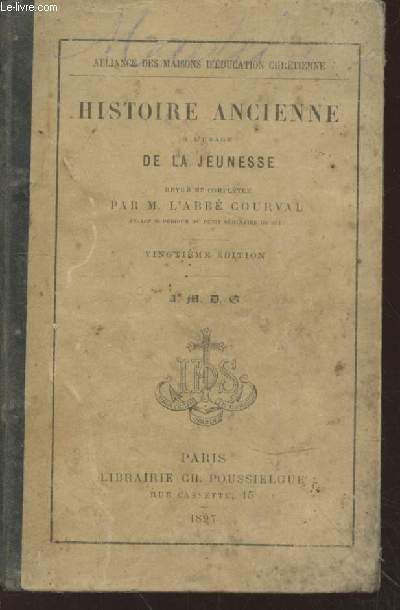
1897R320068141DUPONT PAUL. 1897. In-12. Broché. Etat d'usage, Couv. défraîchie, Dos satisfaisant, Intérieur frais. Paginé de 1298 à 1140 - nombreuses illustrations en noir et blanc in texte.. . . . Classification Dewey : 370-Education
1896R320068142DUPONT PAUL. 1896. In-12. Broché. Etat d'usage, Couv. défraîchie, Dos satisfaisant, Intérieur acceptable. Paginé de 578 à 720 - nombreuses illustrations en noir et blanc in texte.. . . . Classification Dewey : 370-Education
1897R320068143DUPONT PAUL. 1897. In-12. Broché. Etat d'usage, Couv. légèrement passée, Dos satisfaisant, Intérieur frais. Paginé de 1154 à 1296 - nombreuses illustrations en noir et blanc in texte.. . . . Classification Dewey : 370-Education
1896R320061852ACADEMIE DES SCIENCES, INSCRIPTIONS ET BELLES-LETTRES DE TOULOUSE. 1896. In-8. Broché. Etat d'usage, Couv. défraîchie, Dos satisfaisant, Intérieur frais. 21 pages - Tampon sur la page de titre et 1er plat - 1 ertiquette collée en coiffe en 1er plat.. . . . Classification Dewey : 370-Education
1872R240002144BRODARD ET TAUPIN IMPRIMEUR. 1872. In-12. Cartonné. Bon état, Couv. convenable, Dos satisfaisant, Intérieur frais. 32 pages. Manque dos.. . . . Classification Dewey : 370-Education
189637310New York:: G. W. Dillingham Publisher. 1896. Hardcover. Blue cloth covers embossed with gilt spine lettering bright readable. Moderate overall cover wear with spine slant. Previous owner's name in pencil on front endpaper. Hinges sound but front hinge a tad tender. Pages tight unmarked. No DJ. A quite nice copy. Wright Howes: "The author's husband Oklahoma City's first mayor resented certain allusions to his conduct and succeeded in destroying many copies. "; . G. W. Dillingham, Publisher, hardcover
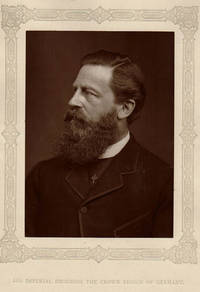
188096441Lock and Whitfield circa 1880. 1880. Fine. - A richly hued 4-3/4 inch high by 3-1/2 inch wide woodburytype portrait of the then Crown Prince Frederick III mounted onto 11-1/4 inch high by 8-1/2 inch wide stiff cream stock. An eagle & crown device above a light gray printed decorative frame highlights the image. The subject is identified in the same light gray centered within the lower half of the sheet. "Specially taken for this work by Lock and Whitfield" is centered below the title. Near fine. <p>Friedrich Wilhelm Nikolaus Karl 1831-1888 was German Emperor and King of Prussia for a period of 99 days in 1888 the year in which he passed away. The period came to be known as the Year of the Three Emperors as his father Wilhelm I passed away in March of that year and Frederick Wilhelm's only son afflicted with cancer of the larynx died in October. Though he professed a hatred of war Crown Prince Frederick had distinguished himself in the Austro-Prussian and Franco-Prussian wars. He was admired by both friends and enemies for his humane conduct.<p>Both a printing process and the print which it produces Woodburytype was invented and patented by Walter B. Woodbury in 1864. A photomechanical process Woodbury type prints are made from exposing a dichromate-sensitized sheet of gelatin to UV light shining through a photographic negative. Each area of the gelatin hardens to a depth in proportion to the amount of exposure to the light before it is then soaked in warm water. The relief image is then pressed onto a sheet of lead to create an intaglio metal printing plate. Lock and Whitfield, circa [1880]. unknown
1896RO20223242Librairie Ch. Poussielgue. 1896. In-12. Cartonné. Bon état, Couv. légèrement passée, Dos frotté, Intérieur frais. 256 pages augmentées de nombreuses cartes en couleurs dépliantes hors texte. Une annotation à l'encre et au crayon sur le premier contre-plat et le premier plat.. . . . Classification Dewey : 370-Education
1895R320061851ACADEMIE DES SCIENCES, INSCRIPTIONS ET BELLES-LETTRES DE TOULOUSE. 1895. In-8. Broché. Etat d'usage, 1er plat abîmé, Dos abîmé, Intérieur frais. 21 pages - Dechirure en 1er plat - Tampon sur le 1er palt et page de titre - 1 etiquette collée sur le 1er plat.. . . . Classification Dewey : 370-Education
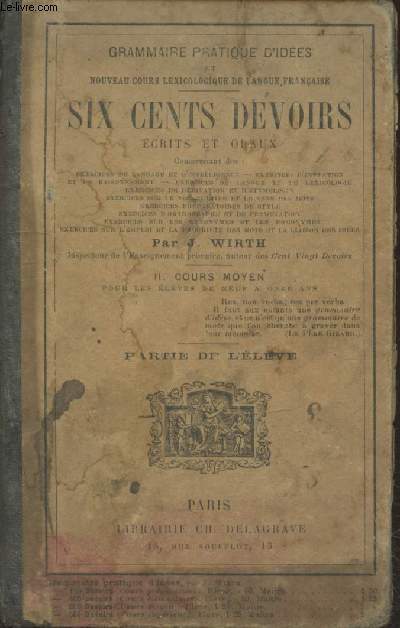
1898R320003792DELAGRAVE. 1898. In-12. Broché. Etat d'usage, Coins frottés, Dos très frotté, Quelques rousseurs. 289 pages - couverture défraichie.. . . . Classification Dewey : 370-Education
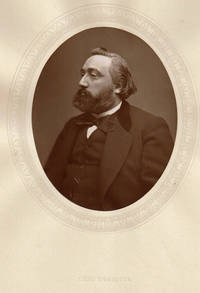
187596430Lock and Whitfield circa 1875. 1875. Very good. - A richly hued 4-1/2 inch high oval woodburytype portrait of Leon Gambetta mounted onto 11-1/4 inch high by 8-1/2 inch wide stiff cream stock. A light gray printed decorative frame highlights the image. The subject's name is printed in the same light gray centered within the lower half of the sheet. "Lock and Whitfield" and "Woodbury Process" are printed at left and right along the lower edge. There is a light vertical crease in the mat and a tiny stain to it's right edge. Very good. <p>The French statesman Leon Gambetta 1838-1882 was admitted to the bar in 1859 and the Conference Mole in 1861. In 1868 Gambetta was selected to defend the journalist Delescluze who was being prosecuted for promoting the erection of a monument to Baudin who'd been killed resisting the 1851 coup d'etat. Gambetta used the occasion to both attack the coup d'etat and the government. He was elected to the assembly by both a district in Paris and one in Marseille. Initially opposing the war with Prussia he gradually came to accept the patriotic line and called for strong measures following the disaster at Sedan. It was he who proclaimed the deposition of the emperor at the corps legislatif and the establishment of a republic at the Hotel de Ville. As one of the first members of the new Government of National defense he became Minister of the Interior. When the delegation to organize resistance in the provinces failed Gambetta set off in the "Armand-Barbes" a coal gas-filled balloon to take control as minister of the interior and of war in Tours. With his assistant secretary of war and the young officer of engineers Freycinet Gambetta organized an army which might have successfully relieved Paris if Metz had not fallen. He later faded from politics after his republican party was defeated by the conservatives and monarchists.<p>Both a printing process and the print which it produces Woodburytype was invented and patented by Walter B. Woodbury in 1864. A photomechanical process Woodbury type prints are made from exposing a dichromate-sensitized sheet of gelatin to UV light shining through a photographic negative. Each area of the gelatin hardens to a depth in proportion to the amount of exposure to the light before it is then soaked in warm water. The relief image is then pressed onto a sheet of lead to create an intaglio metal printing plate. Lock and Whitfield, circa [1875]. unknown
1900RO80154236DELAPLANE Paul. 7ème édition. 1900. In-8. Broché. Bon état, Couv. légèrement passée, Dos satisfaisant, Intérieur frais. 92 pages.. . . . Classification Dewey : 370-Education
1897RO20233721Librairie Ch. Delagrave. 1897. In-12. Relié. Etat passable, Couv. défraîchie, Dos abîmé, Intérieur frais. 268 pages. Une étiquette au dos. . . . Classification Dewey : 370-Education
18909737565Hodges Figgis & Co. 1890. Volume 2.1. This is an ex-library book and may have the usual library/used-book markings inside.This book has hardback covers. In good all round condition. 8vo. 1/2 red cloth with1/2 red leather binding. Raised bands on backstrip with gilt lettering. Red speckles on pageblock edges. Front hinge split. Pages are clean and binding is tight. Please note the Image in this listing is a stock photo and may not match the covers of the actual item1000grams ISBN: Hodges, Figgis, & Co. hardcover
18691304987Berlin, Wiegandt & Grieben, 1864 - 1869. Gr.-8vo. 20, 740 S. u. 20, 739, (1) S. Mit 2 mehrf. gefalt. lithogr. Übersichtskarten u. 20 getönten lithogr. Tafeln mit Ansichten u. Grundrissen von Schulgebäuden. Lwdbde d. Zeit (vereinzelt etwas braunfleckig, Stempel u. Sign. auf Titel).
19001230298Hamburg, Boysen & Maasch, (etwa 1900). 4to. 16 Taf. m. Zeichnungen in illustrierter kartonierter Mappe (Mappe etwas fleckig u. bekritzelt, alle Tafeln m. Besitzvermerk, etwas fingerfleckig, einige farb. Anstreichungen).
18811171976Freiburg, Herder, 1881. 11, 830 S. Hldrbd (bestoßen, St. a. T., Nässespur im Rand).
18691135204Leipzig, J. Klinkhardt, 1869. 21, 232 S. Hldr (beschabt, Vorsatz verstemp. u. mit Wurmspur).
18711135201Leipzig, J. Klinkhardt, 1871. 12, 152 S. Hldr (berieben, Vorsatz verstemp., hinteres Innengelenk m. Wurmspur).
18861141114Wien, C. Gerold's Sohn, 1886. 4 Bl., 411 S. Hlwdbd d. Zeit (berieben, Rsign., St. a. T.).
18481132989Dresden, Arnold, 1847 - 1848. 6, 185 S.; 8 S., 2 Bl., 268 S. Hlwdbd d. Zeit (berieben, St. a. T.).
1885PAED0596Leipzig, Grieben (1885). 2 Bl. Titelei, 188 S., neuerer OBrosch unter Verwendung des sehr läd., illustr. Orig. Umschlages., dieser m. zahlr. Fehlstellen, Innentit. an den Ecken unterlegt, gebräunt, sichtbar gebraucht.
190099653<p>Panama circa early 1900s. 1900s. Good. - Fourteen original silver print photographs of the Canal Zone each measuring 3-1/4 inches high by 5-1/2 inches wide. The images include scenes of workers on and debarking from ships people strolling along village or town streets with horse drawn carriages what is likely an official residence and 5 images of construction work on what would later become the Panama Canal. One of the photos depicting construction work is a duplicate. The photographs are slightly curled with creases to the corners of a very few photos and minor chips to the edges of 4 of these. Very good.</p> [Panama], circa early [1900s].
1827165591827. Women's Education Chapone Hester; Gregory John; Pennington Sarah. Chapone Letters on the Improvement of the Mind; Dr. Gregory's Legacy to his Daughters; Lady Pennington's Advice to her Absent Daughters; with an additional Letter on the Management and Education of Infant Children. London: Scott Webster & Geary c. 1827. Marbled leather boards. 32mo approximately 3.25" x 5.5" inches. 262 pages. Two engravings a frontispiece with tissue guard and a title page illustration. Early edition of this omnibus of foundational works in women's education. The individual texts brought together in this publication were all wildly successful and went through multiple editions in both Europe and the United States. While "conduct books" aimed toward's women's self-improvement became popular in the mid-19th century this edition is remarkable for encouraging rational understanding and free thought in young women through a proper education Chapone as well as defending a woman's right to follow her conscience over blind obedience to marriage vows or social codes Pennington who divorced her husband and was cut off from her children. This illustrated edition of Mrs Hester Chapone's conduct book. Written for her niece who was 15 years old at the time. Throughout the letters Chapone encourages rational understanding through reading history and literature. She explicitly states that sentimental novels are to be avoided. With four illustrated plates and an illustrated title page. The topics discussed range from economy government politeness religion as well as the heart and affections. Chapone's Letters were written when the popularity of advice or conduct books were at its peak. It had over 28 editions printed and first editions are extremely rare this is an early edition. including a French translation. in very good condition. unknown