487 résultats
196827403Cleveland: Ghost Press 1968. First edition. Paperback. Very Good . 4to. STapled mimeograph typescript pages with silkscreen cover by Kryss. One of only 255 "vanishing" copies published by the Ghost Press in Cleveland. Book contains poems and silkscreens by the four contributors. A tribute to Rev. John R. Scott who was sentenced in 1968 to two years in the Cuyahoga County Ohio Workhouse on charges of contributing to the delinquency of a minor. Light staining to lower edge of front cover else an exceptionally nice example of this Cleveland poetry rarity. Ghost Press paperback books
194819690Poughkeepsie 1948-1951. Very good . Oblong 16mo. Commercial string-tied album white boards. 225 gelatin-silver prints 2.5" by 3.25" corner-mounted on black paper with captions in white ink. Apparently complete. Very good plus. Mild touches of wear along page edges; many captions a bit smudged; else clean and sound. <br/><br/>A evocative collection of photographs taken and compiled by Robert H. Tucker while he was a student at MIT of his high school career at Poughkeepsie's Arlington High School where he graduated with the class of 1950. Tucker called this album his "own yearbook" and it indeed shares a great deal with conventional yearbook style with humorous captions "A test Oh no!" and attention to a wide range of faculty staff and student activities both in and out of the classroom. Subjects include track meets baseball games cheerleaders teachers at the blackboard students at work in the library a special event including donkey-riding in the gym commencement and other activities. More than mere yearbook however the album reveals Tucker to be a natural photographer with an eye for both composition and POV; his sports shots are especially vibrant often crisply capturing athletes in the midst of the action. A detailed album capturing the dawn of the post-war American teenager. Indeed quintessentially so; we are tempted to call this an almost Platonically ideal example of the high school album. hardcover books
196926325Watford England: Watford School of Art / Edition Hansjorg Mayer 1969. Light foxing to the text block and some scratching and wear to the mounted tin covers else very good in cloth wrappers. Limited edition. Quarto. Number 100 of an edition of 100 copies. Includes copies of works by Richard Buckley Ian Burton Elliott Frank Challenger Veronica Loveless Hansjörg Mayer Graham Pow Kathryn Wallbridge Cilla Weeks and John Wells printed with a Rotaprint R 70. Covers are original works of art on tin attributed to Watford School of Art on the colophon page. Watford, England: Watford School of Art / Edition Hansjorg Mayer unknown books
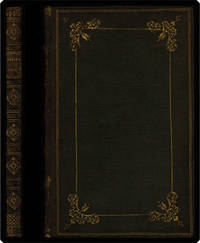
181439223Londini: Ex officinâ Johannis Nichols et Sociorum 1814. Small 8vo 18.5cm 7.25". Frontis. port. 1 f. 62 pp. <br><br>John Colet 14671519 Dean of St. Paul's seems in 1508 to have begun to think about "applying his patrimony to education by the reconstitution of St Paul's Cathedral school in new premises reflecting a preoccupation with education as prerequisite for spiritual regeneration" DNB online. He "opened the doors to St Pauls School in 1509 to educate boys 'from all nacions and countres indifferently' St. Paul's School website.<br>Â Â Â Â Elegantly bound and handsomely printed this is the first edition of this collection for use of the boys of the school and is comprised of "Preces quotidianae ut celebrantur in scholâ Paulina" and "Catechismus cum ordine Confirmationis." The prayers were first published in 1642 and are in Latin while the catechism is in Greek on versos of leaves and Latin opposite on rectos. The engraved frontispiece portrait of Colet is by John Taylor Wedgwood 17831856 a cousin of Josiah Wedgwood.<br>Â Â Â Â Provenance: Late 19th-century bookplate of the Rev. George H. Culshaw; most recently in the library of American collector Albert A. Howard small booklabel "AHA" at rear.<br>Â Â Â Â Binding: Contemporary green straight-grain goat spine gilt extra; both boards with a gilt double-rule outer border and an inner center frame of single gilt rule with large gilt corner devices. Board edges with a gilt roll; narrow turn-ins with a different gilt roll. All edges gilt.<br>Â Â Â Â Searches of WorldCat locate only six U.S. libraries IU NjNbT PPiT IEN NNC NNG reporting ownership. Binding as above; spine sunned to olive front cover with scuff sometime well disguised boards showing signs of having been bent some time ago. Bookplate and label as above. A very few light spots of foxing pages overall clean and crisp. Very good condition. => A very attractive book. Ex officinâ Johannis Nichols et Sociorum hardcover books
2000410762000. UCLA Law Review. Los Angeles School of Law University of California Los Angeles. Vols. 1 to 39 42 to 46 47 part 1 51 part 1 1953-2004 Together 77 books. Ex-private law firm library tan buckram very good. Special $695. unknown books
2004541752004. Lacking issue volume 101 no. 1. Lacking issue volume 101 no. 1. Yale Law Journal. New Haven: Yale Law Journal. Bound Volumes 86 to 91 1976-1982 blue buckram with silver lettering; vols. 100 no. 5 to 106 no. 8 1990-1998; 111 no.1 to 117 no.7 paper issues 2001-May 2008 Lacking issue volume 101 no. 1. Together 24 volumes. Ex-library with stamps. Very good condition. Reprint Price USD 4307. Special $695. unknown books
18712437Charterhouse School 1871. Hardcover. Very good. Dates: 1871-1877 and 1910. Small 4to. 37 ff. mostly with newspaper clippings neatly pasted in on both sides 4 ff. in manuscript "Summary of Scores" from 1871-1877 and 1910. Several leaves excised; it is possible that the present album had been re-purposed. On a few of the stubs appear fragmentary MS notations suggesting that the notebook may have once been divided alphabetically. We find on certain stubs "Ai" followed immediately by "Ao" and then several leaves later: "Her. - Hes" followed by "Io." Binding rebacked with smooth calf. In very good condition. Highly interesting homemade album of Cricket Scores available nowhere else specifically documenting the triumphs of three young members of the Blomfield family namely: E.G. Edward George C.J. Charles James and R.T. Reginald Theodore. One wonders if the present album was created in order to promote friendly competition between the brothers two of whom went to Haileybury School and one went to Charterhouse; all three went up to Oxford. There are scores and game synopsis of matches were between Haileybury Charterhouse Marylebone Cricket Club MCC Westminster Trinity College Oxon. Exeter Oxon. and more. One of the more interesting features about the album is that it provides a fascinating record of one family's love of the game:<br/><br/>¶ Edward George 1853-1885 entered Charterhouse School London in 1865 and transfer upon the School's removal to Godalming in 1872; in 1873 he went to Trinity College Oxon. where he earned a B.A. in 1877 and M.A. in 1879; thereafter he served as Curate of St. Mary's Portsea until 1883 and then Vicar of St. Mark's Woolston until his death in London in 1885.<br/><br/>¶ Charles James 1855-1928 went to Haileybury School; he underwent military training at Sandhurst and served as an army officer in India Sudan and Natal. He attained the rank of Major General before his retirement in 1917. NB: this individual is not to be confused with a noted architect of the same name b. 1862 d. 1932. <br/><br/>¶ Reginald Theodore 1856-1942 also went to Haileybury School; he earned his B.A. from Exeter Oxon. in 1880 and M.A. in 1884. He became an architect and was knighted in 1919. He is remembered mainly for his work designing British war memorials. <br/><br/>¶ The parents of the three young men were Rev. George John and his first cousin Isabella Blomfield of Bow Devonshire whose own father Charles James Blomfield was Bishop of London. <br/><br/>¶ At the end is a "Summary of Scores" for the years 1871-1877. Following this in a different hand is the year 1910; although the initial of the last name "Blomfield" remains the same the other initials belong to Reginald Thomas and his two sons Henry George and Austin. <br/><br/>¶ See Stedman Charterhouse Register 1872-1900 passim. CATALOGUER'S NOTE: We are grateful to Catherine Smith Archivist of Charterhouse School for much useful information concerning the Blomfield Family. hardcover books
1830WRCAM45869Philadelphia 1830. Seven volumes. Illustrated. Contemporary three-quarter calf and marbled boards spines gilt leather labels. Hinges cracked; spine on volume seven heavily worn. Library label at foot of each spine. Bookplate on front pastedowns. Internally clean. Good plus. A complete run of this periodical published by the American Sunday School Union. The magazine was intended to spread news and information regarding Sunday schools the setting up and operating of such schools and new educational methods. The goal of the American Sunday School Union was to establish a Sunday school in every possible community in order to spread the gospel. At this time the association was also advocating free public education in order that the Sunday schools could be primarily focused on religious rather than general education. Important for the history of American education and the rise of the free school movement. A nice run of this periodical. hardcover books
21824NP: NP ND. Fine. 21 x 16 inches gouache on paper of Art Deco jewelry shop designed by R. Tailliard. NP unknown books
63194Nineteenth Century. Apx. 7 x 11 inches image size. Matted framed and glazed. Apx. 7 x 11 inches image size. Provenance: Estate of Esmond Bradley Martin unknown books
1943277008Kamnik district Slovenia: Tehnika RK VI 1943. 30pp. 8vo mimeographed text with images original tan wrappers with mimeographed cover.<br/><br/> This rare surviving pamphlet from World War II was produced by the Yugoslav Partisans the most accomplished armed resistance movement against the Axis occupation of Europe. Starting out as a guerilla group the Partisans soon created a complete underground society based on Communist principles including schools government and medical institutions financial systems and publishing presses. This pamphlet produced by one such press likely hidden in the mountains or forests of Slovenia addresses an emergent need in such a new clandestine society: that for maps. It proceeds in logical order: geographical vocabulary instructions for making field maps and later more sophisticated and symbolic drafting techniques. Within this technical know-how it also communicates tactical military advice that the Partisan guerillas employed in their battles with Axis armies. This tactical quality of the publication is most in evidence in the pamphlets many striking diagrams which demonstrate the importance of visual knowledge in situations of survival.<BR><BR>This pamphlet was one of many Partisan publications designed to educate protect and encourage members of the movement. It is particularly fascinating for its simple means of production since the secrecy of Partisan operations limited them to mechanical methods such as mimeographs--in witness here--as well as heliotypes linocuts and typewriting. Given its fragility the pamphlet is in excellent condition with clean text. Slight stains and some very small tears in margins. As one of the few Partisan publications on cartography this pamphlet is a rare and fascinating record of the World War II resistance.<br/><br/> Tehnika RK VI unknown books
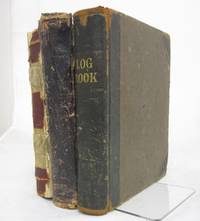
16093Education Daily or weekly handwritten reports in many hands on a school in Kent from the years 1863-1939. The logs chronicle the school's development from single gender instruction to a "mixed school" with classes of boys and girls learning together. The final pages of the log detail WWII-era preparations to train students in gas mask procedures and to prepare the school and community to begin receiving the children evacuated from London and other major cities. 9.5 x 8 in. Quarter morocco. 3 volumes each 500 pages. Original cloth boards. Marbled end papers. 2 entries from 1939: "Aug. 30. Time was spent today with fitting gas masks and gas-mask drill. The time table was to a certain extent disorganized particularly in Gps. I & III." "Sept. 1. The evacuation of London children commenced today. The school was hurriedly closed in view of the arrival of parties of children with their Teachers." In the first four days of September 1939 nearly 3000000 people were transported from places identified as vulnerable to quieter more rural sites. <br/><br/>There were opportunities for women to each and girls to learn as the school became "mixed" at the behest of teachers who believed it would be better for their students' academics. 1885: New teacher "Examined Boys in Arithmetic - about 3 passed in standards I to VII. Reading fair but "sing song" manner. Spelling bad except few boys in 1st class. My conviction is that a "mixed school" would bring better results as practically one teacher has 7 standards to teach--which cannot be well done. Average for the week 52 Boys. Discipline is bad." Includes many entries from women teachers such as this entry from July 15 1872. "Entered upon my new duties as School Mistress of the Wrotham National Infant School having been provisionally certificated on the recommendation of my late Inspector.Found the children to be very backward indeed their being several . years of age and knowing only the alphabet; and not one able to read words of one syllable without spelling. The average attendance of the Infants for the week 28.6. The elder girls from the boy's school attending the Infants school . of an afternoon to receive instruction in needlework and cutting out."<br/><br/>Depending on the principal teacher there are daily or weekly handwritten entries on school business including attendance students' progress with academic material such as spelling and Arithmetic and other notes such as interesting lessons. "School Diary or Log-Book. In every school receiving annual grants the managers must provide out of the school funds besides registers of attendance Article 17h-- a A Diary or Log-Book.The Diary or Log-book bust be stoutle bound and contain not less than 500 ruled pages.The principal teacher must maake at least once a week in the Log-book an entry which will specify ordinary progres and the facts concerning the school or its teachers such as the dates of withdrawals commencements of duty cautions illness.No reflections or opinions of a general character are to be entered in the Log-book." Includes several reports from visiting district supervisors on the progress of students. "The Mixed School.Writing-the best taught subject-is good all through the school and the papers are neat and clean generally."<br/><br/>Many issues related to attendance for holidays and seasonal harvests and notes of outbreaks of diseases and illness such as measles whooping cough and scarlet fever. 1863: "P.J. punctual. First Class commenced writing from dictation on paper. School tin as usual at this season of Hay-making. School year commended. Girls visited by Mrs. Gowland." 1877: "Many students have been migratory this quarter roaming from school to school. Leaflets of New Education Act Laws been supplied to the parents of every child attending school." Many new teachers complained on the educational level of students who attended the school. 1887: "Admitted Thos. Skinner 7 yrs old does not know his letter nor can make one average attendance.Admitted John Broad aged 6 ½ not know his letters.Many infants absent through sickness and also being a very cold stormy week of frost and snow." Covers worn on all volumes at extremities. Spine missing and worn extremities on 1901-1939 volume. Missing front end page boards detached on 1863-1901 volume. Generally clean interior. Good condition. unknown books
1860313321Albany 1860. 62 vintage albumen prints comprising 60 oval gem portraits 1-1/2 x 1 inches 1 larger oval portrait 2-1/8 x 1-5/8 inches and 1 full-length 3-1/2 x 2-1/2 inches. 2 vols. 8vo. Contemporary brown morocco autograph album stamped in gilt and blindW.B. Sprague blindstamp on ffep. A few portrait photos damaged or loose 2 inscriptions are without photos. 62 vintage albumen prints comprising 60 oval gem portraits 1-1/2 x 1 inches 1 larger oval portrait 2-1/8 x 1-5/8 inches and 1 full-length 3-1/2 x 2-1/2 inches. 2 vols. 8vo. Early Albany Law School Photographic Yearbook. A photographic yearbook from the Albany Law School class of 1860 assembled by student Horatio Colony 1835-1917.<br/>Opened in 1851 Albany Law School is the oldest independent law school in the United States. Many of its students in the 1850s and '60s became prominent lawyers and judges.<br/>As is the custom with the professionally produced college photograph yearbooks produced by George Kendall Warren starting in the late 1850s each photograph is inscribed beneath by the sitter with his name and hometown. The album opens with professors Ira Harris Amasa Parker Amos Dean Nathaniel Harris and Levi Chamberlain. Some notable students include Alexander P. Ketchum who became a Colonel and Chief Appraiser of the Port of New York; Clayton H. Delano 1836-1920 who served eight terms as the Town of Ticonderoga's Supervisor and was elected twice to the New York State Assembly; and William S. Opdyke general counsel of the Delaware and Hudson Company. <br/>Horatio Colony 1835-1917 whose picture appears last and is unfortunately obscured by damage assembled this album. The photograph of Levi Chamberlain is inscribed to "Horatio friend and pupil." He was admitted to the bar in New Hampshire and New York in 1860; in 1869 he along with his brother George took over the management of the family business the Faulkner and Colony Woolen Mill. He held several other civic and local government positions before his death in an automobile accident in 1917. His son Horatio Jr. 1900-1977 a poet and novelist established the Colony family home as a museum upon his death.<br/><br/>With: Autograph album containing autographs of acquaintances and some notable figures including Amos Bronson Alcott "A. Bronson Alcott" and Octavius Frothingham "O.B. Frothingham". In near matching black morocco autograph album stamped in blind and gilt extremities rubbed. With later inscription of C.W. Lawbert on front free endpaper. unknown books
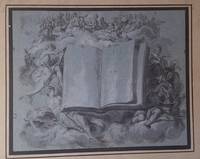
305Augsburg. Original Drawing for Book Illustration. 160 x 197 mm. 6 ¼ X 7 ¾ inches. Drawn on blue paper laid down on 19th century paper. Black double fillet ink border. Shows some light wear but otherwise in very good condition. An attractive and well executed drawing in brown and white ink which illustrates the Book of Life surrounded by figures which probably illustrate the four seasons. This motif is crowned by a chorus of angels and saints also drawn in fine detail. Originally thought to be an Italian drawing the small-scale figures and the delicate pen strokes suggest the Augsburg School of the mid-18th century. Artists like Johann Wolfgang Baumgartner Joseph Christ and Godfried Göz all painters of considerable skill and reputation who also worked closely with local publishers creating designs for prints and book illustrations. The choice of blue paper and the application of white ink to heighten the image is typical of Augsburg style of the 1750's. For further information see Thomas Kaufmann's monograph Central European Drawings 1680-1800. Princeton 1989 and an essay by Peter Stoll in OPUS "Empire of Prints. The Imperial City of Augsburg and the Printed Image in the 17th and 18th Centuries" 2016. Both works are well illustrated and show examples of the drawings and prints from Augsburg artists during the period. unknown books
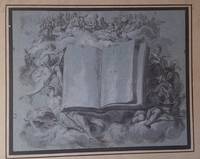
1750762Augusburg 1750. Original Drawing for Book Illustration. 160 x 197 mm. 6 ¼ X 7 ¾ inches. Drawn on blue paper laid down on 19th century paper. Black double fillet ink border. Shows some light wear but otherwise in very good condition. An attractive and well executed drawing in brown and white ink which illustrates the Book of Life surrounded by figures which probably illustrate the four seasons. This motif is crowned by a chorus of angels and saints also drawn in fine detail. Originally thought to be an Italian drawing the small-scale figures and the delicate pen strokes suggest the Augsburg School of the mid-18th century. Artists like Johann Wolfgang Baumgartner Joseph Christ and Godfried Göz all painters of  considerable skill and reputation who also worked closely with local publishers creating designs for prints and book illustrations. The choice of blue paper and the application of white ink to heighten the image is typical of Augsburg style of the 1750's. For further information see Thomas Kaufmann's monograph Central European Drawings 1680-1800. Princeton 1989 and an essay by Peter Stoll in OPUS "Empire of Prints. The Imperial City of Augsburg and the Printed Image in the 17th and 18th Centuries" 2016. Both works are well illustrated and show examples of the drawings and prints from Augsburg artists during the period. unknown books
18602206161860. With Inscription and descriptive text in pencil. 1 vols. 19 x 14 inches 48.3 x 35.6 cm. Framed and glazed. Fine. With Inscription and descriptive text in pencil. 1 vols. 19 x 14 inches 48.3 x 35.6 cm. unknown books
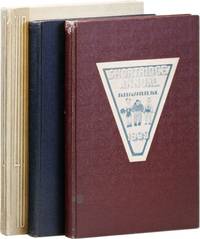
193833807Indianapolis: Shortridge High School Press 1938-1940. First Edition. Three volumes; quarto 25.5 - 27.25cm.; original cloth the two earliest Annuals with color pictorial plates mounted to upper covers last issue pictorially blind-embossed; illus. mostly photographic throughout. Light edge wear tiny loss to cover plate of earliest volume not approaching image or text the usual student signatures throughout else a Very Good or better set. High school yearbooks dating from Vonnegut's sophomore junior and senior years. We find images of Vonnegut on the student council in 1938 and 1940 though never the Fiction Club; ths Social Committee in 1939 and 1940; and the editorial staff in 1940. He was also listed one of the ten most popluar boys "Uglymen" in school his senior year. Years later Vonnegut would famously write: "Shortridge High School is my dream of an America with great public schools. [Shortridge High School Press] unknown books
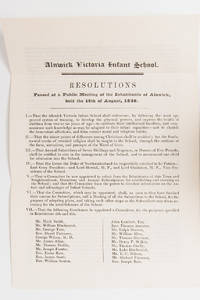
18382596Alnwick: M. Smith 1838. First edition. Fine. 3 page pamphet measuring 152 x 228mm. Trifolded with ownership signature of Wm. Dickson Esq to rear blank. Else an exceptionally clean and seemingly untouched copy of this rare pamphlet advocating for improvements in the early education of children. The only copy known on the market this title does not appear in the modern auction record or at any institutions according to OCLC.<br/><br/>A proposal and prospectus for an Infant School to serve the town of Alnwick and improve the overall level of education within the community. The pamphlet clarifies that the Duke of Northumberland is confirmed as the school's patron; and it outlines how donations and subsciptions from the town will add to the school's endowment. But more importantly it focuses on the communal benefits that will come from citizens' support for children's education regardless of their class. Touting the successes of other Infant Schools in England and abroad in providing "well-regulated nurseries for the children of the poorer classes" the committee also explains that " the most approved system of training will develop the physical powers and improve the health of children from two to six years of age -- to cultivate their intellectual faculties and communicate such knowledge as may be adapted to their infant capacities." The committee asserts that when the larger population begins sending children to school those children will be endowed with a desire to learn and "those attending will feel it as a punishment to be kept from the School" because school "is to the children what the actual business of life is to the man. Here the feelings are manifested and the character is developed" so that infants grow to intelligent and responsible members of the populace. Notably the committee also points out the short term benefits of developing an education system. "To the parents themselves many advantages will accrue from these Schools. Not only will their minds be relieved from much anxiety for the safety of their children but the mother free during the day from the necessity of watching over them will have an opportunity now denied to her of contributing by her labour to their support or of devoting more time to the promotion of their comfort at home." This acknowledgment reveals an important shift in thinking about the economic role of mothers and about women's need for time to accomplish their own work. A rare and important example of the spread of early childhood education and the arguments for its expansion. Fine. M. Smith unknown books
179138981791. 13 x 9 inches. Dark brown body colour on prepared paper. Inscribed "N.2.Stück" and "am 9ten Aprill 1791--nach der Natur gezeichnet von JEW" ink collector's stamp "Linel-Smlg. No." followed by pencilled number "1046" all on verso. Provenance: Linel ink collector's stamp on verso.<br/> <br/>A high quality image that clearly is drawn from life as the inscription claims. The artist's use of a dark prepared ground recalls the work of Barbara Regina Dietsch and her family. A search of Nissen's index of artists reveals one possible name: the Swiss artist Johann Emmanuel Wyss 1782-1837. However the maturity and assurance shown in the present drawing would seem to rule him out: he could have been no older than nine in April 1791. unknown books
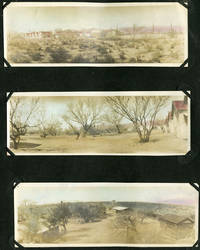
1930WRCAM52672Paradise Valley Az 1930. 220 silver gelatin photographs most 2 1/2 x 4 1/4 inches to 3 1/4 x 5 3/4 inches with a handful of larger photographs and some smaller-format panoramas. Oblong folio. Original brad-bound album. Minor dust-soiling. Overall very good. An engaging collection of original photographs from Arizona circa 1930. The album would seem to depict the early days of the Judson School a well-known boarding school which opened in Paradise Valley Arizona in 1928. It was evidently assembled by one of the students. The first photograph shows the student body of nineteen young men in coat and tie; the second shows founder and head George Judson and the three men who evidently constituted the whole faculty at the time. Since one of the photographs contains a joking reference to Prohibition it would seem to date before 1933; at the same time there are enough buildings and structures to suggest the school had been going for several years hence our dating to circa 1930. <br> <br> The school prided itself on offering a vigorous outdoor life as well as regular schooling. The students are shown in various settings: tending to a camp surveying or on horseback in the desert a few shots depicting a snow-covered desert. The young men are also depicted at leisure: reading in chairs indoors and outdoors playing baseball and tennis wrestling and roping. Also present are a good number of photographs depicting the landscape around the area captured while the boys were exploring the areas around Paradise Valley and Phoenix with numerous shots of the men preparing food while out on the desert prairies. Five photographs depict a railroad derailment and a handful capture Spanish-style buildings or Native American structures in the area with one image of a Native American family inside a makeshift tent. There is also a group of photographs in an eastern setting presumably the student back home. <br> <br> The Judson School once in a rural desert setting was eventually surrounded by the explosive growth of Phoenix. The owner of the school which was always a private for- profit endeavor sold the land to luxury real estate developers and closed the school in 2000. <br> <br> A wonderful collection of photographs depicting a famous pioneering school in Arizona. unknown books
185020700Paris 1850. Pencil pen and wash drawing with numerous sub-titles in ink signed "J. Litoux" A fascinating and beautiful architectural drawing - or 'rendu' of basic elements of house construction in cluding walls floors doorways roofs and ceilings.<br/> <br/>A fine drawing from an architectural student at the Ecole des Beaux-Arts in Paris the most influential architectural school in existence during much of the 18th century the whole of the 19th century and the first part of the 20th century. 'Students were eligible for the Ecole if they were at least fifteen years old or under thirty. They began with the seconde classe in which they competed in the concours d'émulation. These alternated between an esquisse - a rough sketch for which up to twelve hours was allowed - and a rendu - the large-scale finished drawing for which one to three months were allowed. Two to four years were usually required for a student to accumulate enough credits to enter the première classe. The same system was followed again usually for two to three years after which the student should have accumulated enough credits to compete for the Grand Prix de Rome. The winner of the Grand Prix was entitled to five years study under the auspices of the French Academy in Rome. For each of his first three years he was required to submit an analytical study of an ancient monument. For his fourth year he had to submit a complete reconstruction of a major classical work. For his fifth year he was required to submit an original work designed to a program of his own invention. In the seconde classe the student was required to attend a variety of lectures in theory history and construction and learned to prepare construction drawings. Work was done at ateliers located outside the precincts of the Ecole des Beaux-Arts. These were rented and organized by the students themselves and the students had the right to invite a teacher of their own choice to serve as their maître. The teacher himself did not have to be a member of the faculty of the Ecole nor - at least in principle - did he have to be a practicing architect.' Arthur Drexler. The Architecture of the Ecole des Beaux-Arts. New York MoMA 1977 p.8-9<br/> <br/>Arthur Drexler The Architecture of the Ecole des Beaux-Arts. New York MoMA 1977. unknown books
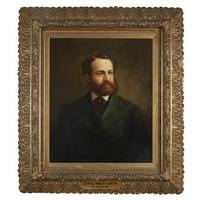
1870690701870. 30" x 24. 30" x 24" A Philadelphia Lawyer Who Served as Pennsylvania's Deputy Attorney General American School 19th Century. Smith Lewis Waln 1846-1881. Portrait of Lewis Waln Smith. Philadelphia c.1870. 24" x 30" image size. Oil on canvas in ornate nineteenth-century gilded wood frame. Some minor nicks and chips to frame gilding slightly dulled otherwise fine. $1800. Lewis Waln Smith was a lawyer who served as Deputy Attorney General for the State of Pennsylvania. This portrait belonged to the Philadelphia Bar Association. Founded in 1802 it is the oldest association of lawyers in the United States. Its library where this portrait was last displayed was renamed the Theodore F. Jenkins Memorial Law Library in 1967. unknown books
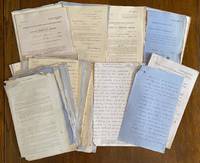
16092Kemble Parochial School Record Book 1871-1904. Kemble Cirencester Gloucestershire. Collection of approximately over 100 documents on approximately 180 leaves many written on both sides comprising the complete records of the Kemble Parochial School. Unbound contained in original protective black cloth boards. Large legal "foolscap" size pages. Comprising both printed Circulars directed to the schools from the Education Department and handwritten copies of records the school was ordered to send as reports to the Education Department. This school is built from grant money received in the wake of the first of the Forster Acts known as the Elementary Education Act of 1870 which made education compulsory in England and Wales for all children aged 5 to 13. <br/><br/> The Forster Acts named for the sponsor of the original bill William Forster brought a sweeping change to elementary education in England by declaring public education for children to be mandatory. It also mandated that the schools should be publicly funded and overseen by regular inspections. The Kemble Parochial school founded at the very inception of this legislation provides a window into the dramatic shift to public education. The first document in this record is a Circular of Instructions and Rules for the construction of a school building. Through the handwritten retained copies of annual reports by Principal A.G.W. Wilts to the Inspector of Schools we are able to grasp the immensity of the change. Wilt first report comes in 1872 when the schools 18 students were taught in an old traditional schoolhouse by headmistress Ms. Hopkinson who did not have an official certification in teaching "This is an average country School carried on at present in rather inadequate premises but a new and handsome school-room and teacher's residence have just been erected.The mistress is a successful disciplinarian and has much natural aptitude for teaching." By 1875 the school has grown to 49 students though still under the tutelage of the unfortunate Ms. Hopkinson who continues struggling to obtain a teaching credential. By 1878 undergoing regular inspections it is reported that the school needs improvement in multiplication and to better follow the state mandated provisions as to Needlework. Their ranks swelled to around 80 students just before the end of the century before petering out and ending in 1904 with only 3 students registered. By then Ms. Hopkinson had been replaced by two subsequent teachers Ms. Lane and Ms. Reed who also struggle to obtain a Certificate while managing a large class.<br/><br/> Circulars from the Education Department show that the idea of public education while welcomed in many quarters arrived also with surprise and some distrust. In 1878 the Circulars report the most recent developments of the Forster Acts "As it has now become evident that by the operation of recent legislation the great majority of the labouring classes will be virtually compelled to send their children to Public Elementary Schools." A major controversy of the Forster Acts surrounded the requirement that the schools operate non-denominationally. While individual churches pushed for the right to educate children under their own religious tenets the Church of England feared that doing so would weaken state control of education. The archive contains notes of this church-state tension in a handwritten letter of 1880 in which the Rev. R.H. Taylor inquires of the Education Department "whether the School is now conducted as a public elementary school.Section VII of the Elementary Education Act 1870 having been conspicuously put up in the School. If not my Lords cannot direct H.M. Inspector to inspect the School annually as a public elementary school." <br/><br/>On the lighter side repeated entreaties from the Education Department in Whitehall during the 1870s call for "teachers of Schools will be willing to give their assistance in endeavoring by due warning to the scholars to put a stop to.the mischief caused by throwing stones at the insulators of telegraph wires." Threatened punishments to the "schoolboys" responsible for this "great evil" include "imprisonment and flogging." Documents are in very good condition on large size sheets of blue or white paper clear and legible. Some dog-ears and a couple pages of the archive have been chewed on the corners but most are complete. Names of all enrolled students appear yearly on the Examination Schedule. A very complete set of records and historical resource on the most dramatic transition ever to come to education; that of going from independent schoolhouses to systemized public education. unknown books
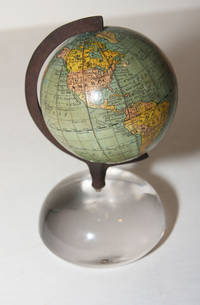
189110008Seneca Falls NY 1891. No Binding. Near Fine. 3-inch diameter globe anchored in magnifying glass as issued; 5 ½ inches total height. Color-printed wax-engraved gores; some fading of place names a few repair in extreme southern portion but overall remarkably little wear; overall excellent condition. An unrecorded delightful cartographic curiosity: a very good quality miniature globe with a magnifying paperweight as its base. Only two other globes by the American Globe and Supply Company are known: a six-inch terrestrial recorded by Rumsey dated 1892 and an eight-inch terrestrial cited in Rittenhouse dated 1891; see below. This Seneca Falls New York company was one of several for which Rand McNally supplied gores for the globes it produced. Rand McNally did not issue its first globe until 1887. Very nice condition for an object of this kind. Cf. Rumsey 5120; Rittenhouse Vol. 2 No. 1 p. 23. unknown books
1895223921Paris: Gauthier-Villars et Fils 1895. First. hardcover. fine. Illustrated throughout with nicely printed portraits and other historical reproductions. 3 volumes. lxviii 519; 572; 646pp. Very thick short 4tos beautifully rebound by Stroobants in older 3/4 tan morocco over marbled boards; ornate gilt-stamped spines with burgundy leather labels; uncut edges t.e.g. original wrappers bound-in marbled board slipcase worn. Paris: Gauthier-Villars et Fils 1895-1897.<br/><br/> Fore-edges foxed and also some light foxing throughout the first volume otherwise a fine copy in a lovely binding.<br/><br/> Gauthier-Villars et Fils unknown books