Rajasthani School, 19th centuryBiblio.com
851 résultats
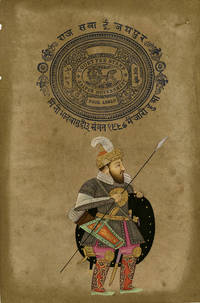
189013351890. Ink and gouache with gold heightening on fibrous brown laid paper with a Jaipur Court Fee tax stamp in black ink 13 3/8 x 8 3/4 inches 340 x 222 mm. Toning handling creases and minor scattered surface soiling throughout. Scattered coeval Hindi inscriptions in ink on the verso as well as the embossed blindstamp of the Treasury of Jaipur. The first revenue stamps in India were issued in the mid-nineteenth century during the Raj and they are still being issued to this day. Apart from issues for the whole of India many princely states provinces and other states also had or still have their own revenue stamp issues. <br /> <br /> Before independence Indian revenue stamps were closely modeled on similar designs from Great Britain as is the case with this carriage motif stamp from Jaipur. The stamps were issued to denote various denominations including rupees and annas. An anna or Änna was a currency unit formerly used in British India equal to 1â„16 of a rupee. It was subdivided into four old Paisa or twelve pies thus there were 192 pies in a rupee. When the rupee was decimalized and subdivided into 100 new paise one anna was therefore equivalent to 6.25 paise. This particular stamp was used as evidence of court taxes remitted for property dealings. unknown
18972083002116204995Tokyo Sewing Girls' School Tatsugoro Watanabe 1897. Soft Cover. Fine. The book is in fine condition. Tokyo Sewing Girls' School Tatsugoro Watanabe paperback
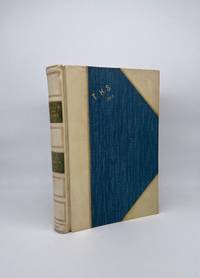
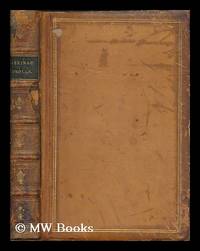
18883032London: George Allen and Sons 1888. Very Good. Reprint of the small complete edition INSCRIBED TO NESTA INGLIS. 8vo. Signed Bumpus binding in half vellum gilt ruled panels to spine green morocco title labels lettered in gilt blue linen boards gilt ruling to boards initials "T. H. S. 1912" stamped in gilt on upper board. Top edge gilt. Blue marbled endpapers. Affectionate contemporary gift inscription to first blank in brown ink: "Nesta Inglis. With much love. F.M.W. & H.J.W." some pencil scoring to Preface and 'Of Kings Treasuries'. Else clean and tidy. Very good A charming copy of Ruskin's essays affectionately inscribed to Nesta Inglis the pioneering headmistress of the independent girls' school Tudor Hall Banbury; seemingly donated to the school library when she was still a pupil 1912. Ernestine "Nesta" Inglis 1895–1990 was an educator and headmistress "who played a pivotal role in the history of Tudor Hall: attending as a pupil rescuing the School from closure as Headmistress and overseeing the eventual purchase of Wykham Park in 1944. Her vision secured the future of the School". According to a former pupil "Nesta's influence at Tudor was to make it a more progressive school following The Dalton Plan – an educational model that aimed to tailor each student's study to their interests and abilities and to promote independent learning." More recently her talent as a musician was recalled on Desert Island Discs by another former pupil the barrister Nemone Lethbridge. George Allen and Sons hardcover
18922091202133207931Kokindo 1892. Soft Cover. Fine. Volume: 1 Kokindo paperback
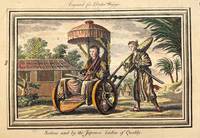
18601967London 1860. Engraving with hand coloring in watercolor on cream laid paper; 7 1/2 x 10 3/4 inches 190 x 272 mm platemark; 8 5/8 x 13 3/4 inches 217 x 348 mm sheet. Significant toning and handling wear edge wear including a missing left corner outside of image area and an expertly repaired vertical edge tear in the center top margin outside of image area and two tabs of archival mending tape at the top corners on the verso. unknown
1851003004Edinburgh: Gall & Inglis. Good with no dust jacket. 1851. First Edition. Half-Leather. Volume Five: 2 2 256 pages. Volume Six: iv 256 pages. Volumes Five and Six together in one volume . Published from December 1851 Vol. V No. 1 to September 1855 Vol. VI No. 8 . Half leather binding and marbled boards. Red leather spine label with gilt lettering. Marbled page edges. Front board almost detached. Leather split down length of front and rear joints. 1/2" missing to leather at head and tail of spine. Spine leather is very worn and affected with dry rot. Gutters cracked at hinges. Internally . ; 8vo . Gall & Inglis hardcover
18734990Paris, Didier et Cie, 1873 ; in-8, broché vert imprimé noir ; 4 ff. , VIII pp. , 564 pp.
1882ZB981331NY: Columbia University Press 1882-1915. volumes 4-36 lacks volume 10 an uninterrupted run of complete volumes bound ex library else text clean & bindings tight. - If you are reading this this item is actually physically in our stock and ready for shipment once ordered. We are not bookjackers. Buyer is responsible for any additional duties taxes or fees required by recipient's country. Photos available upon request. NY: Columbia University Press unknown
18812080302106802487Count Matsudaira Motonori 1881. Soft Cover. Fine. Size: 225 x 152 Number of books: 12 Count Matsudaira Motonori paperback
1860001429Boston: Ticknor and Field 1860. Blindstamped cloth. Very Good. 8vo viii 405 pp. Later early edition. A handsome bron blindstamped copy clean and tight inside with slight cocking of the spine and light edgewear and the like. <br/><br/> Ticknor and Field hardcover books
18508857Paris 1850. Pencil pen and wash drawing with numerous detailed measurements. A fascinating and beautiful drawing--or "rendu"--of an ancient Roman sarcophagus.<br/> <br/>A fine drawing from an architectural student at the Ecole des Beaux-Arts in Paris the most influential architectural school in existence during much of the 18th century the whole of the 19th century and the first part of the 20th century. 'Students were eligible for the Ecole if they were at least fifteen years old or under thirty. They began with the seconde classe in which they competed in the concours d'émulation. These alternated between an esquisse --a rough sketch for which up to twelve hours was allowed--and a rendu --the large-scale finished drawing for which one to three months were allowed.Two to four years were usually required for a student to accumulate enough credits to enter the première classe. The same system was followed again usually for two to three years after which the student should have accumulated enough credits to compete for the Grand Prix de Rome. The winner of the Grand Prix was entitled to five years study under the auspices of the French Academy in Rome. For each of his first three years he was required to submit an analytical study of an ancient monument. For his fourth year he had to submit a complete reconstruction of a major classical work. For his fifth year he was required to submit an original work designed to a program of his own invention. "This study of the sarcophagus of Lucius Cornelius Scipio Barbatus was part of an Ecole de Beaux Arts student's portfolio. The sarcophagus was one of many in the Scipio family tomb on the Via Appia just outside of Roma and it dates from c. 290 B.C. The obituary text reads English "Lucius Cornelius Scipio Barbatus son of Gnaeus a valiant gentleman and wise whose fine form matched his bravery very well was aedile consul and censor among you he conquered Taurasia and Cisauna in fact Samnium he overcame all the Lucanian lands and brought back hostages."<br/> <br/>Arthur Drexler The Architecture of the Ecole des Beaux-Arts. New York MoMA 1977. unknown books
18508857Paris 1850. Pencil pen and wash drawing with numerous detailed measurements. A fascinating and beautiful drawing--or "rendu"--of an ancient Roman sarcophagus.<br/> <br/> A fine drawing from an architectural student at the Ecole des Beaux-Arts in Paris the most influential architectural school in existence during much of the 18th century the whole of the 19th century and the first part of the 20th century. 'Students were eligible for the Ecole if they were at least fifteen years old or under thirty. They began with the seconde classe in which they competed in the concours d'émulation. These alternated between an esquisse --a rough sketch for which up to twelve hours was allowed--and a rendu --the large-scale finished drawing for which one to three months were allowed.Two to four years were usually required for a student to accumulate enough credits to enter the première classe. The same system was followed again usually for two to three years after which the student should have accumulated enough credits to compete for the Grand Prix de Rome. The winner of the Grand Prix was entitled to five years study under the auspices of the French Academy in Rome. For each of his first three years he was required to submit an analytical study of an ancient monument. For his fourth year he had to submit a complete reconstruction of a major classical work. For his fifth year he was required to submit an original work designed to a program of his own invention. "This study of the sarcophagus of Lucius Cornelius Scipio Barbatus was part of an Ecole de Beaux Arts student's portfolio. The sarcophagus was one of many in the Scipio family tomb on the Via Appia just outside of Roma and it dates from c. 290 B.C. The obituary text reads English "Lucius Cornelius Scipio Barbatus son of Gnaeus a valiant gentleman and wise whose fine form matched his bravery very well was aedile consul and censor among you he conquered Taurasia and Cisauna in fact Samnium he overcame all the Lucanian lands and brought back hostages."<br/> <br/> Arthur Drexler The Architecture of the Ecole des Beaux-Arts. New York MoMA 1977. unknown
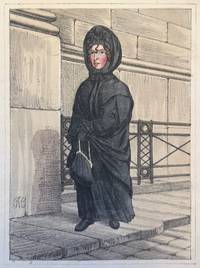
18201889London 1820. Lithograph with handcoloring in watercolor 9 x 6 1/2 inches 230 x 165 mm full margins. Light pencil inscriptions in the lower margins which are largely illegible. Light handling wear and some surface soiling otherwise in good condition with beautiful saturated watercolor work in the area of the subject's face. Whitehead's brother Philip was employed by the Bank of England from 1797 to 1810. During his employment at the Bank Philip Whitehead "adopted an extravagant lifestyle" and evidence came to light that he had defrauded Robarts & Co. by "forging an acceptance to a Bill." He was charged with forgery in 1811 and executed on 29 January 1812. The news of her brother's conviction was kept from his sister Sarah as long as possible. Learning of the execution Sarah Whitehead's mental health became unstable and she began to visit the Bank daily asking if Phillip was there. This continued until 1818 when the Directors offered Whitehead a financial grant on the condition that she stopped coming to the bank. Whitehead wore black crepe clothing which was a sign of mourning and as a result became known as the "Black Nun." To this day Whitehead's ghost reputedly haunts the Bank of England as well as the area on Threadneedle Street nearby. The myth of Whitehead's ghost appears in the poem New Year Letter by W. H. Auden. unknown
18852110502151003604Jodo Fusokai 1885. Soft Cover. Fine. Number of books: 4 Jodo Fusokai paperback
183481451834 Caen, Imprimerie Le Roy, 1834. Un fascicule in-8 de 14 pages, sans couverture. Rousseurs.
185025ABC877London: Impensis Georgii Bell Published by George Bell 1850. 1st Edition . Hardcover. Good/No Jacket. Leather half-binding with marbled boards and gilt-tooled spine. Leathe scuffed along edges with closed splits at corners of spine. Front hinge has come unstuck from the text block clean - simple to repair Primary texts in English German Greek and Italian; translations into Latin and Ancient Greek. Include sseveral engraved plates/illustrations with one prominent frontispiece. Original poems alongside translations into Ancient Greek or Latin on the facing pages a popular academic exercise among Victorian classicists. The book was edited by the Victorian classicist Benjamin Hall Kennedy famous for his Latin primer with contributions from former pupils of Shrewsbury School including James Riddell. <br/> <br/> Impensis Georgii Bell (Published by George Bell) hardcover
185094718London : Georgii Bell 1850. First Edition. Hardback. Finely bound in full contemporary vellum. Minor dust-toning only to the panel extremities. Remains particularly well-preserved overall; tight bright clean and strong - scans and additional bibliographic detail on request. ; 328 pages; Physical desc. : xxii 328 p : plate illus ; 22 cm. Subjects; Latin & Greek poetry - Translations from English. Language: Ancient Greek to 1453 ; Latin. Translations chiefly from the English into Latin or Greek; originals and translations on opposite pages. London : Georgii Bell hardcover
1867253879London: Bell and Daldy 1867. Third Edition. Hardcover. Finely bound in modern aniline calf over marble boards. Raised bands with a dark morocco gilt-blocked label. Spine compartments uniformly tooled in gilt. Physical description: xxviii 401 p. Subjects: Sabrinae Corolla. London: Bell and Daldy hardcover
189717832Joliette Imprimerie générale 1897 In-8 bien illustré de planches hors-texte (portraits et vues), 1f. (titre) et 254p.
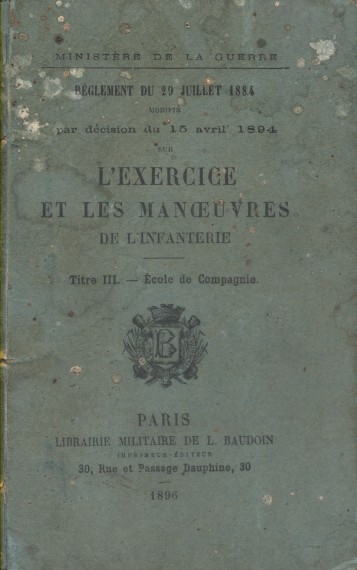
189625277Couverture rigide. Cartonnage de l'éditeur défraîchi. 106 pages. 9 x 15 cm.
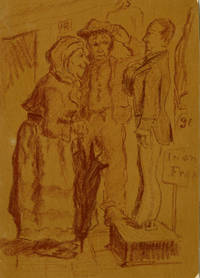
186014021860. Red crayon on brown light-wove paper 6 3/4 x 4 3/4 inches 172 x 121 mm. Light toning and extremely minor small losses at the very extreme top right and left corners 1/8-inch. unknown
188240901New York: Published by the Royal Baking Powder Co 1882. 1st printing thus Axford p. 352; Bitting p. 410; Brown 2431. Not in Cagle though see 1011n nor Wheaton & Kelly. OCLC records 5 holding institutions. Chromolithographed paper wrappers sewn. String hook loop in upper left of booklet. General wear & soiling. Foxing to paper. An About VG copy. 4 41 3 pp. 3 page Index at front. Page 4 a wood engraving showing 20 figures of divers pans used in baking. 8vo. 8-1/4" x 5-1/4" <br/><br/> Published by the Royal Baking Powder Co unknown books
187922101879. Watercolor and graphite on watercolor paper 5 1/8 x 8 1/4 inches 130 x 210 mm the full sheet. Initialed "H.D.J." in watercolor in the lower right image area and titled and dated on the recto. Scattered light foxing and a small corner loss at the lower right corner. unknown
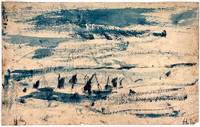
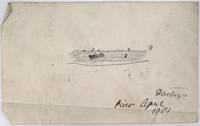
188122171881. Pencil on white wove paper 4 x 6 1/2 inches 102 x 165 mm the full sheet. Titled and dated in ink on the recto. On the verso is a sketch of a house. A lively cursory sketch of boats on a river. Scattered handling wear lights folds and creases. unknown
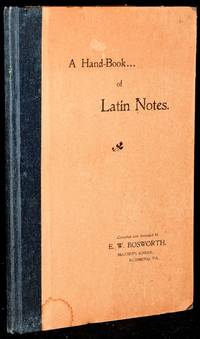
1899271407Richmond VA: Whittet & Shepperson 1899. First Edition. Hard Cover. Very Good binding. A Latin primer prepared by E. W. Bosworth of the McGuire's School in Richmond presumably for the use of the students at the school. An uncommon Richmond item. Very Good binding. Whittet & Shepperson unknown