Pascal, BlaiseBiblio.com

206 résultats
1704biblio592London: A.&J. Churchil 1704. Fine. <p>12mo LVIII 10 392p 18x11cm Translated by Basil Kennet signed binding by Sydney Aiken Fine leather decorated binding and marbled boards ownwer's signature</p> A.&J. Churchil hardcover
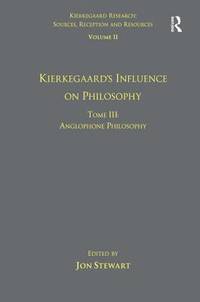
2012SBS-9781409440550ASHGATE 2012. Hardcover. New. ASHGATE hardcover
2012SBS-9781409440550ASHGATE 2012. Hardcover. New. ASHGATE hardcover
BN66187Wie Geschöpfe leben: Konturen evangelischer Ethik Ethik im theologischen Diskurs /Ethics in Theological Discourse Ulrich Hans G <br/><br/> unknown
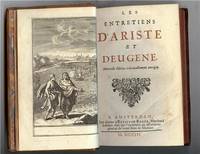
1703biblio45<p><b><i>Bouhours Dominique. 1628-1702 Les Entretiens D'Ariste Et E'Eugene. Nouvelle Edition très-exactement corrigée. A Amsterdam Aux depens D'Estienne Roger Marchand Libraire chez qui l'on trouve un assortiment general de toute sorte de Musique. M. DCCIII 1703</i></b> </p><p>Duodecimo. 3 blank 3 versoscene title page A12-I12 K12-R12 R12 includes 4 blank. Bookplate of Nicolai Joseph Foucault 'Comitis Consistoriani' Two Lions holding a crowned lion within the Crown. French Calf with marvelous gold filigree Emblem on the front and back of the same lion. Five raised spines in period gold gilt. Some edge and binding abrasion but otherwise tight. Internally clean but with fading print probably not washed but just running out of ink.</p> Title Page Printed in <b>Red and Black</b> by Roger in Amsterdam in 1703 the year after Dominque Bouhours death this elegantly bound book was once owned by <b>Nicolai Joseph Foucault and has his wonderful bookplate as well as his deeply embossed Seal on the front and back of the book.</b> Period blind stamp binding with 6 wonderful compartments. There is some minor separation of the leather along the spine but that is easily repaired. The book is tight crisp and is in overall very good condition. Dominique Bouhours 15 May 1628 - 27 May 1702 was a French Jesuit priest essayist and neo-classical critic. He was born and died in Paris. Bouhours entered the Society of Jesus at the age of sixteen and was appointed to read lectures on literature in the Collège de Clermont at Paris and on rhetoric at Tours and Rouen. He afterwards became private tutor to the two sons of Henri II d'Orléans duc de Longueville. First Amsterdam Edition. He was sent to Dunkirk to the Romanist refugees from the Commonwealth of England and in the midst of his missionary occupations published several books. In 1665 or 1666 he returned to Paris and published in 1671 Les Entretiens d'Ariste et d'Eugène which was reprinted four more times at Paris twice at Grenoble and afterwards at Lyon Brussels Amsterdam Leiden and other cities. The work consists of six conversations entretiens between two companionable friends whose Greek- and Latin-derived names both mean "well-born" in the agreeable discursive manner of the well-informed amateur as it had become established in the salons— "the free and familiar conversations that well-bred people have honnêtes gens a by-word of the précieuses of the salons when they are friends and which do not fail to be witty and even knowledgeable though one never dreams there of making wit show and study has no part in it."1 The subjects erudite but devoid of pedantry are the Sea considered as an object of contemplation the French language Secrets True Wit "Le Bel Esprit" The Ineffable "Le Je ne sais quoi" and Mottoes "Devises" all expressed in flawless idiom and effortless allusions to the Classics or Torquato Tasso. The popularity of Bouhours' discursive heuristic Entretiens extended to Poland where Stanislaw Herakliusz Lubomirski imitated them in Dialogues of Artakses and Ewander. His thoughts on the elusive je ne sais quoi that was in vogue in the seventeenth century expressed through his characters ends in assessing it a mystery that escapes a rational inquiry. It determined by its delicate presence its grace and invisible charm the sense of what pleases or displeases in Nature as well as Art and remained an essential part of the French critical vocabulary until the advent of Romanticism.2 His Doutes sur la langue française proposés aux Messieurs le l'Académie française Paris 1674; corrected second edition 1675 was called "the most important and best organized of his numerous commentaries on the literary language of his time"3 when it was edited in a critical edition. His doubts are collected under five headings: vocabulary phrases and collocations grammatical constructions clarity and stylistic consistency in each case setting literary quotations under scrutiny. His standards expressed in the suggestions he offered for improving each example showed the way out of ambiguities skirting incongruous juxtapositions and untidy constructions. The work was widely accepted and Bouhours standards are still the accepted norm among literate readers today. The chief of his other works are La Manière de bien penser sur les ouvrages d'esprit 1687 which appeared in London in 1705 under the title The Art of Criticism Vie de Saint Ignace de Loyola 1679 Vie de Saint François Xavier 16824 and a translation of the New Testament into French 1697. His letters against the Jansenists had a wide circulation. His practice of publishing secular books and works of devotion alternately led to the mot qu'il servait le monde et le ciel par semestre. Bouhours died at Paris in 1702. According to the book Mother Tongue by Bill Bryson Bouhours' dying words were "I am about to -- or I am going to -- die: either expression is used." D' Estienne Roger
17509Society for the Study of Social Ethics Oxford. 1891 and 1892. The six items are all disbound and in fair condition with light signs of age and wear. Items One and Five are not productions of the Society but are closely connected with it. The first five items are scarce: the only copies of One on COPAC at Oxford and the British Library; no copy on COPAC of Two; the only copies of Three and Four at Oxford; Five is a galley proof; and Six only to be found at Oxford the British Library the LSE and University College London. ONE: 'The Idea of an Oxford Modern Ethical Society. A Paper Read at an Inaugural Meeting held on Friday March 13 1891 in University College.' Printed by Parker and Co. Crown Yard Oxford. 20pp. 12mo. Dated at end: 'W. K. FIRMINGER. W. GIBSON. Mert. Coll. Oxon. March 1891.' TWO: 'Society for the Study of Social Ethics. Foreign Immigration - Facts and Figures.' 2 1pp. 12mo. Bifolium. Main text 2pp. first leaf ends: 'WALTER K. FIRMINGER Editorial Secretary pro tem. Merton Coll. Oxon. May 19th 1891.' The recto of the second leaf carries a 'NOTICE.' THREE: 'Society for the Study of Social Ethics. Over-Population - Facts and Figures.' 4pp. 12mo. Possibly a proof: unpaginated and printed on rectos only. Dated at end: 'Walter K. Firminger Editorial Secretary pro tem. Merton Coll. May 1891.' Manuscript emendation to final sentence. Punch-holed in top left-hand corner. FOUR: 'An Essay Read before the Society for the Study of Social Ethics On November 4th 1892 by Walter K. Firminger Merton College Oxford. 28 iv pp. 12mo. Drophead title p.3: 'Religion: An Attempt to appreciate the Social Aspects of the Catholic Faith. A Paper read before the Society for the Study of Social Ethics in Mr. L'Estrange's Rooms in Queen's College Oxford Nov. 4th 1892.' With a couple of minor manuscript emendations. FIVE: Galley proof of article titled 'Oxford Reform Club'. Pencil note at head: 'From Oxford Chronicle. Oct. 1892'. Tipped-in at head of p.3 of Item Four above. The article gives a long report of a lecture by Firminger titled 'Need the poor be always with us' SIX: 'The Journal of the Society for the Study of Social Ethics.' Issue for October 1891. 100pp. 8vo. Prelims not present perhaps not called for. Unopened. The reason for the claim by one source that the Society was founded by Herbert Samuel 1870-1963 later 1st Viscount Samuel is unclear. Society for the Study of Social Ethics, Oxford. 1891 and 1892. unknown