3 060 résultats
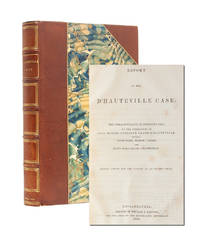
18404910Philadelphia: W. S. Martien 1840. First edition. bound with The Petition of Henry C. De Rham to the General Assembly of Rhode Island To Except Paul Daniel Gonsalve Grand d'Hauteville From the Operation of the Law 'To Secure the Fulfillment of Certain Contracts and for the Relief of Married Women in Certain Cases.' Together with a Remonstrance of Ellen S. d'Hauteville.Providence: Knowles & Vose 1841. First edition. <br /> <br /> bound with Review of the d'Hauteville Case: Recently Argued and Determined in the Court of General Sessions.Boston: Weeks Jordan and Co. 1841. First edition.<br /> <br /> Three volumes bound in one. Finely bound by Bradstreet's in half morocco over marbled boards with gilt to spine. Top edge gilt. Marbled endpapers. Armorial bookplate of Samuel F. Barger to front pastedown. Measuring 225 x 135mm and collating complete including titles: 295 1 blank; 124 2 errata; 2 44. A just about Fine copy with some inoffensive pencil annotations and corrections to volume I and occasional faint foxing; overall a pleasing copy of three scarce legal works related to women's custody rights according to international and interstate law. <br /> <br /> Three scarce tracts documenting the international custody battle that became highly publicized and debated in its time. In 1837 American citizen Ellen Sears married Daniel Gonsalve d'Hauteville a member of the Swiss nobility. During their brief union Ellen survived emotional neglect and mental cruelty from her husband whose "self-image as paterfamilias conflicted with Ellen's growing sense of herself as a mother tormented by an unfeeling spouse" DiFonzo. Pregnant and unhappy she left her husband for the U.S. giving birth to her son after her arrival. Under Common law doctrine d'Hauteville demanded that his wife and child return to his household in Switzerland. "But Sears and her Philadelphia lawyers devised a strategy that would challenge the accepted legal formulation along its emerging cultural fault line.leveraging mental cruelty into an accusation that d'Hauteville had violated the standards of the changing American family" DiFonzo. This strategy combined with gains that the women's movement had made in the U.S. and Europe marital property laws within the century helped bolster her position and win her custodial rights.<br /> <br /> "The d'Hauteville case was not a single event in a courtroom but a set of multiple legal experiences that exposed timebound and timeless realities of American legal culture. The case began in an insular way as a domestic drama must with the rapid rise and equally rapid fall of the d'Hauteville marriage. But as the fight for the son Frederick displaced their marriage as the central focus of Ellen and Gonsalve's relationship the law assumed a greater and greater presence in their lives. The pair not only confronted contradictions between their own ideas about justice and the legal rules they had to learn they also experienced the transformation of their domestic tragedy into a legal event with innumberable participants from lawyers judges and legislators to courtroom spectators newspaper reporters and diarists" Grossberg. <br /> <br /> The present tracts trace d'Hauteville's initial petition for Habeas Corpus followed by his petition to be exempted from a Rhode Island law protecting the rights of mothers. The final title tracks the case's conclusion providing a review. W. S. Martien unknown
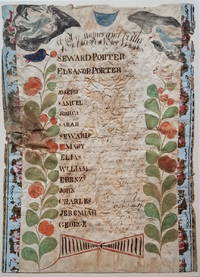
18003722<b><i>Family Register of Seward Porter circa 1800</i></b><br /><br /><br />A nicely accomplished though primitive family register of the Seward and Eleanor Porter family. Two colorful plants with birds in their top branches fill the sides of the register. At the top hover two angel-like figures one bearing an hour glass the other blowing a horn. <p>Seward and Eleanor Porter were from Weymouth Massachusetts but relocated to Falmouth in the District of Maine in about 1777 and then to Freeport in about 1782. This family register lists the names birth places and birth dates of the Porter's 13 children from 1778 to 1797. </p>Their fourth son on the list -- also named Seward Porter -- would become a prominent Maine mariner and entrepreneur. He brought the first steamboat to Maine in 1823. In 1837 he published a now-highly-prized set of charts of the Maine coast. For Seward Porter the son see:<i>Tooley's Dictionary of Mapmakers</i>: Vol 3 p. 453 and Guthorn <i>United States Coastal Charts 1783-1861</i>: p. 29. <br /><br /><b>Condition:</b> Approximately 14 x 10." Iron gall ink on wove sheet with colored decorations. The sheet is mounted on a ca. 1815 newspaper and strips of wallpaper about 1" wide have been applied along the left and right sides. The piece is in fair condition with overall cockling and some water damage. There is a small puncture on the left edge. The ink notations of the birth dates and locations are faded but legible.<br /><br />ICN 3198.
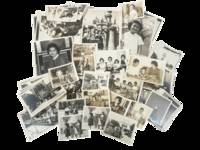
146874N.p.: N.p. 1970. Archive of 288 vernacular color photographs of country music acts from the 1970s housed in a contemporary photo album with the subject of nearly every photograph identified by manuscript ink captions. Occasional additional notations give a date range between 1972-1980 for the photographs with most being dated 1977-1979. <br /> <br /> The photographs primarily consist of performers on stage indicating the photographer was near the stage with a strong sense of composition and timing. Photographs of performers casually posing for the camera indicate the photographer likely had backstage access for some of the performances. <br /> <br /> Based on additional information in some of the handwritten captions the photographs were primarily taken at concerts or events in the Western New York region - Chautauqua Dunkirk Little Valley and Lakewood - all within an hour of each other as well as the nearby Erie County NY Fair and Expo and Pittsfield PA. Other locations include the New York State Fair and Pittsburgh PA. <br /> <br /> Included are images of country music legends Johnny Cash Dolly Parton Loretta Lynn Conway Twitty Hank Snow June Carter Cash The Carter Family Minnie Pearl Tanya Tucker Tammy Wynette and Wanda Jackson. Also included are photographs of singers who while lesser known today were among the biggest stars of the era including Bobby Goldsboro Crystal Gayle Donna Fargo Freddy Fender Jeannie C. Riley Buddy Alan Charlie Walker Peggy Sue Bill Anderson Kenny Price LeRoy Van Dyke Lynn Anderson Jay Lee Webb Jean Shepard and Kitty Wells. Finally the album contains images of smaller and possibly even regional acts some of which appear unknown to us presenting a broad survey of a transitional era in country music as rock soul and pop began to fuse with the more traditional country sound that had begun declining in popularity toward the end of the previous decade. <br /> <br /> For more details please inquire. <br /> <br /> Photographs variously sized primarily 3.5 x 5 inches but up to 7.5 x 9.75 inches. Generally Near Fine. <br /> <br /> Housed in an about Very Good generic photo album with starting and loss to the spine fraying and rubbing. Several internal pages loose or with dried glue leading to occasional slipping of the photographs. N.p. unknown
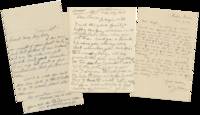
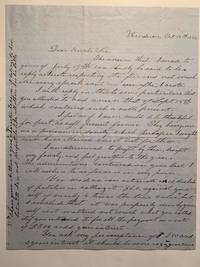
18630002007Baltimore Maryland MD 1863. On offer is a fascinating historic original manuscript letter written by an unknown elderly Baltimore man and likely a member of the Adams family and related to Thomas Boylston Adams September 15 1772 - March 13 1832 the third and youngest son of John and Abigail Smith Adams in response to a request he write of his life and times in New York City. The letter was part of a greater group from the Thomas Boylston Adams papers. The writer relates what an active involved and intelligent teenager and young man experienced in the heady historic days of New York City from 1791 to the turn of the Century. The author gives a real person's view of the French Revolution from the American perspective the feeling of the 'street' to Jacobin views and much more of the politics of the era. The 87 year old man begins "You wish me to communicate for publication such facts and information in regard to Men and things in the City & State of New York as I may from my residence in that City have been connected with or acquired a knowledge of in the early period of my long life." It goes on in part: "Having an ardent desire to see General Washington I soon found my way to Cherry Steer and the Franklin House near Pearl Street where he resided." "It was I think in 1793 or certainly soon after that Francis who had been General Washington's Steward established on or near the Battery his celebrated Ice Cream & Cake house probably the first public house of its kind in the United States." "In his speech at the opening of Congress 1795 the President General Washington.said "Government founded upon the genuine principles of rational liberty and with mild and wholesome laws was it too much to say that our Country exhibited a spectacle of National Happiness never surpassed if ever before equalled." Dated Baltimore March 1863 15 pages on 15 leaves recto side only 8vo 25 x 21 cm. VG. Very Good. 8vo - over 7¾" - 9¾" tall. Manuscript. unknown
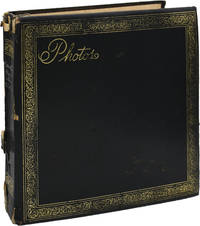
1930400372Pueblo Colorado 1930. Hardcover. Near Fine. Oblong quarto. Measuring 11" x 7". String-tied black cloth over paper boards with "Photographs" stamped in gilt on the front cover. Contains 238 sepia toned or black and white gelatin silver photographs measuring between 4" x 3" and 5.5" x 8" affixed to stiff black paper with some captions. Very good photo album with some spotting and edgewear with near fine photographs with some edgewear.<br /> <br /> A photo album of a Western American family the Gillian's kept between the early 1900s through the 1930s in the Colorado area three photos are printed as cyanotypes. Many of the photos show the family posing around their home in various group photos. Some of the photos show a little girl in various costumes and others show people working on the Gillian's farm. An early photo shows women working at a switchboard. Roughly 24 photos show the aftermath of an earthquake in Pueblo Colorado presumably close to the Gillian home. The photos feature the devastating effects the earthquake had on the main street of the town turning buildings to rubble and uprooting the railroad. One section shows the family on a trip to a ranch which involves horseback riding hiking and posing around early automobiles. The Gillians also frequented New York for vacations with trips detailed here of Lake George and Birch Grove.<br /> <br /> An extensive album of family photos including farm life and an earthquake. hardcover
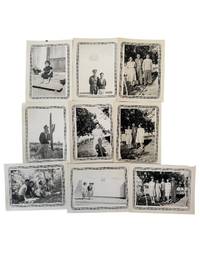
1950227511950. Japanese American California Japanese American family photograph archive 1950s documenting everyday life in Southern California during the decade following the forced wartime incarceration of Japanese Americans under Executive Order 9066. The photographs record domestic routines family celebrations and recreational outings among a Nisei and Sansei generation rebuilding community life after release from War Relocation Authority camps in 1945. Rather than depicting the confinement and dispossession that dominate the visual record of Japanese American wartime experience the images show families participating in the expanding consumer culture and leisure environment of postwar California. Smiling portraits backyard gatherings and excursions to regional landmarks illustrate how Japanese American families navigated the transition from wartime displacement to postwar stability asserting belonging within American suburban and urban life while rebuilding family networks disrupted by incarceration.<br /> <br /> Archive of approximately seventy two original silver gelatin photographs created during the 1950s depicting Japanese American family life across Los Angeles County and surrounding regions. Photographs range in size from approximately 3.75 x 4.5 inches to 8 x 10 inches. The images show informal family portraits children playing in residential yards and gatherings inside modest homes furnished with mid century décor including a television console and living room seating. Numerous photographs document recreational travel and tourism including visits to Griffith Park where family members ride the miniature railroad and trips to Disneyland shortly after the park's opening in 1955 with photographs taken along Main Street U.S.A. and before Sleeping Beauty's Castle. Additional photographs record outings to the San Gabriel and San Bernardino mountain ranges picnic scenes and group portraits taken during day trips to parks and scenic overlooks. Clothing and hairstyles visible throughout the photographs reflect the fashion and social aspirations of mid century Southern California including neatly pressed shirts dresses and casual leisure wear associated with postwar prosperity.<br /> <br /> These photographs document a formative period in Japanese American history when communities across California rebuilt social and economic life following the disruption of wartime incarceration. More than 120000 people of Japanese ancestry had been removed from the West Coast between 1942 and 1945 and confined in War Relocation Authority camps including thousands from the Los Angeles region. By the early 1950s many families were reestablishing homes businesses and neighborhood networks while participating in the broader culture of postwar suburban growth and leisure tourism. Minor handling wear to a few prints with mild corner curling; overall very good condition. This archive provides visual evidence of the social reintegration of Japanese American families within the everyday landscapes of Southern California during the early Cold War era. unknown
1930417961New York / Connecticut / New Jersey 1930. Softcover. Near Fine. Oblong quarto. measuring 10.5" x 7. ". Black cloth over flexible boards. Contains 186 black and white gelatin silver or sepia toned photographs measuring between 2†x 1.5†and 6†x 4.5†with some captions. Some edgewear else near fine album with fine photographs.<br /> <br /> A collection of family photographs from various places in New York and Connecticut beginning in 1917 and continuing through the 1930s. The album is a mix of landscape fashion and group photos often well composed and aesthetically pleasing. Most of the photos are posed shots of the family together often accompanied with smiles and silly faces. Even the elderly members look youthful next to their younger relatives. Some of the pictures have been hand cut into circle shapes around the subject or in diamonds.<br /> <br /> Part of the album features cutouts and photos of the Mitchell family. John Hipple Mitchell was born John Mitchell Hipple before abandoning his first home and family changing his name and starting a new life or Oregon. The he became Oregon's State Senator off and on from 1873 until his death on December 8th 1905. He fathered several girls which the proceeding pictures in the book feature the three sisters Martha Maggie and Mattie posing in shots together. There are cutouts which include a couple of magazine pictures and articles about Maggie L. Mitchell and her sister Mattie Elizabeth Mitchell the Duchess De La Rochefoucauld and her sister’s mother-in-law the Countess De La Rochefoucauld. In the article she is listed as “Mrs. Frances Hoyt Griffin†after just having married her third husband Frances Hoyt Griffin. <br /> <br /> A vast majority of the later photos are of a young woman and man living together in New York with their dog “Beauty.†While their names are not written their initials are B.V.H. and G.V.V. Included in these pictures is photos of the couple together or with their friends around their home and traveling to other location in New York and New Jersey. These include Bellport Pine Bank Caldmill Liberty and Loomis where the couple lived in a small cottage. There are interior shots of their home and exterior shots of different newly built homes in Loomis New York. Almost every house and structure a church and a school have pictures of them in the photo album. The last part of the book shows children growing up with another family in Stanford Connecticut.<br /> <br /> There are some more random pictures which include shots of Columbia College a fair in Chicago two photos of a young boy dressed in a military uniform one cyanotype photograph an illustration of a man holding a woman and an image of a house with the words “Puzzle find the sick lady†written on the verso. <br /> <br /> An aesthetically pleasing photo album filled with family photographs some of which depict the Mitchell family. unknown
1716216537London : Printed for J. Morphew 1716. First Edition. Hardback. Finely bound in modern aniline calf over marble boards. Raised bands with a dark morocco gilt-blocked label. An uncommonly good example - scans and additional bibliographic detail on request.; 8vo 8"" - 9"" tall; 256 pages; Physical description; folding portrait frontis 256p ; 17cm. Subject; Butler family. Ormonde James Butler Duke of 1610-1688. Ossory Thomas Butler Earl of 1634-1680. Ormonde James Butler Duke of 1665-1745. London : Printed for J. Morphew hardcover
030081Hardcover. Very Good. The archive includes: 16 letters 45 manuscript pages dated 1824-1838 with 11 manuscript pages of documents and papers dated 1827-1836 plus 162 manuscript page genealogy book of the Bradford family dated 1825; and a 76 page manuscript "Friendship Book" of Mary Ann Rodgers Bradford c. 1828-1838. Daniel Dunscomb Bradford 1808-1837 Daniel Dunscomb Bradford was born on 14 May 1808 the son of Jacob Bradford 1771-1816 and Elisa Dunscomb of New York City. He was baptized at Trinity Church New York City. Daniel was the second great grandson of William Bradford 1658-1752 the first printer in Pennsylvania and also the printer of the first book and newspaper in New York City. Daniel's father was first cousin to William Bradford 1755-1795 the second Attorney General of the United States 1794-1795. His grandfather Cornelius Bradford was the brother of the Revolutionary War printer William Bradford 1791-1791 the printer for the first Continental Congress. Daniel was one of five children the other four being: Margaret D. Cornelius died young Cornelius second of this name and David Dickson. At the age of 19 Daniel or "Dunscomb" as he was called commenced studying law and was admitted to the practice of law in 1831. He sailed for Europe after visiting England and proceeded to France where he was appointed the American Vice-Consul at Paris which office he held until his death in Paris on 5 December 1837 at the age of thirty years old. While in Paris as Consul Dunscomb was one of two non-family members present during the burial of General Lafayette in 1834. Bradford was also appointed the secretary of a committee of Americans in Paris who organized an appropriate expression of sorrow by the American people for Lafayette's death. David Dickson Bradford 1806- brother of Daniel Dunscomb married Mary Ann Rogers daughter of Dr. George Rogers of New York City by whom he had at least three children: Margaret Gage George Rogers and Mary Elizabeth. David Dickson Bradford became a seaman and eventually captain of his own vessel. Correspondence: 11 letters 34 pp. of Daniel Dunscomb Bradford written to his brother sea captain David Dickson Bradford and his sister-in-law Mary Ann Bradford dated New York and Paris 29 October 1828 - 6 April 1836. One of the letters is incomplete and two others are torn with loss of text with general browning and wear. These letters mainly concern family matters though bigger issues do intrude. In one letter 2 Jan. 1830 Dunscomb breaks the news of Cornelius Bradford's death in Jerusalem a later letter congratulates Dickson on his forthcoming marriage another discusses the welfare of their mother another writes of the family fortune or rather the lack thereof and their careers and aspirations such as sea-captain employment possibilities for Dickson etc. Dunscomb Bradford enjoyed writing on such subjects as how to behave as a gentleman and how to be happy in love and marriage. Dunscomb Bradford took his brother Cornelius Bradford's place as Consul in Paris on the latter's death in August 1830. Dunscomb too died young on 5 December 1837 and was buried in Pére Lachaise. 5 miscellaneous letters 11 pp. include: 1 letter of Capt. E.M. Donaldson to David Dickson Bradford dated Philadelphia 22 May 1824 discussing travel plans for "Mrs. Hall" and "the children." 1 letter copy of David Dickson Bradford to his brother Dunscomb Bradford dated New York 24 February 1833; 1 letter of David Dickson Bradford to his wife Mary dated 5 March 1834. 2 letters of Robert Dumont to David Dickson Bradford dated New York 3 Sept. 1836 and 16 Jan. 1838 the latter written at the request of Bradford's mother informing Dickson of the death of his brother Dunscomb in Paris. The correspondence generally soiled browned and worn. Some sheets torn at wax seals etc. But it is in generally good legible con <br /><br /> hardcover
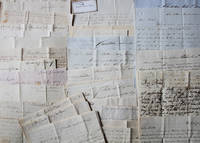
31003<p>46 letters 100 pages some splits and tears along folds some toning and damp staining else in good clean and legible condition.</p><p> The letters offer a view of one 19th century Massachusetts family and their lives in the state. The Welch's must have been a family of some prominence and privilege at least for a time. John N Welch ran the customs house in Boston and two letters show him being relieved of his position in 1814 and 1829. His sons went to sea and plied the waters of the world with varying degrees of success.</p><p> Sample quotes:</p><p> "Lynn July 28th 1816 James Johnson to Lydia H. Welch Boston</p><p> My dear Sister</p><p> … My ride here was not very pleasant; it was very dusty & we were obliged to keep the windows shut which produced very disagreeable sensations in your friend. I never spoke a word till we were within half mile of Lynn. No one interrupted the silence; except a gentleman whose frequent sighs proclaimed him over head & ears in love to look at him was enough to make one sentimental why he sighed so deep sometimes he actually made us start & when he found we observed him he made such horrid grimaces that if there had been any one in stage that I had been the least acquainted with I fear I should not have been able to conceal my laughter. I wish you had been with me to witness his agitation which I believe he affected for oddity's sake why he would have made</p><p>"even thick lipp'd musing Melancholy to gather up her face into a smile before she was aware"</p><p> I was obliged to interrupt their cogitations by asking for a glass of water. The lovesick swain turned his dove like eyes on me & looked as if he had rather I had been in the Red Sea than broken the silence my request was complied with in defiance of his <u>looks</u>& he condescended to ask if I felt better. I dared not answer in the negative for I really believe he would have advised the stage man to leave me he was quite handsome but appeared like one of Lord Byron's characters</p><p>"With pleasure drugg'd he almost longed for woe </p><p>And even for change of scene would seek the shades below"</p><p> … Do you think if one of my "mortal supporters" should fail me or I should say it did which is the same thing that a certain Gentleman whose name I would not mention on any account but who appears to exert himself to relieve suffering humanity & to lighten the afflictions of his kindred as much as possible by contributing books &c to amuse them & as I am a kind of a cousin I think I have a claim would extend his charity to me if there is a chance that he would pray let me know he is a good fellow …James Johnson" </p><p>"New York Nov. 15th 1824 James Johnson to Mr. & Mrs. John N. Welch</p><p> Dear Friends</p><p> The Stage called for me on Saturday morning at half past seven o'clock and I was backed a bout Town for nearly an hour … but I was tied as fast from the fear of being left as the Horses in the harness - we however at length collected our passengers and proceeded on our journey – we arrived in Providence at 2 o'clock – and at 4 took passage in the Steam Boat for N. York – we had a very pleasant time down the sound and arrived here at half past six o'clock on Sunday evening. </p><p> Capt Mackey engaged my passage on Board the Packet ship Canada Cap Rogers and I expect to embark on board tomorrow morning at 10 o'clock for Liverpool … </p><p> I was in hope to have recd a line from your advising me of news from Boston and I still hope that pleasure by tomorrows mail which will arrive before we sail – you must write me in the course of a week or two the Packet ships sail every week from here to Liverpool and a letter bag is always to be found at the reading room in Boston or left at our store Mr. Sewall will forward any letters to my address – I again hope to have this pleasure soon after I arrive in Liverpool …" </p><p> I took lodgings at Bunkers in Broadway where I found several acquaintance among whom was our old friend Marsh – it is seven years since I saw him till now but I do not see that time has made any alteration in him. …"</p><p>"Boston March 8th 1825 James Johnson to John N. Welch</p><p> Dear friends</p><p> … I am about migrating – that is in 3 or 4 days – and I am quite busy in the morning my letters must go to Liverpool… All the public places of amusement I have been to is to see Matthews in his trip to America and an Oratorio – indeed there are no public amusements here – we have been cultivating the fine arts – Painting – but not in the school of West or Sir Joshua Reynolds or Sir Thomas Lawrence but painting on Rugs which we have sipped in great abundance – and if the cols do desert too soon I have no doubt will be much admired. I have visited very pleasantly in several families some of them you know or have heard of Saml Goddard & James Grovener are from Boston and Mr Truman and American artist all have American wives are no bad sample of our fair country women … James Johnson"</p><p>"Gloucester April 15th 1825 Susan to Lydia Welch Boston</p><p> My much beloved friend</p><p> … The late calamity by fire in the City has given a powerful impulse to my feelings and induce me to inquire of you for information. I was about to start off for Boston but Mary did not like I should leave her with the school… The Sabbath after I left B. I received letters Mary wishing me to come immediately to Gloucester and take the school vacated by the marriage of Miss M. E. Hayes who has gone to the Michigan Territory. Accordingly the Thursday following I came down and on making some enquiries found the prospect very flattering. Uncle D. thought the encouragement sufficient to commence and the next week sister M and myself jointly took upon ourselves the care of a school consisting at present of 30 scholars we have received application for a number more. Some are young ladies considerably advanced in their studies others who require the first rudiments of education they are generally interesting. We have no reason to doubt but our patronage will be sufficient to continue here through this summer. We board with Aunt Dale our school room is in the next building which makes it very pleasant and convenient. Mary is writing to uncle James telling him of our new situation I hope it will meet his approbation which I appreciate very highly… </p><p> Now I must say something about the fire which has caused us much anxiety when we first heard of it we were led to fear that Uncle James' store was among the number destroyed still we hoped it might not be till a letter from Capt. G. Whittemore convinced us the truth of it. He says he knew that his friends would feel anxious and that we might not be more alarmed than necessary by exaggerated stories which are always in circulation at such times he could tell us that all his goods were saved and conveyed to the houses of his friends and that his loss would be trivial in comparison with that of his neighbors. … Though the deprivation of property is trifling in comparison with that of friends still when I consider how much he has and now is toiling not only for his own happiness but that of his friends also I feel grieved that his prosperity should in the least be impeded…"</p><p>'Gloucester June 41825 Susan to Lydia Welch Boston</p><p> Dear good Aunt</p><p> Do not call us "lazy girls" If you were here and knew how much we had to accomplish … Our school is large and requires all our time we are confined in the room eight hours every day excepting the Sabbath and when not have either work to fit or writing to do for our scholars which prevents us devoting so much time as we wish to our own exercise or the society of our friends. I was indeed much disappointed that none of us did not write a line by Mr. Pearce but we were not apprised of his intention of leaving us more than ten minutes before his departure we were very much surprised for we had no idea but he would pass the Sabbath with us… What do you think as become of Aunt S. the last time we heard from her she was as usual on the wing to Fryburg where she expected to be at the hundredth anniversary of Lovell's fight; in what course she next directed her flight we have not heard. Last week the Steam boat came in here we anxiously watched expecting that she was on board we anxiously watched expecting that she was on board but was disappointed. Sister M and myself accepted an invitation to take a sail in her went out as far as the Island we enjoyed it much it was quite a novelty being the first steam boat I ever saw. …" </p><p>"Manchester England June 10 1825 James Johnson to Lydia Welch incomplete letter</p><p> … we took up our quarters at the Hotel Montmorency Rue St Marc – I had not been many days in Paris before I forgot the narrow dirty streets in the enchantments of the promenades the beauty of the public gardens and the number and magnificence of the Public Buildings… I can not but think that the French feel humbled since the allies occupied Paris – the soldiers look disconsolate and that enthusiasm has fled which animated them under Buonaparte – you meet in every direction memorials of his deeds Triumphal Arches Columns Public Fountains and Palaces were with him every day things – many of great extent which he began remain unfinished and probably will till time shall moulder them or another revolution takes place as it it is not likely that the Burbons will finish what Buonaparte began – we remained in Paris about 3 Weeks and then retraced our steps as business required our presence in Manchester… </p><p> Friend Welch what is now the topic of conversation with you the presidential election is over and I assure you I am quite satisfied with the result. I am confident we have lost nothing in the opinion of Europe by the choice we have made – for my self I should have been mortified if Jackson had been successful to me he was the most objectionable candidate of all …" </p><p>"New York July 21 1825 Lydia Welch to her husband John Boston</p><p> My dear husband</p><p> … Mr. Marsh said he wou'd write you a few lines… yesterday <u>he</u> came up in a carriage and took <u>us</u> down to see the City Hall and Museum which I was much delighted with – you wou'd be astonished to see the immence growth of this since you were here it is wonderful. Marsh shew me where the last dwelling house was – when he first settled here it seemed as if I cou'd hardly credit him in fact it is becoming over grown. I expect this week to go to the steping mill – I don't expect to derive much pleasure from that view … It seems that Boston heat has exceeded N. Y. heat thus far Marsh says that's the way always with Bostonians they will try to exceed the New Yorkers in everything …"</p><p>"Cap-Sing-Moon China April 4th 1826 Benjamin Welch to his parents Boston</p><p> Dear Parents </p><p> According to promise I made when I left Home to write every chance that offer'd I have to acknowledge the receipt of the letters sent by the Champion. I have seen to Nickels. He is as hearty as a Buck likes the Sea he says and as I was told by Henry Sturgis has proved himself the smartest boy in the Ship. He is taller than he was when I left America & withal thinner. I sincerely think that he will do better in the profession he has chosen than that of a Counter Jumper! hold your tongue John. I mean no insinuations. As for myself I am pretty nearly in the same state of health that I was when I left Home which I suppose you will say was a very consumptive state at least I used to think so sometime after dinner. Capt. Edes and I argue very well and from what I inadvertently heard he gives me a very good name to those who visit on board. Mr. Sever & I also argue much better than we did. He finds I am not to be fooled. & begins to think as best to let me alone; at any rate there is more cordiality than formerly. </p><p> Dear Mother the wish expressed in your letter that I would keep in with the officers of the Brig Mr. Tra. and I were like dog & cat together. He was such a drunken contemptible puppy that I did not hesitate to show my opinion of him upon every occasion as also B. Tufts; in fact he had not one friend in the Brig. I really believe if I had gone home with him I should done my best to flog him before he left the wharf. Yea! even before I had eaten any of those good pies & puddings etc. of yours. - Dear Mother you need feel no anxiety on my account with regard to that detested practice of drinking. I have forsworn it long ago in total. My abhorrence of its effects is as strong as ever the feelings of self respect which I entertain the good opinion of my friends and relations which I esteem more than any thing else the regard which I feel for that of the world in general are strong inducements to a strict forbearance from all spirituous liquors. I am hot enough without the use of stimulatives. I am glad to hear that John is getting on so fast as a ladies man. He is well calculated for it and as his Brother Ben is so far from Home and altogether out of the sphere of action with regard to love affairs he will have fair play & plenty of it. I am certain I should supersede him if I was at Home so I think he had better Chop-Chop as the Chinaman says or else I shall make my appearance as I have a peculiar faculty that way. He will have to keep a bright look out ahead for fear of being run down; however 'self praise goes a little ways' so I think it best to stop here. As for his letter I shall keep that a secret he has reposed his confidence in me & I never will betray him till I receive his permission. I shall only say that I do not wish him a better choice than the one he has made; she is just the one I should wish for myself if I was about to enter into a matrimonial noose. I am getting confounded sleepy so I must perforce close this epistle. </p><p> Remember me kindly to all friends to Aunt Johnson's folks to Cousin Rebecca & Husband to Aunt & Uncle Welch to all my cousins to Frank Welch give a cousin & a Brother Tar's affectionate remembrance to the Howes give an adopted brother's love & to William if at home to Uncle Hovey & partner to E. Jenkins to the Susans & also to Dumpty Diddleday you know who I mean and to her Sisters Mary & Sarah & all the good folks in Harmony Square give my kindest remembrance & regard tell the Pierces their Brothers are still at the Islands and will not be here these 3 years – they are well according to the last accounts – for yourselves Dear Parents accept my best wishes for your health & happiness & believe me when I subscribe myself</p><p>Your affectionate Son </p><p>B.R. Welch" </p><p>Boston Jany. 2nd 1832 Benjamin Welch to his father Billerica Massachusetts</p><p> Dear Father</p><p> I sail tomorrow for Smyrna in the good Brig Mermaid belonging to your old Friend Robert Edes & my old master & have just time to write you a few lines – Augusta goes with me as Capt Edes has politely offer'd to let her accompany – there is everything to make her comfortable & I anticipate a great deal of pleasure …" </p><p> "Smyrna May 3d 1834 Augusta Welch to her father-in-law John Welch Billerica</p><p> My dear Father</p><p> As Ben is full of business he has commissioned me to write and I consider it a <u>pleasant</u> duty I am going to fulfill it forthwith. He expects to sail either to-night or in the morning for Hivoli a small port about a day's sail from here to be gone three or four weeks taking in oil for a part of the Mermaid's cargo & then to return here for the rest myself the most valuable part the specie. We had 58 days out and I was not sea sick at all I think I am getting to be quite a sailor. Yesterday we had a fine donkey ride about 16 miles to a hot-spring which is quite a curiosity here & considered quite medicinal – But <u>such</u> roads never were seen – Some part of the way it is scarcely wide enough for the animal to walk ion & up hill & down precipices the olive groves & between mountains enough to shake the breath of life out of you – However it was a <u>ludicrous scrape</u> & I enjoyed it <u>mightily</u> – We shall not get away under six weeks & it will be quite August before we get home … Gus" </p><p>"Havanna Cuba Decr 23d 1834 Henry Welch to his father Boston</p><p> Dear Father</p><p> I arrd here about a week or little over ago in good health… we shall leave here in about 3 weeks for Matanzas & New York I expect … who will write me in N Yk if I <u>arrive there</u> for we are going to <u>war</u> with France & I may be captured before I arrive. We have all been busy here talking about the Message & we have whipped France nicely two or three times over …"</p><p>"Hallowell Maine February 25th 1836 Henry Blanchard to John Welch Billerica</p><p> My Dear Sir</p><p> … Mr. Welch were you ever down this way If not I advise you to – never come. The whole country here seems to be characterized by its very rugged un-broken surface – the severity of its climate - & the miserly & selfish disposition of its inhabitants. You may judge if I enjoy myself much here. I of course make some exceptions to my description of the people – I speak of them in general - & certainly they are misers & speculators for the most part whose whole object of worship is money. Society with some few exceptions in this town is very bad. There is here a good deal of wealth & of course there will be pretensions to refinement & good manners. But through it all there shows prominently an extreme degree of coarseness & vulgarity. The men are by far the better part of the society than the women' for if they are unlettered & rather rough in their exterior they have generally much shrewdness & some knowledge of the world. They show their shrewdness best perhaps in a bargain; & in your dealings with them you would be rather likely to come off second best. A bad place this for parsons – a strictly honest man here would not probably be long in starving to death.</p><p> The Capitol of the state is close by me & the Legislature is now in session. I have been to look at the members once – They are as a whole I think rather a more decent looking mess than I have been in the habit of seeing in the Massachusetts Legislature. Of course its political complexion is Jackson – though its most eminent members are Whigs. Among these we see old Mr. Holmes – the greatest man probably the state has ever produced.</p><p> Augusta – the capitol – is one of the most thrifty towns in appearance I have ever seen. It is I think remarkable for its well built dwelling houses. You will not see a house in the whole village that seems at all the abode of poverty. On the contrary the inhabitants seemed to have vied with each other in erecting elegant edifices. It is very easy to find however that the elegance is mostly outside – very little inside. …"</p><p>"Boston May 30 1837 John Welch to his father Billerica</p><p> Dear Father</p><p> … The business community are in a bad state and a great many people are out of business owing to this state of things five of the clerks in our store have been discharged & more are to follow perhaps myself for one. … Henry is nearly loaded for St. Petersburg & I presume will sail tomorrow or next day. Benj. Is daily expected at Darien Georgia – his wife gas got a daughter …" </p><p>Charlestown Dec. 21 1838 John Welch to his father Billerica</p><p> Dear Father</p><p> I have intended to have been up to Billerica to have seen you before I leave for New Orleans. I am going to that place to establish myself in business if possible as I find it impossible to remain here & lay up any money. I have been so much pressed with business for some time that I hardly know which way to turn. I should have been up to see you last month but I have been bothered with Edward Stetson who is a very wild boy …" </p><p>"New York July 17th 1840 George E. Welch to his father Billerica</p><p> Dear Father</p><p> I am aware that you may think strange that I should write to you after so long a silence the reason for that silence is not because I had forgotten you but merely because I thought it would afford you more pain than pleasure to read a doleful account of my miseries misfortunes and mishaps. Father my course through life has been an eventful one and I doubt much if there are many of my age who have seen more trouble more sickness or more cruel unrelenting persecution since I have been going to sea I have had eight attacks of fever of all the different kinds and those attacks of the most malignant nature I have had also seven attacks of cramp the last of which deprived me of my intellect for some time after it had passed away I have been laying on my back with bleeding of the lungs and cough in fact for seven years I have not been to sea without being laid on my beam ends and what is worse midst the burning horrors of those fevers I have heard the cry of persecution midst the racking agonies of the cramp I have heard the most cruel taunts coming from the mouths of my nearest and dearest kin and while laying almost at death door I have awakened to the sheriff setting by my side impatiently waiting for my recovery and then do you think it tended to my recovery to hear that man affirm that he was acting as the agent of my brother and then when the glow of health had scarce begun to tinge my cheek to be dragged to prison and from the windows of a felons dungeon to look upon the very house where I had in common with my brothers received my mother's parting blessing. And father did it become those whose duty it was as Christians relative and as men look passively on and see the wreck of your once noble and high spirited boy if I had done wrong was that the way to reform My is it not strange that mid this wilderness of wo the intoxicating cup has never been raised to my lips and dissipation and pleasure have not been the god of my idolatry… I am now recovering from a severe attack of the Yellow fever it was intimated to me that my life was but short and the chaplain on his own responsibility wrote to Gardner to inform of my situation subsequently when letters were written by Y N Reynolds and Albert Cutler and as yet no answer has been returned since I arrived in the city fever sores have broken out on my body and made a perfect scab of me so much so as so as to make me an object of disgust to myself and of pity to those around while at the Hospital my vessel loaded and sailed without leaving me any order for my wages and for the present I must go without them by the kindness of Albert Cutter Y N Reynolds Esq and the Charterers I have had the means of paying my board that is now expended and God only knows where I shall lay my poor aching head. I can not apply to them when I see no means of repaying them but my cup of misery has long been full and I must put my trust in that God whose inscrutable ways … George E. Allen" </p>
4981Various locations in the United States the Philippines Puerto Rico and others 1995. Very good. 290 original vernacular photographs some with manuscript captions measuring between 2.5 x 1.75 inches and 8 x 10 inches plus two partially-printed certificates completed in manuscript. Overall general wear. A unique collection of original vernacular photographs documenting the life and family of Rafael Ralph and Teresa Teresing Acosta Filipino immigrants to the United States in the mid-20th century. Ralph Sison Acosta 1917-1996 was born in Mangatarem in the Philippines. He is listed as the Filipino Third Mate on the manifest of a ship arriving in New York in 1940 having engaged the ship in Manila; this may represent Rafael's initial arrival in the United States. Later as evidenced by the present photographs he served as a personnel officer in the United States Army in the 1950s and beyond. Little is known about his wife Teresa Acosta 1917-2023. Both are buried at the Mount Olivet Catholic Cemetery in Wheat Ridge Colorado.<br /> <br /> The present collection of almost 300 photographs capture Rafael and Teresa their children relatives friends colleagues and others in a variety of settings in various locations over the course of several decades. Fifty-five of the images are captioned in ink in the front margins or on the verso; along with signage and other clues within the photographs the images were taken in Colorado Oregon Manila St. Thomas Puerto Rico Camp Atterbury and Fort Benjamin Harrison both in Indiana and likely other locations. The photographs seem to emanate from the various locations where Rafael was stationed during his long career in the Army. Interestingly among the annotated images a couple of the captions are written in the Filipino mother tongue of Tagalog. One small portrait of Teresa is inscribed by her to Rafael "Dearest Just a reminder that I love you and always will." Other annotated images identify people places situations and more important to the Acostas and their larger circle of family and friends.<br /> <br /> The other photographs most of which are not annotated include portraits of Ralph and his family at various ages plus images at home graduations family vacations portraits of family friends funerals and more. A group of about a dozen photos capture the Acosta family and some colleagues in Puerto Rico in 1956. A great deal of the images picture Ralph at work in the armed forces showing him as well as his colleagues at work posed outside barracks and other buildings and more. A handful of the images from 1967 are stamped on the verso as official photos of the U.S. Army's Rocky Mountain Arsenal in Denver. A vein of Catholicism runs through the photographs with images of churches church signs ceremonies a group shot with a priest and the like. One image of a ceremony inside a church is captioned: "Picture taken during the blessing ceremony of Sacred Heart of Jesus with all the spouses holding the ribbons from the crown of Jesus." These images stand to reason as the Acostas were Catholic themselves.<br /> <br /> In addition to the photographs the collection includes two certificates of appreciation from the Filipino American Community of Colorado -- one each given to Rafael and Teresa in 1995. The certificates acknowledge their "commitment and effort to support" the Filipino-American community in Colorado apparently where the Acostas retired once Rafael's military career was over. An excellent visual primary source collection memorializing the lives of a Filipino-American immigrant family whose patriarch served in the United States military in the decades following the Second World War. unknown
174179120Dordrecht:: Jacob en Hendrik Keur 1741. old full diced and blind-embossed calf over beveled wooden boards with brass corners and one of two brass clasps. . A few old genealogical notes on flyleaves. The text is age-toned; one brass clasp lacking; cracked at joints and chipped at the bottom of the spine;. Folio. Engraved illustrated title page; six folding engraved double-page maps/views and 13 engraved plates. . Jacob en Hendrik Keur, hardcover
196312677Germany 1963. 24 leaves illustrated with 192 tissue-guarded photographs including over a dozen large-format images with the first 112 photos captioned in ink manuscript in the margins and a few scattered captions thereafter. Oblong large folio. Contemporary presentation photograph album bound in cream leather with leather belt-strap on spine with gilt titles on front board reading "Germany 1956-1959 Kaiserslautern Mannheim Memories of Europe The Habib Family." Minor soiling to boards. Light occasional soiling to album leaves. A handsome album in very good condition. An extraordinary annotated vernacular photograph album recording the experiences of James "Jim" Habib his wife Mae their son Paul and James's mother Rose while James served in the 533rd Ordnance Company at the American military bases at Kaiserslautern and Mannheim Germany in the Eisenhower years. Both Jim and Mae Habib were second-generation Lebanese Americans born to immigrant parents in Fall River and Boston Massachusetts respectively. The album records a wide variety of activities on base centering on family and community life including images of the Vogelweh Housing Area in Kaiserslautern the company Christmas party given for military children at which Jim a Christian dressed up as Santa Claus the company bowling team volunteer work at the local "Kinderheim" orphanage weddings parties sightseeing around Germany and so forth. The final eighty-or-so images reflect more intimate family settings for the Habibs with numerous images of newborn Vanessa Habib. Laid-into the album is a color portrait of Jim Habib in his olive green utility uniform. A captivating peek into the lives of a Lebanese-American family serving faithfully in the U.S. Army in midcentury Germany. unknown
19312702Various locations including Montana Wyoming Missouri California 1931. Very good. 45 leaves illustrated with 185 original photographs from 2.75 x 2 inches to 6.5 x 4 inches the great majority measuring 5.75 x 3.5 inches and a few postcards most with manuscript annotations on the borders of the images or on the album pages. Oblong folio. Contemporary textured black cloth gilt title on front cover string tied. Moderate rubbing to covers bottom edge worn corners creased. Internally clean photographs in very nice shape. A well-annotated vernacular photograph album chronicling about two decades of the travels and experiences of Ray Royse and his family as they trekked from Illinois to California through the Upper West in the first quarter of the 20th century. The Royse family started in Aledo Illinois and numerous photographs feature various family members here. They then traveled through Casper Wyoming Great Falls and Butte Montana and other locations before settling in Long Beach where Ray and his brother-in-law worked at the shipyards. The images here document Ray's training at the Sweeney Automobile & Tractor School in Kansas City driving Harley-Davidson motorcycles attempting to repair a nearly destroyed family sedan visiting the Custer Battlefield and the monument to Buffalo Bill Cody among other western sites scenes in Yellowstone Park and a family drive up Pike's Peak among many others. Ray's efforts to move West reflect the expansion and increasingly wide availability of automobiles and the growing industry in the West following the First World War.<br /> <br /> The photographs here record numerous locations in the American West to which Ray Royse along with his family and friends traveled or worked in in a 1922 Nash and later a Ford Model T. They traveled across the Continental Divide Ray worked for a time at the Anaconda Mines near Great Falls and Butte Montana and later the Standard Oil Refinery at Shelby Montana. Many images show a wrecked Ford Model T with Roy diligently at work trying to repair it before finally resigning his efforts by attaching a sign reading "Rest in Pieces" on the radiator. Another picture shows another Ford weighed down with a huge sack of wool in Bear Creek Wyoming. There are also images emanating from Dublin Gulch near Butte; Livingston Montana; Wind River Canyon in Thermopolis Wyoming; Salt Creek Wyoming; ; and several park scenes in Kansas City. A handful of images feature the Warren family in Butte. Several photographs memorialize the Royse family trip to Yellowstone Park in 1923 with many of the geysers and surrounding landscapes the Old Faithful Inn in Yellowstone and more. There are also interesting photos from a Royse family drive to the top of Pike's Peak with views from the peak with additional shots from the Garden of the Gods cliff dwellings near Colorado Springs scenes in New Mexico and Arizona in 1929 dams near Great Falls the Beaver Dam in Wyoming a picture of the "Million Dollar Fire" in Casper in 1921 and a beached fifty-five-foot whale in Long Beach dated December 28 1929. Altogether the images clearly illustrate the wandering nature of the Royse family across several states in the American West.<br /> <br /> Ray Royse 1903-1942 was an automobile mechanic metal worker and sheet metal specialist who worked in the Long Beach shipyards from 1929 until 1942 when he was killed in a shipyard accident. He also worked as a coal miner in Wyoming and on the Douglas Sheep Ranch in Wyoming both of which are chronicled in photographs in the present album. He met and married Sylvia Lambert in 1934 in South Dakota before returning to California.<br /> <br /> A wide-ranging and eclectic mixture of original and unique photographs of the West documenting an interesting family who began in Illinois and eventually settled in California. unknown
7377Arizona Territory 1908–1914. 8vo 9.25†x 8†faux brown leather embossed with gilt title. 53 photographs and postcards 3.5†x 5.5â€; 31 mounted one image per leaf 22 loose. Images include 4 original photographs 14 real photo postcards 35 photomechanical postcards including 13 color 3 embossed color greeting pcs and 19 b&w. Versos include notes written in ink in German canceled stamps and later notes written in two hands in pencil. One used card with note written in English. 26 items have been used 15 with additional notes on the image side. The majority of the cards were sent to Mr. Sig. Kaelin in Mayer Arizona San Diego and Long Beach CA; also to Miss Bertha Ochsner in Prescott Arizona. CONDITION: Very good most images with strong tonality others with some fading. <p>An engaging album of photos and postcards documenting the activities of a community of Swiss immigrant miners in Prescott Arizona.</p> <br /> <br /> <p>In 1912 the newly established state of Arizona supported some 445 active mines seventy-two concentrating facilities and eleven smelters. This album documents the activities of a group of Swiss immigrants in Arizona during the first two decades of the twentieth century centering on the Kaelin family and their claims in the Blue Bell Mine located near Mayer Arizona in Yavapai County. One image shows a group of couples identified as “the clan from Switzerland.†Swiss miners are known to have prospected the Swastika Mine Claim and the Prescott area. Two images capture a Swiss Immigrant Orchestra: a group of six individuals playing music together outside a building and another group of six miners shown in 1917 posing with their instruments. One of these images is captioned “Swiss Immigrant orchestra ca. 1906 Yavapai Co. Negative Printed in Switzerland. Mayer Arizona. Territory. Paula Schrader Plays the Fiddle 2nd from right.â€</p> <br /> <br /> <p>Included here are scenes of miners at work and posed with businessmen; mountain and valley views; a man and a woman panning for gold; a group of women hunting their guns drawn; two women cooking outdoors on a makeshift stove; three cowgirls posing beside a horse smoking cigars and wearing guns; a milk-delivery man next to a Kaelin & Co. coach; the Santa Fe Prescott & Phoenix Depot in Prescott; a photomontage of Prescott residences; elevated views of Prescott and underground mining scenes. Other subjects and Arizona locations pictured include the Swastika Claim Gurley St. in Prescott Stamp Mill-Tiger Cold Co. in Kingman Roosevelt Dam in Globe Granite Creek and Fort Whipple. A range of color postcards picture Prescott Arizona; the Pima people; a Pima camp; an Indian School in Phoenix and more. Identified photographers include W. H. Timerhoff; M. Rieder; H. M. McNeil and Corbin & Bork. Several names mentioned in the annotations include Bertha Ochsner Signis Kaelin and Paula Schrader providing clues for future researchers. The Kaelin family is believed to have later settled in San Diego in the 1920s. One annotation here suggests the family may have lived and mined in Bisbee AZ before moving to the Prescott Arizona area.</p> <br /> <br /> <p>A revealing accumulation of images documenting the mining experiences of a Swiss immigrant family in Arizona in the early twentieth century.</p> [Arizona Territory, 1908–1914] unknown
18970002448WETUMPKA ECLECTIC MOBILE ALABAMA AL. Good. 1897. On offer is a super modest archive of manuscript letters ledger/invoice sheets and poetry relating to the Howle family of Wetumpka Alabama. The small but fascinating group is an interesting peek at life in rural Alabama from the late part of the 19th Century to early in the 20th. All told there are five letters: three postmarked Eclectic Alabama 1897 - 1898 to Mr. Howle one from Mobile 1910 to Mrs. Howle from her sister and the fifth letter Oct. 1901 being a forlorn multipage letter from a bereft Mrs. Howle to her husband in El Paso. She is incredibly lonely and wonders why her husband can enjoy El Paso but refuses to let her to join him as she will not have fun. There is a rather interesting undercurrent in her beseeching tone that Women's Studies students might find of interest running between the lines. There is a 4 page handwritten invoice for many many items written out on a Howle Brothers store printed billhead. It is dated 1918. There are two multi-page manuscript "love" poems or "courting" poems found with the Howle papers. One of them is signed we believe with the initials: St. B. Perhaps these were sent to a Howle daughter as one is addressed "Miss". Then there is a single page pencil genealogy table beginning with Colonel Thomas Marshall family noted as Grandmother's Father whose biography was as noted in pencil written by Senator Aldrich this note is confused as the Senator was named Albert Beveridge. Overall G.; Manuscript; 8vo - over 7¾" - 9¾" tall; KEYWORDS: HISTORY OF J. M. HOWLE WETUMPKA ECLECTIC MOBILE RURAL ALABAMA EL PASO TEXAS SOUTHERN AMERICANA DEEP SOUTH WOMEN'S STUDIES GENDER STUDIES PRE SUFFRAGE MONTGOMERY BLUE RIDGE AMERICANA HANDWRITTEN HANDWRITTEN MANUSCRIPT AUTOGRAPHED AUTHORS DOCUMENT LETTER AUTOGRAPH KEEPSAKE WRITER HAND WRITTEN DOCUMENTS SIGNED LETTERS MANUSCRIPTS HISTORICAL HOLOGRAPH WRITERS AUTOGRAPHS PERSONAL MEMOIR MEMORIAL PERSONAL HISTORY ARCHIVE DIARY DIARIES JOURNAL LOG PRIMARY SOURCE FIRST HAND ACCOUNT SOCIAL HISTORY PERSONAL STORIES LIVING HISTORY ANTIQUITÉ CONTRAT VÉLIN DOCUMENT MANUSCRIT PAPIER ANTIKE BRIEF PERGAMENT DOKUMENT MANUSKRIPT PAPIER OGGETTO D'ANTIQUARIATO ATTO VELINA DOCUMENTO MANOSCRITTO CARTA ANTIGÜEDAD HECHO VITELA DOCUMENTO MANUSCRITO PAPELBIOGRAPHY BIOGRAPHICAL AUTOBIOGRAPHICAL AUTOBIOGRAPHY PERSONAL NARRATIVES .
19182090502130300377Yoshikawa Kobunkan Ikueisha 1918. Soft Cover. Fine. Number of books: 1 Yoshikawa Kobunkan Ikueisha paperback
31294<p>31 Letters 80 manuscript pages three pages of manuscript poetry in very good clean and legible condition.</p><p>This group of correspondence was mainly written by members of the White Family Quakers from Wilmington and elsewhere in Delaware and Philadelphia Pennsylvania. The letters are mainly sisterly letters between the White sisters Ruth Ann Amelia Sarah Jane to each other and other sisters including one Deborah who emigrated to Illinois. The letters contain family news discussions of social and domestic life current events in Wilmington Philadelphia and Illinois amongst other topics.</p><p>The White family were Quakers and were engaged in farming manual labor storekeeping and school teaching in Wilmington and in Kent County Delaware and in Philadelphia. Deborah White Alphonso and later Amelia White later moved to Jacksonville Morgan County Illinois where they established a farm.</p><p>Sample Quotes:</p><p>Philadelphia 3d Mo. 15th 1842 to Amelia H. White Wilmington Del.</p><p>"My dear Sister</p><p>… you would oftener receive a letter from me but the same duties are gone through day after day but this is one of more interest because long anticipated Alphonso is once more a dweller under his mother's roof after dinner today he bid adieu to W. C. Betts and has launched upon the world I hope his may be a prosperous voyage that no adverse gale make shipwreck of his and our hopes and such will be my desires for thee if thy life should be prolonged until that day and I would like to impress upon thy mind my dear Sister that unless thee makes good resolutions and abides by them thee will instead of being lov'd by all thy friends and happy in thy own mind will be disliked by them and unhappy because the stings of a guilty conscience will be felt disobedience to the commands of those who have the care of thee will always be punish'd and that is one sting easily evaded if thee will only use a little exertion it is just as easy to obey as to disobey I expect thee will think my letter now it has come is not very palatable but oh my anxiety for thee increases for each day must I tell that I was disappointed when I was down I had anticipated seeing thee very much changed how sorry was I to perceive thee wasa the same and yet not exactly I thought I could trace some improvement and such might be the case in every instance if thee would exert thyself and that but little thy Heavenly Father has endors'd thee with gifts which if thee will take pains to cultivate will make thee a pleasure and a comfort I will here close with this subject although it is one I could wish to impress upon thy mind with an indelible hand let it sink deep into thgy heart and ever remember it is always open to the searching eye of him who never slumbers bring all thy thoughts and actions to this test and I will have no fears for thee…</p><p>I have received four more squares from Jersey they must like me better than my Wilmington friends do not forget to give my square to Bassetts and ask them each to make me one also Aunt Eliza Jane Eliza John Alphonso and James.</p><p>Now I will speak of our family concerns for I suppose they will have some interest Alphonso because the most recent comes first and I will say of him what I guess few sisters can that instead of going off on an excursion the day he was twenty one he went and commenced work for himself for my part I think it very much to his credit William had no work for him so he has commenced with his brother Richard. W – told Rebecca that if he had work he would have kept him for five years and that is recommendation enough Father has got work in W – we are very glad to hear it and hope it may continue all summer… Ruth Ann"</p><p>"Philadelphia 2nd Mo 21st 1843 Amelia H. White Wilmington Del.</p><p>My dear Sister</p><p>… I often think of you sometimes sadly and would that it were in my power to aid all hands in some way or other but I know not what to do however I hope you may succeed in getting a house and thee must do all in thy power to assist Aunt and thee can do a great deal without neglecting any of thy studies they are very essential for thy welfare for unless things take a sudden and mighty change thee will have to make thy own living as all thy family has and if thee continues to improve we may all sometime join and success I sometimes think of Esops fable of the bundle of sticks by which to represent a family united cannot be broken but once let a single stick be taken out it requires very little to snap it into pieces so let us be like the bundle…</p><p>Last sixth day I went to see the funeral of Commodore Hull it was a very solemn and imposing spectacle the tramp of soldiers the muffled drums and the tears of the sailors as they bore him to his lat narrow home was a most touching sight and now I must say adieu… Ruth Ann…"</p><p>1st mo 31st 1846 to Amelia H. White No 3 Crown Street Philadelphia</p><p>"My dear Sister</p><p>… I suppose you have not heard of a situation for me oh dear me that is a draw back to all my enjoyments I often wonder where my lot will be cast next and among what kind of people but away with this or my letter will be doleful I suppose thee would like to hear how I am passing my time at present I am at David Bassetts and have been since last fourth day there is not much outdoor enjoyment at present for the roads are in a most deplorable condition so that the society of our friends is the pleasure we now have last week we had some delightful sleighing the first evening we spent with a friend at Sharptown when we started for home they drove us around by Woodstown which lengthened our ride some for or five miles… the next day which was sixth day we started about 9 o'clock … for Samuel Allens at Mullica hill and a more delightful sight I never beheld every blade of grass or stubble glittered in the sun like so many diamonds for everything was covered with sleet … we reached our destination about 12 o'clock remained until about 4 when two other sleigh loads joined us as we went to a glass works we went a round about way and by that means had a long drive through the pines or rather at the side of them while we were riding there the sun set and it was truly a glorious sight … blowing glass was a curiosity to me and at the same time I could not help commiserating the poor fellows whose lot it was to stand before such a fire enough to burn them crisp I don't know how they stand it but use is indeed second nature they did not appear to mind it any more or indeed as much as we do baking by a hot fire the gentlemen of our party purchased glass horns singing glasses and several things for us but as is generally the case they got broken long before we got home we arrived at our starting place Elisha Bassetts at half past two oclock after riding more than 50 miles … Ruth Ann"</p><p>Wilmington 4th mo 26th 1846 to Amelia H. White No 3 Crown Street Philadelphia</p><p>"My dear Sister</p><p>… I think it is now probable I shall have to return on 7th day for E. W. will want to go up to the meeting and thee knows that is the day they always go as things have turned up for me the time is not as convenient as it would have been at any other season for my visit will have to be curtailed I regret it exceedingly for I should like to go to Meeting but I suppose what cant be cured must be endured tell Rebeca that I priced bonnets according to her wish they are the same prices here as there Thee says thee is thinking I am so well suited that I have given out the idea of a place of my own there thee is mistaken it is what I would most desire if I had the means or was well assured of my success but I reckon I need never expect to get the little spot I spoke of for Aunt R will hang on to it I expect well so be it perhaps there will some place turn up for us yet I should like us to be fixed together as we once were thee strive hard for what thee is after for I know not where thee would get a situation it appears to me times are exceedingly dull and I fear from what I can gather they will be worse before they are better Uncle told me that one of the houses or the house had passed a bill prohibiting specie payments and he very much feared it would the senate if so farewell to business in general today is coloured quarterly meeting so we could not expect anything else than rain while we ought indeed to be thankful for it was very much wanted I suppose… Ruth Ann"</p><p>Wilmington 6th mo 28th 1846 to Amelia H. White No 3 Crown St Philadelphia</p><p>"My Dear Sister</p><p>… I know not how it is but of all dull places W – goes ahead or rather the people the people. I expect if I was to stay here for twenty years to come not one of my friends or acquaintances would come and say lets take a walk if I go drum them up they go but of themselves they seem to take no interest in you I have never been up the Brandywine yet and no place do I want to go more As G was saying the other day she had never been up since we were all up there together the time that Jim and all hands were down from the city so we are going to make an attempt some of these times … I should be glad to see thee here but the civility must be returned and thee knows how it is at home thee will have to consult those who are better able to give advice than I feel in that case I am I know not what kind of a girl she is now but as a child I never thee well knows I approved of her for a very intimate acquaintance yet youth must have friendships and I am the last one to wish thee or anyone else to be debarred from forming suitable ones thee know what I wish thee to be and my earnest desire is that thy conduct thro life may be such as to insure they comfort and happiness here and thy eternal happiness in the land of spirits …"</p><p>"Wilmington 9th mo 27th 1846</p><p>My dear Sister</p><p>… I have fully made up my mind that as I have to be confined in a store and have the charge of other people I may as well enter into the whole business and reap whatever benefit there may be derived from it and that heaven may prosper my undertaking I most fervently desire I have said nothing to the folks here about it and I expect when I do it will be quite a surprise and indeed I know not what E – will do for between thee and me she does not spend half her time in the store leaves it all to those around her I hope she may always have honest folks about here or else she may be somewhat the poorer a many a dollar I could take and she be none the wiser if I was so disposed but I hope ever to be preserved from the temptation. I take the greater part through the day fix it at night and so on it is easy to be seen how any one disposed to do that that was many could succeed this in confidence. …Ruth Ann `</p><p>Mantua ville Philadelphia 11th mo 15th 1848 to Deborah White Jacksonville Illinois</p><p>"My own Dear Mother</p><p>… I do not suppose you had much to do with Politicks in your travils our bricklayers were minus a lime barrel and I suppose Old Zack is to fill the chair honourable at the White house may his presiding be of peace and happiness to himself the people and the Country and bring better times for they are hard just now. There has been some excitement in consequence of the baisin of the spring garden waterworks cracking and the water rushing out carrying every thing before it including some 50 feet on 2 sides of the wall of Girard Colledge so you may judge of the force of the water to carry away walls 3 ft thick and the people of spring Garden and the libertys were with out water till it was attached from the City a lucky chance the old pipes were not removed. … Time has seemed long since thee left us the house felt desolate enough and … they affectionate daughter Rebec"</p><p>"Prairie Cottage Illinois June 17th 1850</p><p>Dear Sarah</p><p>As I have just washed and curled my two children's heads and they are quietly amusing themselves by looking at the chickens and goslings I thought I would improve the time by writing a few lines to you I have looked in vain for a letter from the Eden of the world and begin to think that you have forgotten these western wilds & that we dwell there … it is dismal enough out here it rains about 5 days out of the week and then the ground is so saturated with water that the farmers cannot work the remainder many of them have had to replant several times and a number have not got all their ground broke up yet and that they have given up entirely our folks have ploughed one day this week and went to try again to day but had to give it up this being Friday too however Alphons is better of than most others in our neighborhood he had his corn planted very early and it had time to be up before the heavy rains came on and consequently had very little to replant considering his corn looks as well if not better than it has ever done before there was a great prospect of wheat but I have heard some say that it is getting spoiled and if the wet weather continues it will all be ruined down on the Illinois river and through the American and Magoupin Macoupin bottoms the wheat fields are 10 feet under water poor prospect that of good flour the water the last we heard was within a few feet of being as high as it was the last great freshet at St Louis they cannot approach the levee in the steam boats but have to go in small boats and flats. …</p><p>The cholera is approaching very near to us there has been several cases in Jacksonville and generally fatal we have not heard from there since last Saturday when it was on the increase then a lady in our neighbourhood was taken with it or something very near it was not expected to recover but I hear she is getting better she had just came home from a visit to Kentucky and suppose she contracted the disease on board of the boat her husbands uncle was travelling with her and he died the next day after he reached home from cholera it is the general opinion that we shall have a great deal of sickness this summer … the fruit in this country is all killed I do not think we have a dozen peaches or Apples in our orchard we shall miss them sadly but perhaps it is better as it is might have been worse for the Cholera had there been plenty of fruit. We had a terrible hurricane passed over here a short time ago which done a vast deal of damage blowing down houses and barns I think there was 8 houses that we heard of that was laid level with the earth but we did not hear of any person being killed we seen the hurricane but did not fel the effects of it it just passed us by there was large trees carried the distance of 2 and 3 mile and some persons have lost part of their furniture which they have not heard of yet I do not think I ever heard so much thunder and accompanied with such vivid lightning the storms this summer is truly awful and so many of them too I dread to see a cloud coming up for I think we are going to have a storm … Harvest commences next week when we expect to have our wheat cut by the machine I and Ferguson Tindall have purchased one and they are to cut ours … A L White"</p><p>"Wilmington August 23d 1851</p><p>My Dear Sister</p><p>… Mrs Sloan the two Masters Sloan and their respective Nurses are all at the Lawyers she has been in town a week and has never yet called on Aunt Ruth but it is just like her the nurses brought the children here yesterday a little while the oldest is quite a pretty child and the younger is the exact counterpart of its Mama so of its beauty I leave thee to judge it looks as though is might be Jane's own face put on it it seems like quite a good natured child… Joe A is also here from Indiana on a visit and Jim has got a situation as purser on board a steamship to sail between New York and England the salary is sixty dollars pr month …</p><p>Well I suppose the road down there is alive today with people going to Camp I do not wish myself among them for Camp meeting to me is a most detestable place; however every one to their liking I expect Janey was off among the first although she stood to it she did not expect to go. The Darkies have one today at Chester I think theirs must be very amusing.</p><p>Tell Mother her deeds and papers of the Orange Street property are all in safe keeping so she can give her mind repose on that subject give my love to her and tell her Janey Rice says she supposes she Mother has to remain during thy absence so keep Old Cadwallader in his right position. I suppose he and Friend John went to the Camp in company they ought to doubt Friend John as Minister… Amelia"</p><p>"Geo Town X Roads Jany 26 1855</p><p>Dear Amelia</p><p>As you seem to have concluded not to write any more I am just going to say to you that after this effort you need expect no more from us 'till you write again You have nothing that I can think of to prevent you from writing to us every week … but I suppose you are so happy now in the west and are so intent in the pursuit of pleasure that you do not like to bring your fancy back to the contemplation of the common place things and people of Kent Co … We are moved and have a large good and comfortable house 120 acres to till in corn 60 to put in oats and any quantity for pasture so you see we have room indoors and out… Lawrence</p><p>"Seconday 29th</p><p>My Dear Sister</p><p>I will endeavour to finish the letter although L has left very little for me to say … I have a nice large house with passage parlor sitting room and kitchen I have use for my stair carpet and I have all furnished except the Parlor it is full of emptiness I would like to quilt some tis such a nice room for such work there is a nice garret and seller a milk house with brick floor and a place to pump the watter around the pans a porch at the back part of the sitting room is an elegant place for styock we have about 30 head of hogs 14 head of cattle 15 of sheep tow nigger woman four nig children Henry Elias Goler and a boy named Martin Emaline calls hers Louin so thee sees we are well supllyd with two and four legged stock there is an apple orchard at Stullville so we will still have plenty … I bought a pare of mules yesterday price $ 200.30 so now I can get a Horse when I want one Randolph will be kept for carriage and saddle …"</p><p>"Near George Town X Roads 4th mo 1855</p><p>My Dear Sister</p><p>I am seated once more with the determination of answering thy letter little Alponah as he calls himself is asleep Miss Prissy has her tin plates filld with nutts on a chair playing George is in the kitchen with the Nigs L is in the Barn. Bis has a paper reading tis a dull whet Sabbath and I have a fire up in thy room where I now am… tell mother there is to be a great Circus next fifth day week to set all the niggers crazy and drain their pocketts… Sarah Jane"</p><p>"Wilmington 5th Month 2d 1858</p><p>Dear Sister</p><p>… Many of our store keepers experienced a trying time last fall and some even had to make assignments and G. Buzby who we used to think was so well off in the world settled with his creditors at 50 cents to the dollar I think that is paying debts easy some did not pay even that much Smith & Brother who I named when West as owing us 470 dollars has not yet made any payment to this day what part we are to get is unknown we fear it will not be much but Hillary and I still hold up and Joseph is with us as heretofore… Abraham Allardice"</p>
1935List2835California Texas Illinois and others 1935. 369 pieces: fourteen empty envelopes 108 pieces of unsorted ephemera and 247 letters. Of the letters twenty-one are undated; three date from 1851–1909; nineteen from 1910–11; thirty-five from 1912; thirteen from 1913–17; forty-two from 1921; thirteen from 1922–24; sixty-eight from 1934; and thirty-three from 1935. Overall very good to near fine. The Beaumans were a family from southern Texas who relocated to East St. Louis Illinois some time before 1908 and some of whom would later live in California. Captain Loui Beauman 1868–1921 was a military engineer Mason and member of the Society of American Military Engineers. He and his wife Kittie Woodruff 1867–1959 had three children survive to adulthood: Carrie Beauman 1893–1982 Second Lieutenant Loui Beauman 1894–1918—a Marine killed at 23 in a seaplane accident—and Julia Frances “Gally†Beauman 1908–1974. <br /> <br /> Offered here is a large correspondence archive belonging to the Beaumans; mainly addressed to Gally 119 letters the younger Loui seventy letters and Kitty fifty-two letters; and written by a wide variety of friends and family including Kitty fifty-one letters Carrie eighteen letters Katharyn Owen of San Antonio sixteen letters and Gally’s future husband Edwin J. Regan of Weaverville California twenty-three letters. Regan 1906–1996 was at the time running for District Attorney of Trinity County and would go on to hold that position before resigning in 1948 in favor of a State Senatorship followed by a judgeship on the Third Appellate Court of Appeal.<br /> <br /> Most of the early letters in the group are addressed to the younger Loui Beauman and their concerns include his friends’ jobs constructing railroads hiding their controversial “ragging†dancing from chaperones and which fraternity Beauman should join at the University of California. The fraternity issue is particularly contentious within the family; the elder Beauman tells his son that “I will not be pleased to hear that you have joined any of the fraternities†September 20 1912. The younger Beauman settled on Zeta Psi.<br /> <br /> After the passing of both father and son most of the letters are addressed to Kitty and Gally Beauman. Edwin Regan writes to Gally about his campaign for District Attorney which made him “worried and discouraged and down on the world†August 3 1934; Regan felt that “ability means nothing to the voters the sole issue is whether or not I am a ‘city guy’ or not†July 30 1934. Another common topic is the family’s concern for Carrie Beauman whose marriage to Arthur Levefre Jr. was becoming increasingly abusive. The couple lived in Houston far from the remaining family who were now in Berkeley and Weaverville.<br /> <br /> Though the family very rarely commented on politics—even including the Great Depression which was in full swing during the writing of nearly half of these letters—there is one event that enthused Carrie Beauman too much for her not to mention. This was the suppression by the KKK of alleged brewing race riots in Houston:<br /> <br /> “We came near a bad race riot last week. All the militia residents Light Guards ex-soldiers were called out. There were over 5000 armed white men on the main streets negro sections. Arthur slept with his clothes on 4 loaded guns. We all piled in one room. Believe me the Ku Klux Klan is doing efficient work. That’s twice in the last 10 days that they’ve ‘operated on’ the beasts. I’m tickled to death to know that there are a few fearless just honorable men left to meet sic out justice to these criminals. By the time this happens half a dozen times some of this crime wave will subside. If the paid officers of the law wont meet the emergency – then it’s time for the upright citizens to take a hand. I am tickled to death over this!†May 1 1921<br /> <br /> Overall an intimate look at the lives and affairs of an ordinary American family in the early twentieth century. unknown
01-069219th & 20th Century. England USA and Trinidad. Archive of photographs and art including oil painting. English Family members resided in Westcliff and Brixton England. Amilia Ann Henning born 1861 art work; Annie Henning her daughter and Lucy Henning living in 1918; Phylllis Eleanor born 1911; Gusav Henning military commission from King George in 1910; USA members resided in Providence RI Florence Henning Attleboro MA Toledo Ohio T.G. Henning; Grammar school pictures in San Francisco from 1923. Family members also resided in Port of Spain Trinidad. 19th & 20th Century. England, USA, and Trinidad. unknown
1554Fruit GrowingFarmingEducation Mid-nineteenth Century Correspondence Between Honorable Nathaniel Goodwin of Hartford Connecticut and the Extended Brown Family of Henderson Jefferson County New York 1849-1855<br /> <br /> Archives consists of 58 autograph letters signed. Each letter ranges from 1 to 6 pages. Collection written on all types of paper stock and sizes but generally range from about 6 x 8 to 8 x 10 inches. Overall the collection is more legible than usual for this period even though written by 5 or 6 different hands. No envelopes; no stamped or stampless letters. Very Good Condition.<br /> <br /> Collection of letters from 1849 to 1855 written to the Honorable Nathaniel Goodwin of Hartford Connecticut from his nephews nieces and brother-in-law--all members of the Brown family of Henderson Jefferson County New York. <br /> <br /> Great archive through letters of the lives of an extended up-state New York family of farmers and fruit growers plus a sibling in college. The collection provides us with six years of struggle hardship and success of rural Americans in the mid-nineteenth century. <br /> <br /> Nathaniel Goodwin 1782-1855 was a surveyor city and county treasurer and probate judge for the Hartford region. He was a student of history and genealogy and authored three books on genealogy of Connecticut and Massachusetts settlers. He clearly was also a benefactor to his nephews and nieces supporting their education and various farming endeavors.<br /> <br /> The extended Brown families from Jefferson County New York consisted of at least four siblings Thomas Arthur Sarah and James plus we have several letters from their father Amasa Brown. We can infer from the letters that the Browns were not well-off. One additional letter is from Sarah Brown's daughter Catherine L. Brown-Dwight.<br /> <br /> Both Thomas Brown and James Brown were farmers and beneficiaries of land purchased by Nathaniel Goodwin for their use. Many of the letters provide detailed information of crop harvests yields and prices. There are also numerous mentions of their various types of livestock. Thomas Brown mentions that he has invested in a local rail spur due to arrive in Henderson in 20 days with construction proceeding 1/2 mile per day. Henderson is in up-state New York near Lake Ontario.<br /> <br /> Like farmers of today crop prices and weather dominate conversation. Through these letters we have a solid understanding of crop prices for upstate New York in the early 1850's. Thomas Brown writes in October 1852 "I have been in a hurry about threshing and drawing off my wheat and I wished to do it before I wrote as I thought you would be pleased to know how it turned out. The season take it together has been a very lean one for farmers generally. From a third to one half the hay crop with me and the rest of the farmers has generally failed the pastures also in the same proportion. Corn has fell short from a quarter to a third. It will be expensive with me and others to winter stock this winter as so much grain will have to be fed. I have 10 acres of corn this season. From 50 to 75 bushels is my usual crop but I have as good corn as any of my neighbors and I think it will not go 40 per acre. My wheat crop of 10 acres went 28 bushels per acre. I sold to Watertown 211 bushels - 1l lbs at $1.08 per bushel. Two acres of potatoes $35.00 per acre sold." <br /> <br /> In addition we learn the exact mix of fruit and ornamental trees planted by James Brown from a January 1853 letter. "I set out two or three years ago 50 apple trees and this last fall I got the balance of the old orchard in what I call first rate order for filling out the whole lot. I done so. I bought 75 young trees that seemed very healthy and quite large natural fruit which I intend to graft in a year or two. 22 I bought of a Rochester nurseryman in order to get specimens of their fruit the Newtown Pippin Baldwin Roxbury Russet &c. I also bought 10 pear trees 2 quince trees 2 cherry trees 2 apricot trees. Some others I set of my own raising making over 100 apple trees. I set out 7 elms from 2 to 4 inches through. They were as good as I could procure but hardly as good as I would have liked. I also set out maple trees a few. I would like your advice as to whether it would be best to fill out the new orchard or not." <br /> <br /> Rochester was the fruit tree capital of the United States in the 19th century with numerous nurseries setting up shop employing a large force of traveling salesmen to sell trees. These nurseries produced beautiful chromolithographic salesmen's books to market their goods. Henderson New York is about 145 miles east of Rochester. <br /> <br /> The two older Brown brothers in 1854 were hired by Nathaniel Goodwin to graft apple trees in a Goodwin/Brown orchard. In total the two brothers grafted 46 trees using 1700 scions. James Brown writes to his uncle in April 1854 "we intended to put enough scions in each tree as to form a good top the number of scions varying from 30 to 65 or 70 according to the size of the tree.the grafts were very nice and fresh and we endeavored to take the utmost pains."<br /> <br /> Thomas Brown notes in May 1854 "I set four trees of Pippins 10 of the Russet 15 of the Baldwin 12 of the Greening & 5 of the Swar in total 46."<br /> <br /> Arthur Brown was a student at Williams College in Williamstown Massachusetts. The majority of his letters are either requesting funds from Nathaniel Goodwin or thanking Goodwin for sending money. Several notes refer to Goodwin's pledge to support Arthur's education. Uncle Nat apparently was keen to quiz Arthur on his studies as noted in this April 1853 letter. "You ask me what I consider to be the motive power of Mr. Ericsson's engine. If I rightly understand it it is simply heated air which is employed instead of steam. This air has to be raised to the temperature of 480 degrees of heat to equal the pressure of one atmosphere or 15 pounds to the square inch. After being employed to raise the piston it passes through a fine wire gauze which takes away 200 degrees of heat & thus allows the piston to descend. I have never seen a drawing of the Engine so as to understand completely its parts."<br /> <br /> Arthur must have been a good student as he was appointed speaker of his graduating class in June 1854. However to save money Arthur apparently left Williams College before the graduation ceremony. He would go on to teach at the Academy School at Fort Covington New York and later serve as a judge appointed to the Jefferson County Court by Governor DeWitt Clinton.<br /> <br /> The letters from Amasa Brown are largely devoted to the purchase of a tract of land financed by Nathaniel Goodwin. One letter includes a manuscript map detailing outbuildings and locations of orchards etc. A January 1st 1853 letter from Amasa describes 90 acres for sale "The one that stands the highest in my estimation according to the price is a lot of ninety acres all cleared up except about an acre surrounded with a good cedar stake and cat ferns on three sides of it and the other side lying on the broad Lake Ontario where the cattle can go and drink at their leisure on the beautiful gravel shore and in hot weather in fly time are often seen standing in the water up to their backs and when the dew is on will go and fill themselves with the richest grass in the world. The owner of the land told me that on account of the severity of the last winter that his cattle came out rather thin of flesh last spring but this fall there was no fatter cattle in the county. He sold his two-year-old steers for thirty dollars a head and was able to keep 30 head in the pasture notwithstanding the drought and let a poor man go and cut about a ton of surplus grass in the pasture." Twenty days later Nathaniel Goodwin replies "To your letter of January 1 1853 relative to the purchase of a ninety acre pasture lot on the Point at 12.50 per acre or less I have given more consideration - and upon the whole have decided that I will buy the lot should you be of opinion that it is worth the money and that the interest of your boys as farmers will be promoted by the purchase; - and that the lot can readily be converted into cash again should occasion be found to dispose of it."<br /> <br /> Sarah Brown's letters are newsy affairs about her family but she also speaks of their land. "Forest and fruit trees have put on their most beautiful verdure and we are hoping for warm weather soon." A second letter details the wedding of her daughter Catherine to Mr. Dwight who is planning on attending Hamilton College in Clinton New York. "He is very industrious and prudent what he has is by his own industry."<br /> <br /> The sole letter from Catherine Brown signed C.L. Brown-Dwight is dated April 28th1855. "Considering your feeble state of health and probable poor appetite my husband and myself thought some maple molasses might be acceptable to you." Later in the letter she notes "Please allow me at this time to make a grateful acknowledgement for the present of money sent me last autumn." This gift was likely a wedding present. "My husband is preparing his ground for crops. He writes with me in sending much love to our respected uncle." Nathaniel Goodwin would pass away 31 days later.<br /> <br /> A fine collection of letters detailing 6 years of an extended family's life as they grow fruit ranch farm and in upstate New York from the mundane to the hard labor. <br /> <br /> Full transcripts of nine letters included. unknown
1945235201945. Japanese American family photo archive documenting the intersection of Nisei military service and wartime incarceration through a postwar visit to the Gila River Relocation Center in Arizona circa 1945-1948. Executive Order 9066 signed on February 19 1942 authorized the forced removal of Japanese Americans from the West Coast and Gila River opened on the Gila River Indian Reservation in July 1942 eventually confining more than 13000 people. These photographs capture the striking contrast at the center of the Japanese American wartime experience: a U.S. Army serviceman in uniform returning to relatives whose lives had been shaped by incarceration under the same government he served.<br /> <br /> Photo archive of 9 silver gelatin photographs each approximately 3" x 4" Gila River Relocation Center Rivers Arizona circa 1945-1948. A Japanese American soldier wearing his U.S. Army uniform and peaked cap stands beside an older Japanese American woman with an older couple and two younger women in family group portraits and at a picnic where fruit bottles and papers rest on a blanket beneath desert trees. Three Japanese American women stand before the Gila River Servicemen's Monument the memorial dedicated in 1944 to honor Japanese American men serving in the armed forces while many of their parents siblings and relatives remained confined within relocation centers. Other photographs show a young child seated on a wooden porch outside a plain building and a woman standing in the Arizona desert beside a towering saguaro cactus. Together the photographs place military service family reunion and memory within the landscape of one of the largest Japanese American incarceration sites in the United States.<br /> <br /> This photo archive documents the family's visit to the Gila River center after the war. By the time these photographs were taken the camp was closing or had recently closed transforming a site of confinement into a place of remembrance and reunion. The Servicemen's Monument serves as the archive's symbolic centerpiece linking the soldier's wartime service to the incarceration experience of his family. Rather than depicting combat or military life the photographs show a serviceman returning to relatives and revisiting a landscape defined by wartime exclusion. The resulting images document one of the central paradoxes of Japanese American history during the Second World War: loyal military service performed alongside the mass confinement of family members whose constitutional rights had been suspended. Light edgewear and toning with printed decorative "Elko" borders; overall in very good condition. unknown
19372092902141600518Arikosha 1937. Soft Cover. Fine. Volume: 1 Arikosha paperback
1772In the Savoy London: Printed by Tho. Newcomb for James Collins in the Temple-passage from Essex-street; and sold at the Kings-head and the Angel in VVestminster-Hall 1679. Hardcover. Good. Octavo. ii 116pp. A2 B4-P4 Q2. Nineteenth-century red morocco with the arms of a Barlow family on the upper cover. ESTC R236210; Wing B840. With remarks by some members of the same Barlow family regarding the author. The arms on the covers belong to this family. They do not however find any kinship with the author. <br/> <br/> In the Savoy [London]: Printed by Tho. Newcomb, for James Collins in the Temple-passage from Essex-street; and sold at the Kings hardcover
19000001895BELLVIEW BELLEVUE TENNESSEE. Good. 1900. On offer is an original unique circa 1900 -1908 archive of a young college aged woman Frances Harding from Bellview Bellevue Tennessee. She attended Soule College and the Memphis Conference Female Institute. The archive includes letters 23 from her family and friends and some notes 9 from college friends and school mates. Some seem to be from young men who are trying to court her; others are from her friends telling Frances not to flirt! Here is a good example "Yield not to flirtation For flirting is serious each sister will help you her brother to fight advances Don't flirt with the boys girls let the boys girls flirt with you!" Also included: 4 receipts relating to college; a Soule College Recital program; five photos four mounted on cardboard one of Miss Smiths class; and one Wedding invitation. BACKGROUND NOTES: Soule College was named for Bishop Joshua Soule of the Methodist Episcopal Church. The Rev. Thomas Madden pastor of the Murfreesboro Methodist Church organized it in 1851 and offered one to two years of college education. "The goals of the college were to provide a thorough education of the mind and heart and to impart sound and useful knowledge. Throughout the history of the school the pupils were supervised closely in all matters of a moral and religious nature." Soule College after its building was damaged closed during the Civil War but reopened soon afterwards remaining in Methodist control until 1892. Lambuth University was a liberal arts university located in Jackson Tennessee and active from 1843 to 2011. It was supported by the Memphis Annual Conference of the United Methodist Church. Lambuth's athletic teams participated in the NAIA's TranSouth and Mid-South Conferences. The university began as the Memphis Conference Female Institute in 1843 and was later renamed in honor of Walter Russell Lambuth 1854-1921 a Methodist missionary who traveled globally during his lifetime.; Manuscript; 12mo - over 6¾" - 7¾" tall; KEYWORDS: HISTORY OF FRANCES HARDING BELLVIEW BELLEVUE TENNESSEE SOULE COLLEGE MEMPHIS CONFERENCE FEMALE INSTITUTE PRE SUFFRAGE WOMEN'S STUDIES SOCIAL HISTORY GENDER STUDIES EARLY 20TH CENTURY HANDWRITTEN MANUSCRIPT AUTOGRAPHED AUTHORS AMERICANA MANUSCRIPT DOCUMENT LETTER AUTOGRAPH KEEPSAKE WRITER HAND WRITTEN DOCUMENTS SIGNED LETTERS MANUSCRIPTS HISTORICAL HOLOGRAPH WRITERS AUTOGRAPHS PERSONAL MEMOIR MEMORIAL PERSONAL HISTORY ARCHIVE DIARY DIARIES antiquité contrat vélin document manuscrit papier Antike Brief Pergament Dokument Manuskript Papier oggetto d'antiquariato atto velina documento manoscritto carta antigüedad hecho vitela documento manuscrito Papel . unknown