807 résultats
192554342Philadelphia PA: Otto F. Schumann Philadelphia Textile School ca. 1925. Small 4to. 8.25 x 9.2 in. 75 leaves unnumbered including 32 leaves with detailed colour charts on weave formations producing various kinds of cloth 3 tipped-in textile samples together w/ weaving instructions in manuscript. Original limp leather 3-ring binder gilt lettering stamped on front cover ink lettering & association of Otto F. Schumann on front cover some soiling dustsoiling edgewear still VG exemplar. This Jazz Age weaving manuscript notebook complete with weave formation design plates fabric samples and instructions offer a remarkable and invaluable artifact of how a young American textile designer and weaver received training at the famed Philadelphia Textile School now Philadelphia University during the 1920s. These course books were judged on completeness and the aspiring weaver’s skill in presenting the details about the instruction as well as their abilities in running the machinery required to produce the cloth. This manuscript notebook includes Schumann’s detailed plates and notes on producing color effect on the plain weave creating Broken Twills Crowfoot Satins Checked & Figured Broken Twills Entwining Twills Basket Weaves and Broken Satins. The extensive manuscript notes detail the loom instructions how many lines are required composition and more in producing the assorted effects. Because of the poor quality of United States textiles exhibited at the Centennial Exhibition in 1876 the Philadelphia Textile Manufacturers pushed for a formalized vocational school to train weavers designers and textile workers. In 1884 it became part of the Pennsylvania Museum and School of Industrial Art with 81 students enrolled by 1885 and by 1894 the School of Textiles added a Department of Wool Carding & Spinning and a Department of Cloth Finishing and Design. By the 1920s the Philadelphia Textile School was offering extensive three-year textile courses chemistry and dyeing courses as well as design courses in cottons woolens worsteds silks Jacquard design and more. Schumann 1906-1967 was the son of Hugo Schumann founder and owner of the Maid Hosiery Mills in Reading PA through the opening decades of the 20th century for whom he worked with until after World War II as designer and sales executive. Otto F. Schumann, Philadelphia Textile School, hardcover
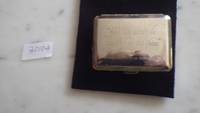
30104Mini Cigarette Case HOLDER WHICH OPENS PILL BOX Measures 2.5" x 2". Silver Plated. VG CONDITION AGE OR DATE UNKNOWN SOLD AS-IS Has some light scuffs and marks. VINTAGE Estate Find so a good cleaning would be helpful OR NOT OR STASH HOLDER. VINTAGE WITH BLACK VELVET POUCH TO CARRY IT IN. WITH DRAWSTRINGS VERY CHIC
2013Manohar-9780415539890Routledge 2013. Hardcover. New. Routledge hardcover
1966ZB3929521966-1981. Volumes 1-17 1966-1981 an uninterrupted run of complete volumes partly bound library markings textually clean & tight price is for the lot. - If you are reading this this item is actually physically in our stock and ready for shipment once ordered. We are not bookjackers. Buyer is responsible for any additional duties taxes or fees required by recipient's country. Photos available upon request. unknown
2025__3406648592C.H. Beck 2025. Hardcover. New. 800 pages. 7.05x1.81x9.84 inches. C.H. Beck hardcover
Dyveke Helsted, Henrik PeJacket very worn book O.K. unknown
194376693Los Angeles: New Age Press 1943-47. Edited by Corinne Heline. Monthly and later quarterly. Twelvemo. 50 disparate issues with the last seven being quarterlies. A few stains and dog-ears but overall in very good condition. OCLC locates no copies.This potpourri of New Age occult and Alt-Biblical articles was the work predominantly of Corinne Dunklee Heline. Born in 1875 or 1882 she was an enthusiast of matters outre quite early and even before the first World War was communicating with “Inner Plane Immortals†with the Virgin Mary being amongst them. Sometime before 1900 Corinne moved to Southern California and became a follower of Max Heindel 1865-1919 at his Rosicrucian Fellowship in Oceanside California. She met her husband John Theodore Heline there in the 30s and they moved to New York City and together they ran the Three-Eleven Rosicrucian Fellowship on West 80th in New York City while he was editing Rays for the Rosy Cross for Heindel's widow. After they returned to Los Angeles John started the New Age Press in 1936 and published a number of pamphlets presenting an occult view of America’s role in the world. Together they ran New Age Interpreter for many decades covering the whole panoply of New Age subjects. Corinne Heline is best remembered for her “Occult Anatomy and the Bible†and much of it was excerpted in this periodical. She died in 1975. Complete list of issues available. New Age Press unknown
1403179115022300620th Century Fox 2014-03-25. DVD. Good. DVD plays perfectly & the case looks good. 20th Century Fox unknown
2003SKU1014194Cherry Lane Music 2003-07-01. Paperback. New. New Inside & Out. Clean & Crisp! Excellent book! z1s042 Some very minor shelf wear on cover. Fast Shipping! Cherry Lane Music paperback
192253307Beaver Dam WI: Malleable Iron Range Co. 1922-23. Three works in one. Oblong 4to. 38; 3-24; 34 pp. 35-39A leaves 39-66 i.e. 68 pp. 1st -- Colour-illustrated title in gray black orange & light blue printed and illustrated throughout with each black & white illustration of stove w/ orange & gray border; 2nd -- numerous plates in black & white black printed borders text illustrations diagrams; 3rd -- illustrated title numerous plates 5 linen-backed colour-tinted photographs w/ linen hinges text illustrations. Tan softcovers bound w/ two brass screw-posts at upper margin w/ Monarch Malleable range instructions cooking times and thermometer instructions preserved in original printed envelope laid-in minor shelfwear very minor thumbing rubbing still VG copy w/ ownership stamp of J.ohn Y. Hicks b. 1881 Malleable Iron Range sales rep who worked as railroad messenger and then machinist and salesman following World War I. First edition thus of these nicely illustrated salesman sample catalogues of Jazz Age electric stove appliances with electric cook tops insulating blocks an electric appliance plug-in on the side as well as automatic timer and temperature controls. These beautiful stoves could be purchased with enamel finish and as one oven cabinet ranges two oven cabinet ranges one oven square ranges one oven H type cabinet range with built-in kitchen heaters and more. The nicely executed colour-tinted linen-backed photographs showing Malleable stoves provide excellent contemporary visual documentation of the actual colours of the popular stoves folloowing World War I. Malleable Iron Range Company existed from 1896-1985 and at its height after World War I employed over 1200 employees producing a variety of stove and oven appliances which were coal & wood burning electric and gas. No copies located in Worldcat. Malleable Iron Range Co., paperback
192453221New York: The Charles William Stores Inc. 1924-1925. Two vols. 4to. 548 8; 518 8 pp. With numerous colour plates colour-tinted text illustrations over 1000 black & white text illustrations diagrams. Colour-illustrated softcovers minor soiling wear slight sunning front cover of vol. 1 creasing to spine; minor creasing shelfwear vol. 2 light uniform interior toning as usual still VG- set. First edition of the complete year of Jazz Age catalogues from the Charles William Stores which offered a treasure trove of everyday fashions work clothes and household and consumer goods during the Roaring 20s offering the glamour and style of New York to the rest of the country. Their fashions were intended for the average American with emphasis on the more “endowed†woman and “stout†man during the Jazz Age emphasizing chic styles and well-woven fabrics. These catalogues detail the high grade work pants riding breeches denim jeans corduroy work pants along with triple-sewed work denim overalls and coats which could be purchased as well as those made out of Wabash Stripe Stifel denim cloth noted for its durability. No copies located in Worldcat of Spring & Summer 1925; 3 copies located of Fall & Winter 1925 Henry Ford Harvard American Textile History Museum. The Charles William Stores, Inc., paperback
Lageras, Per, edIn Pristine Condition. unknown
2012CBS-9781849730518Sp Rsc Publishing 2012. New. Sp Rsc Publishing unknown
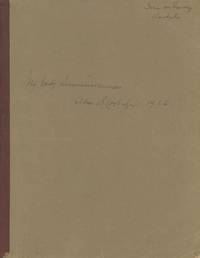
1926List3141Quincy Massachusetts: unpublished 1926. 201 pp cardstock wraps. Normal wear to wraps; overall Near Fine. Alice Brackett White Coolidge 1864–1927 was a Boston socialite of the prominent Richardson family; her grandfather was merchant and Massachusetts State Legislator Jeffrey Richardson. Coolidge was also the author of three children’s books: The Bunnies of Evergreen Village 1917 The Refugees in Evergreen Village 1918 and Evergreen Village to the Rescue 1922. Offered here is Coolidge’s unpublished memoir of her early life written in 1926 titled My Early Reminiscences.<br /> <br /> The memoir recalls Coolidge’s childhood and teen years spent mainly in Massachusetts New Hampshire and Maine. Her recollections typically involve extensive descriptions of the houses at which her family stayed the scenery around them and the various families they met and visited with. Given her position in society her acquaintances are sometimes quite influential people: Princeton president John Grier Hibben enjoys Coolidge’s fishcakes; Trinity Church rector Phillips Brooks gives her grandfather an “excellent pew†in the newly-finished church; pioneering doctor Alfred Worcester mistakes red pepper for mercury in a scientific demonstration at her school; and she recalls brief correspondences with John Greenleaf Whittier and William James.<br /> <br /> Coolidge also took dance lessons from Augustus Papanti whom she describes as “one of the thinnest men I ever saw†who was “very melancholy. I hardly remember his ever smilingâ€; and remembers Judge Charles Devens for “his great stature his charming face his courtliness of manner and his really boyish simplicity in entering into our evening games†including a game of “mind reading†which Devens played “with zest.â€<br /> <br /> One of her longtime friends was Rear Admiral John E. Pillsbury. She recalls:<br /> <br /> “Mr. Pillsbury as a young naval man a brother-in-law of my uncle Dr. Richardson used to take me out in the swan-boats on the Public Garden Pond. Later he went through all the ranks up to being retired as a Rear Admiral but time and circumstances never changed him. We always met at Thanksgiving and Christmas dinners and always talked at great length. . He was a wonderfully interesting lovable man and very modest and unassuming and shy. I always considered him one of my best friends though older by many years than I.â€<br /> <br /> Another interesting New England figure Coolidge encountered was Joseph Lee. She describes Lee’s hotel in Newton:<br /> <br /> “The house where we stayed was kept by a remarkable man named Joseph Lee. He was a mulatto much above many of his kind and his wife was a handsome woman partly Indian. They did the cooking and he waited on table with a colored maid to help him. In fact there were no white women in the house. The cooking was delicious.â€<br /> <br /> Lee was born enslaved in South Carolina freed in 1865 and went on to invent the automatic bread kneading and bread crumbing machines.<br /> <br /> Though nearly all of her childhood was spent in New England she also remembers being invited to visit Charles Joseph Bonaparte in Baltimore:<br /> <br /> “We had never been so far south except to Washington and I felt a curious feeling of being in a different atmosphere from any I had known. . We were met at the station by Mrs. Bonaparte in a large roomy covered vehicle with two horses. The coachman and footman were in the Bonaparte colors -- a deep wine color. The footman I well remember. He was a light-colored young negro very handsome and smiling and excited over having young ladies from the North. . All the servants were colored and lived in cabins near the house. . I never knew Mr. Bonaparte in public life so my memories of him are quite intimate and I fancy I saw much of his real self. . His mind was very active. He used to talk or listen as he walked and he moved his head in a curious way from one side to the other with a slightly rolling motion which was distinctly individual. . I never saw him irritated or excited and he was always very simple. In the group picture we had taken at the Maplewood he sat down cross-legged on the piazza floor like a boy. That was in about 1887. I suppose in public life or in law he was different but he was very equable and charming as we met him in his home and at the mountains. Most of all I admired his sweet tender ways with his flower-like wife.â€<br /> <br /> This was not too long after the end of Reconstruction and Coolidge remarks on the tense atmosphere:<br /> <br /> “Mrs. Bonaparte had warned me to be careful about questions regarding the North and South as the ‘feeling’ had not yet died away. I was so glad she had warned me. A gentleman slipped in and sat down beside me to watch a parade and whispered in my ear as the bands had been playing ‘Dixie’ how glad he was to meet a Northerner. I was glad to meet him too although I remember neither his name nor face but I felt I breathed freer in his sympathetic locality. . I had no idea that this feeling still remained as far North as Baltimore and of course I remembered how our Massachusetts troops had been fired upon in Baltimore at the outset of the war but I was admonished and very wise and only returned my unremembered neighbor’s greeting with a sympathetic word and look.â€<br /> <br /> Besides individuals Coolidge does cover a few historical events including the Great Boston Fire of 1872:<br /> <br /> “Oh! a horrible sight met our eyes. Back of the opposite houses in Park Square was a background of sheets of red flames and heavy black smoke rising high into the air. . On the Parade Ground all was in confusion and the sight was very sad and never-to-be-forgotten. It was literally covered with boxes and bales of furniture and sad forlorn desperate looking people crouching or sitting or standing amidst what they had saved from their homes . At night . the whole city was in darkness as there was no gas.â€<br /> <br /> The family also frequently stayed at hotels in the White Mountains of New Hampshire and Coolidge recalls the “overwhelmingly tragic†effects of the 1867 sale of this land to logging companies; she writes that looking out from the Flume House in Franconia “all about were brown scarred places marking the woodchoppers’ work which was cutting away our beautiful trees for lumberâ€.<br /> <br /> In this memoir Coolidge supplies detailed remembrances of the private personalities of influential figures of Gilded Age New England. We find two copies of My Early Reminiscences on OCLC. Of interest to historians of the era especially as told through the perspective of a young woman. unpublished unknown
19142111902160201098Ima Furudo shoten 1914. Soft Cover. Fine. Volume: 1 Ima Furudo shoten paperback
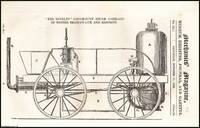
1829507894Knight and Lacey London 1829. Card Covers. Very Good Condition. The Mechanics' Magazine in October 1829 documented one of the most pivotal moments in railway history the Rainhill Trials a competition held to determine the best locomotive for the Liverpool & Manchester Railway. This event showcased several steam engines : The Rocket designed by Robert Stephenson won the competition and established a standard for future steam engines. It introduced a multi-tubular boiler improving efficiency and speed. The Sans Pareil built by Timothy Hackworth this locomotive was a strong contender but was ultimately less efficient than the Rocket and The Novelty designed by John Braithwaite and John Ericsson this locomotive was lightweight and innovative but suffered mechanical failures during the trials. The Rainhill Trials proved that locomotives were feasible for railway transport shaping the future of rail travel and marking the beginning of the age of speed transforming how people lived worked and travelled. Three complete issues of the Mechanics' Magazine No's 323 324 & 325 for October 1829. Genuine Original and Packed with Innovation! This weekly magazine isn't just a fragment of history it's a window into the cutting-edge advancements of the Victorian era! Since 1823 The Mechanics' Magazine has tackled revolutionary topics from printing presses to vapor baths hydrostatics and hydraulics. It dives into breakthrough safety measures preventing explosive contaminated air while exploring the mechanics of oxy-hydrogen blowpipes and self-laying rail carriages. Every page crackles with Victorian-era engineering brilliance capturing the relentless drive for invention that shaped the modern world! This is an exclusive standalone issue carefully separated from its original volume; authentic original and uniquely crafted. It is not a reprint or reproduction but a distinct piece in its own right. Preserved in a modern card cover prepared for practicality - an unassuming but serviceable presentation that favours function over finery. Size: 13 x 21 cms. Category: Mechanics' Magazine; New Arrivals; Special Interest. This item may require more postage than the rates shown for delivery outside the UK. If extra postage is required we will contact you before processing your order and you will be given the details and option to decline the extra cost. Knight and Lacey unknown
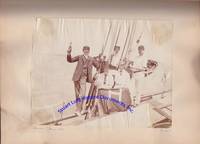
6174LONG ISLAND. This scrapbook displays photographs taken between 1887-1889 that capture a wealthy familys life on Long Island during the Gilded Age. The term The Gilded Age created by Mark Twain refers to the period of the late nineteenth century typically the 1870s through the turn of the 20th century during which rapid economic growth rapid industrialization and widespread European immigration primarily unskilled labor transformed the economies of the Northern and Western United States. According to the United States Census the era saw a real wage growth of 40% from 1860 to 1890 with the average annual wage per industrial worker including men women and children rising from $380 in 1880 $11523 in 2022 dollars to $584 in 1890 $18370 in 2022 dollars a gain of 59%. This rise in wealth resulted in the rise of a New Money elite those who made their money not through generational wealth and family connections but rather through oil the railroads and other rising industries. They are best exemplified by John D. Rockefeller Jay Gould Henry Clay Frick Andrew Mellon Andrew Carnegie Henry Flagler J. P. Morgan Leland Stanford and Cornelius Vanderbilt. New York was often at the center of the Gilded Age as the worlds dominant financial market and the nations leader in economic investment immigration political corruption and culture. This scrapbook contains 59 black-and-white photographs. They are affixed or mounted to 43 of 70 pages in the album. 29 of the photographs are 3.5 x 4.5 19 are 6.5 x 4.5 and 11 are 5.5 x 7.5. Two of these images are cyanotypes. Though the family is not named in the album and photographs with names underneath lead to nothing online there is a photograph in front of a house labeled Westbrook. The Westbrook estate on Long Island was designed in 1886 for William Bayard Cutting 18501912 by the architect Charles C. Haight in the Tudor Revival style. It contained the first private golf course in the United States and is now a part of a state park called the Bayard-Cutting Arboretum. Cutting started the sugar beet industry in the United States in 1888 was a builder of railroads operated the ferries of New York City his maternal grandfather was a partner of Robert Fulton and developed part of the south Brooklyn waterfront Red Hook. Images include a large extended family repeatedly and leisurely photographed the Harvard-Yale sailing race in 1887 at New London young men likely Yale students yachting and relaxing on a boat named the Princess and beautiful images of the scenery and waters of Long Island. Overall the album is in good shape. One photograph is damaged and several others have minor tears or chips. The scrapbook is half-leather and half-cloth so the spine is worn and the corners are rubbed and bumped. Regardless the scrapbook is a prize for anyone interested in this fascinating and relevant era in American history. It provides fantastic insight into the life of a wealthy Long Island family including what they did what they wore and how they presented themselves to each other and their neighbors. hardcover
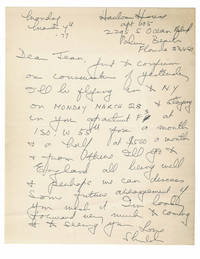
197799587<p>Palm Beach Florida March 7th through March 14th 1977. 1977. Very good. - Three autograph letters signed by Sheilah Graham in 1977 together with a photocopy of the article about her by Wright Tyson with notes penned in ink by Graham on October 21st 1985 also addressed to Jean Dalrymple. In her first letter of March 7th 1977 Sheilah Graham has penned over 70 words on 10 inch high by 8 inch wide buff paper confirming her arrangements to rent Jean Dalrymple's New York City apartment. She informs Jean that she'll be arriving on "Monday March 28" and staying for a month & a half". "I look forward to coming & to seeing you" Signed "Love Sheilah". The letter is folded for mailing else fine. The letter is accompanied by a retained copy of Jean Dalrymple's typed reply offering to cook dinner for Sheilah and correcting the address "except that my address is 150 West 55th Street not 130 . as I'm sure you well know! My office is 130 West 56th Street as on this letterhead! Often confuses people!"</p><p>Sheilah Graham's second letter consists of over 116 words penned on both sides of 9 inch high by 6 inch wide buff paper. She mentions including her check for $500 for one month "It's an answer to my prayer." She'll be in New York on the 14th though moving in on the 28th and as she's working on a new book asks if Jean could call "Plaza Typewriter" and have them deliver an "IBM Standard Electric not the ball keys" to her apartment. Signed "Love Sheilah".</p><p>In her third letter dated March 14th Sheilah Graham pens over 170 words on both sides of a 10 inch high by 8 inch wide sheet of cream paper. The thought of Jean "cooking dinner on the 28th wafts me to Paradise" though she expresses concerns "since my upset tummy landed me in the hospital I'm being very careful". She goes on to state that "I'm coming along well with my new book & I'm going to try to sell it to a network or for a movie." Signed "Love Sheilah". The letter is folded vertically & horizontally for mailing with a couple of short tears to the top & bottom of the folds. Very good. The letter is accompanied by a retained copy of Jean Dalrymple's typed reply dated March 17. "I'm so happy I can get your dinner on the 28th. and of course I wouldn't invite anyone else! But if you ever want to have people in. I can do very fine 'catering' for you!!!!" She reassures Sheilah about her diet "I am the original "Regime Minceur" cook. now made famous by the great French chef Bocuse." "By the way I'm sure you remember that we had a fatal fire at my apartment house. The owner is still fixing the house up and we have new doors but the hall still needs some painting. but I'm pretty sure it will be done within the next eleven days so it wll be pretty when you arrive!"</p><p>There is also a photocopy of Wright Tyson's article on Sheilah Graham from the September 1985 issue of Andy Warhol's "Interview" Magazine illustrated with a portrait of Sheila in Jean Dalrymple's apartment. Graham has penned a lengthy note along the left border of the page dated October 21st 1985. "Dear Jean this was taken at your apartment. The screen was added but if you look closely you will see some of your things on the table! Love Sheilah".</p><p>The British-born American gossip columnist Sheilah Graham born Lily Shiel 1904-1988 was a nationally syndicated gossip columnist during Hollywood's Golden Age. Her career spanned nearly four decades. She was involved in a relationship with F. Scott Fitzgerald in the latter years of his life which she immortalized in her autobiographical book "Beloved Infidel". The book became a best seller and was subsequently made into a movie starring Deborah Kerr and Gregory Peck.</p><p>The recipient Jean Dalrymple 1902-1998 was the dynamic producer and director of theater and light-opera at Manhattan's City Center. Dalrymple began her career in Vaudeville appearing with James Cagney and Carey Grant in the early 1930s. She was a founding member of the American Theatre Wing the theatre service organization. She worked over the years as a personal manager for the likes of Leopold Stokowski Mary Martin Jos Iturbi Andre Kostalanetz Nathan Milstein and Lily Pons. She began her work at City Center with its founding in 1943 serving as a board member and publicist. Her productions there from the 1940s through the 1960s were a revitalizing influence on the whole New York theatre scene. In 1951 Jean Dalrymple married Major-General Philip deWitt Ginder commander of the Thunderbirds in Korea. She was a friend to Presidents and entertainment personalities throughout the world.</p> Palm Beach, Florida, March 7th through March 14th, 1977.
191428380<p>George H. Doran New York 1914. HARDBACK NODUSTJACKET VG/VG- NOJACKET 1914 on copyright pg First Printing First Edition without "Printed in" on copyright page. First state with copyright date and publishers name only on copyright page. in brown paper boards and with blank leaves Before Title pg BROWN CLOTH LITE Wear WITH LABEL ON FRONT CVR & SPINE & Embossed Design on front CVR Medium brown paper covered boards with title and author paper labels on front board and spine. Gold Gilt rubbed of at top Outer pgs FOX to Labels & lite chips to spiner Cvr Ends Slim 8vo 75 pgs JOYCE KILMER' HE WAS THE LEADING AMERICAN POET OF HIS GENERATION AND PAST AWAY TO EARLY IN LIFE First state with copyright date and publishers name only on copyright page. death of joyce kilmer in France Aug. 1918 age 31 graduate Columbia University Kilmer was killed in action during World War I and was posthumously awarded the Croix de Guerre. Signed by Author. 1st Edition. Hard Cover. Very Good/No Jacket.</p> George H. Doran, New York, hardcover
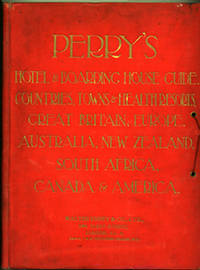
19315466London. Walter Perry and Co. Ltd. 1931. Gilt titled crimson cloth. 4to. Edition for 1931. Profusely illustrated with photographs drawings and period advertisements. An absolute treasure depicting the grand and elegant days of travel. A complete guide to Hotels and boarding houses in Great Britain Europe Australia New Zealand South Africa Canada and the USA. Charming period advertising allows one to travel back to the heady romantic days of Somerset Maugham and the Orient Express. Indexed and tabbed this is a true gem of nostalgia. A Very Good copy Walter Perry and Co. Ltd. hardcover
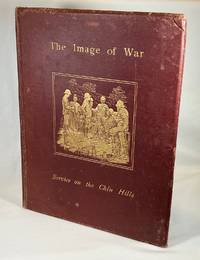
189424957Calcutta India: Thacker Spink and Co. 1894. Textblock clean and tight gently crunched at the head of the spine with resulting shallow creases; Ink stamped second ffep; May have been a school copy at one time; Top edge gilt; Original flat green endpapers secure at both front and rear hinges; The binding is solid but very sunned and edge worn with bumped and scuffed corners and spine extremities; Front cover and spine gilt embossed; 92p. plus a 40 page catalogue of the W. Thacker & Co. London. The Chin Hills extend northward into the Manipur state of India from northwestern Burma Myanmar. . First Edition. Cloth Gilt Embossed. Good. Illus. by 191 Photographs. 4to - Over 9 " - 12" Tall. Hardcover. Thacker, Spink and Co.
1940LIST0210New York 1940. Watercolors on paper affixed to later illustration board 14 x 26 inches each. Very Good. An attractive set of images from the Robert Moses era in an unknown hand. The images show proposed intersections including two that were never built. The images include "Proposed Parkway Passing over Entrance to Fort Totten" which shows an overpass on the Cross-Island Parkway in Northeast Queens dated October 1937; "Linden Boulevard Overpass at Southern Parkway" showing an unbuilt intersection at North Conduit Avenue and Dumont Avenue perhaps in the Ozone Park neighborhood undated; "Woodbine Street Passing over Long Island RR to Metropolitan Ave & 67th St." which shows a non-existent intersection near the Middle Village stop on the M line dated August 1940. <br /> <br /> Interesting relics from the Robert Moses era which shaped the infrastructure landscape of New York City. A very good group overall though the Woodbine Street illustrations shows marginal dampstaining and all three show evidence of label removals and wear. unknown
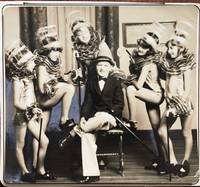
193058055Portland OR: Hollywood College of Music Dancing & Fine Arts Baker Studio Granada Studio La Vere Photo Shoppe Photo Craft Studios ca. 1930-1933. Oblong 4to. 24 original photographs all preserved in archival mylar sleeves sized 6.25 x 7 in. up to 8 x 10 in. some w/ photographer’s imprint w/in negative others w/ manuscript captions added a few w/ annotations and/or photographer’s instructions on versos all with bright strong contrast a few w/ offsetting from previous mounting on versos and one w/ very small pinholes at corners from prior mounting. Recent cloth binder stamping front cover excellent grouping. These photographs vividly document the dance and music studio operated by Annabelle Knowles reflecting the fast evolving costumes and aesthetics of the twilight of the Roaring 20’s as the U.S. descended into the Great Depression. These photos also clearly reflect the influence of Gus Edwards 1879-1945 vaudeville’s premier producer of kiddie acts and who had produced and released the shorts “Kiddie Revue†in 1930 and 1931. His influence was not only driven by his songs “By the Light of the Silvery Moon & “School Days†but also discovering such stars as Groucho Marx Eddie Cantor Mae Murray Sally Rand and many others. The images depict girls in two-piece outfits in front of Art Deco staging for “Body and Soulâ€; bare-backed girls in Flapper Era inspired costumes for chorus line “Kiddie Revueâ€; song and dance routines featuring Ronald Chetwood in top hat with Marcile Shillito Virginia Collins and chorus line in Jazz Age era costumes and canes; and several show Barbara Jane Wicks Shirley Jay Mulkey and Sunny Dentler in Spanish inspired costumes for “Baby Vanities.†Another shows adolescent boy and girl dance team in an “Apache†dance inspired costume number. The Hollywood College of Music Dance & Fine Arts offered classes and instruction in all ages with the last few photos showing teenage girls in chorus line with short hair coquettish expressions and teamwork or chorus line numbers. Annabelle Knowles 1900-1989 was a musician and dancer who founded the Hollywood College of Music Dancing & FIne Arts at 4112 NE Sandy Blvd. some time in the late 1920’s. Most of the street directory references focus on 1929-1932 and her British-America theatre-director husband at the time Vincent Knowles 1883-1944 worked at the studio as well. Baker 1882-1972 was a longtime commercial studio photographer in Portland OR who had initially begun as a photographer with noted tourist travel guide Howard Eaton photographing tours through National Pakrs. Beem 1892-1984 was founder and photographer at Granada Studio located in the 1930’s at 515 Swetland Building in Portland. Centlivere 1878-1964 owned and operated La Vere Photo Shoppe and Photo Craft Studios on Sandy Blvd. in Portland for nearly all of his career. We could find no similar collections or photographs or even references to Annabelle Knowles and very few examples of any of these three photography studios in institutional holdings. Hollywood College of Music, Dancing & Fine Arts, Baker Studio, Granada Studio, La Vere Photo Shoppe, Photo Craft Studios, hardcover