New Hampshire State Board of Health; Irving A (Allison) WATSON, AMMD (editor) (1849-1918). A M M DBiblio.com
118 résultats
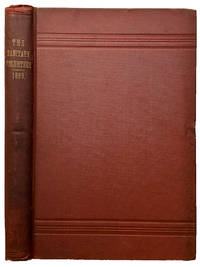
1889M14690Concord NH:: Republican Press Association 1889. 1889. 1 year 12 issues. 8vo. 2 288 pp. Some figs. index. Original brick-red blind- and gilt-stamped cloth by Crawford & Stockbridge Binders Concord NH with their ticket. Bookplate and embossed stamp on title of the New Hampshire Historical Society; Inscribed by the author/editor to the New Hampshire Historical Society 1898. Very good copy. Scarce. "All published." Containing all 12 parts of the first and only year of this publication on public health. / Goodness – after reading some of the comments that the editor published I wonder! This first 7 comments I read are more toward funny and quackery than toward good advice and health as intended. / Good healthful advice is surely intended but really it is a statement of social norms and gossip. Among the stories and contributions printed How long to sleep – How to use milk and avoid its dangers – Contagious and infectious diseases in New Hampshire – To make Koumiss a sweet drink made with champagne – Our insane poor – Sunshine – Employment for young women – A comic cure for insomnia – Muscle and Mint value of muscle culture – The non-ventilated school-room – Lard and oleomargarine – Hot-air inhalations in phthisis etc. Republican Press Association, 1889. hardcover
187720318Brooklyn NY: The City of Brooklyn Board of Health 1877. Cloth. Very Good . INSCRIBED BY H.A. LA FETRA BROOKLYN'S SECRETARY OF THE BOARD OF HEALTH AND THE MAN RESPONSIBLE FOR ISSUING THIS REPORT on the front free endpaper. A solid copy to boot of the uncommon 1877 1st edition. Tight and VG in its dark-green cloth with still-bright gilt-lettering along the spine. Former owner name and date 1878 on the front free endpaper --above Secretary La Fetra's inscription; otherwise very clean with no writing or markings to the text although a dozen or more pages in the body of the text have had their upper tips neatly cut or dogged-eared. Large fold-out color map in the text present map of Brooklyn "Plan Exhibiting the System of Sewage in the City of Brooklyn N.Y. 1875" tucked into the rear pastedown pocket missing in this copy. Additionally there are fold-out plates thru the text and a number of detailed charts. An impressive very thorough study of public health in the city of Brooklyn in the mid 1870s. The City of Brooklyn Board of Health unknown
1889095205New York: H. Campbell Co. Publishers 1889 Book. Very Good. Hardcover. First Edition. Very RARE copy of this late 19th century work described as "a manual especially adapted for the guidance of mothers and monthly nurses comprising full instruction in regard to pregnancy preparation for child-birth and the care of mother and child and designed to impart so much knowledge of anatomy physiology midwifery and the proper use of medicines as will serve intelligently to direct the wife mother and nurse in all emergencies". Gilt decorated binding has light edge wear sticker of previous owner on front pastedown pages very lightly age-toned minor mark on fore-edge. H. Campbell Co., Publishers hardcover
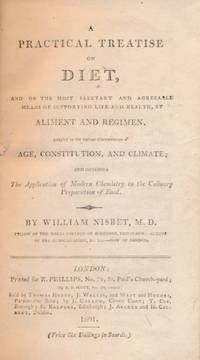
1801e3891London: Richard Phillips. G : in Good condition. Cover rubbed with slight loss to spine base. Some thinning to prelims paper. Slight foxing. 1801. First Edition. Brown hardback leather cover. 180mm x 100mm 7" x 4". xiv 434pp. '. and Including the Application of Modern Chemistry to the Culinary Preparation of Food'. . Richard Phillips hardcover
1870Q1791London: John Churchill and Sons 1870. Second Edition. Hardcover. Good. Maroon cloth 8vo 302pp. Good only with binding split at p. 160; hinges cracked but holding. Discoloration and bubbling to cloth. Previous owner's signature to pastedown. The first edition was published in 1857; this second edition includes updated charts and statistics through 1869. One of the first English texts to treat the subject from a medical and not just moral perspective Acton advocates a pragmatic approach to the inextinguishable trade emphasizing a need for regulation to protect public health and exploring its social causes and implications. He did not entirely avoid moralization but offered a more nuanced appraisal and argued that the implicated women were not to be foresaken but are "as worthy of improvement" as other criminals. <br/><br/> John Churchill and Sons hardcover
1870005050Boston: Commonwealth of Massachusetts 1870 Boston: Commonwealth of Massachusetts 1870. First edition. Very early public document no. 39. Decorative brown silk binding gold titles blindstamped decoration. 58 pp. Antique ex-library with attractive hand-numbered and hand-dated bookplate. No discard markings no pocket. The very rare first report of the Board of Health of the Commonwealth of Massachusetts. Includes material on abbatoirs impure air albumen apothecaries ventilation bone-boiling blood collection from slaughtered animals piggeries including the pig-pens of Brighton calico-printers cellars cleanliness condensation and combustion of vapors from fat-melting dead animals prevention of disease drains and drainage in homes and slaughter-houses disinfecting powers of earth earth closets hogs fed on offal homes for the poor tenement houses public hygiene laws relation to poisons effects of liquor the poor condition of lock-ups. One of the more amusing features of this document is the budget which of course is mainly spent on the salaries and various expenses of the board members. Incredible document near fine condition. Commonwealth of Massachusetts hardcover
1846000508New York / Boston / Philadelphia: William Radde and J.T.S. Smith / Otis Clapp / C.L. Rademacher 1846. Hardcover. See Description. First U.S. Edition. Three tracts together - pp. 154 2; pp. 58 2 blank; pp. 66. Bound in period blind-stamped brown publishers cloth rubbed. Neatly re-backed preserving the original spine. The corner tips and outer edges of the boards are professionally repaired; some cloth discoloration is visible on the bottom corner of each board. The interior contains occasional mild scattered foxing. Damp staining is present on the lower corner edges of the pages. A penciled inscription is lightly marked on the front free fly-leaf. Page 54 of Forbess tract contains a marginal corner crease and a lightly penciled note. The corner tip of the rear fly-leaf is chipped. William Henderson 1810-1872 was a distinguished British doctor and fellow of the Royal College of Physicians of Edinburgh. He created a scandal by adopting the practice of homoeopathy. Hendersons book "An Inquiry into the homoeopathic practice of medicine" London 1845 contains a description and defense of homeopathy followed by numerous case studies and treatments. In response Doctor John Forbes published a critique of Hendersons book in the January 1846 edition of the "British and foreign medical review" entitled "Homoeopathy allopathy and young physic." The critique was viewed as overly favorable toward homeopathy and Forbes therefore resigned editorship of that periodical. Hendersons subsequent "Letter to John Forbes" appeared both in the "British journal of homoeopathy" 1846 and separately See DNB. All three tracts are included in the New York 1846 edition of Hendersons "Inquiry" each with a separate title page and pagination. <br/> <br/> William Radde and J.T.S. Smith / Otis Clapp / C.L. Rademacher hardcover
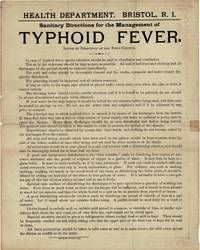
189456695Providence: printed by J. A. and R. A. Reid n.d. 1894. Broadside approx. 12" x 9½" previous folds several old tape repairs on the verso; good or better. Not in OCLC. printed by J. A. and R. A. Reid, n.d. unknown
1860234291860. Spanish colonial administration in Havana used port health regulation as a mechanism of commercial and maritime control with the Captaincy General directing military customs and sanitary officials through centralized orders. This December 6 1860 manuscript concerns the "Junta local de Sanidad" "víveres averiados" and Dr. Rafael Cortés placing damaged provisions public health authority and port enforcement within the same bureaucratic chain. The phrase "usando de las facultades que me competen" invokes the vested powers of the colonial government confirming that the matter was handled through Spanish imperial authority rather than local civic discretion.<br /> <br /> Gobierno y Capitanía General de la Isla de Cuba. Secretaría de Gobierno sección de Gobierno. Manuscript order. Havana Cuba: December 6 1860. Single folded manuscript document with printed colonial seal and heading docketed "Habana y Dic. 6 de 1860" and addressed to maritime or port authorities. The text instructs compliance with a petition or order involving the local Board of Health damaged provisions or foodstuffs and Dr. Rafael Cortés with official endorsements and large administrative signatures below. The verso bears docketing and filing marks consistent with bureaucratic circulation.<br /> <br /> The document belongs directly to Spanish colonial governance in Cuba where the Governor and Captain General exercised civil military and administrative power over the island until the end of Spanish rule in 1898. Its contents connect colonial rule to the management of ports food safety and public health all crucial areas in Havana's nineteenth-century Atlantic economy. Folded as issued with toning scattered foxing edge wear and original folds; seal heading date and principal manuscript text remain legible. Overall good condition. unknown
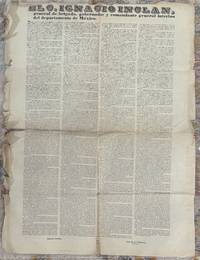
18445731Mexico City: February 13 1844. Good. Large broadside approximately 28 x 21 inches. Previously folded with creasing and occasional minor loss along old folds. Moderate chipping at edges more heavy along left edge. Toned. A scarce and very interesting broadside that issues orders for the maintenance of public sanitation and health in Mexico City of the mid-1840s. This large sheet contains sixty-eight individual articles containing prohibitions on practices from common littering to the disposal of night soil buckets from upstairs windows. Many of the provisions address conditions in markets and the sale of fresh produce and raw meats. Still other articles touch on street cleaning building numbers and much more. An extensive and wide-ranging proclamation for the improvement of sanitary conditions in the Mexican capital; we locate only one other copy at Yale. February 13 unknown
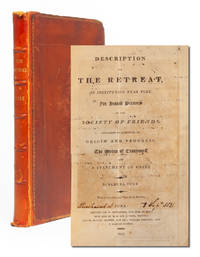
18133361York: W. Alexander 1813. First octavo edition. Octavo leaves 129 x 210 mm. There was also a quarto edition in 1813 generally described as a large-paper copy. Collating: xx 227 1 page errata; complete including frontis and two folding plates. Contemporary calf rebacked to style with gilt and five raised bands to spine. Generally a bit shelfworn and rubbed but a tight square copy. All edges marbled. Marbled endpapers. Armorial bookplate to front pastedown. Original owner's notes on recto and verso of title page in ink: "Purchased at.8 Sept 1821. Visited the Retreat Saturday aftern. 8 September 1821.with cleanly appearance & admirable arrangement of buildings the Inmates looked far happier than could have been expected. The Matron & her husband have the most benevolent countenances that we had ever beheld." Light scattered foxing throughout else unmarked. An account of the groundbreaking work of the Tuke family and the Society of Friends for improving the care and dignity with which mental illness was treated.<br /> <br /> At a time when the diagnosis and treatment of mental illness was often inhumane William Tuke stepped forward in 1796 to found The Retreat. Its goal was to create safe pleasing and dignified conditions for those being institutionalized; and from its inauguration The Retreat kept its doors open to public visitors who may want to witness and document the conditions of its campus and patients. In the present work William's grandson Samuel Tuke publicizes the institution's "internal economy of management" as well as its "mild system of treatment." Transparency is key to continued progress Tuke asserts; and he wants the Retreat's successes to assist in further advances in the field. "The interests of humanity and science alike call upon us to communicate freely the discoveries we make or the failures which happen to us.If persons engaged in the management of the insane were more generally to publish the results of their observation we might reasonably hope that the causes of this obscure and affecting disorder would receive some illustration." While William Tuke's work remains revolutionary in improving method of caring for the mentally ill Samuel Tuke's book "helped popularise the approach.to use the moral treatment method for restoring self-esteem and self-control in individuals" suffering from a range of ailments Quaker World. As awareness of the model spread so too did institutions build on its principles with hospitals emerging in the UK and US. W. Alexander unknown
185843334Roma TipografiaSalviucci 1858. Lex 8vo. Original printed boards. Upper part of spine replaced with title written in hand Wear along upper part of front hinge otherwise fine with just a bit of soiling and some fading to the delicate pink colour. Some occasional brownspotting. 12 VI 216 pp. 9 plates depicting sunspots. <br/><br/><em>The very rare first edition of this beautifully printed work which is a treatise on the work of Piccolomini to which is added 8 hitherto unpublished letters from Galilei from the years1619-24 here published for the first time. Furthermore we here have 9 plates made after drawings by Galilei to document his observations of sunspots between the 3rd and 11th of May 1612. </em> hardcover
1858137227Rome: Tipografia Salviucci 1858. The Palestrina mosaic presented by the prince First edition presentation copy from the prince of Palestrina Enrico Barberini-Colonna 1823-1889 inscribed on the front wrapper to the French politician Frédéric-Alfred-Pierre comte de Falloux 1811-1886 instigator of the Falloux Laws which promoted Catholic education in French schools under Napoleon III. A large and well-illustrated study of the Nile mosaic of Palestrina a Roman floor mosaic circa 100 BCE depicting the Nile in its passage from the Blue Nile to the Mediterranean showing various animals of the river and Ptolemaic Greeks and Aethiopians in hunting scenes. The mosaic is among the earliest examples of Roman Nilotic landscape art and exhibits the Roman fascination with Egyptian exoticism. Part of a sacred grotto the mosaic passed to the Barberini family in the 17th century who removed much of the mosaic from the setting eventually placing it in the Palazzo Barberini in Palestrina where it remains today. The author of this study Sante Pieralisi 1802-1887 was the librarian at the Barberini Library in Rome. Large folio. With 7 engraved plates 5 of which are double page. Original printed paper wrappers. Housed in a standard black cloth archival box. Slight stain to front wrapper light creasing around extremities minor wear at spine ends with repair at foot rear joint splitting internally clean. A very good unrestored copy. hardcover
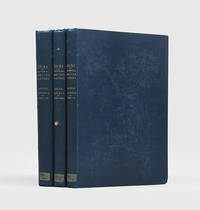
1895182165Shanghai: Published at the Statistical Department of the Inspectorate General of Customs 1895-1905. I believe the Inspectorate aided by its Medical Officers can do good work A lengthy run of this valuable specialist compendium. Each issue had a circulation of around 500 copies only the majority sent to customs stations and libraries as well as diplomats and naval officers and copies are therefore rare in commerce. The Chinese Maritime Customs Service was founded in 1854 by Britain and other foreign powers to collect taxes on maritime trade for the Chinese government but its remit quickly expanded to include domestic customs administration the postal service waterway and harbour management and scientific research. In 1870 Inspector-General Sir Robert Hart instituted this series information to be provided by the medical officers assigned to customs stations. Issues were issued on a yearly or half-yearly basis sometimes in double numbers. "This network of epidemic monitoring and ecological investigation which was gradually built up by the medical officers and medical missionaries extended throughout East Asia and created a huge medical database" Gao p. 54. 17 works bound in 3 quarto 271 x 220 mm. With plates charts maps and diagrams throughout some folding and a few in colour; occasional text in French. Contemporary blue library cloth spines lettered in gilt top edges sprinkled brown other edges untrimmed original yellow wrappers bound in. Ex-Bodleian Library with its shelf labels on spines pencilled pressmarks and accession and cancellation ink stamps. Bindings lightly worn and rubbed one spine with abrasions to cloth occasional short closed tears internally the odd repair and loss but a very good usable collection. Gao Xi "Discovering Diseases: Research on the Globalization of Medical Knowledge in Nineteenth-Century China" in David Luesink William H. Schneider and Zhang Daqing eds China and the Globalization of Biomedicine 2019. hardcover
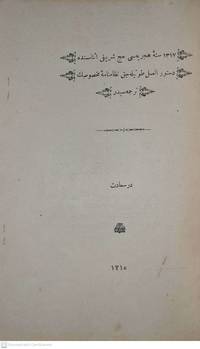
1900000208<p>19 p. Ottoman Turkish text. Official report of the hajj and health quarantine law in 1889-1900. Consists of 20 articles. The Anglo-ottoman Hajj policy conflict. Rare.</p> Osmaniye press paperback
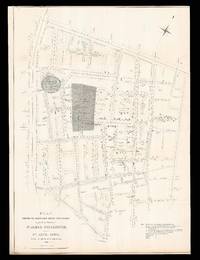
185516264London: HMSO 1855. 810 by 580mm. 32 by 22.75 inches. Folding lithograph plan. Rare epidemiological plan of Soho that accompanied the General Board of Health's exhaustive report into the 1854 Broad Street cholera outbreak. Cholera is a contagious disease caused by the bacterium vibrio cholerae. The bacteria lives in warm salty stagnant waters and is contracted when an individual ingests water or food contaminated with the bacteria. In the most severe strains the bacteria multiplies dramatically within the individual's gut causing the intestine to release increasing amounts of water leading to severe diarrhoea vomiting and rapid loss of the fluids and can if untreated lead to death within 24 hours. The majority of epidemics are caused when the faecal matter of an infected individual contaminates the water supply. It has been estimated that since the beginning of the nineteenth century cholera has been responsible for some 50 million deaths and although relatively simple rehydration treatments are now readily available according to the World Health Organisation some 120000 people a year still die from the disease. The Broad Street outbreak The London epidemic of 1853-54 was part of the larger 1846-1860 cholera pandemic - the third such pandemic to occur since 1817 - and the second time that the disease had spread to British shores. The Broad Street outbreak which was to be traced by Dr John Snow to a contaminated water pump outside number 40 Broad Street was a particularly virulent strain and would result in the deaths of 500 people over a period of just ten days; by the end of the outbreak a total of 619 people would have succumbed to cholera leading the Observer newspaper to note that "such mortality in so short a time is almost unparalleled in this country". The Broad Street outbreak led to the publication of two reports and a monograph: The General Board of Health BoH The Report on the Cholera Epidemic of 1854 1855; The Cholera Inquiry Committee 1855 set up by the Parish of St James's; and Doctor John Snow On the Mode and Communication of Cholera 2nd edition 1855. Although Snow's work is now seen as one of the foundation stones of epidemiology its argument - that cholera was a waterborne disease - was not widely held by the Victorian medical establishment with prominent people such as Edwin Chadwick head of the first General Board of Health expounding the view that cholera was an airborne disease brought about by foul odours caused by unsanitary conditions. Although Snow was to prove that the airborne hypothesis was erroneous the 'miasmatic' theory with its instance that "all smell is disease" would be the catalyst for many of the great municipal sanitary improvements - such as Bazalgette's great sewer - carried out during the Victorian era. Formation of the General Board of Health In 1848 Parliament passed the Public Health Act which instituted the Board of Health for a period of five years with powers to sanction expenditure for sanitary improvements requested by local government and in the event of an epidemic to provide guidance to the government's response. The board was headed by and was the brainchild of Edwin Chadwick whose 1842 General report on the Sanitary condition of the Labouring Population of Great Britain has been called the "fundamental document on modern public health" Rosen. "The creation of the Board of Health was a high point of the great Victorian enterprise of sanitary reform whose central idea was that environmental circumstances particularly pollution of the air and water defective sanitation dampness filth and overcrowding were causes of disease particularly epidemic disease and these diseases often killed the wage earners left poor working families impoverished pushed widows and orphans into workhouses and undermined the moral fibre of the working classes" Paneth. Although the Board was successful in enacting a great many sanitary improvements over the next five years Chadwick's brusque and arrogant manner led to the board's charter not being renewed by Parliament and on 31st July 1854 the members of the board were dismissed. Unfortunately for the government the disbanding of the board coincided with a sharp increase in the number of cholera cases in London from 1 a week to 133 a week during the month of July. On Augsut 1st Parliament instituted another but much weaker Board of Health: its charter had to be renewed annually and consisted of only one board member which had to be filled by a sitting Member of Parliament. The MP chosen was Sir Benjamin Hall who by dint of not being Chadwick was deemed eminently qualified for the job; by the time he assumed his role on the 12th August cases of cholera in London had increased to 644 a week. The Board of Health's Cholera Investigation On the 13th August Hall met with his advisory council which he had rapidly put together the council consisted of some of the most eminent medical practitioners of the day including: John Ayrton Paris and James Alderson president and treasurer respectively of the Royal College of Physicians; William Lawrence vice-president of the Royal College of Surgeons; James Clark physician ordinary to the Queen; Benjamin Babington founder and president of the London Epidemiological Society; and William Farr compiler of the Weekly Returns which included among other statistics deaths and cause of death - a resource that greatly aided Snow in his research. The council divided itself into three sub committees: Committee for Scientific Inquiries CSI which would be responsible for the majority of the cholera report; the Committee for Treatments; and the Committee for Foreign Correspondence. The work of the CSI started on the 5th September 1854 when Drs Fraser Hughes and Ludlow began house to house investigations of the Golden Square area around the same time that Snow was also commencing his investigations; and three days before St James's parish would remove the handle from the water pump on Broad Street on the advice of Snow. The report details some 800 houses listing their inhabitants any deaths from cholera and the sanitary state of the premises which was often terrible and included the condition of any cesspools "bad-smells from water-closets" and untrapped drains. The house to house investigations were supplemented by the scientific report. Hall employed three men to carry out investigations for the committee: James Glaisher superintendent of the magnetic and meteorological department at Greenwich and a founder of the British Meteorological Society; Richard Dundas Thomson professor of chemistry at St. Thomas Hospital; and Arthur Hill Hassall author of the first textbook of microscopic anatomy in English 1846 and famed for his revelations through microscopy of the extraordinarily frequent contamination of food and water in London by adulterants and animalcules Paneth. Although Chadwick was no longer in charge a brief look at the committee's make up clearly shows that the sanitarians still dominated. Their belief that the atmosphere was critical in the spread of disease is demonstrated by the fact that almost a third of the scientific report contains the investigations of meteorologist James Glashier. The Map The map that accompanies the report is a great deal larger and includes much more information than the map that Snow produced for his monograph. Based on the map produced by the Metropolitan Commission of Sewers which was also published in the report carried out by the St James's Parish it covers a much greater area and marks not only cholera deaths and pump locations but also: house numbers new and old sewers sewer grates trapped and untrapped side entrances and ventilators. The map has been updated with the number of cholera deaths in the area tracing people who were hospitalised and those that worked or visited the area. To the upper left are two shaded areas. The first a circle which bisects Little Marlborough Street titled: The erroneously supposed position of the ancient plague pit shewn in the map of the Commissioners of Sewers and the second a rectangle titled: Extent of Craven Estate corresponding with site of pest-field three acres two chains which covers much of Marshall Street and houses either side and ends just west of the water pump on Broad Street - the epicentre of the outbreak. Both sites mark supposed burial pits dug during the Great Plague of 1665. Many had argued that the disturbance of the pits when new sewers where dug in the 1840s and 1850s was responsible for the severity of the Golden Square outbreak. However this theory is conclusively dismissed in the report stating that no burial remains were encountered when the sewers were dug. A comparison of the maps that accompany Snow's monogram and the BoH's report clearly illustrates the authors' varying approach to the epidemic. Snow's map is narrowly focused on the centre of the outbreak and marks only the individual deaths marked by black coffin like lines to each house together with the position of the water pumps; Snow clearly wanting the viewer to draw the causal link between the Broad Street pump and its proximity to a large number of cholera deaths. The BoH's map on the other hand shows a much great area and contains much more information sewers drains plague pits etc. Snow's correlation just like the report that this map accompanied is lost under a mass of miasmic information. In hindsight the report just like the present map can be seen as too large and unwieldy the miasma theory at its heart "predicted to much and therefor was difficult to contradict or falsify"Paneth. In contrast Snow's economy of purpose his monograph at just 162 pages is almost a third the length of the BoH report shines through. "The strength of Snow's hypothesis lies in its exclusion of other alternatives; by insisting on the singular mode of transmission i.e. water Snow was able to imagine circumstances that would invalidate his hypothesis" Paneth. For example the exclusion of both the Broad Street Brewery works and the local Poor House from the cholera epidemic led Snow to investigate their water supply both drew them from independent sources; as did the death of a widow from cholera in faraway Hampstead who was so fond of the Broad Street water that she had her nephews send her bottles of it. Snow is keen to challenge his hypothesis where ever possible alas the BoH report contains no such challenges with the authors suffering from a large degree of confirmation bias. Although the BoH report is now largely forgotten and its hypothesis discredited it was favourably received at the time and would be the catalyst for the creation of The Metropolitan Board of Works arguably the body whose policies would make the greatest impact on the health and wellbeing of Londoners in the nineteenth century. Setup by the head of the BoH Joseph Hall in 1855 it would be responsible for among other things the clearing of slums the creation of London's numerous parks and Bazalgette's great sewerage works. Rarity We are unaware of individual examples of the plan appearing on the market in the last fifty years. HMSO, unknown