ARDUINO, SanteBiblio.com
8 053 résultats
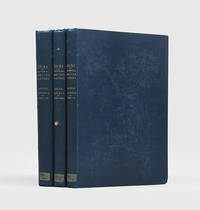
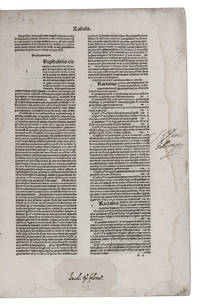
1492I1IBX3XL9PHDColophon: Venice: Bernardino Rizzo 1492. Modern black- and gold-tooled calf. Folio 42 x 28 cm. Set in in 2 columns in 2 sizes of rotunda gothic types with spaces left for numerous 3-line and 4-line and a few larger initials with printed guide letters none filled in. First edition of a work on poisons compiled by Sante Arduino or Ardoini of Pesaro: an elaborate compendium on poisons in eight books which Sante Ardoini of Pesaro compiled in the years 1424-1426 from Greek Arabic and Latin works on medicine and nature and which was printed at Venice in 1492 and at Basel in 1518 and 1562. Although Ardoini quotes previous authors at great length his work is no mere compilation since he does not hesitate to disagree with such medical authorities as Peter of Abano and Gentile da Foligno and refers to his own medical experience or observation of nature at Venice and to what fisherman or collectors of herbs have told him. He also seems to have known Arabic and his occasional practice of giving the names of herbs in several Italian dialects is of some linguistic value Thorndike. Arduino makes extensive use of the works of Avicenna Ibn Sina who held a high place in Western European medical studies ranking together with Hippocrates and Galen as an acknowledged authority" Weisser. Among the numerous other sources he used are Galen Avenzoar Ibn Zuhr Rasis al-Razi Andromachus Albucasis Al-Zahrawi Serapion the younger and Dioscorides.A very good copy with only a few marginal water stains. Binding slightly rubbed along the extremities and with a few scratches on boards.l BMC STC Italian p. 927; GW 2318; ISTC ia00950000; Thorndike III p. 545. Bernardino Rizzo, unknown
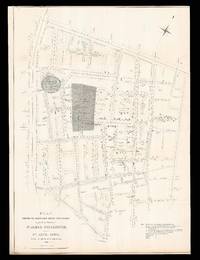
185516264London: HMSO 1855. 810 by 580mm. 32 by 22.75 inches. Folding lithograph plan. Rare epidemiological plan of Soho that accompanied the General Board of Health's exhaustive report into the 1854 Broad Street cholera outbreak. Cholera is a contagious disease caused by the bacterium vibrio cholerae. The bacteria lives in warm salty stagnant waters and is contracted when an individual ingests water or food contaminated with the bacteria. In the most severe strains the bacteria multiplies dramatically within the individual's gut causing the intestine to release increasing amounts of water leading to severe diarrhoea vomiting and rapid loss of the fluids and can if untreated lead to death within 24 hours. The majority of epidemics are caused when the faecal matter of an infected individual contaminates the water supply. It has been estimated that since the beginning of the nineteenth century cholera has been responsible for some 50 million deaths and although relatively simple rehydration treatments are now readily available according to the World Health Organisation some 120000 people a year still die from the disease. The Broad Street outbreak The London epidemic of 1853-54 was part of the larger 1846-1860 cholera pandemic - the third such pandemic to occur since 1817 - and the second time that the disease had spread to British shores. The Broad Street outbreak which was to be traced by Dr John Snow to a contaminated water pump outside number 40 Broad Street was a particularly virulent strain and would result in the deaths of 500 people over a period of just ten days; by the end of the outbreak a total of 619 people would have succumbed to cholera leading the Observer newspaper to note that "such mortality in so short a time is almost unparalleled in this country". The Broad Street outbreak led to the publication of two reports and a monograph: The General Board of Health BoH The Report on the Cholera Epidemic of 1854 1855; The Cholera Inquiry Committee 1855 set up by the Parish of St James's; and Doctor John Snow On the Mode and Communication of Cholera 2nd edition 1855. Although Snow's work is now seen as one of the foundation stones of epidemiology its argument - that cholera was a waterborne disease - was not widely held by the Victorian medical establishment with prominent people such as Edwin Chadwick head of the first General Board of Health expounding the view that cholera was an airborne disease brought about by foul odours caused by unsanitary conditions. Although Snow was to prove that the airborne hypothesis was erroneous the 'miasmatic' theory with its instance that "all smell is disease" would be the catalyst for many of the great municipal sanitary improvements - such as Bazalgette's great sewer - carried out during the Victorian era. Formation of the General Board of Health In 1848 Parliament passed the Public Health Act which instituted the Board of Health for a period of five years with powers to sanction expenditure for sanitary improvements requested by local government and in the event of an epidemic to provide guidance to the government's response. The board was headed by and was the brainchild of Edwin Chadwick whose 1842 General report on the Sanitary condition of the Labouring Population of Great Britain has been called the "fundamental document on modern public health" Rosen. "The creation of the Board of Health was a high point of the great Victorian enterprise of sanitary reform whose central idea was that environmental circumstances particularly pollution of the air and water defective sanitation dampness filth and overcrowding were causes of disease particularly epidemic disease and these diseases often killed the wage earners left poor working families impoverished pushed widows and orphans into workhouses and undermined the moral fibre of the working classes" Paneth. Although the Board was successful in enacting a great many sanitary improvements over the next five years Chadwick's brusque and arrogant manner led to the board's charter not being renewed by Parliament and on 31st July 1854 the members of the board were dismissed. Unfortunately for the government the disbanding of the board coincided with a sharp increase in the number of cholera cases in London from 1 a week to 133 a week during the month of July. On Augsut 1st Parliament instituted another but much weaker Board of Health: its charter had to be renewed annually and consisted of only one board member which had to be filled by a sitting Member of Parliament. The MP chosen was Sir Benjamin Hall who by dint of not being Chadwick was deemed eminently qualified for the job; by the time he assumed his role on the 12th August cases of cholera in London had increased to 644 a week. The Board of Health's Cholera Investigation On the 13th August Hall met with his advisory council which he had rapidly put together the council consisted of some of the most eminent medical practitioners of the day including: John Ayrton Paris and James Alderson president and treasurer respectively of the Royal College of Physicians; William Lawrence vice-president of the Royal College of Surgeons; James Clark physician ordinary to the Queen; Benjamin Babington founder and president of the London Epidemiological Society; and William Farr compiler of the Weekly Returns which included among other statistics deaths and cause of death - a resource that greatly aided Snow in his research. The council divided itself into three sub committees: Committee for Scientific Inquiries CSI which would be responsible for the majority of the cholera report; the Committee for Treatments; and the Committee for Foreign Correspondence. The work of the CSI started on the 5th September 1854 when Drs Fraser Hughes and Ludlow began house to house investigations of the Golden Square area around the same time that Snow was also commencing his investigations; and three days before St James's parish would remove the handle from the water pump on Broad Street on the advice of Snow. The report details some 800 houses listing their inhabitants any deaths from cholera and the sanitary state of the premises which was often terrible and included the condition of any cesspools "bad-smells from water-closets" and untrapped drains. The house to house investigations were supplemented by the scientific report. Hall employed three men to carry out investigations for the committee: James Glaisher superintendent of the magnetic and meteorological department at Greenwich and a founder of the British Meteorological Society; Richard Dundas Thomson professor of chemistry at St. Thomas Hospital; and Arthur Hill Hassall author of the first textbook of microscopic anatomy in English 1846 and famed for his revelations through microscopy of the extraordinarily frequent contamination of food and water in London by adulterants and animalcules Paneth. Although Chadwick was no longer in charge a brief look at the committee's make up clearly shows that the sanitarians still dominated. Their belief that the atmosphere was critical in the spread of disease is demonstrated by the fact that almost a third of the scientific report contains the investigations of meteorologist James Glashier. The Map The map that accompanies the report is a great deal larger and includes much more information than the map that Snow produced for his monograph. Based on the map produced by the Metropolitan Commission of Sewers which was also published in the report carried out by the St James's Parish it covers a much greater area and marks not only cholera deaths and pump locations but also: house numbers new and old sewers sewer grates trapped and untrapped side entrances and ventilators. The map has been updated with the number of cholera deaths in the area tracing people who were hospitalised and those that worked or visited the area. To the upper left are two shaded areas. The first a circle which bisects Little Marlborough Street titled: The erroneously supposed position of the ancient plague pit shewn in the map of the Commissioners of Sewers and the second a rectangle titled: Extent of Craven Estate corresponding with site of pest-field three acres two chains which covers much of Marshall Street and houses either side and ends just west of the water pump on Broad Street - the epicentre of the outbreak. Both sites mark supposed burial pits dug during the Great Plague of 1665. Many had argued that the disturbance of the pits when new sewers where dug in the 1840s and 1850s was responsible for the severity of the Golden Square outbreak. However this theory is conclusively dismissed in the report stating that no burial remains were encountered when the sewers were dug. A comparison of the maps that accompany Snow's monogram and the BoH's report clearly illustrates the authors' varying approach to the epidemic. Snow's map is narrowly focused on the centre of the outbreak and marks only the individual deaths marked by black coffin like lines to each house together with the position of the water pumps; Snow clearly wanting the viewer to draw the causal link between the Broad Street pump and its proximity to a large number of cholera deaths. The BoH's map on the other hand shows a much great area and contains much more information sewers drains plague pits etc. Snow's correlation just like the report that this map accompanied is lost under a mass of miasmic information. In hindsight the report just like the present map can be seen as too large and unwieldy the miasma theory at its heart "predicted to much and therefor was difficult to contradict or falsify"Paneth. In contrast Snow's economy of purpose his monograph at just 162 pages is almost a third the length of the BoH report shines through. "The strength of Snow's hypothesis lies in its exclusion of other alternatives; by insisting on the singular mode of transmission i.e. water Snow was able to imagine circumstances that would invalidate his hypothesis" Paneth. For example the exclusion of both the Broad Street Brewery works and the local Poor House from the cholera epidemic led Snow to investigate their water supply both drew them from independent sources; as did the death of a widow from cholera in faraway Hampstead who was so fond of the Broad Street water that she had her nephews send her bottles of it. Snow is keen to challenge his hypothesis where ever possible alas the BoH report contains no such challenges with the authors suffering from a large degree of confirmation bias. Although the BoH report is now largely forgotten and its hypothesis discredited it was favourably received at the time and would be the catalyst for the creation of The Metropolitan Board of Works arguably the body whose policies would make the greatest impact on the health and wellbeing of Londoners in the nineteenth century. Setup by the head of the BoH Joseph Hall in 1855 it would be responsible for among other things the clearing of slums the creation of London's numerous parks and Bazalgette's great sewerage works. Rarity We are unaware of individual examples of the plan appearing on the market in the last fifty years. HMSO, unknown
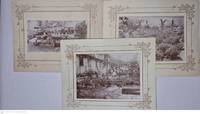
1910000180Each 16.5 x 14 11 x 8 cm. Contains 2 of which published in the book listed in our inventory; health reform and organizations in Hejaz during the Hajj season 1330 AH. By Dr. Kasim Izzeddin. The other 3 photos are not published in this book.
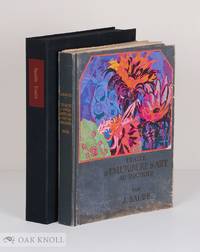
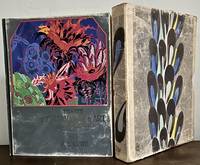
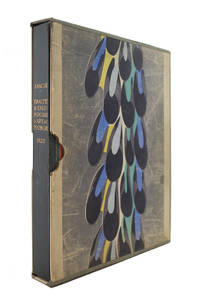
1925134580Paris France: Editions de l'Ibis 1925. illustrated chamis cover custom cloth clamshell box with cloth label with the author and title in gilt loose signatures as issued. 4to. illustrated chamis cover custom cloth clamshell box with cloth label with the author and title in gilt loose signatures as issued. xxv 75 pages 20 plates. One of 500 numbered copies of which this is one of 60 copies signed by Saudé. Also included are the three supplements and subscribers 'prospectus' sheet as well as proofs on heavier blue paper of the front and rear cover illustrations. Additional loosely inserted are four proofs of the pochoir decorated pastedowns of the chemise. Rubbing along the edges spine and hinges of the chemise. All-in-all a spectacular copy of the deluxe edition with additional material loosely inserted.<BR> <br /> <BR> <br /> The plates include work by Lepape Rodin Albert Besnard Andre-Morisset and others. The text on the technique of pochoir printing is by Antoine Bourdelle Lucien Descanves and Sem. "Jean Saudé took over the Ibis studios in Paris and set up the Editions de l'Ibis as a publishing art. Saudé specialized in fine illustrated books and collector's pieces. Above all he is remembered for his Traité d'Enluminure an illustrated manual and historical treatise on the art of pochoir. This was in fact the only published work of any lenght on the subject. Printed in an edition limited to five hundred copies and lavishly illustrated the Traité is now a rare and valuable work" Elizabeth Harris "Pochoir" Smithsonian 1977 p.3. <BR> <br /> <BR> <br /> Twenty-five pochoir plates in thirty-five states plus illustrations some color in the text by Benedictus Brunetta & Chapuis. Unsewn as issued in folder with pochoir by Benedictus pochoir endpapers by Chapuis. Scarce with the three supplements and prospectus. Editions de l'Ibis unknown
1774ABC_501841774. Loosely inserted in contemporary wrappers with the manuscript title on the front. The work is kept in a brown cloth folder with a red morocco title label on the front lettered in gold. Folio. Three manuscript reports concerning sickness scurvy hospital conditions and mortality aboard ships of the VOC Dutch East India Company specifically on voyages between the Cape of Good Hope and Batavia and in connection with the Bengal trade.The first document is from 1783 written by the doctor C. J. de Jamars and addressed to the VOC Chamber at Amsterdam this report discusses the uncommon sicknesses and deaths occurring on outward-bound ships between the Cape and Batavia. It refers to earlier resolutions and records that mortality up to the Cape had decreased following improved regulations.Particular emphasis is laid upon scurvy and putrid fevers and upon the inadequacy of medical stores supplied at the Cape. De Jamars argues for a substantial increase in China cinchona bark the principal febrifuge of the period recommending as much as 50 lb for a complement of 300 men. The document reflects the increasing institutional awareness within the VOC of shipboard hygiene provisioning and preventative medicine.The second document is an extract of a report submitted to Mr Willem Arnold Alting 1724-1800 Governor-General of the VOC by several medical officers including B. S. Engelbert. It offers a detailed investigation into the heavy mortality on ships sailing from the Cape to Batavia.The Cape hospital is identified as a principal source of contagion described as dilapidated foul and lacking segregation of patients. Criticism is levelled at the premature discharge of convalescents who were allegedly forced into heavy labour under harsh conditions before full recovery thereby spreading infection aboard ship. Other causes listed include: the embarkation of inexperienced sailors elderly men and boys climatic factors humid oppressive air near the tropics insufficient medicines especially cinchona bark and spirits of vitriol severe restrictions on fresh water for both sick and healthy men.The report makes extensive practical recommendations: improved hospital hygiene provision of clean clothing and bedding prohibition on the sale of sailors garments better victualling including sauerkraut dried fruits barley beans butter and raisins increased water rations and the preparation of restorative drinks in extreme heat.There are vivid observations of men reduced to destitution lacking shoes or bedding when transferred from hospital to ship and of theft and neglect among the lower ranks. The text provides valuable insight into 18th-century naval medicine dietetics and the administrative challenges of long-distance maritime empire.The third document is a memorandum concerning the prevention of scurvy during prolonged stays in Texel prior to departure. Again written by De Famard he observes that idleness lack of exercise and exposure to damp sea air predispose crews to scorbutic disease even before sailing.The wrappers have been reinforced with gauze on the outside. Otherwise in very good condition. hardcover
175318827Zaandam 1753. 8vo. for the author by Jan Broekhuysen Contemporary decorated paper wrappers preserved in half cloth chemise and matching slipcase. 28 96 pp. Extremely rare first edition of a list of Dutch data concerning the whaling trade in and around Greenland compiled by Gerrit van Sante 1728-1779. The book was designed with blank spance to add new data in the years following 1753. The present copy has been updated probably by the first owner till the year 1761. Besides the names of the commanders for every Dutch voyage to Greenland and the Davis Strait and the names of the directors for whom they sailed it also includes an annual record of the number of whales caught tonnes of blubber and barrels of whale oil both for each commander individually and for the industry as a whole. "Van Sante understood completely the enormous economic importance of whaling for the Netherlands and mentions the results of every voyage of every ship" Catalogue library of G.J. Honig. "Greenland" is broadly interpreted to include the waters around Spitsbergen and Jan Mayen Island and the Davis Strait fleets fishing between Greenland and America are not separately recorded until 1719. With manuscript owner's inscription the warrant signature of the author on the back of the title-page and manuscript additions throughout. Otherwise in very good condition and wholly untrimmed.l Bookauction catalogue The library of G.J. Honig Utrecht 1969 item 375 this copy; JBC III p. 1766; Sabin 76854; STCN 1 copy; WorldCat 2 other copies. ABE CAT Alaska Canada & Greenland hardcover
1900000208<p>19 p. Ottoman Turkish text. Official report of the hajj and health quarantine law in 1889-1900. Consists of 20 articles. The Anglo-ottoman Hajj policy conflict. Rare.</p> Osmaniye press paperback
1914007218Le Mans Sarthe: Raymond Bilard Éditeur 1914. First Edition. Portfolio 44 by 32 cm. 28 plates colored in pochoir by Jean Saudé the greatest practitioner of the technique. Title leaf and 5 other leaves in facsimile. Plates are complete and original. Condition: Some foxing dampstaining and wear to portfolio; text pages 3-6 original others in facsimile; plates with light edgewear and varying degrees of toning a few hints of foxing in margins; very good overall. Raymond Bilard Éditeur unknown
192524167Paris: Au Editions De L'Ibis 1925. First edition. Hardcover. Multi colored boards spine and front cover lettered in gilt. Very good in slightly worn decorated slipcase. Saude Jean. 74 pages in text. 34 x 26 cm. Limited edition copy 396 of 415 copies signed by Jean Saude. Twenty pochoir illustrations some in multiple progressive states 31 plates in total. The text which includes a history of the pochoir process and detailed practical instructions is decorated with large initial letters and head-and tail-piece designs in pochoir. It remains the definitive explanation of the technique. Publisher's chemise with pochoir labels to covers endpapers in pochoir original pochoir illustrated card slipcase painted on all 5 panels repairs at joints and corners rubbing to panels rubbing to chemise custom morocco-backed box. Au Editions De L'Ibis hardcover
1998ZB394168Pergamon Press 1998. volumes 1-75. 1998. partly bound library markings textually clean & tight price is for the set. - If you are reading this this item is actually physically in our stock and ready for shipment once ordered. We are not bookjackers. Buyer is responsible for any additional duties taxes or fees required by recipient's country. Photos available upon request. Pergamon Press unknown
1895182165Shanghai: Published at the Statistical Department of the Inspectorate General of Customs 1895-1905. I believe the Inspectorate aided by its Medical Officers can do good work A lengthy run of this valuable specialist compendium. Each issue had a circulation of around 500 copies only the majority sent to customs stations and libraries as well as diplomats and naval officers and copies are therefore rare in commerce. The Chinese Maritime Customs Service was founded in 1854 by Britain and other foreign powers to collect taxes on maritime trade for the Chinese government but its remit quickly expanded to include domestic customs administration the postal service waterway and harbour management and scientific research. In 1870 Inspector-General Sir Robert Hart instituted this series information to be provided by the medical officers assigned to customs stations. Issues were issued on a yearly or half-yearly basis sometimes in double numbers. "This network of epidemic monitoring and ecological investigation which was gradually built up by the medical officers and medical missionaries extended throughout East Asia and created a huge medical database" Gao p. 54. 17 works bound in 3 quarto 271 x 220 mm. With plates charts maps and diagrams throughout some folding and a few in colour; occasional text in French. Contemporary blue library cloth spines lettered in gilt top edges sprinkled brown other edges untrimmed original yellow wrappers bound in. Ex-Bodleian Library with its shelf labels on spines pencilled pressmarks and accession and cancellation ink stamps. Bindings lightly worn and rubbed one spine with abrasions to cloth occasional short closed tears internally the odd repair and loss but a very good usable collection. Gao Xi "Discovering Diseases: Research on the Globalization of Medical Knowledge in Nineteenth-Century China" in David Luesink William H. Schneider and Zhang Daqing eds China and the Globalization of Biomedicine 2019. hardcover
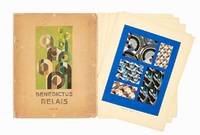
65621Paris: Ancienne maison August Vincent éditions Vincent Fréal et Cie. 1924. FIRST EDITION. Large folio 47.5 x 37.5 cm. Title and 'préliminaires' on one bifolium 15 pochoir plates some heightened in gold and silver loosely housed in publisher's original portfolio rebacked with cloth with title and additional illustration to upper cover. Portfolio a bit rubbed and soiled the odd marginal spot offsetting of black ink from Plate 11 to verso of plate 10 plates in good clean condition overall. A spectacular suite of pochoir plates by Benedictus who was famous for his elegant silks and satins designed for top firms such as Brunet Meunié et Cie. and Tassinari et Châtel. His rugs decorated the Grand Salon and Music Room of the magnificent French Embassy at the 1925 Exhibition. The pochoirs were executed by Saude the foremost practitioner of that art. Paris: Ancienne maison August Vincent éditions Vincent, Fréal et Cie., [1924]. hardcover
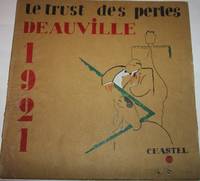
1921006579Chez Jacoub Aulard & Cie 1921. Limp Card. Paper pastedown on card. Very Good. No. 58 of 300 copies on "Grande Fibre de Bambou de Cochin-Chine". Folio 38 cm square. 24 pochoir plates 3 of which are double pages with a brief introductory page and a limitation page at the end. Scarce with only two institutional holdings reflected on OCLC First Search both in France. Caricatures bear a superficial resemblance to those of Sem. The subject matter -- the rich pampered louche effete -- come in for gentle drubbing by both artists. But Chastel's caricatures strike us as more cutting edge more modernist and compositionally quite virtuosic in the manner that they can somehow incorporate cubist aesthetics all the time rendering likenesses that we suspect would have been instantly recognizable by contemporaries. And without being strictly speaking realistic Chastel recreates convincingly the atmosphere and spirit of scenes depicted. This being an album about the fashionable channel resort of Deauville we here are shown people at the gaming tables at the race track sur la plage and engaged in drinking dancing smoking and almost always peacocking -- looking to see and be seen! Condition: chipping of the paper along the spine as virtually inevitable given the material. Light soiling on the paper pastedown. Some gentle edge creasing of the leaves within a result of their not having the the exact same measurements and their never having been together. Chez Jacoub Aulard & Cie unknown
192569144Paris: Editions de l'Ibis 1925. Full Description:<br> <br> SAUDÉ Jean. Traité d'Enluminure d'Art au Pochoir. Prédédé de notes par MM. Antoine Bourdelle Lucien Descaves.et S E M. Aquarelles de Beauzée-Reynaud Benedictus Bourdelle Brunetta L. Chapuis Dorival Abel Faivre Halouze Lepape Madelaine Morisset Rodin S E M et Vignal. Reproductions d'après Jean Fouquet A. Besnard Image de Georgin. Paris: Aux Éditions de l'Ibis 1925.<br> <br> First edition. One of 500 numbered copies this being number 464 signed by Saudé. Folio 12 7/8 x 9 7/8 inches; 328 x 251 mm. 6 xxv 1 blank 74 6 pp. With twenty pochoir plates numbered I-XX two of which are in two states one in three states and two in four states. One of the four states is lacking from the Roses. So as it should be 20 pochoir plates in 30 states present copy is 20 pochoir plates in 29 states. With twelve pochoir vignettes of various scenes and fourteen line illustrations of the mechanics of making pochoir. Additionally with pochoir illustrations on front and back cover of portfolio endpapers and publisher's box.<br> <br> Loose as issued in the publisher's quarter blue cloth over blue board portfolio with pochoir illustration by Benedictus on the front cover and a pochoir illustration by L. Chapuis on the rear cover. Endpapers are also pochoir by Chapuis. Front cover and spine lettered in gilt. Front board a bit rubbed rubbed but not affecting the image. In the original pochoir slipcase. Slipcase with a small amount of chipping. Overall a crisp clean copy of this seminal work on the technique and importance of pochoir illustration.<br> <br> "Between the World Wars the French took this ordinary craft stencilling and raised it to a high art notably in the livres d'artistes movement. Used for making coloring illustrations the stencil process pochoir in French brought brilliance to illustrated books never seen before and very little since. Stencilling is labor intensive; colors are applied by hand and as with many handcrafts went out of use by the beginning of World War Two. Jean Saudé most influential in the development of pochoir into an art and author of Traite d'Enluminure d'Art au Pochoir Paris 1925 believed that the technique could serve as a hyphen between the artist and the public and proclaimed that pochoir through its dependence on manual application in the reproduction process made possible true art instead of altered reproductions. Saude believed that pochoir was the only process which translated the artist's original intent from the first to the last print because it was done entirely by hand" V. Gerry Stencilling. Saudé specialized in finely illustrated books and collector's pieces but this book is his greatest legacy. It was the only contemporary book on the mechanics of pochoir and remains its finest example.<br> <br> HBS 69144.<br> <br> $3500. Editions de l'Ibis unknown
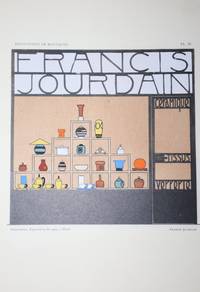
1927007641Paris: Éditions Albert Lévy 1927. First edition. Portfolio. Ribbon tie. Paper pastedown on boards. Very Good Plus. Beautiful folio of Parisian shop windows epitomizing the pinnacle of Art Deco design. Folio 33 by 26 cm. 12 pp. including introduction and table of contents followed by 48 plates of Parisian shop windows from the 1920s each on a heavy card stock. 24 of the 48 plates are pochoir color plates executed by the great master of the pochoir print Jean Saudé. The shops depicted are of a wide variety: perfumeries furriers jewelers furniture stores ceramic or china stores hatters hair salons etc. With each the designers is credited. The folio was intended to make the case for modern design and one can not deny it succeeded magnificently. Condition: The cloth on the spine is torn the entire length both front and rear joint with fraying and the board beneath revealed. The top of the spine also has layers of lower cardboard meant to be hidden now exposed and fanning slightly outward. Light soiling of the paper pastedown on the portfolio boards but much of this can be erased if one applies oneself. Plates are generally clean and bright. Éditions Albert Lévy unknown
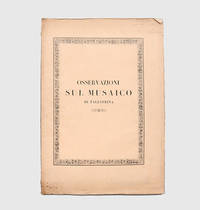
1858137227Rome: Tipografia Salviucci 1858. The Palestrina mosaic presented by the prince First edition presentation copy from the prince of Palestrina Enrico Barberini-Colonna 1823-1889 inscribed on the front wrapper to the French politician Frédéric-Alfred-Pierre comte de Falloux 1811-1886 instigator of the Falloux Laws which promoted Catholic education in French schools under Napoleon III. A large and well-illustrated study of the Nile mosaic of Palestrina a Roman floor mosaic circa 100 BCE depicting the Nile in its passage from the Blue Nile to the Mediterranean showing various animals of the river and Ptolemaic Greeks and Aethiopians in hunting scenes. The mosaic is among the earliest examples of Roman Nilotic landscape art and exhibits the Roman fascination with Egyptian exoticism. Part of a sacred grotto the mosaic passed to the Barberini family in the 17th century who removed much of the mosaic from the setting eventually placing it in the Palazzo Barberini in Palestrina where it remains today. The author of this study Sante Pieralisi 1802-1887 was the librarian at the Barberini Library in Rome. Large folio. With 7 engraved plates 5 of which are double page. Original printed paper wrappers. Housed in a standard black cloth archival box. Slight stain to front wrapper light creasing around extremities minor wear at spine ends with repair at foot rear joint splitting internally clean. A very good unrestored copy. hardcover
185843334Roma TipografiaSalviucci 1858. Lex 8vo. Original printed boards. Upper part of spine replaced with title written in hand Wear along upper part of front hinge otherwise fine with just a bit of soiling and some fading to the delicate pink colour. Some occasional brownspotting. 12 VI 216 pp. 9 plates depicting sunspots. <br/><br/><em>The very rare first edition of this beautifully printed work which is a treatise on the work of Piccolomini to which is added 8 hitherto unpublished letters from Galilei from the years1619-24 here published for the first time. Furthermore we here have 9 plates made after drawings by Galilei to document his observations of sunspots between the 3rd and 11th of May 1612. </em> hardcover
Z1-H-003-01496World Health Organization. Used - Good. Ships from UK in 48 hours or less usually same day. Your purchase helps support Sri Lankan Children's Charity 'The Rainbow Centre'. Ex-library so some stamps and wear but in good overall condition. 100% money back guarantee. We are a world class secondhand bookstore based in Hertfordshire United Kingdom and specialize in high quality textbooks across an enormous variety of subjects. We aim to provide a vast range of textbooks rare and collectible books at a great price. Our donations to The Rainbow Centre have helped provide an education and a safe haven to hundreds of children who live in appalling conditions. We provide a 100% money back guarantee and are dedicated to providing our customers with the highest standards of service in the bookselling industry. World Health Organization unknown
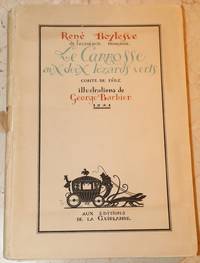
1921007075Paris: Éditions de la Guirlande. Printer: L'Imprimerie Studium 1921. First Edition Thus. Stiff Wraps. Very Good. 4to. 29 by 20 cm. Unpaginated 136 pp. 8 color pochoir plates by Barbier with many smaller color illustrations interspersed in the text. Unnumbered copy to match the 225 on Verge d'Arches from a total edition of 300. Condition: light soiling to the wraps. A few tears and one dangling piece of the spine with minor loss of the paper on the spine. Light age toning to the leaves within. Éditions de la Guirlande. Printer: L'Imprimerie Studium unknown
198485069New York: Simon & Schuster. As New. 1984. Paperback. 0671460889 . FREE UPGRADE to Courier/Priority Shipping Upon Request - IN STOCK AND IMMEDIATELY AVAILABLE FOR SHIPMENT - AS NEW THE TEXT BLOCK IS PRISTINE CLEAN UNMARKED AND IN EXCELLENT CONDITION - - 647 pages. -- with a bonus offer--; 4to - over 9¾" - 12" tall . Simon & Schuster paperback
199770203Ashland Ohio U.S.A.: Hogrefe & Huber Publishers. New. 1997. Spiral. 0889371482 . FREE UPGRADE to Courier/Priority Shipping Upon Request - IN STOCK AND IMMEDIATELY AVAILABLE FOR SHIPMENT - FLAWLESS COPY BRAND NEW PRISTINE NEVER OPENED -- with a bonus offer-- . Hogrefe & Huber Publishers unknown
200980026World Health Organization; W. H. O. ; WHO. New. 2009. Paperback. 9242593672 . FREE UPGRADE to Courier/Priority Shipping Upon Request - IN STOCK AND IMMEDIATELY AVAILABLE FOR SHIPMENT - FLAWLESS COPY BRAND NEW PRISTINE NEVER OPENED -- - Corresponds to ISBN: 9789242593679. Text in French. 75 pages. -- with a bonus offer-- . World Health Organization; W. H. O. ; WHO paperback
200555089World Health Organization; WHO; W. H. O. New. 2005. Paperback. 9241209275 . FREE UPGRADE to Courier/Priority Shipping Upon Request IN STOCK AND IMMEDIATELY AVAILABLE FOR SHIPMENT - Flawless copy brand new pristine never opened -- 160 pages -- with a bonus offer-- . World Health Organization; WHO; W. H. O. paperback
156240368DB1562. Basel Henri Petri und H. Perna 1562. Folio. 8 n.n. Bl. 573 recte 571 S. 7 n.n. Bl. Index. Etwas späterer Halbpergamentband mit 2 verschiedenfarbenen goldgeprägten Rückenschildern. VD16 A-3235. - Durling 254. - Adams A 1546. - Index Aur. 106.971. - Einzige Ausgabe im 16. Jahrhundert. Erschien erstmals 1492 in Venedig. Die Schrift des aus Pesaro stammenden Arduino wurde um 1430 geschrieben und ist neben Arnaldus von Villanova das einzige umfassende Werk der Toxikologie seiner Zeit. Herausgegeben wurde der Band von Theodor Zwinger der im Anhang von Ferdinand Bonzetti das Tractat "De venenis libri tres" anfügen liess. - Mit Exlibris des Fürsten von Liechtenstein auf dem Innendeckel. - Durchgehend stockfleckig. Titel mit Wasserfleck. unknown