180 résultats
18922963State Board of Health; New Hampshire; circa 1892. 1892 Stapled wraps printed front cover 8 7/8 x 5 13/16 inches 23 pp. Fair front cover nearly detached; some chipping corners and edges with no loss of text; modest uniform browning of paper; minor creasing. Rare no OCLC library holdings. Contents: Precautionary Measures; Practical Suggestions Relative to Cholera; The German Government Suggestions Relative to Cholera "The following excellent circular embodies the most recent suggestions of the health authorities of the German government relative to Cholera. The State Board of Health of New Hampshire has deemed it of sufficient importance to publish the following translation in connection with their own circular upon the subject: Berlin July 28 1892. 3214018. 1st Edition. Soft cover. Fair. State Board of Health; New Hampshire; (circa 1892). paperback
1860234291860. Spanish colonial administration in Havana used port health regulation as a mechanism of commercial and maritime control with the Captaincy General directing military customs and sanitary officials through centralized orders. This December 6 1860 manuscript concerns the "Junta local de Sanidad" "víveres averiados" and Dr. Rafael Cortés placing damaged provisions public health authority and port enforcement within the same bureaucratic chain. The phrase "usando de las facultades que me competen" invokes the vested powers of the colonial government confirming that the matter was handled through Spanish imperial authority rather than local civic discretion.<br /> <br /> Gobierno y Capitanía General de la Isla de Cuba. Secretaría de Gobierno sección de Gobierno. Manuscript order. Havana Cuba: December 6 1860. Single folded manuscript document with printed colonial seal and heading docketed "Habana y Dic. 6 de 1860" and addressed to maritime or port authorities. The text instructs compliance with a petition or order involving the local Board of Health damaged provisions or foodstuffs and Dr. Rafael Cortés with official endorsements and large administrative signatures below. The verso bears docketing and filing marks consistent with bureaucratic circulation.<br /> <br /> The document belongs directly to Spanish colonial governance in Cuba where the Governor and Captain General exercised civil military and administrative power over the island until the end of Spanish rule in 1898. Its contents connect colonial rule to the management of ports food safety and public health all crucial areas in Havana's nineteenth-century Atlantic economy. Folded as issued with toning scattered foxing edge wear and original folds; seal heading date and principal manuscript text remain legible. Overall good condition. unknown
18898279Atlanta Ga.: Holliday Bros. Very Good. 1889. First Edition. Hardcover. Clean marbled boards brown leather corners & spine with raised bands & gilt lettering. Decorated endpapers. Text tight clean & intact. Engraved illustrations. Ex-lib with Grosvenor Library book plate. Medical Dental Dentistry ; Ex-Lib; B&W Illustrations; 8vo; 528 pages . Holliday Bros. hardcover
1866002966New York: W.J. Widdleton Publisher 1866. 8vo size black clothbound hardcover with bright gilt titles on spine; 314 pages. Includes detailed indices to: Sleep Health and Disease Consumption Bronchitis From Preface: "It is the aim and end of this Book to show that as a means of high health good blood and a strong mind to old and young sick or well each one should have a single bed in a large clean light room so as to pass all the hours of sleep in a pure fresh air and that those who fail in this will in the end fail in health and strength of limb and brain and will die while yet their days are not all told." Tanned endpages toned pages with a wavy texture to them which is not the result of water damage but probably improper storage some time in it's 150 year history. Occasional light foxed spots lights stains in the margin of pages 262/263. Page 298 has a production wrinkle and a tiny chip in the margin. Name and pencilled price on fep. Sewn binding a little loose at bottom. Inside covers have some small wrinkles and bubbles. Chips to head and heal of spine and two inch tear to top exterior spine. Bumped and worn corners. Front cover has some light soil. Genealogists and family historians: the name on the fep is H.M. Packard 1868 Thanks for shopping with us! 100% of your purchase benefits charity and supports libraries literacy and lifelong learning. 5th. Cloth. Good/No Jacket. 12mo - over 6¾" - 7¾" tall. W.J. Widdleton Publisher Hardcover
1815060264Boston: T. B. Wait & Sons 1815 Book. Good. Leather. PRESENTATION COPY SIGNED. First Edition. RARE PRESENTATION COPY of this early 19th century work on the epidemic diseases in the state of Vermont "from its first settlement to the year 1815 with a consideration of their causes phenomena and treatment. To which is added remarks on pulmonary consumption". Written in pencil on the flyleaf "Wmle Bradley Presented by the Author". 419 pages. Front board is partially detached; moderate spine strip wear; rubmarks; foxing on endpapers; text is in very good condition for a nearly 200 year old book!. T. B. Wait & Sons hardcover
1871014370NY: D. Appleton and Co. 1871 Book. Very Good . Hardcover. First Edition. This volume of the noted Dr. Sir James Y. Simpson's works contains "the substance of his lectures on midwifery". Compiled and edited by Dr. Black who was his constant associate during five years of practice. Divided into sections on labor pregnancy the foetus and its appendages parturition the puerperal state and non-puerperal diseases of women. 852 pages with index. D. Appleton and Co. hardcover
1871BN030572Boston: Wright & Potter State Printers 1871. First Edition. Paperback. Very Good. Octavo. 8vo size original printed stiff blue wrappers xii preliminary pages and 433 pages of text followed by 2 blank leaves. Errata at end of the alphabetical index Sections include The Causes of Typhoid Fever Health of Towns Homes for the Poor The sewage Question and Analyisis of the Mortality of the City of Boston. Illustrated including a large foldout plan Imroved Homes for the People. Laid in is a large folded detailed map "Health Disctricts of the City of Boston" the map being once tipped in at page 368. Also illustrated with 6 full-pag plans/printed drawings showing among other things the plan of a small country school-house for fifty-six scholars. There is also a foldout map showing the regions drained by Mystic Pond. Text is complete some pages at the front loose but present. Some edge chipping to wrappers. The text is clean and not brittle. There is varied material on typhoid. A rare book on American medical history. Wright & Potter, State Printers paperback
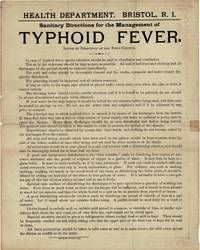
189456695Providence: printed by J. A. and R. A. Reid n.d. 1894. Broadside approx. 12" x 9½" previous folds several old tape repairs on the verso; good or better. Not in OCLC. <br/><br/> printed by J. A. and R. A. Reid, n.d. unknown books
189456695Providence: printed by J. A. and R. A. Reid n.d. 1894. Broadside approx. 12" x 9½" previous folds several old tape repairs on the verso; good or better. Not in OCLC. printed by J. A. and R. A. Reid, n.d. unknown
183623927Marseille, Marius Olive, 1836. In-8 (15 x 23,5 cm) cartonnage de toile bleue, pièce de titre noire au dos, couverture décorée conservée. 323-(4) pp. (Reliure du XXe siècle).
1875095212Wien: Verlag von Karl Czermak 1875 Book. Fair. Soft cover. First Edition. Very RARE copy of this 118 page illustrated 19th century German work on rupture of the uterus. Illustrated "mit vier lithographirten tafeln". Cover is faded and quite worn; many pages are uncut thus unread; illustrations have minor age-marks; text block is split. Verlag von Karl Czermak paperback
18960792NY: The Health Culture Company 1896. Softcover. Fair. 12vo. 90pp. Illus. wraps. The wrapper suffer from small tears 1/2’’ loss from head of spine and top upper corner. The wrapper is separating from the stapled signatures. Interior is toned but otherwise tight and clean. NY: The Health Culture Company unknown
18740085923Boston: Wright and Potter 1874. Paperback. Very Good. 1874 reprinting of the original 1870 document one of 3000 copies. Softcover original blue wraps. viii 58 pp. Very Good; minor sheflwear to the wraps; clean contents; tight binding. OCLC locates 6 copies. Includes sections on bone-boiling pit breeding poisons slaughtering alcohol homes for the poor and much much more. Wright and Potter paperback
1900LCK912611900. First Edition. Disbound. Good. With map and tables. Disbound from a convolute volume from the Library of the Royal College of Surgeons with remnants of the original binding on the spine; without original wrappers. Library stamps of the Royal College of Surgeons to title-page and first page of text. A little chipping to the fore-edge of the last page; light creasing to the first few leaves including the title-page; slight wear and slight soiling to outer pages but the text generally clean and fresh. Pages 65-73 detached from rest of textblock. ; Detailed official account of the bubonic plague outbreak in Mauritius at the turn of the twentieth century submitted by the Acting Director of the Medical and Health Department to the Colonial Secretary. The report reconstructs the origin and spread of plague cases in Port Louis and other districts presents case and mortality statistics in tabular form and describes measures adopted by the colonial authorities including isolation quarantine rat-destruction campaigns vaccination the destruction of infected dwellings and sanitary reforms in insanitary urban quarters. Issued in the context of the wider “third pandemic” of bubonic plague it offers a detailed picture of epidemic management in a small Indian Ocean colony and of the impact of plague control on urban space and labouring and immigrant populations. The Mauritius outbreak – particularly in Port Louis – attracted international medical and press attention and has since been treated in the historiography as a classic case of colonial plague control in a port city. A valuable primary source for the history of plague and quarantine colonial public health in the Indian Ocean world and the social and medical history of Mauritius at the end of the nineteenth century. ; 32.2 x 20.2 cms; 73 pages . unknown
187720318Brooklyn NY: The City of Brooklyn Board of Health 1877. Cloth. Very Good . INSCRIBED BY H.A. LA FETRA BROOKLYN'S SECRETARY OF THE BOARD OF HEALTH AND THE MAN RESPONSIBLE FOR ISSUING THIS REPORT on the front free endpaper. A solid copy to boot of the uncommon 1877 1st edition. Tight and VG in its dark-green cloth with still-bright gilt-lettering along the spine. Former owner name and date 1878 on the front free endpaper --above Secretary La Fetra's inscription; otherwise very clean with no writing or markings to the text although a dozen or more pages in the body of the text have had their upper tips neatly cut or dogged-eared. Large fold-out color map in the text present map of Brooklyn "Plan Exhibiting the System of Sewage in the City of Brooklyn N.Y. 1875" tucked into the rear pastedown pocket missing in this copy. Additionally there are fold-out plates thru the text and a number of detailed charts. An impressive very thorough study of public health in the city of Brooklyn in the mid 1870s. The City of Brooklyn Board of Health unknown
188863723Massachusetts State Board of Health 1888. Pamphlet. Used - Very Good. No imprint preface: April 2 1888. 95 pages. 3 photomechanical plates: press churn & kneading machine microphotographs illustrations of margarine labels. 9 x 5.75" blue printed wrapper. Owner name few edge nicks VG. Massachusetts State Board of Health unknown
183623295Marseille, Marius Olive, 1836 In-8 broché, couverture illustrée conservée. 328 pp.
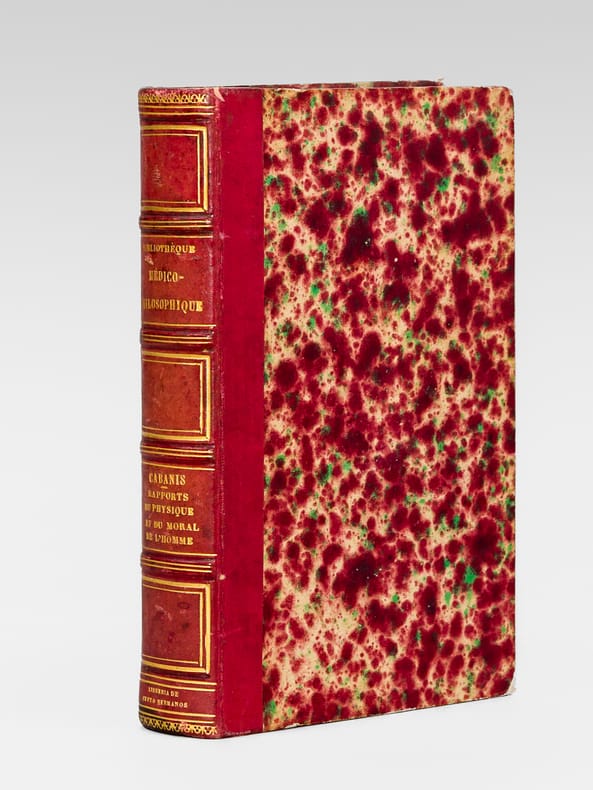
1843685751 vol. in-12 rel. demi-basane rouge, dos à 4 nefs, Bibliothèque Médico-Philosophique, Fortin, Masson et Cie éditeurs - Charpentier éditeur, Paris, 1843, 565 pp.
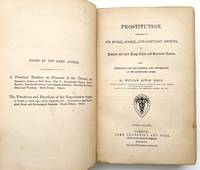
1870Q1791London: John Churchill and Sons 1870. Second Edition. Hardcover. Good. Maroon cloth 8vo 302pp. Good only with binding split at p. 160; hinges cracked but holding. Discoloration and bubbling to cloth. Previous owner's signature to pastedown. The first edition was published in 1857; this second edition includes updated charts and statistics through 1869. One of the first English texts to treat the subject from a medical and not just moral perspective Acton advocates a pragmatic approach to the inextinguishable trade emphasizing a need for regulation to protect public health and exploring its social causes and implications. He did not entirely avoid moralization but offered a more nuanced appraisal and argued that the implicated women were not to be foresaken but are "as worthy of improvement" as other criminals. <br/><br/> John Churchill and Sons hardcover
1863073472Paris: E. Thunot et Cie 1863 Ex-Library. Fair. Hardcover. Original Annual Edition. Cover has moderate edgewear; pages are quite age-toned pencil drawing on rear endpaper. RARE copy of this 19th century French work on pathology of various illnessses "fait a la faculte de Medecine de Paris". Contains writings on a variety of illnesses including cholera diphtheria typhus typhoid fever scarlatina syphilis rheumatism hemorrhages phthisie tuberculosis virulent maladies etc. E. Thunot et Cie hardcover
1854e2752London: John Churchill. G : in Good condition. Fep missing. Some occasional pencil underlining to text. Ex Royal College of Surgeons Ireland Library. 1854. First Edition. Green/gilt hardback cloth cover. 180mm x 110mm 7" x 4". xv 288pp. . John Churchill hardcover
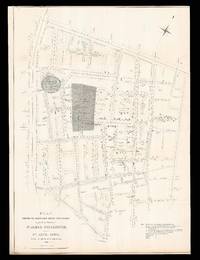
185516264London: HMSO 1855. 810 by 580mm. 32 by 22.75 inches. Folding lithograph plan. Rare epidemiological plan of Soho that accompanied the General Board of Health's exhaustive report into the 1854 Broad Street cholera outbreak. Cholera is a contagious disease caused by the bacterium vibrio cholerae. The bacteria lives in warm salty stagnant waters and is contracted when an individual ingests water or food contaminated with the bacteria. In the most severe strains the bacteria multiplies dramatically within the individual's gut causing the intestine to release increasing amounts of water leading to severe diarrhoea vomiting and rapid loss of the fluids and can if untreated lead to death within 24 hours. The majority of epidemics are caused when the faecal matter of an infected individual contaminates the water supply. It has been estimated that since the beginning of the nineteenth century cholera has been responsible for some 50 million deaths and although relatively simple rehydration treatments are now readily available according to the World Health Organisation some 120000 people a year still die from the disease. The Broad Street outbreak The London epidemic of 1853-54 was part of the larger 1846-1860 cholera pandemic - the third such pandemic to occur since 1817 - and the second time that the disease had spread to British shores. The Broad Street outbreak which was to be traced by Dr John Snow to a contaminated water pump outside number 40 Broad Street was a particularly virulent strain and would result in the deaths of 500 people over a period of just ten days; by the end of the outbreak a total of 619 people would have succumbed to cholera leading the Observer newspaper to note that "such mortality in so short a time is almost unparalleled in this country". The Broad Street outbreak led to the publication of two reports and a monograph: The General Board of Health BoH The Report on the Cholera Epidemic of 1854 1855; The Cholera Inquiry Committee 1855 set up by the Parish of St James's; and Doctor John Snow On the Mode and Communication of Cholera 2nd edition 1855. Although Snow's work is now seen as one of the foundation stones of epidemiology its argument - that cholera was a waterborne disease - was not widely held by the Victorian medical establishment with prominent people such as Edwin Chadwick head of the first General Board of Health expounding the view that cholera was an airborne disease brought about by foul odours caused by unsanitary conditions. Although Snow was to prove that the airborne hypothesis was erroneous the 'miasmatic' theory with its instance that "all smell is disease" would be the catalyst for many of the great municipal sanitary improvements - such as Bazalgette's great sewer - carried out during the Victorian era. Formation of the General Board of Health In 1848 Parliament passed the Public Health Act which instituted the Board of Health for a period of five years with powers to sanction expenditure for sanitary improvements requested by local government and in the event of an epidemic to provide guidance to the government's response. The board was headed by and was the brainchild of Edwin Chadwick whose 1842 General report on the Sanitary condition of the Labouring Population of Great Britain has been called the "fundamental document on modern public health" Rosen. "The creation of the Board of Health was a high point of the great Victorian enterprise of sanitary reform whose central idea was that environmental circumstances particularly pollution of the air and water defective sanitation dampness filth and overcrowding were causes of disease particularly epidemic disease and these diseases often killed the wage earners left poor working families impoverished pushed widows and orphans into workhouses and undermined the moral fibre of the working classes" Paneth. Although the Board was successful in enacting a great many sanitary improvements over the next five years Chadwick's brusque and arrogant manner led to the board's charter not being renewed by Parliament and on 31st July 1854 the members of the board were dismissed. Unfortunately for the government the disbanding of the board coincided with a sharp increase in the number of cholera cases in London from 1 a week to 133 a week during the month of July. On Augsut 1st Parliament instituted another but much weaker Board of Health: its charter had to be renewed annually and consisted of only one board member which had to be filled by a sitting Member of Parliament. The MP chosen was Sir Benjamin Hall who by dint of not being Chadwick was deemed eminently qualified for the job; by the time he assumed his role on the 12th August cases of cholera in London had increased to 644 a week. The Board of Health's Cholera Investigation On the 13th August Hall met with his advisory council which he had rapidly put together the council consisted of some of the most eminent medical practitioners of the day including: John Ayrton Paris and James Alderson president and treasurer respectively of the Royal College of Physicians; William Lawrence vice-president of the Royal College of Surgeons; James Clark physician ordinary to the Queen; Benjamin Babington founder and president of the London Epidemiological Society; and William Farr compiler of the Weekly Returns which included among other statistics deaths and cause of death - a resource that greatly aided Snow in his research. The council divided itself into three sub committees: Committee for Scientific Inquiries CSI which would be responsible for the majority of the cholera report; the Committee for Treatments; and the Committee for Foreign Correspondence. The work of the CSI started on the 5th September 1854 when Drs Fraser Hughes and Ludlow began house to house investigations of the Golden Square area around the same time that Snow was also commencing his investigations; and three days before St James's parish would remove the handle from the water pump on Broad Street on the advice of Snow. The report details some 800 houses listing their inhabitants any deaths from cholera and the sanitary state of the premises which was often terrible and included the condition of any cesspools "bad-smells from water-closets" and untrapped drains. The house to house investigations were supplemented by the scientific report. Hall employed three men to carry out investigations for the committee: James Glaisher superintendent of the magnetic and meteorological department at Greenwich and a founder of the British Meteorological Society; Richard Dundas Thomson professor of chemistry at St. Thomas Hospital; and Arthur Hill Hassall author of the first textbook of microscopic anatomy in English 1846 and famed for his revelations through microscopy of the extraordinarily frequent contamination of food and water in London by adulterants and animalcules Paneth. Although Chadwick was no longer in charge a brief look at the committee's make up clearly shows that the sanitarians still dominated. Their belief that the atmosphere was critical in the spread of disease is demonstrated by the fact that almost a third of the scientific report contains the investigations of meteorologist James Glashier. The Map The map that accompanies the report is a great deal larger and includes much more information than the map that Snow produced for his monograph. Based on the map produced by the Metropolitan Commission of Sewers which was also published in the report carried out by the St James's Parish it covers a much greater area and marks not only cholera deaths and pump locations but also: house numbers new and old sewers sewer grates trapped and untrapped side entrances and ventilators. The map has been updated with the number of cholera deaths in the area tracing people who were hospitalised and those that worked or visited the area. To the upper left are two shaded areas. The first a circle which bisects Little Marlborough Street titled: The erroneously supposed position of the ancient plague pit shewn in the map of the Commissioners of Sewers and the second a rectangle titled: Extent of Craven Estate corresponding with site of pest-field three acres two chains which covers much of Marshall Street and houses either side and ends just west of the water pump on Broad Street - the epicentre of the outbreak. Both sites mark supposed burial pits dug during the Great Plague of 1665. Many had argued that the disturbance of the pits when new sewers where dug in the 1840s and 1850s was responsible for the severity of the Golden Square outbreak. However this theory is conclusively dismissed in the report stating that no burial remains were encountered when the sewers were dug. A comparison of the maps that accompany Snow's monogram and the BoH's report clearly illustrates the authors' varying approach to the epidemic. Snow's map is narrowly focused on the centre of the outbreak and marks only the individual deaths marked by black coffin like lines to each house together with the position of the water pumps; Snow clearly wanting the viewer to draw the causal link between the Broad Street pump and its proximity to a large number of cholera deaths. The BoH's map on the other hand shows a much great area and contains much more information sewers drains plague pits etc. Snow's correlation just like the report that this map accompanied is lost under a mass of miasmic information. In hindsight the report just like the present map can be seen as too large and unwieldy the miasma theory at its heart "predicted to much and therefor was difficult to contradict or falsify"Paneth. In contrast Snow's economy of purpose his monograph at just 162 pages is almost a third the length of the BoH report shines through. "The strength of Snow's hypothesis lies in its exclusion of other alternatives; by insisting on the singular mode of transmission i.e. water Snow was able to imagine circumstances that would invalidate his hypothesis" Paneth. For example the exclusion of both the Broad Street Brewery works and the local Poor House from the cholera epidemic led Snow to investigate their water supply both drew them from independent sources; as did the death of a widow from cholera in faraway Hampstead who was so fond of the Broad Street water that she had her nephews send her bottles of it. Snow is keen to challenge his hypothesis where ever possible alas the BoH report contains no such challenges with the authors suffering from a large degree of confirmation bias. Although the BoH report is now largely forgotten and its hypothesis discredited it was favourably received at the time and would be the catalyst for the creation of The Metropolitan Board of Works arguably the body whose policies would make the greatest impact on the health and wellbeing of Londoners in the nineteenth century. Setup by the head of the BoH Joseph Hall in 1855 it would be responsible for among other things the clearing of slums the creation of London's numerous parks and Bazalgette's great sewerage works. Rarity We are unaware of individual examples of the plan appearing on the market in the last fifty years. HMSO, unknown
190028293Partitions sur la Prison,Partitions sur la Politique et gouvernement Parès Jacques 1900 approx.
1872170331872, librairie J.B. Baillière et fils, in-8 pleine percaline de XXIII+372 pages, introduction de M. le Dr Durand Fardel. | Etat : Assez bon état général, plats légèrement défraichis, coins et coiffes usés, quelques piqûres (Ref.: ref9028)
18584079Charleston SC: Henry R. Frost 1858. Fifth Edition. Hardcover. Very Good. 8vo 6"x9". 318pp. Brown cloth-covered boards with giltstamped title to spine blue endpapers. Slight spine slant. Slightly warped boards: lightly rubbed/scuffed several dampstains and an ink spot. Endpapers toned: pencil marks to front and rear fep. Toned textblock edges and interior. Slightly musty. Binding tight. Covered in seller's mylar. Scarce. Henry R. Frost hardcover