1 249 résultats
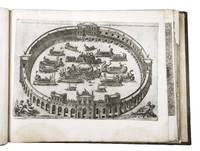
1550ABC_49514Italy 1550. 17th-century gold-tooled brown calf sewn on 6 supports with the corresponding raised bands on the spine a red morocco title label on the spine with the title "Novissima urbis Romae descriptio" lettered in gold gold-tooled board edges. Large oblong folio ca. 59 x 42.3 cm. With 76 full-page engravings and 12 full-page etchings. Remarkable album with 77 beautiful examples of 16th-century Italian cartography all in very fine dark impressions. The collection includes plans of important Italian towns such as Rome Venice Genoa Naples Milan Florence Palermo Siena Bologna and Pisa as well as detailed views of individual buildings and monuments in Rome. They are engraved by several cartographers from the school of Antonio Lafreri 1512-1577 primarily Claudio Duchetti d. 1585 Matteo Florimi d. 1613 and Lafreri himself. Florimi's works are among the rarest of the Lafreri school map makers especially his Siena imprints of which several have here been included.In the middle of the 16th century Italy was the centre of map production and distribution in Europe. This industry primarily took place in Venice and Rome. The most notable of the publishers in Rome was Lafreri. His most important and most popular work is the Speculum Romanae magnificentiae a collection of plans an views of Rome's monuments; no two copies of the Speculum are the same. The present collection contains more than thirty plates from the Speculum. When Lafreri died his nephew Claudio Duchetti inherited the company. He continued to produce the Speculum plates but often made small adjustments and signed his own name at the bottom. Most of the Speculum plates in the present album are by Duchetti. After his death the copperplates were sold to other publishers such as Giovanni Orlandi before 1590-after 1640 who reissued them. The majority of the plates in the present album were printed by Orlandi in 1602.The album further contains 32 engraved city plans mostly of Italian towns although a few foreign cities are also included; one of the rarest is the view of Moscow which is also included here. The collection ends with a incomplete series of 11 etchings of landscapes and biblical scenes.A list of contents is available upon request.With the bookplate of Louis Routy de Charodon seigneur de Grésigny and Charodon 1710-1794 on the front pastedown and remnants of another bookplate above. The boards are somewhat scratched and stained the spine shows traces of use the edges of the boards have been professionally restored and the boards have been lengthened to fit the maps. The maps are slightly browned some are slightly foxed the first few maps have been mounted onto 17th-century leaves the longer maps are somewhat soiled on the fore edge three maps are restored at the fore edge and one at the bottom edge some maps have been cut slightly short. Otherwise in good condition.l Cf. Parshall P. "Antonio Lafreri's "Speculum Romanae magnificentiae"" in: Print Quarterly vol. 23 1 2006 pp. 3-28. hardcover
1790ST19326Amsterdam: H. Keyzer H. Gartman en W. Vermandel 1790. 555 x 345 mm. 21 7/8 x 13 3/4". 2 p.l. 62 folding plates. <br/> Attractive late 19th or early 20th century retrospective polished brown calf by L. Guétant stamp-signed in gilt on tail of spine double gilt-ruled border floral cornerpieces raised bands spine panels with scrolling floral borders and central flower ornament gilt titling. With title vignette and 62 ENGRAVED FOLDING PLATES ALL WITH BEAUTIFUL HAND COLORING AND HIGHLIGHTED WITH GOLD depicting Bible scenes from the Old and New Testament 61 of which are by Jan Luyken. A Large Paper Copy. For earlier editions: Graesse IV p. 308; Brunet III 1245-46; Klaversma & Hannema 159-164. Light rubbing to joints and edges boards just a little marked trivial foxing and faint spots here and there but A REMARKABLY FINE COPY the binding lustrous and showing little wear the paper extremely bright and fresh the margins immense and the paint and gold unusually vibrant.<br/> <br/> The marvelous illustrations of Dutch engraver and poet Jan Luyken comprise this collection of "remarkable stories" from the Bible each depicted with panoramic grandeur and enhanced with a wide range of finely applied colors and gold. Luyken 1649-1712 had written and illustrated erotic poetry as a young man but later became a devout Pietist after reading the works of German mystic Jakob Böhme. He became a member of the Baptist Church in 1673 and thereafter devoted his talents to producing religious works. The vast scenes here are notable in their scale detail and animation. There are a number of battle scenes from the Old Testament as well as dramatic depictions of the plagues and a fascinating episode from the histories of Josephus depicting Herod's soldiers being lowered down the side of a cliff in large boxes suspended from chains in order to attack the thieves hiding in caverns on the cliffside. There is a majestic portrayal of the Queen of Sheba arriving at the court of Solomon a peaceful scene of Adam naming the beasts in the Garden of Eden and a festive celebration of the Feast of Tabernacles. New Testament scenes include a terrifying final judgment a blinding conversion of St. Paul and scenes from that Apostle's travels. The engravings have one common trait: they are heavily populated whether by men or beasts and one of Luyken's special gifts is to render every person in the crowd as an individual with his own concerns and reactions to the events at hand. The engravings while already greatly pleasing in black and white are even more stirring and memorable when seen in the full color and gold used here. Expansive tableaus are given greater definition and clarity and events such as Noah’s flood and the destruction of Sodom and Gomorrah are rendered even more successful in expressing the awesome powers of the Almighty. The illustrations are quite definitely Protestant in point of view: there are no depictions of the Virgin Mary not even a Nativity scene. Except for engravings of the Annunciation to the Shepherds and the Massacre of the Holy Innocents the illustrations focus on Jesus as an adult and on the work of his Apostles spreading the gospel. There were earlier editions containing Luyken's 62 large plates which originally appeared without text as here in 1708 and they appeared again with a text in Dutch in 1729 and in French in 1732. Copies of these editions appear with some regularity in the marketplace but are usually not colored and are often found incomplete or with other major condition issues. We can trace no record in RBH or OCLC of a copy of our 1790 edition and we can find nothing that compares with the quality of coloring and grand height attained by the monumental margins seen here. H. Keyzer, H. Gartman en W. Vermandel unknown
1939SPENDERS007080Atelier 17 Paris & New York. March 1939. First edition. Octavo. Spender's poem ''Fall of a City'' and Louis Aragon's translation ''Chute d'une Cit�'' together with nine engravings loose within wrappers. The engravings were printed by Atelier 17 and Henri Hecht and include one with aquatint and roulette one with soft ground etching one drypoint and one etching. All are on Montval handmade paper with deckle-edges. Held within the original plain board chemise but lacking the slipcase which had a Hayter titling-piece pasted onto the front. Stanley Hayter founded Atelier 17 in Paris in 1927 and it continues to this day in Rue Didot albeit with the name changed to Atelier Contrepoint. This production was his contribution to the raising of funds to help children orphaned by the Spanish Civil War.101 numbered copies were printed for sale and 12 for the contributors. This copy is unnumbered and hors commerce marked ''h.c'' on the limitation page. Each copy including this one was signed by Spender and Aragon at their respective contribution and by each artist in the lower margin of the etched sheet.Fine in custom burgundy morocco box with ''FRATERNITY'' in gilt on the lid. Very scarce with all nine loose etchings as most sets have been broken up for piecemeal sale. Atelier 17, Paris & New York. March, unknown
In-folio, cartella originale con illustrazione, che contiene le 10 incisioni su linoleum, sciolte, tutte numerate e firmate dall’autore, e il testo di Consagra “E’ trascurabile esprimere se stessi”; tiratura limitata, dopo la stampa le matrici furono distrutte. Ottimo esemplare.
160918688<p>Text in Latin. 2nd enhanced edition. Black straight-grain morocco leather over bevel-edge wood boards; gilt ruled frames on covers; brass clasps at fore edge; gilt title and rolls on spine; French Stormont pattern marbled end papers; two color print throughout; large font throughout; woodcut decorative drop-cap initials throughout. Clean covers and spine; front cover detached; light edge wear somewhat heavier at cover fore corners; brass clasps are intact and VG condition; rear cover spine and text block are tightly bound; lacking Title Page and 3 other prelim leaves ll. 7 8 1 and 4 interior leaves including 4 plates pp 56 250 264 314; ll. D4b Q5b R4b V5b; 53 intact full page copperplate engravings and 35 of 38 1/3 page engraved tailpiece vignettes range from Good but light to Fine though 1 plate has light ink attempt to cover angels privates p. 662; l. Tt1b; few light smudges interior otherwise very clean. Note that leaf 7 is lacking which has dedication or honors the pope; catchword at tail of l. 6b is 'PAV' indicating Pope Paul V 1605-1621 on missing leaf rather than Clement VIII 1592-1605 as in some copies. 23 x 17 cm; 696 pp.</p> Antverpiae (Antwerp): Ex Officina Plantiniana, Apud Ioannem Moreti (Plantin-Moretus Press) hardcover
In-4°; pp. 492, (4), segue Hymni per totum annum... pp. 70, (2) con colophon Antverpiae excudebat Christophorus Plantinus Architypographus Regius anno MDLXXIII; frontespizio stampato in rosso e nero, entro bordura xilografica e al centro un grande tondo con l’Ascensione della Vergine (il monogramma di firma A.V.L, Antonius van Leest, l’incisore.). L’intero testo (tranne le ultime 70 pagine) è stampato con parti in rosso, ogni pagina entro ricca bordura xilografica a quattro legni. Nel testo illustrazioni di Pieter van der Brocht incise su legno da Antonius van Leest (i nomi dei due artisti fiamminghi si trovano espressi per intero nell’ultima illustrazione, quella dell’Apocalisse, con data 1572; nelle altre incisioni con i monogrammi). Rara edizione, e una delle prime, riccamente illustrata dell’Officium riformato di Pio V, libro d’ore di Plantin, qui nella versione (Variante C) con illustrazioni e bordure xilografiche. Le xilografie a piena pagina sono 19. Legatura in piena pelle con titolo in oro al dorso. Alcuni fori di tarlo passanti al margine interno bianco delle prime e ultime carte.
WITH TWO IMPRESSIONS, IN FIRST AND SECOND STATES, OF ONE OF KIYOSHI HASEGAWA'S MOST IMPORTANT PRINTS. *** Etched half-title, 16 pp. plus 12 loose engravings. *** A monograph on engraving followed by short biographies of each of the six artists, accompanied by a suite of large engravings by Cami, Cottet, Decaris, Jeannisson, Hasegawa, and Lemagny. From a total edition of 320 copies, all printed on fine Marais wove paper, this is ONE OF ONLY 60 SETS WITH THE ENGRAVINGS IN TWO STATES: THE FIRST STATE ON RIVES WOVE PAPER, SIGNED IN PENCIL, AND THE SECOND STATE ON MARAIS WOVE PAPER. Hasegawa's engraving, "Anemones et fleurs de champs dans un verre a facettes" (Kyoto 368, also known as "Bouquet sur fond de dentelle"), is considered one of his masterpieces. Folio (38 x 28 cm). Loose as issued in the original folding case. Folding case lightly worn and spotted. CONTENTS FINE AND BRIGHT. ALL OF THE PRINTS IN BRILLIANT CONDITION.
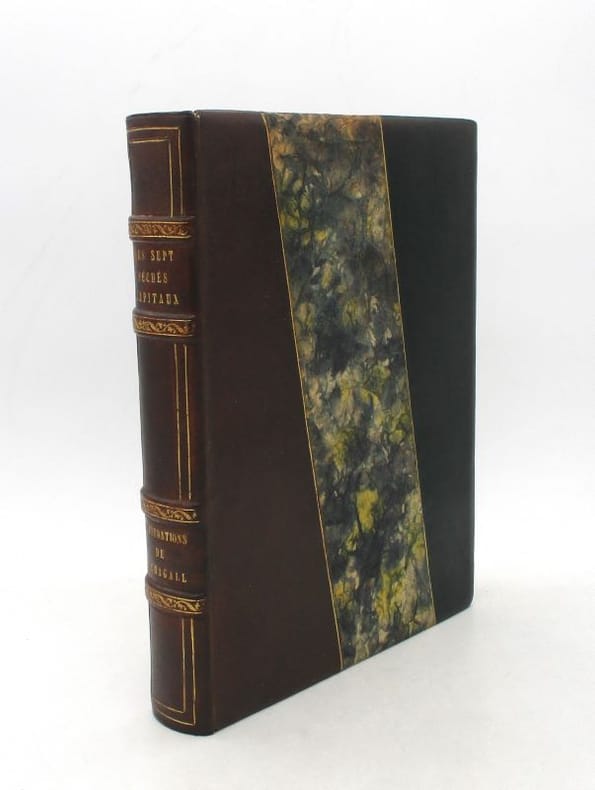
22758Paris, Simon Kra, 1926. In-4, 183 pp. 31 pl., demi-maroquin brun à bande verte de Guglielmoni, filets dorés sur les plats, dos à nerfs orné de filets et frises dorés, tête dorée, couverture conservée (dos légèrement insolé, trois minuscules épidermures aux angles des coiffes, pâles rousseurs et décharges).
Folio (320 x 215mm). (16) ll, including frontispiece, 618 pp, (14) ll. Engraved frontispiece, title in red and black with large engraved vignette, numerous engraved illustrations including large-format ones, and numerous woodcut illustrations, headpieces and initials, with final blank. Contemporary vellum, manuscript title on spine. Somewhat browned and with a small defect in the engraved title-page, but still in good condition, binding slightly bowed.
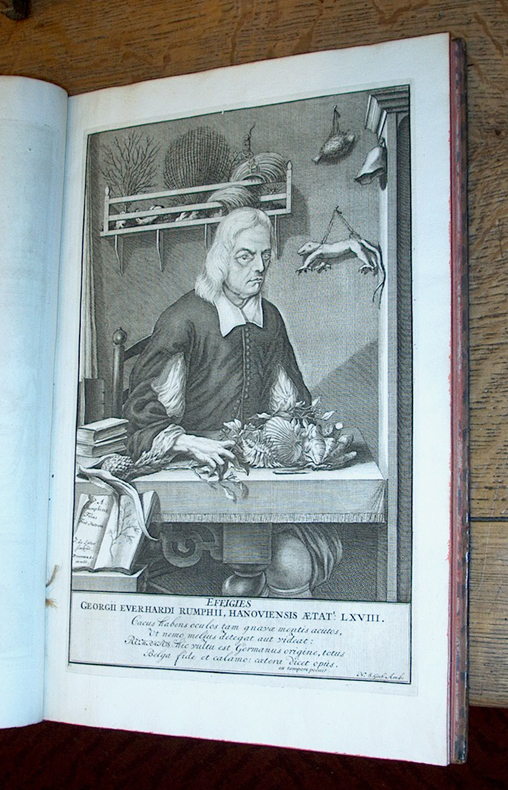
1711002657Lugduni Batavorum (Leide, Leyde), Apud Petrum Van der Aa, Bibliopolam, 1711 In-folio (41 x 27 cm), (1) ff., 15 pp., (8) pp., veau marbré, dos à six nerfs orné, pièce de titre de maroquin rouge, triple filet à froid entourant les plats, double filet doré sur les coupes, tranches rouges (reliure d'époque). Illustré d'un frontispice, un portrait de l'auteur, 1 vignette de titre, 4 vignettes dans le texte, et 60 planches gravées. Première édition en latin du "Cabinet des raretés de l'île d'Amboine" (Amboinsche Rariteitkamer), publié en hollandais en 1705 ; l'auteur, atteint de cécité, est ici représenté dans son cabinet. Précieux exemplaire provenant de la famille de Charles de MONTESQUIEU, de la bibliothèque du Château de la Brède, avec l'ex-libris des Secondat, barons de la Brède et de Montesquieu, "Virtutem Fortuna Secondat, Ex Bibliotheca Bredanense", et les initiales C. M. à l'encre. Bel exemplaire. // Folio (41 x 27 cm), (1) ff., 15 pp., (8) pp., marbled calf, spine tooled raised on six bands, red morocco title label, triple blind fillet borders on covers, double gilt fillet on turns-in, red edges (contemporary binding). Illustrated with a frontispiece, a portrait of the author, 1 vignette on title, 4 vignettes in the text, and 60 engraved plates. First edition in latin of the "Ambonese Curiosity Cabinet" (Amboinsche Rariteitkamer), first published in german in 1705 ; the author, blind, is here depicted in his office. Precious copy from Charles de MONTESQUIEU family, from the "Château de la Brède" library, with the book-plate of the Secondat, barons de la Brède et de Montesquieu "Virtutem Fortuna Secondat , Ex Bibliotheca Bredanense", and initials C. M. hand-written. Fine copy (Nissen ZBI 3520)
(Madrid, Sancha, 1788 y años siguientes), 40,5 x 25,5 cm., cartoné moderno, 130 hojas + 192 láminas iluminadas a mano representando la historia y hábitos de 96 órdenes. (Una de las obras más espléndidas y raras salidas de la imprenta de Sancha. La edición original francesa fue emprendida por Bar en 1778. Sancha empezó a publicar la versión española en 1788 en cuadernos de 6 láminas y quedó sin terminar. Según Cotarelo, a la muerte de Sancha llevaba entregados al público unos 20 cuadernos y posteriormente su hijo tiró algunos más. Ningún bibliógrafo sabe cuantas láminas llegaron a imprimirse. Así, por ejemplo, en El Grabado en España se afirma ?Parece que se publicaron únicamente 188 estampas?. El Catálogo Colectivo solo registra 4 ejemplares pero existe uno más en la Academia de la Historia que utilizó Rodríguez Moñino para su bibliografía de Sancha. Todos estos ejemplares tienen diferente número de láminas. El que mas tiene es el de la Biblioteca Episcopal del Seminario de Barcelona con 203 láminas, el de la Academia de la Historia 188, el de la Biblioteca Lázaro Galdiano 186 y el de la Biblioteca de Navarra sólo 94. Según el WorldCat, esta obra no tiene portada y contiene 97 órdenes y 192 láminas).
1927355490725414London 1927. First Edition. Hard Cover. London: Published by the Fleuron Limited and printed at the Curwen Press 1927-1930. CONTAINS SIGNED WOOD ENGRAVINGS BY JOHN NASH IN VOLUME 3 AND ERIC RAVILIOUS IN VOLUME 4. Publisher's yellow brown pink or purple buckram with gilt lettering to the spine t.e.g. others uncut spines a little faded. Robert Gibbings writes on the Golden Cockerel Press Eric Gill on intaglio printing from woodblocks Paul Nash on woodcut patterns Douglas Percy Bliss on the tools of the wood-engraver etc. W A Thorpe on the Wood-Engravings of John Nash Wood and Metal in the Invention of Printing by Victor Scholderer German Woodcut Lettering by Dr. Julius Rodenberg et al. Generously illustrated with examples of the work of many of the great wood engravers of the time Eric Ravilious John Nash Tirzah Garwood Gwen Raverat Clare Leighton et al. Vol 1 yellow buckram from 1927 is # 25 of 75 copies of which 70 are for sale. Vol 2 brown buckram from 1928 is # 42 of 80 copies of which 75 are for sale. In addition to the blocks in the text there is a fold-out in collotype of woodcut wall-papers opposite page 1. Vol 3 pink buckram from 1929 is # 18 of 80 copies of which 75 are for sale and contains one of the few woodcuts to be produced in Tirzah Garwood's lifetime Vol 4 purple buckram from 1930 is # 27 of 75 copies of which 70 are for sale. A very good set. Containing signed wood-engravings by Eric Ravilious and John Nash. NB: THESE SPECIAL EDITION SETS ARE VERY RARE AS THE SIGNED ENGRAVINGS BY ERIC RAVILIOUS AND JOHN NASH ARE USUALLY FOUND REMOVED. NNB: Dustwrappers not present. Further photographs available upon request. hardcover
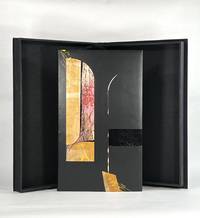
10427Berkeley CA: Editions Koch 2003. Full Leather. Fine binding. Folio. 44 pp. frontis plates. Limited edition one of 120 copies this copy out of series; there are also 26 lettered deluxe copies with a suite of 10 engravings. All are signed by Bringhurst Wagener and Peter Koch at the colophon. Bound by Camille Botelho in black box calf with inlays and onlays of dyed calf vinyl snakeskin painted paper mylar laminates and a porcupine quill; hand embroidered endbands; vinyl snakeskin doublures. A fine copy in clamshell box. <br /> <br /> True to form Peter Koch has produced a marvelous edition of what remains of Parmenides's poem "On Nature." The fragments of the poem are rendered in this opposite page bilingual edition with the Greek on the left and Bringhurst's English translation on the right. The poetry is brilliantly accompanied by Wagner's striking engravings a frontispiece and 4 additional wood engravings in red and orange. <br /> <br /> Given it survives only in fragments there is some debate as to the "meaning" of the symbolism of Parmenides's poem making it a work ripe for interpretation. But at base his view of reality is one of stasis unchangeable. And while that enduring Greek logic marks the work Wagener introduces remarkably abstract and kinetic illustrations printed in an urgent deep red and orange—projecting anything but stasis. It is the discord between the logical understanding or reality and the emotional understanding of it that spoke to Botelho and informed her design of this incredible binding. She writes: "In the design I thought of Parmenides looking out past shadowy arches from within a dark room to find total chaos beyond. The curve of the Mylar inlay and the curve of the porcupine quill mimic a column marking a threshold beyond which is uncontrolled noise and movement and mess. I wanted the disparity between the smoothness of the box calf and the chaos of the inlays and yellow foiling to be a comment on how frightening examining one's reality can be." Magnificently achieved Botelho has created an exceptional binding that bridges Parmenides and Wagener giving voice to the paradox she sees in this metaphysical conversation on the nature of reality. Editions Koch unknown
112186n.p. n.d. eighteenth century circa 1750. . A suite of four original hand coloured engravings titled in Spanish and French La Manna Le Matin; El Mediodia Le Midi; Eldespues de Comer L'Apres Diner and Le Soir La Tarde each approx. 50 x 68 cm modern gilt frames.<br /> An exquisite suite of four eighteenth century conversation piece engravings in the rococo style showing the nobility at leisure dining and dancing outdoors in a bucolic setting. Each image is beautifully set within delicately coloured scrolled borders featuring flowers foliage leafy tendrils and fruit. These prints capture the privilege and lifestyle of the aristocracy and are typical of French decorative art in the early to mid eighteenth century.<br /> n.p., n.d. [eighteenth century, circa 1750]. unknown
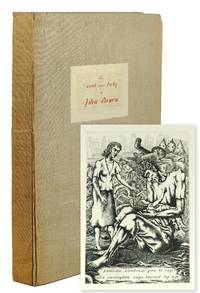
19401262991940. New York: Lee A. Ault & R. C. von Ripper 1940. <br /> <br /> Huge folio 50 pp. text and illustration engraved throughout on folded leaves separated with tissue guards in stiffened wrappers with an additional suite of 22 plates lacking some together in the original cloth portfolio and card slipcase. Together with seven sheets of proof plates and a folder of five related press clippings bearing the printed label of Monica McCall Inc. Wrappers lightly toned portfolio worn and splitting slipcase considerably worn and stained and lacking spine panel plates themselves are very good throughout with only a hint of age-toning to the outer margins.<br /> <br /> § Copy V signed by Von Ripper and Muriel Rukeyser one of three Rives paper with a suite of etchings on Velin de Normandie from a total edition of 67 copies. This copy belonged to Muriel Rukeyser who has extracted some of the suite of prints they now number 22 and added seven proof sheets some showing and annotating alternate inking options as well as a small collection of related press clippings gathered for her by Monica McCall her literary representative and sometime lover.<br /> <br /> An important collaboration between Rukeyser and the Austrian-born surrealist etcher Rudolph von Ripper 1905-1960 on the eve of America's entry into the Second World War. Rukeyser's poem looks to the legacy of John Brown the militant abolitionist of the 1850s and celebrates the possibility of spiritual renewal through resistance to injustice. It first appeared in the June 1940 edition of Poetry Magazine. Here the poem is fully engraved and illustrated with original etchings by von Ripper and interleaved with the etched verses of the old Civil War marching song. By the time Von Ripper was engaged on this project he was only 35 but had already fought for the French Foreign Legion been imprisoned and tortured by the Gestapo and been wounded while fighting on the Republican side in the Spanish Civil War. His direct physical experience of the rise of fascism is evident in his visceral Goya-like etchings. The series was exhibited in the Bignou Gallery in New York in 1941. A contemporary review described it is "an unusal undertaking brilliantly executed the drawings forming not so much illustrations or decorations as actual parts of the poem. Realism symbolism powerful design and dramatic presentment mark these plates which form a distinguished piece of bookmaking. unknown
1733140941304London: Aeneis Tabulis Incidit Iohannes Pine 1733. First Edition. Near Fine. 1733 1737. Two volumes. First edition first issue with "post est" error in the Caesar medallion on page 108 of Volume II. In a lavish full brown morocco binding with five raised bands and ornate gilt stamping to spine borders on covers wide turn-ins and beautifully patterned endsheets; all edges gilt. Near Fine with a light amount of rubbing to joints spines lightly faded a scuff to the front cover of Volume II and small former owner bookplates of noted collector Abel E. Berland to the front pastedowns. Pine's Latin text was based on Talbot's 1699 edition and is remarkable for being entirely illustrated with engraved copper plates throughout the text. Aeneis Tabulis Incidit, Iohannes Pine unknown
1733140941304London: Aeneis Tabulis Incidit Iohannes Pine 1733. First Edition. Near Fine. 1733 1737. Two volumes. First edition first issue with "post est" error in the Caesar medallion on page 108 of Volume II. In a lavish full brown morocco binding with five raised bands and ornate gilt stamping to spine borders on covers wide turn-ins and beautifully patterned endsheets; all edges gilt. Near Fine with a light amount of rubbing to joints spines lightly faded a scuff to the front cover of Volume II and small former owner bookplates of noted collector Abel E. Berland to the front pastedowns. Pine's Latin text was based on Talbot's 1699 edition and is remarkable for being entirely illustrated with engraved copper plates throughout the text. Aeneis Tabulis Incidit, Iohannes Pine unknown books
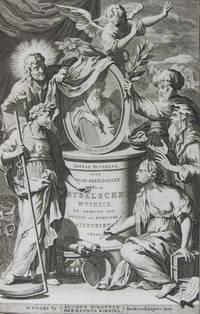
170018867Utrecht: Anthony Schouten; Hermannus Ribbius 1700. Second edition. Hardcover. g to vg. Folio 15 6/8 x 10 2/8". 42 844 36pp Index 4 845-1716 36pp Index. Text in Dutch. Contemporary blind-stamped vellum with gold lettering and tooling to spines. Raised bands. Additional engraved allegorical titles by Gilliam van der Gouwen after Wilhelmus Goeree and Philip Tideman. Title pages in red and black lettering. Decorative initials. Originally published in 1690 this work is an extensive encyclopedical study of Jewish Biblical life and times and of the Ancient Near East incl. Egypt. This complete two-volume set is embellished throughout with no less than 87 engraved plates including 29 folding and 36 in-text engravings. The magnificent engravings depict numerous Biblical scenes as well as the ancient coins of the period; the Enoch Hebrew Assyrian Phoenician Egyptian Copte Armenian and Chinese alphabets; astronomical observations; views of Jerusalem; scrolls and writing instruments; the first 13 Assyrian kings; footwear in Antiquity; mosaic floor tiles; Solomon's Temple etc. Moderate and sporadic rubbing along edges. Gold partly and slightly faded on spines. Light and minor water-staining along margin of very first leaves in first volume. Title page remargined not affecting text. Front free endpaper fly-leaf additional engraved title and title of second volume slightly and partly chipped along edges not affecting text or illustration. Very minor and sporadic foxing/age-toning throughout. A nearly fine amply-magined copy with clean plates throughout. Anthony Schouten; Hermannus Ribbius hardcover
18095Barcelone, ediciones Poligrafa, s.d. In-folio, 67 pp., en feuilles, couverture originale illustrée, chemise et emboîtage de l'éditeur de toile écrue illustrée (petites taches à l'emboîtage).
1 double plate, 2p., 32 double plates Hardcover Very good condition, light foxing, small wter stain on plate 14, in worn 3/4 morocco "The illustrative descriptions were never published with this edition." Catalogue of the Avery architectural library, 1895.
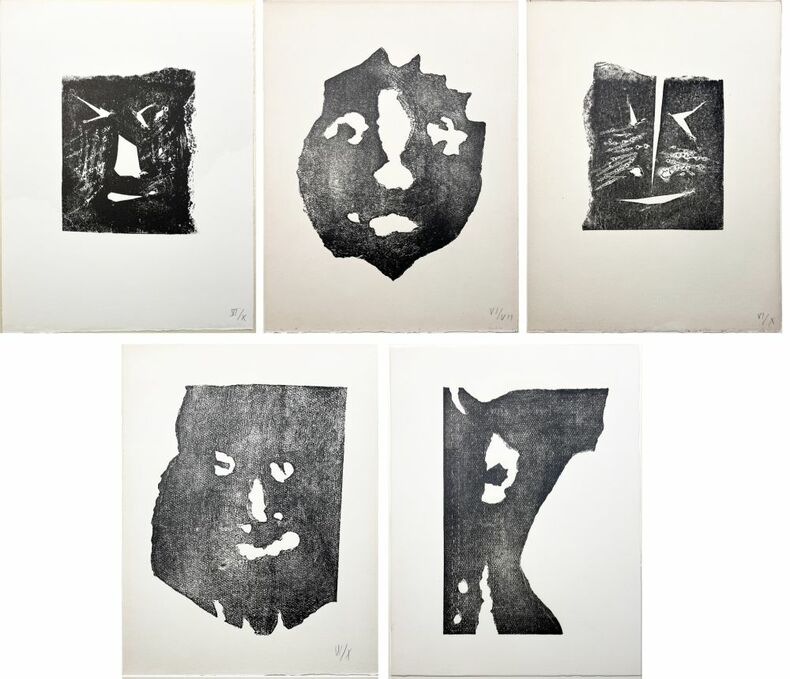
19663141PAB (ierre-André Benoit), Alès, 1966. LA SUITE COMPLÈTE DES 5 CARTALÉGRAPHIES DE PICASSO POUR ILLUSTRER LE POÈME DE RENÉ CHAR : Les 4 pour l'édition à 50 ex. + La planche supplémentaire réservée aux 10 exemplaires de tête. Les épreuves sont justifiées au crayon par Pierre André Benoit VI/X, VI/VII, la planche supplémentaire étant non numérotée. Ensemble rarissime, en excellent état de conservation. - Note : L'illustration de Picasso utilise la technique de la cartalégraphie, mise au point par Pierre-André Benoit en 1959 pour le livre Dans vos jardins, qui consiste à tirer un carton à la manière d'une gravure : "Le principe en est simple : un carton plat ou ondulé, souple ou plus rigide, est découpé, déchiré, incisé, ou gratté par l'artiste, puis fixé par l'imprimeur sur un support à la hauteur typographique, finalement encré puis imprimé." (Coron) Le 10 octobre 1966, Yvonne Zervos obtint de Picasso deux masques telluriques en cartalégraphie, auxquels se rajoutèrent deux masques supplémentaires confectionnés par l'artiste sous les yeux de l'éditeur en février 1967. Char dédie ses poèmes aux "Transparents ou vagabonds luni-solaires [qui] ont de nos jours à peu près complètement disparu des bourgs et des forêts où on avait coutume de les apercevoir." Goeppert-Cramer, Picasso, n° 138 ; Coron, Le Fruit donné, pp. 60-61 et 75-76 ; Les livres de Picasso réalisés par PAB, n° 454.
009237Los Angeles: Zeitlin & Ver Brugge Booksellers 1974. Book. Fine. Hardcover. SIGNED AND INSCRIBED BY PUBLISHER. Limited and Numbered First Edition. 8vo - over 7¾" - 9¾" tall. #105 of 120 copies printed by Saul & Lillian Marks at The Plantin Press Los Angeles completed April 1974. "The entire edition subscribed for by Jacob Israel Zeitlin & Josephine ver Brugge Zeitlin." Association Copy SIGNED AND INSCRIBED BY PUBLISHER at colophon page "for Gary Jake". From the collection of Gary Steigerwald at the time of publication a young bookseller working for Jake Zeitlin. In lovely Max J. Adjarian binding his small label to upper left corner of front pastedown of quarter brown morocco over patterned paper boards.and complementary custom clamshell case of quarter brown morocco over grey buckram boards with beige felt lining stamp-signed "Frank Burton". Both are Fine. SCARCE Association Copy. Zeitlin & Ver Brugge Booksellers, Hardcover
19724Paris, Georges Visat, 1969. In-folio, 56 pp., en feuilles, couverture originale rempliée, étui et chemise de toile rose (très léger ternissement de la toile).
1841013836Julius Perthes, Gotha, ab 1841. Papier-Mappen Gut
Cartella completa contenente 12 acqueforti e due disegni firmati Decroix che raffigurano due dei ritratti incisi. “Il a été tiré de cette suite 75 exemplaires numérotés sur papier de hollande. Exemplaire n. 3” con firma autografa dell’autore. I ritratti raffigurano siberiani, tartari, coreani, “enfants de troupe” ecc. Ogni acquaforte (il foglio misura cm 33x26) reca la firma di Decroix a matita, e il titolo del ritratto. Lo stesso Decroix (Lille 1878-1936 Parigi) fu prigioniero di guerra e passò due anni in un campo in Germania, liberato nel 1916 raggiunse la familgia a Berna per poi trasferirsi a Parigi. Assai raro.