846 résultats
1834GF322961834 Paris, Baillière - 1834- Un volume in8 de 8 - 666 pages - Reliure d'époque demi veau glacé - Dos plat orné de fleurons - quelques piqures - petites épidermures aux mors et en tête - bon exemplaire -
183952767J.-B. Baillière, 1832 ; Desforges et Cie 1839 2 titres en 1volume in-8, demi-basane marron, dos lisse orné de filets dorés, 524 - IV- 321 pp. Fortes mouillures marginales, quelques rousseurs. En l’état.
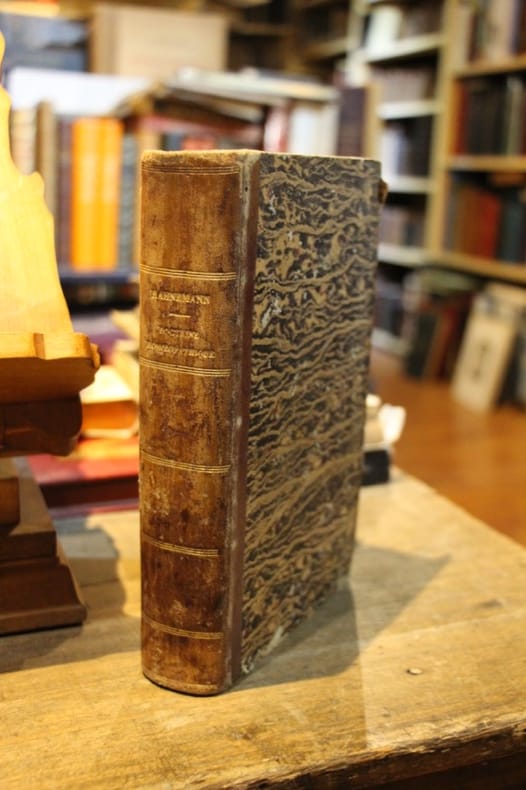
GF32290Genève - Abraham Cherbuliez - Paris - Baillière - 1833 - 1843 - 1 volume in8 de XII - 355 - IV - 376 - 312 - 159 pages - Reliure moderne demi basane lavallière - dos 4 nerfs - tranches marbrées - bon état -
GF32284Lyon - Savy - Paris - Baillière - 1862 - 1 plaquette in8 brochée de 3 - 60 pages - Bon état - non coupée - couverture un peu tachée - Rare -
1947ABE-16179994131156 PAGES-FORMAT 40 X 60-DESSIN DEMI PAGE DUBOUT-ERNEST HEMINGWAY AVENTURIER DE MARQUE-CINEMA LE DIABLE AU CORPS-LE CORBEAU, CLOUZOT-CROYEZ VOUS A L'HOMEOPATHIE? LA MEDECINE DE L'IMPONDERABLE, 2 TIERS DE PAGE (PJ12)
0331111470.Ghardcover. Good. Access codes and supplements are not guaranteed with used items. May be an ex-library book. hardcover
2007ABE-1681850707808L'AUTOMEDICATION COMBINEE POUR TOUTE LA FAMILLE ET NOS ANIMAUX FAMILIERS-COLLECTION HOMEODOC-IN 8-272 PAGES-DEUXIEME EDITION (10D)
81915Les Editions Souffle d'Or, 1983. 15 x 21, 117 pp., quelques dessins, broché, bon état.
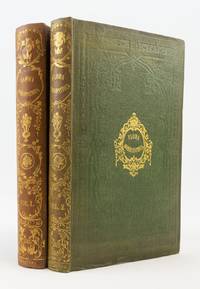
1852ST19516London: H. Baillière 1852-53. FIRST EDITION. 263 x 165 mm. 10 3/8 x 6 1/2". Two volumes. <br/> Publisher's olive green cloth covers decorated in gilt and blind spine attractively gilt the volumes very expertly recased with new appropriate endpapers. WITH 66 VERY ATTRACTIVE HAND-COLORED PLATES lithographed by H. Sowerby. Harvard Arnold Arboretium p. 314; Nissen BBI 778. ◆Spines faded to brown a few minor signs of use but the bindings solid and definitely appealing. Occasional minor foxing one plate with a small spray of black dots from printing process but a fine copy internally the text clean and fresh and the plates bright with pleasing colors.<br/> <br/> This work promotes the efficacy of homeopathic remedies through the use of detailed botanical illustrations and thorough descriptions of 66 plants--from benign specimens such as chamomile and coffee to hazardous species such as poison ivy and ergot. The descriptions of each plant include their botanical characteristics history means of identification geographical distribution physiological effects in humans and animals parts of the plant used and methods of preparation and their general use in homeopathy as well as numerous case studies and clinical observations that supposedly prove the effectiveness of homeopathic remedies in the treatment of various physical and mental diseases. Edward Hamilton 1815-1903 was a member of the British Homeopathic Society and a Physician to the London Homeopathic Hospital founded in 1849. In addition to providing a useful reference for practitioners of homeopathy Hamilton attempts in the present work to elevate and legitimize the practice in the eyes of the public and the larger medical community. The origins of homeopathy go back to the end of the 18th century but the approach became especially popular in the 19th century as an alternative to conventional Western medicine--often referred to by homeopaths as "allopathy"--whose methods at the time could be ineffectual or even dangerous to the health of the patient for example bloodletting and purging. Practitioners of homeopathy operate under the belief that "like cures like." In the words of the National Library of Medicine this means that "Practitioners select a drug that would if given to a healthy volunteer cause the presenting symptoms of the patient. For example the homoeopathic remedy Allium cepa is derived from the common onion. Contact with raw onions typically causes lacrimation stinging and irritation around the eyes and nose and clear nasal discharge. Allium cepa might be prescribed to patients with hay fever especially if both nose and eyes are affected." Crucially homeopathic remedies are harmless to the patient because they are diluted many times over--to the point that the active ingredient is an infinitesimal part of the solution. For example when taken this way the fatal Atropa Belladonna commonly known as Deadly Nightshade which "produces phenomena of inflammation in the peripheral tissues" is especially successful at treating ailments related to inflammation. The author notes that it was even administered as a prophylaxis against scarlet fever dubious studies of which are discussed here at length. Other surprising recommendations in the book include Henbane for nymphomania Bitter Cucumber for dysentery and Cannabis for a range of maladies that include tetanus acne and gonorrhea. Our copy is in remarkably good condition for a work that was intended to be referred to again and again with the hand-colored plates being unusually bright and especially well preserved. There are very few early homeopathic books with significant illustrations and none approaching the level of detail and artistry seen in the present work. H. Baillière unknown
ORD-19757Avec un exposé sommaire de la Doctrine et de la Manière de Formuler suivi d'un Répertoire thérapeutique d'après les meilleurs auteurs français et étrangers. Leipzig. Schwabe. 1899. In-8 percaline violette éditeur, XXXII, 610 pages.+ Prix courant illustré 30 pages, 2 planches en couleurs. Excellent état.
1928106437Paris Librairie J.B Baillière et fils 1928 466p 1 volume In12 broché. Manque la couverture sinon bon état. Neuvième édition précédé de l'exposé de la préparation des médicaments homoeopathiques.
ORD-87237e édition précédée de l'Exposé de la préparation des médicaments homopatiques. Paris. Baillière. 1897. In-12 (124 x 182mm) dos lisse basane noire, titre et filets or, plats chagrinés noirs, XVI, 460 pages, notes manuscrites sur des feuilles insérées ou volantes, ou notes marginales. Assez bon exemplaire.
ORD-149835e édition, corrigée et augmentée. Paris. Baillière. 1877. In-12 (120 x 180mm) dos basane café à fx-nerfs, titre et filets perlés or, plats et gardes marbrés, XII, 584 pages. Bel exemplaire.
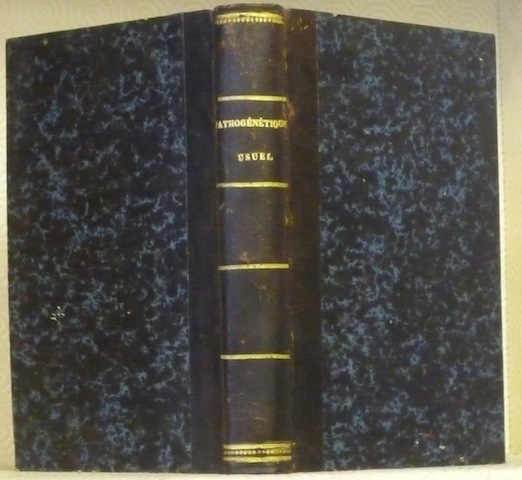
6958ou guide pathogénétique usuel pour traitée soi-même les maladies,édition revue corrigée et augmentée.In 12 demi-chagrin à nerfs, titre et caissons dorés.Titre,XV,582 pages,J.B Baillière & fils 1889 rousseurs habituelles
1927002893Paris, René Kieffer, Relieur-Editeur (Ducros & Colas Maîtres-Imprimeurs), 1927
CZC-10276Prost-Lacuzon (1817-1899). Né à Dole en 1817. Médecin et romancier. Membre de la société d’Émulation du Jura et membre correspondant de la Société médicale homéopathique de France (en 1865). Ce livre se présente comme une liste des maladies, données dans la table alphabétique en fin de volume, avec en regard les remèdes homéopathiques correspondants. Comme le dit l'auteur dans son Introduction : "Ce livre, dont les formules sont le fruit d'expérimentations particulières, d'observations prises au lit des malades, et d'emprunts faits aux meilleurs auteurs, a été écrit dans le but de propager la seule et vraie méthode de guérir rapidement, doucement et sûrement les malades." table ( extraits), fièvres - maladies par excès de sang - angine - Diarrhée - convulsion - dent - perversion de la vue - animaux parasites - névrose - organes sexuels de la femme - infection de la peau - choléra - scofules - paralysies.. Très bel exemplaire, vol fort in8, 19x12, demi cuir, bel état intérieur, 584pp. Paris, Baillère & fils, 1872 ref/c96
530Paris, Lib. Baillière, 1877. Un volume petit in-8 demi chagrin brun, dos à nerfs orné de fleurons dorés, titre doré, plats de percaline aubergine, xii+584 pages. Quelques ressauts de cahiers néanmoins bon exemplaire.
français Paris, Librairie J. B. Baillière et Fils, 1877. In-12 de XII-584 pp.; demi-buffle marron, dos à quatre nerfs (reliure ancienne). Cinquième édition, corrigée et augmentée. Bon état.
17239Paris, J.-B. Baillière 1858, 205x130mm, XLI- 491pages, relié demi chagrin noir de l’époque, titre au dos doré, noms de possesseurs, quelques rousseurs.
15809Paris, J.-B. Baillière 185in8, demi basane epoque XLI- 491pages, titre au dos doré, n quelques rousseurs.
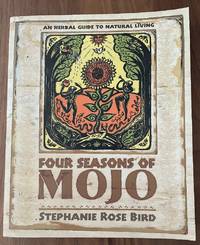
2006c913VG083122b1Llewellyn Publications 2006-03-08. First Edition Paperback. Paperback. VERY GOOD. 9x7x0. First Edition. 2006. Very Good. Unmarked. Paperback. Clean interior text w/ no highlighting underlining or writing. Softcover clean & bright w/ a bit of edge corner & shelf wear. No rips chips stains or tears. Binding in very good condition solid & square. Currently out of print uncommon or hard to find book. Multicultural spiritual guide by Stephanie Rose Bird integrating seasonal herbalism with global ritual practices. Features recipes and techniques from Caribbean Buddhist Hindu Native American Aboriginal and European traditions for natural living throughout the year. Ships quickly and with care. Llewellyn Publications paperback
Bella cromolitografia del 1843 tratta dalla celebre opera di botanica "Flora der Schweiz" di Heinrich Romer sulla flora della Svizzera. In buone condizioni, qualche fioritura. Segni di colla al verso. TECNICA: Cromolitografia DIMENSIONI FOGLIO: cm 18x11 DIMENSIONI INCISIONE: cm 15,5x9,5 EPOCA: 1843 CONDIZIONI: Buone condizioni, qualche fioritura. Piccoli strappi al margine inferiore. Resto di colla al verso. Beautiful chromolythography of 1843 taken form the famous work of botany "Flora der Schweiz" by Heinrich Romer about flowers of Switzerland. In good conditions, some foxings. Glue signs in the verso of page. TECHNIQUE: Chromoytography PAGE SIZE: cm 18x11 PRINT'S SIZE: cm 15,5x9,5 PERIOD: 1843 CONDITION: good conditions with some foxings. Little tears in the lower edge. Glue signs in the verso of page.<BR>
49290, Duffel, Duffelse Heemkring 2011, Softcover, 198pp., rijkelijk geillustreerd, 21.5x30cm., zeer goede staat.
199556508Heidelberg, Karl F. Haug Verlag, (1995). Gr.-8°. Mit 51 Abbildungen. 439 S., Illustr.-OPpbd.