4 309 résultats
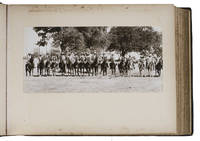
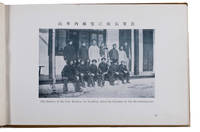
1902000110<p><strong>29 × 20 cm. Comprising 158 text plates including 95 photographs produced by the committee of which 42 photographs appear on separate plates measuring approximately 23 × 15 cm.</strong></p><p>The work documents the Photography Committee's journey from Istanbul to MaÊ¿Än in Transjordan. The accompanying text was compiled from articles originally published without illustrations in various issues of the newspaper <em>Vakit</em> "Time" in 1902.</p><p>This is a unique work prepared for publication with photographs taken by a private committee that included prominent figures such as the German general Karl Auler Pasha who served as an adviser on Hejaz affairs until the fall of Medina in 1918.</p> hardcover
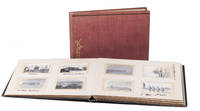
1910J1NH6Y7HYA75France/Belgium 1910. Contemporary black cloth with the title "H. Rabier - peines - supplices" on the spine. 4to 23.5 x 20 cm. Album containing 24 small contact prints 2.5 x 25 cm and 153 albumen or gelatin silver prints 65 x 8 cm both mostly numbered and captioned in French on the photograph 16 photographic reproductions of paintings or drawings 17.5 x 13 cm 2 albumen prints of nudes and 17 silver gelatin prints of sadomasochistic scenes 10.5 x 15 cm. Captivating erotic photo album containing both original photographs and reproductions on the themes of "punishment and penance" which in most cases means flagellation. This specific album was probably compiled by a certain Hector Rabier whose name is inscribed on the spine and was possibly a young Belgian. Among the reproductions of prints in this album can be found various images with an erotic nature showing the flagellation of women by men and women and non-erotic images of the torture and punishment of female heretics and witches including reproductions of artworks. A few series do not involve women and show various types of corporal punishment in the French colonies of Algeria and Indochina and flogging in the British army. A series of 27 images though not explicitly showing scenes of corporal punishment shows life in the Parisian women's prison of Saint Lazare which also doubled as a hospital for the city's prostitutes. 12 photographs show wood engravings of the cruel murder and torture of nude women by Cossacks most including the pins used to hold the engravings in place. Of the original photographs two "academic nudes" show a woman from behind kneeling on top of a chair or hanging face down over a chair or cabinet. The other 17 photographs show a semi-nude woman being bound or tortured by "oriental" men or monks. A montage of small images suggests that the woman-and-monk photographs probably suggesting a witch or heretic being tortured by the inquisition formed part of a larger collection on this subject. Although these photographs were obviously intended as pornographic images they are hardly more explicit than contemporary historical paintings at the Salon or the images in popular histories.With the spine somewhat worn and discoloured the pages of the album very lightly foxed some of the photographs partly detached from the page and some of the larger photographs slightly worn and discoloured at the edges; overall both album and photographs are in good condition. hardcover
1970153176Los Angeles: Warner Brothers Records 1970. Original photographic artwork assemblage for Van Morrison's classic 1970 album with original double exposure photograph by David Gahr designed by Janet Planet and used by Warner Brothers Records as shooting artwork for the album cover.<br /> <br /> Production annotations in manuscript marker and pencil at bottom of board below the image. Annotations on verso noting "Van Morrison 'Cover' 1884" in manuscript marker with the "1884" being the album catalogue number and "the band street choir" just below in manuscript pencil.<br /> <br /> Gahr was a preeminent photographer of folk blues jazz and rock musicians for over four decades whose subjects include the likes of Bob Dylan John Lennon Miles Davis Bruce Springsteen Janis Joplin Peter Seeger and many many others. His work was regularly featured in the seminal rock magazine "Crawdaddy."<br /> <br /> Building on the critical successes of "Astral Weeks" 1968 and "Moondance" 1970 Morrison's fourth studio LP featured the highest charting single of his career "Domino." Originally titled "Virgo's Fool Street Choir" the LP was renamed prior to release without Morrison's consent by Warner Brothers.<br /> <br /> Photograph mounted on board with a clear acrylic overlay. Original black paper overlay included but not attached.<br /> <br /> Photograph 13 x 19 inches mounted to board as created measuring 15.5 x 24 inches. Near Fine. Warner Brothers Records unknown
1940169491United States: c.1940-60. A visual record of a rarely seen and poorly documented world - an accidental history An unusually extensive group of these evocative "table photographs" striking records of largely African-American audiences in the glamorous sociable and intentionally inclusive world of mid-century nightclubs. Shot by in-house photographers developed on site and sold for a dollar at the end of the evening these quick souvenirs now amount to a rare visual history of a poorly documented milieu. As Gold notes they "turn the camera round": instead of performers we see the audiences - a critical part of what Jason Moran calls the jazz "ecosystem." The collection offers a nationwide survey of venues from the extravagant to the resolutely down-home. At New York's Café Zanzibar with its spectacular floor shows and "Zanzibeauts" the audience was integrated but largely white prompting Langston Hughes's caustic observation about the seating hierarchy - an impression borne out by the image here. Detroit's Gay Bar Lounge another "black and tan" joint catered to a mostly Black clientele and offered a rougher edge: in 1947 the barkeep famously shot two stick-up artists with the.38s kept beneath the cash register. Equally compelling are the histories of Black enterprise that surface. Oakland's Athens Elks Cocktail Lounge home to Lodge 70 of the Improved Benevolent and Protective Order of Elks of the World stood at the centre of West Oakland's vibrant musical scene hosting countless jam sessions and serving as the informal checkpoint for touring African-American musicians. In Los Angeles Dootsie Williams's Dooto Music Center founded by the trumpeter-turned-entrepreneur provided one of the city's foremost Black cultural venues praised by the Los Angeles Sentinel as "the most-needed cultural and recreation center in Southern California." The photographers themselves remain surprisingly elusive though a few can be traced. In Columbus George Pierce ran a record shop and studio in Bronzeville and supplied images to the Ohio Sentinel and other regional papers; in Detroit Earl Fowler's Top Hat Photo developed into a significant presence in the Black Press with Fowler later serving as chief of the Los Angeles bureau of Now! magazine. Beyond these contexts the photographs' enduring appeal lies in the human dramas unfolding across their tabletops: the conviviality style and fleeting alliances captured in a moment of collective ease. A scene from Gamby's in Baltimore is emblematic - six convivial hat-tipping men and two young women smiling through a forest of shot glasses presided over by a portrait of Fats Waller. It is warmly enigmatic yet inviting an offhand welcome extended across time. A more detailed description and full listing is available on request. Together 66 black and white gelatin silver print photographs 62 c.127 x 178 mm; 3 approximately 178 x 254 mm around 50 are in their original plain or printed souvenir folders the balance loose. Loose photos and folders with occasional wear and mild damp-staining some annotations verso of prints and to folders prints occasionally stapled into folders overall the group remains about very good. Ronald Auther "The Oakland Larks" The Shadow Ball Express: African American Baseball Renderings and other Facts of Life online; Clora Bryant et al Central Avenue Sounds; Jazz in Los Angeles 1930s-1950s 1998; Jeff Gold Sittin' In: Jazz Clubs of the 1940s and 1950s 2020; Robert Petersen "Before Motown: L.A.'s Black-owned Music Empire" PBS SoCal online. unknown
1928ABC_50475Iran 1928. Oblong album 24.5 x 29.6 cm. Mid-19th-century bright blue faux-leather the front board features a pictorial on-lay within a rectangular frame the illustration depicts a young woman in traditional costume holding a large ceramic vessel. The joints are laced through onto 2 supports. With 19 black and white photographs ca. 23.1 x 17.1 cm on thick dark blue/black paper. 9 ll. Collection of 19 engineering photographs taken in Iran dating from ca. 1928 to 1930 CE. The majority of the images are annotated with the year 1308 AH 1929-1930 CE while only photograph 7 is dated 1307 AH 1928-1929 CE.The album documents large-scale engineering works and urban modernisation in Iran during the early years of the Pahlavi dynasty 1925-1941 under Reza Shah Pahlavi 1878-1944. In this period cities such as Tabriz underwent significant restructuring and infrastructural development as part of broader state-led reforms.The photographs depict surveying activities including measuring instruments mounted on tripods uniformed officials and extensive reconstruction works. Several photographs are identifiable as views of Tabriz including the development of the Gaji Gate Darb-e Gajil in December 1929 Ahrap Ahrab Street and Munjam Street under construction. Other views show street levelling and widening works illustrating the transformation of older urban quarters into broader modern thoroughfares.Further noteworthy subjects include railway works and one photograph taken in Jafarabad shows several men wearing a combination of traditional clothing including papakha-style headgear and Western clothing reflecting the broader cultural transition of the period. The present work therefore stands as an informative visual record of early 20th-century Iranian engineering urban renewal and state modernisation.With some glue staining to the dark blue paper on several pages. A few photographs show minor marginal wear not affecting the images themselves. The final photograph is not mounted on the album paper but on a separate piece of card and is loosely inserted. Otherwise in good condition.l Cf. Tofigh Kouzehkanani & Zelef "Towards extroverted urbanism: Haussmannization and building a new urban identity in Tabriz 1925-1942" ITU AZ 22 3 2025 pp. 559-577 hardcover
1933ABC_45905Cambridge Mumbai New Delhi: Scott & Wilkinson Clifton & Co Hamilton Studios and Kinsey Bros. 1933. Oblong half morocco photograph album by W. Johnson & sons London. With 105 photographs mounted in the album ranging from 16 x 28 cm to 4 x 6 cm 2 photographs loosely inserted and a watercolour mounted at the back 11.5 x 21 cm. Unique photograph album showcasing the vigorous "fox" hunting scene in British India in the early 1930s particularly around Delhi. Most of the photographs show members of the British upper class in India often mounted on horses or posing for a group photograph and accompanied by hounds. The album contains no titles captions or inscriptions and the photographs do not seem to figure recurring individuals which suggests that it was probably compiled to commemorate the hunting and or riding club and its activities in the early 1930s. Numerous photographs show groups of mostly men posing with hounds at lunches and possibly a hunt ball or mounted on horses at jumping events and even a few cup trophies. The very first photograph is by Scott & Wilkinson in Cambridge active before 1933 and was therefore probably taken in England. The other inscribed photographs are by Clifton & Co. and Hamilton Studios from Bombay and Kinsey Bros. which started in New Delhi in 1935.British life in India mirrored life in native Britain and included popular equestrian activities such as hunting. Starting in the second half of the 19th century foxhounds were imported from Britain and subsequently bred in India. Regiments and brigades kept their own packs but at the beginning of the 20th century these had morphed into local hunts. Hounds were kept at over 12 hunting clubs which included Delhi Meerut Narbuda Vale Jaora Poona Bombay Bangalore Ooty Madras Lahore Quetta Peshawar and Karachi. Although the Indian silver fox was sometimes hunted the most common prey was the golden jackal.A different type of hunting popular in India was pig sticking: the chase of a wild boar on horseback with the spear. Several photographs in the album show pig sticking parties either posing or in action and sometimes accompanied by spectators on elephants. In contrast to the jackal-hunt parties the pigstick groups are composed of more military looking men and also include Indian men as opposed to the British-only hound groups.Most photographs show the area around Delhi and include a hunt near Shah Alam's Tomb. A photograph of this event is loosely inserted in the album and dated 1933/34 on the back. Other photographs show the Rashtrapati Bhavan one group shows the Earl later Marquess of Willingdon India's Governor-General from 1931 to 1936. Two images show the monumental Gateway of India completed in 1924 in Bombay Mumbai which can also be seen in an aerial photograph. Several photographs show what is probably the airfield at Karachi as it shows two airplanes loading mail on apparently the first voyage of the Indian Transcontinental Airways. Imperial Airways liner "Hanno" departing from Croydon had left for Karachi on 1 July 1933 via Bahrain and Sharjah. In Karachi the cargo was transferred to the Transcontinental airliner "Arethusa" as can be seen on the photographs.It is unclear why only half of the album was used. It is possible the compiler transferred to Kut in British Mesopotamia Kut al-Imara in modern Iraq. A watercolour on the final page of the album is captioned "A river bank north of Kut".Binding slightly rubbed and worn at the edges. Album leaves foxed throughout but most of the photographs in very good condition. The paper of the large photograph of the group near Shah Alam's Tomb is heavily damaged at the top and left side but the image itself is undamaged. A unique collection of British-Indian hunting photographs in very good condition.l Cf. Hamid "Riding with the Peshawar Vale hunt" thefridaytimes.com; Hunt "Delhi" in: Ten cities that made an empire; "1933 Eastwards: Karachi to Calcutta" indianairmails.com; Lucas Hunt and working terriers pp. 116-120; Mitter et al. The artful pose. Scott & Wilkinson, Clifton & Co, Hamilton Studios and Kinsey Bros., unknown
1917ABC_48426Iran and Iraq 1917. Contemporary cloth one album in in red and one in grey with 'Kodak' lettered in gold on the front board and a black classical meander border tooled near the foot. The albums are kept together by a black ribbon. Oblong 8vo ca. 15.5 x 20 cm. With 191 resp. 95 and 96 gelatin silver prints all ca. 4 x 6 cm. 2 volumes. Remarkable set of Kodak photo albums with nearly 200 photographs of military life and the oil industry in Iran and Iraq in the early 20th century. The photographs were most likely taken by the compiler of the albums and show scenes from his daily life. Most of them are captioned. Included are images of Persian oil fields Abu Zenema Sinai coast Port Sudan Bushehr Basra various locations along the Tigris Euphrate and Shatt al-Arab rivers Ashwaz and Shush. The photographs also show locals involved in various activities including races shark hunting and selling wares. The compiler of the album was likely a British soldier who was stationed in Basra and other locations in Iran and Iraq after the First World War.The edges and corners of both albums are slightly scuffed with a few light stains on the back board of the red album. The paper on which the photographs are mounted is slightly browned ten of the photos have either creased corners or a damaged surface some photographs a little loose within their windows missing a photo on the final page of the red album. Otherwise in good condition. hardcover
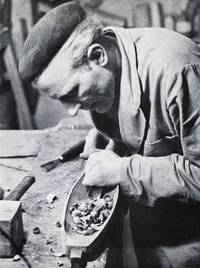
196548080Arnsberg and Dortmund Germany: Arbeitsgemeinschaft Gestaltendes Handwerk 1965. First edition. Hardcover. Near fine condition. Duodecimo 6 1/8 x 8 1/2". Unpaginated app. 100 leaves each three volumes. Original screw-bolted brown cloth with gray lettering on spines. Text printed to handmade paper in variant colors: black brown gray blue cream yellow green burnt Sienna and umbra photographs printed to glossy white paper. With lists of full and associate members of the workshop at front printed in white on black paper.<br /> <br /> Complete catalog of "Werkstattporträt Workshop Portrait" in three volumes a joint venture of the Project Group Creative Crafts for the Districts of Arnsberg and Dortmund Germany from 1961 to 1965. Participants of this project included craftsmen and women from the fields of pottery weaving embroidery bookbinding lathe work carpentry photography painting and sculpting. An extraordinary project presenting a state-of-the-art view of craftsmanship and art in Eastern Westfalia in the 1960s illustrated with 309 b/w photographs.<br /> <br /> Albert Renger-Patzsch participated in this project not only as a photographer see portrait 10 but provided one-hundred and forty-five of the three hundred and eleven photographs of works of other participants including portrait photographs for the catalogs "Werkstattportrait." Renger-Patzsch had worked as press photographer for the Chicago Tribune before publishing his title 'Crassula" with the Auriga-Verlag in the series 'Die Welt der Planze' in 1924. He had his first museum exhibition in 1927. His second book "Die Welt ist schön" became his best-known publication. During the 1930s he remained in Germany and made photographs for the German industy and in advertising. His archive was destroyed during W.W.II. In 1944 he moved to Wamel North Rhine-Westfalia and lived there for the rest of his life.<br /> <br /> The catalog is structured in twenty-nine chapters 0-271 introducing artists and craftsmen and women including one introductory chapter with eight photographs and a final chapter with six photographs. The object of the project was to further the exchange of knowledge and experience collaboration in research shared leisure time and visits of the workshops and studios of participants. Regional and national exhibitions and publications were arranged to help find buyers for the created work. The introductory chapter includes lists of full members and associate members.<br /> <br /> Each of the twenty-seven workshop portraits includes an introductory leaf for the respective participant describing the workshop or studio and the career including particulars about the techniques and material used by the artist with captions on the objects captured in eight b/w offset reproductions of photographs by Albert Renger-Patzsch and others on verso. Each set of photographs includes a portrait of the respective artist. Following each set of photographs a page with contact information of the artist and photo-credits for the work displayed.<br /> <br /> The final chapter is entitled "Workshop Portrait." It includes a brief description of the workshop taking place from April 1961 to December 1965 six b/w photographs of workshop exhibits and a list of all participants with contact information. The last page of this chapter an address by Walter Römhildt states the conclusion of this project and announces the continuation of publications of the series "werkstattforum" at his new office the "Beratungsstelle für Handwerksform bei der Handwerkskammer Hannover." Participants of the project "werkstattportait" will automatically receive those publications. <br /> <br /> Content with participating artists:<br /> <br /> portrait 0: Introduction of the project with photos by Renger-Patzsch 9 <br /> portrait 1: Hildegard Bäumer weaver Siegen photos by Renger-Patzsch 6 and Foto-Besser Siegen 3<br /> portrait 2: Ignatius Geitel Glass painter Bochum with Klischees by Titze & Lorenz Gelsenkirchen 9<br /> portrait 3: Karl Josef Hoffmann sculptor Attendorn with photos by Renger-Patzsch 9<br /> portrait 4: Anneliese Kretschmer photographer Dortmund photos by Anneliese Kretschmer 9<br /> portrait 5: Udo Dickerhoff carpenter Bochum photos by Renger-Patzsch 8 Sabine Renger 1 and Christian Bathe Münster 1; with two transparencies.<br /> portrait 6: Ingeborg and Bruno Asshoff potters Bochum photos by Renger-Patzsch 10 Dagmar Korn Düsseldorf 2 and Helmut Hering Dortmund 2<br /> portrait 7: Martha Wurm embroider Wattenscheid photos by Photo-Soeding J. Müller Soest 11<br /> portrait 8: Otto Pickhan turner Mollseifen photos by Renger-Patzsch 9<br /> portrait 9: Irmgard Timmermann weaver Soest photos by Photo-Soeding J. Müller Soest 9 H. Musmann Lage 1 and Renger-Patzsch 1<br /> portrait 10: Albert Renger-Patzsch photographer Wamel photos by Sabine Renger Wamel 1 Renger-Patzsch 11 Klischees by Titze & Lorenz Gelsenkirchen; <br /> portrait 11: Andrea Böhm picture weaver Lüdenscheid w/o photo-credits 10<br /> portrait 12: Päule Jelich goldsmith Iserlohn photos by Schmidt Lueg Iserlohn 11 and Foto Melchers Herne 1 <br /> portrait 13: Wolfgang Kruse turner Hamm photos by Schmidt Lueg Iserlohn 10<br /> portrait 14: Wolfgang Kreutter sculptor Dödesberg photos by Bert Brösel Siegen 1 Heidersberger Wolfsburg 2 Schmidt Lueg Iserlohn 9 <br /> portrait 15: Marianne Proll bookbinder Hagen photos by A. Bach Hagen 6 Renger-Patzsch 8 <br /> portrait 16: Heinz Abendroth metal smith Dortmund photos by Rolf Schmieding Dortmund 9 Dinstühler Dortmund 1; <br /> portrait 17: Liesel Bellmann sculptor Dortmund photos by Gerd Schlitzer Dortmund 4 W. von Frankenberg Dortmund 1 Rolf Schmieding Dortmund 3 and Heller Telgte 1 w/o credit 3<br /> portrait 18: Karl Jlling metal smith Mallar photos by Renger-Patzsch 10 <br /> portrait 19:Dieter Pieper goldsmithLüdenscheid photos by Werkstätten Carl Golderer Pforzheim 24 <br /> portrait 20: Marieluise Quade painter and graphic designer Lüdenscheid photos by Carl Huth Lüdenscheid 2 w/o credits 7<br /> portrait 21: Waldemar Wien sculptor Kierape 1 photos by Renger-Patzsch 13<br /> portrait 22: Christel Humpert potter Bochum photos by Renger-Patzsch10<br /> portrait 23: W. K. A. Weisheit carpenter Plettenberg-Oesterau photos by Renger-Patzsch 9<br /> portrait 24: Günter Hülshoff potter Rosemarie Hülshoff batik both Wangern photos by Renger-Patzsch 14<br /> portrait 25: Josef Severin metal smith Anröchte/Krs. Lippstadt photos by Renger-Patzsch 6 and Sabine Renger 4 <br /> portrait 26: Gisela Lohse weaver Hagen photos by Renger-Patzsch 11 <br /> portrait 27: Johannes Scharfenstein carpenter Meschede photos by Renger-Patzsch 10 and Foto-Zwietasch Kornwestheim 1<br /> "werkstattportrait" with Klischees by Tietze & Lorenz Gelsenkirchen 6<br /> <br /> Text in German. Minor wear overall with some red underlining of text in Römhildt address on last page. Translation of werkstattportrait 10: <br /> <br /> "Albert Renger-Patzsch born on June 22m 1897 graduated at the Humanistic Gymnasium studied chemistry until the preliminary examination after that he became the head of the photography department of the Folkwang Publisher in Hagen and Darmstadt. Since 1925 independent photographer in Bad Harzburg; first exhibition at Kestner-Gesellschaft in Hannover in 1925; first publication: "Die Halligen" in 1927 worked from 1929–1944 in Essen after that in Wamel near Soest. Following his title "Die Welt ist schön" he published monographs of cities and architecture books on marked-off landscapes and other topics. Renger=Patzsch works are in the collections of the MOMA New York the Eastman House in Rochester the Gernsheim Collection in London the Copper-Engraving Collection of the National Library in Paris and the Photo-Museum in Dresden. He was awarded the David Octavius Hill Medal of the G.D.L. in 1957 the Culture-Award of the German Society for Photography Cologne in 1960 and the Golden Society Medal of the Vienna Photographic Society in 1961. Renger-Patzsch is seen as the father of "Neue Sachlichkeit" in photography. In his book "Die Welt ist schön" he introduces a program with the goal to deter photography from engaging in a race with painting and reflect on its own medium. His notion that photography based on its mechanical structure is better suited to do justice to an object portrait it as an artistic individual pertains to large fields of photography today. Arbeitsgemeinschaft Gestaltendes Handwerk hardcover
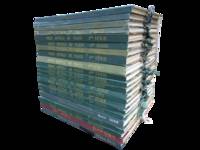
1908063640Paris: F. Contet 1908-1937. Various. Hardcover. Very Good/No Jacket as Issued. Complete 22-Volume Set. Very rare to find the entire series. Volume 1-3 descriptions presumably by F. Contet. Volume 4-16 descriptions by J. Vacquier. Volume 17-22 descriptions by Paul Jarry. Volume 1-47912-22 first editions 17 out 22 volumes. Titles and dates are as follows - Volume 1: Le Temple et le Marais Tome I 1908. Volume 2: Le Temple et le Marais Tome II 1909. Volume 3: Le Faubourges Saint-Germaine Tome I 1910. Volume 4: Le Faubourges Saint-Germaine Tome II 1910. Volume 5: Le Ministere de la Marine; Ancien Garde-Meuble de la Couronne 4th Edition 1922. Volume 6: Le Faubourg Saint-Honore Tome I 3rd Edition 1920. Volume 7: Le Farbourges Saint-Germain Tome III 1912. Volume 8: L'Hotel Lambert 3rd Edition 1921. Volume 9: La Place Vendome 1913. Volume 10: Le Quartier Saint Paul 2nd Edition 1920. Volume 11: Le Faubourg Saint-Honore Tome II 1923. Volume 12: Le Faubourg Saint-Germain Tome IV 1920. Volume 13: Le Faubourg Saint-Germain Tome V 1921. Volume 14: La Nouvelle-France Ou Le Faubourg Poissonniere 1922. Volume 15: Le Quartier Saint-Avoye 1923. Volume 16: Le Faubourg Saint-Germain Tome VI 1924. Volume 17: Le Quartier du Palais-Royal 1926. Volume 18: Les Porcherons ou le Faubourg Montmartre 1928. Volume 19: Le Quartier Saint-Antoine 1929. Volume 20: Le Temple et le Marais Tome III 1930. Volume 21: Le Quartier de Luxembourg 1934. Volume 22: L'lle Saint-Louis 1937. Marbled boards with quarter cloth bindings. 3 dual cloth ribbon ties on each folio. Loose-leaf. B&W plates photographs. Stickers cover original titles on volume 22. Volume 17 20 21 are ex-library on and inside front covers as well as on first few pages. Volume 1 and 2 have titles handwritten on their spines. Volume 18 21 and 22 have new bindings as well as titles handwritten on spines. Volume 6 and 8 have a ribbon torn along fore-edge. Multiple boards have spots of fading and/or rubbing. Several spines have minor fraying tears to cloth and some staining. Many of the inner spines are cracked or broken but still holding together. Age-toning in multiple books. Overall the set is in very good condition. Due to this series's size and/or weight additional shipping may be needed. No international shipping. A highly collectible series filled with attractive photographs! Full refund if not satisfied. F. Contet hardcover
1912ABC_47646Shanghai: Commercial Press Limited 1912. Original publisher's orange-brown pictorial cloth marbled endpapers. Oblong 8vo 15 x 22.5 cm. 160 black-and-white photographic illustrations all protected by tissue paper guards. First and only edition of a very rare work with photographic illustrations of the Chinese Revolution of 1911 with captions in Chinese and English. It was published specifically for circulation in the West and consists of 14 parts. The present work contains the first 4. However any volume in this series is exceptionally rare as we have not been able to find another copy in sales records of the past 100 years.The Chinese Revolution of 1911 is an important event in Chinese history as it resulted in the establishment of the Republic of China. The Revolution was preceded by decade of revolts since Chinese citizens had already been dissatisfied with the rule of the Qing dynasty 1636-1912 for some time. The Revolution started in October 1911 with the Wuchang Uprising after which similar revolts broke out across the country. The Qing court then initiated negotiations with the revolutionaries. Both parties came to the agreement that the emperor who was just 6-years old had to abdicate in February 1912. Revolutionary statesman Sun Yat-Sen 1866-1925 became the first provisional president.The present work offers an authentic pictorial record of the first revolts. The work contains numerous portraits of important leaders of the Revolution and members of the Qing court grim photographic illustrations of the battlefields in Wuchang now the Wuchang District of Wuhan and Hankow or Hankou and images of the attack on Nanking now Nanjing including the preparations and the aftermath.The binding shows very slight signs of wear the gutters of the front and back endpapers are weakened causing the binding to be wobbly but the boards are still attached. The tissue paper between the photographic illustrations has browned throughout. Otherwise in very good condition.l WorldCat 891342401 2 copies. Commercial Press, Limited, hardcover
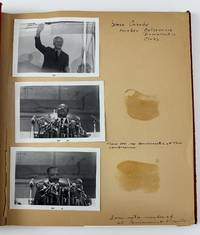
19675899Chicago and New Orleans: September 1967. 21 leaves illustrated with ninety-nine photographs mostly black-and-white but some in color. All ninety-nine images with a printed caption in the margin reading "Sep 67."Square folio. Contemporary red leatherette stamped in gilt on front cover string tied. Minor wear some images loose. Very good. An important photographic record of a notable moment in the interplay between the Civil Rights Movement the Black Power Movement and 1960s white liberalism documenting the 1967 National Conference on New Politics NCNP in Chicago. Simon Hall in his 2003 article in Journal of American Studies entitled "On the Trail of the Panther: Black Power and the 1967 Convention of the National Conference for New Politics" described the event as "one of the most ambitious attempts to forge a broad political alliance of antiwar organizations New Left insurgents and the radical wing of the Civil Rights Movement in 1960s America." The album is captioned on the inside front cover: "The National Conference on New Politics Aug. 31 - Sept. 4 1967 Palmer House Chicago." Seventy-five images document the conference many captioned on the album leaves identifying speakers attendees and settings or providing commentary.<br /> <br /> Chief among the delegates to the conference was Dr. Martin Luther King Jr. who delivered the keynote address on the first night. The title of the speech was "The Three Evils of Society" which King defined as “the sickness of racism excessive materialism and militarism.†The present album includes five candid shots of King from that night. These include four shots of King at the microphones during his keynote address three with captions that read "There are no communists at this conference" "I am not a member of 60 communist fronts" and "We do not believe in violence but rather civil disobedience on a vaster scale than ever before" respectively. The fourth photograph of King shows him sitting with Ralph Abernathy and Michael Wood this image captioned "Center: Michael Wood of the Nat'l Student Assn who blew the whistle on the CIA."<br /> <br /> In addition to the photographs of Dr. King the album includes dozens of candid shots of conference participants that reads like a who's-who of civil rights and Black Power activists of the moment including members of SCLC SNCC CORE and the Black Panthers. These portraits memorialize the conference participation of Julian Bond Dick Gregory Ralph Abernathy one of which catches him sleeping during King's speech and is humorously captioned "The alert audience of ML King" Hunter Pitts "Jack" O'Dell Floyd McKissick James Foreman Lois Allen Vietnam War protester Private Ronald Lockman and a woman from the "Mississippi Freedom Democratic Party" who appears to be Victoria Jackson Gray Adams.<br /> <br /> The album also pictures white members of the New Left or sympathetic supporters of the civil rights movement such as Dr. Benjamin Spock Dr. Donna Allen Women's Strike for Peace Simon Casady influential California Democrat William Pepper Executive Secretary of NCNP Clark Kissinger National Secretary of the Students for a Democratic Society and Robert Scheer publisher of the radical Ramparts magazine. The album also includes some shots of other unnamed notables and additional attendees views from the main conference floor a display of posters featuring "Heroes of the National Liberation Movement" such as Che Guevara Malcolm X and Stokely Carmichael and book displays by vendors such as the Progressive Labor Party Marxist publisher Lou Diskin CADRE Chicago Area Draft Resistors and the Student Mobilization Committee.<br /> <br /> An additional twenty-four color images picture H. Rap Brown Jamil Abdulla al-Amin and various scenes in New Orleans during Brown's trial for weapons charges in September 1967. Brown was a fiery activist who was that time serving as the fifth chairman of SNCC a post he held from May 1967 to June 1968. Incongruously Brown was a controversial head of SNCC for his constant calls for violent political action and even served a dual role as the head of SNCC and as Minister of Justice for the Black Panther Party in 1968. The first page of images featuring Brown in the present album is captioned: "Rap Brown in New Orleans. Arraigned on carrying a weapon in interstate while under criminal indictment in Maryland for inciting to riot & arson" referring to the riot in Cambridge Maryland earlier that summer. Seventeen of these images show Brown and his lawyers talking to reporters outside the courthouse then continuing to do so as Brown walks down the street and gets into a car. Seven of the images show various street scenes around New Orleans. Brown's trial was going on at the same time as the National Conference in Chicago. As such a handful of the latter images show James Foreman of SNCC who according to the manuscript caption "spoke for H. Rap Brown" at the conference. At the time Foreman was the International Affairs Director for SNCC.<br /> <br /> The conference was an odd combination of white liberals Civil Rights legends and Black Power advocates which according to a contemporary source "brought black militants and much of the white left into occasional dialogue and frequent chaos." A retrospective "This Week in History" piece in the Chicago Sun Times in 2021 set the scene of the conference and detailed Dr. King's keynote speech: "A haven for liberal politicians and supporters the National Conference for New Politics took place over Labor Day weekend in 1967. The Chicago Sun-Times extensively covered the conference where politicos activists and anti-war advocates mixed and mingled to excite their base and prepare for the upcoming election season. The highlight of the convention came on Aug. 31 when Dr. Martin Luther King Jr. took to the stage to deliver the keynote address to 4000 people at the Chicago Coliseum. 'The promise of a Great Society has been shipwrecked off the coast of Asia on the dreadful pinnacle of Vietnam' he told conference-goers. The war he said 'has torn up the Geneva agreement seriously impaired the United Nations exacerbated the hatreds between continents and worse still between races: it has frustrated our development at home.If the will of the people continues to be unheeded all men of good will must create a situation in which the 1967-68 elections are made a referendum on the war' he said. 'The American people must have an opportunity to vote into oblivion those who cannot detach themselves from militarism.' King’s speech touched on more than the Vietnam War. He called for a national employment agency noting that capitalism 'was built on the exploitation and suffering of Black slaves and continues to thrive on the exploitation of the poor -- both Black and white -- both here and abroad.' The activist referred to racism as 'that corrosive evil that will bring down the curtain on Western civilization.' King received a standing ovation after his speech. September unknown
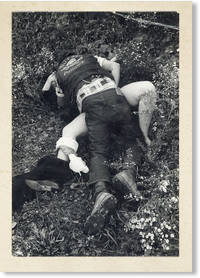
196543698N.p.: S.i. 1965. Original silver gelatin photograph measuring 6" x 8.75" 15.25cm x 22.5cm; mounted to off-white mat board to a total size of 11" x 14" 28cm x 35.5cm. Photographer has titled dated and signed on verso of matting: "McHenry Illinois. Oct.1965. Danny Lyon." Photograph shows some trivial wear to extremities a diagonal crease to upper right corner and faint spidering across center; Very Good. Mild toning to mat board with some scattered foxing and a few faint stains. An outtake from Lyon's 1968 debut The Bikeriders his attempt at recording and glorifying American motorcycle culture. "McHenry Illinois" depicts a member of the Chicago Outlaws motorcycle club of Cicero Illinois mounting his girlfriend in a field of grass and wildflowers. Lyon lived and traveled with the Outlaws between 1963-1967 becoming a member of the club and immersing himself in all aspects of their activities. Provenance: From the collection of Steve Dalber Lyon's roommate at the University of Chicago. S.i. unknown
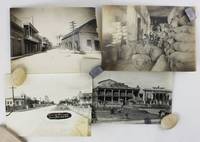
19305942Various locations in the Dominican Republic 1930. Very good. Eighty-three smaller-format photographs each around 5 x 7 inches or smaller; seventy-two larger-format photographs each about 8 x 10 inches. Most images with manuscript or printed captions either in the image or on verso often with photographer's studio stamp. Minor to moderate wear occasional minor chipping to margins varying degrees of curling twelve images adhered to album leaves. A voluminous collection of over 150 photographs picturing the people cities landscapes and commercial activity in the Dominican Republic in the early-20th century. The images capture indigenous Dominican peoples street views waterfront views road construction sugar and other plantations various buildings landscapes and so forth. The photos were produced by a few photographers active in the Dominican Republic and the Caribbean at the time including the Brown Brothers "Fotografia Manon Santo Domingo" whose embossed blindstamp can be seen in the image area of some image and Palau of Santo Domingo City. Most of the images exhibit some kind of manuscript or typed captions either in the negative or on the verso providing critical identification information for the content and/or settings in the pictures. The images identify street scenes on "Avenida Bolivar" "San Pedro de Macoris" and in various other cities as well as shots of "Teatro Independencia" "Palacio Municipal de Moca" "Hipodromo de Santo Domingo" a "Factoria" in La Romana "Palacio Consistorial" in the capital city of Santo Domingo "Cafe Eden" in Santiago de los Caballeros "The Citadel at Santo Domingo" "An American sugar plantation near San Pedro de Macoris" "Laboratorio de Fitopatologia" several views of old ruins and other commercial scientific educational or religious structures.<br /> <br /> Important Dominican landmarks pictured here include the "God Tree" "where legend says Columbus tied his vessel upon his first visit to the island in 1492 the wishing stone of Queen Anacaona who was executed by Bartolome de las Casas the "Puerta de San Diego" and the lighthouse at Santo Domingo City the Cathedral of Santo Domingo begun in 1504 and completed in 1550 and various sites relating to Columbus's arrival and time on the island. Other shots capture inventories in various warehouses or in agricultural fields of sugar cane tobacco onions or cotton an interior shot of a match factory in Puerto Plata a Ford dealership in Monte Cristi large stores of tobacco in La Vega laborers constructing a railroad track near Puerto Plata the old fort and other structures at Santo Domingo various shots of the Dominican Republic's federal army and military band locals picking coconuts and wild oranges along the Macoris River shots of various street vendors several shots of the "School children of Santo Domino" and more. Most of the commercial scenes feature numerous native Dominicans at work and the street scenes often picture locals as well.<br /> <br /> Though we have handled various groups of photographs featuring Cuba Jamaica Bermuda and other Caribbean locations this is the first collection picturing the Dominican Republic that we have offered and the largest we have encountered in the trade. The images provide an excellent opportunity for further study of the people places businesses churches and more in the Dominican Republic during the early part of the last century. unknown
192751953Shanghai: The Commercial Press Limited 1927. First edition. Hardcover. Very good condition. Elephant Folio. 154 1pp. Original Royal Blue brocade with lettering imagery and decorative frame woven into covers; housed in custom-made black cloth slipcase. Frontispiece. Historiated initials at acknowledgments introduction and preface historiated initials and endpiece drawings on text pages. Comprising Seventy Photographic Studies of the Celebrated Monuments of China's Northern Capital and Its Environs Complete with Descriptive and Historical Notes. Introduction by Dr. Hu Shih. Printed in b/w collotype.<br /> <br /> Working as missionaries for eight years the White brothers Herbert Clarence and John Henry took more than four thousand photographs of the city establishing schools to train young Chinese men and women in employable skills. "Students were taught to print and hand-color their photographs in oil. after 1930 the brothers relocated themselves and their publishing concern to ST. Helena California. The sepia photos in this volume each highlighted by a decorative border and captioned simply in Chinese only are described extensively on facing pages in English. The "northern capital" of the subtitle is Bejing referencing the shift of 1927 when the Republicans moved the seat of government to Nanjing southern capital". It was returned to Bejing in 1937 ending the so-called "Nanjing Decade." This decade roughly corresponds to the period when the White brothers lived in Bejing and photographed a truly beautiful–and now irreparably altered–incarnation of the city that is known today almost solely through old photographs such as theirs." Parr & Lundgren The Chinese Photobook pages 44-47.<br /> <br /> An exceptional copy of this intricate photographic homage to the Forbidden City. Slipcase near perfect. Spine lightly cocked and light scuffing with some very light foxing on endpapers and foredge. The Commercial Press, Limited hardcover
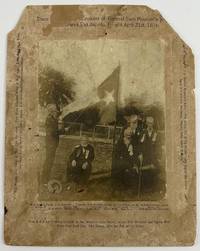
19065502Houston: Nelson Art Studio 1906. About good. Albumen photograph 9.25 x 7.25 inches on a printed studio mount measuring 14 x 11 inches. Substantial rubbing and soiling to printed mount with some loss of printed text top two corners chipped right corner chip costing a few words of text. Extremities of photograph worn and a bit chipped with some soiling to the image area. Overall a battered but charming survivor. A stunning original photograph of the final five survivors of the crescendo of the Texas Revolution the Battle of San Jacinto on a detailed printed mount which provides important information on the subjects. These five Texian veterans are all identified in the printed caption at the bottom. From left to right they are: William Physick Zuber of Austin John Washington Darling of Taylor Stephen Franklin Sparks of Rockport Levi T. Lawlor or Lawler of Florence and Alfonso or Alphonso Steele of Mexia. Each man's age is listed as well. The latter man Alfonso Steele was the last surviving participant in the battle when he died in 1911. Zuber stretches the Texas flag out from the flag staff while the other four men sit or stand at right facing the camera. One of the veterans sits on the cannon used by Colonel James Fannin at Goliad. The photograph was taken at the final annual meeting of the Texas Veterans Association on April 21 1906 the seventieth anniversary of the battle.<br /> <br /> According to the online Portal to Texas History: "The Texas Veterans Association an organization of those who had served prior to during and immediately after the Texas Revolution held its first convention in Houston on May 13-15 1873 with about seventy-five veterans present. After 1876 the annual meetings held in some seventeen different Texas cities always took place in the week including April 21 San Jacinto Day. The association dissolved in Austin on April 19 1907 during its thirty-fifth annual convention. With its dissolution its work was taken over by the Daughters of the Republic of Texas."<br /> <br /> The present card mount containing the photograph is printed with important information on all four sides though some of the information at the top has been chipped away. We would prefer to know the handful of missing words but we cannot find another example of this photograph on the same mount for comparison. Still the heading of the photograph identifies the subjects as survivors of General Sam Houston's Army from the Battle of San Jacinto fought April 21 1836. The caption in the left margin states that "This Picture Was Taken at Their Last Reunion. They Have Resolved Never to Meet Again Being Too Old to Travel. This Picture Can Be Had for One Dollar. Address V.C Terry Houston Texas General Delivery." A few words in the right margin are obscured but can be easily inferred: "These are the Remnant of General Houston's Army. Five Living Out of Six Hundred and Eighty-Six Who Captured Santa Ana and His Murderers Twenty Miles Below Houston." The last portion of text below the identifying captions at bottom addresses the other Texas war relic in the photograph: "This is Colonel Fannin's Cannon at the Massacre near Goliad where Two Hundred and Eighty Men Were Shot Next Day Two Weeks After the Fall of the Alamo."<br /> <br /> The present photograph is decidedly rare but not completely unknown. The only other version of the image we can locate measures roughly the same size but includes a sixth Texas veteran named Asa Collinsworth Hill who holds the flag staff but was not part of Houston's forces during the Revolution and is affixed to a different printed mount with identifying captions for the veterans but with a simple title reading "Veterans of the Mexican War -- 1836" above two lines of poetry. This other version contains a photo credit and copyright notice from C.A. Major of Goliad who apparently took the original photograph at the reunion.<br /> <br /> The present example pictures only the five surviving veterans of San Jacinto is affixed to a much more verbose printed mount with a blindstamp in the center of the bottom margin credited to Nelson Art Studio in Houston. Curiously Asa Hill may have been removed from the middle of this version of the photograph through photographic development methods. In any case these are the only two versions of this photograph we can find. We locate examples of the six-man version on the simpler mount at the Bee County Historical Commission in Beeville with an image hosted by the University of North Texas's Portal to Texas History the Texas State Library and the Daughters of the Republic of Texas Library which may own more than one copy. We have been unable to locate any other examples of the present photograph on the same printed mount as seen here. This somehow appropriately-wounded photographic relic featuring the heroes of the Texas Revolution should positively sing to collectors of Texas history. Nelson Art Studio unknown
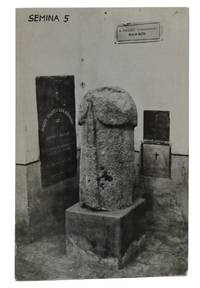
1959140945520Los Angeles: Wallace Berman 1959. Folded pictorial covers with interior printed manila pocket housing 18 loose poems and images. 18.5x12 cm 7 1/2" x 5". One of 350 copies. Contents complete. Near Fine light wear and soiling to wrappers; some pieces with toning or offsetting a few with creases at corner tips<br /> <br /> <br /> <p>The fifth installment of Wallace Berman's legendary artist's magazine. Contributors include Berman John Wieners David Meltzer Ruth Weiss Sor Juana Ines De La Cruz Christopher Maclaine Anne McKeever Antonin Artaud Larry Jordan Kirby Doyle Philip Lamantia John Chance Bob Kaufman Michael McClure John Reed Wm. Margolia and John Hoffman. Semina was published for nine issues between 1955 to 1964. All are now rare. Wallace Berman unknown
1936147033Burbank CA: Warner Brothers 1936. Collection of nine vintage oversize photographs from the 1936 film. Each with a mimeo snipe on the verso. <br /> <br /> Based on the 1930 Pulitzer Prize winning play by Marc Connelly itself based on "Ol' Man Adam an' His Chillun" a 1928 collection of pseudo African American folk tales by Roark Bradford. One of only a handful of films to feature an all-Black cast made by a major Hollywood studio during the Golden Age becoming the highest grossing such film and remaining so until surpassed by "Carmen Jones" in 1954. <br /> <br /> 14 x 11 inches. Very Good with light edgewear and light vertical creasing down the center. Warner Brothers unknown
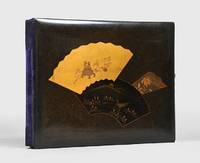
1901124137Kyoto Yokohama & Tokyo: 1901. A fine Japanese tourist album in original lacquer binding A magnificent Japanese export album with large hand-coloured albumen prints of Meiji-era Japan offering a vivid representation of people with arresting portraits accompanied by landscapes sites and everyday life; housed in a beautifully decorated binding and housed in an equally impressive custom box. Of particular interest are the images devoted to "types" life and people including a street peddler hauling his cart of goods by Felice Beato a beach scene on Enoshima Island showing fishermen as well as a splendid image of a shoemaker by Shusaburo Usui. Also featured are city scenes showing Main Street in Yokohama by Izawa Shuji and the royal gardens in Tokyo with the 500-year-old wisteria in bloom. Photography arrived in Japan shortly before the 1867 Meiji Restoration which marked the beginnings of a period of dramatic change with westerners and Japanese setting up studios. Although the photographs were aimed at the tourist market they revealed the dress style and nature of the country. The present albumen prints are mainly from the studios of five different photographers: Tamamura K zabur 1856- was a noted Japanese photographer who originally opened his studio in Asakusa before moving to Yokohama where he began commissioned photography of the tea industry. Kozaburo was probably the most successful of Japanese photographers in marketing his work to foreign residents and visitors. Another photographer is Usui Shusaburo fl. 1877-1894 who had a Yokohama-based studio which operated until the mid-1890s. Izawa Shuji was an amateur photographer active in Tokyo during the 1890s who also edited the photographic periodical Shashin-Sowa. Ueno Hikoma 1838-1904 and Felice Beato 1832-1909 were two of the most successful and well-known purveyors of images based in Nagasaki and Yokohama respectively. The album has an ownership inscription in Spanish on the front pastedown of Ramon Concepcion Lozano 1880-1963. Lozano was a Puerto Rican who served as mess attendant in the US Navy. He purchased the album in Tokyo in 1901 and shortly thereafter concluded his career with the USS Uncas a fleet tug in the Caribbean. A typed note on the front free endpaper notes that Lozano had the present wooden display box made in June 1956. The note also written in Spanish lists the bottom as marine plywood; the box sides as mahogany; lid panels as cypress; inlaid panels on the lid as English pine black cypress oak red mahogany black walnut white pine cherry and birds-eye maple. This is a particularly attractive presentation for this highly evocative album. Landscape folio 305 x 393 mm. With 48 hand-coloured albumen prints landscape or portrait 200 x 250mm; 250 x 200mm. 26 featuring human subjects and large colour print of Hirosaki by Kronfeld all mounted recto and verso on thick cream-coloured boards with tissue guards many with captions or glass plate negative numbers in lower margin of image each with small printed number mounted at lower margin. Contemporary gold-flecked black lacquer boards velveteen spine inlay designs of fans on front cover and floral scene on lower cover gilt dentelles gold-flecked endpapers each leaf with alternating blue and red silk tabs attached to the fore-edge all edges gilt. Housed in wooden display box with eight inlaid panels. Minor rubbing and wear to spine small cracks of lacquer edges of boards with neat retouching of colour corners and inner hinges expertly repaired some occasional foxing slight wear or toning of mounts an excellent example with the photographs retaining strong contrast. Terry Bennett Photography in Japan: 1853-1912 Singapore 2006. hardcover
1967ABC_47179Israel 1967. Oblong album ca. 20 x 26 cm; photographs in slightly varying sizes ca. 18.5 x 24 cm. Grey faux-leather photo album with a small white label on the front board: "42 x Israël 1967 23-24-25 Juli". 44 silver gelatin photographs including 2 duplicates and 1 other loosely inserted. 44 photographs in an album with 30 clear plastic inserts. A rare collection of fascinating original photographs capturing the first Western tourists in Israel and Israeli captured territories approximately a month after the Six-Day War in 1967 by Dutch journalist and photographer Bianca Maria Dony. The 44 photos in the album show the passenger ship SS Pegasus soldiers local people in the streets of Jerusalem and other cities an early war monument checkpoints destroyed military vehicles and other remnants of the war. The album is from the archive of the photographer; some of these photographs were sold to and published in national Dutch and international newspapers and magazines while others remained unpublished.Bianca Dony was part of a group of 150 Christian tourists from various European countries who were now - after the Israeli capture of these areas - able to visit the holy places in the old city of Jerusalem Bethlehem and other places that had previously been inaccessible. The tourists in the present photographs were the first of many and Dony took this opportunity to not only document the trip itself but also the general aftermath of the war.With an additional leaf in the inside front pocket of the album containing notes of how many photographs were sold to different newspapers and magazines including 10 to the "Haagsche Courant" written in blue and red ink and in pencil. Added to the first photograph in the album is a newspaper clipping from the "Jerusalem Post" with the headline "Haifa direct to old city for first time" about the first tourists visiting Israel after the Six-Day War. Some of the clear plastic inserts have small round white stickers on them with different abbreviations connecting the photographs to the newspapers and magazines that possibly printed them for example "HC" for Haagsche Courant etc. 3 photographs are loosely inserted and 2 of these are duplicates of other photo's in the album the 2 duplicates contain a blue stamp "foto bianca dony 147 Malakkastraat Den Haag - Tel. 5582540 Giro 303814" and a manuscript caption in red ink on the back. Most other photographs are simply numbered in pencil on the back. This rare collection of 44 historically significant photographs is in very good condition.l Cf. Rebecca L. Stein "Souvenirs of conquest: Israeli occupations as tourist events" International Journal of Middle East Studies vol. 40 no. 4 2008 pp. 647-669. hardcover
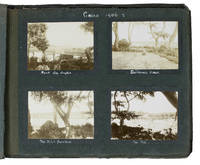
1906ABC_456561906. With: 2 LEHNERT & LANDROCK. Souvenir of Cairo. 12 real artistic photos. Serie A.Egypt late 1920s. Envelope containing 12 silver gelatin prints 12 x 9 cm.3 PHOTOGRAPHY - SINGAPORE. Photograph of a woman and a baby sitting in a rickshaw with a child in front and the rickshaw puller.Singapore late 1920s. Silver gelatin print 7.5 x 12.5 cm. A four-volume photo album compiled by an unknown British woman who also seems to have taken most of the photographs illustrating travels through Egypt Italy Wales and the Isle of Wight. Although the specific background to the album is unknown a photograph of a woman holding a camera is captioned " snapshotted" suggesting that she was the compiler of the album and probably took most of the photographs herself.The first volume starts in 1906 with several photographs showing the interior and exterior of a "summer house" near the "Pont des Anglais" now called the Evacuation bridge a Cairo neighbourhood containing many riverside villas. The final part of the second volume is devoted to the Tanta fair: Egypt's largest fair which normally attracted half a million visitors. Afterwards the party visited the village of Toukh north of Cairo.The third volume opens in May 1907 with a railway visit to the village of "El-Rico" near Hosh Essa also in the Nile delta but nearer to Alexandria. Photographs depict the travelling party as well as local agriculture another wedding and a visit to the weekly market at Abou El Matamer. The final part of the album shows a visit to the Isle of Wight in August 1908.With two photographs in volume IV Cairo on the Nile torn out. Bindings slightly worn spines damaged and volume III without a spine. A few photographs somewhat worn at the edges and with a few spots but otherwise in very good condition. An extensive and remarkable photo album especially for Egypt 1906-1908.l For the excavation at Deir-el-Bahari: Naville The XIth dynasty temple at Deir el-Bahari. Part II. unknown
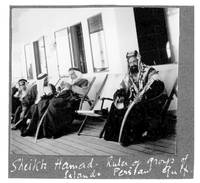
1920G8JG8TV3X9TJGulf region 1920. Black and white photograph gelatin silver print 8 x 7 cm mounted on brown cardboard 9 x 8.5 cm. Captioned in white ink. HH Sheikh Hamad ibn Isa Al Khalifa KCIE CSI 1872-1942 was the King Hakim of Bahrain from 1923 until his death. Throughout the 1920s and 1930s his palace in Al-Sakhir was a centre where both Gulf Sheikhs and British nobility and political figureheads were regularly invited to dine and discuss foreign policy of the region. The photograph shows the monarch in a deck chair on a ship in the company of noble retainers. The caption reads "Sheikh Hamad. Ruler of group of Islands Persian Gulf".A well-preserved glossy print in good contrast. unknown
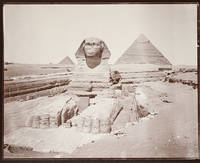
1992100744Chicago: The Oriental Institute of The University of Chicago 1992. No. 4 one of 200 copies. 3 vols. Folio. 30 photographic prints from original glass plate negatives each print mounted 16 x 20 inches. viii pp. booklet with explanatory text and list of plates for each volume text by Peter F. Dorman John Coleman Darnell and Susan Lezon. Housed in three cloth clamshell boxes by Claudia Cohen. Small dampstain to volumes II & III box with some staining in vol. III to mounts and booklet confined to margin some fading to clamshell boxes prints fine with extraordinary detail and tonal gradation. A portfolio of limited edition photographic prints from the Epigraphic Survey's archive of over eight hundred large-format glass plate negatives taken in Egypt between 1880 and 1930 for the tourist trade by photographers such as Antonio Beato and the Zangaki brothers. Printed at Chicago House the field headquarters of the Survey in Luxor. "Unlike other methods of reproduction in which an artificial light source is used on a mass-production basis the glass negatives have been exposed individually to direct sunlight on printing-out-paper resulting in minuscule differences among the prints. Each print was then toned in a gold chloride solution. Great care has been taken to produce prints that would have resembled closely those that one might have purchased while journeying through Egypt in the nineteenth century" p. vi. Images include ruins of ancient monuments details of carved and painted temple walls fleets of feluccas palm groves and formal salon poses and ethnographic portraits of Egyptians and Nubians. The three volumes retailed at $2000 each when published in 1992. The Oriental Institute of The University of Chicago hardcover
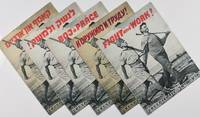
194247882Jerusalem: Printed by Azriel Press for Keren Ha-Yesod 1942. First edition. Softcover. g to near fine. Large quarto. 11 3/4 x 9". Unpaginated. 14 pages each. B/w photo-illustrated wrappers with photomontage and red and black lettering on the covers. These scarce promotional pieces of ephemera published by the Karen Ha-Yesod fundraising organization were issued to coincide with the photographic exhibition "To Arms and to Work the Face of the People and the Land". Here we have 5 copies of the same publication one in Hebrew one in English one in Czech one in Yiddish and one in Russian. They promotes both the military training of Jewish soldiers and the agricultural/settlement efforts in building toward a Jewish state in Mandatory Palestine.<br /> <br /> Profusely illustrated throughout with 82 b/w photographic reproductions showing these activities often with visual parallels drawn between the military and land cultivation via the layout and framing of the images especially the front cover. Images throughout also include depictions of other activities including education recreation construction industry manufacturing and Jewish religious activities. The back cover shows a regiment of marching Jewish soldiers lead by a British commanding officer with a text quote from Chaim Weizmann. The publication was edited by Israeli historian and then head of Keren ha-Yesod Nathan Michael Gelber 1891-1966 and features photographs by leading Israeli photographer Zoltan Zvi Kluger 1896-1977.<br /> <br /> Text in Hebrew English Czech Russian and Yiddish.<br /> <br /> The Russian and Yiddish language editions are moderately age-toned throughout with tiny chipping at the upper margin of both covers of the Yiddish copy. Russian edition with light pen markings on the front cover. English edition with minor rubbing to extremities and a few light stains to the covers. Hebrew edition with light rubbing and rippling along edges. Front cover with a tear at the bottom resulting in slight loss of text. Rippling continued throughout the pages along the top section. Copies in good to near fine condition overall. All copies protected in modern mylar. Quite scarce. Yiddish title: ק×מף ×ון ×רבייט<br /> Hebrew title: ×œ× ×©×§ ולמשק! ×רץ ישר×ל ×‘×‘× ×™× ×”<br /> Exhibition: ×œ× ×©×§ ולמשק ×¤× ×™ ×¢× ×•×רץ - תערוכה ××ž× ×•×ª×™×ª של קרן היסוד<br /> Alternate Translate: To Arms and to Work!<br /> <br /> Keren ha-Yesod was established at the World Zionist Conference held in London in 1920 to provide the Zionist movement with resources needed for the Jewish people to return to the Land of Israel. It came in response to the Balfour Declaration of 1917 which confirmed support from the British government for the establishment in Palestine of a "national home" for the Jewish people. Keren ha-Yesod immediately established fundraising organizations around the world. Early leaders included Chaim Weizmann Albert Einstein and Ze'ev Jabotinsky. During World War II and in its aftermath Keren ha-Yesod established emergency campaigns sometimes in partnership with other organizations. Funds were also used to help the Allied war effort and after the liberation of the concentration camps to smuggle massive numbers of survivors into the Land of Israel in defiance of British immigration restrictions. Many of Keren ha-Yesod's leaders perished in the Holocaust; the organization had to recover quickly in face of the staggering needs during those fateful years. <br /> <br /> There are also known Greek Hungarian Polish and French language versions of this publication. The various versions all are extremely similar in terms of content with only the slightest variation in terms of text placement. Printed by Azriel Press for Keren Ha-Yesod unknown
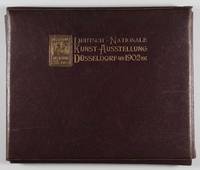
190252612Düsseldorf: Verlag der Dt. Nat. Kunstausstellung 1902. First edition. Loose leaf. Very good to fine condition. Oblong Quarto. 35 original silver gelatin prints. Original brown leather portfolio with gilt emblem and gilt lettering on gilt-framed cover. Red silk inside front cover and portfolio flaps. The bottom flap gilt-stamped Otto Renard Paul Adam Buchbinderei Düsseldorf.<br /> <br /> Album of thirty-five original photographs 9 3/4 x 11 1/4" by court photographer Otto Renard that document National Art exhibtion of 1902 by room. The photographs include a exterior panorama view of the newly built Art Palace its courtyard an interior view of the dome the large gallery the large hall and various galleries with work of artist groups and art organizations e.g. Kunstgenossenschaft Berlin Secession Berlin Dresden Düsseldorf 6 Munich Luitpold Group Munich Secession Munich Art Association Rhineland and Westfalia Art Alliance "Hagen" from Vienna 2 Art Collective Vienna Secession Vienna recreation room Secession Vienna the Van der Velde room the art historian gallery 5 old Japanese art. The exhibition includes paintings furniture sculpture and statuettes and a variety of interiors. The Art Palace was built for the 1902 Industry and Craft Exhibition for the Rhineland Westfalia and neighboring districts. <br /> <br /> The building of the Kunstpalast was in large part due to the efforts of Fritz Roeber director of the Düsseldorf Art Academy the painter Georg Oeder and the art historian Paul Clement in the late 1800s who were able to convince Heinrich Lueg director of the association for commerce that the time for another great art and commerce exhibition had come. The goal was the establishment of a new permanent venture for art exhibitions that was to become the center of the arts in the Rhinelands and Westfalia. Lueg took the lead and started the planing for the Kunstpalast already in 1898. The goal was to exhibit the development of the past 20 years in a formidable gallery and the 1900 Paris World exhibition was the model for the undertaking. Despite the fact that some of the planned buildings were not ready by the opening of the two exhibitions it opened on May 1st and closed on October 20th 1902 the exhibitions became a huge success. Two OCLC entries.<br /> <br /> Text in German. Portfolio with light wear one inch closed tear at top right of portfolio cover. Some light worm damage in silk of inside front cover and right flap. Few plates with minor damage at edges and lightly age-toned in margins. Images fine. Otto Renard 1855-1943 was known for his documentation of art exhibitions among them the 1902 art and commerce exhibition in 1902. The distinction "Hof Fotograf Court photographer" he earned while working at the court of Zar Nikolaus II. Renard returned to Germany after the turn of the century to open photo-studios in Düsseldorf and Aachen. He became wealthy due to his invention of a photo-paper moved to Berlin and then to Darmstadt. Verlag der Dt. Nat. Kunstausstellung unknown
1958D3695San Francisco and Honolulu 1958-1962. Fine. A Collection of 7 Typed Signed Letters from Ansel Adams to Nick Dean presented in three custom boxes as follows: Group of 5 Typed Letters Signed by Ansel Adams in custom box. Hawaii and California 1958. Five typed letters all of them signed by Ansel Adams with his handwritten corrections and asides. And too charming not to mention: Where letters have punch-holes for a 3-ring binder Adams doodles faces around the holes. Most are one page with text on both sides two are one page with text on the recto only. Dated 4 February 1958 to 7 July 1958 some are typed on Memos from Honolulu others on Adams' personal stationery imprinted with his San Francisco address. Adams covers the gamut -- from the personal to the professional from the highly technical to the more philosophical. He remarks on his readings Dylan Thomas and also writes "I am terribly worried about photography and my/our place in it. The MMA business under Steichen is a very depressing and destructive situation" but he also talks excitedly about film different types of cameras and darkroom chemistry and techniques. Includes an interesting list compiled by Adams for Dean of his nominations for an upcoming photography exhibition -- it offers 28 photographers 18 of which have little checkmarks in red ink next to them. Marginalia reveals the checkmarks to mean "AA choice -- Shhh!" Adams' passion for photography as well as the landscape are revealed again and again throughout. One aside: "All Washington is trembling with abject fear! I sent off a telegram in the form of a blast to the Secretaries of the Interior and Commerce and to the Director of the NPS on the Tenaya Lake desecration. The battle is joined! I could not take any more of it. Tell Rosy to get the locals ready for a big fight!" / Typed Letter Signed by Ansel Adams. San Francisco 1961. Three pages typed on the rectos only the first on Adams' personal stationery imprinted with his name San Francisco address and phone number and the last two on plain white paper. Signed by Adams with a few handwritten asides and corrections. A dense wonderful letter addressed "Dear Nick and Zabette." Adams talks about the construction of his house in Carmel "road entrance about 1500 feet down the road from Edward Weston's place." and his rough year "I have been low in imagination and only medium in health" but the tone is overwhelmingly introspective philosophical serious and kind. Adams discusses the state of Modern Photography and Art at length what he feels his early influences and "breaks" were and how to make a living at creative photography while staying enthusiastic and true to oneself. Compelling and touching. In fine condition housed in a lavish custom box cloth backed in green morocco with gilt-stamped lettering on spine. / Typed letter signed by Ansel Adams. California 1962. Two full pages typed letter signed "Ansel" with his handwritten corrections and asides dated March 17 1962. On Adams' personal stationery imprinted with his name address 24th Avenue San Francisco and phone number. Addressed "Dear Nick" Adams congratulates him on an upcoming exhibit discusses a Polaroid book cameras Type 49 Type 55 P/N the completion of his house in Carmel health and injuries or lack thereof a De Cordova exhibit and Nick's critique of it and then goes on to examine the state of photography "commercial photography is getting worse." and other photographers including Minor "Jerry" and Don Worth. Perhaps best of all Adams' thoughts on Art are interspersed throughout including but certainly not limited to "I am beginning to think that the trouble with Art is when it becomes Art!" A wonderful letter revealing both the personal and professional sides of a renowned American photographer. In fine condition housed in a blue cloth chemise with gilt-stamped leather spine label. / Overall a spectacular collection -- all letters are in fine condition housed in 3 lavish custom boxes one for each year 1958 1961 1962. For further details please send us an inquiry. <br/><br/> hardcover