8 292 résultats
1902000110<p><strong>29 × 20 cm. Comprising 158 text plates including 95 photographs produced by the committee of which 42 photographs appear on separate plates measuring approximately 23 × 15 cm.</strong></p><p>The work documents the Photography Committee's journey from Istanbul to MaÊ¿Än in Transjordan. The accompanying text was compiled from articles originally published without illustrations in various issues of the newspaper <em>Vakit</em> "Time" in 1902.</p><p>This is a unique work prepared for publication with photographs taken by a private committee that included prominent figures such as the German general Karl Auler Pasha who served as an adviser on Hejaz affairs until the fall of Medina in 1918.</p> hardcover
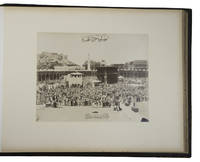
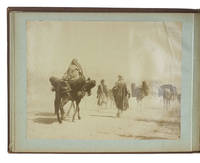
1890ABC_46444Tunis: Photographie Garrigues 1890. Half black leather red buckram sides blind-stamped boards and gold-stamped spine title in gold lettering on front board marbled endpapers. Oblong album 32 x 41 cm. Album with 50 photographic prints of various sizes 13.5 x 9.5 to 29 x 21.5 cm each pasted on thick paperboard. Album with 50 late-nineteenth-century photographic probably albumen prints of scenes in Algeria and Tunisia made by an unknown photographer. Most of the photographs have a caption naming the place photographed but only 5 indicate place of production or publication of the photos. These were all produced in Tunis at least some by the French photographer J. Garrigues printed and published at his studio. Notable photographs in this album are the first showing a veiled woman a barber at work in the streets riders on their horses camels with riders and luggage the Notre Dame d'Afrique in Algiers. Other subjects include city views fairly candid photos of people in the streets landscapes and the exterior and interior of a mosque.The most remarkable print in this album actually does not fit in with the other images of places in North Africa. It is a photograph of pilgrims before the Great Mosque and Kaaba in Mecca modern day Saudi Arabia with a caption in Arabic. This photograph was taken by the first Arab photographer Al-Sayyid Abd al-Gaffar ca. 1887 making it one of the first photographs of Mecca. The present album contains this picture in its original form including the Arabic caption. An edited version of the photograph in which remnants of the Arabic caption are visible can be found in Hurgronje's Bilder aus Mekka.With a small Antwerp booksellers ticket on the front paste-down". The binding shows some signs of wear slight foxing/browning of the outer edges of the paper boards not affecting the photographic prints some prints have slightly faded edges which does not interfere with the actual image. This album with photographic prints of Algeria Tunisia and remarkably 1 of the Great Mosque and Kaaba in Mecca is overall in good condition. Photographie Garrigues, hardcover
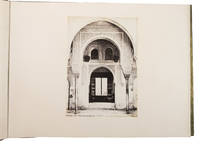
1870ABC_47963Madrid 1870. Contemporary gold- and blind-stamped green leather with the intials "M.L.B." blind-stamped on the front board gold-tooled turn-ins green watered silk endpapers gilt edges. Oblong folio 62 x 46.5 cm. With 72 large size albumen photographic prints with architectural views including numerous views of Spanish and Western Islamic architectural treasures ca. 33.5 x 24.5 cm 3 large composite photographic panoramas the Alhambra and Granada Cordoba and San Sebastian and 5 photographs of people 3 handcoloured photographs of Spanish costumes and 2 portraits of a woman. 58 of the 72 photographs contain the name of photographer title and number of the image in the negative. An exceptional album with fine views of Sevilla Granada Cordoba San Sebastian and many more. The photographer Jean Laurent was born in France but opened a photo studio in Madrid in 1856. In 1858 the Spanish government commissioned him to photograph the construction of the railroad line from Madrid to Alicante. The results were published and exhibited in many places which brought him considerable success. From 1861-68 Laurent held the title of "Fotógrafo de S. M. la Reina" and produced photos of members of the Spanish royal family. His photo studio in Madrid became one of the best-known from his time which allowed him to open gallery in Paris where he exhibited and sold premium-quality prints from his work in Spain. Although he was interested in industrialisation and intended to convey the image of a modern and economically flourishing country his photographs of the more picturesque aspects of Spain became more popular. The present album contains 34 views of Western Islamic architectural structures and a large 4-part folding panorama of the Alhambra and Granada. Furthermore it contains two examples of photographs on leptographic paper a collodio-chloride printing paper which was sold ready to use. Its manufacture was perfected by Laurent in collaboration with Martínez-Sánchez in 1866.With some slight signs of wear around the spine and the corners of the boards the panorama views are mounted on grey cloth which is somewhat foxed not affecting the actual photograph the album leaves are very slightly browned. Overall in very good condition.l Hannavy Encyclopedia of Nineteenth-Century Photography II 829/830. hardcover
000535Cairo Photographic Image. Very Good. No Binding. The photographs are a part of Naum Shoucair's collection has been published except tow un known photographs in this collection in his book Tarikh Sina al Qadim wa al Hadith wa Jografiyyatuha The history of Sinai and Arabs. Al Ma'arif press Cairo 1916 inventory no. 000456. 11 photographs are mounted on cards not included in the measurements mentioned of which four are signed. 1 Sir Lee Stack Pasha royal secretary to the Sudanese government and former director of the intelligence agent and one other un known and un published both signed in 1913. 21.5 x 14 cm. 2 Colone G. F. Clayton director of the intelligence agency and rep. of the Sudanese government signed. Photogrpah by Hughes & Mullins Ryde. 15 x 10.5 cm. 3 Captain A W Weymouth commander of Minerva signed. 15 x 10 cm. Photo by Symonds & Co. Portsmouth 4 Rudolph Slatin Pasha signed in 24-6-1895. Photo by Zangaki Cairo. 22.5 x 16.5 cm. 5 Lord Kitchener. 27 x 17 cm. 6 Beamish bey former governor of the Sinai. Photo. Lekegian Cairo. 14 x 9.5 cm. 7 Captain Phipps Hornby vommander of Diana. Photo. Russell & Sons southsea. 14.5 x 10 cm. 8 A. C. Parker governor of Sinai. Photo. H. Walter. Barnett India- London. 13 x 9 cm. 9 Liutenant W. E. J. Bramly director inspector of Sinai. Photo Lekegian Cairo. 10 x 10 cm. 10 Lord Edward Cecil chancelor of the exchequer Egypt and former director of the intelligence/ information agency. Un mounted. 20 x 14 cm. 11 Un known and un published. 22 x 16 cm. 12 Un known and un published. Photo. P. Dittrich successor to J. Heyman Cairo. 18.5 x 13 cm. Naum Shoucair 1863-1919 intelligence officer and historian was educated at Beirut university and in 1886 came to Egypt where he joined the Intelligence Department of the Egyptian Army. In 1900 he was transferred to the Sudan Government and was appointed Director of the Historical Section. He served under Lord Kitchener and Sir Reginald Wingate and assisted in the arrangements for the escape of Slatin Pasha from Omdurman in 1895 for which he was decorated by the Emperor Francis Joseph. He became a well known expert on Sinai and due to his intimate knowledge he was sent to Sinai in 1905 on several important missions accompanying Captain Phipps-Hornby of HMS Diana on a mission to Akaba in 1906 and later he served as a member of the Sinai Boundary Commission. Shoucair wrote his History of the Sudan in 1903 History of Sinai in 1916 and at the time of his death was completing a history of Arabia. 0.
1900ABC_495491900. Contemporary gold- and blind-tooled burgundy buckram with the title and volume number lettered in gold on the front and spine a double fillet border on both boards blind-tooled turn-ins gold and burgundy floral end papers gilt edges. Folio. With 50 photographic reproductions in black and white mounted onto thick passe-partout leaves separated by thinner leaves onto which typed descriptions are mounted. 2 volumes. Remarkable photographic album beautifully reproducing the paintings from the Shah Jahan Album also known as the Kevorkian Album. The album compiled by the Mughal emperor Jahangir 1569-1627 and his son Shah Jahan 1592-1666 contains miniatures from the best painters of the Mughal era such as Govardhan Mansur Daulat Payag and Chitarman with calligraphic text by famous calligraphers such as Mir' Ali Haravi. The 50 exquisite photographs accurately reproduce the details of the original miniatures highlighting the iconographic and stylistic richness of Mughal art.Mughal albums also known as muraqqa usually included existing works in the patrons collection as well as works created specifically for the album such as paintings and drawings folios from preparatory pattern books and calligraphy specimens. They were not bought ready-made but compiled over a longer period of time by its owners. Emperor Jahangir commissioned the first folios for the Shah Jahan Album around 1620 and his son continued after his death. Shah Jahan's additions are stylistically different from Jahangir's with more portraits and illumination and the inclusion of calligraphy pages. After his death the muraqqa now with 39 miniatures passed onto his son Aurangzeb 1618-1707 who did not commission any more folios. The muraqqa left the royal library in the early 19th century and was likely acquired by an art dealer from Delhi who added 11 miniatures around 1820. These were made in the 19th century but imitated the 17th-century style of the others. In the 20th century the muraqqa was bought by the New York art dealer Hagop Kevorkian who sold 9 folios to the Freer Gallery of Art in Washington and the remaining 41 to the Metropolitan Museum of Art in New York where they still reside.The spectacular Shah Jahan Album is a collection of 50 single-page paintings which include intimate nature studies and portraits of the royal family and various dignitaries framed by a beautiful floral border. Each painting is faced by a single page of illuminated calligraphy made by renowned calligraphers. The photographs in the present work each mounted in a passepartout carefully reproduce the single-page paintings and three of the four calligraphic pages that open the collection. They are accompanied by a foreword and a short description of each painting which appear to be taken from an auction catalogue and were likely added later. A valuable testament to the interest in Mughal art in the 20th century this collection constitutes a seemingly unique iconographic resource as we have not been able to find another copy. There is no mention of a publisher or photographer but the quality of the prints suggests careful production intended for and commissioned by a scholar or collector specialising in Indian art. The present copy was part of the collection of Dr Ebadollah Bahari 1929-2018 noted historian of Persian art author of Bihzad master of Persian painting 1996 and benefactor of the Bahari Curatorship of Persian Collections at the Bodleian Libraries University of Oxford.The boards have been rubbed with minor loss of material on the back board of both volumes the joints are slightly weakened but the structural integrity of the bindings is still intact. Some of the mounted descriptions are lightly foxed. Otherwise in good condition. hardcover
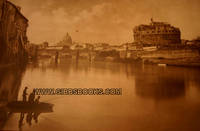
1870053004-KItaly 1870. Book. Illus. by Giacomo Brogi. Very Fine. No Binding. Albumen Mammoth Print c. 1870's By Giacomo Brogi 1822- 1881 Italian. Very rare photographic image by this artist in the original restored frame . This is not one of the standard tourist pictures that you find but a true work of art by this master photographer. Both Brogi and the Alinari Brothers worked as photographers and took the standard architecture ruins photos in Italy most being small 8"x10" Albumen prints but they did art photography also and to find one is a rare treat . This piece shows three men in a row boat on the Tiber River with Castel Saint`Angelo Mausoleum of Adrian on the right the Saint`Angelo bridge to the castle in the middle in the far distance you can see St. Peter's Dome . Looking around the photo the men in the boat you can see their reflection in the water. With sheep on the right shore and the clouds rolling by above it all this is a very importain photographic image by this artist . Please call for more information on this and other works of art. Size: 32 x 23. unknown
1910J1NH6Y7HYA75France/Belgium 1910. Contemporary black cloth with the title "H. Rabier - peines - supplices" on the spine. 4to 23.5 x 20 cm. Album containing 24 small contact prints 2.5 x 25 cm and 153 albumen or gelatin silver prints 65 x 8 cm both mostly numbered and captioned in French on the photograph 16 photographic reproductions of paintings or drawings 17.5 x 13 cm 2 albumen prints of nudes and 17 silver gelatin prints of sadomasochistic scenes 10.5 x 15 cm. Captivating erotic photo album containing both original photographs and reproductions on the themes of "punishment and penance" which in most cases means flagellation. This specific album was probably compiled by a certain Hector Rabier whose name is inscribed on the spine and was possibly a young Belgian. Among the reproductions of prints in this album can be found various images with an erotic nature showing the flagellation of women by men and women and non-erotic images of the torture and punishment of female heretics and witches including reproductions of artworks. A few series do not involve women and show various types of corporal punishment in the French colonies of Algeria and Indochina and flogging in the British army. A series of 27 images though not explicitly showing scenes of corporal punishment shows life in the Parisian women's prison of Saint Lazare which also doubled as a hospital for the city's prostitutes. 12 photographs show wood engravings of the cruel murder and torture of nude women by Cossacks most including the pins used to hold the engravings in place. Of the original photographs two "academic nudes" show a woman from behind kneeling on top of a chair or hanging face down over a chair or cabinet. The other 17 photographs show a semi-nude woman being bound or tortured by "oriental" men or monks. A montage of small images suggests that the woman-and-monk photographs probably suggesting a witch or heretic being tortured by the inquisition formed part of a larger collection on this subject. Although these photographs were obviously intended as pornographic images they are hardly more explicit than contemporary historical paintings at the Salon or the images in popular histories.With the spine somewhat worn and discoloured the pages of the album very lightly foxed some of the photographs partly detached from the page and some of the larger photographs slightly worn and discoloured at the edges; overall both album and photographs are in good condition. hardcover
1970153176Los Angeles: Warner Brothers Records 1970. Original photographic artwork assemblage for Van Morrison's classic 1970 album with original double exposure photograph by David Gahr designed by Janet Planet and used by Warner Brothers Records as shooting artwork for the album cover.<br /> <br /> Production annotations in manuscript marker and pencil at bottom of board below the image. Annotations on verso noting "Van Morrison 'Cover' 1884" in manuscript marker with the "1884" being the album catalogue number and "the band street choir" just below in manuscript pencil.<br /> <br /> Gahr was a preeminent photographer of folk blues jazz and rock musicians for over four decades whose subjects include the likes of Bob Dylan John Lennon Miles Davis Bruce Springsteen Janis Joplin Peter Seeger and many many others. His work was regularly featured in the seminal rock magazine "Crawdaddy."<br /> <br /> Building on the critical successes of "Astral Weeks" 1968 and "Moondance" 1970 Morrison's fourth studio LP featured the highest charting single of his career "Domino." Originally titled "Virgo's Fool Street Choir" the LP was renamed prior to release without Morrison's consent by Warner Brothers.<br /> <br /> Photograph mounted on board with a clear acrylic overlay. Original black paper overlay included but not attached.<br /> <br /> Photograph 13 x 19 inches mounted to board as created measuring 15.5 x 24 inches. Near Fine. Warner Brothers Records unknown
1940169491United States: c.1940-60. A visual record of a rarely seen and poorly documented world - an accidental history An unusually extensive group of these evocative "table photographs" striking records of largely African-American audiences in the glamorous sociable and intentionally inclusive world of mid-century nightclubs. Shot by in-house photographers developed on site and sold for a dollar at the end of the evening these quick souvenirs now amount to a rare visual history of a poorly documented milieu. As Gold notes they "turn the camera round": instead of performers we see the audiences - a critical part of what Jason Moran calls the jazz "ecosystem." The collection offers a nationwide survey of venues from the extravagant to the resolutely down-home. At New York's Café Zanzibar with its spectacular floor shows and "Zanzibeauts" the audience was integrated but largely white prompting Langston Hughes's caustic observation about the seating hierarchy - an impression borne out by the image here. Detroit's Gay Bar Lounge another "black and tan" joint catered to a mostly Black clientele and offered a rougher edge: in 1947 the barkeep famously shot two stick-up artists with the.38s kept beneath the cash register. Equally compelling are the histories of Black enterprise that surface. Oakland's Athens Elks Cocktail Lounge home to Lodge 70 of the Improved Benevolent and Protective Order of Elks of the World stood at the centre of West Oakland's vibrant musical scene hosting countless jam sessions and serving as the informal checkpoint for touring African-American musicians. In Los Angeles Dootsie Williams's Dooto Music Center founded by the trumpeter-turned-entrepreneur provided one of the city's foremost Black cultural venues praised by the Los Angeles Sentinel as "the most-needed cultural and recreation center in Southern California." The photographers themselves remain surprisingly elusive though a few can be traced. In Columbus George Pierce ran a record shop and studio in Bronzeville and supplied images to the Ohio Sentinel and other regional papers; in Detroit Earl Fowler's Top Hat Photo developed into a significant presence in the Black Press with Fowler later serving as chief of the Los Angeles bureau of Now! magazine. Beyond these contexts the photographs' enduring appeal lies in the human dramas unfolding across their tabletops: the conviviality style and fleeting alliances captured in a moment of collective ease. A scene from Gamby's in Baltimore is emblematic - six convivial hat-tipping men and two young women smiling through a forest of shot glasses presided over by a portrait of Fats Waller. It is warmly enigmatic yet inviting an offhand welcome extended across time. A more detailed description and full listing is available on request. Together 66 black and white gelatin silver print photographs 62 c.127 x 178 mm; 3 approximately 178 x 254 mm around 50 are in their original plain or printed souvenir folders the balance loose. Loose photos and folders with occasional wear and mild damp-staining some annotations verso of prints and to folders prints occasionally stapled into folders overall the group remains about very good. Ronald Auther "The Oakland Larks" The Shadow Ball Express: African American Baseball Renderings and other Facts of Life online; Clora Bryant et al Central Avenue Sounds; Jazz in Los Angeles 1930s-1950s 1998; Jeff Gold Sittin' In: Jazz Clubs of the 1940s and 1950s 2020; Robert Petersen "Before Motown: L.A.'s Black-owned Music Empire" PBS SoCal online. unknown
187454520Paris: Arthus Bertrand 1874. First edition. Hardcover. Very good. Four volumes folio 36 by 27 cm text volumes 36.2 by 28.6 cm atlas. Complete with a total of 99 plates in various media. Text in French; copious transcriptions of Arabic inscriptions in the second volume. 4 IV 388 pp. in-text illustrations throughout; 6 222 6 pp; 4 VI 326 pp.14 plates numbered I-XIV: 2 double-suite chromolithographic maps 2 double-suite chromolithograpic arrays of geologic sections; 2 steel-engraved arrays of geologic sections; 8 full-page lithographic specimen plates; Atlas: 4 pp; 67 plates documenting the journey of the Duc de Luynes: 3 unnumbered steel-engraved plates - 1 large folding map colored 1 folding itinerary colored 1 double-suite plan of the iron sailing vessel; numbered I-LXIV - 64 hand-pulled b/w photogravures on steel 1 double-suite by Charles Nègre after photos by Jardin and Louis Vignes; 18 plates documenting the journey of Christophe Mauss numbered I-XVIII: 1 double-suite steel-engraved itinerary 3 steel engraved site plans 1 colored 14 tinted lithographs by Eugène Ciceri after photographs by Henri Sauvaire 8 mistakenly attributed to Louis Vignes.<br /> <br /> Later half light brown morocco over marbled boards gilt spine with raised bands; marbled endleaves; original blue printed wrappers preserved along with the backstrips the three text volumes. Text leaves intermittently foxed throughout often in light-moderately toned large blotches. Plates clean and fresh with only occasional touches of soiling or faint foxing almost exclusively confined to the margins; large folding map and folding itinerary in the Atlas with more notable light foxing. A very good set with fine plates.<br /> <br /> First edition of this comprehensive report on one of the most important scientific and archaeological missions of the nineteenth century the 1864 expedition to the Dead Sea undertaken by the visionary art collector archaeologist and scientist Honoré Paul Joseph d'Albert duc de Luynes 1802-1867. Along with an atlas containing 78 reproductions of photographs by Louis Vignes 1831-1896 Jardin fl. 1864 and Henri Joseph Sauvaire 1831-1896 this work documents "the first systematic attempt to survey and photograph the geological features and cities of the Dead Sea basin in present-day Jordan. In addition to mapping the Dead Sea area the expedition made significant contributions to the geological and paleontological knowledge of the region and also to an understanding of the chemical composition of the lake's waters" GRI. Louis Vignes a lieutenent-commander in the French navy and director since 1860 of the port in Beirut was chosen by de Luynes as photographer for the expedition because of his knowledge of the Levant. "Vignes began to photograph immediately upon arrival in Beirut and continued to do so during the ride south throughout Sidon Tyre Nablus and Jerusalem. From March 14 until May 29 the party sailed the entire Dead Sea on a special iron vessel designed by Vignes to be dismantled for easy trasportation" Perez.<br /> <br /> A preliminary account edited by Vignes appeared as Extrait des notes d'un voyage d'exploration à la mer Morte dans le Wady Arabah sur la rive gauche du Jourdain et dans le désert de Palmyre Paris: H. Plon 1865. This work essentially comprised a key to the two maps drawn by Vignes with assistance from Dr. Gustave Combe. The larger of the two maps charted the Jordan Rift Valley from the southern end of the Dead Sea to the Gulf of Akabah; the second map depicts the Dead Sea and its immediate vicinity. "In addition to tracing the expedition's routes place names elevations vegetation land conditions natural features and many other geomorphic and climatic details are recorded on the maps" GRI. In the Atlas volume of the Voyage these two maps have been combined into a single map printed surface: 69.7 by 28.8 cm. In 1866 de Luynes made a second expedition to the region accompanied by the archaeologist Christophe Edouard Mauss and Henri Sauvaire; their account was published the following year in the Bulletin de la Société de Géographie as "De Karak à Chaubak. Extrait d'un Journal de voyage."<br /> <br /> De Luynes' full account of the expedition is found in the first volume of the present report. The two parts of the second volume comprise Louis Vignes' account of the journey from Petra Jordan to Palmyra Syria along with the account of the 1866 journey from Jerusalem to the Crusader castles in Jordan at Kerak and Shoubak Montréal written by Mauss and Sauvaire. The third volume contains the report prepared by the noted geologist Louis Lartet 1840-1899 who would go on to discover the first Cro-Magnon skeletons. It is accompanied by chromolithographic maps and arrays of geological and paleontological elevations along with finely detailed lithographic specimen plates. The entire production was posthumously edited by Melchior marquis de Vogüé 1829-1916.<br /> <br /> A member of the Académie des inscriptions et belles-lettres de Luynes was a philanthropist with enormous inherited wealth and deep interdisciplinary interests many of which are on display in the present work: the study and collection of Greco-Roman antiquities notably from Phoenicia and Palestine and the pursuit of scientific interests in chemistry geology and photography. In 1856 de Luynes initiated a competitionin in conjunction with the Societé Française de Photographie to find the best method of photomechanical reproduction. Two people were short-listed for the prize: the chemist and photographer Alphonse Louis Poitevin for his method of photolithography; and the pioneering photographer Charles Nègre 1820-1880 whose photogravure method "produced beautiful prints but was even more complicated and unwieldy in practice the Poitevin's method" Parr & Badger. Although Poitevin was finally awared the prize in 1867 de Luynes chose Nègre to process the 64 reproductions which appear in the first suite of images in the Atlas. "The Duc's decision was clearly based on aesthetics" as Nègre's photogravure process actually improved upon the albumen prints by Vignes "which tended to be high in contrast and lacking shadow detail" Parr & Badger. These 64 photogravures are arranged according to the expedition itinerary starting at Beirut and concluding with a view of the source of the Hasbany River. These images along with views of Nablus the ruins of Araq el-Emir the fortified hilltop palace Machaerus the rock-cut architecture of Petra the Greco-Roman ruins of Gerasa and views of the tributaries and source of the Jordan River are "among the earliest photomechanical reproductions of photographs from the Holy Land" Nir. Along with John Thomson's Illustrations of China and its People 1874 Voyage d'exploration à la mer Morte 1868-1874 is a "key work" in the early development of the photobook. "Amongst the best early French photographers" Charles Nègre "was a leading figure in the development and employment of photomechanical processes. These early methods were still labour-intenseive and could be termed hand-craft processes but they represent another significant step in the industrialization of the photographic process -- a step towards the halftone block and the photobook as we know it today" Parr & Badger.<br /> <br /> A note on the dating of this work: Title-pages undated; the publisher's avertissement in the first volume dated "Constantinople août 1874." N.B.: Rohricht dates the work 1871-1876; the Bibliotèque national de France dates the Atlas 1871; The Getty Research institute dates the entire production 1875; several libraries date the geological survey volume 1877. References: P. Foliot "Louis Vignes and Henry Sauvaire Photographers of the Expedition of the Duc de Luynes" History of Photography 1990 vol. 14 no. 3 pp. 233-250; Getty Research Institute "Duc de Luynes Archive and Related Photographs by Henri Sauvaire" via website; Hannavy Encyclopedia of Nineteenth-Century Photography I pp. 982-5 Nègre; Y. Nir The Bible and the Image 1985 p. 89; Parr & Badger I pp. 19 33; N. Perez Focus East Early Photography in the Near East 1988 pp. 180 Jardin 229 Vignes; Rohricht 2824.<br /> <br /> Full title and imprint: Voyage d'Exploration a la mer Morte a Petra et sur la rive gauche du Jourdain par M. le Duc de Luynes. Oeuvre posthume publiée par ses petits-fils sous la direction de M. le Comte de Vogüé. Relation du Voyage. Paris: Arthus Bertrand Éditeur Libraire de la Société de Géographie 21 rue Hautefeuille 21 Tome deuxième De Petra a Palmyre par M. Vignes. Voyage de Jérusalem a Karak et a Chaubak par MM. Mauss et Sauvaire; Tome troisième Géologie par M. Louis Lartet; Atlas. Arthus Bertrand hardcover
1928ABC_50475Iran 1928. Oblong album 24.5 x 29.6 cm. Mid-19th-century bright blue faux-leather the front board features a pictorial on-lay within a rectangular frame the illustration depicts a young woman in traditional costume holding a large ceramic vessel. The joints are laced through onto 2 supports. With 19 black and white photographs ca. 23.1 x 17.1 cm on thick dark blue/black paper. 9 ll. Collection of 19 engineering photographs taken in Iran dating from ca. 1928 to 1930 CE. The majority of the images are annotated with the year 1308 AH 1929-1930 CE while only photograph 7 is dated 1307 AH 1928-1929 CE.The album documents large-scale engineering works and urban modernisation in Iran during the early years of the Pahlavi dynasty 1925-1941 under Reza Shah Pahlavi 1878-1944. In this period cities such as Tabriz underwent significant restructuring and infrastructural development as part of broader state-led reforms.The photographs depict surveying activities including measuring instruments mounted on tripods uniformed officials and extensive reconstruction works. Several photographs are identifiable as views of Tabriz including the development of the Gaji Gate Darb-e Gajil in December 1929 Ahrap Ahrab Street and Munjam Street under construction. Other views show street levelling and widening works illustrating the transformation of older urban quarters into broader modern thoroughfares.Further noteworthy subjects include railway works and one photograph taken in Jafarabad shows several men wearing a combination of traditional clothing including papakha-style headgear and Western clothing reflecting the broader cultural transition of the period. The present work therefore stands as an informative visual record of early 20th-century Iranian engineering urban renewal and state modernisation.With some glue staining to the dark blue paper on several pages. A few photographs show minor marginal wear not affecting the images themselves. The final photograph is not mounted on the album paper but on a separate piece of card and is loosely inserted. Otherwise in good condition.l Cf. Tofigh Kouzehkanani & Zelef "Towards extroverted urbanism: Haussmannization and building a new urban identity in Tabriz 1925-1942" ITU AZ 22 3 2025 pp. 559-577 hardcover
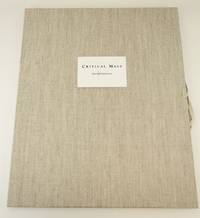
ST15816-18Los Alamos New Mexico: Meridel Rubenstein 1995. No. 3 OF 25 COPIES. 615 x 510 mm. 24 1/4 x 20". 2 leaves of text. <br/> Original linen portfolio with gray paper folder cover with paper label linen ribbon ties. Eight photocollage plates numbered and signed in pencil on verso by Rubenstein all with tissue guards. With pencilled signature and inscription: "For Arnold Horwitch with admiration and gratitude 7/15/95." The tiniest bit of soiling to label on portfolio otherwise in mint condition.<br/> <br/> This is a very rare portfolio based on Rubenstein's photo/text/video installation "Critical Mass" created between 1989 and 1993 in collaboration with Ellen Zweig with technical assistance from Steina and Woody Vasulka. According to the Exhibition description at the MIT List Visual Arts Center "The 50th anniversary of the atomic bomb developed at the Los Alamos Laboratory and first detonated in the southern New Mexico desert on July 16 1943 inspired artists Meridel Rubenstein Woody and Steina Vasulka and Ellen Zweig to probe the ironic juxtaposition of two very different elements of American society. 'Critical Mass' a multimedia installation examines the unusual meeting of J. Robert Oppenheimer and other Manhattan Project scientists with the American Indians of San Ildefonso Pueblo whose land adjoins Los Alamos New Mexico. Their worlds fused at 'the house at Otowi Bridge' Edith Warner’s Rio Grande riverside home where both groups patronized a small restaurant she operated during the 1940s." Born in Detroit Michigan in 1948 Rubenstein received her bachelor's degree in social science with a film-making emphasis from Sarah Lawrence College and a Master's and M.F.A. degree from the University of New Mexico. She is the recipient of fellowships from the Guggenheim Foundation the National Endowment for the Arts and the Pollock-Krasner Foundation and has taught photography at San Francisco State University and the Institute of American Indian Arts. The New Mexico Museum of Art the San Francisco Museum of Modern Art and Smithsonian American Art Museum are among the institutions with her works in their collections. She currently lives and works in Santa Fe. Rubenstein inscribed our copy to its original owner Arizona collector Arnold Horwitch. We could find no record of this item being offered or sold at auction. Meridel Rubenstein unknown
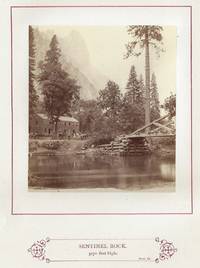
187224393Boston and New York: Alexander Moore and Lee Shepard & Dillingham 1872. Hardcover. Very good. Third edition revised and enlarged; second printing. Small quarto pp. v-x xi-xii 13-98 with two maps and 20 original mounted albumen photographs credited to Boston photographer John Soule. In publisher's green cloth with beveled edges; front board decorated in gilt black and rose; all edges gilt; each text page and each photograph bordered in red. A very good copy with rubbing and fraying to corners and spine ends bookplate of Canadian bookseller and collector G. Ducharme on front pastedown handwritten date of December 15 1872 on front free endpaper evidence of an erased ink stamp on title page. Lacks tissue guard over plate facing p. 35 all others present. Contents sound and clean. This is the rarest and most desirable edition of this work as it is the only one to contain 20 rather than 10 mounted photographs. Kneeland 1821-1888 was a physician naturalist and Professor of Zoology and Physiology at MIT. This book is based on his first visit to the Yosemite Valley in 1870 and includes a narrative of his trip from and return to Boston. "Kneeland made every effort to obtain current and accurate information and each of the later editions of the guide incorporates new material.Weston J. Naef in his book Era of Exploration the Rise of Landscape Photography in the American West 1860-1885.comments that the photographs 'are curious because there is no evidence that Soule a talented landscape photographer was ever in California.which suggests that he might have purchased the negatives from a California photographer not an uncommon transaction'" Currey & Kruska 225. Eadweard Muybridge and Martin Hazeltine are both considered strong candidates to have been the actual photographer. Farqhuar #10; Cowan p. 333. Only two copies of this edition have appeared at auction in the past 30 years and there are no others on the market as of September 2025. Alexander Moore [and] Lee, Shepard & Dillingham hardcover
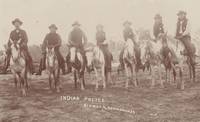
1900List1916Purcell 1900. Unmounted gelatin silver prints and one mounted boudoir card most images measuring 8 x 5 and 7 x 4 ½ inches. Varying levels of fading else about fine. With gallery stamps of Fenn Gallery Santa Fe verso. Near Fine. In the years following the Land Run of 1889 which opened land in Indian Territory to Euro-American settlement professional and amateur photographers alike moved to the region. Their motives varied with some attempting to document the vanishing indigenous culture and others trying to capitalize on the Euro-American demand for photographs of Native Americans in both traditional and western attire. Some studios would use single sets of props for different tribes. Despite these issues the images from the period do illuminate the period of acculturation and displacement in the history of the Southern Plains Indians tribes and also provide a record of the motives of the Euro-American photographers behind the camera. <br /> <br /> William J. Lenny and William L. Sawyers were photographers working out of Purcell in the years immediately following the land rush. They photographed the tribes on the Kiowa-Comanche-Apache and Wichita-Caddo reservations. Lenny was a field photographer and likely took most of the photographs while Sawyer managed the studio. Offered here are a very extensive group of photographs taken by the duo - twenty-seven in total - giving a visual record of the Kiowa and other tribes during this period. Some of these images - though not these copies - were included in the Museum of the Great Plains Exhibition In Citizen’s Garb and we have included their reference numbers where applicable. <br /> <br /> Overall an uncommonly large group in fine condition with some fading. From the collection of Forest Fenn the noted Santa Fe gallerist. <br /> <br /> 1. Indian Police / Kiowa and Comanches Supplied Title. The images shows seven mounted police officers with the one furthest to the left appearing to be Euro-American. <br /> <br /> 2. Arko Captain of the Indian Police Comanche. Supplied Title Indian police commonly earned $8-$10 per month to work on the reservation where their duties included expelling intruders bringing children to the schools curbing crime and preventing the sale of alcohol. He’s dressed traditionally including a single feather worn as a headdress. In Citizen’s Garb 32<br /> <br /> 3. Chief Tow-Wac-A-Ny and Wives. Wichitas. Supplied Title. A portrait of ‘Towacany Jim’ a famous military scout posed with a Navajo-style blanket along with his two wives. The women are wearing purchased shoes common in this period. He earned $10 per month as leader of the Indian Police and traveled to Washington D.C. on diplomatic missions. Fine contrast. <br /> <br /> 4. Big Tree’s Boy and Girl. Kiowas. Supplied Title A portrait of two children of the chief Big Tree. The pair wear traditional dress. Faded. <br /> Big Tree. <br /> <br /> 5. Kiowa Chief. Supplied Title A portrait of A’Do-Ette or Big Tree the Kiowa chief. Fine contrast. <br /> <br /> 6. Portrait of A’Do-Ette . He wears the same costume used by the photographers for various other tribal leaders including a large headdress. Faded. <br /> <br /> 7. Chief Big Tree’s Daughters. Kiowas. Supplied Title The image shows two girls identified as Alma left and Leena right. Alma wears a dress of dark buckskin. Both girls have beaded bags known as “Strike-a-Light†bags hanging from belts. <br /> <br /> 8. Lone Wolf. Kiowa Chief. Supplied Title A photograph of Mamay-day-te or Lone Wolf the Younger in the same costume used for O’Do-Ette’s portrait and others. Some fading.<br /> <br /> 9. Photograph of Laura Dunmore or Laura Pedrick. Dunmore was a graduate of Carlisle School and sister of Chief Aptone. She is pictured here with a parasol tartan cloth and tinkling cone earrings providing a striking study in fashion during this period. Fine contrast. <br /> <br /> 10. Photograph of a Camp Scene in Summer on a Reservation. This scene perhaps a Kiowa-apache camp contains a tipi made of canvas instead of hides. A man in an expensive set of purchased clothing sits in the foreground. Excellent contrast. In Citizens Garb 9<br /> <br /> 11. Photograph of a Camp Scene in Summer. A variant of our no. 10 showing the same scene from a different angle. Excellent contrast. <br /> <br /> 12. Chief Wild Horse Supplied Title Title written in ink on margin. A photograph of Kobay-O-Burra second chief of the Quahadi who took over principal chieftanship when Parra-o-Coom died in 1874. <br /> <br /> 13. Photograph of Mamay-Day-Te Lone Wolf. A variant pose as number 8 with the same dress. <br /> <br /> 14. Photograph of Five Comanche in Mixed Attire. They have been identified as Pah-do-pony top left To-pooh bottom right and Big Kiowa bottom left brother of Pah-do-pony and Perk-a-Quannard. In Citizens Garb 14<br /> <br /> 15. Apache Papoose Supplied Title. A photograph of a child in traditional dress. Faded. <br /> <br /> 16. Photograph of Four Indigenous Subjects in Mixed Attire. A portrait of a man and three women the man in a Euro-American style suit and the women in a mix of traditional dress using trade fabrics. Excellent contrast. <br /> <br /> 17. Portrait of an Unidentified Man. A portrait of a man in heavy fringe breechcloth and fringed leggings. This was marketed under the name “Big Tree’s Son†in the 1890s and the subject is identified as Kiowa in the In Citizens Garb catalog. In Citizens Garb 16<br /> <br /> 18. Kiowa Squaw and Papoose Supplied Title. A photograph of a woman and a child in a studio setting. Very good contrast. <br /> <br /> 19. Portrait of Zah-Tay or Lizzie Woodward. Zah-Tay appeared in other photographs with her niece and son. <br /> <br /> 20. Portrait of Cora Caruth. A portrait identified as Cora Caruth who graduated from an Indian School perhaps Carlisle and eventually worked as an interpreter for Wichita at Anadarko. Fine contrast. <br /> <br /> 21. Portrait of a Man in a Serape. A portrait of a seated man in a serape or striped Mexican blanket. A breechcloth legging and moccasins can be seen under the serape. In Citizens Garb 23<br /> <br /> 22. Chief Cat. Kiowa. Supplied Title A photograph of Ba’o Cat also Goon-Saudle-Te who wandered from camp in Colorado when he was twelve and was not recovered for five years. Comanches sheltered him. Fine contrast.<br /> <br /> 23. Kiowas. Supplied Title A portrait of Lizzy Woodward Oliver and her niece posed in Kiowa clothing. Oliver is in a beaded cradleboard Lizzy’s dress was tied with Tartan cloth and wears traditional Kiowa moccasins. In Citizen’s Garb 10<br /> <br /> 24. Portrait of Lizzy Woodward Her Niece and Oliver. A variant of our no. 23 with Oliver and Woodward in different dress. Fine contrast. <br /> <br /> 25. Portrait of Two Kiowa Girls. Two girls pose one in buckskin dress decorated in paint. Buckskin would become less frequent. Fading. In Citizen’s Garb 2<br /> <br /> 26. Big Tree’s Papoose. Kiowa. Supplied Title. A portrait of Alma later known as Mrs. Ahote. Fine contrast. <br /> <br /> 27. Kiowa Braves. Supplied Title A photograph of two young men on horseback. Very good contrast to foreground slight fading to background.<br /> <br /> 28. A Young Kiowa Warrior Supplied Title. A photograph of Enoch Smokey later known as Apenguadal who lived near Verden Oklahoma. His mother was noted as a beadworker and his horse is fitted with unusually decorative gear. His personal dress includes a hairpipe breastplate and a pelt around his arms. In Citizens Garb 36<br /> <br /> 29. Portrait of a Standing Kiowa Man. He wears the same headdress used in other studio photographs. Some fading. <br /> <br /> 30. Unidentified Man Possibly Euro-American Posed in a Headdress in Studio Setting. This is a mounted image unlike the others with the Lenny & Sawyers mount. The subject appears to be Euro-American and wears the same headdress used by the Indigenous subjects in several of the earlier photographs. He holds a prop bow and arrow. <br /> <br /> An uncommonly large group of images which in total provide an impressive visual record of this period of forced acculturation and transition in dress. unknown
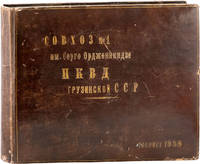
61757Tblisi: NKVD 1938. A magnificent grand-format presentation album ca 35cm x 42cm bound in full calf with heavy gilt titling to front cover; containing 113 original photographs including 90 large-format gelatin-silver prints most about 22cm x 29cm ca 8-1/2" x 11-1/2" a few slightly larger or smaller; four folding panoramas and 19 smaller-format portraits 10cm x 7cm ca 4-1/2" x 3". Rubbing to covers; mild staining to some of the mounts occasional surface scuffs to photographs; two of the panoramas have mended tears at folds. Overall a complete well-preserved album with the photographs in generally excellent condition. A complete list of captions translated into English is included. <br /> <br /> The movement for rural collectivization in the Soviet Union began in earnest in the late 1920s and reached its peak in the mid-1930's under the second Five Year Plan. In every Soviet state hundreds of thousands of rural peasants were moved off their own small holdings and relocated to one of the large collective farms kohlkozy or as here to State-run agricultural factories sovkhozy. State-owned farms like the one portrayed in this album operated under somewhat stricter conditions - in the words of one contemporary observer ".it is perhaps incorrect to speak of 'forced' labor in connection with the sovkhozy.but it is quite reasonable to designate this labor as 'militarized'." The fact that this farm was run by the NKVD the Soviet internal security apparatus means its residents were almost certainly present on a punitive or at least rehabilitative basis: as the agency principally responsible for ferreting out and suppressing counter-revolutionary tendencies among the vast Soviet populace the NKVD would have had little other reason to be involved in the operation of an agricultural enterprise. The use of the sovkhoz as a tool of repression especially in the early days of collectivization is well documented: the collective system was coercive and unwelcome to many if not most of the peasants whom it affected. "What is especially dangerous for the stability of the new agricultural system in Soviet Russia - introduced in such a hurry - is the fact that it was put into effect with coercive methods the system being forced on the peasantry and being accompanied by a cruel campaign against the well-to-do peasantry i.e kulaks quoted from Vladimir Timoshenko "The New Agricultural Policy of Soviet Russia" in Journal of Farm Economics v.13 no.2 April 1931.<br /> <br /> To counter some of the negative views of collectivization a large-scale propaganda campaign was initiated and some of the leading Soviet photographers of the period including Georgy Petrusov Evgeny Khaldei V. Teterin Ivan Shagin Arkady Shaikhet among others were employed to present an idealized version of life on the collective farms. The current album clearly intended to convey this sense of the rural ideal was likely produced by the Directors of the Sovkhoz Sergo Ordzhonikidze named ironically for a one-time ally of Stalin's who had been assassinated in the Great Purge for presentation to a regional state official. In more than 100 hand-captioned images the album portrays every aspect of the enterprise from fields of dairy cattle to chicken hatcheries to leisure-hour activities. The workers are uniformly happy and well-fed their surroundings ideally pastoral the machinery clean new and efficient. One can only speculate what conditions prevailed in the absence of a photographer's lens. <br /> <br /> The photographs themselves are clearly professional: technically and compositionally sophisticated they are exemplars of the form produced in an era when the Soviets had raised the photographic arts to a high level in service to their considerable propaganda needs. Of particular interest are numerous interior photographs documenting industrial activities at the farm - maintenance of the boiler rooms and garages; canning operations; the blacksmith's shop etc: even though staged these are extraordinary photographs of a depth and quality one would associate with the flagship Soviet photographic magazines of the period and there were several the most prominent being Sovetskoe Foto which ran from 1926-1977 and USSR in Construction 1930-1941. <br /> <br /> Despite our belief that these images were likely the work of one of the prominent Soviet photo-documentarians of the period attempts to match the images to a known photographer have proved fruitless. Of the names listed above these images most resemble the work of Evgeny Khaldei who would become famous for his photojournalism during the Second World War; but we find no evidence within the album attributing the work to him or any other photographer. Nonetheless a valuable documentation of pre-War Soviet agricultural life and a quite remarkable collection of images. unknown
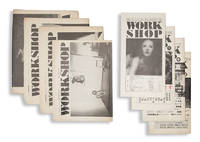
110755Tokyo Workshop Shashin Gakko September 1974-July 1976. . First editions; issue 1 loose sheets folded horizontally as issued 390 x 267 mm 15¼ x 10½ in issues 2-4 tabloids folded horizontally as issued 436 x 280 mm 17¼ x 11 in issues 5-8 narrow 4to 281 x 148 mm 11 x 5¾ in; black-and-white photographs printed in offset; issues 1-4 lightly toned occasional very minor spotting issues 3 and 4 with light wear to edges and short tear to spine at fold issues 5-8 wire-stitched photo-illustrated wrappers white printed in black lightly rubbed light handling marks oxidation to staples issue 8 with an abrasion to upper top right corner a very good to near-fine set; 16; 16; 16; 16; 72; 80; 72; 72pp.<br /> Workshop was the eponymous journal of Workshop Shashin Gakko. This independent photography school taught limited-enrolment classes by its co-founders Tomatsu Shomei Moriyama Daido Araki Nobuyushi Hosoe Eikoh Fukase Masahisa and Yokosuka Noriaki. Each photographer taught a workshop for a period of one year with a strong emphasis on one-to-one teacher-student relationships. During the first year Nakahira Takuma and Narahara Ikko also taught two additional two-month courses. The journal actively explored new trends in photography through essays and criticism by members of the group and others. Issue 4 was edited by Araki and was based on the simple theme of 'making photography' for this issue he contributed an essay on how to shoot good portraits. Issue 6 was the most controversial issue published in January 1976 which announced 'We Will Sell Photographs: An Exhibition of Photographs Selected by Twelve Photographers' which was issued to accompany an exhibition in February 1976 as an attempt to present photographs as commodities. At that time in Japan as elsewhere sales of photographs as works of art were virtually non-existent and there was some resistance to the idea most notably from Norio Asaki in Asahi Camera.<br /><br />The Workshop Photography School lasted from April 1974 until March 1976 but one last journal issue was issued in July 1976. This eighth issue featured 'A Roundtable Discussion with Names Withdrawn: Bashing Photography Magazines' in which the Workshop teachers set about challenging the conventional views of photography put forward by Asahi Camera and other photography magazines as well as criticising popular photographers including Kitai Kazuo and Shinoyama Kishin.<br /><br />The school continued briefly as Araki's Private Photo School until 1977 when Araki offered another one-year workshop. The Workshop Photography School paved the way for several independent galleries and organisations that followed such as Image Shop Camp Photo Gallery Prism and Photo Gallery Put.<br /> For a New World to Come 354-358. Tokyo, Workshop Shashin Gakko, September 1974-July 1976. unknown
1900H9GCKI5261RRZanzibar Madagascar Mayette 1900. Brown cloth album made by M. Andouard in Paris decorated endpapers. Oblong album 25 x 34 cm with 47 silver gelatin photographic prints many with handwritten captions in French. The photographs vary in size from 8 x 5.5 cm to 27 x 20.5 cm. The 30 panorama photographs measure 5.5 x 17.5 cm. 10 10 blank ll. A unique set of views from Zanzibar and Madagascar taken five years after the French military intervention of 1894/95 also called the Second Madagascar expedition. The unidentified photographer can be seen in three of the photographs wearing a white coat and white pith sun helmet being the French tropical style as used by white colonial troops since 1878 suggesting the photographers connection with the French colonial army. His travel partner is occasionally shown as well. Their visit took place during the final years of the notorious slave trading activities of Tippu Tip 1837-1905 in Zanzibar.The photo album opens with a portrait of a young Sakalavan woman in a beautiful dress. Three other photographs show other native women as well including one family with a baby. The majority of the photographs are panoramic views showing villages harbours coasts and landscapes the first dated 28 November 1900. The only full-page photograph in the album shows an Arab caravan marching along the beach. Rare are the few photographs taken in Mayotte giving some highly uncommon scenes of the island nation's pre-development era.Binding somewhat scratched spine slightly worn. The front endleaf clipped. Only a few photographs slightly faded: in very good condition. hardcover
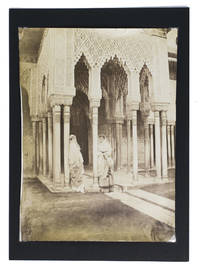
1865ABC_47974Granada 1865. All albumen photographic prints 18 x 24 cm are mounted on black card stock 29.5 x 21 cm. Collection of 19th-century albumen photographic prints of the Alhambra in Spain by Charles Mauzaisse ca. 1823-1885; fl. 1860s. The beautiful images show many different parts of the Alhambra especially of the court and palace of lions including the central fountain and the pavillion with the oriental dome that was added in 1859 and later removed. The Alhambra is a medieval palace and fort of Moorish or Muslim rulers of the Kingdom of Granada in Andalusia in the South of the Iberian Peninsula. Additionally the collection contains one photograph of the tomb of the Catholic monarchs which is located in the Royal Chapel of Granada.During the 19th century tourism was booming. Travellers wanted to take proof of their travels home and often did so in the form of photographs. Many photographers took the opportunity to sell their work to tourists. Charles Mauzaisse son of the painter Jean Baptiste Mauzaisse traveled to the south of Spain and fell in love with Granada where he would develop his professional activity alongside other renowned photographers such as Laurent Coutourier and Dubois. All of them - aware of the lucrative field of work that the image of the Alhambra offered - settled more or less definitively in the city just as Masson or Count Vigier did in Seville or Clifford and Laurent in Madrid.The prints are slightly yellowed and some images were possibly overexposed or have faded slightly all prints show clear signs of having previously been mounted on another surface. Some prints have small tears in the edges. The print of the 2 Moroccan women in the Alhambra is probably by a different photographer but the name has been cut off. The collection gives a beautiful insight into 19th-century photography in the Iberian Peninsula - showing off the beautiful Arabic- and Muslim-influences architecture in Granada. unknown
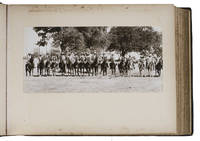
1933ABC_45905Cambridge Mumbai New Delhi: Scott & Wilkinson Clifton & Co Hamilton Studios and Kinsey Bros. 1933. Oblong half morocco photograph album by W. Johnson & sons London. With 105 photographs mounted in the album ranging from 16 x 28 cm to 4 x 6 cm 2 photographs loosely inserted and a watercolour mounted at the back 11.5 x 21 cm. Unique photograph album showcasing the vigorous "fox" hunting scene in British India in the early 1930s particularly around Delhi. Most of the photographs show members of the British upper class in India often mounted on horses or posing for a group photograph and accompanied by hounds. The album contains no titles captions or inscriptions and the photographs do not seem to figure recurring individuals which suggests that it was probably compiled to commemorate the hunting and or riding club and its activities in the early 1930s. Numerous photographs show groups of mostly men posing with hounds at lunches and possibly a hunt ball or mounted on horses at jumping events and even a few cup trophies. The very first photograph is by Scott & Wilkinson in Cambridge active before 1933 and was therefore probably taken in England. The other inscribed photographs are by Clifton & Co. and Hamilton Studios from Bombay and Kinsey Bros. which started in New Delhi in 1935.British life in India mirrored life in native Britain and included popular equestrian activities such as hunting. Starting in the second half of the 19th century foxhounds were imported from Britain and subsequently bred in India. Regiments and brigades kept their own packs but at the beginning of the 20th century these had morphed into local hunts. Hounds were kept at over 12 hunting clubs which included Delhi Meerut Narbuda Vale Jaora Poona Bombay Bangalore Ooty Madras Lahore Quetta Peshawar and Karachi. Although the Indian silver fox was sometimes hunted the most common prey was the golden jackal.A different type of hunting popular in India was pig sticking: the chase of a wild boar on horseback with the spear. Several photographs in the album show pig sticking parties either posing or in action and sometimes accompanied by spectators on elephants. In contrast to the jackal-hunt parties the pigstick groups are composed of more military looking men and also include Indian men as opposed to the British-only hound groups.Most photographs show the area around Delhi and include a hunt near Shah Alam's Tomb. A photograph of this event is loosely inserted in the album and dated 1933/34 on the back. Other photographs show the Rashtrapati Bhavan one group shows the Earl later Marquess of Willingdon India's Governor-General from 1931 to 1936. Two images show the monumental Gateway of India completed in 1924 in Bombay Mumbai which can also be seen in an aerial photograph. Several photographs show what is probably the airfield at Karachi as it shows two airplanes loading mail on apparently the first voyage of the Indian Transcontinental Airways. Imperial Airways liner "Hanno" departing from Croydon had left for Karachi on 1 July 1933 via Bahrain and Sharjah. In Karachi the cargo was transferred to the Transcontinental airliner "Arethusa" as can be seen on the photographs.It is unclear why only half of the album was used. It is possible the compiler transferred to Kut in British Mesopotamia Kut al-Imara in modern Iraq. A watercolour on the final page of the album is captioned "A river bank north of Kut".Binding slightly rubbed and worn at the edges. Album leaves foxed throughout but most of the photographs in very good condition. The paper of the large photograph of the group near Shah Alam's Tomb is heavily damaged at the top and left side but the image itself is undamaged. A unique collection of British-Indian hunting photographs in very good condition.l Cf. Hamid "Riding with the Peshawar Vale hunt" thefridaytimes.com; Hunt "Delhi" in: Ten cities that made an empire; "1933 Eastwards: Karachi to Calcutta" indianairmails.com; Lucas Hunt and working terriers pp. 116-120; Mitter et al. The artful pose. Scott & Wilkinson, Clifton & Co, Hamilton Studios and Kinsey Bros., unknown
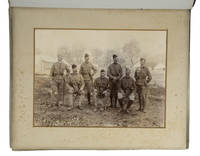
1898ABC_457021898. 2 PARK Superintendent. 1898. Catalogue of photographs by Sergeant A.J. Clarke R.E. taken during Tirah Expedition 1897-1898. Kirkee Pune India Sappers and Miners' Press 1898. Small folio 22 x 14.5 cm 4 pp. With a lithographed title-page. Loosely inserted in the album. Collection of photographs taken by a British Indian Army officer who served in the Peshawar Column during the Tirah Expedition in the Northwest Frontier of India from June 1897 to April 1898 including a manuscript Key that identifies seven British officers that are in the first photo of the album and a list of captions to 10 photos in the album.The Tirah Expedition was aimed against the Afridi and Orakzai tribes in British Indias Northwest Frontier modern-day Khyber Pashtunkhwa province of Pakistan. One of many Northwest Frontier campaigns of British India the Tirah campaign concentrated on the area west and south of Peshawar in the mountainous region between the valleys of the Bara and Kohat Rivers. The album primarily documents the actions of the Tirah field forces Peshawar Column under command of Brigadier-General Arthur George Hammond 1843-1919 which followed the route of the Bara Valley.The present photo album contains 8 large albumen photos documenting the movement of the Peshawar Column. The large photos were taken by W. Rahn according to the memoirs of Peshawar Column officer Richard Thomsett we had a photographer named Rahn with the column and he accompanied us until we arrived at Ali Masjid in December 1897 when an accident necessitated his returning to India. Rahn was a German who had come out to the East some twenty years before and seemed to be ubiquitous for wherever we were there he was with his camera ready and I must say he took some very excellent pictures.The present album also includes 43 smaller gelatin photos with manuscript captions for 10 of them on a small piece of paper perfectly describing the photos on leaves 5 and 9 of the album. The album is supplemented with a rare 4-page brochure no doubt produced in a small print-run that lists 99 photos. About 20 have been marked by hand in pencil probably by the albums compiler. The brochure indicates that the present photos could be purchased from the Bombay Sappers and Miners.8 of the large photos have contemporary manuscript captions in ink on the mounts. 2 marks on the front paste-down reading "photographs by British Royal Engineers. Tirah Expedition 1897-1898 North India. Binding slightly rubbed on extremities the original 5 cords replaced with 3 new black cords hinged to stubs . A few images mildly faded. The additional manuscript leaves foxed and worn. Otherwise in good condition.l The navy and army illustrated V no. 53 24 December 1897 pp. 150-152 4 of the 8 large photographs & no. 57 18 February 1898 p. 275; R.G. Thomsett With the Peshawar olumn. Tirah expeditionary force London 1899 pp. 103-104. unknown
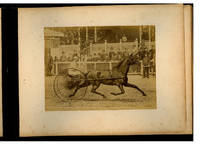
1879G84BDE85OGMKBerlin: H. Schnaebeli & Co 1879. Oblong 8vo 33 x 26.5 cm album with 16 original albumen prints ca. 20.5 x 15 cm mounted on paperboard. Original richly decorated cloth. Title on front cover: "Album des Trabrenn-Sport. H. Schnaebeli & Co. Hof-Photographen u. Kunstverlag. Berlin Unter den Linden 30". Fine album of original albumen prints depicting trotting. All horses and jockeys are identified in handwriting on the opposite page. 1 Cremien. 2. Lump. schw. H. v. Lump a. d. Nelly Parker. Züchter u. Bes. Gestüt Mariahall. 3. Mazeppa. Fahrer J. W. Raymer. 4. anon. 5. France's Alexander. Schwarzer Hengst v. Ben Patschen a. d. Jenny Martin. Besitzer Gestüt Mariahall. 6. Lynwood. Schimmel-Hengst v. Clinker a. d. Belton Maid. Besitzer. Berliner Trabrenn-Verein. 7. Sunol. Braune Stute v. Electioneer a. d. Wazana. Besitzer Rob. Bronner. 8. Djelowaja. Schimmel-Stute v. Atlasnuyi a. d. Delni. Besitzer und Fahrer Herr G. Barthels. 9. Blue belle. Fuchs-Stute v. Blue Bull. Besitzer: Gestüt Mariahall. Trainer u. Fahrer L. Raymer. 10. Polly. Braune Stute v. Hamdallah a. d. Belle. Besitzer: Herr Ehrich. Trainer u. Fahrer Joe Raymer. 11. Tiger. F. H. gez. in Russland 1873 v. Stroining a. d. Saszita. Besitzer: Albas Singer in Wien. 12. Lumpazius. br. H. v. Lump a. d. Addre E. C. Züchter u. Bes. Gestüt Mariahall. 13. Sametz. 14. Maud. S. Fuchs-Stute v. Harlod a. d. Miss Russell. 15. Ledenaja. Fahrer J. W. Raymer. 16. Jersey Thorne brauner Hengst v. Thorndale a. d. Martha Besitzer Mr. Wilson. - Most photographs signed in the negative "H. Schnaebeli"; one dated 1879. Very early example of an album illustrating horses horsemanship and trotting. Extremely scarce: we were unable to trace another copy in any public library according to OCLC-Worldcat and KVK; not in JAP or ABPC. Binding a bit discoloured otherwise very well preserved. Boards show some browning and foxing; albumen prints in very good condition. H. Schnaebeli & Co, hardcover
1917ABC_48426Iran and Iraq 1917. Contemporary cloth one album in in red and one in grey with 'Kodak' lettered in gold on the front board and a black classical meander border tooled near the foot. The albums are kept together by a black ribbon. Oblong 8vo ca. 15.5 x 20 cm. With 191 resp. 95 and 96 gelatin silver prints all ca. 4 x 6 cm. 2 volumes. Remarkable set of Kodak photo albums with nearly 200 photographs of military life and the oil industry in Iran and Iraq in the early 20th century. The photographs were most likely taken by the compiler of the albums and show scenes from his daily life. Most of them are captioned. Included are images of Persian oil fields Abu Zenema Sinai coast Port Sudan Bushehr Basra various locations along the Tigris Euphrate and Shatt al-Arab rivers Ashwaz and Shush. The photographs also show locals involved in various activities including races shark hunting and selling wares. The compiler of the album was likely a British soldier who was stationed in Basra and other locations in Iran and Iraq after the First World War.The edges and corners of both albums are slightly scuffed with a few light stains on the back board of the red album. The paper on which the photographs are mounted is slightly browned ten of the photos have either creased corners or a damaged surface some photographs a little loose within their windows missing a photo on the final page of the red album. Otherwise in good condition. hardcover
1881292681881. Paris G. Masson 1881. Un vol. au format in-folio 473 x 338 mm de 1 f. bl. 2 ff. n. fol. 34 photographies et 1 f. bl. Reliure moderne de demi-cartonnage gris-perle ˆ l'imitation de chagrin dos lisse ornÂŽ de triples filets dorÂŽs et en noir piÂce de titre de maroquin marine titre dorÂŽ. Edition originale d'une insigne raretÂŽ. Exemplaire revÂtu d'un envoi autographe signÂŽ de Georges Pouchet en tÂte de la page de titre. L'ouvrage est constituÂŽ de 34 sur 34 superbes photographies originales tirÂŽes sur papier albuminÂŽ contrecollÂŽes sur carton fort avec lÂŽgende imprimÂŽe en marge infÂŽrieure de chacune et montÂŽes sur onglet. ''Titulaire de la chaire d'anatomie comparÂŽe du MusÂŽum national d'histoire naturelle de Paris Georges Pouchet 1833-1894 se spÂŽcialise dans l'ÂŽtude des cÂŽtacÂŽs et l'ocÂŽanographie. De 1870 ˆ 1894 il passe plusieurs mois par an ˆ parcourir les mers du Nord ou encore ˆ ÂŽtudier les espÂces marines. Ë chacune de ses expÂŽditions il rapporte de nouveaux spÂŽcimens dont plusieurs cÂŽtacÂŽs mais aussi de nombreux tÂŽmoignages sur le paysage marin''. BÂŽnÂŽdicte Percheron. Table : Lodingen - Hammerfest - Vadsš - Klubben - Jarfjord - Kištfjord - Fjeldaal - Bugšfjord - Klosterfjord - Thorgatten - Bergen - etc. Ensemble en bel ÂŽtat. b42961 unknown
196548080Arnsberg and Dortmund Germany: Arbeitsgemeinschaft Gestaltendes Handwerk 1965. First edition. Hardcover. Near fine condition. Duodecimo 6 1/8 x 8 1/2". Unpaginated app. 100 leaves each three volumes. Original screw-bolted brown cloth with gray lettering on spines. Text printed to handmade paper in variant colors: black brown gray blue cream yellow green burnt Sienna and umbra photographs printed to glossy white paper. With lists of full and associate members of the workshop at front printed in white on black paper.<br /> <br /> Complete catalog of "Werkstattporträt Workshop Portrait" in three volumes a joint venture of the Project Group Creative Crafts for the Districts of Arnsberg and Dortmund Germany from 1961 to 1965. Participants of this project included craftsmen and women from the fields of pottery weaving embroidery bookbinding lathe work carpentry photography painting and sculpting. An extraordinary project presenting a state-of-the-art view of craftsmanship and art in Eastern Westfalia in the 1960s illustrated with 309 b/w photographs.<br /> <br /> Albert Renger-Patzsch participated in this project not only as a photographer see portrait 10 but provided one-hundred and forty-five of the three hundred and eleven photographs of works of other participants including portrait photographs for the catalogs "Werkstattportrait." Renger-Patzsch had worked as press photographer for the Chicago Tribune before publishing his title 'Crassula" with the Auriga-Verlag in the series 'Die Welt der Planze' in 1924. He had his first museum exhibition in 1927. His second book "Die Welt ist schön" became his best-known publication. During the 1930s he remained in Germany and made photographs for the German industy and in advertising. His archive was destroyed during W.W.II. In 1944 he moved to Wamel North Rhine-Westfalia and lived there for the rest of his life.<br /> <br /> The catalog is structured in twenty-nine chapters 0-271 introducing artists and craftsmen and women including one introductory chapter with eight photographs and a final chapter with six photographs. The object of the project was to further the exchange of knowledge and experience collaboration in research shared leisure time and visits of the workshops and studios of participants. Regional and national exhibitions and publications were arranged to help find buyers for the created work. The introductory chapter includes lists of full members and associate members.<br /> <br /> Each of the twenty-seven workshop portraits includes an introductory leaf for the respective participant describing the workshop or studio and the career including particulars about the techniques and material used by the artist with captions on the objects captured in eight b/w offset reproductions of photographs by Albert Renger-Patzsch and others on verso. Each set of photographs includes a portrait of the respective artist. Following each set of photographs a page with contact information of the artist and photo-credits for the work displayed.<br /> <br /> The final chapter is entitled "Workshop Portrait." It includes a brief description of the workshop taking place from April 1961 to December 1965 six b/w photographs of workshop exhibits and a list of all participants with contact information. The last page of this chapter an address by Walter Römhildt states the conclusion of this project and announces the continuation of publications of the series "werkstattforum" at his new office the "Beratungsstelle für Handwerksform bei der Handwerkskammer Hannover." Participants of the project "werkstattportait" will automatically receive those publications. <br /> <br /> Content with participating artists:<br /> <br /> portrait 0: Introduction of the project with photos by Renger-Patzsch 9 <br /> portrait 1: Hildegard Bäumer weaver Siegen photos by Renger-Patzsch 6 and Foto-Besser Siegen 3<br /> portrait 2: Ignatius Geitel Glass painter Bochum with Klischees by Titze & Lorenz Gelsenkirchen 9<br /> portrait 3: Karl Josef Hoffmann sculptor Attendorn with photos by Renger-Patzsch 9<br /> portrait 4: Anneliese Kretschmer photographer Dortmund photos by Anneliese Kretschmer 9<br /> portrait 5: Udo Dickerhoff carpenter Bochum photos by Renger-Patzsch 8 Sabine Renger 1 and Christian Bathe Münster 1; with two transparencies.<br /> portrait 6: Ingeborg and Bruno Asshoff potters Bochum photos by Renger-Patzsch 10 Dagmar Korn Düsseldorf 2 and Helmut Hering Dortmund 2<br /> portrait 7: Martha Wurm embroider Wattenscheid photos by Photo-Soeding J. Müller Soest 11<br /> portrait 8: Otto Pickhan turner Mollseifen photos by Renger-Patzsch 9<br /> portrait 9: Irmgard Timmermann weaver Soest photos by Photo-Soeding J. Müller Soest 9 H. Musmann Lage 1 and Renger-Patzsch 1<br /> portrait 10: Albert Renger-Patzsch photographer Wamel photos by Sabine Renger Wamel 1 Renger-Patzsch 11 Klischees by Titze & Lorenz Gelsenkirchen; <br /> portrait 11: Andrea Böhm picture weaver Lüdenscheid w/o photo-credits 10<br /> portrait 12: Päule Jelich goldsmith Iserlohn photos by Schmidt Lueg Iserlohn 11 and Foto Melchers Herne 1 <br /> portrait 13: Wolfgang Kruse turner Hamm photos by Schmidt Lueg Iserlohn 10<br /> portrait 14: Wolfgang Kreutter sculptor Dödesberg photos by Bert Brösel Siegen 1 Heidersberger Wolfsburg 2 Schmidt Lueg Iserlohn 9 <br /> portrait 15: Marianne Proll bookbinder Hagen photos by A. Bach Hagen 6 Renger-Patzsch 8 <br /> portrait 16: Heinz Abendroth metal smith Dortmund photos by Rolf Schmieding Dortmund 9 Dinstühler Dortmund 1; <br /> portrait 17: Liesel Bellmann sculptor Dortmund photos by Gerd Schlitzer Dortmund 4 W. von Frankenberg Dortmund 1 Rolf Schmieding Dortmund 3 and Heller Telgte 1 w/o credit 3<br /> portrait 18: Karl Jlling metal smith Mallar photos by Renger-Patzsch 10 <br /> portrait 19:Dieter Pieper goldsmithLüdenscheid photos by Werkstätten Carl Golderer Pforzheim 24 <br /> portrait 20: Marieluise Quade painter and graphic designer Lüdenscheid photos by Carl Huth Lüdenscheid 2 w/o credits 7<br /> portrait 21: Waldemar Wien sculptor Kierape 1 photos by Renger-Patzsch 13<br /> portrait 22: Christel Humpert potter Bochum photos by Renger-Patzsch10<br /> portrait 23: W. K. A. Weisheit carpenter Plettenberg-Oesterau photos by Renger-Patzsch 9<br /> portrait 24: Günter Hülshoff potter Rosemarie Hülshoff batik both Wangern photos by Renger-Patzsch 14<br /> portrait 25: Josef Severin metal smith Anröchte/Krs. Lippstadt photos by Renger-Patzsch 6 and Sabine Renger 4 <br /> portrait 26: Gisela Lohse weaver Hagen photos by Renger-Patzsch 11 <br /> portrait 27: Johannes Scharfenstein carpenter Meschede photos by Renger-Patzsch 10 and Foto-Zwietasch Kornwestheim 1<br /> "werkstattportrait" with Klischees by Tietze & Lorenz Gelsenkirchen 6<br /> <br /> Text in German. Minor wear overall with some red underlining of text in Römhildt address on last page. Translation of werkstattportrait 10: <br /> <br /> "Albert Renger-Patzsch born on June 22m 1897 graduated at the Humanistic Gymnasium studied chemistry until the preliminary examination after that he became the head of the photography department of the Folkwang Publisher in Hagen and Darmstadt. Since 1925 independent photographer in Bad Harzburg; first exhibition at Kestner-Gesellschaft in Hannover in 1925; first publication: "Die Halligen" in 1927 worked from 1929–1944 in Essen after that in Wamel near Soest. Following his title "Die Welt ist schön" he published monographs of cities and architecture books on marked-off landscapes and other topics. Renger=Patzsch works are in the collections of the MOMA New York the Eastman House in Rochester the Gernsheim Collection in London the Copper-Engraving Collection of the National Library in Paris and the Photo-Museum in Dresden. He was awarded the David Octavius Hill Medal of the G.D.L. in 1957 the Culture-Award of the German Society for Photography Cologne in 1960 and the Golden Society Medal of the Vienna Photographic Society in 1961. Renger-Patzsch is seen as the father of "Neue Sachlichkeit" in photography. In his book "Die Welt ist schön" he introduces a program with the goal to deter photography from engaging in a race with painting and reflect on its own medium. His notion that photography based on its mechanical structure is better suited to do justice to an object portrait it as an artistic individual pertains to large fields of photography today. Arbeitsgemeinschaft Gestaltendes Handwerk hardcover
1908063640Paris: F. Contet 1908-1937. Various. Hardcover. Very Good/No Jacket as Issued. Complete 22-Volume Set. Very rare to find the entire series. Volume 1-3 descriptions presumably by F. Contet. Volume 4-16 descriptions by J. Vacquier. Volume 17-22 descriptions by Paul Jarry. Volume 1-47912-22 first editions 17 out 22 volumes. Titles and dates are as follows - Volume 1: Le Temple et le Marais Tome I 1908. Volume 2: Le Temple et le Marais Tome II 1909. Volume 3: Le Faubourges Saint-Germaine Tome I 1910. Volume 4: Le Faubourges Saint-Germaine Tome II 1910. Volume 5: Le Ministere de la Marine; Ancien Garde-Meuble de la Couronne 4th Edition 1922. Volume 6: Le Faubourg Saint-Honore Tome I 3rd Edition 1920. Volume 7: Le Farbourges Saint-Germain Tome III 1912. Volume 8: L'Hotel Lambert 3rd Edition 1921. Volume 9: La Place Vendome 1913. Volume 10: Le Quartier Saint Paul 2nd Edition 1920. Volume 11: Le Faubourg Saint-Honore Tome II 1923. Volume 12: Le Faubourg Saint-Germain Tome IV 1920. Volume 13: Le Faubourg Saint-Germain Tome V 1921. Volume 14: La Nouvelle-France Ou Le Faubourg Poissonniere 1922. Volume 15: Le Quartier Saint-Avoye 1923. Volume 16: Le Faubourg Saint-Germain Tome VI 1924. Volume 17: Le Quartier du Palais-Royal 1926. Volume 18: Les Porcherons ou le Faubourg Montmartre 1928. Volume 19: Le Quartier Saint-Antoine 1929. Volume 20: Le Temple et le Marais Tome III 1930. Volume 21: Le Quartier de Luxembourg 1934. Volume 22: L'lle Saint-Louis 1937. Marbled boards with quarter cloth bindings. 3 dual cloth ribbon ties on each folio. Loose-leaf. B&W plates photographs. Stickers cover original titles on volume 22. Volume 17 20 21 are ex-library on and inside front covers as well as on first few pages. Volume 1 and 2 have titles handwritten on their spines. Volume 18 21 and 22 have new bindings as well as titles handwritten on spines. Volume 6 and 8 have a ribbon torn along fore-edge. Multiple boards have spots of fading and/or rubbing. Several spines have minor fraying tears to cloth and some staining. Many of the inner spines are cracked or broken but still holding together. Age-toning in multiple books. Overall the set is in very good condition. Due to this series's size and/or weight additional shipping may be needed. No international shipping. A highly collectible series filled with attractive photographs! Full refund if not satisfied. F. Contet hardcover