[Balande] Tharaud (Jérôme et Jean) :Livre Rare Book
66 625 résultats
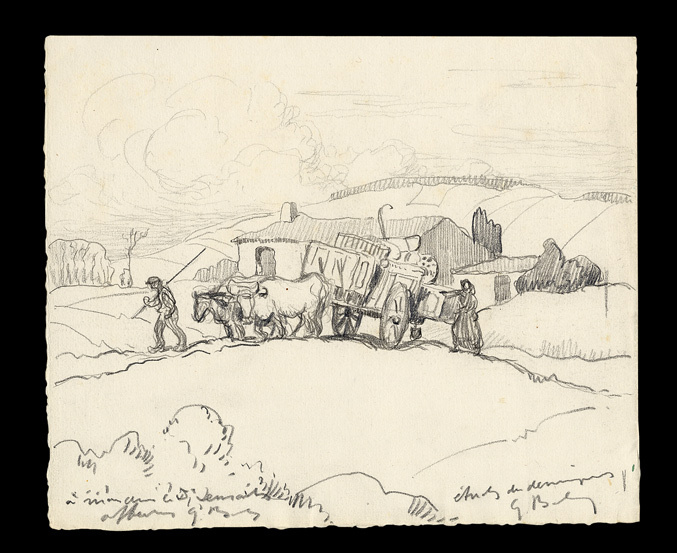
192414699Paris, Lapina, 1924 ; 2 tomes in-4 (le second contient les suites), broché, couverture crème rempliée, chemise-étui bleu (moderne) ; 76 eaux-fortes de Gaston Balande dont 12 hors-texte.
Oblong folio (340 x 202 mm). 272 written pages with a total of 252 numbered chorales (and 4 pages of empty pen-staves). Contemporary half calf over mottled boards with manuscript title label to upper cover. All edges sprinkled in red. Highly interesting collection of Bach chorales, very likely assembled from 1765 onwards at St. Thomas School, Leipzig under the direction of Johann Friedrich Doles, the student of and successor to Johann Sebastian Bach, who sought to make his master's works more widely known. According to an expert opinion included with the volume (ca. 1940), the late head of the Peters Music Library, Kurt Taut (1888-1939), had surmised that the book was "written in Doles's own hand". This assumption is sustained by the apparently autograph entry "di Doles" at the beginning of the Doles chorales which entirely resembles the writing of the remainder of the manuscript. - The volume comprises a total of 252 chorales in a clean, contemporary copy by a single hand, numbered in red ink and (by a later editor) in pencil. Numbers 1 through 200 broadly agree with the two-part printed edition of Bach's chorales issued by Carl Philipp Emanuel Bach (Berlin/Leipzig 1765 & 1769), while numbers 231-251 represent the melodies for Gellert's "Geistliche Oden und Lieder" which Doles published in 1758, but in a revised order. As far as they could be identified, the final piece as well as the thirty pieces between the (real or ascribed) Bach music and Doles's settings consist of works by various composers of the 16th through 18th centuries, including Doles. - Provenance: In 1882 the book was in the library of the Leipzig-based cultural anthropologist and Bach collector Albrecht Kurzwelly (1868-1917), as shown by his label on the pastedown and his ownership on the flyleaf. After his death, it passed into the possession of the Zwenkau music publisher and collector Walter Höckner (cf. his stamp and the end). - Extremeties slightly bumped; a few spine defects have been professionally repaired. Signed expertise (1878) by the Leipzig choirmaster and Bach scholar Wilhelm Rust (1822-92); another opinion (1918) by Rust's successor Bernhard Friedrich Richter (1850-1931) is pasted between the upper cover and the flyleaf.
3 SS. auf Doppelblatt. 4to. Etwas angestaubt und knittrig und mit kleinen Randläsuren.
Folio (218 x 306 mm). 13 pp. on 8 ff. 16th and 17th c. Spanish chancery (brown ink on paper). Sewn within contemp. wrapper with list of contents, numbered "No. 52". The first document (8 pp.) concerns a sales contract between the seller Doña María Cabeza de Vaca and the buyer Don Rodrigo de Verdesoto: on 13 March 1505, Doña María of Santervás de Campos (near Valladolid in Spain) sold Don Rodrigo ten medium-sized batches of bread for 60,000 Maravedís. Numerous ms. marginalia and notes of later centuries. - Attached to this is a document (3 ½ pp.), according to which descendants of the buyer, Alfonso and Francisco Verdesoto, tried to lodge claims in the same matter nearly two centuries later; these claims were rejected by the city council in 1697. - Slight tears and waterstains to corners In den Ecken geringfügig wasserrandig; altogether well-preserved.
In French and Russian. Various formats. Altogether 14 pp. Together with an autograph letter by Jean Françaix's father Alfred, 1 typed draft for a letter to Aleksandr Shervashidze, the carbon copies of 11 typed letters and 1 telegram, and a copy of the first page of a contract between Leonide Messine and Wassily de Basil. Correspondence of five artists with Wassily de Basil, director of the famous ballet company and his office: André Derain (1 letter), Jean Françaix (2 letters), André Masson (1 letter), Nicolas Nabokoff (2 letters, one of which incomplete), and Pedro Pruna (5 letters). Carbon copies of answers and requests addressed to the artists complete the collection. - André Derain confirms the receipt of a cheque for his stage designs for the ballet "La Concurrence" (Competition) and photographs from the production as announced in an undated letter from the office (Paris, 26 July 1933). "La Concurrence" had successfully premiered on 12 April 1932. - In January 1933 Jean Françaix sold his ballet "Scuola di Ballo" with music based on themes by Luigi Boccherini to the company and later had a disagreement concerning an outstanding payment. A letter from the office was sent with the contract, asking for the signature of Jean’s father Alfred Françaix, as the young composer was not yet of age, prohibiting ballet productions with other companies until the premiere. Jean Françaix responded within a week: "You will find the contract signed by my father, as you requested, attached to this letter. Concerning the letter that you sent me, my father has reminded me that it is important to set the latest possible date for the premiere of our ballet in Paris. This date should be 1 July 1933. Before that date I naturally commit not to have another ballet performed. I would be willing to give you an option for the commission of a new ballet under the condition that I receive the binding commission no later than 1 January 1934 and that the terms of the new contract are established by mutual agreement [...]“ (Le Mans, 17 January 1933). Apparently, Françaix's offer led to the commission of the musical "Beach" mentioned in the telegram from 16 June 1933: "Urgent tell me date first performance Beach". The more successful premiere of "Scuola di Ballo" was on 9 June 1933 at the Théâtre du Châtelet. - In February 1933, André Masson received two letters from the office ahead of the premiere of "Les Présages" on 13 April 1933 at the Théâtre de Monte Carlo, concerning a meeting with Wassily de Basil and a stay in Monte Carlo for the execution of stage designs. "Les Présages" was a plotless ballet choreographed by Léonide Massine based on symphonic music from Tchaikovsky’s Symphony No. 5 with costumes and stage designs by Masson. On 10 June 1933 Masson sent a pneumatic post to de Basil, underlining the absolute necessity to repair a damaged frieze: "It is necessary to repair the second frieze that was damaged. I absolutely want to. Please give me notice so that I can go where it needs to be done. Yesterday’s soiree was completely to the honour of the Ballets de Monte-Carlo. Decidedly, it is what is really good that ultimately triumphs over snobism and free advertisement". This intervention probably occurred during the production of "Les Présages" in Paris. - Both letters from Nicolas Nabokov are in Russian. The complete letter from 20 March 1934 concerns his ballet "Union Pacific, composed for the Ballets Russes de Monte Carlo that premiered in Philadelphia and New York with resounding success. - The correspondence with the Spanish painter and Picasso student Pedro Pruna concerns stage and costume designs for the revival of "Les Matelots" (The Seamen) in Monte Carlo, which had originally premiered in Paris on 17 June 1925. In a letter to de Basil from 15 February 1933, Pruna accepts the commission: "I agree to redo the sets for the Ballet 'the Matelots' under the conditions indicated in your kind letter from the 12th February inst. In three days I will have the documents that will serve me for this reconstruction, and I will start immediately. Please be so kind and tell me until when you will be in Paris, as well as the dimensions in which I need to do the designs. Is it 12 by 18 meters? I forget [...]". Pruna's set designs were to be complemented by decorations by the scenographer and painter Prince Aleksandr Shervashidze. In a letter from 27 March 1933 an impatient Wassily de Basil asked Pruna for two additional costume designs for the premiere on 11 April. In later letters Pruna asks for the final payment and confirms sending his sets to Shervashdize after the production, as the company needed them for an exhibition in New York: "I have asked you several times please to return to us Pruna's designs in your possession. Mr Pruna himself confirmed to us by letter and verbally that these designs will be sent us by you. As we cannot wait any longer, being obliged to send them to New York for the exhibition, I ask you to have them sent to me as soon as you receive this letter [...]. Do you have the model for your design for Swan Lake? If you want it to be shown in New York, please provide us also with the same [...]" (draft for a letter to Shervashdize). - All but one of the letters and all carbon copies with filing holes occasionally touching the text. Some rust stains and small holes from paper-clips and staples. Minor browning and tears to some of the letters; carbon copies with creases, tears and brownstains but no loss to text.
Large 8vo. 3 pp. Fine wove paper. With stamped address and note, "par ballon monté". Postmarked Paris 29 November (departure), Saint-Marcellin 5 December (arrival). Balloons provided the first airmail service in history, starting with Blanchard's 1785 flight across the Channel. Decades later, balloons were used to transport mail from Paris during the Franco-Prussian War of 1870-72. Sixty-five unguided mail balloons were released in besieged Paris to communicate with the world beyond the besieging forces, of which only two went missing. The term "ballon monté" means the balloon was manned (while unmanned balloons were referred to as "ballon non-monté"). - The present letter provides a vivid account of the situation in the starving city after ten weeks of siege: "[...] nous touchons je crois à une crise décisive, est-ce la victoire? est-ce la défaite [...] ce qui est certain c'est que notre sort se joue en ce momen. toute la nuit le canon a grondé depuis 5 h. c'était un tonnerre et du haut de la maison les éclairs des obus sillonaient le Ciel, c'est un spectacle terrible. c'était une sortie du Géneral Ducro; à midi on n'entendait plus rien, on dit que nous sommes victorieux c'est à dire que nous avons repris Choisy-le-Roi. est-ce vrai, il faut attendre les proclamations de ce soir, un premier succès aurait pour nous une bien grande importance. On dit, mais on dit tant de choses, qu'on a entendu en étant aux avants-postes - le bruit du canon loin loin du côté d'Etampes, les armées de secours approcheraient - elles donc? enfin tout prend fin sur terre, esperons que le malheur est pour nous à son terme et que bientôt, étant débloqués, nous pourrons nous rejoindre [...] J'ai été tentée tout à l'heure de faire l'emplette d'un bifsteck d'ours [...] je regrette aussi d'avoir manqué le kangourou [...] la conversation culinaire est la seule à la mode en ce moment [...] J'espère que l'univers aura horreur de la guerre. Vous au moins êtes loin de tout [...] mais les traces que vous en retrouverez vous suffiront - tout, autour de nous, detruit, brûlé [...]." - Traces of folds; insignificant damage from opening, otherwise fine.
1 S. Qu.-4to. Auf Pergament.
Handkolorierte Lichtpause. 1 Bl. Qu.-Folio (498 x 320 mm). Plan zur Neuerrichtung des Warenhauses Gerngroß in der Wiener Mariahilferstraße. - Vereinzelte kl. Rostfleckchen; mit Stempelung und Unterschrift des Baudirektors der Wiener Baugesellschaft.
Large folio (ca. 46,3 x 20,4 cm). Blue ink (text) and pencil (signatures) on paper. 4 pp. To the ballet dancers and choreographers Albert Burger and Elsa Hötzel in Stuttgart, who had, together with Oskar Schlemmer, conceived the famous "Triadisches Ballett" (Triadic Ballet), cordially inviting them to perform the piece on the occasion of the 1923 Bauhaus Week in Weimar: "Wir Bauhäusler möchten Sie so von ganzem Herzen bitten kommen Sie doch mit Ihrem Ballett zur Bauhauswoche hierher. Sie wissen garnicht, was für eine grosse Freude Sie uns allen damit bereiten würden auch sind wir überzeugt, das Ihr Auftreten in diesen Tagen sehr viel zum Gelingen der Festwoche verhelfen könnte". - The charming letter is signed by no fewer than 68 "Bauhäuslers", including some of the art school's most prominent members: among the teachers who signed the letter are, in order of appearance, Gunta Stölzl, Paul Klee, Wassily Kandinsky, Georg Muche, Lothar Schreyer, and Josef Hartwig. The students include Kurt Schmidt, Dörte Helm, Ida Kerkovius, Erich Consemüller, Marcel Breuer, Andreas Feininger, Felix Klee, Lily Klee, Kurt Schwerdtfeger, and Farkas Molnár. Both Paul Klee and Wassily added brief notes for the recipients. Klee wrote: "Nachdem ich soviel Schönes über Ihre Leistung gehört habe, würde ich mich sehr freuen, wenn Weimar zum Genuss Ihrer Kunst käme". - Burger and Hötzel followed the invitation of the Bauhaus and enjoyed a successful performance of their ballet on 16 August 1923 in the theatre in Weimar. - Stamped with the "Sternenmännchen" logo of the Bauhaus, designed by Karl Peter Röhl. Traces of folds. Formerly separated into two parts, affecting two of the signatures, but professionally repaired. Some yellowing and very minor stains. Contemporary punched holes.
Mit 1 Feder- und 1 Bleistiftzeichnung. 94 Bll. mit ca. 130 Eintragungen. Grüner feingenarbter Lederband der Zeit mit etwas Jugendstil-Goldprägung und Goldschnitt. 8vo. Bemerkenswertes und ungemein reichhaltiges Autographenalbum eines Opernliebhabers mit Einträgen von zahlreichen Größen der Opern-, Musik- und Theaterwelt aus dem Umfeld der Wiesbadener Oper und der Bayreuther Festspiele. Darunter: Aino Ackté (Sopranistin, 1876-1944; 32), Bela Alten (Sopranistin, 1877-1962; 55), Roald Amundsen (Polarforscher, 1872-1928; 93), Friedrich Simon Archenhold (Naturwissenschaftler und Astronom, 1861-1939; 6), Hermann Bahr (Schriftsteller, 1863-1934; 44) und Anna Bahr-Mildenburg (Sopranistin, 1872-1947; 44), Michael Balling (Bratschist und Dirigent, 1866-1925; 43), Felix Berber (Violinist, 1871-1930; 64), Carl Braun (Tenor, 1885-1960; 31, mit Notenzeile), Gustav Brecher (Dirigent und Komponist, 1879-1940; 8, mit Notenzeile), Carel Burrian (Tenor, 1870-1924; 65), Fritz Busch (Dirigent, 1890-1951; 80, mit Notenzeile) Mme Charles Cahier (Altistin, 1870-1951; 68), Teresa Carreño (Pianistin, 1853-1917; 84)., Enrico Caruso (Tenor, 1873-1921; 20, mit eh. Selbstportrait in Feder), Houston Stewart Chamberlain (Schriftsteller, 1855-1927; 42), Susanne Dessoir (Sopranistin, 1869-1953; 81) Ilona Durigo (Altistin, 1881-1943), Eleonora Duse (24), Mischa Elman (Violinvirtuose, 1891-1967; 83), Otto Ernst (Schriftsteller, 1862-1926; 26 und 83), Karl Ettlinger (Schriftsteller, 1882-1939; 83), John Forsell (Bariton, 1868-1941; 68) Max Friedlaender (Musikwissenschaftler, 1852-1934; 35), Vally (Valerie)Friedrich-Höttges (Sängerin, 1887-1958; 82) Wilhelm Furtwängler (90), Ludwig Ganghofer (73), Jeannette Grumbacher de Jong (Sopranistin, 1872-nach 1932; 86), Ellen Gulbranson (Sopranistin, 1863-1947; 29), Lilly Hafgren (Sopranistin, 1884-1965; 46), Karl Halir (Violinist und Konzertmeister, 1859-1909; 21), Gerhart Hauptmann (60), Sven Hedin (56), Hugo Heermann (Violinist, 1844-1935; 78), Frieda Hempel (Sopranistin, 1884-1955; 27), Heinrich Hensel (Tenor, 1874-1935; 77) Gudrun Hildebrandt (Schauspielerin, D. n. b.; 11), Josef Kainz (Schauspieler, 1858-1910; 61), Herbert von Karajan (Eintrag von 1972; 57), Tilly Koenen (Mezzosopranistin, 1873-1941; 79), Thomas Koschat (Komponist, 1845-1914; 38, mit Notenzeile), Felix von Kraus (Bassist, 1870-1937; 51 und 82), Fritz Kreisler (71), Jan Kubelik (Violinvirtuose und Komponist, 1880-1940; 70) Léon Laffitte (Tenor, 1875-1938; 81), Arno Landmann (Orgelvirtuose und Komponist, 1887-1966; 83), Martha Leffler-Burckhard (Sopranistin, 1865-1954; 71), Lilli Lehmann (Sopranistin, 1848-1929; 34), Paul Lincke (Operettenkomponist, Kapellmeister, 1866-1946; 12, mit kl. Notenbeispiel "Luna-Walzer"), Flore Luithlen-Kalbeck (Sopranistin, gest. 1948; 86), Ottilie Metzger-Lattermann (Altistin, 1878-1943; 3), Alexander Moissi (Schauspieler, 1879-1935; 85), Karl Muck (Dirigent, 1859-1940; 30, mit Notenzeile), Elly Ney (22, mit Notenzeile), Arthur Nikisch (Dirigent, 1855-1922; 58), Siegfried Ochs (Dirigent und Komponist, 1858-1929; 35), Elisabeth Ohlhoff (Sopranistin, 1884-1954; 82), Fritz von Ostini (Schriftsteller; 1861-1927; 72), Carl Julius Pappenheim (Zeitungsverleger, 1850-1927; 18), Ernst von Possart (Schauspieler und Bühnenleiter, 184-1921; 7 und 64), Margarete Preuße-Matzenauer (Kammersängerin, geb. 1881; 1), Paul Prill (Kapellmeister, 1860-1930; 78), Max Reger (82), Wolfgang Reimann (Organist und Chorleiter, 1887-1971; 51, mit Notenzeile), Anton van Rooy (Baß-Bariton, 1870-1932; 63), Moritz Rosenthal (Pianist, 1862-1946; 69) Kurt Rotter (Musikschriftsteller und Volksliedsammler, 1881-1945; 43), Marcell Salzer (Rezitator und Schauspieler, 1873-1930; 62), Adele Sandrock (59), Vasily Safonov (Pianist und Dirigent, 1852-1918; 69), Max von Schillings (Komponist, 1868-1933; 64, mit Notenzitat) Paul Schmedes (Tenor, 1860-1930; 74), Rolf Schroeder (Pianist und Konzertbegleiter, geb. 1898; 89, mit ganzseitiger Handzeichnung), Elisabeth Schwarzkopf (Sopranistin, 1915-2006; 91), Marcella Sembrich (Koloratursopranistin, 1858-1935; 72), Alfred Sittard (Organist, Komponist, Michelkantor, 1878-1942; 73), Leo Slezak (Tenor, 1873-1946; 61), Walter Soomer (Baß-Baritonist, 1878-1955; 93), Agnes Sorma (Schauspielerin, 1862-1927; 33), Frieda Stahl-Spiess (Pianistin, D. n. e.; 72 und 92) Bernhard Stavenhagen (Pianist, 1862-1914; 49), Fritz Steinbach (Kapellmeister und Komponist, 1855-1916; 87, mit Notenzeile), Richard und Pauline Strauss (21) Joseph Szigeti (Violionist, 1892-1973, 76, mit Notenbeispiel), Henry Thode (Kunsthistoriker, 1857-1920; 40), Siegfried Wagner (Sohn von Richard W., Dirigent und Festspieldirektor in Bayreuth, 1869-1930; 42), Harry Walden (Schauspieler, 1875-1921; 25) Wolfram Waldschmidt (Musikschriftsteller, 1874-1935; 81), Edyth Walker (Sängerin, 1867-1950; 9, mit Notenzeile), Erika Wedekind (Sopranistin, Schwester von Frank W., 1868-1944; 10), Felix Weingartner (Dirigent, Komponist, 1863-1942; 69), Clarence Whitehill (Baß-Bariton, 1871-1932; 37), Ernst Frh. von Wolzogen (Schriftsteller, 1855-1934; 28) und Konrad von Zawilowski (Baritonist, 1880-1952; 82). - Einband etwas berieben, Ecken und Kapitale etwas beschabt.
1 S. auf Doppelblatt. 4to. An den Möbelfabrikaten J. A. Eysser über eine offene Rechnung Richard Wagners: "Im Auftrage und für Rechnung des Herrn Richard Wagner hier übermache ich Ihnen anbei: fl 292.47 baar / fl 10.000,- in 4 Accepten des Herrn R. Wager zuzügl. 5% Zins [...] Die Wechsel sind auf Termine basiert, an denen Herr Wagner sichere Einnahmen zu gewärtigen hat, die eventuell auch nach seinem Tode anfallen würden [...]". - Mit kleinen Randläsuren. Beiliegend 2 Photoreproduktionen und ms. Transkription mit einer Bleistiftkorrektur der Unterschrift. In der Transkription irrig 1873 datiert.
28457Normandie (St Maurice d'Etelan), L'Auteur, 1944. In-8, couverture gauffrée illustrée d'un damier bleu et blanc et d'une coccinelle en relief.
7732Paris, F. de Nobele, 1965. In-8 à l'italienne, reliure toilée, reproductions, jaquette.
162148Milan, 12 floreal an 6, 1798 in-folio, 4 pp. double feuillets, en-tête du Conseil de révision, "Division Française de la ci-devant Lombardie", gravure.
2½ SS. auf Doppelblatt. 8vo. An die Frau von Alfred Rt. von Lindheim (1836-1913) in Vertretung ihres nach Bosnien verreisten Gatten: "H[au]pt[mann] Kraus [?] war der Erste in seinem Jahrgange in der Kriegsschule u. hat sich immer im Generalstabs Dienste vorzüglich verwenden lassen [...]“. - Friedrich Gf. von Beck-Rzikowsky, verdienstvoll in den Feldzügen in Ungarn und Italien 1848/49, gehörte als Mitglied der Generaladjutantur seit 1863 der unmittelbaren Umgebung des Kaisers Franz Joseph an. 1867 zum Vorstand der kaiserlichen Militärkanzlei ernannt, sicherte ihm das Amt maßgeblichen Einfluß auf die Personalpolitik der Armee. 1870 setzte er sich für die Neutralität im Deutsch-Französischen Krieg ein und wurde 1875 Generaladjutant des Kaisers, 1881 auch Chef des Generalstabs. Auf Drängen Franz Ferdinands übergab er 1906 sein Amt an Conrad von Hötzendorf.
Paris, Hachette, 1971. In-8, broché. Envoi autographe de l'auteur.
2 SS. auf Doppelblatt. Folio (ca. 205:330 mm). Über die Erbschaft des kinderlos verstorbenen Ignaz Beecke, die ordnungsgemäß zu akquirieren und zu verteilen seine Erben den Ratsherrn Guillaume de Saint George bevollmächtigen: "Nous les Présidents, Conseillers intimes, Directeur, Conseillers auliques et Assesseurs de la Régence de Son Altesse Serenissime Madame la Princesse douairière et Tutrice d'Oetting et de Wallerstein, Baldern et Soetern, née Duchesse de Wirtemberg et Teck [d.i. Wilhelmine Friederike von Oettingen-Wallerstein, 1764-1817] Certifions par les présentes, que de feu le major Ignace Becké, décédé ici à Wallerstein le 2. Janvier de l'an 1803 sans laisser ni Veuve ni enfans, ni disposition, sa Succession a été devolue et effectivement rendue à ses plus proches parens collatereaux [...] Aux noms desquels [...] nous donnons plein pouvoir au Sieur Guilleaume de Saint George, Conseiller d'ici, pour soigner la rentrée des fonds qui leurs sont dûs de la Succession de feu le Major Ignace Becké, faire recouvrement et toutes poursuites contraintes et diligences à ce réquis et nécessaire [...]". - Mit rotem Lacksiegel sowie den Unterschriften der Beamten Straubenmiller und von Ellenrieder. Kleine Papierdurchbrüche und Randläsuren.
1 S. Qu.-gr.-folio (406:483 mm). Extrem seltener, vermutlich unikaler Aushangzettel, für uns bibliographisch nicht nachweisbar. Am 31. Dezember 1813 hatte Beethoven im "Allgemeinen Intelligenzblatt zur Oesterreichisch-Kaiserlichen privilegirten Wiener Zeitung" (Nr. 209, 1317) unter dem Titel "Musikalische Akademie" folgende Anzeige veröffentlicht: "Der Wunsch zahlreicher, mir sehr verehrungswürdiger Freunde der Tonkunst, meine grosse Instrumental-Composition über Wellingtons Sieg bey Vittoria noch einmahl zu hören, macht es mir zur angenehmen Pflicht, dem schätzbaren Publikum hiermit anzukündigen, daß ich Sonntag den 2. Januar, die Ehre haben werde, mit dem Beystande der vorzüglichsten Tonkünstler von Wien, besagte Composition, mit neuen Gesangstücken und Chören vermehrt, im k. k. Redouten-Saale, zu meinem Besten, aufzuführen". - Auf dem Programm standen: "Erstens: Die neue große Symphonie [d. i. die 7. oder 8. Sinfonie]. Zweytens: Ein neuer feyerlicher Einzugs-Marsch mit Chören [Marsch Nr. 1 in F-Dur, "Yorckscher Marsch"), Drittens: Eine noch nie gehörte Baß-Arie, mit Begleitung des Chors, aus der Oper: Die Ruinen von Athen, die Scene des Oberpriesters im Tempel der Musen, gesungen aus Gefälligkeit für den Conzertgeber von Herrn Weinmüller k. k. Hofkapell- und Kammersänger [d. i. Festspiel nach Kotzebue, op. 113, wohl die Arie des Hohepriesters, "Will unser Genius noch einen Wunsch gewähren"], Viertens: Eine große vollstimmige Instrumental-Composition, geschrieben auf Welllingtons Sieg in der Schlacht bey Vittoria [d. i. "Sinfonisches Schlachtengemälde", op. 91)". - Bei dem im Aushang erwähnten Sänger Weinmüller handelt es sich um den deutsch-österreichischen Bass und Theaterregisseur Carl Weinmüller, dessen vorzüglichste musikalische Tat darin bestand, dass er 1814 zusammen mit Ignaz Saal und Johann Michael Vogl Beethovens weitgehend vergessene Oper "Fidelio" für eine Benefizvorstellung wählte "und den Komponisten damit zu einer grundlegenden Überarbeitung des Werkes anregte. Diese dritte, endgültige Fassung kam am 23. Mai 1814 im Theater am Kärntnertor erstmals zur Aufführung" (Wikipedia). - Etwas fleckig und abgegriffen; gefaltet.
4to (ca. 180 x 217 mm). Deutsche Handschrift auf Papier. 37 SS. Zeitgenöss. marmorierter Einband. Zeitgenössische Reinschrift der von Schuler 1838 im Innsbrucker Verein "Die Namenlosen" gehaltenen Beethoven-Gedenkrede, die posthum in seinen "Gesammelten Schriften" (Innsbruck 1861, S. 166-178) gedruckt wurde. Wohl von Schuler selbst als Geschenkexemplar für einen namentlich nicht genannten Freund besorgte Reinschrift, der am Ende des Manuskripts folgenden Eintrag hinterließ: "Ich danke dir lieber Schuler! Unter Thränen gelesen im (!) meinen 7u.7sten Jahr!". - Der Jurist und Schriftsteller Schuler, Abgeordneter der Frankfurter Nationalversammlung und Wegbereiter der Tiroler Literatur im Vormärz, hinterließ auch eine Reihe literarischer Werke, darunter das Libretto zur Oper "Die zehn glücklichen Tage" von Louis Schindelmeisser. Schuler, der in seiner Gedenkrede auf Lebensstationen und Charakter sowie einzelne Werke Beethovens (u. a. die Sonate für Pianoforte und Violine in G-Dur, Op. 96) eingeht, konnte diesem während seiner Studienzeit in Wien ab 1820 noch persönlich begegnet sein. Die überragende musikgeschichtliche Bedeutung des damals noch verkannten Meisters war Schuler bewusst ("obwohl keinem seiner erhabensten Kunstgenossen nachstehend, ist [er] unter unsern Umgebungen am wenigsten gekannt, u. beinahe unverstanden", Bl. 3v), und seine Rede ist ein wichtiges Zeugnis der frühen Beethoven-Biographik, die eigentlich erst 1838 mit den "Biographischen Notizen" von Wegeler und Ries einsetzte. - Einband gering berieben; Papier leicht gebräunt aber insgesamt von schöner Erhaltung.
2 SS. 8vo. An einen Redakteur: "Ihrer freundlichen Aufforderung folgend, übersende ich Ihnen hiermit meinen Beethoven. Die historischen Notizen, wie sie L. Stohl in seiner Biographie des großen Musikers gibt, waren mir in den Hauptpunkten maßgebend. Charakteristische Momente, wie der Plan einer Faustkomposition, vereinsamte Stellung in der letzten Zeit seines Lebens, das Gewitter, unter dessen Dröhnen er verschied, sind verwendet worden [...]".
Large 8vo. (4) pp. 5 handwritten lines. Original cardboard wrappers. Interesting inscription to the painter James William Frater (1887-1969), who is addressed as the "corrector of Heraclitus' Bridge", one of Magritte’s paintings on view at the exhibition: "A James Frater (ou, plutôt à Jim) le correcteur du Pont d'Heréclite, l’allègre chiffoneur des papiers bruns, le nouveau Jéovah qui fait un homme rapide du carton immobile". The booklet entitled "Bulletin Internationale Kunst", no. 9, of the Esher Surrey Art Galleries, had been printed for a Magritte exhibition in The Hague (14 November to 5 December 1936). Frater was a student of Jan Toorop and collaborated with Mondrian and Escher. Apparently he had contributed in some form to the painting mentioned in the inscription. The assembled signatures of the writers Paul Colinet (1898-1957), Jean Émile Louis Scutenaire (1905-87), his wife Irène Hamoir (1906-94), and the painter Magritte (1898-1967) bear beautiful testimony to the early years of the Belgian Surrealist movement. - The four-page booklet contains a portrait of Magritte, a short text on the artist, a list of 26 works on display, and two reproductions of paintings on display. Several addenda, including a page of the "Nieuwe Rotterdamsche Courant", 25 November 1936, with a review of the exhibition entitled "Plastische Kunsten, Rene Magritte, Kunstzaal Esher Surrey". - Booklet shows some browning to the upper margins and a rust stain from the staple.
1 f. (ca. 33 x 43 cm), on paper, in Latin. Official copy signed by the Apostolic Notary François Ramault of Ypres, dated 1642. Early document relating to the Flemish Recollect Province, founded 1629. - Folds with a hole in the central fold; edges slightly frayed. In good condition.
8vo. 1 p. on bifolium. Several addenda. Fine collection of material about Alexander Graham Bell's experimental designs for hydrofoils and flying machines in his last years, i. e. the time of World War I and immediately thereafter. The Smithsonian Institution's librarian Brockett writes to Bell: "The fact that I have not written to you does not mean that I have not been going ahead with the search for the material relating to the boats in which you are interested. I am going through some of the older series of 'Revista Marittima' and publications of a similar class, keeping a careful list of what I am doing, as suggested by you. Just to be sure that I am correct as to the size of the copy, I am sending you a few photostat copies which I have had made. It seems to me that it would have been much better to have the black on white as we agreed upon before you left. Another thing, as to bringing these things together, would you like to have me send them on or was it your intention that I should retain them here [...]". - Includes the photostat copies mentioned in the letter, as well as: - 2 typed copies from Bell's "Home Notes", his collection of memoranda which ultimately would span 135 volumes: "A Hydroplane Submarine Chaser" (5 Feb. 1917, 3 ff.; and 4-5 April 1917, 6 ff., 4to). The memoranda were published in the "Beinn Breagh Recorder" (vol. XXI, pp. 95ff. and 175ff.), Bell's house periodical, published in only 21 copies. - Carbon copy typescript "Secret and Confidential Report on the Graham Bell 'Hydroplane'" (21 ff., folio). - Carbon copy typescript "Report on Experiments with the HD-4 with Liberty Motors. Made 1919 Sept. 26 by Alexander Graham Bell" (4 ff. , large 4to). - Offprint from the "Smithsonian Report for 1919": William Washington Nutting, "The 'HD-4'. A 70-Miler With Remarkable Possibilities Developed at Dr. Graham Bell's Laboratories on the Bras d'Or Lakes". Washington, 1921. (2), 205-210 pp. With 9 plates. 8vo. Original wrappers. - Pencil graph (in Bell's hand?) on graph paper, displaying the increase of fuel consumption with increasing engine speed. - A. G. Bell not only invented the first telephone but was also a pioneer in the construction of hydrofoil boats. He undertook his first experiments in 1908 with his collaborator Fredrick "Casey" Baldwin (1882-1948), and in 1915 they created their most successful model, the HD-4, which reached 114 kilometers per hour - a record unchallenged for a decade.
Ca. 143 x 80 mm, folded. Addressed in an unknown hand to "Jules Benedict, Esqr. / 2, Manchester Sq.re / London". - Sir Julius is commemorated at his Manchester Square address (opposite the Wallace Collection), where he lived for 40 years, by a blue plaque.
3 SS. auf Doppelblatt. 8vo. "Mit gerechter Befriedigung habe ich Ihre treffende u. der Wahrheit entsprechende Recension über 'Das Neue Wahlrecht' Posse von Th. Flamm u. J. Rehbock gelesen. Die Ausbeutung des literarischen Nachlasses meines Vaters erweckt in mir gerechte Entrüstung. Der beiliegende Artikel des Witz-Blattes 'Kikeriki' (3. Dez. 1893) welcher von Herrn Flamm de[m] jetzigen Leiter dieses Blattes geschrieben ist u. eine förmliche Drohung gegen das Raimun[d] Theater enthält, wenn die Direction sich weigern würde sein neues Stück (Das neue Wahlrecht) aufzuführen - möge das Vorgehen dieses Herrn am besten charakterisieren [...]". - Ebersberg war Gründer der satirischen Blätter "Tritsch-Tratsch" (1859) und "Kikeriki" (1862). "Neben seiner journalistischen Tätigkeit schrieb er zahlreiche Wiener Volksstücke und Possen, bearbeitete französische Boulevardstücke für Wiener Bühnen und gab Unterhaltungskalender heraus. Rieb sich in maßlosen publizistischen Auseinandersetzungen auf" (ÖBL I, 209). Vgl. auch Öst. Lex. I, 105, Kosch I, 397 und Giebisch/G. 69f. - Beiliegend der erwähnte Artikel Flamms (Zeitungschausschnitt 10:29 cm). - In altem Sammlungsumschlag.


