4 134 résultats
Folio (218 x 340 mm). Two parts: 1) Confidential. Survey by Major E.T. Rich, R.E., of routes between Bandar-Abbas and Kerman. General Staff, India. Simla: Government Branch Press, 1917. 9, 13, (1), 7, 16 = 46 pp. With six maps and plans (two folding), a proof plate with 2 photo views, and 13 leaves of original manuscript, typewritten and printed telegrams related to the report. Both original publisher’s wrappers bound in. - 2) Confidential. Report by Major E. T. Rich, R.E., on the Construction of Motor Roads in South Persia between Bandar Abbas and Kerman. 1917. General Staff, India. 2 vols. Delhi: Superintendent Government Printing, India, 1918. Vol. 1: (2), IV, 38 pp. With 12 leaves of plates (including one proof plate) and 8 maps and plans (3 folding). Vol. 2: 39-54 pp. With 3 folding maps. Occasional red ink notes by Rich in text and on the maps/plans; original publisher’s wrappers bound in. Occasional red ink notes by Rich in text and on the maps/plans; both original publisher’s wrappers bound in. Custom-made hardcover binding with the first publisher’s wrapper of the original report pasted to the front board. With a large folding linen backed map of Persia in the pocket at rear. Addenda (see below). Special custom-bound, historically important archive, compiled by E. T. Rich and containing confidential printed reports, 18 maps and plans, as well as original documents related to the survey of potential routes for a motor road between Bandar Abbas and Kerman in southern Persia. The survey was carried out by Rich as a part of the Persian campaign during the First World War on the special orders of the Chief of General Staff in India. As a part of WWI military operations, Bandar Abbas was occupied by British forces under command of Sir Percy Sykes in March 1916, and the survey was apparently undertaken in order to establish additional supply routes to the war’s Persian front. Rich was ordered "to report as soon as possible on the best route for a road to take motor lorry traffic from Bandar Abbas to Kerman and to frame estimates from the same and proposals as to the best way of carrying out the work." The survey was done between December 1916 and June 1917; a year later Rich was promoted a Companion of the Order of the Indian Empire (C.I.E.) for his work. Nevertheless, the road never was constructed, probably because of the cardinal changes on the Persian front after the collapse of the Russian front line as a result of the revolution in February 1917. - The volume contains: confidential reports by Rich; printed "Working notes" on the survey; maps and plans of Bandar Abbas, Kerman, and the area in between; telegrams sent to him from the Chief of General Staff (Delhi & Simla), Surveyor General’s Office in Calcutta, British Consul in Bandar Abbas; tables with distances and estimates of construction, printed views of the area et al. Several leaves slightly age-toned, but overall a very good custom-made copy. - Supplemented with Rich’s copy of a typewritten dispatch from the British Vice-Consul in Bandar Abbas to the Chief of Roodbar (South Persia) Zarghan-us-Saltaneh, dated Bandar Abbas, 2 Dec. 1916. In the dispatch the consul asks for the assistance to Rich who is going to visit the area under the chief’s control during the course of his road survey. The copy is signed by the consul and has his manuscript note "Original sent by special messenger direct to Zarghan-us-Saltaneh." - There are also two autograph signed letters by Rich, addressed to his aunt in London and written while on field service in Southern Persia. The letters are dated 10 & 25 Dec. 1916, housed in the original envelope with a postal stamp of Bandar Abbas, and contain interesting notes about Rich’s work and his observations on the native life. [Near Kerman:] "It is Xmas evening & as I have no one to talk to, the nearest white man being over 100 miles away, I am writing instead. Being high up over 5000 feet in the mountains, it is bitterly cold & proper Xmas weather, but personally I’d prefer it a bit warmer as I can’t keep warm no how at night which means continuously waking up [...] The food of the villagers about here is most strange, being dates & bread about 2 lbs of each per diem & nothing else. They feed the horses & cows on dates & even the dogs. I eat them once a day for lunch which consists of porridge, bread & cheese & dates. I often envy the meals my servants get at home when I am out on these expeditions." - E. T. Rich (1874-1937) was a British military engineer and surveyor, Fellow of the Royal Geographical Society. He graduated from Sandhurst with the Pollock Medal and was gazetted as 2nd Lieutenant in the Royal Engineers. In 1895 he went out to India and was posted to railway survey work in Burma. In 1905-1909 Rich worked as survey officer on the Indian North-West Frontier, and took part in the Bazar Valley and Mohmand Campaigns of 1908 (as a divisional and a chief survey officer respectively). During the latter he was slightly wounded and for his services was promoted brevet-major. In 1911 Rich was appointed the head of the survey office on the Burma frontier post at Myitkyina, where he carried out the survey of the border with Tibet and Yunnan. In 1916/17 he was in charge of the survey party looking for the alternative routes between Bandar Abbas and Kerman in South Persia; in 1918 he was in charge of the North West Persia Survey Detachment which accompanied British intervention in the Caspian under command of General Dunsterville. Rich carried out important surveys in Baku, Batum and Tiflis. After WWI Rich returned to Burma where he became the head of the Burma Circle of the Survey of India. In 1920-22 while surveying the unadministered territory between Burma and Assam he encountered slavery and human sacrifices still practiced there; in 1925 he took part in the Sir Harcourt Butler’s Mission to the Hukawng Valley to suppress slavery. Rich retired with the rank of Colonel and C.I.E. in 1929. "Colonel Rich was a great linguist, and besides his knowledge of Urdu, Pushtu, and Persian, he was able to converse in Yunnanese and several dialects of Burma - Kachin, Maru, and Lisaw [...] He was a keen explorer throughout his career and did much to encourage a spirit of adventure in younger officers who served under him” (Obituary, The Geographical Journal 91.1 [1938], p. 96).
1986118195P., Unesco, 1986, gr. in-8°, 336 pp, 43 photos et cartes, index, reliure toile éditeur, jaquette illustrée, bon état. Texte en anglais
ill., br. Con il titolo "Golf. Un gioco di testa" l'autore ha voluto mettere in evidenza l'ovvia importanza che la psicologia del golfista esercita sulla buona riuscita del gesto atletico e della performance. Il risultato è un libro da utilizzare come un manuale da portarsi sui campi di prova, a disposizione di chi abbia la volontà di introdursi come golfista alle tecniche funzionali a far scoprire come il proprio gioco possa ancora cambiare e migliorare. Lo scopo di questo libro è anche quello di riuscire a ridurre, non purtroppo a eliminare completamente, quella porzione di scontentezza che alligna nell'animo di ogni golfista, coltivando nel contempo quelle abilità che, unite parallelamente ad una buona condizione fisica e tecnica, possono condurre il giocatore alla realizzazione della peak performance, intesa come propria prestazione ottimale. Numerosi i suggerimenti utili per gestire al meglio le dinamiche interiori, insieme ad esercizi ed azioni pratiche che potranno far evolvere considerevolmente il potenziale personale, l'umore e non ultime, le scelte tattico-strategiche che sarà possibile fare sul percorso.
ill., br. "Una sfida che accomuna tutti noi professionisti sia giocatori sia maestri è rendere, per quanto possibile, la tecnica del golf più comprensibile ed accessibile a tutti. In questo contesto si inserisce perfettamente il libro di Stefano, ricco di aiuti e "drill" atti a colmare quella distanza che a volte si crea tra la tecnica pura e la sua applicazione pratica. La lettura del suo libro risulterà pertanto molto utile a tutti noi giocatori, poiché se la perfezione nel golf non esiste e non deve essere ricercata, è altrettanto vero che una pratica mirata, più efficace e ricca di feedback porta sicuramente a risultati migliori." (Matteo Delpodio)
(Large) 4to. Altogether 8¾ pp. on 3 bifolia. Three letters to the Prelate in Austro-Hungary, Jacob Mislin (1807-78), signed, containing reports of the position of the Lebanese Christians, especially about Youssef Bey Karam (1823-89), a Maronite freedom fighter in Mount Lebanon: "Le Cheik Joseph Caram, sur l'avis qu'il avait reçu de votre Grandeur s'était préparé à faire une brillante réception à leur Altesse Royale le Duc de Brabant et son auguste épouse, il avait mis à contribution tout ce que son pays pouvait lui fournir de ressources matérielles, pour donner à leur Altesse un témoignage éclatant de la vénération qui lui et tout son pays professent pour elles. Après de nombreux préparatifs, ayant appris que leur Altesse n'avait pu exécuter leur voyage au cèdres, sa douleur a été à son comble. Vous connaissez ses instincts pour les devoirs de l'hospitalité; En cette occasion ils s'étaient déployés au delà de tout ce qu'on peut dire. Pendant les dix ou douze jours de son attente, il avait mis plusieurs villages à contributions, pour réparer les chemins trop raboteux et qui pouvaient offrir quelques dangers, il avait aussi envoyé au haut des montagnes ôter la neige tout le long de la route depuis les cèdes jusqu'à l'autre côté du Liban; il avait entretenu pendant plusieurs jours une cinquantaine de cavaliers dans sa maison; il avait acheté et distribué huit quintaux de poudre à tous ses gens armés aux quels il donnait quelque teinture de la manœuvre militaire pour que leurs salves fussent exécutées avec ordre; il avait fait de grands achat de tentures pour tapisser tout l'intérieur de sa maison et ses avenues &c.&c.&c., le tout à ses frais, malgré la maudicité de ses ressources. Son cœur généreux et on ne peut plus désintéressé serait certes loin d'espérer quelque compensation à toutes ces dépenses, il se tiendrait même grièvement offensé sur le point d'honneur, s'il savait que je vous au fait connaître ces détails; c'est donc à son inçu et sur le conseil de quelques uns de ses nombreux amis que je me donne la liberté de vous en entretenir, afin que si vous le jugez convenable, vous portiez ces faits à la connaissance de leur Altesse Royale; votre ami se croirait déjà trop flatté de savoir que sa bonne volonté leur est connue. Le Prince de Jouinville dans son voyage en Syrie l'avait pris tellement en affection qu'il voulait l'emmener à la cour, si l'Auguste sœur de ce digne Prince voulait lui continuer le même intérêt, nous la prierions de vouloir bien obtenir de la porte Ottomane, pour le Cheik Joseph Caram, le titre serait le prix de son parfait dévouement, non seulement pour le servir de leur Altesse Royale, mais encore pour celui de tous les européens qui voyagent dans ces pays et cela depuis un bon nombre d'années, suivant en cela les traces de son illustre Père. Mille pardons, Monseigneur, de la liberté que je prends moi pauvre missionnaire; c'est peut-être un excès de tendresse de ma part" (10 May 1855). - "Le scheik Joseph Caram gouverneur d'Eden, Sgorta, […] vient de scavoir l'honorable et précieux souvenir de son Altesse Royale le Duc de Brabant. Cette marque distinguée de la munificence du Prince a été reçue avec de grands transports d'enthousiasme et une pompe vraiment triomphale. On est allé à rencontre de la précieuse epingle, avec le même élan et la même solemnité que si c'eut été son Altesse en personne qui venait honorer ces contrées de sa personne. Le Scheik Joseph ne fait rien à moitié: il a voulu que la foule nombreuse qui faisait cortège au Cadeau Royal, depuis Tripoli, avec chants, musique, salves, tournois, comprit la signification qu'il voulait donner à cette fête. […] publiant avec une grande conviction, en face de tous, que tout honneur vient de Dieu et doit retourner à Dieu, que ce n'est qu'en vue de glorifier sa souveraine Majesté qu'on doit accepter la gloire mondaine; que le glorieux Prince qui veut bien condescendre à honorer la personne n'a d'autre dessein dans ses largesses que d'étendre le royaume de celui de la libéralité du quel il tient le sceptre et la couronne […]" (1 Feb. 1856). - "Le fanatisme des Musulmans se réveille. Un de ces jours le tribunal de Tripoli a condamné à (3) mort un Maronite pour avoir maudit Jésus Christ. Ce n'est pas, comme vous le pensez bien, par respect pour la religion chrétienne et son divin instituteur, mais pour avoir raison de condamner à la même peine de mort quiconque blasphémerait le nom de Mahomet : car disent-ils la loi du Coran est encore dans toute sa vigueur et le Hati-Scherif n'a pas voulu toucher la question de la liberté de conscience […]" (21 June 1856).
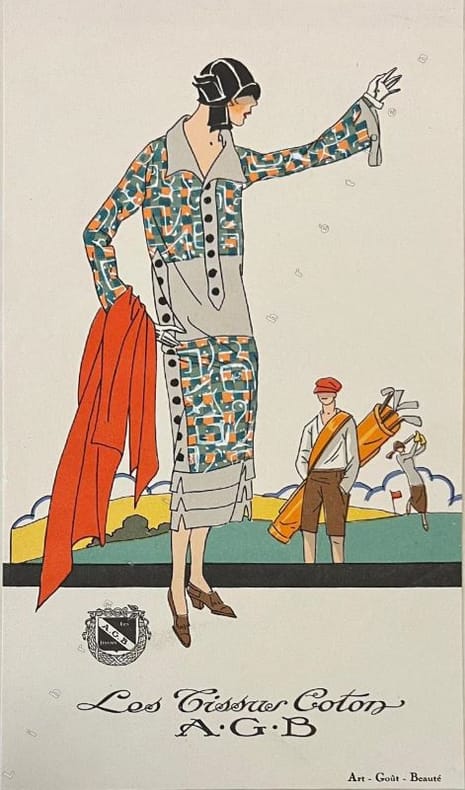
192224714paris 1922 1 in 4 Estampe rehaussée au pochoir, titrée, rehaussée sur la page de Garde. Paris, Successeurs d'Albert Godde, Beddin et Cie, (1922),
386161 vol in-8 broché - 162 pages - N° 33 de janvier - mars 1992
83543Seconde période - Tome cent troisième - XLIIIe année - 15 janvier 1873 - 2e livraison - Paris. Bureau de La Revue des Deux Mondes - grand in-8 broché - 240 pages
1st edition. Fine in green cloth with white lettering.8894. eng
Folio (ca. 275 x 365 and 370 x 555 mm). Altogether 13 volumes (7 text volumes and 7 issues of plates in 6 volumes). (4), 884, (4) pp. With 70 engraved and lithographed numbered plates, including 1 folded plate, 1 folded map, and 8 plans, 3 of which folded; a few in original hand colour. Contemporary wrappers. Plates stored in two half cloth portfolios. First edition. - A rare complete set of this monumental description of the 1860/61 archaeological expedition to Lebanon and Syria, commissioned by Napoleon III and led by the renowned scholar of Semitic languages, Joseph Ernest Renan. The text volumes give a vivid account of the expedition, its route and findings, and include several illustrations within the text, while the plates provide additional documentation of the visited archaeological sites. Engraved by Jules Penel (b. 1833), Georges Erhard Schièble (1821-80), and others, they include a map of the expedition area, Phoenician monuments at Amrit, Arwad, Byblos, Sidon and other places, as well as a folded plate showing the Kabr Hiram mosaic and 3 folded plans depicting Sidon and the Sidon necropolis. This important work documents the state of the excavations at that time and triggered further research on the Phoenicians. A facsimile edition appeared in 1998. - Text volumes uncut. Some wrappers faded, extremities bumped. Paper somewhat browned as common; plates fresh and clean.
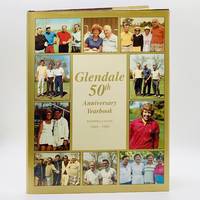
19966635Winnipeg Manitoba: Glendale Golf & Country Club 1996. First Edition First Printing. Hardcover. pp. 88. Slim 4to. measuring 29 cm tall. Publisher's maroon boards with gilt lettering to the spine and front board. Rich with many black-and-white photographs portraits illustrations facsimiles etc. Bright clean and unmarked; near fine and housed in near fine original unclipped dustjacket. Appears unread; as new. Corresponds to OCLC #36044467. <br/><br/> Glendale Golf & Country Club hardcover
8vo. 85, (11), 254 pp. Contemporary boards; spine rebacked with calf; giltstamped spine label. All edges red. Four important 17th and 18th century Western treatises on Islam, uniting works by Adrian Reland, Albert Bobovius, and Gottfried Wilhelm von Leibniz. Reland's two works in especial, first published in 1705, were considered a groundbreaking achievement: the first contains a brief dogmatic treatise (translated from an Arabic ms.), providing a Muslim self-portrait, while the second rectifies prevalent misconceptions about Islam (cf. Fück). The material, including translations of many passages, was drawn from original sources, chiefly from the 11th-century philosopher Ahmad ibn al-Husayn Abu Shuja` al-Isfahani (cf. Quérard, La France litt. VII, 512). Adriaan Reelant (1676-1718) held the chair of oriental languages at the University of Utrecht. The third part, originally published in Latin (Oxford 1690) as "Tractus de Turcorum liturgia", also discusses the pilgrimage to Mecca and includes notes by Thomas Hyde. The fourth part, by Mathurin Veyssière de Lacroze, was first published in his "Dissertations historiques sur divers sujets" (Rotterdam, 1707; cf. Quérard IV, 381). The present translation includes "a letter from Mr. Leibnitz to the author" (pp. 245-254). - From the library of the British philosopher of religion, David Arthur Pailin (b. 1936), with his bookplate and notes laid in. Chauvin XII, 1384. OCLC 15270828. Cf. Fück 102 (Reland). Not in Brunet.
196112884Leipzig: VEB F.A. Brockhaus Verlag, 1961. o.A. 158 Seiten , 30 cm, geb. Pappeinband
Large folio (450 x 330 mm). 114 ff., illustrated throughout with original photographs, with tissue guards. Original padded cloth with inlaid cast metal coverpiece. Stunning album commemorating the National Socialist exhibition on the history of the horse as represented in art from the stone age to the 20th century, held in Munich's Residenz from July 22 until November 15, 1936. Only 300 copies were produced (this copy is numbered 220). Perfectly preserved. Cf. OCLC 162880518 (4to).
200431602Paris Buchet / Chastel 2004 In-8 Traduit de l'américain par Anne-Marie Hussein - 443 pp en français - 1 ff Table - Cahier central de photographies non comprises dans la pagination. Cette édition n' est pas celle au format poche
8vo. 2 vols. (4), XV, (1), 400 pp. (4), 488 pp. With 10 engr. plates (2 folding). Contemporary quarter calf over mottled boards on four raised bands. Gilt lettering and decoration to spines. Marbled endpapers and edges. First edition of J. T. Reinaud's (1795-1867) rare catalogue of the famous collection of Islamic Art amassed by the French statesman Blacas. Most copies have title changed to "Monumens arabes, persans et turcs". This copy is inscribed by Reinaud to the Duc de Luynes, another famous French antiquarian. - The French antiquarian and diplomat Pierre Louis Jean Casimir, prince de Blacas d'Aulps (1770-1839) acted as prime minister to Louis XVIII when he succeeded Napoleon in 1814 and later served as French ambassador to the Holy See. Remaining in Rome for many years, he provided Ingres with a commission and became a patron to the German classicist Theodor Panofka. He worked closely with Italian archaeologist Carlo Fea in the excavation of the Roman Forum, supported the orientalist Jean-François Champollion and created the "Musée Egyptien" within the Louvre. In 1866, his descendants sold most of his collection to the British Museum, where it remains to this day. - The plates show beautiful specimens of Arabic calligraphical art (including many seals). Some browning and staining throughout. From the library of the Ducs de Luynes from the Château of Dampierre with bookplate to pastedowns. Ibrahim-Hilmy II, 159. Gay 3592 bis (variant title). Brunet IV, 1198. Graesse VI, 72. Quérard VII, 513. OCLC 39974885. Not in Arntzen/Rainwater.
8vo. 22 pp., final blank f. Contemporary unsophisticated wrappers. Rare offprint from the "Journal Asiatique", 1858, no. 10: Reinaud's account of the growing Arabic literary production among Syrian Christians, and the newly founded Lebanese periodical "Hadiqat al-Akhbar", Beirut's first bi-weekly newspaper. Numerous passages printed in Arabic, quoting from the works of Khalil-al-Khouri and others. - Some foxing throughout, small tear to corner of upper cover; old ownership (dated 1872). OCLC 223258574.
2003028214New York: Doubleday 2003. INSCRIBED / SIGNED by Rick Reilly directly on the front free endpaper. The inscription reads: "Fore! Jennifer Thanks 4 asking ME to dinner!" Laid in is a ticket with ticket number 3 to An Evening with Rick Reilly from February 2004. SIGNED copies are RARE. Near Fine condition in a bright and shiny Near Fine dust jacket. NOT price clipped $24.95. NO chips tears creases or fading. NOT a library discard. NOT a remainder. Pages are crisp clean and unmarked. Bound in the original green boards with a light gray spine stamped in green. From the dust jacket: "The funniest and most popular sportswriter in America abandons his desk at Sports Illustrated to caddy for some of the world's most famous golfers and some celebrity duffers recounting it all in this hilarious and revealing look at the world of golf. Who knows a golfer best Who's with them every minute of every round hears their muttering knows whether they cheat Their caddies of course. So sportswriter Rick Reilly figured that he could learn a lot about the players and their games by caddying even though he had absolutely no idea how to do it. Amazingly some of the best golfers in the world -- including Jack Nicklaus David Duval Tom Lehman John Daly Casey Martin and Jill McGill -- agreed to let Reilly carry their bags at actual PGA and LPGA Tour events. To round out his portrait of the golfing life Reilly also caddied at the Masters persuaded Deepak Chopra and Donald Trump to use him as a caddy accompanied high-rolling golf hustlers in Las Vegas around the course and carried the bag for a blind golfer. In WHO'S YOUR CADDY Reilly chronicles his experiences in the same inimitable style that makes his back-page column for Sports Illustrated a must-read for more than twenty million people every week. From his laugh-out-loud portrait of Deepak Chopra decomposing on the green to his portraits of good ol' boys who bet $100000 a round to his hilarious descriptions of his own ineptitude as a caddy to his insights into what makes the greats of golf so great Reilly combines a wicked wit with an expert's eye in a most original and entertaining look at golf. WHO'S YOUR CADDY is the next best thing to a great round of golf. It is sure to delight low-handicappers high-handicappers and everyone in between.". INSCRIBED / SIGNED by Rick Reilly. Later printing. Hardcover. Near Fine condition/Near Fine dust jacket. Illus. by NOT a library discard. 8vo. ix 261pp. Great Packaging Fast Shipping. Doubleday Hardcover
Hand-coloured engraved map (740 x 555 mm). A fascinating 1804 map of Persia by Christian Gottlieb Reichard. It covers from the Black Sea south as far as the Gulf and east as far as Punjab in India, including the modern day nations of Iran, Iraq, Georgia, Armenia, Azerbaijan, Turkmenistan, Afghanistan and Pakistan. The map identifies numerous towns, villages, deserts, mountain ranges, river systems and a host of other topographical features. The map is color coded according to territories and boundaries. The map curiously divides the country, as the title suggests, into the Eastern and Western Empire, suggesting suspicious political evidence. Furthermore, the islands in the Gulf are also erroneously shown as independent territories, suggesting political aspirations of the time. The map represents Persia under the Qajar Dynasty. In 1794, Aga Muhammad Khan of the Qajar Dynasty overthrew Loft Ali Khan, the last Shah of the Zand Dynasty, and relocated the capital to the new city of Tehran. The subsequent era, the Qajar Dynasty, witnessed numerous military conflicts with the rising powers of Imperial Russia and the loss of much of Persia's territory. Al-Qasimi 218. Not in Tibbetts, Al Ankary.
1951e7271aLondon: William Heinemann Ltd. VG : in very good condition without dust jacket. Creasing to spine. Browning to pages and text-block. 1951. First Edition. Green hardback cloth cover. 220mm x 140mm 9" x 6". xi 88pp. B/w photographs. Signed and dated by author on fep. . William Heinemann Ltd hardcover
8vo. 36 pp. Contemporary green cloth wrappers titled in gilt. A chronology of the Arab world spanning from Babylonian origin myth to the accession of Yezid, son of Caliph Mawiya I of Damascus in 679. Redhouse (1811-92) first sketched out his timeline while he was preparing a translation and commentary in the East India Office of a manuscript called the History of the Resuliyy Dynasty and the Kings of Yemen to the death of Melik Eshref II. He decided to publish his chronology separately in order to reach a wider audience, and so as to make it available to scholars who might find further use for it. Much of the early entries are by necessity semi-mythical, but Redhouse adds historical notes where possible, occasionally alongside his own personal commentary, such as in his entry for 12 BC wherein Hassan, son of Tubba' the Middle, king of Yemen, "uses the Macbeth strategem of boughs of trees to make the advance of his army against the place", or in 189 CE when he notes with some confusion, "The Saracens defeat the Romans; their first mention in history. (Who were they? Arabians have always been well known)", and at roughly 300 CE notes that "Lu'eyy b. Galib [...] ninth ancestor of Muhammed, wrests the principality of Mekka [...] out of the hands of the 'Ezdite tribe of Khuza'a. (It remains in the hands of his descendants to the present time, A.D. 1887)". - During his career Redhouse served the Ottoman government as interpreter to the Grand Vizier, as Minister of Foreign Affairs, and sat on the Naval Council. He was additionally involved in attempts to negotiate treaties for Britain and the Ottomans with Persia. In his retirement his focus turned entirely academic. - A little light wear, binding somewhat delicate. OCLC 5590516.
Small folio (224 x 284 mm). 15 vols. (final vol. in 2 parts), uniformly bound in half tan sheep over decorated boards, spines gilt with raised bands in five compartments, decorated endleaves. Some original printed wrappers bound within. All edges sprinkled. First editions; all that was published of this massive project. The "Corpo diplomatico" deals with the relations between Portugal and the Roman Curia, presenting a chronologically arranged sequence of documents from the 16th and 17th centuries. The Portuguese Empire was the first global empire in history, and the sources here edited - frequently citing the significant Portuguese royal title of "King of Portugal and the Algarves, on this side of the sea, and on the other side in Africa, lord of Guinea and of the naval and commercial conquest of Ethiopia, Arabia, Persia, and India" - provide substantial information on the principal world issues and conflicts during that vast Empire's first era. Much of the diplomatic correspondence concerns conflicts between the worlds of Christianity and Islam: in one letter, King Manuel describes his attacks on and victories over the local Muslim rulers ("the Saracens are thrown into confusion"; "our men attacked and burned maritime towns belonging to the Saracens, situated on the mainland"; cf. vol. I, p. 116f.), and in a Papal Breve, Pius V praises the strengthening of the Maltese fortifications after the Great Siege of Malta ("erit opportunissimum adversus Turcas, et praedones Afros totius christiani populi propugnaculum", vol. X, p. 226). Many volumes, but VII through XI in particular, contain material on the Arabian Gulf (Basra, Bahrain, Muscat, and Ormuz): "Ormuz, que he cabeça de todo o Reino de Ormuz [...] e na dita Cidade de Ormuz fortaleza minha com muita gente de christâos portuguezes" (vol. II, p. 374); "o vejo, que se se faz guerra ao Turco e Vossa Alteza quer, sem despesa de quasi nada, o Egipto e Suria e Arabia seraom vossos" (vol. III, p. 243); "e asy mandou que se reteuessem todas as naos, que viessem da India a Judá e a Meca" (p. 397); "se entende hum muito boom socedimento pella armada de Vossa Alteza na ilha de Banrrehem [= Bahrain] de que se deve ter muito contentamento assi pella reputaçâo" (vol. VIII, p. 372); "e depois em Ormuz poderia saber o acontesimento de Baharem" (p. 468); "toda a costa de Melinde ate Moçambique e assi da outra de Adem ate Ormuz quererâo por alguma d aquellas tentar ardis [...] A Baçora vai tambem muita somma de especiaria" (vol. IX, p. 110f.); "O negocio he grave e de muita consideraçâo e em ser muita a somma da speciaria que vem pello mar Roxo ao Cayro e pello de Ormuz a Bacora" (p. 135); "Andre Ribeiro que com Joâo de Lisboa foi cativo em Mazcate" (p. 175); "creo tambem que elles lá ou nos quá nâo sabemps o que passa em Bacora porque se n aquella ilha creserem galees sem hirem do mar Roxo, como as que ali vierâo quando de caminho tomarâo Mascate nâo sey por onde viessem as outras" (p. 305); "pera o resgate dos portugueses que estam cativos no Cayro, e forom presos em Mazcate" (p. 382; cf. p. 485); etc. - Furthermore, there are reports on the Portuguese in Suez, Africa (including Angola, Mozambique, Guiné, Sofala, Morocco, Arguin, Cabo Verde, Congo, São Thomé, Ethiopia), Brazil (Bahia, Maranhão, Rio de Janeiro, Pernambuco), the Azores, India (in nearly every volume, including Goa, Cochin, Damão, Malabar), and the Far East (Malacca and the Moluccas, with a few sections on Macau, China, and Japan scattered in vols. X-XIV). The work also provides a wealth of detail about the Inquisition and "cristãos novos" (both discussed in almost every volume), the Jesuits (vols. V-XV), the Council of Trent (vols. VI-X), Protestant activity (particularly in England), the Restauração, the Dutch in Brazil, the wars with the Turks on land and sea, and the activities of D. Sebastião and St. Charles Borromeu, the Order of Malta, and Cardinal Mazarin. Among the most notable texts are Ambassador Martinho's 1533 letter describing the forces defending Christianity in India and Africa, Bishop Lourenço Pires de Tavora's account of monasteries in India in 1561, and 25 letters written by P. Antonio Vieira from 1671 to 1675 (vol. XIV). - Marginal spotting in vol. XV, part 1; last 5 leaves remargined. Very discreet library markings on rear pastedown of each volume. Overall a very good set. Innocêncio IX, 95. OCLC 55783574.
1241740 president of the United States. Reagan Presidential GOLF BALL. White Nike golf ball with Presidential seal and facsimile "Ronald Reagan" signature on the ball. Mint condition. unknown books
Folio. 10 vols. Vol. 1 red half cloth with printed boards, vols. 2-10 blue cloth. With altogether 65 maps, of which 59 folding, several plates, portrait and a few text illustrations. An important standard work of Persian topography: H. A. Razmara's monumental gazetteer, or geographical dictionary, of modern Iran, "compiled and published in ten volumes by the Geography Department of Iran's Military Staff during the years 1328-1332 Sh./1949-1953. The [...] work provides an extensive amount of geographical, environmental and rural settlements" (Yeroushalmi, p. 81). In Farsi throughout. - Paper somewhat browned; spine of vol 4 sunned. Some notes in pencil. Collection stamps "ex libris eurasiasticis Dr. Jan von Loon, Herlenii". An uncommon set.