4 134 résultats
1991feb1207971991. Used. For more details please contact me unknown
10 vols (8vo) and atlas (4to) in 11 vols. With engr. portrait, 9 frontispieces, 50 engr. maps, and 23 folding tables. Contemp. half calf with spine label; atlas bound in contemp. full calf. First ten-volume edition of this famous work on the European trade with the East and America. The atlas includes the well-known map of the Arabian Peninsula by Rigobert Bonne (1725-95). "This map covers from 25'-60' E and 10'-50' N. It shows the north east of Africa and the Arabian Peninsula with its three classic divisions, Arabia Deserta, Arabia Petraea and Arabia Felix. On the part showing the Arabian Peninsula, [... the data] is concentrated in the west" (Al Ankary coll.). - Primarily written by Diderot and the encyclopédists, this the work saw no less than 12 editions until 1821. The text deals with the commercial relations between Europe and their colonies. Raynal’s treatises on the evils of slavery and the moral obligation to aid the underprivileged were ahead of their time, and Raynal was harshly criticised and forced into exile. - Contemporary ownership "Hippolyte Cazenove" to endpapers; atlas volume slightly browned. Formerly in the Ottoman collection of the Swiss industrialist Herry W. Schaefer. Sultan Bin Muhammad Al-Qasimi, The Gulf in Historic Maps, p. 198. Khaled Al Ankary Collection p. 388. McMinn 56. Sabin 68081. Feugère 51. Phillips 652. Brunet IV, 1126. Graesse VI, 40. Cf. Kress B 314 & 315.
4to (182 x 275 mm). (6), VIII, 40 pp. Publisher's original illustrated printed wrappers. First edition of this study on the origins of the Wahhabis, published from the archives of the French Ministry of Foreign Affairs. With a preface by the French historian Édouard Driault (1864-1947). An Arabic translation ("al-Tadhkirah fi asl al-Wahhabiyin wa-dawlatihim") appeared at Riyadh as recently as 2004. - Binding somewhat frayed and chipped. Uncut, untrimmed copy from the library of the respected Cairo-based Egyptologist and dealer in antiquities, Roger Khawam (1922-2016), who dispersed his library four years before his death (his Scarab bookplate to the front free endpaper). Macro 1874. OCLC 5277329.
Imperial folio (360 x 490 mm). In the two original, matching decorative portfolios. Half cloth, boards with illustrated lithogr. title, inside covers and flaps with ornamental decoration printed in gold, green and blue. Green ties. I: 12 pp. 36 lithogr. plates in colour (of which 4 are double-page). II: 12 pp. 54 plates in colour (of which 2 are printed in gold on blue paper and 8 double-page sized). First edition of both parts, complete and not listed thus in library catalogues or auction records of the last decades. The first part was considered lost; indeed, its very existence was doubted ("apparently the first part was never published", Atabey Sale, Sotheby's 29 May 2002, lot 990, the second part alone fetching £22,000). Contains a finely chromolithographed selection of plates illustrating Islamic architecture and architectural details drawn from various mosques and numerous examples of ornamental decoration taken from Islamic fayences. - Some staining to upper covers of both portfolios; outer cloth of spines restored; mild foxing to margins of a few plates in part II; otherwise, plates clean and in good condition. Atabey 1015 (part 2 only). Not in Blackmer.
4to. 3 parts in 1 vol. Title-page printed in red and black. With 3 woodcut title vignettes (including one showing a camel). (8) ff. (incl. final blank), 123, (1) pp. (2), 161, (1) pp., 1 bl. f. 176, (6) pp. Contemporary blindstamped brown calf with 2 clasps. Rare second edition, printed in the year of the first edition: a German description of a three-year journey to Palestine and the Near East by the botanist Rauwolf (1535-96), with many authentic and reliable observations, also about the people and customs and of the difficulties of travel. His description of the preparation of coffee in Aleppo was the first such report by a European. "Highly influential travel account by the learned Augsburg physician and botanist who journeyed to Jerusalem in the years 1573 to 1576. The 8th chapter of part I contains the celebrated descriptions of the coffee drink and of the coffee berry [...] Rauwolf's account of coffee as a social drink of the East is thought to be the earliest in a printed book" (Hünersdorff/H. II, 1221). "Rauwolf [...] made a hazardous journey in many parts of the East to collect foreign plants; his herbarium is now carefully preserved at the Rijksherbarium in Leiden" (Hunt 146). "He was the first modern botanist to collect and describe the flora of the regions east of the Levantine coast" (Norman). An illustrated edition expanded by a fourth part was published at Lauingen the following year. - Binding professionally repaired at extremeties. Title page remargined, showing some fingerstaining; occasional slight brown- and waterstaining; a few contemporary marginalia near the end. VD 16, ZV 12969. Adams R 188. Pritzel 7430. Cf. Norman 1782. Not in BM-STC German.
8vo. (4), 304 pp. With a frontispiece showing the author in Arab garb, 88 illustrations in text, most of them reproductions of drawings and photographs by the author, and a folding map loosely inserted in a pocket at the end. Publisher's green cloth. First and only edition, in the original Danish, of an account of a journey through the Arabian Peninsula. Sponsored by the Royal Danish Geographical Society, Barclay Raunkiaer (1889-1915) set out to penetrate the hitherto unexplored deserts of south-east Arabia. Although the traveler came equipped with a modest amount of scientific instruments and a camera, the use of these became almost impossible. The foreigner was looked on with suspicion by the Arabs and Raunkiaer could only use his camera, with great risk, at certain unwatched moments (p. 12). At the beginning of 1912, the traveler reached Kuwait, where he stayed at the palace of Sheikh Mubarak. Since it was Mubarak's policy to keep Kuwait free of foreign interference, it took some active lobbying of the British envoy to convince the Kuwaitis that Runkiaer was a harmless traveller. After that, it seems that the Dane enjoyed a certain amount of freedom, as numerous photographs, including one of pearl-fishers and a portrait of Sheikh Mohammed, testify. Raunkiaer was very impressed by the volume of trade in Kuwait, which he considered to be the most important trading town on the east coast of Arabia. - In Kuwait, Raunkiaer became seriously ill, but his tuberculosis was undiagnosed. After a period of rest, he travelled further to Riyadh. As the first western traveller in the city in half a century, Raunkiaer was graciously received by Ibn Saud. After a short stay in Riyadh, Raunkiaer followed a caravan which mostly consisted of 150 pearl-fishers bound for Bahrain. During a stay in Hofuf, where the book ends, Raunkiaer's health became worse and he sailed to Bahrain to recuperate. From there he travelled back to Copenhagen via Bombay. After a few years working for the East Asiatic Company, Raunkiaer died from tuberculosis. - Shortly after the appearance of the Danish edition, the book was translated into German. T. E. Lawrence, who considered it to be one of the "readable Arabian books", helped facilitate an English translation in 1916, which was privately printed by the Arab bureau in Cairo. - Inscribed by the author to the Danish historian of religion Ditlef Nielsen (1874-1949), with and a few annotations in pencil in the final chapter. Binding slightly worn along the edges, with a small stain on the title. Endpapers foxed with the text browned; some small random pen marks at the lower margin of p. 47. The map with a few tears along the folds, most of them expertly repaired; a very good copy. Facey, Kuwait by the first photographers, pp. 50-51; "Mr. Raunkiaer's expedition in east-central Arabia", The geographical journal XL (1912), pp. 331-332; "Danish expedition to Arabia", The geographical journal XLIV (1914), pp. 85-86; not in Howgego.
XII, (2), 148 pp. With hand mounted coloured frontispiece of Fa Serr and a folding map. Profusely illustrated throughout. Original cloth with dust jacket. 8vo. Limited second edition. Number 204 of 1000 copies. Signed by Carl Raswan in Arabic and English on front flyleaf. The sum of Raswan's research into and knowledge about Arabian horses among the Bedouin and of his visits to Arabian Studs in Egypt and other parts of the Near East. - Very rare as all of Raswan's works, an excellent copy. Boyd/P. 99. OCLC 401346888.
7 vols. Original illustrated cloth/gilt embossed percaline. First editions, very rare. - Complete set of this famous reference work. No more than 380 copies were printed (and many destroyed by a flood); vols. III and V were limited to a press run of 250 and 284 copies, respectively. Raswan became an expert on the Arabian breed through his lengthy trips to the desert, where he lived with the Bedouins and learned their language and customs. - Some hinges split. All volumes save for VI and the posthumous VII numbered and signed by Raswan, mostly in the year of publication. In very good condition.
Large 4to. X, (2), 134 pp. Contemporary green half calf over marbled boards with giltstamped spine title. Marbled endpapers. First edition. - History of the Muslim world and its rulers from Muhammad's flight (AD 622) to the year 1020 AH (AD 1611). The Danish oriental scholar Jan Larson (Jens Lassen) Rasmussen (1792-1826) had studied in Paris with de Sacy (cf. Fück 156). - Binding rubbed and bumped. Some browning and light dampstaining to interior, old shelfmark label to pastedown. Provenance: stamp of the oriental scholar Charles Barbier de Ménard (president of the École des Langues orientales from 1898 to 1908) on title, with additional Canadian library stamps of the Ottawa Commissariatus, Terrae Sanctae. Rare. OCLC 953808200.
42 x 100 cm. Five-tone lithographic map with illustration by Harraz. Constant ratio linear horizontal scale 1:7,500,000. Road map also showing railways, populated places, boundaries, rivers, wadis, and possible flood areas. Includes inset map: Diagrammatic map of the Arab world. Folded. First edition of this large, decorative map, showing the highways that linked countries under Arabian influence in the early 1970s. It stretches as far north as Turkey, south to the Sudan, west to Mauritana and east beyond the Strait of Hormuz, capturing the whole of the Arabian Gulf including Kuwait, Bahrain, Muscat, Oman, Saudi Arabia and the People's Republic of Southern Yemen. The verso contains an index of main travel routes through these various countries. - The United Arab Republic, as it is here referred to, was formed through a political union of Egypt and Syria. It was instigated by the Egyptian Prime Minister Gamal Abdel Nasser (1918-1970) and was seen as an expression of pan-Arab sentiment. Syria broke aways from the union in 1961 (and is here shown as an independent country), but Egypt continued to use the name until 1972. The People's Republic of Yemen, the only communist state to be established in the Arab world, was formed in late 1967, to last until 1990. - Some nicks and small tears, a single mark to the covers, a 1 cm tear on the left side of the map. In very good condition for a fragile map. Scarce: LibraryHub does not locate any holdings whilst Worldcat adds just eight institutional copies worldwide. OCLC 5403988.
Large 8vo. XIX, (3), 83, (1) pp. With 3 plates. Original green cloth with giltstamped spine title. First English edition of this classic of hippiatry. "Saadat Yar Khan (1756-1835) was the son of Tahmasap Beg Khan Turani, a Persian nobleman. After his death, Rangin shifted to Delhi and began an army career. In 1787, he left the job and went over to Bharatpur and after two years again shifted to Lucknow where he was in the service of Mirza Suleman Shokoh. After a stay of nine years in Lucknow, he left to travel in Bengal. Later, he reached Gwalior and served the Sindhias for six years. He again resigned from service and took to trading of horses and touring" (Samiuddin, Ency. dict. of Urdu lit., p. 507). - A good, clean copy with C. Antony Penton's bookplate on front pastedown. Boyd/P. 99. Mellon Coll. 309.
9" x 4" map folds out to 24" x 18". Printed in two colours - the traditional Gulf blue and orange. Moderate wear. Unmarked. A quality copy of this wonderful vintage road map. Map
20051-0792238729Natl Geographic Society 2005. Hardcover. New. new title edition. 160 pages. 10.75x9.25x0.75 inches. Natl Geographic Society hardcover
3 parts in 3 folio volumes (302 x 205 mm). (4), 34, 436 ff. 30, 248 ff. 6, 34, 455 (not 456) ff. With a total of 51 engravings in the text (7 full-page) and 12 double-page maps and plans (2 full-page). 20th-c. full brown morocco, double-gilt fillet on the covers, spine ribbed and decorated with gilt fleurons, mottled edges. Stored in custom-made calf-edged slipcases. Perfectly complete copy of this superb collection of travels, composed of the first edition of the 3rd part and the second edition of the 1st and 2nd part. The second edition, widely enlarged, of the 1st part, is the first and only one to present the 3 double-page maps representing Africa and India that had not been printed in the first edition of 1550, and which would not be reprinted in the 3rd edition of 1563 since the wood plates of these 3 maps had been destroyed in the fire that ravaged Giunti's workshop in 1557. - "This work, which served as a model to Hakluyt, was the first systematical collection of voyages that had so far appeared [...] It [...] is carefully and intelligently done" (Cox). "All authors are unanimous of their praise of Ramusio's choice of published narratives. Locke, the English philosopher, states that it is 'the most perfect work of that nature in any language'. Harrisse writes, 'The publication of Ramusio's "Raccolta" may be said to open an era in the literary history of Voyage and Navigation. Instead of accounts carelessly copied and translated from previous collections, perpetuating errors and anachronisms, we find in this valuable work original narratives which betray the hand of a scholar of great critical acumen'" (Borba de M.). The first volume, mainly dedicated to Africa and South Asia, happily includes several travel reports of the utmost importance for the exploration of the Arabian Peninsula and the Gulf region. Lodovico Varthema's travel report, famous for detailing the first recorded visit of a Westerner to Mecca, indeed the first western encounter with the Arab world, contains accounts of the holy cities of as well as of the port of Jeddah, information on Bedouin life and costume, etc. (ff. 162-166). - The account of Vasco da Gama's voyage to India is comparable in importance only to Columbus’s in the west, as it “opened the way for the maritime invasion of the East by Europe” (PMM 42). Da Gama’s pioneering sea voyage ranks amongst the greatest historic events of the second millennium and as “one of the defining moments in the history of exploration” (BBC History, online). It is also considered the turning point in the political history of the Arabian Gulf region, followed as it was by a prolonged period of east-west commerce, conquest and conflict. Critically, the excerpt here published includes details on "una isola [i. e., Julfar] verso il colfo Persico dove altro non si fa che pescar perle" (I, f. 132). - Duarte Barbosa's report includes accounts of Mecca and Medina (f. 323), the ports of Jeddah (ibid.) and Aden (f. 324), the Arab kingdom of Hormuz (ff. 324-327), Julfar and the islands in the Arabian Gulf (f. 325, with reference to pearl-diving), etc. Also, we find the very early and highly influential, albeit imprecise data on the Kuwait region: place names such as Lorom, Gostaque, Bacido, Conga, Menahaon (p. 325) etc. which Slot discusses at some length: "Much of the toponymic information in the Kuwait region on the maps from the Gastaldi group is based on an erroneous interpretation of Duarte Barbosa's text. From this text come the strange names of places in the area of Kuwait like Costaqui (Kuhistaq) which should in fact be placed on the other side of the Gulf [...] Loron [...] might be an error for the Karun River which is on the Persian side just east of the Shatt al-Arab. Then follows inside the inlet of the Gulf of Kuwait the name Manahon. Then follows around this 'Gulf of Kuwait' three names which are cased by erroneous plotting [...]: Congo (Bandar Kong), Costaqui (Kuhistaq) and Bacido (Basaidu) with the offshore island of Queximi (Qism). These are names taken from [...] Duarte Barbosa's book and erroneously plotted on this coast" (Origins of Kuwait, p. 15). - The volume also includes a set of three woodcut maps by Gastaldi: the first showing Africa, the second showing the Indian subcontinent, the Strait of Hormuz, the Eastern half of the Gulf, and the Indian Ocean, while the third shows Southeast Asia and the East Indies. These were a great advance on earlier maps, including even Gastaldi's own, taking into account new information provided by Portuguese explorers. Many of the topographic names in the Gulf region derive from the forms used by these navigators and can be identified, sometimes tentatively, from their place on the first two of these maps and from the early accounts of the voyages: "Cor. Dulfar" (Dhofar), the island "Macira" (Masirah), "C. Resalgate" (Ras al Had?), "Galatia" (the ancient site Qalhat), "Mazcate" (Muscat), the island "Quexumo" (Qeshm), "Ormus" (Hormuz), and there is even an unlabelled city close to the present-day Abu Dhabi. - Occasional handwritten ink notes. Waterstain on the lower part of vol. 2, ff. 31-35; some browned leaves; otherwise fine, a washed copy. Provenance: Professor Eva G. R. Taylor (1879-1966), historian of science and the first woman to hold an academic chair of geography in the UK, presented to Birkbeck College, University of London (bookplate) and sold through Sotheby's in 1990. Sabin 67731, 67737, 67740. Harrisse 304. Church 99. Borba de Moraes² 698f. Bosch 46. Cox I, 28. Cordier, BS 1939. Fumagalli (Bibl. Etiopica) 83 (note). Gay 258. Adams R 135, 137, 140. Brunet IV, 1100f. Slot, The Origins of Kuwait (1998), p. 15 & 187.
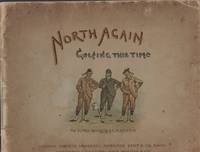
18943061aLondon: Simpkin Marshall Hamilton Kent & Co Ltd. G : in Good condition without dust jacket. Cover rubbed and soiled with edge-wear. Some foxing. 1894. Reprint. Illustrated card cover. 200mm x 250mm 8" x 10". 25pp ads. . Simpkin, Marshall, Hamilton, Kent & Co Ltd unknown
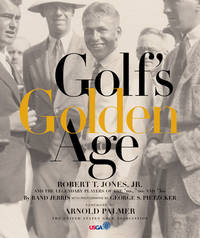
18903061London: Day & Son; Simpkin Marshall Hamilton Kent & Co Ltd. G : in Good condition. Cover rubbed. Slight foxing. 1890. First Edition. Maroon hardback cloth cover. 190mm x 250mm 7" x 10". 27pp 25pp ads. According to the Badminton Library. . Day & Son; Simpkin, Marshall, Hamilton, Kent & Co Ltd hardcover
8vo (148 x 206 mm). 56 pp. Original printed pink wrappers. Omar Rakbani (1904-62), a professor at Ez-Zitouna University, was a Tunisian historian and tutor of Muslim girls. Fond of travelling, he published several accounts of his journeys through Europe, North Africa and the East in a series entitled "Summer Trips". This sixth booklet in the series is devoted to his visit to the Hejaz in 1947, when he performed the Hajj to Mecca. - Slight fraying to wrappers; slight waterstain. Extremely rare: a single copy in OCLC (National Library of the Kingdom of Morocco, Rabat). OCLC 929787399.
C. 280 x 180 mm. Pencil and opaque white on brown paper, signed at bottom left: "Rainer | May 1844", captioned at right: "Jerusalem gesehen vom Tempel des Salomon". Matted. Depicts the south-western corner of the Temple Mount (with Dome of the Rock, Al-Aqsa Mosque, and hinting at the recently rediscovered Robinson's Arch). Archduke Rainer, one of the most eminent figures during the rule of Emperor Franz Josef, also was a talented landscape painter and lithographer (cf. Fuchs II, 37). Although he served in political functions (he was Austria's first constitutional Minister-President from 1861 to 1865), his heart always belonged to the arts and sciences. An honorary member of the Imperial and Royal Academy of Sciences, the variously talented Archduke was one of the Habsburg family's most remarkable collectors: his Viennese library encompassed some 40,000 volumes (not counting the inherited library in Hernstein Castle), and the "El Fayum" papyrus collection acquired by him, containing a treasure of 180,000 papyri now stored in the National Library, is regarded as "the greatest of its kind in the world" (Unesco, Memory of the world, Nominated Documentary Heritage). - Rainer, son of the brother of Emperor Franz, spent his youth under the tutelage of his artistically inclined parents and excellent teachers, and it was common for the young Austrian Archdukes in the first half of the 19th century to be instructed in draughtsmanship by the great Chamber painters of the time. The Holy Land was not an uncommon station on the tour of contemporary Chamber painters: Eduard Gurk even died there in 1841 on a study tour. - The quality of the present illustration clearly surpasses that of Rainer's known student drawings (two, dated 1839, are preserved at the National Library, Bildarchiv und Fideikommissbibliothek, PK 3050 2 and 3). The mature talent of the Archduke, only seventeen years old in 1844, is especially evident in comparison with the works of other members of the Imperial family, many of which also dabbled in landscape painting (their works are preserved in the so-called Dilettante cassettes in the Albertina).
120 pages. Features: Cover illustration of International Farmall tractor harvesting grain; Lovely colour ad for Nash cars inside front cover; Color photo of golfer Sam Snead in one-page B.F. Goodrich tire ad; Half-page color ad for Titleist "Acushnet" golf balls; Nice two-page color ad for Mobilgas features large winged horse; Lovely half-page color ad for Hydrox cookies; Great two-page color ad for Chevrolet cars, featuring their PowerGlide transmissions; The Ordeal of Judge Harold Raymond Medina - he is hard on Reds; The Wrath of Tugboat Annie (story); Edmonton, Alberta - feature article with many photos, including youthful premier Ernest Manning; Ditchdigger's Daughter (story); Getting ripped off by phoney weigh scales; Photo-illustrated article on simultaneous translators at the U.N.; James (Big Jim) Morton - "I Was the King of the Thieves" - part 2; Appointment with Treachery (story); Super color-photo illustrated article on circus highwire performer the Great Alanza; The Magnificent Faker (story); Funny Way to Got To School - Calvert School in Baltimore; Bonus Rookie (story); Nice one-page color-photo ad for Campbell's Chicken Gumbo soup includes an Aunt Jemima-like lady cooking at fire; Lovely one-page color ad for the (yellow) Oldsmobile "88" Holiday Coupe; Murder is the Pay-Off (story); Nice one-page color-photo ad for G.E. fridges with the new Alnico Magnetic Door; Nice one-page color ad for De Soto cars; One-page color cartoon-style ad for Post cereals features baseball scene; Pall Mall cigarette ad; Nice one-page color ad for Ford cars; Sultry one-page ad for movie "Born to Be Bad" starring Joan Fontaine; Nostalgic two-page color ad for Kraft mayo and salad dressings; Nice one-page color ad for Frigidaire electric ranges; One-page color ad for the Studebaker Champion; One-page color ad for Hudson cars; One-page ad for RCA Victor televisions; One-page photo ad for Prest-O-Lite batteries features lady golfer Babe Didrikson Zaharias; Wonderful color ad for Chesterfield cigarettes inside back cover features Gene Tierney and tobacco farmer Charlie P. Murphy of Mebane, N.C.; Attractive back cover Coke ad features large pop machine surrounded by a crowd of happy Coke drinkers. Somewhat above-average but not excessive wear. Light pink discoloration to part of top and bottom edge of most pages - text unaffected. Small piece missing from front cover at top of coverfold. Binding intact. Unmarked. A sound vintage copy. Magazine
3003Boston: The Company; Alfred Mudge & Son Printers 1878. . 8vo dusty pink wrappers front printed; some chips; slightly soiled One holding library in OCLC Boston: [The Company]; Alfred Mudge & Son, Printers, 1878. unknown books
2472Boston: The Company Alfred Mudge & son Printers 1878. . 8vo buff wrappers front printed some minor fragments missing from the bottom margin of the first few leaves not affecting text One holding library only in OCLC. Lists all capital expenditures for the year bridge building and other repairs; a breakdown of all shipments sent and the usual financial disclosures Boston: [The Company] Alfred Mudge & son Printers, 1878. unknown books
Small folio (ca. 210 x 314 mm). (10), 308, (12) pp. With engraved title-page and 5 full-page engraved illustrations in the text, as well as several woodcut initials and woodcut printer's device. Contemporary full vellum. All edges red. Second, improved Latin edition of this famous account of a pilgrimage to the Holy Land by the Polish Prince Mikolaj Krzysztof Radziwill (1549-1616), frequently translated and reprinted. First published in 1601; the present edition is corrected and expanded. - During his two-year journey from 1582 to 1584 Radziwill visited not only Palestine, but also Syria, Egypt, Crete, Cyprus, Italy and Greece. "Radziwill, in his account of the pilgrimage to the Holy Land and Egypt, described the ethnic diversity of the inhabitants of these lands. Critics underline the fact that his descriptions were ethnographic in character and quite objective. His 'Peregrynacja' was published in Latin and in Polish and apparently was quite widely read" (S. Grodz, Islam in Polish-Lithuanian/Ottoman Encounters, in: The Character of Christian-Muslim Encounter, Leiden 2015, p. 234). - The emblematic illustrations show sailboats in a fierce storm, such as Radziwill himself encountered, as well as appropriate Biblical quotations in banners decorated with maritime elements, but also a plan of the Church of the Holy Sepulchre in Jerusalem (a separate appendix describes the prayers and songs there to be sung). - Binding somewhat brownstained and a little warped; upper hinge starting. Paper evenly browned throughout, occasional brownstains. Provenance: from the library of Duke Franciszek Maksymilian Ossolinski (1676-1756), Polish politician in the service of the exiled Stanislaus I. Leszczynski and an important collector, with his autograph ownership inscription "Ex Libris F. M. Ducis de Tencryn-Ossolinski", dated Lunéville, 12 Sept. 1741, to front pastedown, and a three-line handwritten French quotation from St. Augustine to lower pastedown. In all a good copy of a widely received work; this edition rarely seen at auction. Weber II, 204. Röhricht p. 208, no. 787. Estreicher XXVI, 90. Brunet IV, 1087. Graesse VI, 17. Baumgarten, Hall. Bibl. VI, 65f. Ebert II, 18596. Tobler 83. Cf. Aboussouan 769.
Royal folio (375 x 488 mm). VII, (1), 204, VIII pp. With 64 plates (46 full-page, 17 half-page and 1 folding), mostly engraved after Ludwig Christian Fuhrmann, some after drawings by the author; 8 engraved text vignettes, 1 engraved tughra as headpiece; lithographed dedication. Modern half calf over contemporary marbled boards with printed title label on spine. First edition. - The very rare original edition of this important account of a journey through Turkey and Asia Minor. According to Brunet the finest publication ever to leave a Polish press, it was soon translated into German as "Malerische Reise in einigen Provinzen des Osmanischen Reichs" (last sold for £20,400 at Sotheby's 2004 Natural History and Travel Sale; no copy of the present original edition has appeared at German auctions during the last decades). - The Polish statesman Count Edward Raczynski (1786-1845), a patron of the arts and founder of the Raczynski Library in Poznan, travelled to Constantinople by way of Odessa during the months of July through November 1814. He was accompanied by the artist Ludwig Christian Fuhrmann (1783-1829), and most of the plates are engraved after his drawings. Raczynski also visited the Troad, the peninsula containing the ruins of Troy, of which a detailed description is given. This beautifully illustrated work is highly sought after for its many detailed engravings, including a folding map of Istanbul, illustrations of the ruins of Troy and Assos, the bay of Lesbos, a portrait of Sultan Muhammad IV, the mosque of the Sultan, etc. - In the present set, most of the plates are early or proofs prints, still lacking numbers and/or captions, which are frequently supplied in meticulous pencil calligraphy (in Polish and English). Leaves of pp. 1/2 and 3/4 transposed; the former bound showing page 2 before 1. Interior severely browned throughout as common. Tears to title and dedication repaired; a few edge flaws due to brittleness of paper. Only 5 copies of this original edition listed in library catalogues internationally (BL, BnF, LoC, Stabi Berlin, NL Sweden). Brunet IV, 20412. Weber 133 (note). Not in Atabey. Cf. Blackmer 1375 (1824 German edition).
8vo. 307 ff. Naskh calligraphy, 15 lines. Black ink on polished paper; borders in red and gold; sura headings in white ink on gilt; gilt discs for verse divisions. Double-page 'unwan on first two pages shows elaborate gilt ornamentation; colophon shows floral ornamentation in green and gilt. Coloured floral decoration to margins. Later cloth. Colophon in Arabic: "Finished Thursday afternoon 3 o'clock. The scribe is the son of Mehmed Halil Ibrahim, what is done is determined by Allah". - Provenance: acquired in Istanbul, Turkey, in the 1960s.
26 x 37 mm. 819, (5) pp. Original leather leather binding richly gilt with floral motifs, with leather clasp and cord with attached magnifying lens. All edges gilt. In original cardboard box. A charming miniature Quran in excellent condition, preserved in its original gilt binding and cardboard box. With richly decorated opening double page frontispiece. Fully vocalized text set in a frame, verse separators, sura headings and section markers in the margins printed in black throughout. These miniature Qurans were printed at the press of Hans Steinbrener since the early 1900s; with the new millennium, the shop closed down and ceased production. These miniature editions of the Holy Quran, with their elaborate gilt leather bindings and attached magnifying glass, count among the finest examples of their kind and as masterpieces of Bohemian printing and craftsmanship. "The firm advertised itself as the continent's largest producer of artistic bindings for prayer books and the largest publisher of prayer books [...] This publisher supplied a market ranging from Manila to New York" (Marija Dalbello, "Franz Josef's Time Machine: Images of Modernity in the Era of Mechanical Photoreproduction", in: Book History, Vol. 5 [2002], pp. 67-103). - Available colours: green, red, blue, brown, maroon. Gilt cover design, box design, and clasp design may vary. Coin shown for size comparison only.