Buckingham, James Silk.MareMagnum

4 134 résultats
4to. XV, (1), 669, (1) pp. With a folding engraved map and 28 wood-engraved vignettes as chapter headings. Half brown calf over marbled boards, spine compartments ruled and decorated in gilt, burgundy morocco gilt lettering label. First edition. James Silk Buckingham (1786-1855), founder of the Calcutta Journal, Oriental Herald and Colonial Review, The Sphynx, and The Argus, social reformer and founding member of the British and Foreign Institute, travelled in the Middle East as a sea captain and merchant. This work relates the part of his travels which took him through Nazareth, the plains of the Hauran, Damascus, Tripoli, Lebanon and Balbec to Aleppo. An appendix refutes the charges of plagiarism brought by Burckhardt and Bankes against his Travels in Palestine. - Occasional light foxing and staining, slight offsetting from the engraved map to the titled. A very good copy. Blackmer 232. Tobler 143. Röhricht 1650. Howgego II, B69, p. 78.
8vo. XII, (2), 346 pp. With a double-page map on blue/green paper, 22 double-sided plates, a green ornament on the title-page, a small woodcut of Asolo on p. 336, and some small decorations in the text. Green cloth with gold lettering on front cover and spine. With a dust jacket designed by F. Quilter. First part of Freya Stark's autobiography, spanning the years until her early thirties (1893-1927), immediately before embarking on her travels. The author was one of the first non-Arabs to journey through the southern Arabian Desert, in the 1930s. - The present copy is a reprint of the first edition; it was published in 1951, merely months after its first appearance in September 1950. Even though Stark's uniquely personal writing style was considered unusual at the time, her books proved very popular. Stark was of Italian and British descent; she was born in Paris and grew up in several places throughout Europe. - Freya Stark's autobiography includes three additional works: Beyond Euphrates (1951), The Coast of incense (1953), and Dust in the Lion's Paw (1961). - Dust jacket is somewhat damaged and partially repaired with tape, edges are untrimmed, small repair to the inner front hinge with tape. Overall in very good condition. Howgego IV, S 61. Cf. article "Freya Stark" in Encyclopaedia Britannica. Shapero, The Islamic World (2003), 470 (other ed.).
Small folio. 3 vols. (2 vols. of text and 1 plate vol.). 288 pp. 256 pp. 64 plates. Contemporary half calf on raised bands, red morocco spine labels, black volume numbers. Marbled endpapers. First edition, one of 125 copies. - The learned Italian abbot and orientalist Michele Angelo Lanci (1779-1867) taught Arabic at the Sapienza in Rome. For his "Trattato", Lanci studied Islamic artefacts such as the famous "Vaso Vescovali" (now in the British Museum), of which he provided the first scholarly account. Includes engravings of inscriptions on talismans, amulets, arms and armour, metalwares and textiles. - Some foxing. From the library of the Ducs de Luynes at the Château de Dampierre: their bookplate reproducing the arms of Charles Marie d'Albert de Luynes (1783-1839), 7th Duc de Luynes, on pastedown. - Of the utmost rarity, no copies recorded at auctions since decades. No copy in the US. ICCU UBO\3282249. OCLC 41653985. Cf. Gay 2094. Brunet III, 809. Graesse IV, 93 (1846 ed.).
Folio (202 x 294 mm). (16), 100 pp. Title printed in red and black. With woodcut title vignette and full-page woodcut of the author at the end of the preliminaries. 19th century half cloth. Second edition of Galvao's great history of exploration and voyages, including the Portuguese conquests on the Arabian coast, in the Gulf, and in the Kingdom of Ormus. The first edition, published in 1563, is considered virtually unobtainable, as only some five or six copies are known to exist. "This second edition, says Innocencio, 'has been equally rare for many years, since almost all copies were lost, in the house of a bookdealer, during the Lisbon earthquake'" (Borba de Moraes). Galvao's text was translated in 1601 by Hakluyt, who complained about the rarity of the first edition even then, and had to rely on a copy sent from Lisbon. - Born in 1503, Galvao was sent to India in 1527, and after distinguishing himself there, he was appointed governor of the Moluccas. He maintained a keen interest in military and religious affairs throughout his career, and spent the latter part of his life assembling accounts of the voyages that comprise this collection. He provides a relatively succinct chronological list of ancient and modern discoveries to the year 1550, including those by Columbus, Cabral, Cortés, and Pizarro. "Ce livre est divisé en deux parties: la première traite des premières navigations, y compris celles faites par les Espagnols et les Portugais dans l'océan Atlantique et aux côtes d'Afrique. La seconde partie contient toutes les découvertes faites par les Espagnols et les Portugais en Amérique et aux Indes jusqu'en l'année 1550" (Leclerc). "The author has been styled 'the founder of historical geography'. The book gives a good summary of the geographical explorations of the Portuguese and other important voyagers, including the English" (Hill). - Spine worn. Slight spotting and thumbing throughout, slight worming to lower blank margin of first 6 leaves, minor hole to blank margin of fol. M3. Sabin 26468. Borba de Moraes 289. Bosch 180. Rodrigues 1059. Palau 182.290. Leclerc 225. Innocencio I, 147, 720. Hill 670. Bibliotheca Americana 642. European Americana 731/89.
560 x 430 mm. Folding poster with several black-and-white photographic illustrations. Aramco poster celebrating technological advances in the Arab world. Featuring pictures taken by Aramco employees, it presents the various modes of transportation in Saudi Arabia, emphasizing the symbiosis of progress and tradition: "Present-day Arabia is a meeting place of ancient and modern ways. Arab Bedouins and camels, reminiscent of Biblical days, are often seen side by side with modern airplanes and oil rigs". The images show pack animals, sail boats, cars, buses, tankers, trains and airplanes.
4to. 3 vols. XXXVIII, 319 (but: 337), (1) pp. VIII, 379, (1) pp. XII, 556 pp. With 50 (instead of 51) engraved plates and maps (9 [instead of 10] of which folding), 2 in original hand colour. Contemporary giltstamped full calf with giltstamped spine-labels. First edition: a scarce series of research papers of one of the leading learned societies of the 19th century, focusing on India and Persia. Among the most prominent authors are James Mackintosh, George Staunton, Henry Salt and Vans Kennedy. The "Transactions" include an English translation of the fifth sermon of Saadi, a discussion of the Akhlaq-i Nasiri, the account of a journey from al-Qatif to Yanbu, a description of the character of Muhammad, and an account on the deciphering of cuneiform, as well as papers on antiquities and archaeology, literature, religion, linguistics, geology, history, current affairs, and anthropology. The illustrations depict mainly archaeological finds and excavation sites, including the caves in Salsette and the excavations at Elephantana, as well as architectural ornamentation, showing the Temple of Boro-Budor, cuneiform writing, and "a curious case in Arabian surgery" involving a wounded arm. - Provenance: "Ochterlony" bookplate to front pastedown of volume II, most likely that of David Ochterlony (1758-1825), commander of the British East India Company and British Resident at the Mughal Court in Delhi. Later obtained by the Schlagintweit brothers, eminent German 19th century scientists and explorers (their library blindstamps "Ex Bibliotheca Schlagintweit" to title-pages). Last in the collection of Prince Konrad of Bavaria (1883-1963), a member of the Bavarian Royal House of Wittelsbach (his bookplate to pastedowns of two volumes and front free endpaper of the other, his library stamp to half-titles). - Bindings professionally restored; vols. I and II lacking title-labels. Tears in gutter of one folding plate repaired with old adhesive tape (not touching image). Some minor spotting, offsetting of plates and text; light marginal dampstaining to a portion of volume two. A scarce work with fine provenance. OCLC 977182244.
Small 8vo. (4), VII, (1), 138, (2) pp. Modern half calf with giltstamped red spine label, light cloth covers. All edges red. Rare first edition of one of the earliest treatises devoted exclusively to cannabis, extolling its virtues as a medicine, industrial fibre, seed oil, soap, animal feed, and so on. Marcandier in particular recommends the cultivation of the plant in the "Nord d'Amerique" (p. 46), and indeed the Traité du Chanvre was read by perhaps that region's most famous hemp enthusiast, George Washington - whose library contained a copy of the English translation printed in 1764, cataloged as Wa/549. - Marcandier begins with a scholarly account of the herb as it was known to the Romans (quoting Dioscorides, Pliny, and Herodotus), presenting intriguing theories of the etymology of the term cannabis: from the Celtic canab; the Greek kanna; the Hebrew kanneh; the Latin canna; etc. Although he is most concerned with its cultivation and medical applications, in his surveys of cannabis in non-European cultures we find descriptions of what can be termed 'recreational use': for example, "the Hottentots use a plant, named Dakha, instead of tobacco, or at least mix them together, when their provision of the latter is almost exhausted. They say that it is a kind of wild hemp" (pp. 19f.), while the 'flour' (farine) of the plant mixed into a drink "renders those who use it drunk, stupid, dazed; they say that the Arabs make of it a type of wine, which intoxicates" (p. 37). - Evidently drawing on personal experience, Marcandier describes the female flower as a "tender, sweet, and oily, white kernel, of a strong smell, that intoxicates when it is fresh" (p. 28) and even gives lengthy advice on how to inspect and purchase good-quality hemp (p. 76) and how to dry the plant properly, to avoid 'black spots' i.e. mold from forming (p. 54). - Cannabis is also recommended for myriad medicinal uses: "The grain and the leaves being squeezed, while they are green, and applied, by way of cataplasm, to painful tumors, are reckoned to have a great power of relaxing and stupefying ... The root of it boiled in water, and applied in the form of a cataplasm, softens and restores the joints of fingers or toes that are dried and shrunk. It is very good against the gout, and other humours that fall upon the nervous, muscular, and tendinous parts. It abates inflammations, dissolves tumours, and hard swellings upon the joints. Beat and pounded in a mortar, with butter, when it is still fresh, it is applied to burns, which it relieves greatly when it is often renewed" (pp. 38, 40f.). Marcandier also finds it useful as a spermicide (p. 35) and against gonorrhea, jaundice, smallpox, and 'vermin of the ear'. - A few contemporary ink annotations throughout. Provenance: from the library of the noted French botanist Philippe de Vilmorin (1872-1917) with his bookplate and separate shelfmark label ("a progenie in progenies") to pastedown. An excellent copy. Very rare: OCLC records 8 copies in US institutions (Chicago, Princeton, Lloyd Museum (OH), American Philosophical Society, Carnegie Mellon (Hunt Institute), Harvard, Minnesota, and the JCB). Not in Kress. Cf. Clarke & Merlin, Cannabis: Evolution and Ethnobotany (University of California Press, 2013), p. 202; and Gibson, "Bibliotheca Cannabinacea", in: Journal of Industrial Hemp 13 (2008), pp. 176-188.
8vo. LVI, 312, (4) pp. With 2 folding engr. plates and 5 (3 folding) tables. Contemp. calf binding (repaired); marbled endpapers. First French edition. - "Été longtemps considéré comme un ouvrage classique" (Mennessier de la L.). - First and final gatherings a and V misbound, but complete. Old stamp to title page; occasional browning and waterstaining. Mennessier de la Lance I, 607. Huth, p. 51. Schrader 181.
8vo. (8), XXXXV, (1), 104 pp. With engraved dedicatory headpiece and 8 (instead of 10) engraved plates (some depicting cuts of diamonds) and tables. Contemporary smooth calf with gilt cover borders and red spine label. First edition in French of this early book describing "how diamonds and pearls can be evaluated on the basis of the factors of size (or weight) and style of cut" (Sinkankas). The London jeweller Jeffries is the first author to provide "a clear statement of the principle that the value of pearls should be calculated to the square of their weight [...] This principle is implicit in the valuation tables given by earlier authors, including Tavernier and others, but Jeffries is the first to state it explicitly. At the back of his book, he provides tables allowing the calculation of the value of individual and batches of pearls of different size or quality. This is effectively a 'chau' book, as used by merchants in the Gulf and India until the mid-20th century, and fulfils exactly the same function" (Carter). - "The text explains the [diamond] cutting procedure, how the evaluation rules were derived, the importance of imperfections and flaws as affecting price, notes on rough diamonds [...] and finally, a somewhat similar procedure for the valuation of pearls, with highest values accorded to pearls of closest approach to spherical perfection, luster, etc. The mathematical rule used for the pearl is known as the 'square of the weight' multiplied by a per-carat base price" (Sinkankas). - This French edition is much scarcer than the expanded second English edition, on which it is based. It is dedicated by the translator (the Royal librarian Chappotin S. Laurent) to the sixteen-year-old Louis Joseph de Bourbon, prince de Condé, on the occasion of his marriage to Charlotte de Rohan. - Hinges weak, corners and spine-ends bumped and chipped. Lacks the final two plates (showing the cuts of the largest diamonds). Provenance: 20th century handwritten ownership to title-page. Removed from the Library of the Birmingham Assay Office, one of the four assay offices in the United Kingdom, with their library stamp to the flyleaf. Sinkankas 3198. Cf. Carter, Sea of Pearls, p. 83, 125f., 251. Goldsmiths' 8500. Hoover 453. Roller/G. II, 10.
8vo. (8), XXXXV, (1), 104 pp. With engraved dedicatory headpiece and 10 engraved plates (some depicting cuts of diamonds) and tables. Contemporary French mottled calf with red giltstamped label to prettily gilt spine. Marbled endpapers. All edges red. First edition in French of this early book describing "how diamonds and pearls can be evaluated on the basis of the factors of size (or weight) and style of cut" (Sinkankas). The London jeweller Jeffries is the first author to provide "a clear statement of the principle that the value of pearls should be calculated to the square of their weight [...] This principle is implicit in the valuation tables given by earlier authors, including Tavernier and others, but Jeffries is the first to state it explicitly. At the back of his book, he provides tables allowing the calculation of the value of individual and batches of pearls of different size or quality. This is effectively a 'chau' book, as used by merchants in the Gulf and India until the mid-20th century, and fulfils exactly the same function" (Carter). - "The text explains the [diamond] cutting procedure, how the evaluation rules were derived, the importance of imperfections and flaws as affecting price, notes on rough diamonds [...] and finally, a somewhat similar procedure for the valuation of pearls, with highest values accorded to pearls of closest approach to spherical perfection, luster, etc. The mathematical rule used for the pearl is known as the 'square of the weight' multiplied by a per-carat base price" (Sinkankas). - This French edition is much scarcer than the expanded second English edition, on which it is based. It is dedicated by the translator (the Royal librarian Chappotin S. Laurent) to the sixteen-year-old Louis Joseph de Bourbon, prince de Condé, on the occasion of his marriage to Charlotte de Rohan. - Professional repairs to hinges and corners; in all a fine copy. Provenance: Handwritten ownership of the Brussels jeweller Emanuel Meyer, dated 1788, to title-page. 19th century engraved bookplate of Thomas Westwood to pastedown. Latterly removed from the Library of the Birmingham Assay Office, one of the four assay offices in the United Kingdom, with their library stamp to the second flyleaf. Sinkankas 3198. Cf. Carter, Sea of Pearls, p. 83, 125f., 251. Goldsmiths' 8500. Hoover 453. Roller/G. II, 10.
8vo. XLIV, 224 pp, 2 blank leaves. Modern half calf with giltstamped red spine label. First translation (by Károly Comte de Reviczky) of Müteferrika's discussion of the reform of the Ottoman military, which the author himself had published at his own press in 1732. This is the second issue, without the Arabic words "Usul al-hikam fi nizam al-umam" or the word "la" on the title-page and a new page-count (agreeing with the copy in the BSB). - Ownership and bookplate of an Italian collector Antuzzi on flyleaf. Untrimmed; a good copy. Rare, no copy can be traced in auction or trade records. Seemann (Trattner) 1958. Giese 1005. Petrik II, 200. Kriegsarchiv-Bibliothek Dg. 13. Oravetz, 119. Oravetz S., 25.
Folio (556 x 735 mm). (6), VI, 90 pp. Tinted lithographed title with a pictorial border comprising 11 scenes of hawking by J. B. Sonderland, 2 hand-coloured lithographed plates of falconry equipment by Portman and von Wouw, and 10 (of 12) hand-coloured lithographed plates of hawks by Wendel after Joseph Wolf (8 of which mounted on board). Stored loosely in original cloth-backed printed boards. First edition of "the finest work on falconry that has ever been produced; not only on account of the beauty of the plates, wherein the hawks are depicted life-size and of the natural colours, but also for the general accuracy of the letterpress" (Harting). Schwerdt concurs that "the life size illustrations of birds are by far the finest ever produced in any book on falconry. It is impossible to describe the mellowness and beauty of the colourings." The "Traité de fauconnerie" is the rarest, most beautiful and most desirable book on falconry ever published. According to the exhibition catalogue documenting the falconry books in the Dutch Royal Library (The Hague, 1993), probably no more than 100 copies were printed, of which no more than 50 can be located today. - Covers of portfolio somewhat rubbed and stained; spine cloth and extremeties professionally restored. Some foxing and browning to plates; several marginal tears and chips professionally repaired and rebacked. Lacking 2 lithographed hawking scenes by J. Dillmann after Sonderland. Still an attractive set, uncommonly encountered in the original portfolio as issued. Harting 194. Schwerdt II, 150. Thiebaud 833. Nissen IVB 832. Fine Bird Books, p. 105. Zimmer p. 554.
Large 8vo. (12), 269, (3) pp. With 35 plates and numerous illustrations in text. Modern red half sheepskin, with the original publisher's printed wrappers bound in. Rare first and only edition of a work on falconry, followed by a short treatise on cormorant fishing by Alfred Belvallette, "well known in France as a skilful falconer, and he writes with a thorough knowledge of his subject [...] French falconers apply the term fauconnerie only to flights with the long-winged hawks (Peregrine, Merlin, Hobby, and Jerfalcon), flights with the short-winged Goshawk (autour) and Sparrow-hawk (épervier) coming under the expressive and very convenient term 'autourserie'" (Harting). The work partly contains original illustrations, including many photographs of falconers in action, but also copies after Schlegel and others. - Belvallette is best known for his earlier work "Traité d'autourserie" (1887), the present work includes this topic as well, but is not included in Bibl. accipitraria or Schwerdt. - With only a couple of spots, otherwise in very good condition. Thiebaud 66. Cf. Harting 219; Schwerdt I, 59. WorldCat (9 copies).
Large 8vo. (12), 269, (3) pp. With 35 plates and numerous illustrations in text. Modern red half sheepskin, with the original publisher's printed wrappers bound in. Rare first and only edition of a work on falconry, followed by a short treatise on cormorant fishing by Alfred Belvallette, "well known in France as a skilful falconer, and he writes with a thorough knowledge of his subject [...] French falconers apply the term 'fauconnerie' only to flights with the long-winged hawks (Peregrine, Merlin, Hobby, and Jerfalcon), flights with the short-winged Goshawk (autour) and Sparrow-hawk (épervier) coming under the expressive and very convenient term 'autourserie'" (Harting). The work partly contains original illustrations, including many photographs of falconers in action, but also copies after Schlegel and others. - Belvallette is best known for his earlier work "Traité d'autourserie" (1887); the present work includes this topic as well, but is not included in Bibl. accipitraria or Schwerdt. - With only a couple of spots, otherwise in very good condition. Thiebaud 66. Cf. Harting 219; Schwerdt I, 59. WorldCat (9 copies).
Small 4to. (3)-137, (5) pp. (without first blank leaf). With 12 numbered plates. Contemporary green cloth with giltstampes spine title; original illustrated wrappers bound at the end of the volume. First edition of this standard work on hawking with the goshawk. Unnumbered copy of a press-run of only 400, signed and inscribed by the author on the half-title: "à ma chère Marguerite Gorrée". - "In this country we use the term falconry in a somewhat wider sense than is the case in France, including thereby every kind of flight with a hawk, whatever may be its species. French falconers apply the term 'fauconnerie' only to flights with the longwinged hawks (Peregrine, Merlin, Hobby, and Jerfalcon), flights with the short-winged Goshawk (autour) and Sparrow-hawk (épervier) coming under the expressive and very convenient term 'autourserie'. To this branch of sport M. Belvallette has devoted an entire volume, albeit a small one, nicely printed, and illustrated with a dozen full-page plates and some pretty text cuts, which, if not always original (we recognise the work of both English and Japanese artists), are appropriate and fairly accurate. M. Belvallette is well known in France as a skilful falconer, and he writes with a thorough knowledge of his subject. On this account his little book commends itself at once as being thoroughly practical" (Harting). - Free endpapers noticeably browned, otherwise very good. Handwritten ownership of Charles Henry Stanley Garton (b. 1920), dated Kingswood, 1942, to front pastedown. Thiebaud 66. Harting 219. Schwerdt I, 59.
66 pages. Features: The Nation's Crossroads - stand at Chicago's 21st St. Tower and you'll see trains from Canada, the Gulf, and both coasts - great article and photos; Asa Packer's Railroad - Coal means so much to the Lehigh Valley Railroad that even its crack passenger train is known as the Black Diamond - long article with full-page map and many photos; The Hiawatha Story - How the first engine to carry the Indian totem came to be, as recalled by a C.H. Bilty, a Milwaukee Road man who helped create it; Photo Section; The Atlantic & Danville (A&D) - photos, map and article; Early Days in Oregon - at the turn of the century the Union Pacific had its eye on a group of little roads which held the key to the Puget Sound gateway - map, photos and article; Great vintage ads; and more. Unmarked. Average wear. Cover holding by one staple, otherwise a sound vintage copy. Magazine
0907186521.Ghardcover. Good. Access codes and supplements are not guaranteed with used items. May be an ex-library book. hardcover
Folio. 10 pp. Sewn as issued. First edition of this rare and highly interesting commercial report. Maclean, Special Commissioner of the Commercial Intelligence Committee of the British Board of Trade, travelled to Muscat in February 1904 and made detailed notes on the trade of Oman (imports, exports, coinage, weights, freight and course of trade). He then visited Bahrain and gathered information on its increasing trade before returning to Karachi via Bushire and Kuwait. The notes on Bahrain provide a valuable insight into its economy, which - less than thirty years before the discovery of oil - still relied strongly on pearl fishing ("the annual value of pearls exported is estimated at £350,000 to £400,000"). - Extremities dusty and slightly fragile, otherwise very good. Withdrawn from the University of Hull with requisite stamps to cover-title. Rare; no copies in LibraryHub. WorldCat locates just one, at the University of Erfurt. Cd. 2281. Macro 1505. Wilson p. 133. OCLC 553574318.
170017369Amsterdam, de Wit, 1675 (recte um 1700). Ca. 49,5 cm x 57 cm. [4 Warenabbildungen]
4to. Title and 24 pp., all inset into folio leaves. Marbled spine. Rare contemporary manuscript copy of the peace treaty, in 22 articles, concluded between King José I of Portugal and the Sultanate of Morocco. After the Reconquista, Portugal had expanded into Africa, starting with the territory of Morocco, by occupying cities and establishing fortified outposts along the Atlantic coast. The Portuguese seized numerous Moroccan cities and built coastal fortresses there, but most of these had to be abadoned soon. When Tangier was ceded to England in 1661 and Ceuta finally handed over to Spain in 1668, Portugal's direct involvement in Morocco had essentially come to a close, and when King Juan I abandoned Mazagan under the pressure of Mohamed ben Abdallah in 1769, Moroccan reconquest was complete. Five years later, in 1774, the Governments of Morocco and Portugal concluded a Peace and Friendship Agreement, one of the oldest bilateral agreements of both nations. Ever since his accession in 1757, Sultan Mohamed had sought to adopt the European trading system, while simultaneously safeguarding the spirit of Islam amongst his peoples. To this end, he ratified earlier peace treaties with Great Britain and with the Netherlands, then went on to sign several more, beginning with Denmark, Sweden and Venice; similar treaties were closed with France and Spain (both 1767) and Tuscany (1782). A fundamental principle that was enshrined in all of them was rooted in the annual payment of a fee in cash or in kind. - Slight browning to inset leaves. Apparently removed from a 19th-century document collection, with the original leaves remargined to folio size. A principal document of Luso-Moroccan relations.
188 pages including black and white illustrations. Highlights of the 30 stories include: Devon III in Rose Bay, Trawler Gulf Gull, Chignecto Ship Railway, Iona Gypson Company, Bryden's Mill, Harvest Excursion, The Highlands, and Buck & Jim Murder. Moderate wear. Unmarked. Decent copy. Book
Features: The August Chronicles; Muni Bonds Today; Coronado Centennial; New York Yacht Club, Newport Style; Moments in Murray Bay - Canada's Elite Retreat; Seductive Summer Salad; 100 Years of Westchester Golf; Guide to Fall & Winter Antique Shows; Fall Fashion '88 - The Best of the Collections; Hide & Chic in France; Art - A Passel of Baskets; Many gorgeous colour-photo fashion ads, including a two-page spread of Linda Allard for Ellen Tracy; Wedding photos of the Jonathan M. Tisches, The Thomas W. Bowrons II, The Randall Joseph Ottingers, The Miles Sinclair Buntins, The Walter Norwoods, The James Robert Millers, The Efraim Grinbergs, The Robert C. Gardners, The Lawrence A. Jeydels, the Matthew Gersons, the Arnold R. Hendersons, The John Robert Hewitts, the Brent Driskell Bakers, The James M. Hoeys, The Richard Mark DeMosses, The Paul Herman Buehlers, The Randolph Scovils, The William A. Albrights Jr., The Arthur J. Kremers, and the James Dickson Cohens; Photos at Palm Desert Polo Luncheon include Sam Wanamaker, Mrs. Marvin Davis with Mr. and Mrs. Michael York, Mr. & Mrs. Timothy Vreeland, Mr. and Mrs. Armand Deutsch, Fergie, Mr. and Mrs. Mark Thatcher, Mrs. Walter H. Annenberg, Dr. Armand Hammer with grandson Michael and his wife Dru Ann, and Glen Holden; and more. Unmarked with moderate wear. A quality copy of this lovely issue. Book
1967900304AG1967. Aquarell, Blattmaß: 16,5 x 24 cm (quer),
1967900306AG1967. Blattmaß: 16,5 x 24 cm,
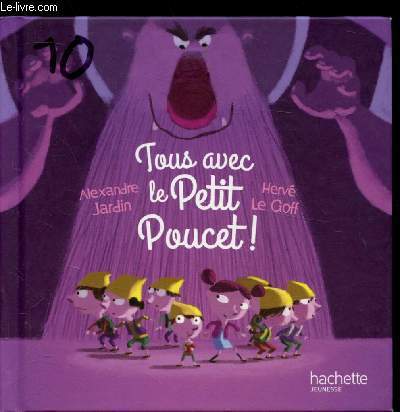
2015R160209336Hachette. 2015. In-12. Relié. Bon état, Couv. convenable, Dos satisfaisant, Intérieur frais. Environs 20 pages illustrées en couleurs. note au marqueur sur le 1er plat.. . . . Classification Dewey : 843.0692-Livres d'enfants