AUTOMOBILE PROFILESBiblio.com
3 531 résultats
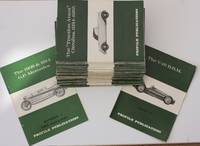
196645733Profile Publications Windsor 1966-1967. 96 vols. 8vo. First Edition with coloured and monochrome illustrations and monochrome photographs; pictorial wrappers wire-stitched as issued a few covers lightly age-soiled else all very good clean copies. The run comprises Nos. 1 - 96. RUNS OF THIS CALIBRE ARE EXTREMELY SCARCE. Profile Publications, [Windsor], unknown
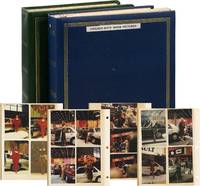
167954N.p.: N.p. 1990. Archive of approximately 570 vernacular color photographs of the Chicago Auto Show housed in two generic photograph albums with plastic overlays covering every year from 1979 through 1990 lacking 1981.<br /> <br /> The first photograph album a blue 3-ring binder of 58 leaves with a "Chicago Auto Show Pictures" label on the front board contains approximately 320 photographs housed on the rectos and versos of the leaves and has ink annotations on the verso of the front board noting the years 1979 1980 1982 1983 1984 and "David Hasslehoff" a guest at the 1983 Chicago Auto Show. The vast majority of photographs in this album are 5 x 3.5 inch photographs with approximately 40 3.5 x 3.5 inch photographs.<br /> <br /> The second photograph album a green 3-ring binder of approximately 53 leaves with a "Chicago Auto Show Pictures" label on the front board contains approximately 250 photographs housed on the rectos and versos of the leaves and has ink annotations on the verso of the front board noting the years 1985 1986 1987 1988 1989 1990 and "William Perry The Refrigerator" a guest at the 1986 Chicago Auto Show. The vast majority of photographs in this album are 5 x 3.5 inches with eleven 4.25 x 3.5 inch photographs.<br /> <br /> A sizable photographic archive documenting eleven years of a devoted fan's annual trips to the Chicago Auto Show throughout the 1980s. The majority of the photographs depict the displayed vehicles with their attending female models and performers as well as the lavish booths and fashions of the 1980s. A documentation of a transitional decade for the US automobile as the behemoths of the late 1970s evolved into the more compact and fuel-efficient Japanese-influenced models emergent by 1990.<br /> <br /> The Chicago Auto Show was begun in 1901 by bicycle show promoter Samuel Miles and quickly rose to prominence often regarded as the "National Auto Show" by the early 1930s. World War II curtailed the production of motor vehicles for consumers and as a result the Chicago Auto Show was not held between 1941 and 1949. In 1961 the Chicago Auto Show was moved from the International Amphitheatre to its current location at McCormick Place. It is currently the largest auto show in the United States.<br /> <br /> Photograph Albums 11.5 x 11 inches. Albums and photographs all Near Fine. N.p. unknown
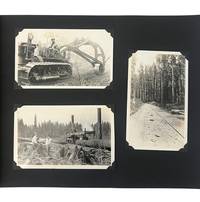
1930234241930. California photo Album documenting 1930's roadside commerce's Oil and logging industries and desert sightseeing across Southern California and Death Valley circa 1930s. Include logging photographs made when steam power still ran the woods before the gasoline tractor and chainsaw displaced the steam donkey engine and the logging railroad. The photographs were made just as the paved highway and the auto court were turning the California desert and mountains into a tourist destination reachable by family car. John Marshall High School in Los Angeles shown new and unweathered in the album opened its doors on January 26 1931 fixing the album's date to that year or shortly after.<br /> Photo Album of 116 silver gelatin photographs mostly snapshot format ranging approx 3 x 5 to 5 x 7 inches California Sierra Nevada and Death Valley circa 1931 to 1935. The logging images show a tracked crawler tractor fitted with a tall steel arch for skidding logs a steam donkey engine venting steam beside a yarding spar rigged with cables decked logs stacked on railcars marked with painted numbers a single rail line running through uncut timber and a man in suspenders and field hat standing beside a standing tree with a felling axe and undercut wedge driven into the trunk. The Southern California group includes wooden oil derricks stepped up a steep eroded canyon wall three women in cloche hats and drop-waist dresses standing arm in arm on a pile of oil-field casing pipe a touring sedan with passengers parked among the derricks a typed caption reading "No 4. Artist's Drive. Death Valley" above eroded badland hills the neon-topped "El Don Motel" sign advertising kitchenettes and refrigeration the "Beechwood Motor Apartments" and "Aut-O-Tel" auto court a palm-lined commercial street with a Citizens Bank and parked Model A automobiles the Collegiate Gothic John Marshall High School captioned in pencil the grounds of the Hotel del Coronado covered wagons drawn up in a mountain meadow a backyard scene of an older couple outside a board cabin and harbor views with a small fishing boat numbered "A 619." Photographs are mounted with black corner tabs on black album leaves several captioned in pencil or by typed slip.<br /> Southern California in the early 1930s was the most prolific oil-producing region in the world with derricks crowding canyons and city lots from Signal Hill to the Newhall fields and the album captures ordinary visitors treating an active oil field as a sightseeing stop. The same years saw the auto court and motel emerge along the new highways and the El Don and Aut-O-Tel signs document that roadside lodging industry in its first decade. The logging photographs record steam-era timber work the crawler tractor and steam donkey caught at the moment mechanized gasoline equipment was about to replace them. Overall in very good condition with some fading to individual prints. The album places steam-era timber work and first-decade California auto travel side by side recorded firsthand during the years of the development of roadside infrastructure. unknown
1940LIST0210New York 1940. Watercolors on paper affixed to later illustration board 14 x 26 inches each. Very Good. An attractive set of images from the Robert Moses era in an unknown hand. The images show proposed intersections including two that were never built. The images include "Proposed Parkway Passing over Entrance to Fort Totten" which shows an overpass on the Cross-Island Parkway in Northeast Queens dated October 1937; "Linden Boulevard Overpass at Southern Parkway" showing an unbuilt intersection at North Conduit Avenue and Dumont Avenue perhaps in the Ozone Park neighborhood undated; "Woodbine Street Passing over Long Island RR to Metropolitan Ave & 67th St." which shows a non-existent intersection near the Middle Village stop on the M line dated August 1940. <br /> <br /> Interesting relics from the Robert Moses era which shaped the infrastructure landscape of New York City. A very good group overall though the Woodbine Street illustrations shows marginal dampstaining and all three show evidence of label removals and wear. unknown
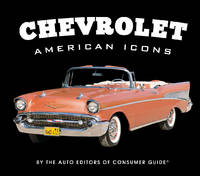
20151-1680220950Publications International Ltd. 2015. Hardcover. New. 160 pages. 9.13x6.57x1.11 inches. Publications International, Ltd. hardcover
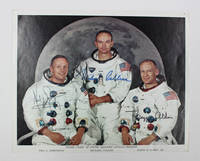
1972028847UK 1972. First Edition . Paper. Good. 48mo - over 3 - 4" tall. An Original Official NASA Apollo 11 Astronaut Picture with Auto Pen Signatures of Neil Armstrong Buzz Aldrin and Michael Collins. A good example of an auto pen signed NASA picture. C1972. Apollo 11 July 16-24 1969 was the American spaceflight that first landed humans on the Moon. Commander Neil Armstrong and Lunar Module Pilot Buzz Aldrin landed the Apollo Lunar Module Eagle on July 20 1969 at 20:17 UTC and Armstrong became the first person to step onto the Moon's surface six hours and 39 minutes later on July 21 at 02:56 UTC. Aldrin joined him 19 minutes later and they spent about two and a quarter hours together exploring the site they had named Tranquility Base upon landing. Armstrong and Aldrin collected 47.5 pounds 21.5 kg of lunar material to bring back to Earth as pilot Michael Collins flew the Command Module Columbia in lunar orbit and were on the Moon's surface for 21 hours 36 minutes before lifting off to rejoin Columbia. Size is 255mm x 205mm. Condition is good. Light finger/handling creasing. More images can be taken upon request. RefA1234 <br/> <br/> unknown
20212081502111901574chinese commerce 2021. Soft Cover. Fine. The book is in fine condition. chinese commerce paperback
165053957à Paris: Chez Augustin Courbé 1650. Fine. Chez Augustin Courbé à Paris 1650 17 x 24 cm relié First edition illustrated with a frontispiece by Mellan and a portrait by Champaigne engraved by Nanteuil and produced after the author's death by Martin de Pinchesne his nephew. Full grained sheep binding late 18th century. Spine with raised bands decorated in grotesque style with 2 different motifs. Pink calf title label. Joints cracked at head. Wormholes at foot. 2 corners slightly bumped. Rubbing. Some leaves uniformly browned others yellowed. Headcap clumsily restored. Yellow dampstain to lower right corner of first 30 pages. Voiture 1597-1648 was throughout his life a gallant and courtier brilliant in salons and playing games. His epistolary talent earned him the distinction of making prose fashionable in France for a long time and his poetry excels in the mannerist and precious tone even though he knows how to be trivial when necessary. He is an essential figure of the literary scene of the early 17th century a true Molière character. Voiture is above all a style not only in his letters Lettres amoureuses and his poetry but also in his prose see for example the delightful Métamorphoses. His works were in the image of the man gallant teaching beautiful language and fine manners to the habitués of the Hôtel de Rambouillet. His fame was very great during his century and he remains an emblem of the 17th century. Chez Augustin Courbé hardcover
199246069Besancon & Le Mans: Editions d’Art J.P. Barthelemy 1992. Two vols. Folio. 366 2; 382 2 pp. Over 1500 photos plates colour illustrations black & white illustrations racing posters and more. Uniformly bound in black boards silver lettering w/ d.j.s. slight shelfwear NF/NF set preserved in open-backed slipcase. First edition of this lavishly illustrated reference and history of the famed Le Mans 24-hour race graphically describing the 70 years of races involving the racing teams of Jaguar Aston Martin Ferrari Ford Porsche and Panhard from the Jazz Age until the modern era. Every race car is pictured along with the engineering team the drivers the designers the type of motor along with action photographs of the action. The authors have included details about the different track configurations the reigns of assorted teams racing memorabilia and more. The index is definitive and the work offers an incredible view of this pinnacle of automobile racing technology. Editions d’Art, J.P. Barthelemy, hardcover
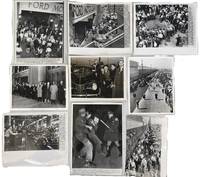
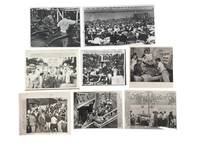
1941234311941. Labor Organizing Ford River Rouge plant press photographs documenting labor conflict picketing and union organization at the largest industrial complex in the United States from the early UAW recognition battles of 1941 through the major Ford walkouts of 1949 and 1967. The River Rouge plant in Dearborn employed tens of thousands of workers and was the center of Ford's anti-union resistance during the rise of the Congress of Industrial Organizations CIO. Ford Motor Company remained the last major Detroit automaker to recognize the United Auto Workers after General Motors and Chrysler signed contracts following the 1936-1937 sit-down strikes. Several scenes here connect directly to the April 1941 strike that finally forced Ford to negotiate with the UAW after years of union busting and company sanctioned violence against organizers. Later scenes document the 1949 strike involving roughly 65000 workers and the 1967 Rouge walkout documenting three decades of union activity in the American auto labor history.<br /> <br /> Photo archive of 9 black-and-white press photographs silver gelatin prints ranging from 7 x 9" to 8 x 11" Dearborn and Detroit Michigan 1941-1967. Photographs show UAW members at Rouge plant gates carrying placards reading "Ford Is On Strike" while reporters and cameramen surround circular picket formations outside the factory entrances. One scene records women from the Women's Auxiliary of UAW Local 600 marching in orderly formation with American flags during an April 1941 demonstration outside the Rouge complex. Another captures a state policeman advancing with baton raised as two men recoil during violence near a plant gate; the attached caption identifies one figure as an unidentified Black man striking a UAW picket captain. Additional scenes show workers waiting in line for pay envelopes during the strike men gathered outside plant entrances under heavy guard and a largely idle assembly floor where a lone foreman sits beside silent production lines after tens of thousands of workers walked out. Typed press captions affixed to versos on image margins including references to the May 1949 strike and September 1967 Rouge picketing.<br /> <br /> The Ford strikes were some of the most consequential labor battles in twentieth-century American industry. Ford's Service Department under Harry Bennett built an extensive anti-union apparatus that used labor spies intimidation and physical violence against organizers culminating in nationally publicized confrontations such as the 1937 "Battle of the Overpass." The April 1941 strike represented the decisive collapse of Ford's resistance to industrial unionism and secured UAW recognition at the Rouge plant fundamentally changing labor relations in the American automobile industry. These scenes preserve not only the mechanics of organized strike action but also the scale of industrial labor mobilization in midcentury Detroit where mass demonstrations were central in the struggle between organized labor and corporate management. Light creasing scattered surface wear and minor handling marks consistent with newsroom use; captions and editorial markings largely intact and legible. Overall good to very good condition. unknown
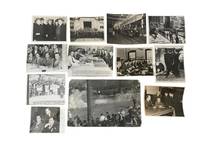
1938234231938. Labor Organizing United Auto Workers and CIO labor photograph archive documenting strike action union leadership and collective bargaining negotiations during the expansion of organized labor in the American automobile industry 1938-1949. The archive traces the period immediately following the 1935 Wagner Act when unions gained federal legal protection for collective bargaining but still faced violent resistance from corporations police departments and municipal governments. Several scenes connect directly to the years surrounding the 1937 Battle of the Overpass in Dearborn when Ford security men beat UAW organizers attempting to distribute union literature outside the River Rouge complex and to the broader wave of sit-down strikes and factory shutdowns that forced General Motors Chrysler and eventually Ford into formal negotiations with the UAW. The captions identify senior labor figures including Walter Reuther R. J. Thomas George Addes and Richard T. Leonard establishing the archive as documentation not merely of rank-and-file unrest but of the institutional consolidation of the UAW-CIO into one of the most powerful industrial unions in the United States. The material also records how labor disputes extended beyond factory gates into courts city halls state legislatures and police jurisdictions revealing the political dimensions of industrial unionism during the New Deal and early Cold War years.<br /> <br /> Photo archive of 12 Large silver gelatin press photographs one large panorama measuring 9.5 x 16.5 inches 11 press photos ranging from 6 x 8 inches to 8 x 10 inches primarily Detroit Dearborn South Gate and Atlantic City circa 1938-1949. A large-format scene dated 1939 records tear gas and street violence during a UAW strike at the Fisher Body plant with clouds of gas spreading across trolley tracks as helmeted police advance toward crowds of fleeing workers and spectators. Another image shows hundreds of demonstrators carrying a massive American flag through downtown Detroit toward City Hall during protests following clashes between union pickets and police at Federal Screw Works; the verso caption notes approximately forty injuries and references accusations of "police brutality" raised before city council. Additional photographs show UAW-CIO officials seated at conference tables negotiating contracts and appearing in municipal hearing rooms beneath desk microphones and courthouse lighting. Captions identify figures including Walter Reuther George Addes and R. J. Thomas while a 1940 Dearborn caption records the arrest of union leaders for distributing handbills asserting workers' rights under the National Labor Relations Act. South Gate strike scenes outside a General Motors facility show workers carrying placards demanding a thirty percent wage increase while Rev. Louis R. Loe conducts prayer services along the picket line. Convention and leadership photographs from Atlantic City and Washington document labor leaders gathered under the authority of Samuel Gompers and later CIO leadership structures linking local strike activity to national labor organization.<br /> <br /> The archive illustrates the transformation of the automobile industry from one of the nation's most violently anti-union industrial sectors into the center of postwar collective bargaining power. Ford Motor Company resisted union recognition longer than General Motors or Chrysler relying on private security forces local police cooperation labor espionage and anti-handbill ordinances to suppress organizing inside and outside its plants. Several captions directly reference these legal confrontations including arrests tied to leaflet distribution and disputes over municipal authority to restrict labor organizing in public space. By the late 1940s many of the same figures shown here were negotiating contracts that established wage standards pensions grievance procedures and health benefits that reshaped industrial employment across the United States. Creasing edge wear scattered minor losses adhesive residue and newsroom markings to versos; images remain clear and intact overall. Overall good condition. unknown
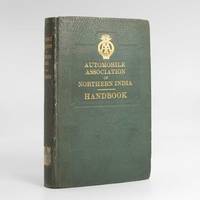
193421223981934. Colophon: Lahore: printed at the ""Civil and military Gazette"" by G. E. Tilt for the association. 1934. 8vo. Original cloth lettered in gilt and black; pp. xvi title-page and illustrated advertisements 2 sectional title on stiff yellow papers 303 ix 3 additional sectional titles and leaves of illustrated advertisement interspersed numerous folding maps to throw clear; binding with wear to extremities and restorations to spine internally very clean provenance: printed On his Majesty's Service label and name J. B. Enyon in ink on verso of front fly-leaf pencil notes on final blank.Very rare sole edition of this all-encompassing motoring guidebook for Northern India with information on distances road quality garages hotels other infrastructure and hints for sight-seeing. The fist section of the volume describes the automobile association which was founded in 1927 its organizational structure statutes eminent members rules and regulations. This is followed by a list of towns their elevation and population together with guest houses and hotels and their prices garages descriptions of hill roads all with town plans. Somewhat tautological the next section lists more hotels dak bungalows government-run guest houses petrol stations and garages registered by the Association and hospitals. This is followed by a historical section and practical hints for morists including the relevant laws.LibraryHub locates a single copy in the British Library ascribing the authorship to one H. J. Martin; no copy in WorldCat. hardcover
195262418Denver CO: Ronald C. Hill Photographer ca. 1952-1961. 4to. 41 leaves unnumbered. w/ mylar sleeves holding 98 original photographs sized from 2.5 x 3.5 in. up to 5 x 7 in. 80% are larger size including 21 in Kodak Kodacolor prints remainder on glossy & matte finish black & white silver gelatin and about 80% including specific identifying manuscript notes in ink or pencil on versos including drivers race locations dates as well as frequently the camera lenses exposure and print paper used occasional over-exposure in the earliest Kodacolor Prints otherwise nearly all are quite sharp occasional rubbing thumbing still NF archive of photographs preserved in recent black cloth 3-ring binder. This well-documented archive of photos captures the thriving and fast-growing sports car racing scene in Colorado following World War II by very young Ronald Hill. The photographs here open in 1952 with photos of Dabney Collins with George Joseph’s 1952 Ferrari 340 American Spyder fitted with a Lampredi V12 at the Buckley Naval Air Station races in Aurora CO. A nicely annotated group of photos captures the racing cars of Charlie Hughes Bob Carnes and other drivers in the first Lookout Mountain Hill Climb in 1953 held up the 4.5 mile Lariat Trail from Golden CO to the top of Lookout Mountain. Young Hill notes that “Charlie really did a beautiful job of driving here -- up to his usual style. Seems unlikely that Carnes actually beat him.†Other photos capture the 1953 Buckley Naval Air Station field races where Hill remarks on the back of one photo about “John Mathewson corners vintage Maserati GP car . . . finished 3rd over-all after long duel with Allan Phipps due to carb trouble.†Many of the colour photographs capture in Kodacolor the 1959 Porsche Club Hillclimb races shot by Hill with a Leica IIIg camera and featured drivers such as Mike Collins Lucille Key just before crash and Jim Eckhorn in a modified VW Bug. Also shot by Hill were the Sept. 1959 CAMS sponsored by the SCCA Sports Car Club of America including Ray Mayer in Bill’s Corvette and Bill Kalmer in an Ace-Bristol. Several capture the racers and races at the Continental Divide Raceways in Castle Rock 30 miles south of Denver including Chuck Frederick in his Chevy-Allard J2X and Hall John Read and Hap Sharp at the CDR Driver’s School. Of special interest are a couple photos of the Bocar racing sports car in 1960 which was series of limited production 2-seater cars developed by Bob Carnes in Lakewood CO featuring beefed-up VW rear suspension and Corvette 283 V8 engine with a few sold on Triumph frames. Also included here are scarce early images of the Elva Courier Mk. II at the CDR and were only raced in the U.S. in 1960 and 1961 before forced into liquidation and same year Carroll Shelby won the USAC Road Racing Championship at CDR in his Scarab-Chevrolet later won by Ken Miles in a Porsche 718 RSK. Hill 1937-2023 was born in Illinois moved to Denver with his parents when his father became a professor at Denver University and Ron graduated from Denver U in 1959 attended Denver U Law School and served in the US Army 1962-1964 rising to Captain. He was a noted and accomplished railroad photographer favoring Leica and Hasselblad cameras who although best remembered for his Colorado Railroad photos shot automobiles automobile racing airplanes and landscapes from the 1950’s through the 2020’s eventually writing 12 books over 30 years on railroads. See: Scott Lothes Center for Railroad Photography & Art Feb. 2023. Ronald C. Hill, Photographer, hardcover
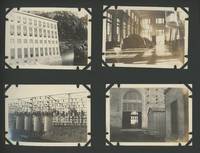
1921List3510California 1921. Photo album measuring 10 x 12 inches containing approximately 360 photographs. Photos are approximately 3 ½ x 4 ½ and smaller with very good to excellent contrast. Album with wear to covers and edges of pages; photos generally excellent to Near Fine. A photo album belonging to an unknown Southern California family; license plates date the album to about 1914 to 1921. Most of the photographs are of family life including farm work: piles of hay; cows pigs chickens turkeys and horse-drawn plows; gigantic watermelons; and family members posing outside vineyards and in cornfields. The family also documented their car and their recreational activities including swimming hiking and fishing picnics and carriage rides. It appears that they were quite proud of their car and were frequent “auto-campers.†They seem to have taken a trip to Mexico or the Southwest as some shots show wide desert landscapes Joshua trees and low Spanish colonial-era buildings.<br /> <br /> Identifiable subjects include the ferry boat Ramona; the Rose Parade in Pasadena showing Culver City Pasadena and Glendale floats; San Gorgonio Mountain Half Dome and the Wawona Tree a giant sequoia in Yosemite; and the Fairview Farm Club parade—a line of cars driving down a dirt road the first decorated with cornstalks—which is probably related to the ranching development located between Huntington Beach and Newport Beach.<br /> <br /> Someone in the family had an interest in hydroelectric power as many shots show ongoing or completed hydroelectric works projects in Southern California. Several show the Southern California Edison Big Creek plant. Located in the Sierra Nevada the Pacific Light & Power Corporation began the Big Creek project in 1910 to provide power to the growing metropolis of Los Angeles. The photographs in this album appear to include both exterior and interior shots. Another set of shots show a dam under construction; this may be Devil’s Gate Dam on the Arroyo Seco which was constructed in 1920.<br /> <br /> Of interest to historians of Southern California in the early twentieth century and some of its public works projects. unknown
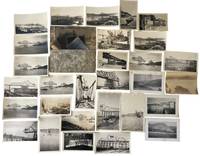
1927233011927. Carquinez Bridge construction photo archive documenting the industrial development of the 1927 cantilever crossing at the Carquinez Strait a transportation project driven by California's rapid automobile growth and the mounting inadequacy of the Vallejo ferry connection between the Bay Area and Sacramento. By the early 1920s California vehicle registrations had risen sharply ferry traffic across the strait had become a bottleneck and the new span created the first direct highway link between San Francisco and Sacramento when it opened in May 1927. Positioned between the first major wave of California highway investment in the 1910s and the later Freeway Era the archive records bridge construction as an industrial process showing how steel members cranes temporary decking marine equipment and high-angle labor were organized into a permanent transportation crossing. With two main spans of 1100' each the Carquinez Bridge at the time of its completion was the fourth largest cantilever truss bridge in the world and the second largest in the United States<br /> <br /> Photo archive of 31 silver gelatin photographs plus 12 photographic negatives ranging from roughly 3 x 5 to 3.5 x 6 inches Carquinez Strait California circa 1927. Most of the prints focus on the bridge construction process. The 1927 Carquinez Bridge was the first major auto bridge in the San Francisco Bay Area designed to resist seismic forces with piers extending 135 feet below water and notes its role as the first direct highway link between Sacramento and San Francisco. Exterior views show the cantilever arms extending out over open water from tall steel towers with large truss sections still incomplete the suspended span not yet joined and the full geometry of the crossing legible at successive phases of erection. Several photographs are taken from elevated ground above shoreline houses and industrial buildings locating the bridge within a worked waterfront rather than an isolated engineering view. Others are made from water level where the steel rises directly from the strait and barges work boats and temporary supports register the marine logistics required to build in the channel. One close construction view looks straight down a temporary work deck lined with rails or timbers toward cranes and hoisting apparatus embedded inside the growing steel frame. Another shows a group of workers seated and standing on a riveted member before placement making the relationship between labor and material explicit without shifting the archive away from its central subject the structure under assembly. Additional prints show falsework approach grading industrial shoreline staging and spectator vantage points from which the nearly completed trusses were watched from land. Versos carry Velox paper marks oval WEBBS processing stamps dated March 14 1927 on several prints and manuscript or stamped inventory numbers. The 12 negatives are secondary material and include unrelated vernacular subjects by the same photographer among them floodwater truss bridges a rifle-range scene and a few domestic snapshots. <br /> <br /> The archive belongs to the period when California road building and bridge construction accelerated to meet automobile traffic that older ferry systems could no longer absorb. In these photographs infrastructure is not presented as a finished monument but as an active building process with the visual emphasis placed on staged steel erection temporary supports shoreline preparation marine access and workers operating within narrow elevated material-heavy conditions. Light curling minor creasing and scattered discoloration on few with verso stamps or notations; overall good condition. Archive of photographs showing a necessary piece of California transportation infrastructure being built with the labor system and material processes documented. unknown
1961234081961. Labor Organizing United Auto Workers strike and labor photographs documenting national contract disputes factory shutdowns collective bargaining and picket line action across the American auto industry during the 1960s and 1970s. The group records major UAW conflicts involving General Motors Ford and Chrysler including the 1961 General Motors bargaining deadline the 1967 Ford strike in Los Angeles and the 1973 Chrysler contract dispute led by Leonard Woodcock and Douglas Fraser. These conflicts grew from fights over wages speedup compulsory overtime pensions medical coverage retirement eligibility and plant safety inside the nation's largest manufacturing sector. By the early 1970s the UAW represented more than one million workers and could halt production across dozens of plants through coordinated bargaining local picketing convention mobilization and public demonstrations.<br /> <br /> Photo archive of 8 Large silver gelatin press photographs one large panorama measuring approximately 8 x 14 inches and the remaining ranging from 8 x 8.5 to 8 x 10 inches primarily Detroit and Los Angeles 1961-1973. Workers paint strike placards inside a Local 15 UAW-CIO shop space with slogans including "Improve Working Conditions" "Free Paid Medical and Insurance" and "Stop Speed Up." Leonard Woodcock and Douglas Fraser march beside white-collar Chrysler employees carrying a sign reading "30 and Out No Age Limit." Ford workers gather beneath the "Ford Motor Co." sign at the Los Angeles assembly plant while signs reading "UAW on Strike for Justice" and "UAW Local 148" rise above the crowd. At Ford's Rouge plant hundreds of UAW members picket outside the entrance after a contract settlement while the attached caption notes that the plant employed roughly 33000 workers and that pickets remained after the "lonely guard" opened the gate. Factory interiors show chassis assembly lines rear axle installation and suspension components while a crowded convention hall displays banners reading "Get America Back to Work" and "Improve Working Conditions."<br /> <br /> The group demonstrates the UAW operations in the labor strife of the 60s and 70s: national officers negotiated with automakers local members prepared signs and walked gates convention delegates debated priorities and production workers controlled the pace of automobile output by withholding labor. Kennedy publicly intervened during the 1961 GM dispute to prevent a shutdown of the auto industry while the 1973 Chrysler negotiations centered on retirement working conditions and contract protections during a decade of inflation and labor unrest. Creasing edge wear scattered minor losses and occasional handling wear; captions editorial markings stamps and verso annotations retained throughout; images overall intact and clear. Overall in good condition. unknown
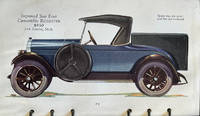
192661673New York & Detroit MI: Durant Motors Inc. April 1 1926. 8vo. 154 pp sections unpaginated others separately paginated. including Retail Order Forms in duplicate on pink & beige-coloured paper with carbons perforated prospect forms. With numerous colour plates black & white photo plates text illustrations. Simulated textured green-brown flexible calf 6-ring binder raised embossed lettering in blind on front cover minor shelfwear rubbing slight age toning faint tidemark to upper fore-edges of a few plates still a VG- copy. First edition of this exceedingly scarce dealership salesmen’s hand book for Durant Motors Star Four Star Six automobiles and commercial vehicles introducing their newly introduced 6-cylinder engine. The Star Six produced 40 horsepower and had a 107-inch wheelbase with models including the Star Six Touring Star Six Sport Coupe Coupe Coach Roadster Landau and Sedan all designed and priced to compete with similar Chevy and Ford Models. Durant Motors was founded in 1921 by William Durant after he lost control of General Motors and in the subsequent years built and sold cars assembled from parts manufactured by other suppliers with the intent of building a company that rivaled GM and Chevrolet. This salesman’s hand book describes and illustrates the Durant “New Star Four†Model F which when introduced in 1925 featured the Continental 35 horsepower engine and was very popular. This salesmen’s book includes specific Retail Order forms detailing the price of car freight financing insurance how to push sales through garage owners cultivate Star Car owners as rolling advertising salesman 129 Star Quality Features over competitor’s automobiles low operating costs and pushing the newly introduced Compound Fleetruck commercial truck vehicles. Along with specifics on the factory sales organization the dealership sign is depicted along with specific instructions on developing service/lubrication schedules with new others. This line-up continued into 1927 but Durant began running into capitalization problems and sold his Flint MI plant to GM and in 1927 sold his Long Island City plant to Ford and suspended the Durant Motor Car production in 1927 although the Star continued to be produced with over 70000 sold in 1927. Sales continued to drop in 1928-1929 and by 1932 ceased production and by 1932 Durant was wiped out by the Great Depression. No copies in Worldcat; See: Pat Foster After Being Ousted from GM Billy Durant Aimed for the Skies Hemmings July 11 2024; John B. Rae The Fabulous Billy Durant Business History Review Vol. 32 No. 3 Autumn 1958 pp. 255-271. Durant Motors, Inc., unknown
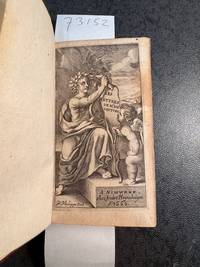
#[73152]Nimwege Andre Hogenhuyse Nijmegen Andries Hoogenhuis 1660 24 652 14pp. engraved titlepage and portrait of Voiture by P. Philippe after Robert Nanteuil French 1623-1678 after Philippe de Champagne beautiful leather tooled binding ornaments and title on spine gilt tooling on front and back tooled edges of front and back gilt edges written by Voiture Vincent 1598-1648 Vincent Voiture was a French poet and writer of prose. During his lifetime he did not publish any works in book form. After his death that his verses and prose letters were the delight of courtiers and were copied and admired. Willems Nr. 870. Scarce. hardcover
19822091202133105888Automobile Regiment History Publishing Society 1982. Soft Cover. Fine. Volume: 1 Automobile Regiment History Publishing Society paperback
1968149422N.p.: N.p. 1968. Archive of 48 vintage photographs of car accidents scenes in the Columbia County New York area from the years 1961-1965 1966 and 1968. With the stamp of Lee's Studio in Chatham NY on the verso of the majority of photographs along with occasional manuscript annotations. Most photographs housed in sleeves with annotations detailing dates locations and occasionally noting whether or not the accident was fatal. <br /> <br /> Also included are several accident reports prepared by Lee Studios for internal use and correspondence between Lee and law firms representing people involved in the accidents requesting copies of photographs. <br /> <br /> The 1960s saw large increases in the number of vehicle fatalities as car ownership greatly increased over the previous decades and out of the six years documented in the archive 1966 and 1968 are both among the ten deadliest in US history. <br /> <br /> Photographs variously sized with most being 10 x 8 inches. Generally Near Fine. Housed in a contemporary photo album and two folders. N.p. unknown
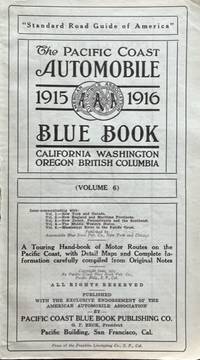
191559020San Francisco CA: Pacific Coast Blue Book Publishing Co. Pacific Building Press of the Franklin Linotyping Co. 1915. Tall 8vo. 908 pp. printed on blue-tinted paper throughout. Numerous text maps several maps photo-illustrated ads illustrated ads Shell Oil Co. service station colour lithograph ads on rear endpapers. Limp publisher’s calf gilt lettering on front cover Shell gilt logo advertisement on back cover ex-lib markings on endpapers title perforated stamp on title chipping & wear to fore-edges rebacked w/ renewed lettering on spine linen tape joint repairs at gutter margins of endpapers still a good copy which was a Multnomah County Library duplicate sold through their Title Wave bookstore at some point. First edition thus of this surprisingly scarce automobile travel tour guide for California Oregon Washington and British Columbia prior to World War I. This volume edited by Beck combined the four different Automobile Club Pacific Coast Blue Books issued for California Oregon British Columbia & Washington separately 1912 with the 1915 edition including revised driving regulations specific instructions on driving the Golden Gate Presidio the Univ. of California as well as scenic drives in Oregon Washington & British Columbia. These Blue Books offered complete maps of every motor road running directions at every fork and turn with mileages points of interest ferry and steamship schedules and extensive illustrated ads for all the potential motorist’s needs such as garages service stations hotels and restaurants. Worldcat locates 2 copies UCLA U of W. Pacific Coast Blue Book Publishing Co., Pacific Building, Press of the Franklin Linotyping Co., unknown
195455862Dearborn MI: Ford Motor Company 1954. Oblong Folio. 14.75 x 11 in. 30 pp. Colour photo illustrations colour illustrations and black & white photos throughout diagrams. Colour-illustrated front boards showing the 1955 Ford Fairlane coupe in blue & white wire spiral binding as issued w/ large double-folding easel mounted on rear cover allowing this to be displayed and fully opened double-page on a counter minor rubbing slight scuffing & edgewear minor wear to corners still a VG bright copy. First edition of this unusually scarce original dealer’s showroom counter display catalogue for the 1955 Ford model year introducing the newly redesigned Ford Fairlane which replaced the Crestline as the top trim level and through its’ lifespan would become Ford’s flagship automobile to the mid-size market eventually accounting for 20% of Ford’s production. Of special interest is the introduction of the Ford Thunderbird styled and designed by George Walker and although introduced for sale in October 1954 was sold as a 1955 and exceeded all expectations. The popular sportscar featured fender skirts a removable fiberglass top and a fabric convertible top as an option fitted with Ford’s 292 cubic-inch Y-block V-8 and exhaust pipes through twin bumper guards. No copies located in Worldcat. Ford Motor Company, hardcover
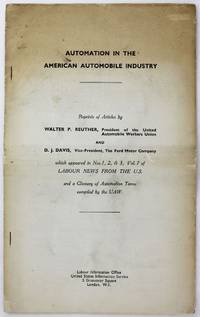
19554891London England: Labour Information Office / United States Information Service 1955. Very good. 29pp. Folio. Original printed wrappers stapled. Noticeable toning and spotting to wrappers minor edge wear. Light toning to first text leaf. A rare collection of offprints of three articles which first appeared in the English publication Labour News from the U.S. in 1955 on the subject of automation in the American car industry along with a glossary of terms compiled by the United Auto Workers UAW. Two of the articles were authored by Walter P. Reuther president of the UAW and the third was written by D.J. Davis vice president of the Ford Motor Company. The articles were presented by the authors to a special joint subcommittee of the United States Congress. Reuther reports from the labor perspective writing that automation is welcomed by labor unions but he also points out the many problems of the practice. He also discusses the impending effects of electronic computers on society the responsibilities of employers the productivity of capital the need for growth in consumer markets the need for small business aid and more. Reuther suggests policies such as a more equitable distribution of the tax burden adequate unemployment compensation improved social security a higher minimum wage and other improvements that will satisfy the labor market in the advent of more automation. Davis's article provides the Ford Motor Company's perspective on the issue their definition of automation as well as its economics and effects. The glossary comes from a pamphlet printed by the UAW the same year and provides definitions of a range of terms such as automation servomechanism cybernetics and robot among others. We locate no other copies of this collection of offprints on automation from 1955 providing early information on the effects of computers and perhaps foretelling the advent of artificial intelligence on American industry. Labour Information Office / United States Information Service unknown
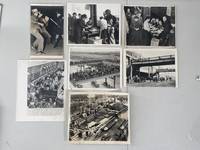
1941234341941. Labor Organizing Ford River Rouge plant labor photo archive documenting the struggle over union recognition strike enforcement and industrial bargaining at Ford Motor Company between 1941 and 1953. River Rouge was Ford's massive Dearborn complex where raw materials blast furnaces rail lines ships assembly shops and tens of thousands of workers were concentrated at one site. Ford resisted the United Auto Workers longer than General Motors and Chrysler and the 1941 strike forced the company into an NLRB-supervised vote that led to UAW representation at Rouge. The later 1949 strike over speed-up conditions demonstrates the continued role of the union in protecting workers from unreasonable production paces giving bargaining authority and strengthening worker control inside the plant.<br /> <br /> Photo archive of 7 Large silver gelatin press photographs measuring between 7 x 8 and 8 x 10 inches Dearborn and Detroit Michigan 1941-1953. Workers stream across elevated pedestrian bridges into the Rouge gates crowd plant entrances receive ballots under the supervision of officials and a Michigan State Police officer and stand in picket lines outside Ford buildings. A Black worker charges toward a picket while a state policeman advances with club raised with the Acme caption identifying the incident as "Vengeance at River Rouge" on April 4 1941. Other captions identify Sunday dinner served to pickets on April 6 1941; thousands returning to work after settlement of the UAW-CIO strike on April 14 1941; workers voting in the NLRB election on May 21 1941; pickets entertained from a truck during the May 1949 walkout; and Ford's River Rouge plant in 1953 described by the Ford News Department as employing more than 60000 and able to turn raw materials into a finished car in 28 hours.<br /> <br /> The archive records both the scale of River Rouge and the mechanics of labor conflict: police interference union voting picketing crowds and shop workers moving between strike and production. It connects the 1941 recognition fight to the postwar UAW's continuing battles over working conditions at one of the most closely watched industrial sites in the United States. Creasing handling wear surface marks and caption wear; images remain intact and legible. Overall in good condition. unknown
1984mon0000031463Jarrold and Sons LTD 1984. Paperback. Good. in x in x in. Ex-Library. Paperback. Jarrold and Sons LTD paperback