Automobile Club of ArizonaBiblio.com
3 531 résultats
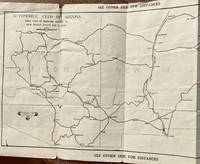
1916499Phoenix: Automobile Club of Arizona 1916. 12 1/2 x 7 3/4 inches. The map is in good used condition not lacking any printed surface. Very nice early map for traveling the roads of Arizona to El Paso. Mileage charts included on the backside. There is a reference to using the Bankhead Highway founded in 1916 for one of the suggested routes. The map includes a road that EVENTUALLY WAS LABELED ROUTE 66. Overall this is a simple but adequate composition that would get the driver from here to there on less than perfect roads.This is quite rare. Automobile Club of Arizona unknown
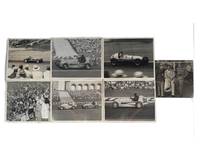
1940215481940. Archive of original photographs documenting midget auto racing at the Los Angeles Memorial Coliseum during the postwar expansion of American motorsports culture in the 1940s and 1950s. The material captures competitive race action spectator culture and driver camaraderie at one of Southern California's most recognizable sports venues during a formative period in American automobile racing. The photographs provide visual evidence of the growing popularity of midget racing in the decades following World War II when compact open-wheel race cars became central attractions at urban speedways and stadium tracks across the United States. The archive also preserves details of racing technology protective gear crowd demographics and public spectacle associated with mid-century American motorsports entertainment.<br /> Collection consists of seven vintage black-and-white silver gelatin photographs measuring approximately 10 x 8 inches. The images depict open-wheel midget race cars with exposed suspensions streamlined bodies and oversized racing numerals characteristic of late 1940s designs associated with manufacturers such as Kurtis Kraft. Several photographs capture high-speed racing sequences with drivers leaning into turns gripping steering wheels tightly as cars accelerate around the Coliseum track. Cars numbered "81" and "60" appear repeatedly throughout the archive in both individual and competitive scenes. One photograph prominently features a driver wearing a dark leather racing helmet and protective goggles typical of the period. Additional race images show vehicles crossing near the checkered start-finish line while spectators densely fill the Coliseum grandstands in period attire including brimmed hats jackets and collared shirts. One particularly striking image frames speeding race cars against the Los Angeles Memorial Coliseum's monumental archways in the background. Beyond race action the archive includes candid social scenes associated with the event including a photograph of a driver addressing a crowd from an elevated platform while spectators gather below and another image showing three men in racing attire and plaid shirts standing beside a race car in a relaxed pit-side setting.<br /> The archive documents the culture of early postwar American motorsports at a time when Southern California emerged as a major center for automobile racing innovation promotion and spectatorship. Midget racing attracted large urban audiences during the mid-twentieth century and served as an important developmental arena for drivers mechanics and racing technologies that later shaped broader American auto racing culture. Particularly notable are the photographs balancing high-speed competition with informal social interactions preserving both the spectacle of racing and the community surrounding the sport. Minor handling wear scattered creasing and light edge wear; photographs otherwise remain in very good condition overall. A strong visual archive of mid-century American midget racing and postwar Los Angeles sports culture. unknown
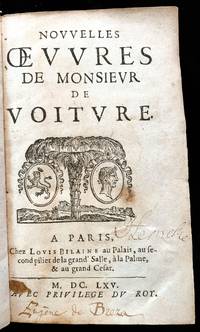
166510340Paris: chez Louis Bilaine au Palais 1665. Complete as issued with the Nouvelles lettres and the Metamorphoses. Interesting title device. French sprinkled calf joints starting; some minor foxing and stains a tear on page 3 affecting text. Early note on flyleaf plus a contemporary signature of Eugène de Breza on title and a bookplate Karl Spitzweg's The Bookworm signed by Robert J. O'Toole. This edition of the author's works of prose is sometimes found bound with his Les Oeuvres. Our copy which is complete has the tables of the first and second works here bound together along with the privilege du Roy .<br /> <br /> Voiture 1597-1648 was an eminent French writer. His letters were translated by John Dryden and others in the Familiar and Courtly Letters to Persons of Honour and Quality by Mons. Voiture London 1701. chez Louis Bilaine au Palais unknown
20182-1980618208Independently published 2018. Paperback. New. 105 pages. Spanish language. 9.00x6.00x0.27 inches. Independently published paperback
2013DADAX1450876625Publications International Ltd 2013-07-24. hardcover. New. 11.25x0.81x8.50. Buy with confidence. Excellent Customer Service & Return policy. Publications International, Ltd hardcover
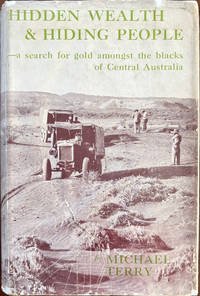
193162087London & New York: Putnam 1931. Thick 8vo. xv 1 350 pp. Photo frontisp. numerous photo plates 3 folding maps 1 large 1 colour 1 large folding chart. Brown publisher’s cloth gilt lettering on spine minor foxing to upper fore-edges of textblock very slight bumping to couple corners w/ d.j. wraparound photo cover art of 2 6-wheel Morris trucks minor closed tears closed tear & creasing front cover w/ repair on verso minor edgewear still VG/G copy. First edition of this uncommon third automobile/truck expedition which equipped with two 6-wheel Morris trucks started in Port Hedland May 1928 and then drving via De Grey Pardoo and Wallal homesteads north to Broome. After Broome they pushed onto Fitzroy Crossing and Hall Creek hunting gold and then reached the Tanami goldfields and then prospected along the Lander River visiting Brooks’ Soak a traditional Warlpiri Soak which Fred Brook was illegally appropriating. Their mining expedition overlapped the subsequent tragic Conniston Massacres of Australian Warlpiri Anmatyerre and Kaytetye Indigenous Peoples in retribution for the killing of Fred Brooks. Terry’s party quickly moved on and headed to Alice Springs followed the Finke River to Horseshoe Bend Oodnadatta Hawker Adelaide and later Melbourne. Terry was quite taken with the Morris trucks which averaged 5-18 mpg every 250 miles and the lead truck only suffered 41 flat tires in their Dunlop tires. See: Ron Moon The Last Explorer: Michael Terry WhichCar July 20 2015. Putnam, hardcover
165625169à Paris: Chez Augustin Courbé 1656. Fine. Chez Augustin Courbé à Paris 1656 9 x 15 cm relié Fifth edition published at the same time as the quarto edition. The first edition dates from 1650. Contemporary full brown sheep binding. Ornamented spine with raised bands. Red morocco title label. Lower joint partly split. Relatively invisible restorations to headcaps. The work contains the letters and various poems of the author. Voiture 1597-1648 was throughout his life a gallant and courtier brilliant in the salons and playing games. His epistolary talent earned him the distinction of making prose fashionable in France for a long time and his poetry excels in the mannerist and precious tone even though he knows how to be trivial when necessary. He is an essential figure of the literary scene of the early 17th century a true Molière character. Chez Augustin Courbé hardcover
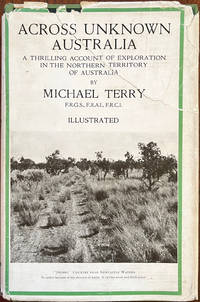
192562085London: Herbert Jenkins Ltd. 3 York Street St. James 1925. Thick 8vo. 311 1 pp. plus 8 pp. publisher’s ads. Photo frontisp. numerous photo plates map. Green ribbed publisher’s cloth blue ruling & lettering minor foxing to fore-edges of textblock & endpapers very minor bumping to couple corners w/ d.j. cover art photo of “Desert†Country near Newcastle Waters minor chipping & tear head of spine closed tear front cover minor creasing still VG/G- copy. First edition of this excellent account of the pioneering 1923 automobile explorations by Michael Terry through Northern Australia as he pioneered the route while driving a 1913 Model T dragging a trailer behind loaded with supplies. Although they managed to secure food and fuel most of the way they ran out at the Western Australia border stumbled through the desert with no water and no fuel but were luckily found by some Aboriginal stockmen and eventually reached Broome. Exceedingly scarce in the original dustjacket. See: Ron Moon The Last Explorer: Michael Terry WhichCar July 20 2015. Herbert Jenkins, Ltd., 3 York Street St. James, hardcover
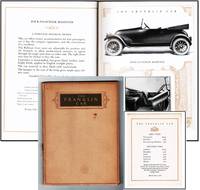
191820597Syracuse NY: Franklin Automobile Company 1918. Very Good/No Dust Jacket As Issued. <br /> A remarkably sophisticated manufacturer-issued automotive catalogue issued at the height of Franklin's influence this volume functions simultaneously as a luxury sales presentation and a technical exposition of the company's distinctive air-cooled engineering philosophy.<br /> <br /> Unlike many contemporary automobile catalogues that relied primarily on promotional imagery Franklin devoted substantial space to explaining mechanical construction operating principles and performance advantages presenting its automobiles as advanced engineering achievements for a technically minded and affluent clientele.<br /> <br /> Among the most substantial American automobile catalogues of the late Brass Era it captures the intersection of industrial innovation luxury marketing and consumer culture at a moment when competing visions of automotive technology were still actively contested. The survival of the original June 5 1918 price sheet further enhances its documentary value preserving a notably complete record of one of America's most innovative automobile manufacturers and its effort to educate prospective buyers as well as sell them a car.<br /> <br /> CONDITION: Very Good. The bindings are tight and square. Text is clean with light even age-toning throughout. Moderate shelf handling is present with rubbing to the lower corners and a small scuff mark centered on the spine. The photographic plates remain bright and well-preserved.<br /> Laid-In Material: The original printed price sheet titled 'Effective June 5 1918' remains present and well preserved. HISTORICAL SIGNIFICANCE -<br /> Founded in Syracuse in 1902 the Franklin Automobile Company emerged as one of America's most innovative automobile manufacturers. While competitors largely embraced water-cooled engines Franklin built its reputation around air-cooled technology lighter construction and advanced engineering solutions. The company attracted buyers who viewed the automobile as a technical achievement as much as a luxury product.<br /> <br /> This 1918 catalogue was issued during Franklin's most influential period when the company had established itself as a respected producer of premium automobiles. The publication demonstrates how Franklin communicated its engineering advantages to potential customers using technical explanation as a marketing strategy. As such it serves as both a sales catalogue and a primary-source record of early twentieth-century automotive thought.<br /> <br /> Today Franklin occupies an important place in American automotive history because it pursued an alternative technological path that challenged industry norms. The catalogue captures that distinct identity at a moment when the future of automobile design remained open to experimentation and competing engineering philosophies.<br /> <br /> SCHOLARLY FEATURES<br /> Automotive Innovation: Documents Franklin's pioneering commitment to air-cooled engines at a time when water-cooled designs dominated the American market.<br /> Engineering Culture: Reflects an era when manufacturers actively educated consumers about mechanical principles assuming a technically curious audience.<br /> Industrial Design: Illustrates the relationship between engineering innovation and luxury branding during the Brass Era and immediate postwar automotive market.<br /> Corporate Identity: Presents Franklin's engineering philosophy as the company's defining competitive advantage rather than focusing solely on appearance or comfort.<br /> Documentary Value: The surviving price sheet preserves contemporary pricing data rarely retained with trade catalogues.<br /> <br /> SUBJECTS: Franklin Automobile Company Air-Cooled Automobiles Early Automotive Engineering American Automobile Industry Brass Era Automobiles Automobile Design Technical Sales Literature Industrial Design History Syracuse New York Manufacturing Automotive Advertising Transportation History Automobilia Trade Catalogues Transportation History Industrial Design Corporate Publishing Technical Manuals Automotive Ephemera. Franklin Automobile Company unknown
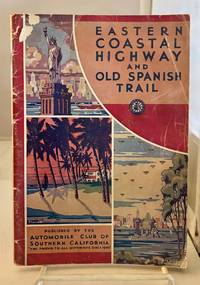
1932A50580Los Angeles CA: Harper Collins. 1932. First Edition; First Printing. Stapled wraps. Very Good-. This is an oversized paperback booklet with illustrated covers and a stapled spine. The booklet is in Very Good- condition and was issued without a dust jacket. The spine ends and corners of the book covers have some lightish bumping rubbing and wear along with associated wrinkles. There are two smallish spots where the color has been removed towards the top edge of the front cover by the spine joint. The rear cover of the book has a previous owner's ink stamped address no name at the top edge. The text pages are clean and bright. The contents contain a group of strip maps published by the Auto Club of Southern California that show two different trip routes the first from New York City to Southern Florida St. Augustine and the second from St. Augustine to San Diego. The pages also include bits of trivia regarding each strips and advertisements that a traveler can use hotels repair shops restaurants. Worldcat shows only four copies of this booklet. " All-weather roads crossed much of the nation by the mid 1930s; the system of numbered US highways had been introduced in 1926. Prior to that "named highways" like the Lincoln Highway or Yellowstone Trail had signs directing you from town to town coast to coast or border to border. By 1940 even most state highways were paved meaning you could reach almost any town in the country. The first arduous cross-country journeys were made in the teens but by the late 1930s it was commonplace for a middle-class family to make an auto trip of several hundred miles to vacation in a national park or to visit relatives. In The Grapes of Wrath Steinbeck writes about the cross-country journey made via U. S. 66 by hundreds of Okies to California looking for work. "from Reddit / Askhistorians ; B&W Illustrations & Maps; 4to 11" - 13" tall; 104p. pages; Pictured 3/25/25 . Harper Collins paperback
19752110502150310908Katsumata jidosha 1975. Soft Cover. Fine. Volume: 1 Katsumata jidosha paperback
192358809Portland OR: n.p. 1923. One large silver gelatin photograph sized 14 x 23.5 in. w/o photographer’s imprint or markings on thick matte finish photo paper very very slight closed tear at lower fore-edge neatly repaired in original glass & frame now w/ archival foam core backing. This wonderful image graced the offices of the Oregon Auto Stage Terminal Co. in downtown Portland out of the Union State Depot. Following World War I over 135 motor buses and automobiles operated over 16 different routes within a 125-mile radius of Oregon. Before the Oregon Auto Stage Terminal was built countless unlicensed and registered companies stationed themselves at corners hotels and spots throughout the city resulting in many complaints from both tourists and residents. The OAST Co. established a well organized system that allowed more than 10000 passengers to be carried every year and these Fageol buses along with White Co. coaches were especially popular on the windy and picturesque route along the Columbia River Highway. We could find no similar surviving promotional company photo for the Company. See: Earl Brownlee Various Makes of Busses are Used with Marked Success. . . The Motor Truck Feb. 1922; Advertising “Travel by Motor Stage†Pays Well in Portland Ore. Bus Transportation Vol. II Sept. 1923 pp. 435-436. n.p., unknown
193646617Dearborn MI: Ford Motor Co. 1936. Large poster 36 x 21.25 ins. colour lithograph mounted on thick board pinholes to corners minor rubbing & edgewear minor chipping to corners some rubbing to the fore-edges of board slight scuffing still a G and bright example professionally cleaned and shrunkwrapped on archival foam core. First edition of this exceedingly scarce original dealership showroom display poster for the 1937 Ford Deluxe Tudor Sedan which was introduced in November 1936. The car came equipped with the Flathead V-8 generated 85 horsepower and could reach nearly 80 m.p.h. The 1937 was the first year Ford built coachwork with all steel construction the cars featured a more rounded and smooth look the front grill was V-shaped and faired-in headlights were offered stock. The decision to integrate the famed teardrop shaped headlamps into the front fenders had been made by Edsel Ford and designer E.T. Bob Gregorie who decided to opt for the industrial look of flat body panels flowing fender lines and a raked windshield. Deluxe models had interiors with walnut wood grain window moldings and more exterior trim bright work. They had two matched-tone horns behind the radiator grille two taillights swivel-type sunvisors and the wheels were dressed up with chrome trim. These Dealership posters were typically printed on very thin paper and mounted on boards and unlike porcelain or tin advertising signs these were usually thrown away with the introduction of the next year’s promotional material so they are very scarce. Ford Motor Co., hardcover
191363117New York: C.S. Hammond & Co. Schum Bros. Stationers and Printers 1913. 12mo. 3.5 x 7.5 double-sided colour lithograph map which folds out to 25.25 x 16.5 in. on 28 x 17.75 in. sheet very light dustsoiling slight shelfwear very slight age toning along the folds. Original printed gray-blue pocket portfolio folder blue lettering on recto & verso added affixed label of Schum Bros. over imprint minor age toning still a VG bright clean map. First edition thus of this very scarce Brass Era automobile travel map depicting Manhattan and portions of Long Island from Brooklyn across to Smithtown and Great River. Verso Map includes Long Island fro Great River up to Darlington across to Truman Beach and Bridgehampton with two inset maps: “Contination of North Shore†and “Continuation of South Shore†with “Good Roads†and “Fair Roads†differentiated as well as depiction of the Long Island Railway line and red dots tracing the electric interurban lines. As early as 1906 Hammond & Co. had produced a map for Good Roads enthusiasts and motorists but this updated issue documenting the improved roads was issued in 1913 and then regularly from 1914-1925. No copies in Worldcat. C.S. Hammond & Co., Schum Bros., Stationers and Printers, unknown
193264025Detroit MI: Ford Motor Co. 1932. Oblong 4to. 10 x 7.5 in. 20 pp. Numerous sepia-tinted photo illustrations and colour plates black & white text illustrations. Colour-illustrated softcovers w/ front cover art of the iconic 1932 Ford Model 18 grille slight creasing very slight edgewear still VG bright copy w/ faint dealership stamp of Raymond Price Mountainhome PA on back cover. First edition of this exceedingly scarce original dealer’s showroom brochure for the 1932 Ford Model 18 when Henry Ford brought V-8 power to the people and within a generation inspired a wide array of hot rodders. The “Deuce Coupe†was an entirely new body style thanks to Edsel Ford and the softer and smoother lines with a few more curves inspired automobile enthusiasts customers and automotive designers which would even be further refined in the soon-to-be-released 1933 models. All 1932 Fods came with black fenders wire wheels and a rear-mounted spare wheel with options of twin side mounts luggage rack clocks interior and exterior mirros and choice of leather available for customers. The 1932 Ford Model 18 was produced for only about 6-7 months in 1932 until the 1933 models appeared. The 1932 models retained the flat radiator smaller 106 in. wheelbase hence they were lighter and still powered by the powerful Ford Flathead V-8. The Ford V-8 had previously only been included with their Lincoln line-up but now was the centerpiece of the new very fast Fords. Worldcat locates only 1 copy Hagley. Ford Motor Co., paperback
19512091202133106246automobile news agency 1951. Soft Cover. Fine. Volume: 1 automobile news agency paperback
196253185Lansing MI: Oldsmobile Division General Motors Corp. April 1962. Three vols. 1st - Oblong 4to. 12.75 x 9 in. 48 pp. printed on thick card stock with 297 nylon upholstery leather and simulated leather vinyl samples tipped in; w/ 29 paint samples bound spiral bindings including 11 mylar oversheets which are used to show colour combinations for different makes of Oldsmobile models. Original padded Mid-Century Modern geometric cover art vinyl landscape format 4-ring binder rounded corners some lifting to the paint samples at rear minor scuffing 1 corner torn on one of the mylar oversheets of car outlines still G copy; 2nd -- Oblong 12mo. 132 pp. With over 100 text illustrations photos diagrams. Original wire spiral vinyl binding red white & blue rounded corners minor soiling still VG- copy; 3rd -- Oblong 12mo. 36 pp. printed in black white & orange several colour-tinted images numerous photo illustrations. Self-printed orange black & white softcovers minor dustsoiling shelfwear still VG set. First edition of these very scarce dealer showroom catalogues for the 1962 Oldsmobile automobiles which featured the introduction of the 2-door hardtop Starfire to join the convertible line-up just introduced in mid-1961 as well as the turbo-charged Jetfire. The “Starfire†which was introduced in mid-1961 was based on the Super 88 convertible sporting leather bucket seats a center console with floor shifter -- the first U.S. full-sized production car to feature an automatic transmission with console-mounted floor shifter. In addition it featured a high performance engine. The 1962 Jeftire was based on the compact F-85 2-door hardtop but these models were fitted with a Garrett turbocharger that relied on “Turbo Rocket Fluid†to prevent the 10.25- compression V-8 from detonating. Unfortunately many Oldsmobile drivers failed to maintain and drive the cars properly so either they had run the fluid tank dry losing turbo power or had not driven the car hard enough to generate boos and the assemblies froze over time. No copies located in Worldcat. Oldsmobile Division, General Motors Corp., paperback
2018__1980618208Independently published 2018. Paperback. New. 105 pages. Spanish language. 9.00x6.00x0.27 inches. Independently published paperback
151962985Indianapolis IN: Chevrolet Bros. Mfg. Co. 410 West Tenth St. Feb. 15 1927. 8vo. 15 1 pp. With numerous text & photo illustrations throughout. Red illustrated & printed softcovers w/ Fronty-Ford race car on front cover soiling from creasing spotting minor chipping & edgewear thumbing still a Fair sound copy w/ manuscript notes on back page concerning Glen Smith’s Fronty Ford race car. First edition of this remarkably scarce and early speed catalogue for specially designed new overhead-valve cylinder heads and lightweight stripped down racing bodies for the Ford Model T in 1927. Arthur and his brother Louis along with Cornelius W. Van Ranst designed and built the cylinder heads and racing cars beginning in 1922. Although the Chevrolet brother Gaston Chevrolet -- winner of the 1920 Indy 500 had died in a spectacular crash in 1920 the two surviving brothers continued their drive to build faster cars. These special heads eliminated overheating and vibrations boosted fuel economy and enabled acceleration speeds of 5 to 40 mph in 16 seconds. The Fronty-Ford racing cars were sold for $ 2000.00 but a race car driver could also purchase the racing exhaust manifolds special ball-bearing caps Fronze front and rear brackets oversize axle shafts racing steering knuckles racing wheels filler caps and specially designed one-man racing bodies & radiators. Worldcat locates 1 copy Henry Ford Research Center; Matt Litwin Chevrolet Abetting Ford Racers; Spotting a Frontenac Cylinder Head Hemmings Daily Jan. 11 2016. Chevrolet Bros. Mfg. Co., 410 West Tenth St., paperback
191051591Elgin IL & Chicago IL: American Motors Racing Picture Co. 1910. One leaf two-side printed broadside on green-tinted paper photo illustration of Ralph Mulford on front two views of the race from the film on verso framed in printed text very minor sunning to fore-edges very slight chipping to right margin light creasing still a VG- exemplar. First edition of this exceedingly scarce silent movie theatre broadside promoting performances of the now-lost pioneering sporting event motion picture of the Elgin National Road Races held in 1910. The broadside asserts that the film was the “clearest and most life-like moving pictures ever taken of an athletic or sporting event.†The Elgin National Road Races were first proposed by Elgin IL auto dealer Frank Wood who convinced the Chicago Motor Club that they should hold their races on a race course in Elgin because there were no crossroads railroads bad hills or towns to pass through. The racers hurtled down a rugged 8.5 mile course on the west side of the Fox River over what is now Larkin Avenue McLean Boulevard Highland Avenue and Coombs Road competing for the coveted Elgin National Watch Company Trophy -- solid silver designed by Tiffany’s of New York and valued at the time at $ 4500. The track was an oiled gravel surface with judges stands and bleachers erected alongside the track and over 125000 spectators attended the two-day race beginning on August 26 1910. These famed Brass-era races featured pioneering drivers such as Ralph Mulford Eddie Hearne Ralph De Palma Gil Anderson and Earl Cooper who were all winners of various races held through the pre-World War I years in Elgin. Henry Ford had entered two of his Model T’s in 1910 but they were disqualified due to weight requirements for competitors. Mulford won the race driving a Lozier at an average speed of 62.5 mph over the entire 36 laps with only one pit stop for gas water and oil. Mulford 1884-1973 would race in the first Indy 500 the next year in 1911 and is reputed to have actually been the winner over Ray Harroun was National Driving Champion in 1911 and 1918 and continued to compete into the 1920s. Frank Albert 1872-1920 was an active Chicago promoter and publicity man who pioneered the use of silent films for sporting events in and around Illinois before World War I. The Star Theatre in Elgin IL used Bell & Howell Co. Simplex projectors for their movie showings from 1910 to 1915. No copies located in Worldcat; See: Jeff Michel The Elgin National Road Race; Stan Kalwasinski Early Days of Chicago Area Racing -- The Turn of the Century and Beyond Chicagoland Auto Racing 2009; Mulford to Defend Title New York Times April 10 1911; Elgin Road Race Collection Special Collection The Crittenden Automotive Library 2012; The Moving Picture World Vol. 15 No. 1 1913 p. 917. American Motors Racing Picture Co., unknown
193063581Los Angeles San Francisco & Seattle: Heald & Walkup Publishing Co. Schmidt Litho Co. 1930. Large colour lithograph map 35 x 50 in. varnished colour lithograph on thick paper stock cut into 4 separate strips and folded resulting 32 pp. booklet. Publisher’s beige-coloured flexible covers 3-post split-pin binder old scotch tape repairs head & foot of spine minor creasing to corners still a VG copy w/ the map in excellent condition w/ no tears. First edition of this map devised by the Ralph Heald for his company which operated initially as Heald-Menerey and then Heald & Walkup as the first of its kind for automobile airplane and office use. The map shows hard surface highways main & improved highways roads trails steam & electric railways rivers lakes dry lakes aqueducts lighthouses county lines and more. The format of this predecessor to the modern Thomas guide provided a convenient portable map for early 1930’s travelers to reference with the state divided into four East to West strips. This map was executed originally around 1930 as the Portland Railway Light & Power CO. interurban is still shown between Vancouver WA and Portland OR. Heald 1898-1974 was a World War I veteran who operated a successful map and real estate survey publishing business into the Great Depression but by the beginning of World War II is listed as unemployed and we could find no employment records after that. Worldcat locates 3 copies of a later 1934 edition featuring a companion 28 pp. index Seattle Public U of W Washington State Library. Heald & Walkup Publishing Co., [Schmidt Litho Co.], unknown
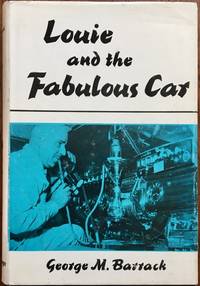
197558014New York: Vantage Press 1975. 8vo. 262 pp. Black boards gilt lettering on spine minor shelfwear slight lean to spine w/ d.j. cover art photo of Louie Mattar behind the dashboard of his heavily modified 1947 Cadillac minor shelfwear dustsoiling VG/NF copy inscribed by author on half-title. First edition stated & inscribed of this extraordinary account of Louie Mattar and his heavily modified and converted 1947 Cadillac. Mattar converted his “fabulous car†to include a bar a television stereo shower refrigerator retractable running boards and a hydraulic system for raising and lowering wheels to a tire could be changed while still in motion. He could cook meals iron clothes and have a cocktail and even fit a microphone attached to a speaker in dash of the Cadillac while also installing a hot water system for a travel trailer which could be pulled behind. Mattar and two other drivers set an early transcontinental driving record in 1952 by driving from San Diego to New York and back without ever stopping refueling in motion from a modified moving gas truck. He also made a similar nonstop from Anchorage AK to Mexico City. The vehicle now resides at the San Diego Automobile museum. Worldcat locates 2 copies SDSU Clarke Hist. Lib. Vantage Press, hardcover
193857167Portland OR: Motor Vehicle Inspection Bureau 1938-1942. Seven colour-printed transfer stickers to be adhered to windshields still mounted on original paper backing papers with instructions sized approx. 2.5 x 3 in. all colour-printed stamped numbers all 7 w/ added gilt highlights some w/ remnants of scrapbook or old mounts on versos adhering to the printed instructions for properly affixing them couple w/ minor scuffing VG set. A set of exceedingly scarce City of Portland Motor Vehicle Inspection stickers depicting such themes as salmon swimming upstream Art Deco streamlined trains planes & steamships Chief Multnomah tall trees and mountains Skidmore Fountain covered wagon and the Veterans Hospital. Some time in the early 1930’s after the Federal Government had adopted a gasoline tax similar to Oregon’s pioneering move required driver’s license applicants to pass vision and road rules tests and registration fee the City of Portland began requiring twice-yearly inspections for vehicles. Reproductions can be obtained for the first three stickers 1938-1939 but the final four are relatively unknown. See: Joseph Rose A Brief History of Oregon Vehicle Fees and Fuel Taxes Jan. 10 2019; Bob Hoyt Classic Windshield Inspection Stickers Oregon 2020. Motor Vehicle Inspection Bureau, unknown
196662415Pasadena & Santa Monica CA: Spartus Inc. & Douglas Aircraft Corp. 1966. Folio. 10.25 x 13.25 in. 16 pp unpaginated. With photo illustrations blueprint diagrams text illustrations throughout. Flexible metallic silver covers laurel wreath logo at upper right corner front cover minor shelfwear slight creasing still VG copy from the library of Gene Sherman 1944-2007 famed southern California auto designer and builder renowned metal fabricator automobile restoration specialist worked at the Briggs Cunningham Automobile Museum until it closed and later opened a studio in Huntington Beach CA. First edition of this exceedingly scarce promotional catalogue from Art Sparks whose introduction details the efforts to radically compete with the new-found supremacy of the Lotus-Ford race cars and in conjunction with Douglas Aircraft and Sparks engines design a competitive car. In 1966 the USAC regulations required Indianapolis race cars to feature open-wheel design with maximum width of 75 in. and minimum wheelbase of 96 in. and 4.2 litre engines with 2.8 litre superchargers. The legendary innovator applied his famed ForgedTrue pistons which when used in other engines powered 11 consecutive Indianapolis 500 race winners. Sparks 1901-1987 was a pioneering silent movie and talkie professional driver stuntman including Howard Hughes’ epic Hells Angels raced on outlaw dirt tracks and began competing with Stubby Stubblefield Bill Cummins and Rex Mays on West Coast Tracks. He designed Stubby’s “The Catfish†aerodynamic race car which placed 6th in the 1932 Indy 500 and later began working with Thorne Engineering to develop George Robson’s 1946 Indy 500 winner. No copies in Worldcat; See: Colorful & Eccentric Innovator Art Sparks Racing History Other Series Speed Sport March 10 2023; Art Sparks Indianapolis Motor Speedway Museum Inducted Hall of Fame 1987. Spartus Inc., & Douglas Aircraft Corp., unknown
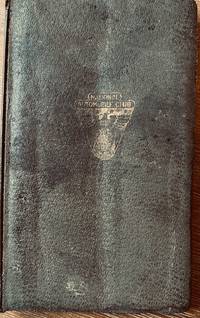
1925537San Francisco: National Automobile Club 1925. 7 x 4 1/4 inches. Fair condition having discoloration along the extremities. Two foldout maps are separated at the seams. This small booklet is a compact atlas for the State of California. It has an initial tables of distances for 1600 places from four cities; San Francisco Sacramento Fresno and Los AngelesThere is an indexed set of twenty-five maps covering the entire state. Additionally there is California Trunk Highways covering twenty-seven maps. They were; Redwood Highway Pacific Highway Coast Highway Valley Highway Los Angeles to San Diego- via coast route and Los Angeles to San Diego-via inland route. In the back are fold out maps for traveling specific routes like "route to Lake Tahoe. Overall this is an exceptional compact production for pre-federal highway numbers. National Automobile Club unknown