3 531 résultats
1940Cat332United States 1940. Photo album measuring 7 x 10 inches containing fifty-three photographs: two tintypes c. 1890s and 1920s six RPPCs and forty-five modern photographs. Photographs mainly measure 4 x 6 inches and smaller. Conditions vary; some with wrinkling and damage especially to corners and edges; others Fine. Overall excellent. A photo album of an unknown couple. Early shots include two tintypes which appear to be turn of the century to 1920s and six real photo postcards dating to the 1920s at the latest based on stampboxes. The RPPCs include portraits shots from a farm and a souvenir photo from Brooklyn. Later shots are likely WWII-era showing several men posing in military uniforms.<br /> <br /> The album is highlighted by its photographs of Californian auto tourism and a Soap Box Derby event likely also in California. Identifiable tourist locations include Bear Canyon Campground in Altadena and Cedarpines Park in the San Bernardino mountains; people pose with the car in deep snow and at the campside and shots show the car with luggage strapped to the outside and filling up at a Shell. One Cedarpines photo is dated captioned “Winter ‘28â€. Later auto tourism shots—with what appears to be a 1940s model car—show the car at a Los Angeles mechanic with a teardrop camper and a boat on top and later parked at a beach with the camper set up with manuscript verso indicating that the location is Mexico. Alongside these photographs is a shot of a Depression-era billboard reading “NO JOBS in California / KEEP OUT / 6 MEN FOR EVERY JOB / NO STATE RELIEF AVAILABLE FOR NON-RESIDENTSâ€; on the verso it is captioned “1929 / This sign was posted in Tennesseeâ€.<br /> <br /> Soap Box Derby is a Depression-era invention beginning in 1934 in Dayton Ohio and quickly becoming a national phenomenon. Derby shots in this album appear to be Californian or at least to highlight Californian entrants: the cars pictured are sponsored by Siminow Bros. a Los Angeles gas station and mechanic. These include the cars being towed in the line for the inspection station the starting line and action shots.<br /> <br /> Highlighting two very different forms of car-based recreation the album is of interest to historians of the car in American leisure in the period surrounding the Great Depression. unknown
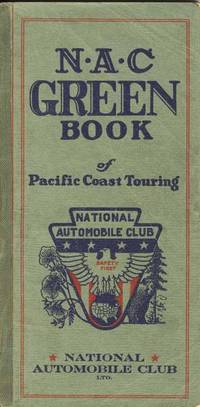
193153870N. P.: Privately printed 1931 1931. Fourth edition. 8vo. 8 3/4" x 4 3/8" printed wrappers printed in blue on green paper stock and with a cloth spine 239 pp. maps mileage tables. Provides automobile service in California but the service is modified for drivers in Arizona Idaho Nevada Oregon Utah and Washington. The National Automobile Club started delivering peace of mind to motorists on February 28 1924. The first headquarters were established at 362 Pine Street San Francisco California. It was founded to provide assistance to motorists when that unexpected roadside emergency arose. Back then hard-surfaced roads were a novelty vehicle disablements prevalent flat tires were commonplace and gas was purchased at the general store. Engineers and cartographers in the Club's Engineering Department were engaged to log the roads of the state and to draft maps for the information and guidance of the members. NAC's maps remained in demand by the California Highway Patrol and the United States Bureau of Roads for decades. The N A C remains active today and provides roadside assistance for its many customers. Very good copy. Privately printed, 1931 hardcover
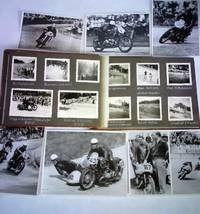
5i38381949-1952. 48 kartonierte S. mit Seidenhemdchen Bildformat meist 6 x 6 cm einige Aufnahmen größer Halbkunstleder-Einband mit Kordelbindung quart-quer. - Die Fotos zeigen die Rennen "Rund um Schotten" 1949 1951 1952 / Nürburgring 1950 / Dieburger Dreiecksrennen 1950 / Rhein Pokal / Hockenheim / Zentralbahn-Fahrradrennen / Foto von Thorn Prikker H. Battisberger auf BMW Duke und zahlreichen anderen Rennfahrern auch aus dem Fahrradrennsport. Teils sind die Fotos betitelt / Einige Fotos vom Reichsarbeitsdienst und Militärdienst in der Wehrmacht. Ausbildung am 75 cm P.A.K. / auch private Aufnahmen aus Familie und Beruf - unknown
2d8410General Motors GmbH Bln. 1929. 84 S. mit zahlr. Abb. kartoniert Einband und Titelseite etwas fleckig. - innen gut erhalten - unknown
BN66195Auto Union AG: Findbuch Veröffentlichungen des Sächsischen Staatsarchivs: Reihe A / Archiverzeugnisse Editionen und Fachbeiträge Sächsisches Staatsarchiv Chemnitz and Kukowski Martin <br/><br/> unknown
BN90956Grand-Prix-Report: Auto Union 1934 bis 1939 Hardcover Jan 01 1984 <br/><br/>Grand-Prix-Report: Auto Union 1934 bis 1939 Hardcover Jan 01 1984 Grand-Prix-Report: Auto Union 1934 bis 1939 Hardcover Jan 01 1984 hardcover
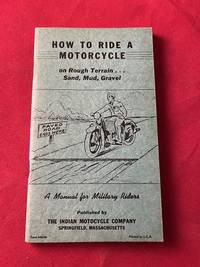
19406584Springfield MA: The Indian Motorcycle Company 1940. First Edition. Original wraps. Near Fine. 3 3/4 X 6 3/8 Inches. 49 PP. Original stapled green wraps as issued. Very early Indian Motorcycle guide issued with new motorcycles for a few of the earlier years. This particular issued for "Military Riders" of Indian cycles. Illustrated with simple line drawings throughout. Very early and important advertising booklet used by Indian motorcycles. OCLC LOCATES "0" COPIES. The Indian Motorcycle Company unknown
193958975South Bend IN & Chicago IL: Studebaker Corporation Plastic Binding Corp. 1939. Oblong 4to. 12.25 x 9.25 in. 114 pp. w/ thumb tabs at fore-edge of textblock. Illustrated title in blue gray & black. Illustrated throughout many black & white text illustrations photo illustrations diagrams many printed in blue gray & black. Colour-illustrated flexible plastic-comb binding as issued yapp edges rounded corners some wear & scuffing minor lifting to original cellophane laminate on covers still VG- copy w/ former ownership markings on front cover for James Langdon and his brother Harold “Slim†Langdon who operated a garage and Studebaker dealership in Clackamas County OR. First edition of this nicely illustrated Studebaker dealer’s salesman manual detailing the very successful 1940 Studebaker models which featured the influence of the streamlined designs of Helen Dryden in consultation with the equally famous contemporary industrial designer Raymond Loewy who began his contract with Studebaker in 1936. The 1940 Studebaker lines featured the President & Commander lines. The 1940 Studebaker models included 4-door sedans 2-door coupes and 2-door Club Sedans fitted with dual sidemounted spare tires. They came stock with cigar lighters clock and dual horns and ran on a 122 in. wheelbase. This manual includes tips for the Studebaker salesmen on performance comfort safety dependability and fuel economy. In addition there is a well-illustrated section on 1940 Studebaker commercial cars. Dryden 1883-1972 was an acclaimed woman artist earning over $ 100000 a year in the 1930’s when her designs first appeared with Studebaker. Dryden continued to work with Loewy at Studebaker until 1940 when she mysteriously drops from the public eye only to make a short appearance in a series of 1956 New York times articles on her dispute with the Welfare Department. No copies in Worldcat; See: Ed Heys Helen Dryden: Fashion Illustration and Automobile Hardware Design Hemmings Daily Feb. 17 2016; Raymond Loewy and Streamline Moderne The Old Motor August 12 2013. Studebaker Corporation, Plastic Binding Corp., unknown
192463831New York: Brentano’s 1924. 8vo. 262 pp. Photo frontisp. 34 photo plates. Pictorial green black & orange publisher’s binding auto camping scene by Decorative Designers on front cover gilt lettering on spine minor shelfwear slight lean w/ d.j. photo cover art of Yosemite map of couple’s auto transcontinental auto trip on back cover minor dustsoiling edgewear tear affecting part of lettering w/ minor loss on front cover minor chipping head & foot of spine still VG/G- copy inscribed by the author on the title to Marcel & Quinta Kersell. First edition inscribed of this fascinating memoir of Mary and Fred Bedell’s trek across the perimeter of the United States in 1922 following World War I in their Hupmobile over some of the worst driving conditions imaginable including impassable roads holdup bandits in Texarkana tornadoes through Texas while featuring camping stops at Yosemite Crater Lake Mount Rainier Glacier National Park Yellowstone Banff and more. Political and racial upheaval make infrequent appearances as she often refers to the plight of African-Americans or Native Americans but she and her husband were particularly appalled at the prevalence of the Ku Klux Klan across the South and into Arizona “taking the law into its own hands and wearing masks to prevent detection. Could anything be more cowardly or more at variance with our constitution.†Bedell 1870-1936 was an active photographer while her husband Frederick Bedell 1861-1958 was a noted physicist at Cornell specialist in alternating currents audiologist specialist and later professor at Caltech. Exceedingly scarce in original jacket. See: Bliss Autos Across America 41. Brentano’s, unknown
191063754Coventry & London England: Hire Department of The Daimler Motor Co. 1904 Ltd. 1910. One large folding linen-backed dissected colour travel map sized 36 x 32 in. consisting of 40 map panels 14 leaves of Daimler Motor Co. for hire vehicles advertised & mounted on verso w/ photo illustrations self-printed mounted red linen covers when folded black lettering on covers NF copy. First edition thus of this exceedingly scarce promotional automobile travel map issued by the storied Daimler Motor Co. after the company had been purchased in 1910 by BSA Birmingham Small Arms Co. under the efforts of Dudley Docker. Featuring garages in various locations the Daimler Motor Co. Hire Dept. rented every type of automobile including Landaulettes Limousines Touring Cars Ambulances and even provided automobiles and chauffeurs for Continental Tours. In addition they maintained an entire stable of automobiles in Liverpool near the Cunard Line docks to receive American customers who could rent by the hour day and up to a month 42 and 48 horsepower cars seating up to 5-6 passengers and the driver. The Bartholomew Touring Map tends to be rather uncommon but we could find no holdings or records of this specially issued Daimler Motor Co. version in Worldcat or other references. Hire Department of The Daimler Motor Co. (1904), Ltd., unknown
196053159Lansing MI: Oldsmobile Division General Motors Corp. Sept. 1960. Two vols. 1st - 4to. 86 6 pp. first section leaves printed on thick card stock some colour-printing thumb tabs at lower margin text illustrations diagrams with supplement pages printed in red white blue & black. Colour-illustrated covers w/ clear vinyl 4-ring binder Mid-Century Modern geometric cover art rounded corners minor shelfwear slight creasing to covers VG; 2nd - Oblong 4to. 11.5 x 10.5 in. 56 18 12 10 pp. printed on alternating thick and thin card stock with 262 nylon upholstery leather and simulated leather vinyl samples tipped in; w/ 28 paint samples bound spiral bindings including 9 mylar oversheets which are used to show colour combinations for different makes of Oldsmobile models. Original padded Mid-Century Modern geometric cover art vinyl landscape format 4-ring binder rounded corners some lifting to the paint samples at rear minor scuffing still VG copy; former dealership stamp on 1 title page. First edition of these very scarce dealer showroom catalogues for the 1961 Oldsmobile automobiles which featured the introduction of the unique mid-size F-85 powered by a aluminum 215 cubic inch V-8 trying to compete with similar offerings by Buick and Pontiac. The full size line-up models featured an all-new smaller streamlined and rounded body and chassis with perimeter “Guard Beam†frame and all-coil suspension replaced the leaf springs. All of the full-size Oldsmobiles were powered by the 394 cubic-inch Rocket V8 with the Dynamic 88 featuring a 2-barrel 250 horsepower version. The Super 88 could be purchased with a 4-barrel 394 Skyrocket V8 rated at 325 horsepower. These catalogues also include the supplement for the convertible-only “Starfire†which was introduced in mid-1961 and was based on the Super 88 convertible sporting leather bucket seats a center console with floor shifter -- the first U.S. full-sized production car to feature an automatic transmission with console-mounted floor shifter. In addition it featured a high performance engine. No copies located in Worldcat. Oldsmobile Division, General Motors Corp., hardcover
196353157Lansing MI: Oldsmobile Division General Motors Corp. 1963-1964. Two vols. 1st - 4to. 106 2 126 pp. first section leaves printed on thick card stock some colour-printing thumb tabs at far right margin text illustrations diagrams with supplement sections printed in gold blue pink & beige coloured papers. Red padded vinyl 3-ring binder silver lettering stamped on front cover & spine rounded corners faint tidemark to fore-edges of some of the leaves very minor shelfwear VG; 2nd - Oblong 4to. 13 x 9 in. 124 pp unpaginated. printed on alternating thick and thin card stock with 286 nylon upholstery leather and simulated leather vinyl samples tipped in; w/ 27 paint samples bound spiral bindings including 9 mylar oversheets which are used to show colour combinations for different makes of Oldsmobile models. Original padded red vinyl 17-ring binder embossed raised silver lettering on front cover silver lettering on spine rounded corners minor tidemark & soiling to far lower right corners of text leaves still G- copy. First edition of these very scarce dealer showroom catalogues for the 1964 Oldsmobile automobiles which featured the introduction of the Oldsmobile 442 a muscle car option on the F-85/Cutlass platform to compete with the Pontiac GTO the F-85 fitted with cast-iron 6-cylinder and V-8 engines; and Jetstar I which was to compete directly with the Pontiac Grand Prix. The Starfire Oldsmobiles featured brushed-aluminum side trim with brand new sheetmetal and grille and taillights as well as the introduction of a concave rear window which blended well with the hardtop roofline. The new Jetstar 88 and Jetstar I models were the least expensive and sportiest models of the full-size Oldsmobiles and the 394 cubic inch Starfire Rocket V-8 was Oldsmobile’s highest output engine at 345 horsepower. The original dealer showroom catalogues complete with all the possible upholstery and paint combinations have become quite scarce and the product selling information catalogue complete with all of the 1964 updated package information and comparative price and selling points with Ford Pontiac and Chevolet provide an invaluable sales reference for these Mid-Century Modern classics. No copies located in Worldcat. Oldsmobile Division, General Motors Corp., hardcover
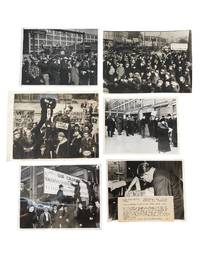
1937234461937. Labor Organization Chrysler strike press photo archive documenting the 1937 sit down strikes and picketing campaigns at Dodge Main and other Chrysler facilities in Detroit and Highland Park Michigan during the decisive phase of industrial unionization in the American automobile industry. The archive records workers occupying plants mass picket mobilizations outside factory gates anti injunction demonstrations and violence connected to the struggle between Chrysler management the United Automobile Workers and competing independent unions. These events unfolded only weeks after the February 1937 settlement of the Flint sit down strike against General Motors which established the UAW as a major industrial union and accelerated organizing efforts across Detroit's auto plants. Chrysler initially resisted recognition obtaining court injunctions ordering workers to evacuate occupied factories while thousands of laborers remained inside the plants or formed flying squadrons to block strikebreakers from entering. The scenes here capture the atmosphere of confrontation in Depression era industrial labor conflict at a time when mass production workers forced some of the largest corporations in the United States to negotiate with organized labor.<br /> <br /> Photo archive of 6 silver gelatin press photographs from 6 x 8 inches to 8 x 10 inches Detroit and Highland Park Michigan 1937. Affixed captions on versos with filing stamps dated March and August 1937. Crowds of striking workers gather outside Dodge Division and Chrysler factory gates beneath signs reading "Dodge Division of Chrysler Corporation Employment Office" and "We Are Here To Stay Dept. 82." Several men hold placards reading "82 is Sittin Too" "Spirit of 1937" and "Fence Jumper" while an effigy labeled "Injunction" hangs over the crowd in open defiance of a court order directing workers to vacate occupied plants. A large calendar board records the passing days of the sit down occupation beginning March 8 1937. Another scene shows relatives and supporters communicating with occupying workers through numbered department cards hung along the perimeter fence after union organizers established an improvised locating system for men inside the plant. One caption identifies "flying squadrons" directing picket activity outside Chrysler headquarters. The latest photograph records Frank A. Dillon identified as president of an independent Chrysler union receiving questioning from Detective Sergeant Harry Scher after an alleged beating connected to union violence that led Chrysler officials to temporarily close a plant pending investigation.<br /> <br /> The Chrysler strike formed part of the larger wave of industrial labor upheaval that reshaped American manufacturing during the New Deal. Passage of the Wagner Act in 1935 legally protected collective bargaining but enforcement depended on workers physically preventing corporations from continuing production with replacement labor. Sit down strikes became one of the most controversial tactics of the era because occupying workers halted machinery while denying employers access to their own factories. The archive preserves not only the mechanics of strike organization but also the public theater of industrial conflict in Depression era Detroit: marching pickets improvised communication systems anti injunction symbolism and massive worker assemblies outside factory gates. Moderate surface wear occasional creasing editorial markings and toning to versos with captions firmly affixed; images remain sharp and highly legible. Overall very good condition. unknown
192658781Stockton CA: Duffy; Eddy ca. 1926-1931. Oblong 4to. 11 x 4.2 in. 70 pp unpaginated. on thick black paper stock. With 99 photographs & RPPC’s sized from 2.6 x 4.5 in. to 3.5 x 5.5 in. photographer’s imprint w/in negative at lower corner w/ many captioned. Contemporary polished calf Yellowstone Park souvenir post-binder punch-sewn at gutter margin w/ suede calf tie illust. of brown bear on front cover minor scuffing edgewear minor soiling to upper right corner wear to corners still VG exemplar. This album records the automobile trip and scenic views along the way of a young Stockton California couple as they traveled past Mount Shasta to the Columbia River Gorge Highway with snapshots interspersed with RPPC’s. Views of the Rotary Club Fountain at Wahkeena Falls along the Columbia River Highway the Cascade Falls and Funicular at Mount Shasta the Bonneville Fish Hatchery as well as Salmon Fish Wheels on the Columbia River and Multnomah Falls are all present. In addition the couple visited the Celilo Falls area before the dams removed their iconic footprint as well as camped and fished on their way to Yellowstone National Park. Several photos show the falls geysers and vistas at Yellowstone along with glimpses of the black bears and buffalo at the Park followed by trip to Salt Lake and on through the California Sierra Nevada mountains to return to Stockton. Jesse Duffy 1895-1977 was a World War I veteran sergent in Company F 263rd Infantry 91st Division discharged in 1919 worked for Holt Manufacturing in Stockton the City Engineering Dept. during the 1920’s and later for Fibreboards Products Co. in Stockton. Ruth Duffy 1895-1974 was a longtime seamstress and tailor. Eddy 1889-1970 was a longtime Oregon City photographer who first launched his career at 70th & Sandy in Portland as photographer and later operated a postcard stand at Wahkeena Falls in the Columbia River Gorge. Duffy; Eddy, hardcover
193762970Dublin Ireland: Royal Irish Automobile Club; The Irish Tourist Association Great Southern Railways Ormond Printing Co. ca. 1937-1938. Ten pieces. 8vo. 8 pp unpaginated. photo illustrated throughout. Green pictorial softcovers colour cover art minor shelfwear slight creasing; 8vo. 4 x 9 in. which folds out into 23 x 27 in. large map printed in red black & green photo illustrations on recto & verso slight shelfwear; 8vo. 4.5 x 8.5 in. folds out into 23.5 x 24 in. map in red & back stiff printed & illustrated covers in blue & red; 8vo. 4 x 8.75 in. 158 2 pp. Orange printed softcovers cover w/ green & black decorative lettering minor scuffing slight closed tear head of spine; 8vo. 12 pp unpaginated. leporello accordion style printed & illustrated in orange & black map of Galway self-printed softcovers minor shelfwear slight bumping to corner; 8vo. 12 pp unpaginated. leporello accordion style printed & illustrated in blue red & black photo illustrations self-printed colour-illustrated softcovers; 3 vols. 8vo. 12 pp unpaginated. leporello accordion style printed & illustrated in colour folding to the center all three w/ self-printed colour-illustrated softcovers; 4to. 40 pp. Photo-illustrated throughoug. Colour-illustrated softcovers Shamrock cover art front cover photo cover art on back some scuffing remnants of mailing flap on front cover upper fore-edge still a VG grouping w/ Complimentary Letter from the Royal Irish Automobile Club laid-in addressed to Harold Berson 1926-1986 later World traveler and noted children’s book illustrator. First editions thus of these automobile travel brochures maps and directories promoting the “See Ireland First†campaign developed by the Royal Irish Automobile Club and the Irish Tourist Association during the Great Depression to encourage UK tourists to visit Ireland as well as Americans. The campaign designed to emulate the “See America First†good roads campaign in the United States was focused on touting the amenities for automobile enthusiasts the improved roads and connections between the Free State of Ireland and Northern Ireland between the Wars but also the many different hotels roadside inns historic attractions and sporting opportunities including angling golf and hunting. Several of these including the first are either not located in Worldcat or just a couple copies. Royal Irish Automobile Club; The Irish Tourist Association, Great Southern Railways, Ormond Printing Co., paperback
195563056New York: Thomas Y. Crowell Co. 1955. 8vo. viii 6 274 pp. Publisher’s half-beige cloth over blue boards black lettering on spine slight toning to fore-edges minor shelfwear w/d.j. splendid wraparound pictorial map cover art depicting regional and local foods across the U.S. slight darkening to spine very minor edgewear still NF/VG copy inscribed by author on first dedication page “To Bessy Morris Eat & have fun.†First edition inscribed of this gastronomical memoir and guidebook by the esteemed authority on the best restaurants to be found while traveling the back roads of America in the first half of the 20th Century. Although Hines could barely cook he was a consummate traveling businessman whose adventures encouraged him to search for the best restaurants keeping notes and eventually writing his iconic guidebooks advising on restaurants and eateries wherever the tired motorist may stop. Prior to modern guidebooks ratings websites and other travel advisories Hines was an investigative epicurean who not only kept meticulous notes on the meals he ate but visited the kitchens and even the garbage outback to confirm cleanliness standards. He partnered in 1952 with Roy Park to form Hines-Park Co. in Ithaca NY and later began marketing everything from ice cream to cake mixes. Scarce in original dustjacket or signed. Thomas Y. Crowell Co., hardcover
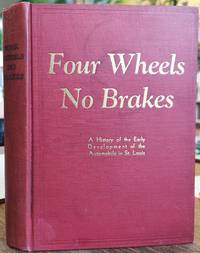
1930260226-MB54St. Louis Missouri: St. Louis Society Automobile Pioneers 1930. Very Good hardcover 33 black and white plates. some discoloration to back cover otherwise unmarked. First Edition. Hard Cover. Very Good/No Dust Jacket. St. Louis Society Automobile Pioneers Hardcover
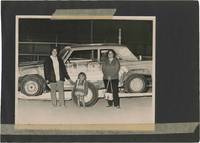
1974149416N.p.: N.p. 1974. Archive of 20 vintage black-and-white photographs along with one color photo of Central Valley CA stock car racer Don Darling 1972-1974. Five photographs loose the remainder tipped onto black card stock leaves with masking tape. Occasional manuscript ink annotations to the tape identifying the years as well as dirt tracks in Roseville and Maryville CA. <br /> <br /> Included are images of Darling and others drivers in action crashed or wrecked cars many of which appear to be a decade or more older than the photographs and posed shots of Darling or others with vehicles including a signed portrait. Also including is a handwritten note listing the point totals for racers on Aug. 18 1974 showing Darling solidly in sixth place out of a field of 16. <br /> <br /> Black-and-white photographs 10 x 8 inches color photograph 5 x 3.5 inches. About Very Good. N.p. unknown
190858484New York: Automobile Club of America 54th St. West of Broadway 1908. 12mo. 4.75 x 6.25 in. 422 pp. Frontisp. photo colour plate double-page map. Flexible pebbled calf gilt lettering stamped on front cover rounded corners street route symbols on front pastedown a.e.g. minor chipping head & foot of spine scuffing minor chipping head & foot of spine fore-edges still a VG- copy. First edition of the first of the Automobile Club of America ACA Bureau of Tours guide books intended for their members. For a yearly fee of $ 10.00 any member would have the benefits and services of the club and their subscription copy of this guide book. These year books contained the list of officially appointed hotels garages repair shops attorneys physicians and surgeons throughout the touring regions and specific route information. The colour plate shows the officially accepted ACA flag for businesses hanging from its’ bracket and the map specifies the coverage of tours stretching from Maine to Chicago and down to Maryland. The route instructions read similarly to a “Hieroglyphic Bible†with road instruction symbols demarcating routes trolley lines grade crossings RR Bridges speed limits and mileage markers. The ACA was the first automobile club formed in America in 1899 and advocated for and against automobile regulations improving “Good Roads†with the Good Roads Movement and were the U.S. sponsors for International Auto Racing. The Club later disbanded in 1932 during the Great Depression. Worldcat locates 2 copies U of Rochester The Henry Ford; See: A.C.A. Bureau of Tours Cycle and Automobile Trade Journal April 1908 p. 42. Automobile Club of America, 54th St. West of Broadway, unknown
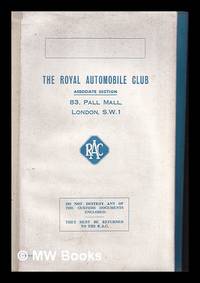
1950433242The Royal Automobile Club 1950. 1st edition. Softcover. Good stiff-card folder with maps certificates driving permits envelops and similar documentation. Edges and documents nicked stained dust-dulled and somewhat rubbed as with age. Scans and additional bibliographic detail on request. Physical description; folder with envelops coloured maps permits certificates and similar cash of papers. Subjects; The Royal Automobile Club. Insurance cars 20th century. Automobiles 20th century. The Royal Automobile Club paperback
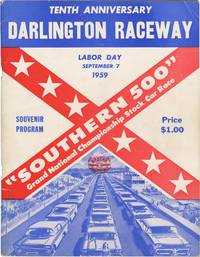
1959167807N.p.: N.p. 1959. Vintage program and archive of assorted ephemera from the 1959 Southern 500 held at the Darlington Raceway in Darlington South Carolina on September 7 1959. An enthusiastic spectator's archive of the marquee NASCAR event held at NASCAR's "oldest superspeedway race" during its Tenth Anniversary which has since become a Labor Day institution in the South.<br /> <br /> The substantial archive of ephemera from the 1959 Southern 500 includes: The 88 page Souvenir Program. A tri-fold ticket order form mailer for the Rebel 300 and the Southern 500 with grandstand map. A ticket stub from the event. A flyer of the "Race Qualifiers" on the recto with the "Starting Order Of Cars" on the verso with an attached newspaper clipping of the event's winners. A souvenir Confederate flag with "Southern 500" printed on one side. A jumbo color post-card of the then-named Darlington International Raceway viewed from above. A color post-card and four 3.5 inch vernacular black and white photographs of the Bennettsville Motel and Brandin' Iron Restaurant where the compiler of the material appears to have stayed for the event. And a dozen contemporary newspaper clippings from before and after the event.<br /> <br /> The 1959 Southern 500 was the tenth running of the race held at the then-named Darlington International Raceway on September 7. A legendary NASCAR racetrack and one of NASCAR's Crown Jewels Darlington has been nicknamed as "The Lady in Black" and "The Track Too Tough To Tame" by NASCAR enthusiasts because of it's long unique somewhat egg-shaped course with uniquely different banks at the track's first two turns from the track's last two turns giving the track a storied reputation for being unforgiving and unpredictable.<br /> <br /> The race lasted for four hours and twenty-eight minutes with Jim Reed defeating Bob Burdick by more than two laps in a 1959 Chevrolet Impala and featured Richard Petty who finished fourth and Buddy Baker's first superspeedway experience. Scenes from the race were used in the 1960 film "Thunder in Carolina" directed by Paul Helmick and starring Rory Calhoun and Alan Hale Jr.<br /> <br /> Program. 8.5 x 11 inches side-stapled. Near Fine overall.<br /> <br /> Additional materials Very Good plus to Near Fine overall. N.p. unknown
195562224Salem OR: Traffic Engineering Division Planning Survey Section Oregon State Highway Commission June 1955. Oblong folio. 15.5 x 11 in. 151 1 pp. With maps colour maps diagrams 5 colour mylar overlays civil highway engineering elevation drawings tables charts. Original tan softcovers plastic-comb binding as issued wear bumping creasing to text block some soiling & tidemark to back cover edgewear front cover retained and affixed w/ paper tape repair still a good reference copy from the library of A. Rodney Eckerson 1930-2024 former purchasing agent for the Port of Portland. First edition of this groundbreaking highway engineering urban planning and “blight†redevelopment plan released the year before funding began flowing to underwrite 90% of the eventual 42500 mile interstate freeway “Expressway†system. Oregon leaders had contracted with New York urban planner Robert Moses†in 1943 to develop a public works program and highway building plan for the state which included a series of core recommendations reflected in this later 1955 Traffic Engineering Technical Report prepared by Baldock & Williams who pitched in the report that Portland be carved up by a series of freeways and cleared of blighted urban neighborhoods. The Banfield Freeway which later became I-84 through East Portland was completed first in 1958 and largely was built over the remnants of a vast shanty town in Sullivan Gulch but the construction of I-5 through North Portland began in earnest in 1962 directly demolishing 300 homes and bisecting the African-American Lower Albina neighborhood which at the time was the heart of the city’s only majority black neighborhood. The original colour mylar overlays depict the projected growth of the city and the increasing demand for roads as the interurban and electric railway system was either decommissioned or condemned and automobiles were the focus of transport into and around the city. Also included here is the proposed route for the Mount Hood Freeway which was to run through East Portland all the way to Mt. Hood and by 1969 had received the necessary funding but by then considerable residential backlash had built primarily due to the fact that the proposed Stadium Freeway I-405 ended up bisecting and leveling the former neighborhoods North & West of downtown Portland near Goose Hollow increasing removal of houses in North Portland along the I-5 construction was particularly bitter and the introduction of the early plans for I-205 set off a revolt in Lake Oswego that would have as planned divided the community separating the schools from their community. Eventually after the election of Mayor Neil Goldschmidt the Mount Hood Freeway project would finally be canceled and the Federal money poured into mass transit projects. Although 11 copies are located in Worldcat privately owned copies for sale in the trade are quite scarce; See: Val Ballestrem “In the Shadow of a Concrete Forest:†Transportation Politics in Portland Oregon and the Revolt Against the Mount Hood Freeway 1955-1976 2009; Cortright How a Freeway Destroyed a Neighborhood and May Again 2019; Raymond Mohl The Interstates and the Cities: Highways Housing and the Freeway Revolt 2002. Traffic Engineering Division, Planning Survey Section, Oregon State Highway Commission, paperback
192862600Ottawa ONT: Natural Resources Intelligence Service 1928-1929. Four large folding colour maps. atlas folio w/ largest sized 45 x 35 in. w/ each sheet including an index map indicating there are 4 in total with outlines fold creases as issued minor age toning to fore-edges a few minor closed tears at fold creases still a VG set of maps. Early printing of this four sheet map depicting the automobile roads connecting Canada and the United States during the 1920’s as the Good Roads Movement rapidly expanded through the Northern Country following World War I. These maps depict the burgeoning highway and national road system which had been fostered by urban centers attempting to convince rural municipalities to replace their seasonal dirt roads with those of gravel or crushed stone and facilitate much greater movement of agricultural and manufacturing products across the continent and with the U.S. The Atlantic map stretches from the maritime provinces down to Washington D.C. and over to Niagara Falls and Buffalo NY; The Middle West map documents the main automobile roads and highways from Port Albert to Port Arthur and South from Denver to St. Louis indicating provincial federal and state roads and highways; The Great Lakes section tracks the extensive network of roads and highways surrounding the Great Lakes including those in Iowa Kentucky Wisconsin New York and the Canadian provinces of Quebec and Ontario; while the Pacific Map records the highways from San Francisco to Denver and up through Alberta and over to British Columbia. Uncommon with all four maps present. See: J.I. Little Confronting Rural Localism: The Good Roads Movement in Quebec’s Eastern Townships 1897-1920 Social History/Histoire sociale Vol. 57 No. 117 May 2024. Natural Resources Intelligence Service, unknown
193961858Saugatuck CT: The Eno Foundation for Highway Traffic Control Inc. Yale University 1939. 4to. 7.5 x 9.4 in. xi 1 293 1 pp. With several diagrams street plans colour facsimiles of driving rules and street regulations designed by the author. Black publisher’s cloth white lettering red sigil front cover for the Eno Foundation white lettering on spine minor shelfwear very minor rubbing w/ d.j. title & Eno Foundation sigil repeated on front cover Roundabout street plan for the Champs Elysees drawn 1912 approved 1913 and installed later after World War I in 1927 minor chipping & tears small tear upper fore-edge back cover darkening to spine still a VG/VG- copy. First edition 1 of 2500 copies printed of this seminal work detailing the author’s pioneering efforts of introducing traffic controls and street flow regulations beginning during the Progressive Era in 1899. Although Eno 1858-1945 had personally experienced his first New York traffic jam in 1867 it was missing the opening of the New York Metropolitan in 1899 that turned him to devote all his efforts to Good Roads engineering and traffic regulation and away from real estate. This volume includes his pioneering “Rules of the Road†which suggested speed limits right-of-way laws slowing and stopping signals and that vehicles should stay to one side and in 1902 New York adopted the rules creating their “Apollo Squad†traffic police. As the Progressive Era “Good Roads†movement launched largely by bicyclists and further propelled by automobiles in the Brass Era traffic flow planning patterns and regulations were also considered and adopted by governments in London Paris Berlin Rome and others consulted from as far as Australia and Japan. In addition during both World Wars he developed the military traffic control codes used overseas and in 1901 incorporated the Eno Foundation for Highway Traffic Control along with inventing the stop sign marked pedestrian crosswalks taxi stands and pedestrian safety islands. Of interest is that Eno never learned to drive. See: William Phelps Eno Institute of Transportation Engineers 2024; Karen Karabell William Phelps Eno My Hero Cycling Savvy Feb. 14 2018; The Life of Eno Eno Center for Transportation 2024. The Eno Foundation for Highway Traffic Control, Inc., [Yale University] hardcover
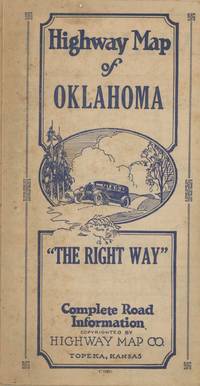
1930List2430Topeka 1930. Folded map measuring 28 x 17 inches. Some small tears at folds very good. Very Good. A scarce depression-era map of Oklahoma with graphic advertisements to the verso showing the range of automobile-centric establishments in the state at the time. The map shows all the automobile routes of the time with text along the borders listing the towns and the telephone numbers of various services and lodging options. The instructions on the the top read “Put Out Your Fires / Leave a Clean Camp / Keep the Streams Pure / Don’t Be a Road Hog.†According to the single copy in OCLC at the Denver Public Library the map was printed in 1930 though we see no date on the map itself. The depression hit Oklahoma following the drought in 1930 which also coincided with the opening of the East Texas oil field. This map is a relic of the period just before the state’s economic downturn with the early automobile infrastructure still intact and vibrant. unknown