Monsieur VoitureBiblio.com

The Saint Bookstore · Royaume-Uni38,16 £GB≈ 43,57 €
3 531 résultats
19752080502106915672Not Available 1975. Soft Cover. Fine. The book is in fine condition. Not Available paperback
195455862Dearborn MI: Ford Motor Company 1954. Oblong Folio. 14.75 x 11 in. 30 pp. Colour photo illustrations colour illustrations and black & white photos throughout diagrams. Colour-illustrated front boards showing the 1955 Ford Fairlane coupe in blue & white wire spiral binding as issued w/ large double-folding easel mounted on rear cover allowing this to be displayed and fully opened double-page on a counter minor rubbing slight scuffing & edgewear minor wear to corners still a VG bright copy. First edition of this unusually scarce original dealer’s showroom counter display catalogue for the 1955 Ford model year introducing the newly redesigned Ford Fairlane which replaced the Crestline as the top trim level and through its’ lifespan would become Ford’s flagship automobile to the mid-size market eventually accounting for 20% of Ford’s production. Of special interest is the introduction of the Ford Thunderbird styled and designed by George Walker and although introduced for sale in October 1954 was sold as a 1955 and exceeded all expectations. The popular sportscar featured fender skirts a removable fiberglass top and a fabric convertible top as an option fitted with Ford’s 292 cubic-inch Y-block V-8 and exhaust pipes through twin bumper guards. No copies located in Worldcat. Ford Motor Company, hardcover
0881766402New. hardcover. New. Satisfaction Guaranteed or your money back. hardcover
1171442920.Gpaperback. Good. Access codes and supplements are not guaranteed with used items. May be an ex-library book. paperback
1385816597.Ghardcover. Good. Access codes and supplements are not guaranteed with used items. May be an ex-library book. hardcover
192064176St. Louis MO: H. Wenzel Tent & Duck Co. 1920. 8vo. 20 pp. Numerous colour illustrations some colour highlights price update on one leaf w/ affixed pink-tinted sheet. Colour-illustrated softcovers showing Wenzel poleless tent erected and Auto Touring Tent being unloaded from Brass Era auto running board cartoon illustrations on back cover for erecting tent minor fold crease from mailing some dustsoiling edgewear still a VG bright copy w/ price-list laid-in. First edition thus of this nicely illustrated camping equipment catalogue which opens illustrations of regulation wall tents flies for wall tents and several versions of auto camping tents including the Square Umbrella Ture-Lite Water-Proof auto tent and Lean-to Tent. The Wenzel Poleless Auto Touring tent was designed to be rolled up and erected using guy wires flexible ridge member with adjustable lever and three-section steel tubing for each end allowing it to be adjustable as well as portable. Also featured are Boys Camp tents miner or teepee tents large stable tents and Gospel or Circus tents. Wenzel 1850-1922 was a German-American who originally arrived in the U.S. in 1866 and launched a sailmaking business in Massachusetts followed by an awning business in St. Louis MO but by the end of the 19th-Century had moved to producing a significant line of camping tents auto camping tents and still produces as part of the Exxel Outdoors Co. a wide array of camping tents and waterproof sleeping bags and outdoor gear. Worldcat locates 2 copies Winterthur & MO Hist. Mus. H. Wenzel Tent & Duck Co., paperback
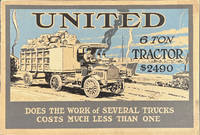
191662233Grand Rapids MI: United Motors Co. Etheridge Printers ca. 1916. Oblong 8vo. 9.25 x 6.25 in. 12 pp. printed in blue & black. Tan-coloured illustrated softcovers cover art of United Motors truck in blue black & tan front cover yapp fore-edges minor soiling to far right fore-edge slight shelfwear still VG copy. First edition of this very scarce dealer’s showroom catalogue for the pre-World War I United Motors Co. filled with factory photos advertising their innovative 6-ton tractor and semi-trailer configurations as considerable cost savings. For 2/3 of the cost of a 5-ton truck the retailer shipper etc. could field a tractor and trailer for less than $ 3300.00. Founded originally as the United Motor Trucks Co. before World War I as a division of the United Light & Railways Co. conglomerate to not only produce trucks and utility vehicles for their own needs but to meet burgeoning demand brought on by improving roads and fast-growing commercial demands before and after World War I. By 1922 Hulswit Kanary and Eckburg were building and selling United Trucks powered by a four-cylinder Continental Engine the lightest model featuring a worm drive and the others often fitted still with chain drives moving to shaft drive and by 1925 would be manufacturing what they called the “Highway Special.†Hulswit 1875-1933 was the president and organizer of the United Light & Railways Co. which held 13 railroad and public service gas & electric utilities and corporations in five states and was forced out of his company in 1926. By that time Kanary had decamped to Hollywood California and the truck manufacturing unit was spun off to ACME Motor Truck Co. of Cadillac MI which continued the badge for a short time. Advertisements for their truck line cease by 1928. Very few of the original company catalogues survive some business records and material can be found in the Austin Automobile Co. Collection Grand Rapids Library Special Collects. Finding Aid May 10 2018; See: Mroz American Cars Trucks & Motorcycles of World War I pp. 365-366; United Trucks Grand Rapids Spectator Vol. 11 Feb. 1922 pp. 17; Buys United Motor The Indianapolis Star Dec. 12 1926 p. 71. United Motors Co., Etheridge Printers, paperback
0915845008.Gpaperback. Good. Access codes and supplements are not guaranteed with used items. May be an ex-library book. paperback
193961858Saugatuck CT: The Eno Foundation for Highway Traffic Control Inc. Yale University 1939. 4to. 7.5 x 9.4 in. xi 1 293 1 pp. With several diagrams street plans colour facsimiles of driving rules and street regulations designed by the author. Black publisher’s cloth white lettering red sigil front cover for the Eno Foundation white lettering on spine minor shelfwear very minor rubbing w/ d.j. title & Eno Foundation sigil repeated on front cover Roundabout street plan for the Champs Elysees drawn 1912 approved 1913 and installed later after World War I in 1927 minor chipping & tears small tear upper fore-edge back cover darkening to spine still a VG/VG- copy. First edition 1 of 2500 copies printed of this seminal work detailing the author’s pioneering efforts of introducing traffic controls and street flow regulations beginning during the Progressive Era in 1899. Although Eno 1858-1945 had personally experienced his first New York traffic jam in 1867 it was missing the opening of the New York Metropolitan in 1899 that turned him to devote all his efforts to Good Roads engineering and traffic regulation and away from real estate. This volume includes his pioneering “Rules of the Road†which suggested speed limits right-of-way laws slowing and stopping signals and that vehicles should stay to one side and in 1902 New York adopted the rules creating their “Apollo Squad†traffic police. As the Progressive Era “Good Roads†movement launched largely by bicyclists and further propelled by automobiles in the Brass Era traffic flow planning patterns and regulations were also considered and adopted by governments in London Paris Berlin Rome and others consulted from as far as Australia and Japan. In addition during both World Wars he developed the military traffic control codes used overseas and in 1901 incorporated the Eno Foundation for Highway Traffic Control along with inventing the stop sign marked pedestrian crosswalks taxi stands and pedestrian safety islands. Of interest is that Eno never learned to drive. See: William Phelps Eno Institute of Transportation Engineers 2024; Karen Karabell William Phelps Eno My Hero Cycling Savvy Feb. 14 2018; The Life of Eno Eno Center for Transportation 2024. The Eno Foundation for Highway Traffic Control, Inc., [Yale University] hardcover
193558977Bourne Lincolnshire & London English Racing Automobiles Ltd. Printed & Published by Sir Joseph Causton & Sons Ltd. 1935. 4to. 28 pp unpaginated. With photo illustrations throughout. Colour-decorated limp covers striking Art Deco cover art lettering in red white blue & silver on English racing green field wire spiral binding as issued NF copy. First edition of this scarce promotional catalogue touting the storied English Racing Automobiles Ltd. E.R.A. founded in Nov. 1933 and manufactured 18 single seater racing cars capable of competing against most major race car manufacturers in motorsports at the time. The E.R.A.’s used 1.1 liter 1.5 liter and 2 liter supercharged engines competing in the Voiturette classes and were particularly designed for hill climbs and won many “Small Car†races. Of the original 18 ever built 17 still survive today although many have been heavily modified and experienced changes to blowers suspension brakes and styling to remain on the cutting edge. Their efforts were rewarded in 1935 by placing 1st 3rd 4th & 5th at the prestigious Nurburgring “Voiturette†class race in 1935. No original copies in Worldcat. English Racing Automobiles, Ltd., Printed & Published by Sir Joseph Causton & Sons, Ltd., unknown
5034San Francisco: California State Automobile Association. Circa 1910. 1st edition. Pages 4 pp. Single sheet printed both sides & folded.6� x 3.5� folded. Single sheet folded twice. 1st edition. Black & white photographs throughout. Scare early promotional piece for the hotel together with 2.25� x 3.25� photo card of the building. Very good. San Francisco: California State Automobile Association. Circa 1910. unknown
0265164788.Ghardcover. Good. Access codes and supplements are not guaranteed with used items. May be an ex-library book. hardcover
0265123984.Gpaperback. Good. Access codes and supplements are not guaranteed with used items. May be an ex-library book. paperback
0282597956.Gpaperback. Good. Access codes and supplements are not guaranteed with used items. May be an ex-library book. paperback
0428358233.Ghardcover. Good. Access codes and supplements are not guaranteed with used items. May be an ex-library book. hardcover
191226351NY: Self Published. Very Good with no dustjacket. 1912. Hardcover. Name inside one volume. ; Original hardcover not a reprint. 2 book set. ; 8vo 8" - 9" tall . Self Published hardcover
191526348NY: Self Published. Good with no dustjacket. 1915. Hardcover. Both volumes have very good and clean pages except for a name/address inside one front cover. The covers have some old spotting/staining. Very sound. ; Two book set. Original not reprints. ; 8vo 8" - 9" tall . Self Published hardcover
0484471058.Ghardcover. Good. Access codes and supplements are not guaranteed with used items. May be an ex-library book. hardcover
0259350761.Gpaperback. Good. Access codes and supplements are not guaranteed with used items. May be an ex-library book. paperback
0282626263.Gpaperback. Good. Access codes and supplements are not guaranteed with used items. May be an ex-library book. paperback
X06G-00746Automobile Association. Used - Good. Good condition. A copy that has been read but remains intact. May contain markings such as bookplates stamps limited notes and highlighting or a few light stains. Automobile Association unknown
190661361London: Salvation Army Book Department 1906. 12mo. 85 pp. plus 3 pp. publisher’s ads on thick paper stock. With 6 photo plates. Blue pictorial publisher’s cloth w/ image on front cover of General Booth’s 1906 Thomas Flyer touring car white lettering lsight scuffing minor shelfwear still VG bright copy. First edition of this informative work tracing the route and adventure in August 1904 as Salvation Army co-founder William Booth embraced the brand new motorized contraption traveling from Land’s End England to Aberdeen Scotland. The 1904 Thomas Flyer touring car was accompanied by a 1904 Thomas Tonneau touring car but Boot’s was painted white in order to attract more attention. Booth stopped off in cities towns and villages to preach to assembled crowds eager to hear the Methodist preacher’s message and the novelty of the automobiles was key. At the time less than 23000 motor cars were owned in all of Great Britain and as noted by the London Transport Museum over 98% of the vehicles in the London streets were drawn by the more than 300000 horses maintained in the urban area at the time. See: An Innovative Army Salvation Army Life and Times History 2023. Salvation Army Book Department, hardcover
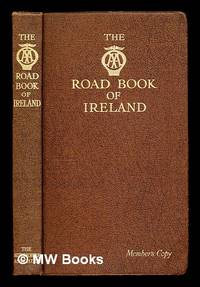
321088London: The Automobile Association. Revised Edition. Hardcover. Near fine copy in the original publisher's gilt-blocked cloth edges very slightly toned. Corners sharp with an overall tight bright and clean impression. Physical description; 357 pages ; maps. Notes; No clear publication date given. Subjects; Ireland. The Automobile association. Touring Surveys. Gazetteer. Itineraries. Maps. Town Plans. London: The Automobile Association hardcover
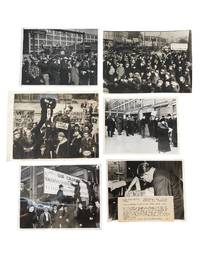
1937234461937. Labor Organization Chrysler strike press photo archive documenting the 1937 sit down strikes and picketing campaigns at Dodge Main and other Chrysler facilities in Detroit and Highland Park Michigan during the decisive phase of industrial unionization in the American automobile industry. The archive records workers occupying plants mass picket mobilizations outside factory gates anti injunction demonstrations and violence connected to the struggle between Chrysler management the United Automobile Workers and competing independent unions. These events unfolded only weeks after the February 1937 settlement of the Flint sit down strike against General Motors which established the UAW as a major industrial union and accelerated organizing efforts across Detroit's auto plants. Chrysler initially resisted recognition obtaining court injunctions ordering workers to evacuate occupied factories while thousands of laborers remained inside the plants or formed flying squadrons to block strikebreakers from entering. The scenes here capture the atmosphere of confrontation in Depression era industrial labor conflict at a time when mass production workers forced some of the largest corporations in the United States to negotiate with organized labor.<br /> <br /> Photo archive of 6 silver gelatin press photographs from 6 x 8 inches to 8 x 10 inches Detroit and Highland Park Michigan 1937. Affixed captions on versos with filing stamps dated March and August 1937. Crowds of striking workers gather outside Dodge Division and Chrysler factory gates beneath signs reading "Dodge Division of Chrysler Corporation Employment Office" and "We Are Here To Stay Dept. 82." Several men hold placards reading "82 is Sittin Too" "Spirit of 1937" and "Fence Jumper" while an effigy labeled "Injunction" hangs over the crowd in open defiance of a court order directing workers to vacate occupied plants. A large calendar board records the passing days of the sit down occupation beginning March 8 1937. Another scene shows relatives and supporters communicating with occupying workers through numbered department cards hung along the perimeter fence after union organizers established an improvised locating system for men inside the plant. One caption identifies "flying squadrons" directing picket activity outside Chrysler headquarters. The latest photograph records Frank A. Dillon identified as president of an independent Chrysler union receiving questioning from Detective Sergeant Harry Scher after an alleged beating connected to union violence that led Chrysler officials to temporarily close a plant pending investigation.<br /> <br /> The Chrysler strike formed part of the larger wave of industrial labor upheaval that reshaped American manufacturing during the New Deal. Passage of the Wagner Act in 1935 legally protected collective bargaining but enforcement depended on workers physically preventing corporations from continuing production with replacement labor. Sit down strikes became one of the most controversial tactics of the era because occupying workers halted machinery while denying employers access to their own factories. The archive preserves not only the mechanics of strike organization but also the public theater of industrial conflict in Depression era Detroit: marching pickets improvised communication systems anti injunction symbolism and massive worker assemblies outside factory gates. Moderate surface wear occasional creasing editorial markings and toning to versos with captions firmly affixed; images remain sharp and highly legible. Overall very good condition. unknown