[Port Lincoln Indigenous Group Portrait]Biblio.com
9 915 résultats
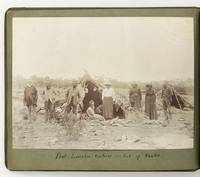
1900143581Adelaide: Government Printer 1900. First Edition. Hardcover. Fine. Adelaide Government Printer circa 1900. An oblong quarto photograph album approximately 250 × 320 mm containing 22 original vintage gelatin silver photographs each approximately 200 × 280 mm tipped in on the recto and verso of 11 card leaves captioned in ink on the mount. Cord-bound textured papered boards; minimal signs of age and handling; essentially in fine condition. 'South Australia' is written in ink on the front pastedown and the individual captions tend to be informative and site-specific: 'Aquaduct at the Gorge on the Torrens River'; 'View from Mount Barker'; 'Orchard & Vineyard Roseworthy College Farm'; 'Head of Gillen on the River Murray'; and 'Vineyard at Magill' are a few examples along with numerous identified bridges viaducts reservoirs and rivers. <p>This level of detail has enable us to locate thanks to Trove an article in an Adelaide newspaper 'The Express and Telegraph' Wednesday 3 October 1906 headed 'Advertising the State. South Australian Photographs in London'. The description of many of the photographs on display at the Bank of Adelaide branch in London 'The whole of these photographs were supplied by Mr. Vaughan the photo-lithographer' matches many of those in this album leading us to our attribution. <p>The article records that 'The Government recognise the value of photographs . and they have been putting the cameras in the Lands Department to good use lately for the purpose of advertising the State. A large number of pictures and slides for lantern use have been sent to the office of the Agent-General and every mail now takes a small addition to the stock. The photographs are used for advertising the State in various ways'. <p>It is perhaps unsurprising that the extraordinary portrait of the 'Port Lincoln natives - last of tribe' is not mentioned in the report. The State Library of South Australia has two examples of this print in its collection B 512 and B77443 - the latter in poor condition dated 'Approximately 1897' and '1897' respectively. Government Printer hardcover
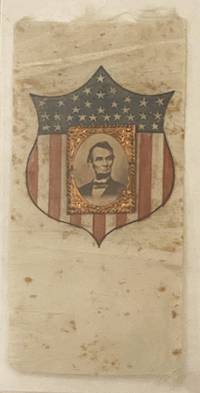
1864BB_Lincoln_badge<p><strong>LINCOLN</strong> Abraham 1809–1865</p><p><em><strong>PHOTO BADGE</strong></em> in copper frame with silk <strong>Campaign Ribbon</strong> circa 1864</p><p>Framed Albumen Portrait measures 1 x ¾ inches; Ribbon imprinted Chicago: North Western Flag & Banner Co. L. 4 inches.</p><p>The portrait by Anthony <strong>BERGER</strong> of Matthew Brady's Gallery the image taken in Washington DC 9 February 1864</p><p>Reference: C Hamilton and L Ostendorf: <em>Lincoln in Photographs</em> 109</p> North Western Flag & Banner Co.
18642547081864. very good-. This historic and rare black printed broadside presents the platforms of both parties the Republicans having convened in Baltimore in June and nominated Abraham Lincoln for President and Andrew Johnson for Vice President and the Democrats having convened in Chicago in August and nominated George B. McClellan for President and George H. Pendleton for Vice President. This copy measures 29 x 23 cm is double columned and with the imprint "For sale by all News Agents. Price $1 per 100." Very light foxing at the bottom margin more visible on the verso. Fraying at the margins as usual. Sabin 63348 Exceedingly scarce.<br/> <br/> unknown
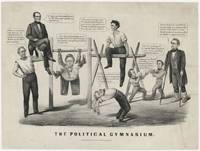
186060001<p><strong>Scarce iconic & fantastic lithograph Abraham Lincoln cartoon <em>The Political Gymnasium</em></strong></p><p>Abraham Lincoln Louis Mauer <strong><em>The Political Gymnasium</em></strong>. New York: Currier & Ives 1860. Lithograph broadside 18 x 13-1/2 inches.</p><p>This scarce and iconic lithograph is a detailed humorous "parody on the field of presidential candidates and their supporters in the 1860 campaign." Bell and Everett for the Constitutional Union Party are there: Bell a muscle man holds Everett aloft on a barbell. Horace Greeley struggles to do a pull-up in his effort to gain the New York governorship while Lincoln is easily astride his own bar wooden rails offering helpful advice: "You must do as I did Greely get somebody to give you a boost. I'm sure I never could have got up here by my own efforts." The New York Courier's James Watson Webb does a backward somersault in the foreground.</p><p>The broadside evidently issued after the parties' nominating Conventions because Seward is depicted as a cripple "on crutches and with bandaged feet." Breckinridge and Douglas "the two sectional Democratic candidates compete in a boxing match."</p><p>Auction records for the last couple of years show a colored example with trimmed right margin selling for $8125 and a nice but sooty uncolored example for $5250. Both sold by Heritage. Measures 18 x 13-1/2 in. and is an ideal candidate for framing. Overall Near Fine. Professionally cleaned & mended. Closed tear crosses most of Seward's midsection.</p> Currier & Ives
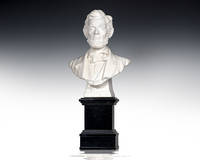
1909148487c. 1909. Painted plaster bust of Abraham Lincoln mounted on a wood pedestal base. After Raffaello Gironi for The Boston Sculpture Company. Signed faintly on reverse of integrated plaster pedestal "R. Gironi." An unpainted plaster of this sculpture is in the collection of the Canadian Museum of History Ottawa. In fine condition. The piece measures 21 inches by 9.5 inches. Abraham Lincoln served as the 16th President of the United States from March 1861 until his assassination in April 1865. He led the United States through its Civil War and in doing so preserved the Union of the United States of America abolished slavery and strengthened the federal government. In his Address at the Sanitary Fair in Baltimore Maryland in April of 1861 Lincoln stated: “The world has never had a good definition of the word liberty and the American people just now are much in want of one. We all declare for liberty; but in using the same word we do not all mean the same thing. With some the word liberty may mean for each man to do as he pleases with himself and the product of his labor; while with others the same word may mean for some men to do as they please with other men and the product of other men’s labor. Here are two not only different but incompatible things called by the same name liberty. And it follows that each of the things is by the respective parties called by two different and incompatible names…liberty and tyranny.†unknown
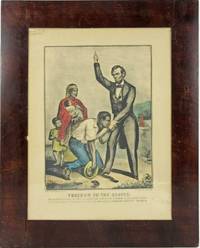
186538499New York: Currier & Ives 1865. Color print 11-3/4" x 15-1/2" by sight. A black man newly freed from slavery kneels at Lincoln's feet his shackles broken. He kisses Lincoln's hand. His wife and babies stand behind him. Lincoln's right arm is raised and pointing heavenward. Light uniform toning but brightly colored. Two blank margin tears at lower right corner one blank margin tear at upper left corner. Framed in wood a few small dings to overall size 16" x 20." Very Good.<br /> <br /> "This commemorative print was issued soon after the assassination of President Lincoln to comfort his supporters. The semi-allegorized representation portrayed the former president as the emancipator of enslaved African Americans guided by divine principles" Description online at The Met. <br /> Entering Richmond in 1865 Lincoln was met by many former slaves who kneeled before him. Lincoln told them to stand and thank God not Lincoln for their freedom. A decade later the Colored People's Educational Monument Association headed by the African-American abolitionist Henry Highland Garnet. created a memorial to Lincoln. The result was a sculpture erected in 1876 in Lincoln Park near Capitol Hill depicting a supplicant slave and a towering Lincoln. Known as the Emancipation Memorial or the Freedmen's Memorial it generated some contemporary criticism for its depiction of the inferior position of the black man. <br /> Gale 2311. Not in LCP Reilly or Weitenkampf. OCLC 1292616124 1- OH Hist. Connection 870219805 1- IN Hist. Soc. as of May 2024. AAS also owns a copy. Currier & Ives unknown
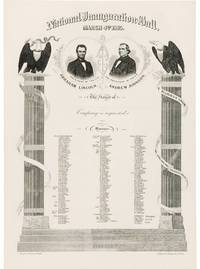
186540934Washington: Designed & Drawn by Bruff. Engraved by Dempsey & O'Toole 1865. Engraved broadside invitation 10-1/2" x 7-1/2" printed on heavy card stock engraved by Dempsey & O'Toole Designed & Drawn by Bruff to the Ball celebrating the second inauguration of President Abraham Lincoln and the inauguration of Vice President Andrew Johnson. The name of the invitee is not filled in. Fine.<br /> <br /> The attractively engraved invitation has detailed engraved portraits of Lincoln and Johnson flanked by two iconic American Eagles perched atop Corinthian columns. The Eagle on the left holds a rattlesnake in its beak reminiscent of the "Dont Tread on Me" flag. The pillars rest on three steps labeled "1777-83" "1812-15" and "1860-65." Beneath the portraits a three-column list of Managers is printed including prominent political and military figures of the time such as outgoing Vice President Hamlin Generals Grant Sherman Thomas Sheridan Doubleday Winfield Scott Hancock and Admirals Farragut and Porter. "E Pluribus Unum" and "We Are One and Indissoluble" are inscribed on banners wrapped around the columns<br /> The 1865 Inaugural Ball was held on March 6 1865 not March 4 at the Patent Office in Washington D.C. now home to the Smithsonian American Art Museum and National Portrait Gallery.<br /> OCLC records about ten locations under several accession numbers as of May 2025. Designed & Drawn by Bruff. Engraved by Dempsey & O'Toole unknown
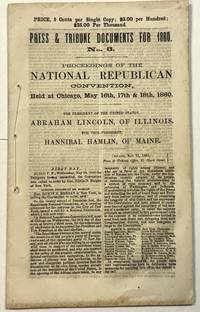
186041812Chicago: Press & Tribune Office 1860. Caption title as issued. 44pp. Stitched. Widely scattered light foxing. Near Fine. At head of title: "PRICE 5 Cents per Single Copy; $3.00 per Hundred; $25.00 Per Thousand."<br /> <br /> The "stenographic report" Monaghan of the country's most significant political convention with a record of all activities including speeches platform and the balloting for President and Vice President. Unlike modern conventions the winner of this one was far from clear. Several formidable candidates-- including Seward Chase Bates and Fremont--- stood in Lincoln's way. Although he had planned his strategy with great intelligence Lincoln was a true 'Dark Horse.' <br /> "Instead of attending in person Lincoln was represented by his friend and campaign manager Illinois judge David Davis whose initiative and deal-making skills despite his candidate's disapproval of such behind-the-scenes maneuvering is widely credited with his eventual nomination. Davis did however follow Lincoln's instruction in forming their general strategy as he maneuvered throughout the building nicknamed The Wigwam. <br /> "To make up for his meagre resume compared to Seward and Chase his team thought it prudent to not go on the attack against the frontrunners and instead become 'everybody's second choice.' through the convention's ranked voting system. His campaign also used the convention to start forging Lincoln's image as the Rail-Splitter a reference to his working-class background and a potential golden opportunity to appeal to the common laborers in the industrial Northern states who stood to benefit the most from the Republicans' Free Soil ideology. They also made direct appeals to delegates from the critical swing states of Pennsylvania and Indiana. When voting began on the 18th Davis and his allies felt confident in their chances to pull ahead. The first ballot placed Seward predictably with the highest vote total of 173.5 but not enough to win a majority while Lincoln followed with a total of 102. The second round bumped Lincoln's total number of votes to 181. The momentum on Lincoln's side continued to surge into the third round where Lincoln received a total of 231.5 votes still not enough to be nominated until David Cartter leader of the Ohio delegation announced his decision to switch support from Chase to Lincoln making him the 1860 Republican nominee for President" American Battlefield Trust 'Inside the Wigwam'.<br /> Ante-Fire Imprints 504. Monaghan 76. Sabin 65894. Press & Tribune Office unknown
186095830c. 1860. Rare original painting of the 16th President of the United States Abraham Lincoln. After a photograph by Civil War photographer Alexander Gardner. Scottish photographer Alexander Gardner immigrated to the United States in 1856 where he became best known for his photographs of the American Civil War President Abraham Lincoln and the execution of the conspirators to Lincoln's assassination. In near fine condition. In a period frame. The entire piece measures 20.75 by 16.75 inches. Rare and desirable. Abraham Lincoln served as the 16th President of the United States from March 1861 until his assassination in April 1865. He led the United States through its Civil War and in doing so preserved the Union of the United States of America abolished slavery and strengthened the federal government. Lincoln began constructing his cabinet on election night and sought to create a cabinet that would unite the Republican party. His eventual cabinet would include his primary rivals for the Republican nomination and although his appointees held differing views on economic issues all were opposed to the expansion of slavery into the territories of the United States. The most senior cabinet post of Secretary of State was appointed to William Seward who had recently failed to win the 1860 Republican presidential nomination and Lincoln's choice for Secretary of the Treasury was Ohio Senator Salmon P. Chase Seward's primary political rival and the leader of a radical faction of the Republican party that sought the immediate abolition of slavery. unknown
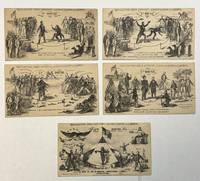
186141884New York: J.H. Tingley 1861. Five postal covers each oblong 3-1/4" x 5-7/8." The recto of each is an engraving of a Round of the boxing match. Near Fine.<br /> <br /> From the U VA description: "Five envelopes in the Champion Prize Envelope set depict a boxing match between Lincoln and Davis in which the latter is easily defeated and Winfield Scott commands the Union armies. Smaller vignettes in the corners depict dogs guarding southern cotton and then fleeing; liberated slaves Union artillery advancing firing and marching home; Union and Confederate politicians commenting on the fight including John Minor Botts who is seen as keeping Virginia in the Union; European countries commenting on the fight; and the Union eagle and Liberty victorious with Lincoln the champion of all sections."<br /> 1st Round: Standing around a boxing ring Lincoln and Davis in the middle are a group of civilians Soldiers cannon. two dogs guarding a bale of cotton and a Confederate flag a group of slaves three men on a globe Capitol and American flag in the background. In the ring Davis cowers before Lincoln who says "I use no more force than necessary." Davis: "Let me alone!"<br /> 2nd Round: The same group encircles the ring. Lincoln: "Go back you dog to the junction I'll call on you there soon." Davis: "Beauregard Lets fall back on Richmond." From the crowd of civilians: "Secession is looking smaller" and "We shall soon strip it." Other comments are also uttered.<br /> 3d Round: Lincoln: "I will soon smother those pirates." From the same encirclement anti-Confederate comments such as "General That's secession's last kick" rebel soldiers saying "Let's go home boys." The cotton bale and Confederate flag are missing.<br /> 4th Round: Seward and Scott are in the ring. Seward: "General where is secession now" Scott : "Don't you see that greasespot" Comment: "Virginia and Kentucky may now be heard in behalf of the whole Union."<br /> 5th Round: Lincoln with "The Champion Belt": "You shall all have my impartial constitutional and humble protection." He is surrounded by the iconic Screaming Eagle; a triumphant West North East and South; and Lady Liberty who says "I still live." <br /> Not in Reilly or Weitenkampf. AAS and the University of Indiana own all five envelopes. OCLC 277634667 1- U VA 14953428 2- CT Mus. Hist. Culture U IL as of June 2026. J.H. Tingley unknown
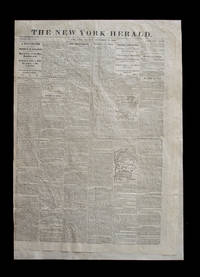
186268870New York: The New York Herald 1862. Full Description:<br> <br> LINCOLN Abraham. Emancipation Proclamation."A Proclamation by the President of the United States. Operations of the Confiscation Act. All Slaves in States in Rebellion January 1 1863 to Be Free." New York. Published in: The New York Herald Tuesday September 23 1862. Whole No. 9506.<br> <br> The publication of Lincoln's Emancipation Proclamation in James Gordon Bennett's pro-Democratic New York Herald and one of if not the first official public announcements of the preliminary Emancipation Proclamation.<br> <br> Broadsheet folio one large leaf folded along top to make four pages two leaves printed on recto and verso. Six-column format. 22 x 15 1/2 inches; 560 x 395 mm. Light creases down the middle in both directions. Some nearly invisible repaird along top margin and edges. Some of the repairs just touching a few letters in the headline. Still a very good copy of this important declaration. We could only find 3 copies of this at auction and it is not mentioned in Eberstadt. Eberstadt mentions that his Third edition of the Emancipation has a publication date somewhere between September 24th and 26th therefore putting the current copy before this. Eberstadt's first and second edition are the official state department editions printed the day of the declaration September 22nd just the day before this New York Herald was printed.<br> <br> Abraham Lincoln issued the preliminary Emancipation Proclamation on September 22 1862 stating that if the rebelling states did not cease fighting and rejoin the Union by January 1 1863 the slaves in those states would be set free. The New York Herald issued this front-page top left corner early printing of Lincoln's Proclamation the very next day appearing under the headline: "All Slaves in States of Rebellion January 1 1863 to Be Free."<br> <br> "Lincoln read the first draft of what came to be known as the Preliminary Emancipation Proclamation to his cabinet on 22 July 1862. Given the criticism directed at Lincoln for moving too slowly on the issue of emancipation it is worth noting that this first reading took place just sixteen months after he had pledged not to 'interfere with the institution of slavery in the States where it exists.' He continued to revise the document throughout the summer and following the Union victory at Antietam he issued the preliminary proclamation-which managed to balance daring with prudence-on 22 September. This first proclamation essentially gave the Rebel States one hundred days to return to the Union after which period any slaves within their borders would be "then thenceforward and forever free." Any rebellious states that returned to the Union in the interim would be able to adopt immediate or gradual-and compensated-abolition of slavery within their borders." Sotheby's.<br> <br> The front page of this newspaper also contains two maps and reports of the campaigns in Kentucky.<br> <br> HBS 68870.<br> <br> $3500. The New York Herald unknown
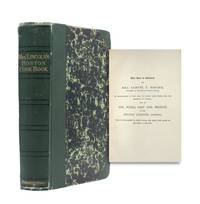
1884353213Boston: Roberts Brothers 1884. First edition second printing published the same year as the first with sixteen advertisements on seven pages rather than six on four pages except for the advertisements the contents and pagination of the 1884 1885 1886 and 1887 printings are identical. Illustrated. xiv ii 536 7 adspp. 1 vols. 8vo. Original publisher's green half cloth over marbled boards generally good unrestored condition with some wear to spine and edges of boards corners bumped. First edition second printing published the same year as the first with sixteen advertisements on seven pages rather than six on four pages except for the advertisements the contents and pagination of the 1884 1885 1886 and 1887 printings are identical. Illustrated. xiv ii 536 7 adspp. 1 vols. 8vo. Grolier American 86; Crahan 74; Wheaton p.152 #3707; Vicaire p.524 1887 edition; Bitting p. 288 citing 1896 edition Roberts Brothers unknown
1884140942960Boston: Roberts Brothers 1884. Second Printing. Very Good. First edition second printing published the same year as the first with sixteen advertisements on seven pages rather than six on four pages. Except for the advertisements the contents and pagination of the 1884 1885 1886 and 1887 printings are identical. The milestone cookbook from the first principal of the Boston Cooking School and a student of Maria Parloa. Bound in contemporary black pebbled cloth with new black leather spine lettered in gilt. Pages soiled or foxed throughout chip to top corner of title page fore edges occasionally worn an amateur repair to one leaf pages 304/305. A scarce early printing of an important American cookbook. Roberts Brothers unknown
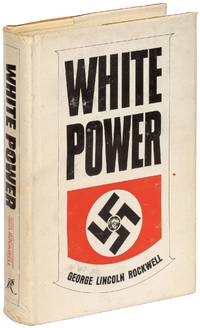
1967614666Dallas: Ragnarok Press 1967. Hardcover. Very Good/Very Good. Stated second edition but published in the month after the first September 1967 with a slightly different dedication after Rockwell's assassination on August 25th. Octavo. 482pp. Illustrated. With two manuscript corrections each to the publisher's address on both the jacket and copyright page. Pictorial boards reproducing the jacket art. Spine base gently bumped about 15 pages with a tiny bump at the top corner a near fine copy save for about 80 pages marked in red and blue ink ranging from a single underlined passage to major portions underlined bracketed struck through and a couple of brief marginal notes but still easily legible. In a faintly tanned very good or a bit better glossy dust jacket with small chips and tears and the author's name on the spine sunned. Rockwell's screed was first published in August 1967. This edition was printed posthumously in September after Rockwell's assassination by former ANP member John Patler on August 25th. Ragnarok Press) hardcover
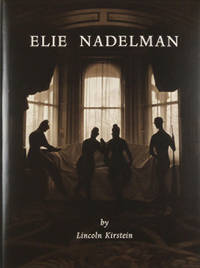
197384031Eakins Press. As New. 1973. Hardcover. 0871300346 . FREE UPGRADE to Courier/Priority Shipping Upon Request - IN STOCK AND IMMEDIATELY AVAILABLE FOR SHIPMENT - AS NEW THE TEXT BLOCK IS PRISTINE CLEAN UNMARKED AND IN EXCELLENT CONDITION - - 358 2 pages 215 illus; 4to. Description: "When writer and New York City Ballet founder Lincoln Kirstein died in 1995 he was hailed as a Renaissance man. This splendid publication compiled and composed by Kirstein on the works of the acclaimed American sculptor Elie Nadelman stands as a monument to both extraordinarily talented men. This 1973 first edition featuring extensive reproductions from all phases of the artist's career is the most complete catalogue of Nadelman's work and writing." Catalogue Raisonné Catalogue Raisonne Catalog Raisonnee Complete Works Eakins Press hardcover
1929106036New York: National Americana Society 1929. Hardcover. very good. 2nd printing. x126pp. Folio in original gilt lettered blue cloth and blue endpapers with gilt top edge photogravure plates and plates from facsimiles and maps. Inscribed from Lincoln Ellsworth on front free endpaper. very good Collection of articles on Ellsworth's two Arctic expeditions with Amundsen the first flying from Spitsbergen to the North Pole in two planes largely financed by Ellsworth the party of six reached 87`44N before being forced down with engine trouble. In 1926 Amundsen and Ellsworth returned to the Arctic this time in the semi rigid airship the 'Norge' making the first crossing of the polar sea from Spitsbergen to Teller Alaska over the North Pole. Although the title page states second printing both printings are the identical and both are very scarce. 1929 National Americana Society hardcover
2010mon0000069040Lincoln Electric 2010-01-01. Unknown Binding. Good. in x in x in. Lincoln Electric unknown
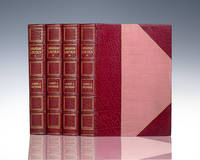
1928146970Boston and New York: Houghton Mifflin Company 1928. Limited manuscript edition of this complex and revealing biography of one of the most popular Presidents of the United States. Octavo four volumes bound in the publisher's cherry-red three-quarter crushed morocco at the Riverside Press with gilt titles and ruling to the spine in six compartments top edge gilt red silk ribbons tipped in tissue-guarded frontispiece portrait of Abraham Lincoln and additional tissue-guarded color plate views of the Lincoln Memorial to each volume illustrated with thirty-two tissue-guarded plates and maps throughout window-mounted leaf of the author's manuscript research notes adhered to the front flyleaf of Vol. I some pages uncut stamp-signed by the Riverside Press. One of one thousand numbered sets printed at the Riverside Press Cambridge U. S. A. this is number 130. In fine condition bookplate from the library of American banker and philanthropist Frank K. Houston to the front flyleaf of Vol. II. An exceptional set. Praised for his biographies of Chief Justice John Marshall and President Abraham Lincoln American historian and United States Senator Albert J. Beveridge has introduced the public to the realities of the lives of revered historical figures. Using analysis and thorough investigation Beveridge was able to contextualize the actions of America's sixteenth president with his traditions and influences in his four-volume biography 'Abraham Lincoln 1809-1858' published post-humously in 1928. His contributions to historical study cannot be understated and the American Historical Association's Beveridge Award exists to demonstrate as much. Houghton Mifflin Company unknown
19383113549New York: The Museum of Modern Art. Near Fine in Very Good dust jacket. 1938. First Edition; First Printing. Hardcover. First Edition. Published in September 1938. Errata slip present. Lacks belly band. Near fine in very good dust jacket. Faint offsetting at upper portion of front panel extending to spine. A few short edge nicks and hint of chipping to jacket. Top edge lightly foxed. 87 images. 5000 copies printed. A photographic high spot that has become increasingly difficult to locate in jacket. ; 8" x 9"; 198 pages . The Museum of Modern Art. hardcover
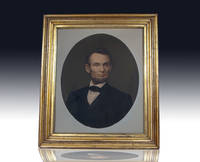
1864109542Cincinnati: E.C. Middleton 1864. Rare oleographic portrait of Abraham Lincoln by E.C. Middleton. With Middleton's Warranted Oil Colors imprint to the verso of the frame dated 1864. Between 1861 and 1873 E.C. Middleton of Cincinnati published a series oval oleographic portraits intended to have the appearance of oil paintings including thirteen “Portraits of American Statesmen and Heroes.†Middleton invented the method of oleography which used the process of chromolithographic printing with oil based inks mounted on canvas. The portraits were exclusively sold in frames directly through agents by subscription. In near fine condition. Matted and framed. The portrait measures 13.25 inches by 16.25 inches. The entire piece measures 20 inches by 23.25 inches. A rare striking portrait of Lincoln. Abraham Lincoln served as the 16th President of the United States from March 1861 until his assassination in April 1865. He led the United States through its Civil War and in doing so preserved the Union of the United States of America abolished slavery and strengthened the federal government. Lincoln began constructing his cabinet on election night and sought to create a cabinet that would unite the Republican party. His eventual cabinet would include his primary rivals for the Republican nomination and although his appointees held differing views on economic issues all were opposed to the expansion of slavery into the territories of the United States. The most senior cabinet post of Secretary of State was appointed to William Seward who had recently failed to win the 1860 Republican presidential nomination and Lincoln's choice for Secretary of the Treasury was Ohio Senator Salmon P. Chase Seward's primary political rival and the leader of a radical faction of the Republican party that sought the immediate abolition of slavery. E.C. Middleton unknown
1973C84031Eakins Press. As New. 1973. Hardcover. 0871300346 . FREE UPGRADE to Courier/Priority Shipping Upon Request - IN STOCK AND IMMEDIATELY AVAILABLE FOR SHIPMENT - AS NEW THE TEXT BLOCK IS PRISTINE CLEAN UNMARKED AND IN EXCELLENT CONDITION - - 358 2 pages 215 illus; 4to. Description: "When writer and New York City Ballet founder Lincoln Kirstein died in 1995 he was hailed as a Renaissance man. This splendid publication compiled and composed by Kirstein on the works of the acclaimed American sculptor Elie Nadelman stands as a monument to both extraordinarily talented men. This 1973 first edition featuring extensive reproductions from all phases of the artist's career is the most complete catalogue of Nadelman's work and writing." Catalogue Raisonné Catalogue Raisonne Catalog Raisonnee Complete Works -- with a bonus offer-- - May be EITHER: out of print OOP and extremely rare in this pristine condition; signed by author or contributor; or a first or special edition; inquire for details . Eakins Press hardcover
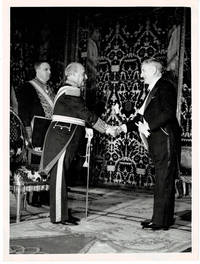
195298714Madrid: Oficina de Informacion Diplomatica March 27-28 1952. 1952. Fine. - Folio hardcover. Original 12-3/4 inch high by 9 inch wide printed wrappers bound with silk cord into sumptuous 15-1/4 inches high by 10 inches wide burgundy leather with a gilt device centered within gilt decorated roulette and gilt double-ruled frames on the front cover. The binding is further enhanced by gilt inner dentelles and silk pastedowns. 28 pages including 10 pages with tipped on original clippings from Spanish newspapers and 16 pages with 9-1/2 by 7 inch tipped on original photographs presumed to be by Campua of the festivities. The edges of a few of the photos are creased. A unique sumptuous volume. <p>"Presentacion de Credenciales del Excmo. Senor LINCOLN MAC VEAGH Embajador de los Estados Unidos."<p>Together with an autograph note signed consisting of over 70 words by the claimant to the Spanish throne Juan III written on both sides of a 4-1/8 inch by 6-1/2 inch card with the Royal Crown printed at top left. "Estoril. 24 - 1 - 52. Dear Ambassador I have just heard about your appointment as U.S. Ambassador in Madrid & I feel I cannot remain indifferent with this news.Yours sincerely Juan / Conde de Barcelona". There are minor staple holes along the left edge of the card.<p>TOGETHER WITH: 2 original photographs by Jose Demaria Vazque 1900-1975 popularly known as "Pepe Campua" the photographer of Franco and the Spanish royal family during the dictatorship. Both photographs are stamped "Campua" and dated March 27 1952 on the versos. One photo pictures the procession to the Pardo Palace of MacVeagh in a gilded coach drawn by six horses followed by 50 soldiers of Franco's personal Moorish guard. It was the same coach in which Washington Irving went to present his credentials to the regent during the Carlist wars in 1842. The second photo pictures a handshake between MacVeagh and Franco MacVeagh having presented his credentials to the Generalissimo. Foreign Minister Alberto Martin-Artajo stands in the background. The photographer's credits are stamped in purple on the verso. Likely once mounted into an album there are black paper remnants adhering to the verso of each photo. In addition there are 15 small snapshots many cropped from larger photos of MacVeagh's time in Spain.<p>Lincoln MacVeagh 1890-1972 a Renaissance man graduated from Harvard magna cum laude in 1913. He went on to study languages at the Sorbonne and became fluent in German French Spanish Latin Greek and Classical Greek. After World War I he became a director of the Henry Holt and Company publishing firm where he became friendly with the poet Robert Frost. In 1923 he left the firm and founded the Dial Press. His name appears on the imprint of many of their publications. In 1933 President Roosevelt appointed him Minister to Greece. He followed presentation of his credentials with a speech in Classical Greek. While in Greece he conducted excavations beneath the Acropolis and made archeological contributions to the National Museum in Athens. He left Greece in 1941 when the German army over ran the country. From there he was appointed the first US Minister to Iceland where he negotiated agreements for the construction of the Keflavik airfield. In late 1942 he became Minister to the Union of South Africa and coordinated American wartime agencies there. In 1943 he was sent to Cairo as Ambassador so that he could assist the governments in exile of Greece and Yugoslavia. He returned to Athens as Ambassador in 1944. MacVeagh gave secret testimony before Congress concerning the Balkans in 1947 testimony that was an important factor in the formation of the Truman Doctrine. In 1948 as Ambassador to Portugal MacVeagh was influential in admitting her into NATO. In 1952 President Truman named him Ambassador to Spain. President Truman wrote to him on March 9 1948: "On the occasion of your appointment as Ambassador to Portugal I would like to make some personal expression of appreciation for the high services you have already rendered your country. During the past fifteen critical years you have served with distinction as Chief of the United states Missions to Iceland the Union of South Africa Yugoslavia and Greece. In this last post especially - as Minister from 1933 to 1941 and as Ambassador since 1943 - your scholarly statesmanship and diplomatic judgment have been of the utmost value." Madrid: Oficina de Informacion Diplomatica, March 27-28, 1952. hardcover
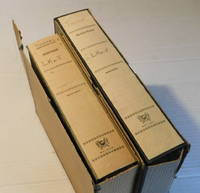
193398736circa 1933. 1933. Very good. - What is being offered here are the final hand-written manuscript together with a typed copy of a translation into English of the first 6 Satires of Juvenal. The manuscript is on 10-1/8 inch high by 8 inch wide lined sheets; the typed sheets are on 11 inch high by 8-1/2 inch wide sheets. The translation is realized in 4-line stanzas quatrains of poetry in the ABCB rhyme scheme. The contents of both the hand-written manuscript and the typed copy are as follows: Book 1: Satire One 31 pages with 12 lines per page; Satire Two 30 pages with 12 lines per page except for the last page; Satire Three 56 pages with 12 lines per page except for the last page; Satire Four 28 pages with 12 lines per page except for the last page; Satire Five 31 pages with 12 lines per page. Book 2: Satire Six 123 pages with 12 lines per page except for the last page.<p>The famous Satire Six begins: "I'll not deny that Chastity/for many years remained/And was long seen upon the earth/in days when Saturn reigned. But that was when some chilly cave/provided hearth and home/For men and herds and household gods/beneath one gloomy dome. The mountain-wife who made her bed/of forest leaves and grasses/and skins of local animals/could not compare with lasses/Like Cynthia or Lesbia/whose grief-bereddened eyes/Lost all their native sparkle through/a sparrow's sad demise/But suckling mighty babes on milk/that she could well afford/Was often more unsightly than/her acorn-belching lord. For earth and sky were new and life/was different to folk/Who fatherless were formed from clay/or sprang from riven oak."<p>The sheets are housed in two cardboard cases with the title "JUVENAL" and MacVeagh's initials "L.Mac.V." written on the spines. The boxes in which the manuscript and typescript are housed are broken.The title page of the typed copy of "Satire 6" has a tear. Unique. <p>Robert Frost wrote to his friend Lincoln MacVeagh from Amherst on December 11 1933: "I have been over your Juvenal again by myself. I have consulted no one at all about it; and the conclusion I have arrived at is entirely my own. The translation and the versification are a good job. But they only confirm me in the indifference not to say dislike I have always felt for the subject matter of the original. I believe it gains in harshness said right out in English. You know me: I can stand sorrow better than evil."<p>Lincoln MacVeagh 1890-1972 a Renaissance man graduated from Harvard magna cum laude in 1913. He went on to study languages at the Sorbonne and became fluent in German French Spanish Latin Greek and Classical Greek. He served in the Atois St. Mihiel and Meuse Argonne campaigns of World War I as an aide to the commanding general of the 80th Division and of the Ninth and Sixth Army Corps. He rose to the rank of Major. After the war he became a director of the Henry Holt and Company publishing firm where he became friendly with the poet Robert Frost. In 1923 he left the firm and founded the Dial Press. His name appears on the imprint of many of their publications. In 1933 President Roosevelt appointed him Minister to Greece. He followed presentation of his credentials with a speech in Classical Greek. While in Greece he conducted excavations beneath the Acropolis and made archeological contributions to the National Museum in Athens. He left Greece in 1941 when the German army over ran the country. From there he was appointed the first US Minister to Iceland where he negotiated agreements for the construction of the Keflavik airfield. In late 1942 he became Minister to the Union of South Africa and coordinated American wartime agencies there. In 1943 he was sent to Cairo as Ambassador so that he could assist the governments in exile of Greece and Yugoslavia. He returned to Athens as Ambassador in 1944. MacVeagh gave secret testimony before Congress concerning the Balkans in 1947 testimony that was an important factor in the formation of the Truman Doctrine. In 1948 as Ambassador to Portugal MacVeagh was influential in admitting her into NATO. In 1952 President Truman named him Ambassador to Spain. President Truman wrote to him on March 9 1948: "On the occasion of your appointment as Ambassador to Portugal I would like to make some personal expression of appreciation for the high services you have already rendered your country. During the past fifteen critical years you have served with distinction as Chief of the United states Missions to Iceland the Union of South Africa Yugoslavia and Greece. In this last post especially - as Minister from 1933 to 1941 and as Ambassador since 1943 - your scholarly statesmanship and diplomatic judgment have been of the utmost value." [circa 1933]. unknown
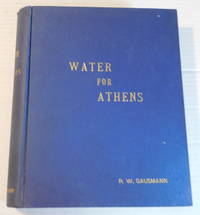
194098653Athens Greece 1940. 1940. Very good. - Quarto 11-3/8 inches high by 9 inches wide. Hardcover bound in blue cloth titled in gilt on the front cover and on the spine. 2 x & 328 mechanically reproduced pages printed on the rectos only. Illustrated with an original photograph as the frontispiece a pictorial title page 60 inserted charts and plates not included in the pagination and a folding plate reproducing a document. Most of the plates with drawings were created by the author. Near fine. <p>A RARE AND VALUABLE UNPUBLISHED WORK. Of 15 mimeographed copies this is No. 5 designated for Lincoln MacVeagh and was his copy.<p>Laid into the book is a map outlining the Parnassos Aqueduct with notes on the stages of construction and a "General Plan" of the Athens-Piraeus Waterworks in 1945.<p>The author Roy W. Gausmann was one of the designing engineers of the Marathon Dam and until 1941 the general manager of EEY the Greek Water Company. He trained as an engineer at Columbia University and worked for Ulen & Co. on the Shandaken Tunnel bringing water from the Catskill Mountains to New York City. During World War II he supervised camouflaging the dam and purification plant in Athens in order to prevent the Germans from taking control of the water company.<p>From the library of Lincoln MacVeagh and his wife Margaret with their "Arcades ambo" bookplate. Lincoln MacVeagh 1890-1972 a Renaissance man graduated from Harvard magna cum laude in 1913. He went on to study languages at the Sorbonne and became fluent in German French Spanish Latin Greek and Classical Greek. He served in the Atois St. Mihiel and Meuse Argonne campaigns of World War I as an aide to the commanding general of the 80th Division and of the Ninth and Sixth Army Corps. He rose to the rank of Major. After the war he became a director of the Henry Holt and Company publishing firm where he became friendly with the poet Robert Frost. In 1923 he left the firm and founded the Dial Press. His name appears on the imprint of many of their publications. In 1933 President Roosevelt appointed him Minister to Greece. He followed presentation of his credentials with a speech in Classical Greek. While in Greece he conducted excavations beneath the Acropolis and made archeological contributions to the National Museum in Athens. He left Greece in 1941 when the German army over ran the country. From there he was appointed the first US Minister to Iceland where he negotiated agreements for the construction of the Keflavik airfield. In late 1942 he became Minister to the Union of South Africa and coordinated American wartime agencies there. In 1943 he was sent to Cairo as Ambassador so that he could assist the governments in exile of Greece and Yugoslavia. He returned to Athens as Ambassador in 1944. MacVeagh gave secret testimony before Congress concerning the Balkans in 1947 testimony that was an important factor in the formation of the Truman Doctrine. In 1948 as Ambassador to Portugal MacVeagh was influential in admitting her into NATO. In 1952 President Truman named him Ambassador to Spain. President Truman wrote to him on March 9 1948: "On the occasion of your appointment as Ambassador to Portugal I would like to make some personal expression of appreciation for the high services you have already rendered your country. During the past fifteen critical years you have served with distinction as Chief of the United states Missions to Iceland the Union of South Africa Yugoslavia and Greece. In this last post especially - as Minister from 1933 to 1941 and as Ambassador since 1943 - your scholarly statesmanship and diplomatic judgment have been of the utmost value." Athens, Greece, 1940. hardcover
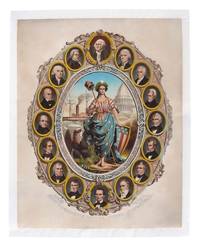
186131279Philadelphia: F. Bouclet 1861. Very Good. Philadelphia: F. Bouclet 1861. Original color lithograph 68x54cm. Mounted to matte backing; marginal tears and soiling; rubbing and a few scrapes around title; colors remain bright; a Very Good copy. <br /> <br /> This large vibrant lithograph was issued to commemorate Lincoln's first inauguration depicting the first sixteen Presidents with George Washington at top a beardless Abraham Lincoln at the bottom. The female personification of Columbia stands in the center before the Capitol holding a shield and staff with a liberty cap. The Capitol Dome sits in the background and is depicted as the artist anticipated it would look--the structure was not completed until late 1863. A handsome and uncommon print scarce in retail and auction records with only two holdings found in OCLC at the Library of Congress and the Mankato Area Public School District in Minnesota. . F. Bouclet unknown