MONTANA DE MONSERRATE, BernardinoBiblio.com
7 472 résultats
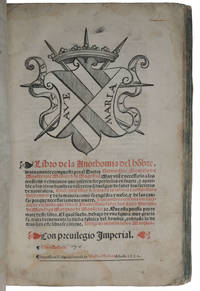
15515399Valladolid: Sebastian Martinez 1551. First edition. <p>First edition very rare of the first separate and first illustrated anatomical work in the vernacular printed in Spain. "While Valverde di Hamusco's Historia de la composicion del cuerpo humano 1556 is often credited with introducing into Spain the Vesalian anatomical iconography coupled with a vernacular text this honor actually belongs to Montaña de Monserrate's Anothomia" Norman.</p>. <p>FIRST SPANISH ILLUSTRATED ANATOMY IN THE VERNACULAR</p> . <p>First edition very rare of the first separate and first illustrated anatomical work in the vernacular printed in Spain. "While Valverde di Hamusco's Historia de la composicion del cuerpo humano 1556 is often credited with introducing into Spain the Vesalian anatomical iconography coupled with a vernacular text this honor actually belongs to Montaña de Monserrate's Anothomia. Montaña's Anathomia represents the first separate anatomical work in the vernacular printed in Spain as Lobera de Avila's unillustrated Libro de Anatomia was only a section of the more general Remedio de cuerpos humanos 1542. Montaña's text like that of another Vesalian propagandist Thomas Geminus was largely derived from the popular Anatomy of the medieval surgeon Henri de Mondeville and was thus more likely than that of Valverde to have been immediately accessible to Spain's barber-surgeons" Norman. "The book contains twelve anatomical crosscuts of which nine are copied from Vesalius' Fabrica or Epitome. These nine drawings are reduced and simplified and include three of Vesalius' male muscle figures two plates representing the central nervous system two plates of the venous and arterial systems Vesalius' figure combining genito-urinary and thoracic organs and a reversed copy of the Fabrica's first skeleton plate. Of the remaining three drawings two illustrate skeleton views derived from Berengario and Dryander while the third a crude semi-schematic representation of the thoracic and abdominal organs is probably an original by an unknown author. This book does not have any anatomical drawings of a female corpse. As the woodcut border bears the initials of the book's printer Sebastian Martinez it is likely that he executed the woodcuts" Reveron pp. 14-16. ABPC/RBH list four complete copies in the last half-century.</p> <br /> <p>Provenance: A few early annotations throughout including a small diagram of a jointed limb. </p> <br /> <p>"The Anothomia of Montaña consists essentially of three parts. The first comprises the anatomy proper to which are appended two chapters one of which deals with the generation and development of man and the other with the causes which necessarily lead to death. The second part is a colloquy the dream of the Marques de Mondejar presented in the manner of a typical renaissance dialogue between the Marques and Montaña on certain aspects of humoral physiology. And the final section is devoted to the illustrations.</p> <br /> <p>"The anatomical section together with the dedicatory epistle occupies the first seventy-three folios. After the proemium in which the author exhorts the would-be surgeon to select for his training an institution where actual dissection of the human cadaver is performed there follow three chapters of preliminary materials devoted to definitions the simple and the compound members. Thereafter the rest of the anatomy of the body is treated successively in the following order: the cranial cavity and contents the vertebral column the facial region the neck the upper extremities the thorax the abdomen the organs of generation and finally the lower extremities. One immediately recognizes in the arrangement from head to foot the scholastic order so popular in mediaeval texts and found in the anatomical treatise of the great French surgeon Henri de Mondeville 1260-1320.</p> <br /> <p>"The second part of the anatomical treatise is divided . into two chapters which treat of generation development of the foetus birth and the causes which necessarily lead to death. The principal agent of generation says Montaña is arterial blood which is elaborated and prepared in the testes to be converted into semen. Blood he continues is either venal and therefore gross earthy and impure; or arterial a purified and subtle form of the former. The purification and conversion of venous into arterial blood is carried on through the medium "of the pores of the substance of the heart." This arterial blood prepared by the testes and converted into semen when mixed with arterial blood is the basis of generation. The process of development then proceeds owing to a sort of selective fermentation which thus engenders the natural heat. Thereafter he continues with a discussion of the foetal membranes the umbilical chord and the placenta the successive development of the foetus and the mechanism of its formation with a consideration of the true termination of conception. These conclusions he informs us are the result of forty-five years of experience and he asks pardon for the shades of Hippocrates Aristotle Galen and Avicenna because he does not follow their teaching in this regard.</p> <br /> <p>"The section on embryology and the mechanism of developmental processes especially the concept of fermentation as a major factor in the formation of the natural heat and in the elaboration of the various organs of the body is quite unique. However we immediately recognize despite Montaña's protestations the fusion of Aristotelian and Galenical ideas and therefore suspect that he is for the most part dependent on Arabian sources. His indebtedness is notably evident in his use of anatomical terminology and we often meet with such terms as mirach for the anterior abdominal wall and siphac for the peritoneum" Saunders & O'Malley pp. 91-95.</p> <br /> <p>The dream of the Marques de Mondejar which has a separate title page is a work on physiology in which the principal functions of the human body are presented in allegory. The colloquy begins with the narration of a dream experienced by the Marques as told to his doctor the author himself in order that he may account for the figures and images that in the character's words 'appeared' to him 'most mysteriously.' The Marques' vision was of the magnificent architecture of a stately and gracious mansion in whose interior he sees a fortress being built. Montaña uses footnotes to reveal the links between the architectural images he is describing and the different parts of human anatomy: the stately mansion he describes is none other than the body of a pregnant woman with its respective regions organs and substances as well as the function of each of these in the reproductive process; the fortress is evidently the growing embryo.</p> <br /> <p>The colloquy is particularly notable for Montaña's account of the cardiac cycle. In it "he presented several observations from life on the cardiac cycle and he probably owed to Vesalius his knowledge of the function of the valves of the heart and the correct relationship of cardiac systole and diastole to the arterial pulse. Based upon an inexact interpretation of his discussion of the heart some Spanish historians have tried to credit Montaña with discovering the circulation of the blood but his writings show no understanding of the circulation in the Harveian sense" Norman.</p> <br /> <p>"At the end of Montaña's volume we come to the illustrations which would seem but for the collation to have been added as an afterthought since no mention is made of them in the text proper nor are they indicated on the title page the dedicatory letter or in the table of contents. We are simply told in the heading to this section that these figures will be found useful in following the author's discussion of the anatomical structure of man" Saunders & O'Malley pp. 101-102. These anatomical illustrations "included nine copies from either the Fabrica or the Epitome. These nine cuts all of them reduced and simplified included three Vesalian 'musclemen' two plates representing the venous and arterial systems two plates of the peripheral and central nervous systems a figure combining Vesalian representations of the genitourinary and thoracic organs and a reversed copy of the Fabrica's first skeleton plate. Of the remaining three plates two illustrating views of the skeleton were derived from Berengario and Dryander while the third a crude semi-schematic representation of the thoracic and abdominal organs is probably original" Norman. The woodcut illustrations like the woodcut border on K2 were presumably executed by 'S.M.' i.e. Sebastian Martinez.</p> <br /> <p>Little is known of the life of Montaña de Monserrate. A Catalan he was born ca. 1480 in the small hamlet of Monserrate near Barcelona. After studying medicine probably in Montpelier he returned to his native country living for many years in Valladolid. It was here that he established his reputation eventually being called to the position of physician to the emperor Charles V.</p> <br /> <p>Cushing Vesalius addenda 598; Durling 2339; Garrison-Morton 378.01; Norman 1540; Waller 6647; Wellcome 4406. Pedraz 'Body and society in the Libro de la anathomia by Bernardino Montaña de Monserrate: an anatomist's political dream' Historia Ciencias Saude 20 2013 pp. 1-14. Reveron 'The first human anatomy book in Spanish .' Vesalius 25 2019 pp. 8-18. Saunders & O'Malley 'Bernardino Montaña de Monserrate' Journal of the History of Medicine and Allied Sciences 1 1946 pp. 87-107.</p> <br/> <br/> Folio 289 x 200mm ff. viii i-ii iii-cxxxvi. Title in red and black with large woodcut coat-of-arms presumably of his patron the Marques sectional title on K2 within elaborate woodcut border signed 'S.M.' and 12 large three-quarter page anatomical woodcuts in text initial and final few leaves with some light marginal staining and some rubbing to corners of last few leaves. Contemporary vellum hand-lettered spine endleaves consisting of sheets printed with a full-page devotional woodcut broadside of the Virgin repeated twice on the front endleaves and once at the rear upper corner of back cover torn. Housed in a cloth clamshell box with leather spine label. A genuine untouched copy. Sebastian Martinez unknown
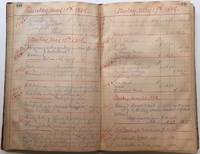
1882267192Territory of Montana 1882. hardcover. very good-. 478 pages folio 12.5 x 7.75 inches original marbled boards worn re-backed with maroon linen designated: "Minute Book No. 10" the proceedings of the 1st District Court Territory of Montana November 13 1882 - April 11 1886 the official record of hundreds of criminal and civil cases almost entirely in the hand of Theophilus Muffly - 1833 - 1898 a pioneer of the Territory who emigrated to Virginia City in December of 1864 and who was appointed to the bar by the United States Supreme Court. He was one of the lawyers present at the opening of the District Court of the Judicial District and subsequently served as Clerk of the Court Attorney Probate Judge Justice of the Peace and Police Magistrate. This remarkable offering provides great insight into the inner workings of the Territory's Judicial system which on the surface amounted to little more than a glorified "good ol' boys club" with little concern given to the issue of "conflict of interest." There are instances whereby District Attorneys prosecuted cases one day and then represented defendants in the same court room the next. Thus it created an environment whereby prosecutors opposed each other in some cases and then jointly prosecuted defendants in similar cases. In one instance James E. Callaway a signer of the 1884 Montana State Constitution was appointed by the court to represent a defendant who could not procure counsel. Ordinarily this would not raise eyebrows except for the fact that Callaway was one of the most prominent District Attorneys in the court. Henry N. Blake First Chief Justice of the Montana Supreme Court and arguably one of the most gifted jurists in the Territory had no qualms about handling an exorbitant amount of divorce cases collecting his usual fee of $50.00. This was done while he was an Associate Justice serving on the Montana Territorial Supreme Court! One thing that is evident is that this ledger is a virtual who's-who of many of the most prominent figures in Montana history including entries for lawmen who would eventually be murdered lawyers who would become important legislators including a Governor and pioneers who would become founders of the State Constitution. Many of these people lived colorful and distinguished lives while others would be forever clouded by controversy. Of special interest to historians will be the very last cases of Justice Everton Judson Congers 1834 - 1918 -- a Civil War hero who sustained several wounds in combat but who will forever be remembered for his role in the capture of John Wilkes Booth. He was appointed to the Court in 1880 by his friend Rutherford B. Hayes despite being a confirmed alcoholic morphine addict and habitual gambler. He made many political enemies and in 1883 was suspended from the bench due to "incompetence neglect of duty and keeping companionship of low vile people" a decision upheld by President Chester A. Arthur. Public outcry and an internal investigation later attributed his drinking and drug addiction to injuries sustained during the war. Congers was re-appointed to the bench but it was just one day before his term was set to expire and he was out of a job. Interestingly in his later years he relocated to Hawaii where he served as the attorney for Queen Liliuokalani. Congers presides over several interesting cases including an indictment for "marking and branding a calf with intent to steal same" of which he set bail at a staggering $500.00. On the other hand a person convicted of "manslaughter with malice" received a generous sentence of six years incarceration. Charles W. Turner 1846 - 1907 a prominent attorney who appeared many times before Congers might have summed it up best when he said "He called them the way he saw them with little left to the imagination or reason." Turner became a law partner of Andrew F. Burleigh 1846 - 1907 who is also heavily represented in this book and was subsequently murdered by a gunman in 1907. Burleigh performs his duties as District Attorney but also represents gold mine owners and railroad interests throughout the book. There is no doubt that the experience he acquired from these cases laid the groundwork for his becoming Receiver of the Northern Pacific Railroad. Another prominent District Attorney whose earliest known cases are documented is Robert B. Smith 1854 - 1908. He was appointed to the job by President Cleveland in 1885 launching his political career which culminated in his being elected Governor in 1896. Smith procures indictments and then prosecutes defendants charged with a host of frontier crimes including "grand larceny" "drawing and exhibiting a deadly weapon in an intimidating manner" and "driving away steer." Approximately half of the cases cited pertain to Civil Court issues several with high-powered litigants such as Simon R. Buford 1845 %u2013 1905 a pioneer and prominent businessman who owned S.R. Buford & Co. Another litigant was Amos C. Hall -- the most prominent banker in the Territory and owner of Hall-Harrington & Co. There are several entries of "Officers of the Court" who would later become prominent sheriffs and marshals including Frank S. Metzel who was shot and killed while intervening in a bank robbery and James E. Summers who was killed while attempting to serve an arrest warrant. It should be noted that this book contains many more names of prominent people. All cases presented be they criminal or civil are adjudicated from beginning to end -- from indictment to sentencing and from service of warrant to final litigation. The rarity of this book lies in the fact that it is unique and that it is the only documentation of the proceedings within. Staining inside the covers does not affect the interior. Very good- condition.<br/><br/> unknown books
2081502111906888Guangxi Normal University Publishing House N.A. Soft Cover. Fine. The book is in fine condition. Guangxi Normal University Publishing House paperback
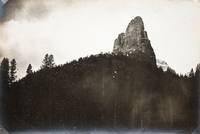
1899365579Montana 1899. 21 silver print photographs. Captioned in pencil on verso. Approx. 4-3/4x7 inches each. Uniformly matted. 21 silver print photographs. Captioned in pencil on verso. Approx. 4-3/4x7 inches each. Although the photographer is unidentified the captions on the verso are in the same hand and the image quality suggests a pictorialist such as Dan Dutro or an extremely talented amateur. The group if noted for its images on the Blackfeet reservation including several of the Grass Dance dated 1899.<br /> <br /> The captions comprise:<br /> Grass Dance 1899<br /> Grass Dance 1899<br /> Inside Medicine Lodge<br /> Camp on Cut Bank on Reserve<br /> Cut Bank<br /> Cut Bank Creek<br /> Cut Bank in winter<br /> Cut Bank in winter<br /> Camp in Cut Bank in winter<br /> View in the large park on Cut Bank<br /> Peak up Two Medicine<br /> Upper St. Mary's Lake<br /> Upper St. Mary's<br /> Up Birch River<br /> Birch Creek south line of reserve<br /> Birch Creek<br /> Birch Creek<br /> Fish Lake south of reserve<br /> Fish Lake<br /> Grinnell Mt and Swift Current Fall<br /> On the trail to Bull's Head Mine in the Swift Current country back of Grinnell Mt. Mt Wilbur in distance. unknown
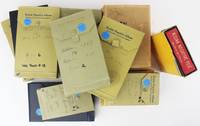
19594928Saltese Mt. and various places across the American West 1959. Very good to near fine. Approximately 2150 photo negatives each about 3x5 inches contained in 22 fully-annotated Kodak negative albums. A bit of exposure bleeding at edges hardly affecting image areas. Occasional light scratching visible in margins. Fine strong images overall. A comprehensive and meticulous collection of photo negatives comprising well over 2000 images of Saltese Montana its industry development and culture over the first six decades of the 20th century. The images present here were compiled across two generations of the Rogers family primarily by Herbert Rogers and his son Gale Rogers both influential citizens in the very small town of Saltese during its brief heyday. Herbert moved to Montana in the late-19th century and began this photo record soon after; and until his retirement in the late 1920s he was the chief owner and operator of the power and water services for the town. Gale attended a small business school in Butte and thereafter was involved in many of the Rogers' local business interests including the Woodburn Mining Company the aforementioned Saltese Electric Light and Water Company and the Rogers Tourist Cabins and Standard Service Station. The elder Rogers was perhaps the prime mover of this archive's generation as the photo series ends in 1959 following quickly upon his death the year prior.<br /> <br /> Today the town of Saltese in the northwest corner of Montana near the border with Idaho is a small collection of houses with a bar and a general store sandwiched between Interstate 90 and the St. Regis River. The 2020 census recorded a population of ten. In its former life Saltese was a gold and silver mining town established in the 1880s as Silver City and renamed after the Nez Perce chief in 1891; for a time in the early-20th century and during the period covered by the present archive it could boast over 2000 residents and a stop on the Northern Pacific Railroad. The twenty-two albums that house the negative collection each contains an index filled with manuscript dates and descriptions for each image.<br /> <br /> The core of this archive is an almost sixty-year visual record of life in Saltese with images of town architecture views industry business social activity and citizens. The preponderance of images date from the early 1920s to the late 1950s with one album covering the period before World War I. The negatives include classic mining images railroad views and town floods; floods of the St. Regis River winter storms and their effects and various weather mitigation efforts; social events town baseball games and family gatherings; group and individual portraits of town citizens friends and members of the Rogers family. In addition to the images of mining efforts there is ample documentation of other industry in the region such as lumbering and milling; the local water and power plants which the Rogers owned; and construction of various edifices and businesses. The negatives are also an excellent record of town life showing schoolhouse gatherings town sports teams fire lookouts and Rogers family activities.<br /> <br /> A substantial portion of the collection documents automobile journeys taken across the intermountain West by the Rogers who traveled extensively in Montana Idaho Wyoming Utah Colorado and elsewhere. A subset of these is an interesting group of major dam projects and construction such as Polson Dam on the Flathead River and the Grand Coulee Dam on the Columbia River. In all a fabulous and expansive visual archive of a small town northwestern Montana and life in the mountain West as it was lived by the Rogers family during the first half of the 20th century. unknown
1 vol. in-4 reliure de l'époque demi-veau vert à petits coins, dos à 4 nerfs plats orné, dos portant l'indication erronée "W. Beattie", Hippolyte Souverain, Paris, 1835, 2 ff., VIII-372 pp. Exceptionnel exemplaire, bien complet des 89 planches indiquées en table (dont la carte dépliante du Lac des Quatre Cantons, et la grande carte routière dépliante de la Suisse par Keller), et des 2 ff. de partition, mais surtout enrichi à l'époque de très nombreux documents, cartes et gravures anciennes, dont plusieurs aquatintes en couleurs, la carte du Mont-Blanc par Picquet, la belle lithographie coloriée du Rigi, de nombreux gravures en couleurs de costumes traditionnels, etc. (voir détail complet ci-après, ou sur demande). Bon état (des rouss. et petits frott., qq. petits accrocs ou défauts signalés aux planches, le relieur a confondu Alexandre Martine et William Beattie, tous deux auteurs d'une "Suisse Pittoresque", à moins qu'il ne s'agisse d'un remboitage lég. postérieur) pour cet exemplaire unique. Détail des planches et documents supplémentaires : - General-Carte der Scwheiz, bey Orell Fussli, 1829 (carte dépliante en couleurs) - Der Canton Zurich 1822 (carte dépliante en couleurs, Orell, Fussli) - Zurich (costumes du canton de Zurich, lithographie rehaussée en couleurs format 10,5 x 14 cm, contrecollé sur support) - Der Canton Bern (carte dépliante en couleurs, Orell, Fussli) - Berne (costumes du canton, lithographie rehaussée en couleurs format 10,5 x 14 cm, contrecollé sur support) - Vue du Château et de la ville de Berthoud (format 9,5 x 7,5 cm contrecollé sur support) - Vue de Neuhaus (format 9,5 x 7,5 cm contrecollé sur support) - Femme de la Vallée de Lauterbrunne (lithographie rehaussée en couleurs numérotée "28") - 2 vues du glacier de Grindelwald ( chacune format 9,5 x 7,5 cm contrecollé sur support) - 2 vues de la Scheideck et Lauterbrounen (chacune format 9,5 x 7,5 cm contrecollé sur support) - Paysage de la Wengen-Alp (aquatinte format 16,5 x 12 cm rehaussée en couleur) - Vue du Wellhorn et Wetterhorn (aquatinte format 15,5 x 11,5 cm rehaussée en couleur) - Chute d'eau près le glacier de Rosenlau (format 9,5 x 7,5 cm contrecollé sur support) - Les bains de la Rosenlau (aquatinte format 16,5 x 11,5 cm rehaussée en couleur, avec mq.) - Der Giesbach am Brienzersee (lithographie dépliante par Labhart et Werner) - Vue du Pont de Zollbrücksur l'Aar (lithographie dépliante de Engelmann, par Villeneuve) - Lucerne (costumes du canton, lithographie rehaussée en couleurs format 10,5 x 14 cm, contrecollé sur support) - Souvenir du Rigi ; Sehnsucht nach dem Rigi, par Hanar (lithographie avec belle vue rehaussée en couleur au recto et partition au verso, format global circa 31 x 48 cm) - L'Auberge du Rigi-Staffel (gravure dessinée par Corrodi, gravée par Weber) - L'Auberge du Rigi-Koulm (gravure dessinée par Corrodi, gravée par Weber) - Chapelle de N. D. de Neiges sur le Righi (format 9,5 x 7,5 cm contrecollé sur support) - Vue de la chapelle de Guillaume Tell (gravure dessinée par Corrodi, gravée par Weber) - Grutli (gravure dessinée par Corrodi, gravée par Weber) - Brunnen (gravure dessinée par Corrodi, gravée par Weber) - Le Lac de Lowertz vers les Mythen (aquatinte format 16,5 x 11,5 cm rehaussée en couleur) - Schwyz (costumes du canton, lithographie rehaussée en couleurs format 10,5 x 14 cm, contrecollé sur support) - Lac de Lowert et Goldau (Lith. de Kaeppelin, par Drulin d'après Dubois, format 11 x 11 cm contrecollé sur support) - La Chapelle de Guillaumetell (gravure dessinée par Fuessli, gravée par Bentz) - Die Cantone Schwyz und Zug (carte dépliante en couleurs, Orell, Fussli) - Zug (costumes du canton, lithographie rehaussée en couleurs format 10,5 x 14 cm, contrecollé sur support) - Zoug (gravure dessinée par Corrodi, gravée par Bodmer) - Der Canton Freyburg (carte dépliante en couleurs, Orell, Fussli) - Gravure de Charles Duc de Bourgogne [Charles Le Téméraire ] (gravure format 21 x 15 contrecollée sur papier fort, Chez Iollain [Jollain ] Paris, s.d. ] - Femme en Costume de Cérémonie (Canton de Fribourg) (lithographie rehaussée en couleurs numérotée "59") - Vue de Morat (lithographie dépliante de Villain dessinée par Pingret - Der Canton Aargau 1822 (carte dépliante en couleurs, Orell, Fussli) - Baden (Lith. de Kaeppelin, par Drulin d'après Dubois, format 11 x 10,5 cm contrecollé sur support) - Femme de la Campagne (Canton d'Argovie) (lithographie rehaussée en couleurs numérotée "63") - Nion (lac de Genève) (lithographie par J. du Bois format 11 x 12,5 cm contrecollée sur papier fort) - Plan de la ville et des environs de Lausanne capitale du Canton de Vaud 1824 (carte dépliante lithographiée, chez Amédée Batard - fort accroc) - La Tour à mon Repos et Mon Repos (2 lithographies contrecollées, par Dubois, lith de Spengler) - Prison pénitentière et Le Signal (2 lith. contrecollées, par Dubois) - Le Château de la Tour du Peil et Mortreux (par Dubois, lith. de Kocher et de Lemercier) - Port d'Ouchy (aquatinte rehaussée en couleurs format 16 x 11 cm) - Neuchatel (lithographie rehaussée en couleurs format 10 x 14 cm) - Plan de Genève publié par Briquet et Dubois (grand plan dépliant en couleurs, lithographié par Kocher et Décor) - Maison où est né Jean-Jacques Rousseau à Genève (vue lith. rehaussée en couleurs format 9,5 x 8 cm, contrecollée sur papier fort) - Château de Ferney-Voltaire à Genève, Chez Manega Frères (vue lith. rehaussée en couleurs format 9 x 9 cm, contrecollée sur papier fort. Au dessous : Intérieur de la chambre de Voltaire à Fernex) - Inscription existante à la vieille route de la Grotte : Carolus Emmanuel II (placard format 29 x 42 cm à la gloire des ducs de Savoie et rois de Sardaigne, évoquant le creusement de la route vers Chambéry) - Mont-Blanc et Alpes adjacentes (grande carte dépliante gravée par Picquet, format 41 x 55 cm) - Eaux Thermales et Minérales de Saint-Gervais, en Savoie, entre Genève et Chamonix. Prospectus (2 feuillets sur papier vert, 1830, chez Routin, Bottero et Alesio, Chambéry) - La Mer de Glace vue du Montaviert (lith. format 10 x 11 cm contrecollée sur papier fort) - On joint, sur f. volant : Grotte du Giesbach (gravure rehaussée en couleurs format 12 x 17 cm) Français
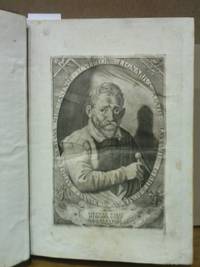
1684392032ª Edición.- FACSIMIL editado en Milton Keynes: Lightning Source UK 2021 y ORIGINAL editado In Roma: Si stampano e si vendono in Stampa. di Gio. Iacomo de Rossi 1684.- Vol. 1 facsímil conteniendo el primer libro a tamaño reducido 42 fol. Vol. 2 original conteniendo en un mismo tomo del segundo al quinto libro 48; 49; 40; 24 fol.: Retratos del artista arquitecto diseñador y escultor "G. B. Montano Milanese a la edad de ochenta y siete años muerto en Roma en 1621" en frontis y del recopilador "G. B. Soria Romano a la edad de cuarenta y dos años" tras la portada del segundo libro ambos magníficamente grabados al cobre por Hieronimus David además de profusión de finísimos grabados mostrando planos templos sepulcros tabernáculos etc.; Facsímil en 4º 239 x 155 cm y obra original en Gran Folio 38 x 27 cm; Facsímil del primer libro encuadernado en Cartulina y obra original encuadernada en un sólo volumen en Media Piel época conteniendo los libros del segundo al quinto. El libro primo se ofrece a modo de complemento como un libro aparte siendo un FACSIMIL moderno impreso a tamaño reducido. FALTA el folio 12 del quinto libro y por tanto uno de sus grabados. En general todos los grabados están en excelente estado algunos con muy leves manchas. El retrato del arquitecto está reforzado de época con una hoja en blanco adherida al verso del mismo manchada en su mitad inferior. La encuadernación algo fatigada aunque restaurada. El arquitecto y tallista Montano Milanese muere en 1621 por lo que toda la publicación de su obra es póstuma tanto los tres primeros libros publicados por Soria Romano en 1624 1625 y 1628 como los dos siguientes publicados por Callisto Ferranti en 1636 y 1638. La Imprenta de Giovanni Domenico de Rossi los reúne y publica juntos bajo el título "Li cinque libri di Architettura di Gio. Battista Montani Milanese" en 1684 que es la obra que ofrecemos pero altera el orden cronológico de las cinco primeras ediciones sueltas y las ordena a capricho sin seguir el año de su primera publicación. Realmente este orden carece de importancia pues creemos que lo que pretendió Giovanni Domenico De Rossi en esta segunda edición fue simplemente recopilar toda la producción artística del gran Giovan Battista Montano Milanese. RARISIMA OBRA. ARQUITECTURA Y URBANISMO Libro in italiano Giovanni Domenico de Rossi hardcover
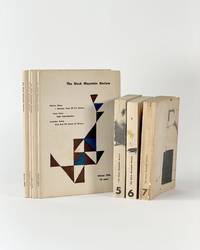
1957410610Black Mountain NC: Black Mountain College 1957. Spine of issue 7 partly split wrappers slightly smudged; issues 3 and 4 with small stains on wrappers. Otherwise a fine clean set of this rare complete periodical. Complete set of 7 issues 4to and 8vo. Illustrated by FRANZ KLINE and RENÉ LAUBIÉS the first four with cover illustrations by K. KITASONO other illustrations by AARON SISKIND J.ALTOON D. RICE and E. CIRBETT. "It is difficult… to appreciate the excitement in certain very limited circles of course produced by the appearance of the Review." Martin Duberman 'Black Mountain: An Exploration in Community' 1972. With contributions by Robert Creeley publisher of Divers Press in Palma de Mallorca Charles Olson the College Rector Kenneth Rexroth Paul Blackburn Robert Duncan Denise Levertov William Bronk and Larry Eigner. The final issue was devoted to Beat authors and contains work by Jack Kerouac Allen Ginsberg Gary Snyder Philip Whalen and published a pre-publication excerpt from "Willam Lee's" Naked Lunch William S. Burroughs. Clay and Phillips p. 106ff: "The Black Mountain Review printed in Palma de Mallorca where Creeley was producing his Divers Press books developed from the friendship in daily correspondence between Creeley and Black Mountain rector Charles Olson who thought a quality literary journal might help increase enrollment. Black Mountain College unknown
064-Do.J. Schwarze Kreide, braun laviert, auf Bütten, rechts unten mit dem braunen Pinsel gemalte Signatur ?Schüz?, auf Sammlungsuntersatz des 18. Jahrhunderts montiert. 25,3:34,5 cm. Literatur: Ph. F. Gwinner, Kunst und Künstler in Frankfurt am Main... Frankfurt am Main, J. Baer, 1862, p. 313ff.
1951ZB679346Montana Historical Society 1951. uniformly bound in green buckram library markings else texts clean and bindings tight. - If you are reading this this item is actually physically in our stock and ready for shipment once ordered. We are not bookjackers. Buyer is responsible for any additional duties taxes or fees required by recipient's country. Photos available upon request. Montana Historical Society hardcover
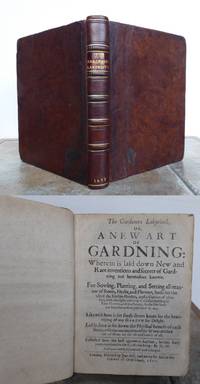
52191<p>London printed by Jane Bell and are to be sold at the east-end of Christ-Church 1652 i.e. 1651. TITLE CONTINUED: For sowing planting and setting all manner of roots herbs and flowers both for the use of the kitchin garden and a garden of pleasure with the right ordering of all delectable and rare flowers and fine roots; as the like hath not been heretofore published by any. Likewise here is set forth divers knots for the beautifying of any garden for delight. Lastly here is set down the physical benefit of each herbe with the commodities of the waters distilled out of them for the use and benefit of all. Collected from the best approved authors besides forty years experience in the art of gardning: by D.M. Newly Corrected and enlarged 1652 in 2 parts. The second part has separate divisional title page dated 1651 and pagination; register is continuous. Small 4to approximately 180 x 135 mm 7 x 5½ inches 11 woodcut illustrations in the text pages: 8 1-29 32-90 1-173 13 blank endpaper included in collation jump in numbering from 29-32 catchwords and register correct nothing missing contemporay sheep covers rebacked in calf gilt lettered label and gilt rules and date to spine edges speckled red. A little scuffing to covers corners slightly worn a little worming to inner margins from page 123 to end of Part II just touching 6 letters no loss of meaning a little pale staining and age-browning heavy age-browning to 4 leaves all text legible small hole in page 45 affecting 4 words paper fault missing words inked in margin tiny burn hole in page 87 affecting 2 words small part of 1 outer margin missing not affecting text small library stamp to first pastedown Rothhamstead Experimental Station tiny amount of old ink scribble to endpapers and few other minor faults otherwise a very good copy. See: Blanche Henrey British Botanical and Horticultural Literature before 1800 Volume 1 page 261; Rachel Hunt Catalogue of Botanical Books Volume 1 page 275; Catalogue of Printed Books in the Wellcome Library Volume 3 page 266; John Evelyn had a copy of this edition in his library see: Geoffrey Keynes John Evelyn A Study in Bibliography page 299; Christie's The Evelyn Library Part 2 page 104 No. 757 mentioned out of interest. MORE IMAGES ATTACHED TO THIS LISTING ALL ZOOMABLE FURTHER IMAGES ON REQUEST. POSTAGE AT COST.</p> London, printed by Jane Bell, and are to be sold at the east-end of Christ-Church, 1652 [i.e. 1651].
1835556571 vol. in-4 reliure de l'époque demi-veau vert à petits coins, dos à 4 nerfs plats orné, dos portant l'indication erronée "W. Beattie", Hippolyte Souverain, Paris, 1835, 2 ff., VIII-372 pp.
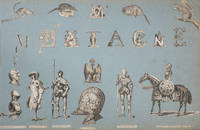
18508528<p>A bravura performance of recreational papercutting of elaborate wood engraved prints many of large size. The name on the first leaf 'Mr Montagne' is constructed of historiated letters from various sources which sets the tone for this rather astonishing and various collection of cut prints apparently chosen for their delicacy and intricacy and the challenge they presented to the papercutter. After cutting many have only minute filaments holding them together like a net. This is not an antiquarian collection and most of the subjects seem to have come from French popular newspapers and journals of the day others from pattern books — the best contemporary repositories of the wood engraver's art.<br />Papercutting has developed in different branches all over the world and in Europe especially England and France it bears an interesting relation to print culture. It demonstrates alternative ways of consuming products of the explosion of the production visual prints in the mid nineteenth-century involving personal selection manual interaction curation and preservation.<br />There are images here of contemporary notables: including a statue of the army surgeon Dominique Jean Larre erected in 1850 at Val-de-Grâce; Thomas Robert Bugeaut d. 1849; Louis-Eugène Cavaignac; Emperor Louis-Napolèon III first president of France 1848-1852; Queen Victoria; George Washington; Alexander II. Other subjects include flora and fauna sometimes exotic with some American falcons and exotic plants; coaches and carriages with some more recherché conveyances such as De Schevleing's sailing chariot; there are soldiers and also a few caricatures. But perhaps the most impressive and decorative cuts are the prints of medieval applied art and architecture – with copious gothic detail — and the large cartouches and decorative panels with their floral swags leafy branches and tendrils all offering a robust challenge even to the expert papercutter's hand.</p><p>Oblong folio 295 × 450 mm 72 leaves all but one of stiff blue paper each with elaborate papercut prints mainly to one side but occasionally to versos too. Some prints on coloured paper others with coloured elements. Original album binding with amateur late 19th century floral fabric covers brocade borders and decoration secured with long stitching over the front pastedowns.</p>
132-Eo.J. Aquarell über Bleistift, mit Bleistiftlinie umrandet, auf Velin. 25:37,5 cm. Kat. 84, Nr. 71. Provenienz: Nachlaß Ludwig Thiersch, München; Sammlung Prof. Richard Jung, Freiburg, (nicht bei Lugt). Verso bezeichnet: ?im L. Thiersch Nachlass Leop. Rottmann um 1860?. Dieser Vermerk bezieht sich auf den in München tätigen Landschaftsmaler L. Thiersch (1825 - 1909). Beide Künstler, Rottmann und Thiersch, waren in derselben Stadt tätig und werden sich wohl gekannt und Arbeiten ausgetauscht haben. Durch diese Provenienz darf die Zuordnung an Leopold Rottmann als sicher gelten. Farbfrisches Aquarell, das in der Landschaftsauffassung dem älteren Bruder, Carl Rottmann (1797 - 1850), verpflichtet ist.
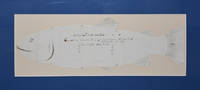
1877321671Montana Territory 1877. Pen-and-ink drawing on ruled paper cut out to size and captioned as above. Approx. 20-1/2 x 7 inches. Old folds. Matted. Pen-and-ink drawing on ruled paper cut out to size and captioned as above. Approx. 20-1/2 x 7 inches. From the first reports of the Yellowstone region such as Gen. Wm. E. Strong's A Trip to the Yellowstone National Park in July August and September 1875 the word began to spread: "There is probably no river in the world the equal of the Yellowstone for big trout." Though tourist parties began to travel to the Yellowstone it was still uncertain territory. In the late summer of 1877 it was the seat of war.<br /> In early September 1877 Civil War veteran General Oliver O. Howard who a decade earlier had founded Howard University and served as its president was leading his troops on the trail of the Nez Perce who had just left the Yellowstone Park. Howard's forces more than 500 strong reached the northeast corner of the Park on Clark's Fork on 7 September. The Nez Perce under the leadership of Chief Joseph moved through incredibly rugged terrain and ultimately evaded both Howard and another military cohort under Col. Samuel D. Sturgis.<br /> This contemporary record of a Yellowstone river trout was made on a large sheet of ruled ledger paper. The anonymous artist is believed to be Lieut. Cyrus A. Earnest of the 8th U.S. Infantry as the item was found among his papers with a cyanotype of Fort Bridger California where he was posted following his Yellowstone expedition service as well as several related printed documents of the Military Order of the Loyal Legion California Commandery. These items accompany the drawing.<br /> Earnest 1840-1893 was a lieutenant in the Eighth Infantry and served with Custer in the 1873 Yellowstone Expedition to survey a route for the Northern Pacific Railroad along the Yellowstone River. While serving under Howard in the Nez Perce expedition Earnest received special commendation for a heroic 2-day over 100 mile ride over rough terrain to resupply the army at Baker's battlefield.<br /> Ernest who was born in Ohio used the conventional name for the brook trout Salmo fontanalis but that describes a non-native eastern species. Yellowstone cutthroat trout or black spotted are the most widespread native trout with "highly variable coloration but generally yellow-brown or brassy/bronze" They were first described as a distinct species Oncorhynchus clarkii bouvieri by Jordan and Gilbert in 1883.<br /> A remarkable artifact from the earliest years of the U.S. presence in the Yellowstone valley and a reminder that at the edges of battle people attend to customary tasks and pursuits: fishing and making a record of daily activities. Provenance: Cyrus A. Earnest 8th U.S. Infantry see below unknown
17882092902138300936Tsutaya Juzaburo board 1788. Soft Cover. Fine. Size: small book Tsutaya Juzaburo board paperback
149-Wo.J. Öl, auf Papier, links unten ritzsigniert ?Ernestine von Lipowsky, geborene von Eder?, rechts unten bezeichnet ?Untersberg?. 13,7:19,6 cm. Nagellöchlein in den unteren Ecken. Minimaler Einriß links unten. Frische und dynamische, sicher vor Ort entstandene Landschaftsstudie, die eine intensive Beschäftigung mit der Münchner Freilichtmalerei erkennen läßt.
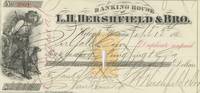
1872List2423Montana Territory 1872. Lot of seventy-six checks measuring 8 ½ x 4 inches with vignette illustration of a prospector and his dog. With one additional document relating to the Hershfield account with the Bank of California. Most checks issued to “Gold Coin†and drawn on the Bank of California in San Francisco. The checks are printed by Robert F. Macey Stationery in New York. Fine condition with an occasional tear and chip. Fine. In 1870 one out of ten residents of Montana Territory were of Chinese descent a figure that would decline precipitously in the ensuing decades until Chinese-Americans made up less than one percent of the population around the turn of the century. Chinese immigrants arrived in Montana following the discovery of gold in Bannack and Virginia City in the 1860s. Many of the Chinese immigrants settled and worked in the Big Belt Mountains east of Helena including the Cave Cooper Oregon and Confederate Gulches.<br /> <br /> Collected here are a collection of seventy six checks from Helena in 1870 and 1871 written to Chinese-owned businesses and cashed at the L.H. Hershfield and Brother bank in Helena and drawn on the Bank of California in San Francisco. The checks contain the names of over thirty different Chinese merchants operating in Montana at the time - with some companies like Wan Yuen and Co. having multiple checks present. As a group they offer an interesting map of the Chinese-American business community operating at the time and the duplicate checks which sometimes have notes on the verso giving a representation of the relative size of the firms and individuals involved. <br /> <br /> The LH Hershfield & Bro. Banking House in Helena operated from 1865 to 1882 in Last Chance Gulch near the corner of Bridge and Warren Streets. It later became the Merchants National Bank from 1882-1898 then the Union Bank and Trust Company from 1898 to 1859. Hershfield also had a banking operation in Virginia City during the Gold Rush period. Overall the group documents the Chinese-American community during the period and the breadth of economic activities of Chinese-Americans in Montana’s early mining camps. unknown
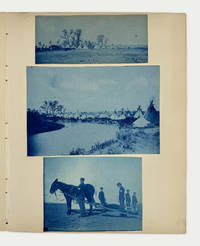
1890BB.001<p><em><strong>Cyanotypes and silver prints 48</strong></em> <em><strong>Most 5 x 7 inches a few smaller</strong></em> This intriguing collection of cyanotype and platinum print photographs shows Native American life in Montana at the end of the 19th / beginning of the 20th century. The photos were likely taken in the third Crow Agency its present location as there are three photographs showing Crow camps along the Little Bighorn River. There are also several photographs showing a festival or ceremony; images of travoises in use; thoughtfully-composed views of tipis; shots of US Army presence including one photo of a man with a bandaged arm; scenic views; and interior views of an unidentified home most likely the photographers. A captivating collection worthy of greater study.<br /><br />The original Crow Agency was established in 1868 and located in the western reaches of the Yellowstone River Valley north of the Absaroka Range of Mountains. In 1875 the Agency was relocated eastward to a new site north of modern-day Absarokee MT. In 1884 it was moved for a final time 60 miles south of Billings MT along the Little Bighorn River.</p>
160211741De l'imprimerie de Jean de Tournes, 1602. Petit in-folio de [8]-468-[12] pages (4; a-z6; A-R6.), plein vélin ivoire, dos lisse, titre manuscrit au dos, avec ses attaches souples. Quelques rousseurs et galeries de petits vers, une tache d'encre p. 33. Bel exemplaire dans un vélin de réemploi. Ex-libris de Jean Armand Tronchin, et étiquette de la bibliothèque du château de Bessinge.
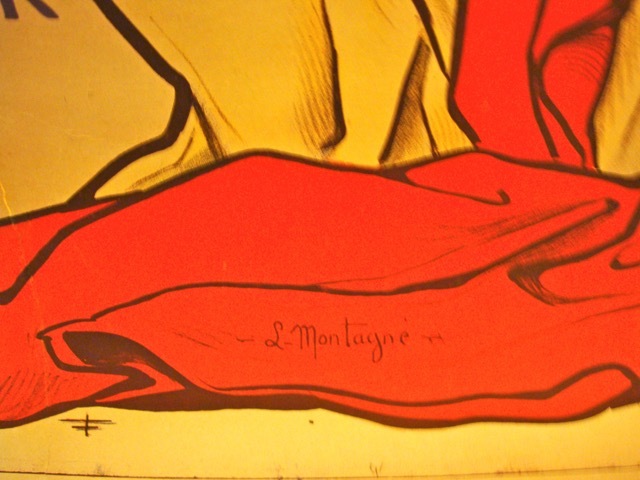
19045526Superbe lithographie de Montagné, avec des coloris très frais. Entoilée. Très bel état. Rarissime.166 x 115 cm. sans couverture Très bon 1904
74778Appalachian Mountain Club. APPALACHIA. Vol. 1 no. 1 - Vol. 14 No. 2. June 1876 - June 1917. Boston: Published for the Club by Houghton Mifflin at The Riverside Press Cambridge. Each volume of Appalachia contains four numbered issues. We offer a large early run of the mountain periodical complete. Illustrated with portraits diagrams photographs and maps; some of the maps fold-out. Octavo. Individual numbers are bound in original printed paper wrappers. The first ten volumes are bound in black cloth with the original wrappers for each number bound-in. The set is ex-library with pencil notations to front wrappers of some issues and a bookplate to front pastedown of each cloth-bound volume. External and internal library markings are minor. The wrappers of the individual issues show some edgewear and occasional soiling while the cloth-bound volumes show genral light scuffing. The text is uniformly clean throughout and well illustrated. Also included is a later single issue of Appalachia from June 1934 Vol. 20 No.4 in original green paper wrappers. Offered with: BULLETIN OF THE APPALACHIAN MOUNTAIN CLUB. Vol. 10 No. 1 - Vol. 12 No. 4 October 1916 - January 1919. Each volume contains ten numbered issues and this small run is nearly complete lacking only one issue: Vol. 11 No. 10 September 1918. Each issue is approximately 16 pp. and records recent or upcoming chapter business reviews of excursions and information about future outings. 12mo. printed paper wrappers wire saddle stitch. Most issues have some dust-soiling to wrappers and a few are creased but generally clean and crisp within. Also included is a later single issue of the Bulletin from January 1942 Vol. 8 N.S. No. 1 in original paper wrappers. Offered with: APPALACIAN MOUNTAIN CLUB REGISTER for the years 1879-83 1885 and 1900. Published annually each register lists the officers and by-laws of the club as well as the general membership. Approximately 4.5 in. by 6 in. each. Printed paper wrappers wire saddle stitch. Most wrappers have some library pencilling/stamping to top wrap and show general dust-soiling and occasionally a nick. The back panel of one issue is detached. Clean within. While not complete this is a substantial early run of the. unknown
74778Appalachian Mountain Club. APPALACHIA. Vol. 1 no. 1 - Vol. 14 No. 2. June 1876 - June 1917. Boston: Published for the Club by Houghton Mifflin at The Riverside Press Cambridge. Each volume of Appalachia contains four numbered issues. We offer a large early run of the mountain periodical complete. Illustrated with portraits diagrams photographs and maps; some of the maps fold-out. Octavo. Individual numbers are bound in original printed paper wrappers. The first ten volumes are bound in black cloth with the original wrappers for each number bound-in. The set is ex-library with pencil notations to front wrappers of some issues and a bookplate to front pastedown of each cloth-bound volume. External and internal library markings are minor. The wrappers of the individual issues show some edgewear and occasional soiling while the cloth-bound volumes show genral light scuffing. The text is uniformly clean throughout and well illustrated. Also included is a later single issue of Appalachia from June 1934 Vol. 20 No.4 in original green paper wrappers. Offered with: BULLETIN OF THE APPALACHIAN MOUNTAIN CLUB. Vol. 10 No. 1 - Vol. 12 No. 4 October 1916 - January 1919. Each volume contains ten numbered issues and this small run is nearly complete lacking only one issue: Vol. 11 No. 10 September 1918. Each issue is approximately 16 pp. and records recent or upcoming chapter business reviews of excursions and information about future outings. 12mo. printed paper wrappers wire saddle stitch. Most issues have some dust-soiling to wrappers and a few are creased but generally clean and crisp within. Also included is a later single issue of the Bulletin from January 1942 Vol. 8 N.S. No. 1 in original paper wrappers. Offered with: APPALACIAN MOUNTAIN CLUB REGISTER for the years 1879-83 1885 and 1900. Published annually each register lists the officers and by-laws of the club as well as the general membership. Approximately 4.5 in. by 6 in. each. Printed paper wrappers wire saddle stitch. Most wrappers have some library pencilling/stamping to top wrap and show general dust-soiling and occasionally a nick. The back panel of one issue is detached. Clean within. While not complete this is a substantial early run of the. unknown books
41253Paris, chez Panckoucke, 1770. In-4°, XIV-372 pages Reliure plein veau caillouté, dos à nerefs orné de fleurons dorés, tranches rouges, gardes marbrées.
1917026451Boston MA U.S.A.: AMC 1917. Third 1st Printing. Flex-cloth. Very Good. 16mo - over 5¾" - 6¾" tall. Assorted Maps. 3rd Edition 1917. Light Brown Buckram Flapped Field variant. A pack-worn example with general wear VG. Contents are NF with 421 pages and all 8 sectional & 4 page maps present. It also contains the 1917 Northern Peaks Pocket map Fine and the 1918 Mount Washington map good condition. This edition is one of the most scarce in this series of hiking guides. It was published in 3 variants and had a very small print run. <br/> <br/> AMC hardcover