EINSTEIN, ALBERT; VISHNIAC, ROMANBiblio.com

3 443 résultats
19802611New York: np 1980. First edition. Clamshell box. Fine. EXTREMELY RARE COMPLETE SUITE OF SEVEN LARGE SILVER PRINTS FROM EINSTEIN'S FAMOUS PHOTO SHOOT AT PRINCETON WITH ROMAN VISHNIAC. Each print is signed by Vishniac and dated "At Princeton 1942" in his hand below the image and numbered on the back. "One day Vishniac decided to visit Albert Einstein at Princeton to offer greetings from mutual friends in Berlin. Uninvited he hoped Einstein would pose for a portrait but Einstein had little interest. Vishniac recalled:<br /> <br /> It was a singular experience. An idea had suddenly come to him and the room was filled with the movement of the great man's thought. I waited several minutes and then when I saw that he did not intend to say anything more to me and that he was off in a world of his own I started taking pictures.<br /> <br /> Einstein later admitted that a Vishniac photograph taken that day was his favorite portrait" Encyclopedia of Twentieth-Century Photography. <br /> <br /> Vishniac provided details about this portolfio in a letter to an original recipient the letter is not included here explaining:<br /> <br /> The size of the edition's limitation is uncertain due to my age and only spare time to make them. The most expensive portfolios - Ansel Adams Kertesz - are limited in large numbers I can never measure up - 999 1001 and similar. <br /> <br /> The originality of Portfolio "Einstein" consists of its special character. It is made not to get images but the feeling that you are present during the creativity by the Great Man. All pictures are made with "hidden camera" method.<br /> <br /> The value of this portfolio is great and can hardly be estimated today. <br /> <br /> Princeton/New York: 1942 negatives; 1980 silver prints. Elephant folio clamshell box approx. 17x21 in. housing seven silver prints. Image size: approx. 10.25 x 13.25 in.; with matte 16x20 in. A few minor blemishes to box. Photos in fine condition. RARE. np unknown
193488436London: Nancy Cunard at Wishart & Co 1934. First Edition. One of 1000 copies. Large quarto 31.5cm; publisher's dark brown buckram with titles stamped in red on spine and front cover and a map of "The Black Belt of America" on rear cover; dark brown topstain; viii23-855pp; with numerous half-tone and other illustrations throughout including the color fold-out map of Africa tipped in between p.584-585. Modest external wear particularly to base of spine and upper and lower front joint gently spine-sunned light wear to topstain with a touch of dust-soil to covers and faint foxing to endpapers and text edges occasionally extending into the margins; small closed tear to lower edge of title page with a tiny puncture to one lower fold on the map; hinges sound; a solidly Very Good copy. <br /> <br /> A monumental work compiling some 250 contributions by more than 150 authors two-thirds of whom were Black privately published and financed by Cunard a direct descendant of Benjamin Franklin and heiress to the Cunard shipping fortune. Blockson notes Cunard's "bohemian spirit" and "unbending devotion to ending racial prejudice" and calls Negro "a landmark in African-American literature see BLOCKSON 71 p.53-5. Cunard stated her purpose in publishing Negro was to show "that there was no superior race merely cultural differences that racism has no basis whatsoever." Among the impressive list of contributors were Langston Hughes W.E.B. Du Bois Zora Neale Hurston Jomo Kenyatta Samuel Beckett Ezra Pound Theodore Dreiser Countee Cullen Sterling Brown Claude McKay and many other key figures in the Harlem Renaissance. Of the 1000 copies printed many hundreds were destroyed during the blitz of London -- an assertion that was long offered by dealers without documentation but which is indeed supported by an annotation in Cunard's own copy held by the Ransom Center dated October 1941: ".what remained of the whole edition has been destroyed by bombs and fire last years Sept. save 10 copies saved by E.E. Wishart as if in prevision." This fact along with the book's unwieldy size and fragile binding accounts for the scarcity of attractive copies in the marketplace; the present example being among the nicer copies we have handled. BLOCKSON 71; PERRY 761 The Harlem Renaissance: An Annotated Bibliography and Commentary. 88436. Nancy Cunard at Wishart & Co unknown
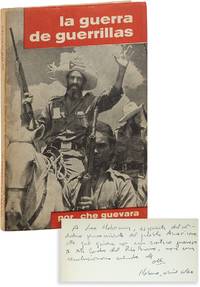
196086348Havana: Departamento de Instrucción del MINFAR 1960. First Edition. First printing. Warmly inscribed to the American economist and author Leo Huberman who was responsible for introducing the work to a North American audience: "A Leo Huberman exponente del verdado pensamiento del pueblo Americano esto que quiere ser un cantico guerrero a este lado del Río Bravo con un revolucionario saludo de / Che" To Leo Huberman exponent of the true thought of the American people this that would wish to be a war chant this side of the Rio Bravo with revolutionary greeting.; dated Habana April 6 1960. Small octavo; staple-bound pictorial paper wrappers; 1875pp. Text illustrations. Mild edgewear and some gentle rubbing at bound edge still Very Good or better. <br /> <br /> Terrific association copy of the true first edition of Che's classic treatise on people's war later published in English by Huberman's own Monthly Review Press 1961. Though unquestionably the work with which Guevara is most associated it is the hardest of his books to obtain in the first printing. It was issued presumably simultaneously in two formats - a 12mo edition measuring 15cm in height and with a price of 50cts on the rear wrapper; and as here in octavo measuring 20cm and with the wrapper unpriced. We have been unable to determine priority but would conjecture that the two issues reflect separate intent: a people's edition for slipping into a jacket pocket; and a more expensively-produced edition for libraries. Of the two the octavo edition is somewhat scarcer in institutional collections with about twenty examples noted in OCLC.<br /> <br /> Guevara's signature is not strictly speaking rare; however inscriptions with personal content are truly scarce and signed or inscribed copies of the present title are almost never seen. A copy inscribed to Argentinian dictator Juan Perón was offered by Sotheby's in 2016; a copy with Che's ownership signature appeared at Bonham's in 2014 but no further signed or inscribed copies appear in the auction record. Our copy is inscribed to Leo Huberman 1903-1968 Che's American publisher and a key figure of the American left during the Great Depression and into the decade of the Fifties. Huberman founded the important independent Marxist journal The Monthly Review in 1949 and it was as its editor that Huberman became closely involved with the revolution in Cuba - as well as more directly with Guevara himself. Along with his co-editor economist Paul Sweezy Huberman spent three weeks in Cuba in the months following the revolution much of that time in the company of Guevara who appears to have been among the authors' principal informants. Out of that visit came the book Cuba: Anatomy of a Revolution Monthly Review Press: 1960 a sympathetic account and one of the earliest for an American audience. Guevara is mentioned frequently in the book always in glowing terms - as for example: ". as we can testify from personal observation Che Guevara President of the National Bank has as brilliant quick and receptive a mind as is likely to be found in anyone occupying a comparable position in the government of any country in the world." p.92. It must have been during this visit that Huberman secured American publishing rights to Guerrilla Warfare and clearly this is when the present copy was inscribed to him an inscription that is truly effusive by Che standards giving every indication that Guevara held Huberman in mutually high respect.<br /> <br /> PROVENANCE: From the collection of a direct Huberman descendant 2025. Departamento de Instrucción del MINFAR unknown
1920140553Munich: Dreilander Verlag 1920. Collection of 38 issues of the landmark Weimar-era periodical highlighting fantasy horror and early science fiction stories. Text in German. <br /> <br /> One of the world's first fantasy periodicals alongside the Swedish "Hugin" "Der Orchideengarten" featured a mix of new German stories alongside translations of foreign literature largely French including works by Victor Hugo Guy de Maupassant Voltaire Charles Dickens Edgar Allan Poe Joseph Capek H.G. Wells and many others. The magazine also made forays into the proto-science fiction genre as seen in Vol. 2 No. 4 entitled "Phantastik der Technik." <br /> <br /> A true product of the Weimar era's cultural blossoming the magazine also features stunning illustrations both with its two- and three-color cover art and its woodcut reproductions throughout: sinister yet elegant visions of anthropomorphic flowers religious idols Grim Reapers and gory deaths. "Der Orchideengarten" featured the work of Gustave Dore Otto Linnekogel Karl Ritter Alfred Kubim Carl Rabus Otto Nuckel and many more. <br /> <br /> This archive contains the following largely sequential issues: Vol.1 Nos.1-18 16 and 17 published as a combined issue; Vol.2 Nos.1-6 8 10-16 18-24. <br /> <br /> 9 x 12 inches saddle stapled. Very Good to Near Fine condition. In a custom quarter leather clamshell box. Dreilander Verlag unknown
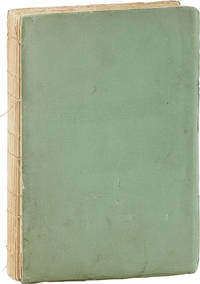
193258248New York: Charles Scribner's Sons 1932. First Edition. First Printing. Octavo 20cm; publisher's folded and gathered signatures sewn together across the spines with unprinted jade green laid paper wrappers glued onto preliminary and terminal leaves; x2415pp. Light wear and dust-soil to wrappers though contents are fresh and clean; Near Fine. Caldwell's first novel and second book produced by a commercial publisher a searing fictional depiction of poor white life in the deep South. "The story of a Georgia sharecropper shelved by the plantation owner allowed to live in a tumble-down shack but not allowed to raise a crop. Pictures a family unbelievably degraded and destitute - the end result of a bad system" COAN p.56. While the novel infuriated Southern readers it was nevertheless an enormous success basis for John Ford's 1941 film starring Charley Grapewin Gene Tierney and Dana Andrews. A Modern Library 100 book and one of the defining works of the 1930's rare in this pre-publication format with none found in the auction record. HANNA 570; FLYNT & FLYNT 73. Charles Scribner's Sons unknown
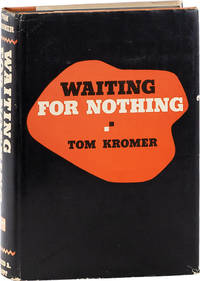
193558667New York: Alfred A. Knopf 1935. First Edition. First Printing. Octavo 19.25cm; orange cloth with titling and decorations stamped in black on spine and front cover; black topstain; dustjacket; x1873pp. Contemporary bookplate of Brigadier General Philip R. Faymonville on front pastedown hint of sunning to spine else a fresh Fine copy. Dustjacket is unclipped priced $2.00 with light wear to extremities hint of sunning to the red portions on the spine and a faint diagonal crease to upper front flap; Near Fine. Offered together with a copy of the Advance Issue. Octavo 19cm; publisher's taupe cloth with titles stamped in burgundy on front and rear covers; burgundy topstain; dustjacket; 48pp. Light wear to extremities with a touch of dust-soil to lower board edges; contents clean; Near Fine. <br /> <br /> Laid into the first edition is a brief one-page TLS from Sinclair Lewis to Blanche Knopf dated October 2 1936: "Dear Blanche: Tom Kromer has asked me to read his novel "Waiting for Nothing" to see if I want to recommend him for the Guggenheim Fellowship. Would you like to send me a copy of it here at the Essex House Yours sincerely Sinclair Lewis." Typed letter on white bond measuring 8 5/8" x 11"; 17 lines 66 words with a few old folds a small tear to right edge and staple holes at upper left corner. A quintessential novel of the Great Depression and a masterpiece of understated desperation written by a West Virginia drifter who famously scribbled his story down on scrap paper scrounged on the streets in boxcars and in hobo jungles. The novel was highly praised upon publication but Kromer never mustered another book-length work; he died tubercular and forgotten in a West Virginia sanatorium. The novel was essentially "lost" until its republication by the University of Georgia Press in the 1980s. <br /> <br /> In 1936 Kromer prepared his application for a Guggenheim Fellowship the basis for which was six completed chapters of his working class novel Michael Kohler and a discussion of the industrial scene and proletarian character he explored in Waiting For Nothing. It would have been a logical leap for him to have solicited an recommendation from Lewis who by then was nationally recognized as an author in the proletarian vein and whose novel It Can't Happen Here was published the same year as Kromer's debut. Kromer was unsuccessful at securing a Fellowship though the letter is evidence that Lewis at the very least made an effort to acquire a copy of his novel from Knopf in an attempt to help him in his efforts. HANNA 2059; RIDEOUT p.297. Alfred A. Knopf unknown
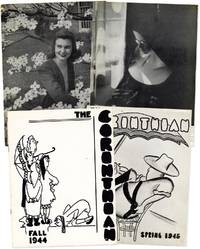
194388110Milledgeville GA: Georgia State College for Women 1943-1945. First Editions. Four slim quarto issues 29.25cm; original photo-illustrated and pictorial wrappers stapled. Publication sequence as follows: Spring 1943 Vol.XVIII No.2 1-1920pp; Fall 1943 December 1-1920pp; Fall 1944 34-1718-20pp; Spring 1945 34-1819-20pp; illus. The Spring 1943 and Fall 1944 issues are Very Good with some light external wear minor dust-soil and occasional foxing to wrappers with a few tiny tears and abrasions and a small ink mark to front cover of one issue. The Fall 1943 issue is Very Good with light wear and dust-soil to wrappers and an ad carefully torn out from inner rear wrapper. The Spring 1945 issue shows some splitting above and below the staples faint foxing along the left edge with the wrappers present but detached and neatly separated along the spine-fold; Very Good. <br /> <br /> A significant collection of issues of the Corinthian the literary magazine of the Georgia State College for Women where Flannery O'Connor attended on an accelerated program from 1942-1945 after graduating from Milledgeville's Peabody High School. She joined the staff of the Corinthian where she rose to the rank of editor in 1944 and contributed numerous poetry and prose pieces and also the occasional cartoon. Aside from her contributions to Peabody High's school newspaper where she served as art director these pieces in the Corinthian constitute some of hear earliest published work. Her contributions to the present issues all credited to M.F. O'Connor are as follows: Spring 1943 - "Elegance Is Its Own Reward" prose "Effervescence" poetry; Fall 1943 - "Home of the Brave" and "Doctors of Delinquency" prose; Fall 1944 - "Fashion's Perfect Medium" prose "Pftt" poetry; Spring 1945 - "Higher Education" poetry "Education's Only Hope" prose. While uncredited and lacking her later stylized "MFOC" initials both the cover of the Fall 1944 issue and two large cartoons illustrating "Fashion's Perfect Medium" are a dead match for O'Connor's style right down to the angular and chinless facial features of her subjects. Issues of the Corinthian are rare in commerce with none appearing in the auction record; OCLC notes 4 locations holding any issues Georgia College & State Univ UGA Brown BL with Emory showing 3 issues from 1942-45 held with O'Connor's papers. <br /> <br /> Provenance: From the collection of Kitty Burruss Bull a friend of O'Connor's at GSCW and her associate editor. Through a descendant. 88110. Georgia State College for Women] unknown
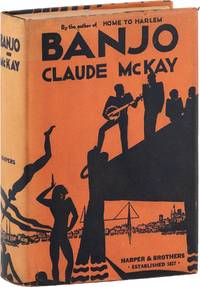
192988435New York: Harper & Brothers Publishers 1929. First Edition. First Printing. Octavo 19.5cm; navy blue and red paper-covered boards and black cloth backstrip with titles stamped in gilt on spine; decorative endpapers; orange topstain; dustjacket; viii23-3262pp. Spine ends gently nudged topstain slightly dulled else a fresh very Near Fine copy. In the original dustjacket designed by Aaron Douglas; unclipped priced $2.50 gently spine-sunned and lightly edgeworn with a few tiny tears a tiny split at rear flap fold and some mild dust-soil; still a bright Near Fine copy. <br /> <br /> McKay's second novel an accurate social perspective of Black life in southern France drawn directly from McKay's experience living in Marseilles. "Lincoln Agrippa known to his drifter cohorts on the 1920s Marseilles waterfront as "Banjo" passes his days panhandeling and dreaming of starting his own little band. At night Banjo Malty Ginger Dengel Bugsy Taloufa Goosey and even Jake of Home to Harlem prowl the rough waterfront bistros drinking looking for women playing music fighting loving and talking - about their homes in Senegal the West Indies or the American South; about Garvey's Back-to-Africa Movement; about being Black. When Ray a writer joins the group it triggers his rediscovery of his African roots and his feeling that at last he belongs to a race "weighted tested and poised in the universal scheme" from the HarperCollins reissue. PERRY 377; GLOSTER p.165-166. 88435. Harper & Brothers Publishers unknown
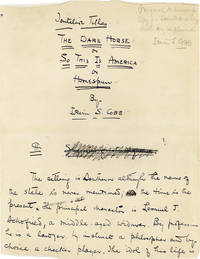
193446764N.p.: S.i. 1934. Holograph manuscript composed in dark blue ink on 152 numbered leaves rectos and housed in a bespoke chemise and slipcase by Barrieri. With presentation inscription from Cobb to MGM film produced and screenwriter Samuel Marx in pencil at upper right corner of title leaf: "Original manuscript copy for Sam Marx Esq / with my compliments / Irvin S. Cobb." A heavily-revised draft with extensive holograph additions and elisions in pencil and in pen throughout marking substantial textual differences between this and the final draft of the screenplay. Mild wear and handling; preliminary leaves with faint creasing to extremities with subtle toning to title leaf; Very Good or better. Slipcase with some light wear and minute board exposure to points around opening else Near Fine. Early unpublished manuscript treatment of the 1939 Paramount Studios film Our Leading Citizen directed by Alfred Santell with a screenplay by Jack Moffitt. A "Capital vs. Labor" story set in a once-small town that has evolved into an industrial city and centered around Lem Schofield an attorney and homespun philosopher and Clay Clinton son of Schofield's deceased partner. Clinton in love with Schofield's daughter and anxious for quick success joins the employ of J.T. Tapley the town's corrupt and influential industrialist. "When Tapley imposes a ten percent wage cut at his factory the workers walk out on strike precipitating a labor war. Lem immediately withdraws as Tapley's attorney but Clay ignorant of the nefarious tactics that Tapley is planning stays on. To crush the strike Tapley calls in a gang of strikebreakers led by Shep Muir. While pacifist union leader Jim Hanna struggles to end the strike peacefully communist agitator Jerry Perkins arrives in town to advocate radicalism and violence. Riots break out and amid an atmosphere of fear and suffering Lem steps in to quell the unrest. After insuring the arrest of agitators Peters and Muir Lem works to institute a labor settlement and Clay finally recognizing Lem's virtues nominates him for the position of United States Senator" TCM. <br /> <br /> While the final script faulted greedy capitalists and violent revolutionaries alike the film was blacklisted by V.J. Jerome head of the communist cultural commission who got an early look at the script and together with film critic Howard Rushmore deemed it potentially anti-communist. S.i. unknown
20002111902160307367Showa Women's University Institute of Modern Culture 2000. Soft Cover. Fine. Number of pages: 500 pages average Size: B6 size Number of books: 79 volumes Showa Women's University Institute of Modern Culture paperback
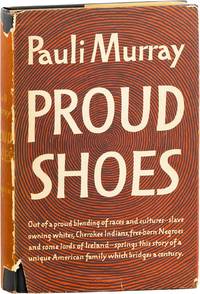
195684129New York: Harper & Brothers Publishers 1956. First Edition. First Printing with "First Edition" and the publisher's "I-F" code on copyright page. Octavo 21.75cm; dark grey cloth boards with titles stamped in white on spine and publisher's logo in white at lower front cover; dustjacket; x2762pp. Inscribed by the author on the front endpaper: "August 28 1964 / Especially for Sybil / with affection and admiration / Pauli Murray." Landau was a Jewish feminist attorney and educator in New York who spent much of her career championing civil rights and lesbian causes and was an early girlfriend of Audre Lorde's. Light wear to spine ends pinpoint wear to lower board edges some offsetting to endpapers and a few tiny indentations to right edge of textblock; about Near Fine. Dustjacket is unclipped priced $3.50 spine-sunned shelfworn with toning to panels a few small tears some losses to spine ends none affecting lettering and a faint splash mark to spine on verso; Good to Very Good. <br /> <br /> Murray's first major literary work a realistic and convincing representation of the Black experience and an account of both her North Carolina family and childhood and her search for identity in her past. "Her book in which history and literature intersect is the product of a lively imagination and four years of devoted research in oral and documented history. She points out that it is the biography of her grandparents the story of three generations of a family "involved in a crucial turning point in our nation's history." Much of the saga centers around the racial conflicts through which the family worked out its destiny focusing on the courage strength and fearlessness in the face of danger that all members of the group exhibited. The women both black and white are noteworthy in their independence and recognition of moral duty and the men are stalwart and refuse to accept any status less than that of honorable men. Race and sex are explosive elements of suffering and shame that Murray exorcises through her honest confrontation of them while education and tenacious survival are the foundations on which she builds a strong and positive indentity" DLB Vol.41: Afro-American Poets Since 1955 p.249. An uncommonly warm association copy from Murray to another prominent attorney. BLOCKSON 3815. 84129. Harper & Brothers, Publishers unknown
190285955Washington DC: Privately Published 1902. First Edition. First Printing. Octavo 20.25cm; vertically-ribbed blue cloth titled in gilt with a blind-ruled border and decorations on front cover; floral endpapers; iiiiv-xvi3-3722pp with portrait frontispiece of the author and 38 plates of illustrations halftones. Light wear to lower board edges front endpaper neatly detached but present with an old very faint splash mark to upper edge of textblock; Very Good. <br /> <br /> A lively account of the life and times of Mifflin Wistar Gibbs 1823-1915 an American businessman politician and newspaper publisher from Philadelphia. Shadow and Light recalls his impoverished youth his early involvement in aiding fugitive slaves while working with William Grant Still and accompanying Frederick Douglass on his 1849 tour of New York. Gibbs moved west during the Gold Rush in 1850 sensing that there was more money to be made in business than in panning for gold; he and his partner established a prosperous clothing and dry goods business and a few years after Gibbs purchased and became the editor of the Mirror of the Times the local Black antislavery newspaper. He moved to Victoria British Columbia during the Canadian gold rush opening an additional business before returning to the U.S. where he got married began his legal education and established himself in Little Rock Arkansas. "Beginning as a lawyer he was later appointed to county attorney and in 1873 he won election as municipal judge of Little Rock reportedly the first black man in the nation to be so honored" AANB Vol.3 p.484. He lost the judgeship in 1875 but embarked on a career in local and national politics ultimately being appointed by Rutherford B. Hayes as register of the U.S. Land Office for the Little Rock District and eventually as U.S. consul to Tamatave Madagascar 1898-1901. The remainder of his life was dedicated to causes that would advance "the progress of the race." Uncommon in commerce with the last copy in the auction record offered in 1962. BLOCKSON 3987; AANB Vol.3 pp.483-485. 85955. Privately Published unknown
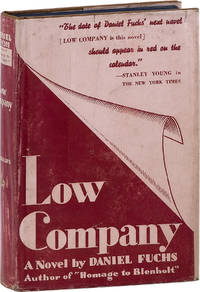
193781105New York: The Vanguard Press 1937. First Edition. First Printing. Octavo 21cm; brown cloth with titles stamped in black on spine and front cover; navy blue topstain; dustjacket; vi23-314pp. Mild offsetting to endpapers a few tiny indentations at mid-spine else a fresh very Near Fine copy with the topstain bright and unfaded. In the correct first printing dustjacket with five blurbs on the rear panel; unclipped priced $2.50 showing modest wear and dust-soil a few tiny nicks and tears four tiny punctures on the spine panel and five pieces of clear tape reinforcement on verso; a solidly Very Good unrestored example. <br /> <br /> The final volume in Fuchs's Williamsburg Trilogy published by Vanguard between 1934-37 which together paint a witty sad and faithful picture of Jewish Brooklyn during the early 1930s. The story is centered around a soda parlor in Neptune Beach a fictitious version of Brooklyn's Brighton Beach "where gangsters and whoremasters compete to control a string of houses where petty gamblers and thieves and brutal amateurish murders appear" Coan p.174. None of the three books were strong sellers; in Fuchs's preface to the 1961 omnibus edition Basic Books he admits Low Company sold only 1200 copies. Basis for Gordon Wiles's 1947 film noir The Gangster with the screenplay written by Fuchs and Dalton Trumbo starring Barry Sullivan Joan Loring Akim Tamiroff and Harry Morgan. The Dark Page Vol.1 pp.108-109; Hanna 1330. The Vanguard Press unknown
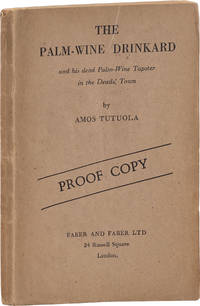
195281395London: Faber and Faber Ltd 1952. First Edition. First Impression. Octavo 20cm; original light brown wrappers titled in black on front cover; 67-1253pp. Pronounced forward lean some light overall wear crown gently bumped with some of the expected subtle tanning to the text edges; still a clean Very Good copy. The Nigerian author's best-known book the first African novel published in English outside of Africa. Tutuola's manuscript "after being rejected by a missionary press and an educational publisher in Nigeria was sent on to London where Faber and Faber published it in May 1952. This unusual story describing the hazardous journey of a drunkard to the land of the dead and his redemption through trials and testing was greeted with enthusiasm by British reviewers who credited Tutuola with remarkable originality. Within a year a separate American edition and a French translation appeared. Yet back home in Nigeria the book was regarded as a national embarrassment partly because it had been written in ungrammatical English and partly because fellow Yorubas recognized most of the tales in it as deriving from their own oral and literary heritage" DAB Vol.6 p.87. Today it is a highly-regarded work considered a successful fusion of the oral tradition and written art. Uncommon in the proof state - this is the first example we've seen or handled. BLOCKSON 7186 for the U.S. edition. Faber and Faber Ltd unknown
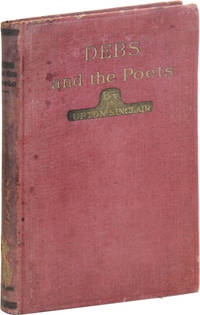
192046734Pasadena: Upton Sinclair 1920. Two octavo volumes 18.75cm; maroon cloth with titles stamped in gilt on spine and front cover; ii9911pp. The first copy is inscribed by Eugene Debs to American film actress screenwriter and editor Helen Louise Gardner on the front endpaper: "To Helen L. Gardner / With love and greetings and with deep appreciation for her beautiful character her lofty spirit her rare vision courage understanding and her high ideals and noble aspirations - Eugene V. Debs / Terre Haute Indiana / December 1924." Gentle sunning to spine oxidation to gilt with moderate scattered soil to covers light wear to extremities and heavier wear with resulting board exposure to upper right corner of front cover; mild offset to endpapers from binders glue; Good. Housed in a clamshell case. <br /> <br /> The second copy is inscribed to Gardner by Ruth Le Prade opposite the title page: "To Helen Gardner - with cordial greetings / Ruth Le Prade." Spine-sunned cloth edge-worn and lightly soiled with oxidation to gilt a few small stains to front cover some erosion to cloth toward lower spine and mild offset to endpapers from binders glue; Good. Poems honoring socialist leader Eugene Debs by a variety of radical 20th century poets including Witter Bynner Max Eastman Charlotte Perkins Gilman Carl Sandburg Siegfried Sassoon Horace Traubel and Israel Zangwill many others. Sinclair contributed the foreword along with letters from H.G. Wells and George Bernard Shaw who states: "Clearly the White House is the only safe place for an honest man like Debs". An interesting pair of copies inscribed to Gardner 1884-1968 acclaimed stage actress and the first actress to form her own production company. <br /> <br /> Moved by his circumstances and deeply influenced by his speeches she visited him in prison in 1920 bringing him an autographed photo and beginning a correspondence that would last through the mid-1920's. In a December 21 1920 letter she writes: "Let me tell you that I was surprised to find my emotional self somewhat unaffected while I listened to you talk. I know the reason now. It is the same with you as it was with Epictetus prison walls cannot confine the spirit -- the mind is ever free. So in a way I did not feel your plight as keenly as I would that of another who had little vision little intelligence little understanding about his body being so small a part of the real him that his confinement was of the physical order only." While the "special edition" of 500 with signed bookplate by Debs appears with some frequency inscribed copies of Debs and the Poets are genuinely uncommon. Upton Sinclair unknown
19932110502150903260Seishodoshoten 1993. Soft Cover. Fine. Number of books: 6 Seishodoshoten paperback
19932110502151003093Seishodoshoten 1993. Soft Cover. Fine. Number of books: 6 Seishodoshoten paperback
1957209290214150288716 vols. 1957. Soft Cover. Fine. Size: B5 Number of books: 16 16 vols. paperback
194447333New York: Reynal and Hitchcock 1944. First Edition. First Printing. Octavo 21.25cm; yellow cloth with titles stamped in black and red on spine and front cover; dustjacket; x1793pp. Signed by Miller in blue ball-point pen on the title page. Spine ends gently nudged some trivial wear to lower board edges with a hint of sunning to upper board edges and a faint shallow stain to lower edge of rear cover; Near Fine. Dustjacket is unclipped priced $2.00 with two tiny tears at crown and a faint vertical crease along left joint; a bright very Near Fine example. Laid into this copy is an untitled seven-page carbon typescript on onionskin 8" x 10.5" written by Miller in 1943 relating details about the book's conception; horizontal fold at center staple holes at upper left corner with two neat punctures along left margin; Very Good. Attractive copy of the Pulitzer Prize-winning playwright's first book based on his experiences researching the war correspondence of journalist Ernie Pyle. The title derives from the widely-used military acronym slang "SNAFU" Situation Normal: All Fucked Up which translates to a bad situation that is a normal state of affairs. Miller was tasked by Hollywood to gather material for "an honest movie" about American GI's during the war about their training daily life their hopes dreams and why they are fighting. Miller visited several Army camps training living and interviewing soldiers and taking down the unvarnished truth of his discoveries. "I was the person fate picked out of Brooklyn to go among the soldiers and pick up enough facts honest-to-God true facts to make a soldier picture which soldiers could sit through until the end without once laughing in derision. A picture that would properly end all soldier pictures" p.1. The film in question was William A. Wellman's The Story of G.I. Joe to be adapted by Miller for Lester Cowan from Pyle's 1943 book This Is Your War. Miller's version was ultimatley not produced likely due to ideological differences and his leftist political leanings. The typescript written the year before Situation Normal was published summarizes the conception of the book detailing his early meetings with Ernie Pyle over how his work would be translated into film and what they wanted to accomplish. "I bring up the idea that it would be a shame to show this massive canvas without reducing what is chaos to at least an inkling of purpose and order and of course he agrees. But we both feel that to lard on ideology where there is no ideology would be to wrap the truth. You can't have soldiers talking about four freedoms when all they want is to go home. Myself I curse the press and the million textbooks that turn out the billions of words and never add up to an excuse for dying" typescript p.5. A superlative copy of an important debut. Reynal and Hitchcock unknown
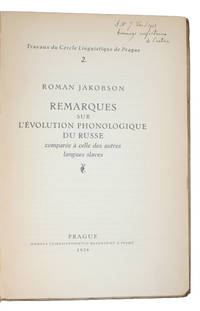
192942791Prague Jednota Ceskoslovenskych Matematiku a Fysiku 1929. 8vo. Uncut and unopened in the original printed wrappers. A bit of minor chipping and bending to extremities. A very nice copy. 118 2 -blank pp. <br/><br/><em>The rare first edition of one of the most important early works by the pioneer of the structural analysis of language and one of the most influential linguists of the 20th century with presentation-inscription for one of the leading French linguists of the period: "A Mr J. Vendryes homage respectueux del'auteur" on the title-page. The work constitutes the starting point of a new approach in linguistics and phonology.The work was published as No. 2 of the foundational "Travaux du Cercle Linguistique de Prague" the publication from the seminal Prague School of Linguistics of which Jakobsen was a founder. The Prague School held its first international conference of Slavic linguists in 1929. Here Jakobson presented his research on the phonological evolution of Russian and other Slavic languages which had led him to conclude that there was a correlation between the description of sound systems and the explanation of their evolution. "He identified the phoneme as the minimal unit of language capable of discriminating word meanings and viewed the phoneme as an indivisible atom. These advances constituted the starting point of a new approach in linguistics and phonology according to which each language is distinguished from all others by its phonemic system that is by the inclusion or omission of particular phonemes available to human speech." American National Biography. The work is fundamental for Jakobson's development of a universal structural-functional theory of phonology which was the first successful theory of its kind in accordance with Saussurean hypotheses. The concept of the phoneme that Jakobson had reached became a fundamental element of linguistic theory and came to greatly affect scientific descriptions and analyses of language. Roman Osipovich Jakobson 1896 - 1982 was a famous Russian linguist and literary critic who became one of the most influential linguists of the 20th century. He is probably most famous as the pioneer of structural analysis of language and as the co-founder of structuralism.Jakobson was born into a Russian Jewish family. Early on he showed a great interest in the theory of language and already as a student he became a leading figure of the Moscow Linguistic Circle. He was very much influenced by Husserl's phenomenology and the work of Saussure and he developed a deep interest in the question of how language the human speech functions and is possible.Due to political troubles in Russia in 1920 Jakobsen moved to Prague where he was to become even more influential. Here in 1926 he co-founded the Prague School of linguistic theory which together with the Copenhagen School was the most influential school of linguistics of its time and of decades to come. It is here that Jakobson develops his seminal ideas of phonology as well as the term structuralism and the contents of it. Among his most important works from this period is his present work in which he compares the phonological evolution of the Russian language to that of other Slavic languages a foundational work for the development of his theories on the structure and function of language.When the Second World War broke out Jakobson moved to Scandinavia where he met the Copenhagen School of linguistics and its main figure Louis Hjelmslev. Later he fled to America where he met Claude Lévi-Strauss Quine Bloomfeld and many other important thinkers within the field of language theory.Jakobson's structuralist theories of language differentiate much from other parts of the structuralist movement in that he constantly bases them on knowledge from other sciences from mathematics philosophy psychology etc. and as such Jakobson's theories are among the most influential and wide-ranging in the history of linguistics as they come to also affect and profoundly influence several other scientific fields.Joseph Vendryes 1875-1960 was a much respected and quite influential French linguist specialized in Celtic languages. He was involved with the standardization and presentation of the universal language Interlingua. </em> unknown
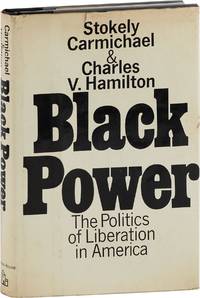
196784126New York: Random House 1967. First Edition. First Printing. Octavo 21.5cm; bluish-grey paper-covered boards and turquoise cloth backstrip with titles stamped in gilt on spine and authors initials embossed onto front cover; light blue topstain; dustjacket; 4xvi1986pp. Inscribed by Carmichael on the front pastedown: "To my Brother James / Afrika will be free / unified socialist / Kwame Ture / Thank You." Additionally inscribed by Hamilton on the title page: "In the struggle / Charles V. Hamilton." Light rubbing to silver lettering on spine some wear to spine ends dampstain to lower rear cover and a small splash mark to lower edge of textblock closest to backstrip resulting in some mild waviness to lower text edges; Very Good. Dustjacket is unclipped priced $4.95 shelfworn a bit dust-soiled some old dampstains to edges with scattered foxing a few small tears and attendant creases and some underlining and holograph notations in pink pen on rear flap; Good to Very Good. <br /> <br /> A major work by Carmichael and Hamilton first published by Random House in 1967 delineating the political framework and ideology of Black Power which they felt represented "the last reasonable opportunity for this society to work out its racial problems short of prolonged guerrilla warfare. That such violent warfare may be unavoidable is not herein denied. But if there is the slightest chance to avoid it the politics of Black Power as described in this book is seen as the only viable hope" from rear wrapper. Contents include examinations of White power structures chapters on the need and substance for Black Power myths of coalition Mississippi Freedom Democrats Black-Belt elections the politics of deference and problems and unrest within the nation's ghettos. Copies inscribed by both authors are uncommon. BLOCKSON 2415. 84126. Random House unknown
19492092902141401221Not Available 1949. Soft Cover. Fine. Number of books: 79 Not Available paperback
190283882St. Petersburg: F. Pavlenkov 1902. First Russian-Language Edition. Octavo 18.7 × 12.3 cm. Original printed wrappers; 367 1 pp. Very light wear to wrappers; private inventory number and a few ink spots to title and front wrapper; else Very Good; text uncut and unopened. <br /> <br /> Women and Economics generally considered Gilman's most important theoretical work described by one historian as "the first real substantial contribution made by a woman to the science of economics" first appeared in Boston in 1898; by 1911 no fewer than eight foreign translations had been published including editions in Hungarian 1906 Polish 1909 and Japanese 1911. Of the two contemporary Russian editions this by Andrei Vasil'evich Kamenskii was the first; it was followed in less than a year by a competing translation by one M. Mamurovskii about whom we can discover very little. Kamenskii 1843-1914 trained as an engineer was also a prolific translator and biographer; he wrote at least six entries for Florenty Pavlenkov's massive biographical dictionary Жизнь замечательных людей "Lives of Remarkable People" begun in 1890 and still being updated in the 21st century. As Pavlenkov was also the publisher behind the current work it makes sense that Kamenskii already on his payroll would have undertaken the translation. <br /> <br /> Kamenskii's Preface to this volume provides insight to the reception of Gilman's ideas - and to the topic of feminism more generally - in pre-Revolutionary Russia. Kamenskii does not stint in his praise for the theoretical importance of the book praising the author's ".inimitable simplicity and clarity and.amazing logical force;" noting that ".the author examines the abnormal economic situation of women with all of its negative consequences not as a woman's question but above all from the point of view of social evolution - as a human question." Yet in an earlier passage Kamenskii takes pains to ground his subject as a relatably "feminine" - and perhaps less threatening - figure: ".Stetson is still a relatively young and good looking woman. In addition to her literary gifts and enormous erudition she has other more modest talents. She draws well she is an excellent dressmaker and in addition and excellent and in a pinch can substitute for the domestic help." <br /> <br /> Extremely uncommon. Of this translation we can trace no holdings in American or European libraries per OCLC and KVK; the copy referenced in Feinberg below appears to have been digitized from a private Russian library. <br /> <br /> References: <br /> <br /> How Did Eight Translations of Charlotte Perkins Gilman's WOMEN AND ECONOMICS Transmit Feminist Thought across National Boundaries in the Years before World War I Documents selected and interpreted by Harriet Feinberg on-line resource<br /> <br /> Mary A. Hill Charlotte Perkins Gilman: The Making of a Radical Feminist 1860-1896 p. 295. F. Pavlenkov unknown
19962083002115800993Gakuen Publishing Company 1996. Soft Cover. Fine. Number of books: 20 Gakuen Publishing Company paperback
1921ZB393524NY: Current Literature Publication 1921-25. volumes 69-78 complete volumes bound ex library well illustrated; PRICE IS FOR THE LOT:. - If you are reading this this item is actually physically in our stock and ready for shipment once ordered. We are not bookjackers. Buyer is responsible for any additional duties taxes or fees required by recipient's country. Photos available upon request. NY: Current Literature Publication unknown