1 474 résultats
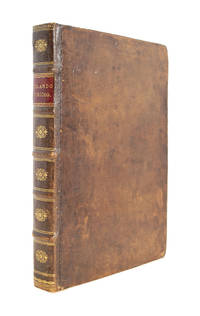
15915552London: Richard Field 1591. Hardcover. Very Good. 4to in sixes 26.8 x 18.6 cm. 9 ff. 423 pp. 1 p. 5 ff. with 1 full-page engraved frontispiece and XLVI full-page engravings woodcut headpieces tailpieces and initials woodcut printer's device on colophon ruled in red ink throughout. Bound in 17th-century paneled calf rebacked with original spine laid down raised bands spine gilt in six compartments old paper label in top panel gold-tooled borders gold-tooled cornerpieces and board edges marbled pastedowns marbled edges. Some rubbing and wear to spine and boards corners neatly repaired. Preserved in a custom quarter red morocco box some damage to spine of box. Marginal finger-soiling and occasional other minor old staining some offsetting a few edge mends at title final prelim. leaf and pp. 59 81 103 109 290 295 small corner loss at p. 237 inconsequential rub to plate IX the occasional contemporary manuscript correction. Provenance: contemporary signature erased from title 'Montagu' signature 'Marie M.' in the margin of p. 343 "E. G. C." or "G. E. C." gilt initials on spine Hopetoun House presentation label from Martin dated 1822 Hopetoun bookplate W. A. White ownership signature dated 4 June 1890; Arthur Amory Houghton book label. Generally very good. Rare first edition of Orlando Furioso translated by the Elizabethan courtier and poet Sir John Harington 1560-1612 - the first English version of Ludovico Ariosto's 1454-1553 famous epic poem - here with its 47 full-page engravings enriched with exceptionally fine contemporary hand-coloring complete with extensive silver and gold accents and giving every appearance of being a presentation copy. Hand-coloring of this quality is outstandingly rare in any English work of this period and such an extensive suite of illustrations is very unusual for purely literary works. Containing "the best known engraved illustrations in an English book before 1700" Hodnett p. 46 Harington's Orlando Furioso represents a landmark in engraving in England an achievement that Harington himself highlighted in his prefatory comments on the "vse of the Pictures" in the book noting that its images "are all cut in brasse and most of them by the best workemen of that kinde" and that he had "not seene anie made in England better nor in deed any of this kinde in any booke." He further states that although England had produced some impressive illustrated volumes "all their figures are cut in wood & none in metall and in that respect inferior to these" fol. Ar. In these remarks "Harington gives us the first critical comment on book illustrating by an Englishman" Hodnett p. 46 and by citing the fine English woodcut books of "Liuy Gesner Alciats emblemes a booke de Spectris in Latin & in our tong the Chronicles the booke of Martyrs the book of hauking and hunting and M. Whitneys excellent Emblems" he announces his intention to produce an illustrated volume comparable to the best yet produced in England. In a further extraordinary step Harington had a handful of copies decorated by the best illuminators available thus elevating these select examples beyond even the most excellent English woodcut books and thereby creating a place for purely literary works in the pantheon of early English book illustration. for full description visit our website at www.martayanlan.com <br/> <br/> Richard Field hardcover books
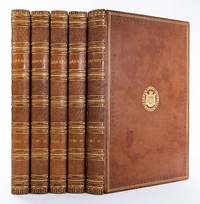
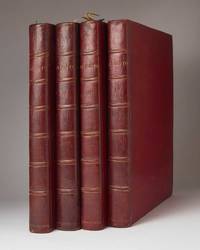
2124605Birmingham: John Baskerville for Pietro and Giovanni Claudio Molini. 1773. Four vols 4to. Contemporary red straight-grained morocco boards filleted in gilt spine gilt-ruled in compartments and lettered directly in gilt raised bands edges gilt board-edges with a single gilt fillet turn-ins roll-tooled in gilt marbled endpapers green silk place-markers; I: pp. vi lviii 362 with copper-engraved portrait frontispiece by Etienne Fiquet after Charles Eisen and a further 12 copper-engraved plates; II: pp. ii 450 with 11 copper-engraved plates; III: pp. ii 446 with 12 copper-engraved plates; IV: pp. ii 446 26 list of subscribers with 11 copper-engraved plates issued without errata leaf 52 as usual; light variable foxing and browning slight offset from plates vol. II with marginal paperflaw to H2; generally a very good crisp set in a well-preserved and unrestored binding with all the cancels called for by Gaskell; nineteenth-century ink inscriptions to vol. I frontispiece verso in two hands 'coll: perf: H. Drury. Harrow.' and 'LARGE PAPER. C. 153.3. from Queen Charlotte's Collection where it was bought 1819. bound by Roger Payne' see below; recent bookseller's tickets to front pastedowns.The dedication copy of John Baskerville's Orlando furioso a handsomely bound large-paper copy from the library of Queen Charlotte later in the possession of Lord Byron's tutor and friend Henry Drury with an uncensored plate defaced by the disgruntled engraver.Among the most accomplished productions of the Baskerville Press this edition of Ariosto's epic poem was commissioned by the brothers Giovanni Claudio c. 1724-c. 1812 and Pietro Molini c. 1730-1806 members of a prominent Florentine family of publishers and booksellers active in Italy France and England. Pietro who styled himself 'Librajo dell'Accademia Reale' at Haymarket is documented in London from at least 1769 - when he acted as the London representative for the Livorno edition of the Encyclopedie 1770-79 - to 1795. In his preface Pietro Molini emphasises the correctness of the text partly based on Francesco de Franceschi's 1584 Venetian edition the diligence of its printer the 'notissimo Giovanni Baskerville' and the collaboration of 'the most celebrated artists of London and Paris' trans. This is followed by a detailed life of Ariosto by Giovanni Andrea Barotti 1701-1772 a scholar from Ferrara whose edition of the complete works of the poet first published in 1741 was among the first to draw on the poet's autograph manuscript rather than relying solely on printed sources. Baskerville appears to have printed the letterpress in 1770 while the copperplates were completed by 1774. Each of the forty-six cantos opens with a facing engraving the illustrations signed by twenty-one artists and engravers active in London and Paris. The designers include Giovanni Battista Cipriani Jean-Michel Moreau le Jeune Charles-Nicolas Cochin Charles Monnet and Jean-Baptiste Greuze. The result was widely admired. Dibdin described it as the finest edition of Ariosto known to him: 'Paper printing drawing plates - all delight the eye and gratify the heart of the thorough-bred bibliomaniacal virtuoso. This edition has hardly its equal and certainly not its superior in any publication with which I am acquainted' pp. 758-59. This copy features an early uncensored state of the plate to Canto XLIII engraved by Francesco Bartolozzi 1727-1815 after Giovanni Battista Cipriani. Apparently exasperated by delays and insults from Molini - who 'one day in a passion called him an ass a poltroon an animal' Benton p. 42. Bartolozzi defaced his own work incising on the tomb of the Saracen knight Brandimarte the words 'd'asino de poltrone d'animale' removed in subsequent states cf. the Princeton copy.Ariosto dedicated his Orlando furioso to Cardinal Ippolito d'Este 1479-1520 son of Ercole I d'Este Duke of Ferrara. While centred on the paladin Orlando and his unrequited love for the pagan princess Angelica - which drives him mad - the poem interweaves multiple narrative strands within a famously complex episodic structure. Among these are the trials leading to the union of Ruggiero - a pagan knight descended from Hector - and the Christian knight heroine Bradamante culminating in Ruggiero's conversion and their marriage. From this union Ariosto mythically derives the House of Este. In his dedication to Queen Charlotte Molini explicitly draws on this genealogy invoking the 'heroes of the most glorious House of Este from which the august progenitors of your royal consort trace their origin who did not have to envy Achilles Homer nor Augustus Virgil' trans. This alludes to the eleventh-century union of Alberto Azzo II founder of the House of Este and Kunigunde of Altdorf whose son Welf I founded the younger House of Welf ancestors of the dukes of Brunswick and the Hanoverian monarchs of Britain. This dynastic connection had long played a role in the political and genealogical self-fashioning of the House of Hanover. In 1676 Sophia of Hanover mother of George I commissioned genealogical research to substantiate the traditional claim that her house descended from the Este through the Welf line. These investigations established that the House of Hanover could also claim English royal descent through Mathilda of England daughter of Henry II. Molini thus constructs a deliberate bridge between Ariosto's original Este dedication and the British royal family linking the poem's chivalric mythology to the lineage of George III and his consort.An avid reader from an early age Queen Charlotte began to form a substantial personal library after her marriage to George III in 1761. Initially housed in London her collection was later moved to Windsor Castle increasingly used as a royal residence from the mid-1770s and partly to Frogmore House which was expanded to accommodate the growing collection. In 1803 the Queen appointed Edward Harding 1755-1840 as her personal librarian at Frogmore a position he held until her death. The 1819 Christie's sale catalogue records over 4500 titles in German French Italian and English mostly recent publications.The King and Queen head the long list of subscribers to the Baskerville Orlando George III's copy is now in the King's Library at the British Library; see Bibliothecae regiae catalogus vol. I p. 123. This list forms a veritable 'who's who' of eighteenth-century Britain including aristocrats artists writers and booksellers. Among the most notable subscribers are Johann Christian Bach 1735-1782 Edmund Burke 1729-1797 David Garrick 1716-1779 and Joshua Reynolds 1723-1792. Several women are also included among them Society hostess Margaret Clive Baroness Clive nee Maskelyne 1735-1817 sculptor Anne Seymour Damer nee Conway 1748-1828 and Susanna Leveson-Gower Marchioness of Stafford nee Stewart 1742-1805 one of the most influential women in eighteenth-century British politics. The list extends internationally including subscribers from France Spain the Netherlands Russia Germany and Italy. In Naples appear Sir William Hamilton 1730-1803 British envoy and antiquarian and the architect Luigi Vanvitelli 1700-1773. The subscription price was four guineas or louis d'or with the plates.Following Queen Charlotte's death her Baskerville Orlando furioso was sold at auction with the rest of her books and personal effects an event that gave rise to a national scandal; after passing through the London trade this copy was acquired by Henry Drury classical scholar and assistant master at Harrow School from 1801 until his death serving as master of the lower school from 1833 to 1841. He was also a member of the Roxburghe Club and Fellow of the Royal Society. Among his many friends were Dibdin Drury appears in his Bibliographical Decameron and Lord Byron who stayed in his house at Harrow and later corresponded with him 'in affectionate terms and without much regard to the propriety later thought usual to preserve in a correspondence with a clergyman' ODNB. Drury's vast library including numerous Greek and Latin classics was dispersed in 4729 lots by Robert Harding Evans in a sale lasting twenty-three days in 1827 and a second by Christie & Manson in 1841 after his death. Although the binding has been attributed to Roger Payne he is not known to have bound for the Royal family; however 'he strongly influenced many who did more particularly Christian Samuel Kalthoeber who bound many of the books in the King's Library at the British Museum' Davenport p. 91. Provenance:1. Charlotte of Mecklenburg-Strelitz Queen Consort of Great Britain and Ireland r. 1761-1818; her sale Christie's 9 June-16 July 1819 lot 1766 '4 vol. 4to. Cuojo turch. Birm. 1773'. 2. Evidently bought at Queen Charlotte's sale by the bookseller and publisher Robert Triphook 1781/2-1868 active on St James's Street c. 1809 and on Old Bond Street from 1815 to 1825 no. 2648 'Ariosto . large paper fine impressions of plates red morocco gilt leaves . The Queen's Copy' listed for PS12 in the supplement to his Catalogue for 1819 of Rare Books in Various Languages.3. Henry Joseph Thomas 'Harry' Drury 1778-1841 bibliophile Harrow master and friend and correspondent of Lord Byron; his sale R. H. Evans 19 February-23 March 1827 lot 339 'Ariosto L. Orlando Furioso 4 vol. LARGE PAPER. Plates by Bartolozzi &c. red morocco gilt leaves Queen Charlotte's copy Birmingham Baskerville 1773' sold for PS10 10s see The Classical Journal vol. xxxvi Sept.-Dec. 1827 p. 145.4. The booksellers Dulau and Co. at 37 Soho Square 'Valuable and Choice Works' in Bent's Literary Adviser September 1842 'ARIOSTO . large paper . red morocco by Roger Payne . From the Collection of Queen Charlotte' listed for PS11 11s.Brunet I col. 438 'belle edition' Cohen-de Ricci 95 'Tres belle edition' Gaskell 48b; Graesse I p. 199 this copy 'Drury' mentioned in note; ESTC T133620; Lowndes I p. 61 this copy 'Drury' mentioned in note; Ray French 64. See Benton John Baskerville 1914; Davenport Royal English Bookbindings 1896; Dibdin The Library Companion 1824; Schellenberg Book Illustration in the Long Eighteenth Century 2015. hardcover
154748296In Vinegia Venice Venise Venice: appresso Gabriel Giolito de Ferrari 1547. Fine. appresso Gabriel Giolito de Ferrari In Vinegia Venice Venise Venice 1547 10.50 x 16 cm relié A handsome illustrated edition and one of the first printed by Gabriele Giolito de Ferrari dedicated to the Dauphin of France. It has a superb engraved title with Giolito's printer's device a phoenix being reborn from its ashes on a globe marked with the printer's initials 56 attractive woodcuts and numerous large ornate capitals as well as a portrait of Ariosto after Titian in a medallion at the end of the poem and two states of the printer's device. The end of the work is made up of a vocabulary of obscure words and an explanation of the difficult passages in the work compiled by Lodovico Dolce with a separate title and not included in the pagination. Giolito published more than twenty books in thirteen years of printing this is the third edition of this work the first appearing in 1542 and the second in 1543. Printed in round Roman type double column. Late 17th or early 18th century red morocco spine richly gilt in six compartments one compartment marked with lettres rondes round Roman type. Covers with a frame of triple gilt fillets gilt roulette frame to insides of covers all edges gilt. Binding a little rubbed faint dampstaining to end of volume. A handsome copy in a lovely red morocco binding. appresso Gabriel Giolito de Ferrari unknown
176832081-81Paris M. Prault 1768. With frontispiece portrait of Ariost engr. by Littret 1767 4 engr. pictorial titles by Godefroy after J. M. Moreau 1768 and 1 engr. plate by Aveline after Cochin. 12mo. Contemp. red morocco flat spines richly gilt with two labels gilt arms of King Gustav III of Sweden on upper and lower covers gilt outer and inner dentelles edges gilt. Engr. exlibris Robert Foot and ms. inscr. Caroline and Catherine Foot on flyleaves. Paris M. Prault 1768. Beautiful set of Ariost's poem in the Italian original printed in Paris bound in a fine binding for King Gustav III of Sweden 1746-1792. His reign was a cultural and economic high point in Swedish history. - Brunet I 438 Paris Prault 1746 and 1768. GENEALOGY - HERALDRY ; BINDINGS ; Paris, M. Prault unknown
154748296appresso Gabriel Giolito de Ferrari | In Vinegia (Venise) 1547 | 10.50 x 16 cm | relié
alb0b5d837ed3cd2352Ariosto L. Furious Roland. 3t. In Russian (ask us if in doubt)/Ariosto L. Neistovyy Roland. 3t. Short description: In Russian (ask us if in doubt).Illustration by Gustava Dore. Moscow. Leather Mosaic Publishing House. 2013. 316 348 332p. We have thousands of titles and often several copies of each title may be available. Please feel free to contact us for a detailed description of the copies available. SKUalb0b5d837ed3cd2352
1634001525London: Printed by G. Miller for J. Parker 1634 1634. THIRD EDITION AND THE FIRST ENGLISH LANGUAGE EDITION. 1 vol. folio 10-1/2" x 7-3/4" ix423pp.xxvii engraved title-page with vignette portraits of Ariosto and Harington and 46 full-page engraved illustrations complete a few leaves at beginning including 2 plates not affecting the image with fore-edge repair slight loss to side-notes of 3 leaves a couple of short tears minor worming to several pages Ownership inscription on front blank endpaper "Elizabeth Tyringham Her Booke Aprill ye 5 1668." bound in contemporary full calf over cords head and foot of spine renewed at some early date worming to rear cover hinges fine internally generally clean and bright no water staining overall a VERY GOOD copy STC 748 The plates were first used in the 1591 edition and derive from Girolamo Porro's illustrations of the 1584 Venetian edition. London: Printed by G. Miller for J. Parker, 1634 unknown
44800Paris chez Brunet 1775-1783 4 volumes in-8, veau rouge, plats orns d'un important dcor compos d'une grande plaque pousse froid dans un large encadrement de filets et roulettes dors, rappel du dcor sur les dos quatre larges nerfs, roulettes or sur les coupes; encadrements intrieurs orns d'une roulette dore, doublures et gardes de papier marbr, tranches dores, couvertures imprimes (Thouvenin).Cette seconde dition, parue la mme anne que l'dition originale dont elle diffre totalement, est illustre d'un portrait et de 93 figures gravs sur acier en preuve avant la lettre, savoir: le portrait-frontispice et les 46 figures de la suite dite Baskerville, dessins par Cipriani, Cochin, Eisen, Greuze, Monnet et Moreau, et la suite des 46 compositions dessines par Cochin et graves par De Launay, Linge et Ponce. Bel exemplaire superbement reli par Thouvenin, un des plus grands relieurs du XIXe sicle.
17752091202133206166Chez Brunet 1775. Soft Cover. Fine. Number of books: 4 books in total Chez Brunet paperback
1542173105Venetia: Appresso Gabriel Iolito di Ferrari 1542. Leather bound. Good front hinge weaker than rear hinge wear tpo extremities text block and pages clean and tight. Full red leather with elaborate gilt embossed design front and back reeded gilt edges to covers five raised bands with gilt devices in compartments and applied leather label. All edges gilt with impressed cross design on all three text block edges. Ancient marbled endpapers with bookplate of Olin Lane Merriam on inside front pastedown. 260 xx leaves collated complete title page within engraved architectural border text with 46 woodcut engravings and engraved initial at beginning of each canto in text wood-engraved oval bust portrait of Ariosto on verso of leaf 260; unpaginated 20-leaf commentary by Lodovico Dolce has its own title page with wood-engraved vignette of phoenix rising at center of title page and verso of last leaf. This is the first complete printing with the "Espositione di tutti i vocaboli et luoghi difficili . con vna brieue dimostratione di molte comparationi & sentenze dall' Ariosto in diuersi autori imitate / raccolte da M. Lodovico Dolce" 20 leaves at end has special t.p." at rear after portrait. A lovely example in an exceptional binding. Appresso Gabriel Iolito di Ferrari hardcover books
1550047702Lyon: Guillaume Rouillé for Matthia Bonhomme 1550. Second Edition. Hardcover Full Leather. Very Good Condition. Ca. 17th century full acid calf spine gilt in compartments slightly sprung. Portrait and 46 woodcuts modeled after those in Giolito's ediitons. Title repaired at edges obscuring part of the heading for the dedication by Urrea on the title verso. Trimmed a bit close sometimes touching the running title or page numbering worm hole in the middle margin starting around page 87 and hitting a woodcut on 121 and hitting text in one stanza from around 137-167 and touching one other woodcut. Early minor notes and underlining stanzas numbered by hand early on scattered minor ink stains moderate foxing and minor stains - still very good overall. 436 4pp with some mispaginations. An early addition is pasted to the top of page 180 "obras que hazen y pueden las culpables y maluadas hembras enfurcci das del amor por cumplir si apetito y desseofas de venganca". <br /> <br /> The second Urrea edition after the first from the year prior in Antwerp - an immensely influential edition an inspiration to Cervantes and a finely printed and illustrated book. Brunet I 443 "Traduction estimée" and he notes that only the 1553 Giolito is as attractive an edition. Adam 1682A the 1553 reimpression. Underrepresented in institutional collections maybe 2 dozen copies of the 1550 edition and a dozen of the 1549 and rare in commerce. Size: Quarto 4to. Quantity Available: 1. Shipped Weight: Under 1 kilo. Category: Literature & Literary; Poetry. Inventory No: 047702. Guillaume Rouillé for Matthia Bonhomme hardcover
In-4°; cc. 243, (1), al frontespizio grande ritratto xilografico dell’Autore, al verso dell’ultima carta grande marca tipografica incisa su legno. Legatura in piena pelle con tassello e titolo in oro al dorso, tagli spruzzati. Precedono il testo due dediche a Francesco Gonzaga, una firmata dall’Autore, l’altra da Pietro Aretino. Edizione originale di questo singolare poema, continuazione del fortunato capolavoro di Ariosto, scritto in italiano ma con numerosi termini e espressioni in lingua dialettale umbra e dell’alta Italia. Sigismondo Paulucci detto Filogenio, nacque a Cerreto, vicino Spoleto intorno al 1501 (morto nel 1590); fu giureconsulto e segretario del duca di Camerino; frequentò l’ambiente degli umanisti di Mantova e Bologna; è l’autore del Le notte d’Aphrica, Messina 1535, e de I trionfi di Carlo V nell’Affrica e l’impresa di Tunisi fatta, Venezia, 1543. Sander 5464; Agnelli-Ravegnani II, 196-98 “raro”; Choix 4999. Sigismondo Paolucci detto Filogenio di Cerreto di Spoleto poeta del secolo XVI / Alunno, Aurelio, in: Bollettino della Deputazione di Storia Patria per l'Umbria, 29, 1932, 167-185. In-4 °; cc. 243, (1), on the frontispiece a large woodcut portrait of the Author, on the back of the last paper, a large printer’s woodcut mark. Full calf binding with label and gilt title on the spine, sprayed edges. The text is preceded by two dedications to Francesco Gonzaga, one signed by the author, the other by Pietro Aretino. Original edition of this singular poem, a continuation of Ariosto's successful masterpiece, written in Italian but with numerous terms and expressions in the Umbrian and northern Italian dialects. Sigismondo Paulucci known as Filogenio, was born in Cerreto, near Spoleto around 1501 (died in 1590); he was a jurist and secretary of the Duke of Camerino; he was part of the milieu of the humanists of Mantua and Bologna; he is the author of Le notti d’Aphrica, Messina 1535, and of I trionfi di Carlo V in Africa e l’impresa di Tunisi fatta, Venezia, 1543. Sander 5464; Agnelli-Ravegnani II, 196-98 “raro”; Choix 4999. Sigismondo Paolucci detto Filogenio di Cerreto di Spoleto poeta del secolo XVI / Alunno, Aurelio, in: Bollettino della Deputazione di Storia Patria per l'Umbria, 29, 1932, 167-185.
Quattro volumi di cm. 29, pp. 1.500 ca. complessive. Al primo volume è presente: antiporta illustrata, il ritratto dell'Ariosto e 5 tavole a corredo della vita. Seguono le 51 tavole poste all'inizio di ogni canto. Il testo è inoltre impreziosito dai frontespizi figurati e da moltissime testate e cul-de-lamp. Solida ed elegante legatura d'epoca successiva in piena pergamena rigida, dorsi a cinque nervi con titoli in oro su doppi tasselli. Una firma di possesso cancellata al frontespizio del primo volume. Esemplare che si distingue per freschezza e per l'impeccabile stato di conservazione. Opera che si pone come uno dei capolavori dell'editoria veneziana del '700. Cfr. l'ampia bibliografia in materia.
1795(LCPCLIT-0012)(Le "Orlando Furioso" de l'Arioste, avec une double suite de gravures, conservé dans une élégante reliure en maroquin du temps) ARIOSTO Ludovico. (Reggio Emilia, 1474 - Ferrara, 1533) "ORLANDO FURIOSO". 1795, Parigi, P. Plessan. 4 volumes in-fol. (323x245 mm) (dimensions pages 313x237 mm) I: (1) f. (portrait de l'Arioste), LXXIX, (1), 360 pp.; II: 452 pp.; III: 448 pp.; IV: 452 pp. 92 planches h.t., y compris le portrait de l'Arioste au frontispice, gravé sur cuivre par Fiquet d'après Eisen. Elégante reliure de l'époque en maroquin vert. Encadrement de triple filet doré sur les plats. Dos à cinq nerfs avec fleurons, décorations et titres dorés. Filet doré sur les coupes et dentelle intérieure dorée. Tranches dorées. Gardes de papier décoré. "L'Orlando furioso è un poema cavalleresco in ottave, a schema ABABABCC, strutturato su 46 canti, per un totale di 38.736 versi nell'edizione definitiva del 1532. Vi sono infatti due edizioni precedenti, scritte con una lingua più popolare e rozza. In particolare, una prima redazione dell'Orlando furioso, in 40 canti, era stata redatta nel 1515 e venne pubblicata nel 1516. La seconda edizione uscì nel 1521, caratterizzata da una lieve revisione linguistica. L'opera ha una trama molto stratificata che si sviluppa sostanzialmente su tre narrazioni principali: quella militare, costituita dalla guerra tra paladini, difensori della religione cristiana, e i saraceni infedeli; quella amorosa, incentrata sula fuga di Angelica e sulla pazzia di Orlando, e infine quella encomiastica, con cui si lodava la grandezza dei duchi d'Este, dedicata invece alle vicende amorose tra la cristiana Bradamante e il saraceno Ruggiero. L'Orlando furioso si propone come il naturale prosieguo dell'Orlando innamorato di Matteo Maria Boiaro; Ariosto continuò la narrazione proprio dove Boiardo la interruppe, facendo evolvere la vicenda amorosa tra Angelica e Orlando che, a causa del rifiuto dell'amata, diviene furioso, pazzo per amore". (Wikipedia) Très jolie édition. Exemplaire enrichi d'une double suite de gravures: celle de Cochin, en premier tirage, et celle de Moreau le jeune, Eisen et Monnet, réalisée pour l'édition de Birmingham de 1773. Exemplaire imprimé sur papier de Hollande, à marges immenses, quelques fois non rognées. Petits frottements à la coiffe inférieure et petit coup sur le second plat du premier tome. Quelques rousseurs, surtout aux marges des planches et plus fortes sur quelques cartes. Deux gravures du t. III avec des rousseurs plus fortes. Provenance: Ex Libris Fumach (XXe siècle). (Cohen, p. 98) (LCPCLIT-0012) (4.800,00 €) (Tous les livres provenant d'Italie possèdent la licence d'exportation
in-8, ff. 4 n.n., legatura d'amatore del XIX secolo in marocchino granata, fleuron impresso in oro al centro dei piatti. Edizione di mitica rarità (apparentemente non censita in nessuna Biblioteca pubblica italiana) di questo componimento eroicomico in due libri in complessive 64 ottave su due colonne. Al titolo magnifica xsilografia (mm 86x112) raffigurante probabilmente Carlo Magno in trono circondato dai suoi Paladini, il tutto entro bordura geometrica. Di questo componimento si conoscono almeno quattro ristampe nel XVI secolo, tutte rarissime ed edite a Firenze: la prima del 1568 senza note tipografiche, cui seguirono la presente, quella del 1582 del Pagolini e quella, di nuovo del Baleni, del 1597. La bellissima xilografia fu utilizzata e ricopiata con fedeltà in altre placchette cinquecentesche. Già a metà XVI secolo presentava una spaccatura verticale della matrice lignea. Nella prima edizione e in quelle successive si fa esplicito riferimento alla fonte ariostesca di questo anonimo componimento ''Con alcune stanze d'Orlando alla Birresca'', invece taciuta nella presente edizione. L'anonimo autore parafrasa infatti i più dolci tormenti d'amore dell'Orlando Furioso trasfigurandoli nelle sofferenze dei debitori perseguitati dagli sbirri (''...d'haver tanti suoi debiti à pagare/da quel martir, da quella frenesia/da quella gente detta Birreria''). Soltanto il verso dell'ultimo foglio riporta un titolo corrente in capitali "Furioso alla Birresca" che precede le parodie della prima e seconda ottava del Canto 31, la prima del Secondo e la quinta del trentesimo, nelle quali son modificati e aggiunti versi sul vivere e mangiare bene a dispetto degli Sbirri, della prigione e dell'onestà. ''Le edizioni di questo poemetto sono assai rare. Essendo le prime tre ottave del medesimo simili a quelle che si leggono in altro libretto citate dalla Crusca col titolo di Stanze del Poeta Sciarra (Pietro Strozzi) fu la prima operetta da taluno confusa con la seconda... si descrivono in essa con istile bernesco varie imprese di carlo Magno e de' suoi Paladini'' (Storia ed analisi degli antichi poemi di cavalleria, IV, pp. 222-223). Rarissima placchetta di satirico poemetto cavalleresco, ben conservata nonostante qualche lieve fioritura. Il Agnelli Ravegnani II, 1568. Sander 5389, note. Un esemplare risulta citato nel 1922 da un bollettino VIII di De Marinis, al n. 113. Storia ed analisi degli antichi poemi di cavalleria, IV, pp. 222-223. . Agnelli Ravegnani II, 1568. Sander 5389, note. Un esemplare risulta citato nel 1922 da un bollettino VIII di De Marinis, al n. 113. Storia ed analisi degli antichi poemi di cavalleria, IV, pp. 222-223. .
1542173105Venetia: Appresso Gabriel Iolito di Ferrari 1542. Leather bound. Good front hinge weaker than rear hinge wear to extremities text block and pages clean and tight. Full red leather with elaborate gilt embossed design front and back reeded gilt edges to covers five raised bands with gilt devices in compartments and applied leather label. All edges gilt with impressed cross design on all three text block edges. Ancient marbled endpapers with bookplate of Olin Lane Merriam on inside front pastedown. 260 xx leaves collated complete title page within engraved architectural border text with 46 woodcut engravings and engraved initial at beginning of each canto in text wood-engraved oval bust portrait of Ariosto on verso of leaf 260; unpaginated 20-leaf commentary by Lodovico Dolce has its own title page with wood-engraved vignette of phoenix rising at center of title page and verso of last leaf. This is the first complete printing with the "Espositione di tutti i vocaboli et luoghi difficili . con vna brieue dimostratione di molte comparationi & sentenze dall' Ariosto in diuersi autori imitate / raccolte da M. Lodovico Dolce" 20 leaves at end has special t.p." at rear after portrait. A lovely example in an exceptional binding. Similar copy sold for 5000 Euro in 2016. Appresso Gabriel Iolito di Ferrari hardcover
1772018555Venezia: Zatta 1772-73. Quattro volumi in 4to 20x29 cm rilegati in piena pelle coeva dorso a nervi ornato e dorato con tassello di titolo vede; risguardie con carta marmorizzata blu notte; tagli azzurri. Spellature alla superficie dei piatti; difetto al piede del primo volume con mancanza di pelle ma nel complesso bella legatura settecentesca di pregevole fattura. Vol 1: 18-LX-300pp21 tavole compresa antiporta e ritratto dell'Ariosto inciso da Giuseppe Daniotto. Vol 2: di 214pp13 tavole. Vol 3: di 206pp 14 tavole. Vol 4: di 280pp 12 tavole. Ampi margini e stampa di notevole nitidezza. Nel totale 4 pagine di frontespizi calcografici 58 incisioni a pagina intera 36 incisioni di dimensioni minori 51 argomenti riquadrati con testo inciso agli inizi dei canti 46 canti 5 canti rivisti 20 tra testatine e finalini incisi. Incisioni di Giuliano Zuliani Tommaso Baratti Ferdinando Fambrini Giacomo Malosso e altri su soggetti di Pietro Antonio Novelli ecc. In fine al vol. 4: La presente opera fu corretta dall'illustr. sig. ab. D. Leonardo Marcellotto e ricorretta dal sig. Antonio Cilis. Contiene anche al vol 1: "Vita di msr. Lodovico Ariosto riveduta e accresciuta per la terza volta e di annotazioni non poco aumentata ." di Giovanni Andrea Barotti. Uno dei più famosi e raffinati libri illustrati del 700 opera dello Zatta in ottime condizioni. Zatta unknown
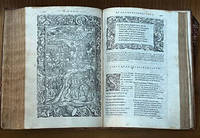
160318663Venetia: Vencenzo Valgrifi 1603. A very early printing of the complete and corrected ORLANDO FURIOSO also with the Life of Ariosto by Battista Pigna. Letters tables and scholarly critical works by Ruscelli and others. Magnificently illustrated with 51 full-page woodcut engravings within ornate borders using the blocks from the first Valgrisi quarto edition of 1556 46 in the ORLANDO 5 additional in the appended “Cinque Canti†also with engraved architectural titlepage imprint set in type in a cartouche in the lower part of the border type ornament with the title medallion portrait of Ariosto from the Giolito portrait of 1542 from the profile by Titian devices of Ariosto and Valgrisi’s serpent device half titles and beautifully engraved decorated large head and tail pieces and large historiated and arabesqe capital initials printed in double column Italic. 4to full antique Italian vellum over stiff boards spine with terra-cotta morocco label lettered and decorated in gilt. 8 A - Z8; Aa - Vv8; ie xvi 654 32. A very handsome copy in proper period binding. The paper just likely mellowed and toned by time very occasionally headlines slightly shaved first gathering cropped a bit the vellum very well preserved sturdy and handsome. RARE AND EARLY ILLUSTRATED PRINTING OF ONE OF THE FOUR CORNERSTONES OF ITALIAN LITERATURE. Ariosto’s great cantos inspired by the crusades are considered his crowning achievement. Though first published in 1516 Ariosto considered this edition incomplete and imperfect. He continued to work on correcting and enlarging it throughout the remainder of his life thus the first “complete†ORLANDO FURIOSO was not produced till 1532 the year prior to the author’s death by consumption.<br> The extraordinary merits of this work cast into oblivion the numberless romantic poetry which inundated Italy during this period. This flawless work powerful elegant and cultivated. In description and narrative he excites the reader’s deepest feelings and displays a vivacity of fancy with which no other poet can vie.<br> ‘The ORLANDO blocks were cut for Valgrisi’s first quarto edition of 1556 and follow Niccolo Zoppino’s idea of providing one illustration to each canto but going far beyond the Zoppino blocks in skill of design and cutting. They are the first full-page illustrations for Ariosto. They were placed in the instructive tradition of the Marcolini Dante the illustration is mentioned on the title-page and at the beginning of Ruscelli’s 1556 dedication to Alfonso d’Este Duke of Ferrara. Ruscelli explains to the reader the application of the rules of perspective to the multiple scenes in these cuts. The upper part of the block often becomes a map offering as Philip Hofer notes a tour of the canto by hippogryph. Valgrisi’s artist often varied from Giolito’s in his choice of the principal scene for illustration and relegated the Giolito subjects to his background. Valgrisi’s blocks are printed within borders with figures and grotesques. He was able to use the same blocks without borders in an octavo of 1556 for the popular market. There are two different border designs for the illustrations and two smaller cherub borders for the “argomento†to each canto.’ Vencenzo Valgrifi hardcover
158075291580 In Venetia: Appresso gli Heredi di Vincenzo Valgrisi, 1580. Deux parties en un vol. in-4: 18,5 x 26 cm. 8 ff. n. chiff. de pièce lim., 654 pp. de texte du Orlando et des Cinque Canti, 16 ff. n. chiff. de table. Nouvelle impression de la célèbre édition du Roland Furieux de l'Arioste imprimée pour la première fois chez Valgrisi en 1556 et illustrée des figures communément attribées à Dosso Dossi. (Brunet, I, 434). Édition établie par Girolamo Ruscelli. Volume illustré de 51 figures hors-texte finement gravés sur bois (46 pour l'Orlando et 5 supplémentaires pour les Cinque Canti). Parmis les nombreuses éditions illustrée de l'arioste, l'édition Valgrisi est la première à confier à l'illustration une place si importante, en effet, chaque chant est précédé d'une grande figure qui résume en image la narration. Reliure légèrement postérieure en veau brun. Dos à cin nerfs avec titre en capitales dorées et caissons aux petits fers. Tranches mouchetées. Reliure uniformément frottée. Mors de pied légèrement fendu, cependant ouvrage solide. Petit travail de vers discret dans la marge inférieure des derniers feuillets et dans la marge latérale des pages 525 à 542. Pale rousseurs aux premiers ff., sinon papier extrêmement frais. Un bijou d'impression.
4 volumi in-4, bella legatura coeva in piena pelle, riquadro di filetti in oro ai piatti, titolo e fregi in oro ai dorsi. Illustrati da 1 ritratto dell'A. di Eisen inc. da Fiquet e 46 figure in stupende tavole fuori testo, di Cipriani, Cochin, Eisen, Greuze, Monnet, Moreau incise da Bartolozzi, Choffard, Duclos, ed altri. Celebre edizione dell'Orlando Furioso. Ottimo esemplare.. .
177587791775 A Paris, chez Brunet, Libraire [Laporte pour le volume IV], 1775-1783, deux tomes en quatre volumes, in-4°, 21 x 26,5 cm. I tome: [4] + 222 pp. + 1 portrait + 23 figures / II tome: [2] + 223-388 + 23 figures / [2] + 283 + [1 bl] pp.+ 24 figures / tome IV: [4] + 287-567 + [1 bl] pp. + 22 figures; toutes les gravures sont protégées par des serpentes. Reliure en basane finement marbrée, triple filet doré sur le plat, dos orné à 5 nerfs, pièce de titre et de tomaison en maroquin vert, tranches dorées. Bas des charnières du tome I endommagées, petits accrocs à la coiffe du tome II, exemplaire autrement en très bon état; intérieur parfaitement propre.
55160Pisa: Dalla Tipografia della Societa Letteraria 1809. 5 vols. Folio. 39 x 24 cm. Full contemporary russia double gilt fillet and blind-stamped borders spines with raised bands decorated in gilt and blind stamped panels marbled edges and endpapers armorial gilt stamp to upper covers. Engraved portrait frontispiece by R. Morghen. Ex libris Merthyr Guest with his sepia printed armorial bookplate and with the circular gilt stamp of Richard Grosvenor Richard 2nd Marquess of Westminster 1795 - 1869 "Ricardus Comes Grosvenor - 1833" to upper covers. Some light foxing to end-leaves trivial old wormhole to foot of upper joint of vol. 4 minor abrasion to lower board of vol III generally very fresh and clean in a handsome binding. Edition of 250 copies this being no 195 for the Florence publisher Guglielmo Piatti printed using the typefaces of the Amoretti Brothers followers of Giambattista Bodoni. Pisa: Dalla Tipografia della Societa Letteraria, 1809. hardcover
163469070London: Printed by G. Miller for J. Parker 1634. HARRINGTON John. . Orlando Furioso. in English Heroical Verse by Sir John Harrington of Bath Knight. Now thirdly revised and amended with the Addition of the Author's Epigrams. London: Printed by G. Miller for J. Parker 1634.<br> <br> Full Description:<br> <br> ARIOSTO Lodovico. HARRINGTON John translator. Orlando Furioso in English Heroical Verse by Sir John Harrington of Bath Knight. Now thirdly revised and amended with the Addition of the Author's Epigrams. London: Printed by G. Miller for J. Parker 1634.<br> <br> Third edition of Harrington's 1591 translation which was the first English edition and remained the only English translation of many years. This third edition is further expanded by the addition of the "Author's Epigrams." Two works in one small folio in sixes 10 5/8 x 7 1/4 inches; 270 x 185 mm. 16 1 Ads 1 plate 423 9 table 1 Title 1 blank 43 1 blank pp. With engraved title-page for the first work and 46 full-page engravings included in the pagination accompanying each Canto. Separate title-page for "Epigrams" with an engraved vignette. Epigrams have a separate title but continuous register. Elaborate engraved head and tail pieces and initials.<br> <br> Contemporary full calf rebacked to style. Spine with red morocco spine label lettered in gilt. Spine stamped in gilt. All edges speckled red. Newer endpapers Fore-edge margins are trimmed close a few times just touching printed marginal notes. Closed tear to bottom margin of S1 barley touching a few letters. T6 with a tear to fore-edge margin with a bit of loss to marginal note. Some various dampstains and other soiling throughout. Some minor occasional offsetting from plates. Overall a very good copy.<br> <br> "Lodovico Ariosto represented the sentiments the passions and the vices and virtues of 16th-century Italians in his epic poem L'Orlando Furioso The Crazy Orlando. This Renaissance classic based on romances popular at the time furnished the framework for the chivalric narrative in Edmund Spenser's The Faerie Queene. Orlando Furioso is a tale of knights dames and courtesies when the Moors invaded France to avenge the death of their king's father. In the story Orlando Roland Charlemagne's nephew and most famous knight falls madly in love with Angelica who is also pursued by many other Christian and Moorish knights. She flees these attentions only to bestow her love in the end on a poor man without rank. Ariosto's view of life reflected throughout the poem is one of ironic disillusionment-love is madness. John Harington 1561-1612 was a witty courtier and godson of Queen Elizabeth. He is also the acknowledged inventor of the flush toilet. According to lore Harington first translated the racy tale of Jocundo from Canto XXVIII and circulated it among the ladies of the Court. The Queen feigned to be shocked by some passages and reprimanded her godson for endangering the morals of her maids of honor. Elizabeth sentenced Harington to stay away from the Court until he had translated the whole of Ariosto's poem. Harington completed the translation by 1591. Harington's Orlando Furioso is one of the major translations of the age freely executed but faithful to the spirit and style of the original. At 33000 lines in length and nearly 6000 lines shorter than the original the translation is seldom exactly what Ariosto wrote shorter in places and expanded elsewhere-with moral truisms added. Each of the forty-six cantos of the poem is preceded by a full-page illustration including the especially risqué one for Canto XXVIII. All are copied strictly or with slight variation from the plates used by Girolamo Porro in a Venice edition printed in 1584. The engravings are unsigned purportedly the work of several engravers including possibly Jodocus Hondius. Clark Library UCLA Chrzanowski 1607a : Regarding the 1607 Second edition.<br> <br> STC 748. Pforzheimer 447.<br> <br> HBS 69070.<br> <br> $3000. Printed by G. Miller for J. Parker unknown
16-6460Venetia: Appresso gli Heredi di Vincenzo Valgrisi 1580. Quarto 17.5 x 25.5 cm; bound in blond calfskin with a gilt-decorated ribbed spine 18th century; rubbed and worn. An edition of Ariosto’s epic poem printed in italics in a two-column layout. It is illustrated with 51 full-page woodcuts—each set within a handsome decorative border—and a frontispiece plate featuring a portrait of Ariosto. At the head of each canto the verse summary is enclosed within a wood-engraved frame. Foxing staining.OCLC Number / Unique Identifier:896165021: 16 654 34 pages : illustrations woodcuts ; 25 cm 4to.Con privilegio."Title within elaborate ornamental border with printer's device; printer's device also appears as title vignette on page 533 special title page to "I cinque canti""I cinque canti" has separate title page; pagination and register are continuousThe designs for the illustrations have been attributed probably falsely to Dosso DossiEach canto is preceded by a full-page woodcutSignatures: ⸠A-2V⸠2R4 signed '2S4'; 2V8 blank.Provenance: The Marquis de Saporta was an 18th-century French noble known for his personal bookplate which frequently appears as a mark of provenance in rare antiquarian and classical texts.Second provenance:.Fitzroy Fitzcharles and Fitzjames were the names bestowed by the two sons of King Charles I of England upon their illegitimate offspring. This tradition of using the prefix Fitz—which translates as "son of"—for English royal bastards continued under the Hanoverian dynasty: William IV uncle to Queen Victoria was himself the progenitor of numerous Fitzclarences.James Fitzjames 1670–1734 the fruit of the union between James II Stuart and Arabella Churchill was created Duke of Berwick by his father in 1687. Appointed a Marshal of France in 1706 he was also granted the title of Duke of Fitz-James within the French peerage by Louis XIV in 1710. His eldest son founded the Spanish branch of the Dukes of Berwick—a line that under the name Fitz-James Stuart today holds several Grandeeships of Spain including that of Duke of Alba. His younger son founded the French branch of the Dukes of Fitz-James a line that distinguished itself over seven generations until its extinction in the mid-20th century.Fitzroy Fitzcharles et Fitzjames furent les noms donnés par les deux fils du roi Charles Ier d’Angleterre à leur descendance illégitime. Cette tradition du préfixe Fitz pour les bâtards royaux anglais qui se traduit par « fils de» se poursuivra sous la dynastie des Hanovre : Guillaume IV oncle de la reine Victoria fut en son temps l’auteur de nombreux Fitzclarence …James Fitzjames 1670-1734 fruit des amours de Jacques II Stuart et d’Arabella Churchill fut titré par son père duc de Berwick en 1687. Maréchal de France en 1706 il reçut également de Louis XIV le titre de duc de Fitz-James dans la pairie française en 1710. Son fils ainé est l’auteur de la branche espagnole des ducs de Berwick qui sous le nom de Fitz-James Stuart cumule aujourd’hui plusieurs grandesses d’Espagne dont celle de duc d’Albe. Son fils cadet est l’auteur de la branche française des ducs de Fitz-James qui s’illustra pendant sept générations jusqu’à son extinction au milieu du XXe siècle. Venetia: Appresso gli Heredi di Vincenzo Valgrisi, 1580 unknown



_2.jpg)