[BOCCACCIO, GIOVANNI]. LYDGATE, JOHNBiblio.com
39 résultats
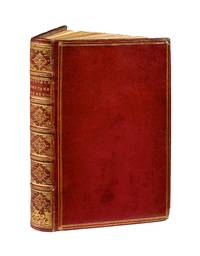
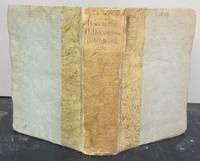
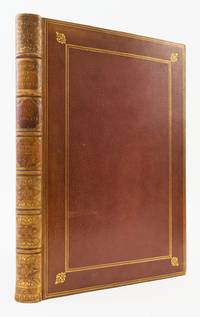
1554ST19091London: Iohn Wayland at the signe of the Sunne oueragainst the Conduite in Flete-strete. Cum priuilegio per septennium 1554 or 1555. Third or Fourth Edition of the First English Translation of "De Casibus Illustrium Virorum. 340 x 220 mm. 13 1/4 x 8 3/4". 9 p.l. clxiii xxxvi xxxv-xxxvii 1 leaves complete including "A Memorial of such Princes" leaf often lacking at the end; collates as ESTC. Translated from the French version of Laurent de Premierfait by John Lydgate. <br/> Attractive 19th century honey-brown morocco by Francis Bedford stamp-signed on front turn-in covers gilt with French fillet frame oblique bouquets at corners raised bands spine compartments with central fleuron framed by geometrical compartments filled with floral tooling gilt lettering gilt-rolled turn-ins marbled endpapers all edges gilt. Title page and Gg4 recto title page of a suppressed supplement dealing with English notables with woodcut title border the top compartment with the Royal Arms termini at sides the pedestal at base with a tablet showing one boy waking another with the motto "Arise for it is day" McKerrow & Ferguson 76a A4 recto with woodcut depicting the Creation of Eve flanked by terminal side-pieces woodcut historiated and floral initials throughout. Printed in black letter. Front pastedown with engraved bookplate of Christopher William Beaumont Pease; rear pastedown with bookplates of John William Pease and Lord Wardington. Chrzanowski 1555b; Pforzheimer 73; Luborsky & Ingram 3178; STC 3178; ESTC S107087. Spine somewhat sunned and dulled extremities very lightly rubbed boards with a couple of faint scratches but the once very handsome binding still attractive. Title leaf and final leaf extended at foot first few and last couple of leaves excluding title and final leaf with small minor repair at upper corner probably pressed and perhaps lightly washed at the time of binding isolated trivial stains but the text still surprisingly fresh remarkably clean and entirely smooth.<br/> <br/> This is a desirable copy of an important 16th century translation of Boccaccio's study of the vicissitudes of fortune prepared by John Lydgate a poet much influenced by Chaucer. Educated in the Benedictine monastery where he eventually served as prior Lydgate ca. 1370 - 1449/50 was a respected poet whose works DNB tells us "bear the mark of a pious and learned mind." And an indication of his importance is reflected in Chrzanowski's statement that "well into the 16th century the premier poets of England were considered to be Geoffrey Chaucer John Gower and Lydgate." Undertaken ca. 1431 at the request of the duke of Gloucester the 36365 lines here divided into nine books required a massive effort that took until 1438 or 1439 to complete. In the text a parade of notable historical figures pass before "Bochas" Boccaccio telling of the turns of fate that brought their careers and reputations crashing down from a pinnacle. According to DNB Lydgate's interpretation of the work "urges the traditional doctrines of moderation the avoidance of pride and the pursuit of virtue and demonstrates the horror of discord and strife between kinsfolk. This advice though couched in general terms was highly relevant to contemporary princes." This relevance led to popularity: more than 30 manuscripts of the work survive and it was printed previously in 1494 and in 1527. The final leaf here Gg4 contains the title page for "A Memorial of Such Princes as since the Tyme of King Richard the Seconde Haue Been Unfortunate in the Realme of England" intended for issue with "Fall of Princes" but suppressed by Queen Mary. It was finally published as the famous "Mirrour for the Magistrates" in 1559 after Elizabeth I had ascended the throne. The binding here is by the eminent West End bindery of Francis Bedford d. 1883 and was owned by three generations of the Wardington family who created one of the finest private libraries in England. It contains the bookplates of Northumberland banker John William Beaumont Pease 1869-1950 who began the collection; a grandson Christopher Henry Beaumont Pease 2nd Baron Wardington 1924-2005 who was successively Chairman Vice-President and then President of the Friends of the British Library; and a great-grandson the Hon. Christopher William Beaumont Pease b. 1970. The Wardington sales at Sotheby's in London were major bibliophilic events in 2005 and 2006. The very expert extension at the bottoms of the title leaf and the rare final leaf would seem to suggest that these come from another copy the leaves are not facsimiles. In any case every recent copy sold at auction according to RBH lacked one or both of these leaves or had other leaves supplied. This fact plus the fine state of preservation of our copy and its distinguished provenance surely are more than enough to compensate for the volume's one appreciable shortcoming. Iohn Wayland, at the signe of the Sunne oueragainst the Conduite in Flete-strete. Cum priuilegio per septennium unknown
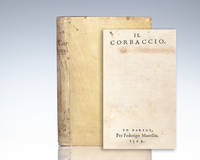
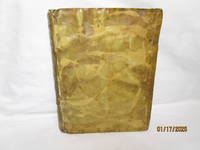
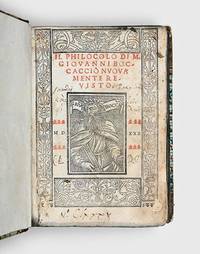
1569746Paris: Morel 1569. Hardcover. Fair. The last Italian novel that Boccaccio prepared Il Corbaccio The Crow; around this time 1354-55 a.d. and after Boccaccio primarily focused on Latin works. This copy is a 1569 edition in the original Italian but printed in France by Morel but Morel Italianized his name to appeal to Italians on the title page. This novel finds some disfavor with modern readers. In this work a man is being rebutted by a widow but upon falling asleep her dead husband visits him and confides in him all the ways she's best left alone. In concert the sleeping man and the dead man decide to write this work warning young men of the deceits of some women. The work has since been dubbed ""misogynistic"" despite at almost the same time Boccaccio preparing his Latin work recording a selection of noble women De Claris Mulieribus. Other's claim that surely Boccaccio must have been jilted by a widow to write such a scathing work. About Boccaccio - Giovanni Boccaccio 1313 1375 was an Italian writer poet correspondent of Petrarch and an important Renaissance humanist. Born in the town of Certaldo he became so well known as a writer that he was sometimes simply known as ""the Certaldese"" and one of the most important figures in the European literary panorama of the fourteenth century. Some scholars including Vittore Branca define him as the greatest European prose writer of his time a versatile writer who amalgamated different literary trends and genres making them converge in original works thanks to a creative activity exercised under the banner of experimentalism. His most notable work is The Decameron. About the Printer from the website Printing in France - ""In 1549 Morel decided like many before him to get involved in the book trade. He became a proof-reader for Charlotte Guillard d. 1557 one of the famous woman printers of sixteenth-century Paris. In 1557 Morel decided to become a printer himself following the death of Charlotte Guillard in the same year. By 1570 Fédéric I Morel was one of the most prestigious printers in Paris. It is thus not surprising to see him being appointed royal printer on 4 March 1571 following the move by his wifes cousin Robert II Estienne to Geneva."" Provenance - Ex-libris plate of George Benson Weston a Harvard and Columbia graduate who edited a work on Italian literature. Also his inscription stating that he bought the book in Naples in 1904. Also the ticket of the Naples bookseller F. Casella established 1852. Bibliographic Details - Universal Short Title Catalogue USTC number 130039 found in many of the world's best libraries. Pettegree Walsby and Wilkinson - 58272 Physical Attributes - Measures approx. 11 x 17 x 1.75 cm. Signed in 8 octavo. Hardcover. Marbled paper covering pasteboards and a leather spine. Spine broken into six compartments by five gilt fillet lines title in gilt in one compartment five compartments with a blind tool roll of circles and palm fronds making the top and bottom border. Edges sprinkled brown. Pages - xvi 174 all numbered pages present but missing one blank leaf. Collation - A-G8 H7 I-L8 missing H8 a blank leaf that went between two sections and was not included in the numbering which is perhaps why it was removed Condition - This copy missing one blank leaf which would be the 8th leaf in the H gathering between two sections. Binding with some wear at edges corners and spine. Bookseller ticket and ex libris of George Beson Weston on pastedown. Blank unnumbered endpapers stating Gamba 205 and that Weston purchased the book Naples July 5 1904. Some toning and foxing throughout. Occasional thumb. Title page with an old manuscript provenance inscription under the title. A manuscript note in the fore-edge margin of page 111. Morel
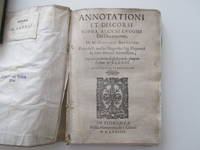
157417322AB1574. Fiorenza Giunti 1574. 20 : 145 cm. 20 leaves 142 pages 8 leaves with 2 woddcut portraits and two woodcut initials. Contemporary vellum First edition rare. - From the library of M. Landau with his Exlibris. - The first pages at the edges a bit rubbed occasionally some foxing the last pages with some waterstains at the edges not affecting the text; binding a bit wrinkled edgas a bit damaged. hardcover
152770195senza luogo Londra senza note editoriali Tommaso Edlin 1527 ma 1725. In 4° piena pelle coeva con bei fregi nervi e titolo al dorso qualche minima traccia di consunzione d'uso ma comunque molto buona. Bella antiporta incisa B. Baron con leone unicorno e allegoria della Musa che accompagna il Poeta piccolo angelo indica il cielo frontespizio dell'originale del 1527 con piccola marca tipografica segue una carta con la dedicatoria di Paolo Rolli tavola con ritratto inciso del Boccaccio cc. 6 n.n. con la vita dell'A. scritta da Filippo Di Matteo Villani altra carta con la riproposta del frontespizio originale che al retro propone i dati editoriali effettivi cc. 284. In fine sono poste 7 cc. non numerate con i "Nomi dè Signori sottoscriventi" e "Tavola sopra il libro chiamato Decameron cognominato Principe Galeotto ." seguono ancora 49 cc. con le Osservazioni dell'editore che provocarono aspre censure del Buonamici. Esemplare in ottimo stato di conservazione ad ampi margini tagli rossi; curiosa etichetta coeva in carta posiziona questo volume fra quelli "Proibiti". Gamba 186. Bacchi della Lega pag 49 senza luogo (Londra), senza note editoriali (Tommaso Edlin) unknown
152011556Jehan & Gourmont o. J. 1520 1520. priv. Einband . 4°.117s-. fachmännisch Restauriert einige Seiten mit geringem Textverlust sonst in gutem Zustand AZB7LS4 HC Jehan & Gourmont, o. J., (1520), unknown
1547008609Venetia: Venice: Pietro dei Nicolini da Sabbio 1547. This is an original edition published in the year 1547.Collation 264216 i.e 4321pp woodcut decorative capital's throughout. Recently bound in full antiquarian calf blind flat bands leather title label ruled blind lines on boards. Slight crease line along edge of spine. Binding in very good clean firm condition with strong hinge joints. Internally no loose pages title page slightly dusty very small nick on margin first few pages with light stain to extreme margin otherwise text in remarkably clean condition throughout. A very nice copy in a very good attractive binding.F. Full Calf. Very Good. Small 8vo. Venice: Pietro dei Nicolini da Sabbio, Hardcover
152011557J. Gourmont & J. Petit Paris 1520 1520. Opb 4° 109s. Fraktur. fachmännisch restauriert am Ende des Buches restaurierte Fehlstellen mit geringem Textverlust. sonst in gutem Zustand AZA8 SL2. HC J. Gourmont & J. Petit, Paris 1520 (?), unknown
1551ABAA25-4<p>Lyon Guillaume Rouille 1551.</p><p>12mo 158 x 101 mm of 384 pp. 4 ll the last one doubled numerous ornamented initials two tiny holes in title small stain in lower margin of pp. 17-20. A fine copy.</p><p>Red morocco triple gold fillet around the covers spine ribbed richly decorated with the special crowned dolphin lace at the foot decorated edges inner gilt roulette gilt edges on marbling. <em>Bound in the 17th century.</em></p><p><strong>One of Boccaccio's most famous works the 'De claris mulieribus' written in Latin around 1360 is a book both erudite and amusing intended for a wide audience</strong>. Following the model of Petrarch's <em>Hommes illustres</em> Boccaccio recounts the lives of 104 famous women queens and courtesans virtuous and promiscuous from Eve to Pope Jeanne.</p><p><strong>First edition of this translation by Denis Sauvage. </strong>This is the first French translation after the Italian version due to Denis Sauvage; it replaced that which L.A. Ridolfi had given according to the Latin original.</p><p>Written in 1361-1362 Boccaccio's <em>De mulieribus claris</em> <em>The Illustrious Women</em> is the first collection of women's biographs in western history.</p><p>Inspired by Boccaccio's own admission by his friend Petrarch's <em>De viris illustribus </em><em>The Illustrious Men</em> this work offers a reasoned compilation of "stories" both pagan and Christian of remarkable women whose excellence in good or evil Boccaccio highlights even if it means drawing from this "evil" the appropriate moral lesson. We thus find the great figures traced by Titus Livius Pliny the Elder or Suetonius but also from Saint Jerome or the Bible the book begins with a "biography" of Eve. There is certainly no lack of the traditional depreciatory remarks inherited from the two antiquities on the weakness of women's character but in the praise of figures such as Nicostrata or Epicharis a certain evolution of mentalities is already apparent provoked by the prodromal stages of humanist reflection on female virtues.</p><p><strong>This book quickly translated into French</strong> Laurent de Premierfait or into German Heinrich Steinhöwel strongly marked its time since Chaucer drew on it for The Canterbury Tales and Christine de Pisan in 1405 for her Livre de la cité des dames.</p><p><strong>In this newly inspiring work Boccace therefore gives the modern reader an overview vast and often picturious of medieval attitudes to women</strong> at a time when the renascent elites were going to change their view of women's potential Jean-Yves Boriaud <em>Les Femmes illustres</em> / <em>De Mulieribus claris</em>.</p><p>"<em>The work written between 1360 and 1362 amplified and recast in later years contains the biography of 104 famous ladies of all times from Eve to Queen Joan of Naples; it is dedicated to the beautiful Andrée Acciaiuoli sister of the great seneschal Nicolas Acciaiuoli second wife of a Count of Altavilla.</em></p><p><em>The example of Petrarch and his treatise on illustrious men had a significant influence on Boccaccio as he himself acknowledged. The narrative vein expands with some freedom as in the pages devoted to the life of the papess Joan the voluptuous length on the love affairs of Thisbe and the story of the naive Paulina a Roman beloved of the God Anubis which is rather reminiscent of the tale of Lisette and the angel Gabriel in the Decameron. . Taken as a whole the volume is a compromise between historical scholarship and storytelling a pleasant book of scholarship intended not only for men but also for women - who says Boccaccio for his excuse being accustomed to hear stories have a greater need of them and are entertained by a copious exposition</em>." T. F. G. Rouville.</p><p>Beautiful italic printing by Philibert Rollet with nice initials and some ornaments. The title is set in a remarkable wood frame reproduced by Baudrier.</p><p><strong>Fine copy of exceptional elegance covered with a fine seventeenth century binding the spine of which bears the crowned dolphin lace.</strong></p><p>Label of the <em>Pierre Berès</em> bookshop on the first flyleaf it appeared under n°32 of its 1951 catalogue <em>Livres Français des quinzième & seizième siècles</em> at a price of 45 000 fr.</p><p>FR</p><p>Lyon Guillaume Rouille 1551.</p><p>In-12 de 384 pp. 4 ff. le dernier doublé nombreuses initiales ornées deux infimes trous ds. le titre pte. tache ds. la marge inf. des pp. 17 à 20. Exemplaire réglé.</p><p>Maroquin rouge triple filet or autour des plats dos à nerfs richement orné avec la dentelle spéciale au dauphin couronné en pied coupes décorées roulette intérieure dorée tranches dorées sur marbrures. <em>Reliure du XVIIe siècle</em>.</p><p>158 x 101 mm.</p><p><strong>Une des œuvres célèbres de Boccace le 'De claris mulieribus' composé en latin vers 1360 est un livre à la fois érudit et amusant destiné à un large public</strong>. Suivant le modèle des <em>Hommes illustres</em> de Pétrarque Boccace y raconte les vies de 104 femmes célèbres reines ou courtisanes vertueuses ou libertines d'Eve à la papesse Jeanne.</p><p><strong>Edition originale de cette traduction due à Denis Sauvage.</strong> Il s'agit de la première traduction française d'après la version italienne due à Denis Sauvage ; elle remplaçait celle que L.A. Ridolfi avait donnée d'après l'original latin.</p><p>Rédigé en 1361-1362 le <em>De mulieribus claris</em> <em>Les Femmes illustres</em> de Boccace constitue <strong>la première collection dans l'histoire occidentale de biographies féminines. </strong></p><p>Inspiré de l'aveu même de Boccace par la lecture du <em>De viris illustribus</em> <em>Les Hommes Illustres</em> de son ami Pétrarque cet ouvrage propose une compilation raisonnée des " histoires " païennes et chrétiennes de femmes remarquables dont Boccace met en exergue l'excellence dans le bien ou le mal quitte à tirer de ce " mal " la leçon de morale appropriée. On y retrouve donc de grandes silhouettes tracées par Tite-Live Pline lʼAncien ou Suétone mais venues aussi de saint Jérôme ou de la Bible le livre commence par une " biographie " d'Eve. Les propos dépréciatifs traditionnels hérités des deux antiquités sur la faiblesse de caractère des femmes nʼy manquent certes pas mais transparaît déjà dans la louange de figures comme celles de Nicostrata ou Epicharis une évolution certaine des mentalités provoquée par les prodromes de la réflexion humaniste sur les vertus féminines.</p><p><strong>Ce livre vite traduit en français</strong> Laurent de Premierfait ou en allemand Heinrich Steinhöwel <strong>marqua fortement son époque </strong>puisquʼy puisèrent aussi bien Chaucer pour <em>The Canterbury Tales</em> que Christine de Pisan en 1405 pour son <em>Livre de la cité des dames</em>.</p><p><strong>Dans cet ouvrage d'inspiration nouvelle Boccace donne donc au lecteur moderne un aperçu vaste et souvent piquant des attitudes médiévales à l'égard des femmes</strong><strong></strong> à un moment où les élites renaissantes vont changer leur regard sur les potentialités féminines. Jean-Yves Boriaud <em>Les Femmes illustres / De Mulieribus claris</em>.</p><p><em>" L'œuvre écrite entre 1360 et 1362 amplifiée et refondue dans les années postérieures contient la biographie de 104 dames de renom de tous les temps d'Ève à la reine Jeanne de Naples ; elle est dédiée à la très belle Andrée Acciaiuoli sœur du grand sénéchal Nicolas Acciaiuoli épouse en secondes noces d'un comte d'Altavilla.</em></p><p><em>L'exemple de Pétrarque et de son traité des </em>Hommes illustres<em> influença notablement Boccace ainsi qu'il l'a reconnu lui-même. La veine narrative s'y élargit avec quelque liberté comme dans les pages consacrées à la vie de la papesse Jeanne aux voluptueuses longueurs sur les amours de Thisbé à l'histoire de la naïve Paulina Romaine aimée du Dieu Anubis qui rappelle d'assez près le conte de Lisette et de l'ange Gabriel du Décaméron. … Dans son ensemble le volume est un compromis entre l'érudition historique et le conte un plaisant livre d'érudition destiné non seulement aux hommes mais aussi aux femmes - lesquelles déclare Boccace pour son excuse étant habituées à entendre des histoires en ont un besoin plus grand et se divertissent d'un copieux exposé. "</em> T. F. G. Rouville.</p><p>Jolie impression en italique de Philibert Rollet avec de jolies initiales et quelques ornements. Le titre est placé dans un remarquable encadrement sur bois reproduit par Baudrier.</p><p><strong>Exemplaire réglé d'une élégance exceptionnelle revêtu d'une fine reliure du dix-septième siècle dont le dos porte en pied la dentelle au dauphin couronné.</strong></p><p>Etiquette de la librairie <em>Pierre Berès</em> au premier contreplat il a figuré sous le n°32 de son catalogue <em>Livres Français des quinzième & seizième siècles</em> de 1951 au prix de 45 000 fr.</p> hardcover
1569146435Paris: Federigo Morello 1569. Rare sixteenth century edition of this literary work in the original Italian. Duodecimo original full vellum. In near fine condition with light splitting to the front interior hinge. Giovanni Boccaccio was an Italian writer poet correspondent of Petrarch and an important Renaissance humanist. Often referred to as one of the "Three Crowns" of Italian literature along with Dante Alighieri and Petrarch Boccaccio is responsible for the creation of classic works of imaginative literature such as 'The Decameron' and setting the stage of Renaissance Humanism in Italy. Federigo Morello hardcover
158272228Firenze Florence: Nellastamperia 1582. Seconda Editione. Hardcover. Good. 23 x 16 cm. Octavo. 585pp 78pp. Bound into worn flexible vellum paper spine label. Second edition with the censorship of Lionardo Salviati: Italian humanist philogist and writer. Salviati modified 52 of the short stories leaving 48 intact. Decorative initials. Previous owners stamps on title page Giusep: Talinu. There is staining effecting some of the last and first few dozen pages. The staining avoids the text on most but not all pages. Binding remains tight. Nellastamperia hardcover
158852227Venetia: Fabio & Agostino Zoppini Fratelli & Onofrio Fari Compagni. Good. 1588. Hardcover. Contemporary vellum with small loss to spine head. Title page with engraved vignette. With front and rear blanks. Some worming affects text on last pages marginal staining to early pages. Mild foxing some toning. Pp. 8 564 68. ; 8vo 8" - 9" tall . Fabio & Agostino Zoppini Fratelli, & Onofrio Fari Compagni hardcover
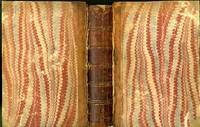
1552184537Venetia: V. Valgrisio 1552. Leather bound. Fair heavy wear to leather boards with sections worn off. Expected age toning to pages but text is otherwise clear and binding is fairly tight. Bound in brown leather boards; five raised bands and gilt tooling on spine; all edge red tinted; red and blue marble illustrated end papers; bw illustrated title page; 10 487 10 pp. The rear of the book contains a separate section titled "Vocabolario Generale di Tutte le Voci Vsate dal Boccaccio." which is 67 pp. Text in Italian. "La vita di m. Giovan Boccaccio descritta da m. Francesco Sansovino": p. 1-6. V. Valgrisio hardcover
1573047703Florence: Giunti 1573. Early Edition. Hardcover. Very Good Condition. Later quarter calf front cover and free endpaper detached rear board just about detached. Mild dampstain over first 100 pages scattered foxing and browning but generally quite bright otherwise. Two small worm holes in gutter of final colophon leaf. Two portraits Boccaccio and an unidentified woman and lovely historiated initials throughout - a finely printed Giunti edition of Boccaccio's masterpiece. 32 580 1pp. Admas B2156 Brunet I 1002 note Pettas Giunti of Florence 496.<br /> <br /> The first of the famed Council of Trent editions - having been unable to ban a book as widespread and beloved as The Decameron it was censured in 1564 the council of Trent instead removed all mention of priests clergy and the Church from the work while leaving all the erotic bits that would have been too easily missed. Marketed as a "correction" of earlier supposedly erroneous editions. Provenance: Kimbolton Castle copy with case/shelf ticket inside front cover.<br /> <br /> Size: Quarto 4to. Quantity Available: 1. Shipped Weight: Under 1 kilo. Category: Poetry; Antiquarian & Rare. Inventory No: 047703. Giunti hardcover
159056659Venetia Fabio & Agostin Zoppini Fratelli & Onofrio Farri 1590. 4to. Contemp. full vellum. Marbled edges. Printers woodcut-device on title-page. 854490 pp. Many large initial in woodcut 10 large woodcut illustrations in the text 3/4-page woodcut portrait on verso of fol.4. A few faint brownspots. Clean and fine. <br/><br/><em>Brunet I1002. - Not in Adams. </em> hardcover
158233055-217Florence Filippo & Iacopo Giunti October 1582. Printer's woodcut device on title large historiated woodcut initials a different printer's device on last leaf. In Italics. 16 leaves 585 pp. 1 38 leaves. 4to c. 210 x 145 mm. 18th century half calf rep. Florence Filippo & Iacopo Giunti October 1582. An important edition of this classic of Italian literature by Giovanni Boccaccio 1331-1375. This literary ten-day odyssey became the emblem of creative expression in the Italian Renaissance about the human experience its nature and psyche. Boccaccio's epic is edited here by Leonardo Salviati 1540-1589 a Florentine nobleman who was a founder member of the Accademia della Crusca. Its avowed aim was to uphold the purity of the Tuscan language as it had been in the fourteenth century. The Accademia Florentina founded in 1540 was dedicated to the same purpose and Salviati was active in both bodies. In 1584 Salviati published his "Degli Avvertimenti della Lingua sopra il Decamerone" a detailed discussion about the language used by Boccaccio. In this edition of the Decameron Salviati returned to the old texts and dedicated the work to Jacopo Buoncompagni one of his patrons. The text includes many beautiful historiated initials. - A very well printed and rare edition. - Ind. Aur. 120.402; Adams B-2158; STC Italian 110; Brunet I 1002; Gamba Serie dei testi di lingua p. 59 no. 181. LITERATURE:ITALIAN ; EROTICA ; GRAPHIC ARTS:GIUNTA ; Florence, Filippo & Iacopo Giunti unknown
1590D6205Venice: appresso Fabio e Agostino Zoppini fratelli e Onofrio Farri compagni 1590. Hardcover. Very Good. 4to 210 x154mm. 8 544pp 92 index epithets glossary by Ruscelli. Collation: ast. 4; A-2M 8; 2N 2; 2O-2R 8; 2S 4. Woodcut printers device to title. Oval woodcut portrait of Luigi Groto Cieco dAdria 1541-1585 facing first text page 10 woodcut illustrations numerous woodcut initials most historiated with griffins putti other figures or foliage and decorative chapter head- and tailpieces. Text in italic type; headlines chapter headings and marginalia in Roman. Printed marginalia. Early vellum; title with upper margin stained cancelled inscription and small tear some wear mostly on preliminaries; joints starting. Collection inscription in abbreviated Italian on front pastedown dated 1841 possibly from a Jesuit Society. Early booksellers stamp C. Simms of Manchester. <br/><br/>Good large quarto copy of Giovanni Boccaccios Decameron redacted by Luigi Groto 1541-1582 from the edition edited by Girolamo Ruscelli 1500s-1556 and first published two years previously. Groto a minor Venetian writer reworked Boccaccios famous tale; retaining parts of the original parable but also creating his own tangents. Groto for instance created a predicament concerning a young man who finds himself confronted by three different ladies he has been secretly courting. When his deceit is discovered he must answer as to which of them is his true love. The lengthy narration of the amoroso imbroglio is Grotos own literary stamp and he hoped with these revisions he would gain literary fame stating I will give life and light to Boccaccio and he will do likewise for me . I will rescue him from darkness and burial and he in turn will rescue me from obscurity Ironically Grotos retelling of the Decameron remains known for it deformations of the tale rather than its celebration. Each of the ten sections are preceded by an overview written by Ruscelli the well-known editor of Ptolemys Geographia of 1754 and a large woodcut illustration depicting narrative scenes of the Decameron tale. Brunet I 1002; STC Italy I: p.256. appresso Fabio e Agostino Zoppini fratelli e Onofrio Farri compagni hardcover
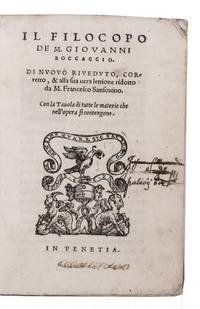
1554L1NFVE7U6EX8Venice: device of Domenico Giglio colophon: Francesco Rampazetto 1554. Contemporary limp vellum sewn on 3 alum-tawed supports laced through the joints with manuscript title down the spine in rotunda gothic lettering 6 mm x-height with decorated capitals: Filocopo del Boccaccio. Small 8vo 15 x 11 cm. With Giglios woodcut device a bird with a scorpion in its beak above a pot with DG above 2 winged sea-goats with motto non sine quare sic facio and N.S.C.C.F. on the title-page 6 woodcut decorated initials 3 series plus 2 repeats. Set in Aldine-style italic types with upright capitals with incidental roman. Second Sansovino edition of Boccaccio's first important work Il Filocolo here Filocopo a prose romance written ca. 1334-1336 about twenty years before the Decameron. Boccaccio reworked the 12th-century French love story of Floire Florio muslim Prince of Andalusia and Blancheflor Biancifiore the orphaned daughter of his mother's Roman Christian lady-in-waiting. They grow up together in the royal household but when they fall in love his parents try to break up the romance by selling her to merchants who will take her to Alexandria to join a harem. Florio under the pseudonym Filocopo rescues and marries her. He converts to Christianity and they return home where he ascends the throne and his people embrace Christianity. Boccaccio introduced many new elements into the story and told it with his usual flare for often risqué humour. It served as inspiration for writers around the world from Chaucer to Keats and Boccaccio himself further developed several episodes for stories in his Decameron.Francesco Sansovino 1521-1583 had produced the first variorum edition of the Decameron in 1546 and then turned his editorial scholarship to Il Filocolo beginning with Gaetano's text editions in 1527 and 1538. With 2 early owners' inscriptions on the title-page both struck through and part of one abraded. With a small hole in the title-page and the corners of a few leaves dog-eared but otherwise internally in very good condition. The binding is worn but the lovely manuscript title on the spine remains clear. Second edition of the best Renaissance redaction of Boccaccio's important influential and entertaining first major work.l EDIT 16 6334; Gay & Lemonnyer col. 726; USTC 814845; cf. Gamba Italiana letteratura 198 cr. other eds.; for the text: Kirkham et al. eds. Boccaccio: a critical guide pp. 87-93; Marrone Encyclopedia of Italian literary studies pp. 252-253. [device of Domenico Giglio] (colophon: Francesco Rampazetto, hardcover
1530178085Venice: per Nicolo di Aristotile detto Zoppino 1530. An early edition of the first adventure novel of Italian literature in vernacular prose. Written by the author during his student years in Naples this was Boccaccio's first important work a retelling of the popular medieval French romance of Floire and Blancheflor. "Boccaccio demonstrated a vast knowledge of literature classical and medieval and a personal engagement with it giving a strong indication of literary promise and of the masterpieces to come. Boccaccio enlarges and ornaments the story with Florio's travels throughout Italy and the Mediterranean adding digressions geographical historical and mythological at each stop and each new encounter; he weaves into the story autobiographical allegories exotic places and even a lesson in church history and doctrine" Weaver p. 87. The Filocolo was published in 1472. This is one of two Venetian editions printed in 1530 the other by Francesco di Alessandro Bindoni both reproducing the text as edited and published by Marco Guazzo in 1527. Octavo 150 x 115 mm: A-2Y 360 leaves. Title page printed in red and black within elaborate woodcut border and incorporating woodcut portrait of the author similar portrait of St Nicholas on verso of last leaf. Eighteenth-century mottled half sheep smooth spine divided by ornate gilt rolls light brown calf label patterned paper-covered boards edges black. Old library label on spine. Near-contemporary Latin and Greek ownership inscription on title page "Joannis Bonij. kai ton filon in Greek characters C:L:D:S:" indicating it belonged to one Giovanni Boni "and friends". Worming on spine and margins of a few initial and final leaves affecting woodcut decoration and several words corners worn inner hinges cracked title and final page partly detached from gutter but firm some loss to margins of final page intermittent and mainly marginal foxing and toning couple of gathering damp stained. A good copy. EDIT16 6283. Elissa Weaver "A Lover's Tale and Auspicious Beginning Filocolo" in Victoria Kirkham Michael Sherberg & Janet Levarie Smarr eds Boccaccio. A Critical Guide to the Complete Works 2013. hardcover
153933106-1153Bern Mathias Apiarius 1539. With 15 near half-page woodcuts including 2 repeats of which 9 are signed Jakob Kallenberg 2 different printer's woodcut device on title and last leaf honey-licking bears one by H. Holbein. 6 LXXXI 1 ff. Small folio. 18th-century calf worn. From the library of G. Wüthrich with his engr. supralibros. Bern Mathias Apiarius 1539. Bound with: MAZZOCCHI Giacomo ed. Epigrammata antiquae urbis. With 21 woodcut illustrations of classical architecture and inscriptions including large depiction of the Pantheon on B2v more than 100 woodcut borders in text. Roman type. 10 CLXXXI leaves further 8 ff. with index and errate lacking at the end. Folio. Rome Jacobus Mazzocchi April 1521. Ad I: First edition of the earliest books from the press of the first printer of Bern and a beautifully illustrated edition of Boccaccio's encomium of famous women. It is notable as the first collection devoted exclusively to biographies of women in Western literature. The artist has been identified as Jakob Kallenberg a Bavarian painter and craftsman from Bern who worked there from 1535 until about 1565 and became a member of the city council. His style is reminiscent of Holbein whose pupil he probably was. Several of these cuts are also extant on broadside publications or loose sheets. The satirical cut of Pope Joan f. LXXIIIv giving birth during a procession surrounded by cardinals is here in perfect state whereas it is often either missing or mutilated.- 18th cent. ms. owner's entry on title-page otherwise a nice copy. Ad II: First edition of the first printed collection of classical inscriptions an anthology of ancient Roman epigraphs and the most beautiful book from the press of the famous Roman printer Mazzocchi active 1505- 1527. His work is import as one of the earliest humanist studies on epigraphy and valuable for its profuse woodcut illustrations. There are woodcuts of art and architecture of ancient Rome including the Pantheon triumphal arches the "Three Graces" and other reliefers and steles; about 80 cartouches of varying design frame the inscriptions and 7 full-page woodcut borders are on black ground. The work has been attributed to one of Mazzocchi's humanist friends Francesco Albertini the great scholar of Roman antiquities. This publication was a determining factor in the development of Roman studies in the 16th century and is the first collection of classical inscriptions from the city of Rome. - Last 8 ff. index and errata lacking 18th cent. ms. owner's entry on title-page otherwise fine. - Ad I: Fairfax Murray 78; VD 16 B 5814; Adams B 2141; Hollstein XVB p. 206 nos.1-15; ad II: Cicognara 3789; Sander 2554; Fumagalli p. 339-342 fig. 142; Coszena III 2251; Mortimer Italian 297; EDIT16 CNCE 18162; Adams E 236. GRAPHIC ARTS:ILLUSTRATED BOOKS ; SWITZERLAND ; ITALY ; Bern, Mathias Apiarius unknown
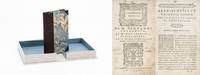
158431320AB1584. Venetia Appresso I Gioliti 1584. 9.5 cm x 15.4 cm. 107 1 pages including illustrated titlepage with Giolito's printer mark and Giolito's stunning colophon of Phoenix rising from the ashes and the Motto: "Semper eadem" "Always the same". Hardcover in custom - made solanderbox. Recently rebound in half-leather with marbled paper-covered-boards. The bookblock in very good condition with some minor contemporary inkstains. Name of preowner "Exlibris Bernard Rielliae "Bernard Reilly" in contemporary ink 16th or 17th century entry. Small lesion to titlepage and first three pages only. Very faint faded dampstain to the outer margins of a few pages. This is one of the rare Giolito editions of Boccaccio's "L'Elegia di Madonna Fiammetta" in which the important italian publisher Gabriel Giolito added a two-page-dedication to the women of Citta di Casale. His dedication reads: to the Gentili et Valorose donne della Città di Casale di Monferrato Gentle and Valorous women of the city of Casale Monferrato. This early dedication to women conveyed what later became the normative terms of Giolitos advertising techniques. According to Giolito Lamorosa Fiammetta was ideal feminine reading since it narrated a womans amorous experiences" Source: Androniki Dialeti - "The Publisher Gabriel Giolito de Ferrari Female Readers and the Debate about Women in Sixteenth-Century Italy" Elegia di Madonna Fiammetta or The Elegy of Lady Fiammetta in English is a novel by the Italian writer Giovanni Boccaccio probably written between 1343 and 1344. Written in the form of a first-person confessional monologue it describes the protagonist Fiammetta's passion for Panfilo a Florentine merchant and takes place in Naples. It has been characterised as the first psychological novel in Western literature. It consists of a prologue and nine chapters. Wikipedia Giovanni Boccaccio 16 June 1313 21 December 1375 was an Italian writer poet correspondent of Petrarch and an important Renaissance humanist. Boccaccio wrote a number of notable works including The Decameron and On Famous Women. He wrote his imaginative literature mostly in the Italian vernacular as well as other works in Latin and is particularly noted for his realistic dialogue which differed from that of his contemporaries medieval writers who usually followed formulaic models for character and plot. Boccaccio grew up in Florence. His father worked for the Compagnia dei Bardi and in the 1320s married Margherita dei Mardoli who was of a well-to-do family. Boccaccio may have been tutored by Giovanni Mazzuoli and received from him an early introduction to the works of Dante. In 1326 his father was appointed head of a bank and moved with his family to Naples. Boccaccio was an apprentice at the bank but disliked the banking profession. He persuaded his father to let him study law at the Studium the present-day University of Naples where he studied canon law for the next six years. He also pursued his interest in scientific and literary studies. His father introduced him to the Neapolitan nobility and the French-influenced court of Robert the Wise the king of Naples in the 1330s. At this time he fell in love with a married daughter of the king who is portrayed as "Fiammetta" in many of Boccaccio's prose romances including Il Filocolo 1338. Boccaccio became a friend of fellow Florentine Niccolò Acciaioli and benefited from his influence as the administrator and perhaps the lover of Catherine of Valois-Courtenay widow of Philip I of Taranto. Acciaioli later became counselor to Queen Joanna I of Naples and eventually her Grand Seneschal. It seems that Boccaccio enjoyed law no more than banking but his studies allowed him the opportunity to study widely and make good contacts with fellow scholars. His early influences included Paolo da Perugia a curator and author of a collection of myths called the Collectiones humanists Barbato da Sulmona and Giovanni Barrili and theologian Dionigi di Borgo San Sepolcro. Wikipedia hardcover