Boccaccio, Professor GiovanniBiblio.com

1 685 résultats
1165536900.Gpaperback. Good. Access codes and supplements are not guaranteed with used items. May be an ex-library book. paperback
2009DADAX110427695XKessinger Publishing 2009-04-02. hardcover. New. 6.00x0.69x9.00. Buy with confidence. Excellent Customer Service & Return policy. Kessinger Publishing hardcover
2020x-0367133393Taylor & Francis 2020. Paperback. New. 171 pages. 8.25x5.25x0.50 inches. Taylor & Francis paperback
0367133393.Gpaperback. Good. Access codes and supplements are not guaranteed with used items. May be an ex-library book. paperback
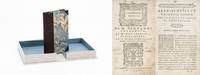
158431320AB1584. Venetia Appresso I Gioliti 1584. 9.5 cm x 15.4 cm. 107 1 pages including illustrated titlepage with Giolito's printer mark and Giolito's stunning colophon of Phoenix rising from the ashes and the Motto: "Semper eadem" "Always the same". Hardcover in custom - made solanderbox. Recently rebound in half-leather with marbled paper-covered-boards. The bookblock in very good condition with some minor contemporary inkstains. Name of preowner "Exlibris Bernard Rielliae "Bernard Reilly" in contemporary ink 16th or 17th century entry. Small lesion to titlepage and first three pages only. Very faint faded dampstain to the outer margins of a few pages. This is one of the rare Giolito editions of Boccaccio's "L'Elegia di Madonna Fiammetta" in which the important italian publisher Gabriel Giolito added a two-page-dedication to the women of Citta di Casale. His dedication reads: to the Gentili et Valorose donne della Città di Casale di Monferrato Gentle and Valorous women of the city of Casale Monferrato. This early dedication to women conveyed what later became the normative terms of Giolitos advertising techniques. According to Giolito Lamorosa Fiammetta was ideal feminine reading since it narrated a womans amorous experiences" Source: Androniki Dialeti - "The Publisher Gabriel Giolito de Ferrari Female Readers and the Debate about Women in Sixteenth-Century Italy" Elegia di Madonna Fiammetta or The Elegy of Lady Fiammetta in English is a novel by the Italian writer Giovanni Boccaccio probably written between 1343 and 1344. Written in the form of a first-person confessional monologue it describes the protagonist Fiammetta's passion for Panfilo a Florentine merchant and takes place in Naples. It has been characterised as the first psychological novel in Western literature. It consists of a prologue and nine chapters. Wikipedia Giovanni Boccaccio 16 June 1313 21 December 1375 was an Italian writer poet correspondent of Petrarch and an important Renaissance humanist. Boccaccio wrote a number of notable works including The Decameron and On Famous Women. He wrote his imaginative literature mostly in the Italian vernacular as well as other works in Latin and is particularly noted for his realistic dialogue which differed from that of his contemporaries medieval writers who usually followed formulaic models for character and plot. Boccaccio grew up in Florence. His father worked for the Compagnia dei Bardi and in the 1320s married Margherita dei Mardoli who was of a well-to-do family. Boccaccio may have been tutored by Giovanni Mazzuoli and received from him an early introduction to the works of Dante. In 1326 his father was appointed head of a bank and moved with his family to Naples. Boccaccio was an apprentice at the bank but disliked the banking profession. He persuaded his father to let him study law at the Studium the present-day University of Naples where he studied canon law for the next six years. He also pursued his interest in scientific and literary studies. His father introduced him to the Neapolitan nobility and the French-influenced court of Robert the Wise the king of Naples in the 1330s. At this time he fell in love with a married daughter of the king who is portrayed as "Fiammetta" in many of Boccaccio's prose romances including Il Filocolo 1338. Boccaccio became a friend of fellow Florentine Niccolò Acciaioli and benefited from his influence as the administrator and perhaps the lover of Catherine of Valois-Courtenay widow of Philip I of Taranto. Acciaioli later became counselor to Queen Joanna I of Naples and eventually her Grand Seneschal. It seems that Boccaccio enjoyed law no more than banking but his studies allowed him the opportunity to study widely and make good contacts with fellow scholars. His early influences included Paolo da Perugia a curator and author of a collection of myths called the Collectiones humanists Barbato da Sulmona and Giovanni Barrili and theologian Dionigi di Borgo San Sepolcro. Wikipedia hardcover
1166300757.Gpaperback. Good. Access codes and supplements are not guaranteed with used items. May be an ex-library book. paperback
1571289674Venetias.: Giorgio Angeliieri. 1571. Contemporary plain parchment. Good text detached from covers “Boccaccio†inked out on title page old ownership stamp to title page some mostly marginal dampstains old ink notes to pastedowns. 12 mo. 13x8 cm. Italian text. An uncommon edition of this prose romance. weight: 0.2 lb. Woodcut initials. Giorgio Angeliieri. unknown
1558181567In Vinegia : Appresso Gabriel Giolito de Ferrari 1558. New Edition. Hardback. Finely re-bound in modern 1/2 vellum over marble boards with a paper label to spine. Taped repairs to top left-hand corner of pages throughout. Minor scattered foxing. Corners sharp with an overall tight bright and clean impression. ; 8vo 8"" - 9"" tall; 107 pages; Description: 107p. 16cm. Subjects: Boccaccio Giovanni 1313-1375 --Italian drama --14th century. Publisher's device to title page. Decorative headings and historiated initials to dedication prologue and beginning of each act. Language: Italian. In Vinegia : Appresso Gabriel Giolito de Ferrari hardcover
19394447Bari: Laterza 1939. Very Good. 22 cm; 262 pages. Original brown printed wraps. Unopened. Old bookplate on verso of upper wrap; owner's blindstamp on series title page. Pencil notation on upper wrap. Shelf mark applied to spine. Slight tear at upper joint; some slight shelf wear. <br /><br />Published in the Scrittori d'Italia series. Laterza paperback
1019626712.Ghardcover. Good. Access codes and supplements are not guaranteed with used items. May be an ex-library book. hardcover
1017737584.Ghardcover. Good. Access codes and supplements are not guaranteed with used items. May be an ex-library book. hardcover
1421973111.Gpaperback. Good. Access codes and supplements are not guaranteed with used items. May be an ex-library book. paperback
2013506414.Gpaperback. Good. Access codes and supplements are not guaranteed with used items. May be an ex-library book. paperback
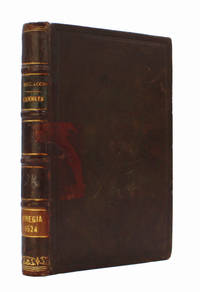
15248801Venetia: Bernardino di Vitale 1524. First Edition — Primera edición. Hardcover — Tapa dura. 156x104mm. 6¼x4". Venetia Bernardino di Vitale 1524. En 8º 156 x 104mm. 116 hojas sin foliar la última blanca. Signaturas <sup>4</sup> B-O<sup>8</sup> P-Q<sup>4</sup>. Marca del impresor en la última hoja de texto. Encuadernación del siglo diecinueve en piel tejuelo en marroquén cortes dorados de antiguo. Atractivo ejemplar de esta rarÃsima edición de <em>La Fiammetta</em> de Boccaccio desconocida a todos los repertorios bibliográficos consultados. Esta elegÃa de Madonna Fiammetta narra en primera persona sus desventuras y está considerada como la primera novela "psicológica". Escrita entre 1343 y 1344 la obra se presenta como una larga carta escrita en la que la protagonista Fiammetta relata su amor juvenil por Pánfilo en la ciudad de Nápoles. La relación entre ambos termina cuando Pánfilo debe partir a Florencia. Fiammetta sintiéndose abandonada por su amante intenta suicidarse. Al final de la obra la protagonista se siente de nuevo esperanzada cuando oye que Pánfilo ha regresado a la ciudad pero descubre con amargura que se trata de otra persona con el mismo nombre. La obra es dedicada por el autor «a las mujeres enamoradas». Obra con un importante componente autobiográfico. Giovanni Boccaccio 1313-1375 es uno de los padres de la literatura en italiano junto a Dante y Petrarca. Es recordado sobre todo como autor del <em>Decamerón</em> libro esencial para introducir en la literatura europea el género de la novela corta. Se trata de una edición desconocida a todos los repertorios consultados: no en Brunet ni Graesse ni Adams. OCLC no registra esta edición tampoco CCPB STL Italian Books ni BnF. Sólo lo registra el Catálogo del Servizio Bibliotecario Nazionale de Italia SBN código identificativo ITICCUCNCE006262. Aparece citada en <em>Mostra di manoscritti documenti e edizioni</em> Certaldo 1975 v. 2 n. 60. Contiene al fin la bella marca tipográfica de veneciano Bernardino di Vitale activo impresor italiano del que se conocen más de 150 impresiones entre los años 1493 a 1539. Triángulo con las iniciales TDG y seis estrellas en su interior. Buen jemplar generalmente limpio y de buenos márgenes muy ligera mancha en el margen exterior de los últimos folios por lo demás perfecto. Procedencia: Filiciano RamÃrez de Arellano Marqués de Fuensanta del Valle. Su ex-libris. Uno de los más importantes bibliófilos españoles del siglo diecinueve Bernardino di Vitale hardcover
1161438556.Ghardcover. Good. Access codes and supplements are not guaranteed with used items. May be an ex-library book. hardcover
1574D11148Venice: Giovanni Antonio Bertano 1574. Paperback. Very Good. 4to 204 x 148mm. 1 16 263pp. 2 leaves including final blank. Signatures: A-KK 8. Front flyleaf with likely 18th-century half-title added in manuscript calligraphic script over undulating ownership inscription on ribbon De Me Giovanni Agostino Panater and palm or quill on island in sea with ship signature repeated on title. Woodcut printers device of Bertano of young stork bring food to decrepid parent in the nest and motto on filial piety Pietas Homini Tutissima Virtus Compassion is the safest power. Few woodcut initials throughout. Italian translation by Giovanni Betussi. Dedicated to Count Collaltino di Collalto. Contemporary limp vellum ms. title to spine; spine darkened head cap chipped with loss text block loose in binding; intermittent browning title with old owners signatures cancelled minor marginal worming added half-title with ink oxidation. The whimsical added title complements this monumental Italian humanist work; a defense of poetry and a synthesis of ancient mythological sources which justified the study of pagan literature within a Christian context. <br/><br/>Betussis Italian translation of Boccaccios medieval work on progeny in classical times a veritable mythological encyclopedia that aimed to solve questions about lines of succession. Boccaccios Genealogia sought to preserve the past from oblivion by creating an almanac of inter-related families including the competing noble houses in order to organize lines of descent. With the Genealogia Boccaccio aimed to solve contradictory accounts of hereditary matters by assuming the existence of pagan gods and organizing their progeny - Jupiter I and Jupiter II for instance. Perhaps most contentious was Boccaccios identification of Demogorgon as the ultimate progenitor of all pagan divinities description starting on page 5 who was also associated with Satans netherworld conspirators. The Genealogia reputedly had been copied and transmitted before its completion apparently without the consent of Boccaccio. The earliest Latin editions all follow the first of 1472. This is a later edition of Giuseppe Betussis Italian translation of the Genealogia; Betussis first was printed in Venice by Comino da Trino di Monferrato in 1547. Nearly a dozen subsequent editions follow this date well into the seventeenth century. Betussi was a prominent man of letters in Paduas Accademia and was at the avant-garde of those promoting the substitution of Italian for Latin as the language of scholarly literature. To his edition Betussi added a ten-page biography of Boccaccio and alphabetical indices corresponding to page numbers not book or chapter. The Genealogia became a standard reference works for readers who wished to disentangle the complexities of Greco-Roman mythology. The work was enormous in scope covering approximately 950 individuals groups and beasts both named and unnamed in fifteen books and 723 chapters with over a thousand citations from Greek Roman medieval and Trecento authors. Near the end of the sixteenth century the Genealogia while mostly out of the public eye still provided source material for numerous authors including Edmund Spenser and his work on Christianized paganism. This edition rare OCLC lists one other in Toulouse. Giovanni Antonio Bertano paperback
1333203624.Gpaperback. Good. Access codes and supplements are not guaranteed with used items. May be an ex-library book. paperback
1018694242.Ghardcover. Good. Access codes and supplements are not guaranteed with used items. May be an ex-library book. hardcover
1272797856.Gpaperback. Good. Access codes and supplements are not guaranteed with used items. May be an ex-library book. paperback
1276942214.Gpaperback. Good. Access codes and supplements are not guaranteed with used items. May be an ex-library book. paperback
1289716730.Gpaperback. Good. Access codes and supplements are not guaranteed with used items. May be an ex-library book. paperback
1286293383.Gpaperback. Good. Access codes and supplements are not guaranteed with used items. May be an ex-library book. paperback
1010691228.Ghardcover. Good. Access codes and supplements are not guaranteed with used items. May be an ex-library book. hardcover
159252248Venice: Bonfadino. Good. 1592. Softcover. Contemporary rustic paper binding. Partial bookplate. Some loss of paper to spine. No front or terminal blanks no frontis. Pp 144 10 1blank 70 Dialogo D'Amore misnumbered but all pages present. Occasional underlining in the text. ; 24mo 5" - 6" tall . Bonfadino paperback
1545SE4<p>8° mm 147x92. Collation: A-G8 H4. 56 4 leaves. Woodcut printer's device on the title-page and larger on verso of the last leaf. Woodcut animated initials. Bookmark in blue silk. 20th-century half Morocco spine with four raised bands and title tolled in gold at the second compartment. A good copy pale stains one more visible on l. A3.<br /><br />The first Giolito edition of Bocaccio's Laberinto d'amore edited by Lodovico Domenichi 1515-1564.<br />The Labirinto d'amore was written in the mid-1350s; it is also known as Corbaccio an alternative title introduced in the Florentine editio princeps of 1487 although the word 'corbaccio' never actually occurs in the work. It certainly derives from the Italian 'corvo' i.e. crow possibly recalling the satire Ibis by Ovid one of Boccaccio's favourite sources.</p> Gabriele Giolito de Ferrari