16 276 résultats
1859472016. The excited retelling of great stories An alternative version of the illustration published within Morpurgo's picture book on page 8 showing an excited group of children talking with animation in a classroom. The story concerns a class of children from an inner-city school who spend a week living as farmers at Nethercott Farm in Devon. Morpurgo's text reads "Every year after our week in Devon we come back to school and the whole place is buzzing with excitement. Everyone wants to hear about it. In the playground and in the staff room all the stories of our time down on the farm. are told again and again. Some are true some are not so true maybe a bit exaggerated but they all make great stories". For many decades Quentin Blake has created different versions of the same illustration prior to publication. The one finally reproduced in a book is retained in the artist's archive and the alternative versions have generally been sold. These alternatives offer an insight into Blake's process of changing small details in his work. The present illustration for example includes a bright sunlit window and more wall decoration than in the published version. Ink and watercolour drawing 84 x 160 mm on single sheet of wove paper 198 x 280 mm signed "Quentin Blake" lower left. Mounted framed and glazed framed size 250 x 330 mm. Light rippling to paper some finger marks: fine and unfaded. unknown
109358London: Jonathan Cape 1982. First edition of this Dahl classic which has sold over 20 million copies. Octavo original cloth illustrated by Quentin Blake. Presentation copy inscribed by the author on the front pastedown "Nicola Love Roald Dahl." Additionally inscribed by the illustrator Quentin Blake opposite Dahl's inscription. Fine in a near fine dust jacket. Uncommon signed by both Dahl and Blake. Roald Dahl is now considered one of the most beloved storytellers of the twentieth century. Dahl's ability to twist words into a clever and creative new language is fascinating to children and is evident in BFG. The gruesome descriptions of the horrid giants and the subtle allusions to other stories will entertain children young and old. An animated adaptation was released in theatres in 1987 with David Jason providing the voice of the BFG and Amanda Root as the voice of Sophie. It was also the basis for the 2016 film directed and co-produced by Steven Spielberg written by Melissa Mathison and starring Mark Rylance Ruby Barnhill Penelope Wilton Jemaine Clement Rebecca Hall Rafe Spall and Bill Hader. Jonathan Cape hardcover
18011227331801. London : Dalla Stamperia di Gul. Bulmer 1801. <br /> <br /> Thick 4to 2 1 1-721 pp. Printed in English and Italian. Contemporary red straight-grained goatskin flat spine banded with double gilt rules single gilt rule to the margins of the boards all edges gilt some foxing to the preliminaries binding repaired and refurbished still showing some scratches and stains but still an attractive copy.<br /> <br /> § Only edition of absolute rarity three copies recorded none at auctionone in the marketplace bought by Yale. Maggs wrote of this copy: "Written by an associate of William Blake this is a profoundly eccentric production full of the revolutionary spirit of the times combining mysticism philosophy electricity and magnetism. One of an unknown number of copies privately printed for the author without a title page by George Bulmer all of them intended for presentation to the author's friends this copy bearing the 19th Century ownership inscription 'Girdlestone' for whose identity there are several candidates none completely convincing.<br /> <br /> It is in two parts the first "An Investigation into Principles" written in English is a series of reflections on the nature of elements gravitation "the pressure of the general ethereal fluid against our orb" time "Look for time in the vast expanse Eternity will start to view and time revolve no more" tides earthquakes and the lack of salt in rain when raised into the sky by waterspouts it is sweetened by the action of electricity. His logic is baffling at times demonstrating the wisdom of a forward five year old or of an experienced haschischan : for instance he observes that gravity isn't all that Newton cracked it up to be since water "from a known principle in hydraulics" rises to the top of mountains which truth he derives from the fact that rivers never run dry. "On the Barleycorn" is a dialogue between Mata and Ata based on a conversation with George Finch Earl of Winchilsea concerning wisdom folly genius reason the individuality and the faculty of the soul.<br /> <br /> The second part is titled "On the Soul. On Magnetism. Magnetic Productions." and comprises the transcripts of Avena's automatic writings see below in Italian many with English introductions and some untranscribed writings dismissed as "too confused to merit attention". There are a total 51 sessions in the first year dated to "Alessandria 1796" 52 in the second year and 27 in the third and last year. The last two years have almost no English narrative.<br /> <br /> In researching this book we Maggs rely heavily on the intoxicating and brilliant essay by Marsha Schuchard "Blake's Healing Trio: Magnetism Medicine and Mania" published in Blake an Illustrated Quarterly Vol 23 Issue 1 which explores Blake's relationship with the "eclectic network of illuminés which included Swedenborgians Freemasons and Cabalists who shared his interest in animal magnetism spirit-communication and erotic trances". George Baldwin was one of these and is included as "Baldwin of Egypt's Lake" in a vicious later 1808 - 1811 poem attacking their lack of commitment to his studies.<br /> <br /> Baldwin born in 1744 was an author and diplomat who became very wealthy in the later years of the 18th century establishing trade links for the East India Company with Egypt owning a monopoly of the British trade route through Suez demonstrating remarkable prescience about the importance to British trade of this route to the east. He was British Consul-General in Egypt from 1786 to 1796 in which position he warned the British Government of French plans to take over Egypt a warning which was largely ignored. When the French invaded Egypt in 1798 he left the country for Italy leaving behind substantial property in Alexandria which was seized by the French. He was of considerable help in the planning of the British counter invasion returning to Egypt in 1801 with the British forces and claimed the credit for the decision to breach the canal in Alexandria and flood Lake Mareotis to hinder French navigation which played a significant role in the recapture of Egypt - this is what Blake refers to when he mentions "Baldwin of Egypt's Lake." It is attractive to think of a time in which a man could be a senior servant of the state as well as indulging in such arcane personal tastes.<br /> <br /> Baldwin's wife Jane Malpass a famous Greek beauty sat for her portrait to Sir Joshua Reynolds and to Richard Cosway who introduced Baldwin to English devotees who believed in healing by magnetism which although he was a popular figure in English society made him the subject of some ridicule. Some Blake scholars believe that Jane Malpass is one of the figures in Blake's 'Vala' manuscript. Baldwin had come across what he claimed were many cures in Egypt using magnetism and experimented on himself with he said considerable success. His Magus so to speak was an itinerant poet one Cesare Avena di Valdieri who passed on his gifts to Baldwin during magnetic sleep. The 'Principles' begins in English with a history of the development of Animal Magnetism then turns to Italian and intertwines the further exploration of the theme with the story of Baldwin's 'contact' with the spirit of his lost first love through the mediumship of Valdieri in a magnetised trance. Both Blake and Baldwin believed that the same Muse that dictated spirit writings to them also inspired Milton in the writing of 'Paradise Lost'. <br /> <br /> Baldwin was in London from 1781-6 where he must have first encountered the English school of Animal Magnetism a fashionable science begun largely by Franz Anton Mesmer who was for a while very successful as a practitioner in London society. It is highly likely that Baldwin made the acquaintance of Blake during these years. Mesmer was soon eclipsed by his disciple Dr. John Bonniot de Mainaduc who became a very rich man treating the great and the good of British society from Royalty downwards. Mainaduc published in 1798 a series of lectures with a frontispiece by Cosway where much of the phraseology bears a striking resemblance to the writings of Blake. Baldwin was back in Egypt in 1786 from where he ordered many publications on Animal Magnetism and on his interest in 'native' medicines with their use of magic and trance states. He set himself up as a practitioner and claimed much success as a healer - it is thought that a drawing from Blake's notebooks showing a cloaked man wearing a turban treating a young crippled girl represents Baldwin. Baldwin even claimed to be able to heal the plague rife in Egypt at the time mainly by the use of massage with olive oil. <br /> <br /> This publication originated with Baldwin's meeting with Valdieri and his consequent magnetisation of the poet who poured forth the verse printed here dictated to him by spirits. In 1797 Baldwin was visited in Egypt by the art connoisseur Thomas Hope a devotee of Animal Magnetism. The copy of this book in Emory University Library is inscribed to Hope's brother Henry a wealthy banker and disciple of Mainaduc. The inscription reads 'To Henry Hope Esq from his humble servant George Baldwin author of the English part of this work and editor only of the Italian'. Baldwin himself categorises the principles of the title as 'the discovery of a spiritual influence on the physical temperature of man'.<br /> <br /> Worldcat reports only two copies in institutions worldwide Emory University and the University of Chicago but a deeper poke reveals a mis-catalogued copy in the British Library. Not in Crabtree Animal Magnetism early hypnotism and psychical research an annotated bibliography. 1766-1925."<br /> <br /> DNB notes: "Baldwin was welcomed into London society as an exotic newcomer. He was described by Wright as 'lolling on oriental cushions amid strange hangings' T. Wright Life of William Blake 1929 2.31 and had some interesting pictures to share. Baldwin became intrigued by Cosway's keen interest in the therapeutic powers of magnetism as expounded by John de Mainauduc. Baldwin's presence was noted in William Blake's lines:<br /> Cosway Frazer and Baldwin of Egypt's lake<br /> Fear to associate with Blake<br /> This life is a warfare against evils<br /> They heal the sick he Blake casts out devils."<br /> Bentley BBS 495 p. 404. unknown
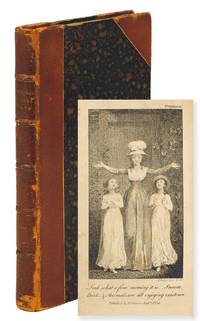
17911269381791. London: printed for J. Johnson 1791. <br /> <br /> 12mo xii 177 3ads pp with 6 plates by William Blake after his own designs each signed by Blake. Old half red morocco scuffed but sound some browning and rubbing. The Buxton Forman copy with his large bookplate and manuscript notes in pencil. Other illegible early notes partially erased.<br /> <br /> § First edition to contain William Blake's characteristic illustrations reminiscent in iconography to his designs for his own Songs of Innocence 1789. This copy has all the plates in the third state the only state to have every plate signed by Blake with notable variations from the first and second states. The Buxton Forman copy initialed by him in pencil with his shelf mark. According to Bob Essick this is the only copy known to him with the third state plates in the first edition -- they are usually found in the 1796 edition only.<br /> <br /> This collection of didactic tales for youth in part reinforcing the lessons of Wollstonecraft's first book Thoughts on the Education of Daughters proved her most popular book going through five editions by 1800. <br /> <br /> Windle Bibliography of Mary Wollstonecraft A3b. Bentley Blake Books 514A. Easson and Essick vol. I no. III. unknown
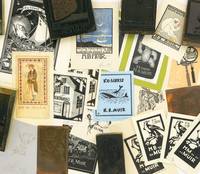
132768The archive comprises: <p>1. Sara Eugenia Blake: an etched bookplate Peake 3869: 'Juvenilia H.B. Muir'. One signed copy with the original zinc plate. <p>2. Sara Eugenia Blake: an etched bookplate depicting a Persian or Mughal figure Peake 3870: 'Indian Man'. Six signed proof copies printed in different coloured inks one extensively hand-coloured with the original zinc plate. <p>3. Tom R. Bond: a process bookplate Peake 3871: 'Mask' incorrectly dated 1937. One proof copy signed and dated 1933 by the artist and numbered 10/10 plus ten further proof prints on different paper stocks some untrimmed. With the original India ink drawing and process block. <p>4. Adrian Feint: a process bookplate Peake 3872: 'Desk open window river' 1936. One copy signed by the artist and another on Japanese paper likely a proof. With the original ink drawing and process block. <p>5. John Barclay Godson: an etched bookplate depicting the devil Peake 3873: 'Devil's face' 1934. One signed remarque proof with a preliminary pencil drawing and the original copper plate. With a list in Harry Muir's hand regarding distribution of copies of the bookplate. <p>6. John Goodchild: a process bookplate depicting a ship at sea Peake 3874: 'Galleon and seagull' 1932. Four copies two identified as proofs by Harry Muir on the reverse 'Delmonts proof of bookplate. 1st Sept 1932' and 'Hassells proof of bookplate from Delmonts zinc block'. With a preliminary pencil drawing signed by Harry Muir identifying the artist the final large ink drawing 146 × 102 mm with a pencil note to 'Reduce ¼ size' and the original process block. <p>7. John Goodchild: a process bookplate depicting a one-legged pedlar selling prints Peake 3875: 'Autolycus selling from tray' 1932. With the original process block. <p>8. John Goodchild: a three-colour linocut and process bookplate Peake 3877: 'Glass enlarging galleon plate' 1943. One copy with the three original blocks two linoleum and one process block. <p>9. Peter Hosokawa: a bookplate featuring two whales Peake 3878: 'Two whales' 1980. Number 31 of 100 signed copies; printed on blue paper. <p>10. Jane Hylton: a process bookplate depicting poppy kernels Peake 3879: 'Poppy kernels'. With the original process block heavily tarnished. <p>11. George David Perrottet: a three-colour linocut bookplate depicting a ship under a crescent moon Peake 3882: 'Sailing ship against crescent moon' 1933. Two copies one untrimmed and signed by the artist. With all three original linoleum blocks plus three process blocks heavily oxidised possibly prepared for Muir's 1942 publication on Perrottet's bookplates. <p>12. George David Perrottet: a hand-coloured two-colour linocut bookplate for Muir's books by and on John Galsworthy Peake 3880: 'Monkey with orange' 1936. With both original linoleum blocks. <p>13. George David Perrottet: a two-colour linocut bookplate featuring the exterior of Muir's bookshop Peake 3881: 'H B Muir bookshop' 1939. One signed proof copy on fine paper plus a copy of the standard version. <p>14. Derek Riley: a woodcut bookplate featuring bookstalls Peake 3883: 'Bookstalls with church tower behind'. One signed proof copy inscribed by the artist 'Opus 22' dated 1980. With the original woodblock. <p>15. Derek Riley: a woodcut bookplate featuring a tiki Peake 3884: 'New Zealand tiki'. Signed proof copy inscribed by the artist 'Opus 35' dated 1981; mounted in a card bifolium also signed and dated and a copy of the standard version. With the original woodblock. <p>16. Leslie Victor Smith: an etched bookplate showing maps of Canada and Australia Peake 3885: 'Tree embracing maps of Canada & Australia' 1943. One copy signed by the artist. With the original copper plate and an autograph letter 1943 with the original envelope to Muir from this Canadian artist primarily regarding the bookplate it appears he produced it as a gift without Muir's knowledge and sent him twelve signed proof copies. <p>17. Eric Thake: a process bookplate for Muir's collection of books on Bligh and the 'Bounty' Peake 3886: 'Three figures from "Bounty" mutiny' giving the date 1947. With two ink drawings a preliminary version and the final version dated '1945-1948' and the original process block. <p>18. Eric Thake: a process bookplate featuring a chained Pegasus Peake 3887: 'Pegasus' 1933. Number 9 of 15 proof copies signed by the artist plus two further copies one signed. With the original ink drawing and two lists in Muir's hand regarding distribution of the proof copies. <p>19. Noel Wood: a linocut bookplate Peake 3888: 'Eagle on rock' 1932. One untrimmed remarque proof number 5 of six copies almost certainly printed by the artist two copies of a more crisply-printed version possibly process; one with Muir's annotation on the verso stating that it is a 'Hassell's print'. With a preliminary ink drawing mistakenly giving Muir's middle initial as M not B. <p>20. John Goodchild: an offset-printed bookplate for Muir's holiday house Petrel Cottage at Encounter Bay Victor Harbor Peake 3876: 'Seagulls' 1938. <p>21. George David Perrottet possibly: two linoleum blocks for a second bookplate for Petrel Cottage a two-colour linocut very much in the style of Perrottet. This bookplate was apparently never published. Provenance: H.B. Harry Muir 1909-1992 bookseller publisher and bookplate collector; by descent. A quantity. unknown
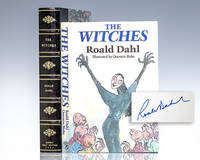
144317London: Jonathan Cape 1983. First edition of Dahl’s Whitbread Award-winning children’s novel illustrated by Quentin Blake. Octavo original cloth. Boldly signed by Roald Dahl on the half-title page. Fine in a near fine dust jacket. Housed in a custom half morocco clamshell box made by the Harcourt Bindery. Dahl's The Witches centers on the experiences of a young British boy and his Norwegian grandmother in a world where child-hating societies of witches secretly exist in every country. "Don't be fooled by those witches with their black hats black cloaks and broomsticks though those are not REAL WITCHES. Real witches are exceedingly difficult to spot in the wild and dress in ordinary clothes looking very much like ordinary people." Dahl's vital indicators for spotting a real witch include facts like they always wear gloves they have no toes are bald as boiled eggs and they have blue spit. “Dahl seems to have made an art form of the rediscovery that children tend to warm to the sorts of horror that make lesser mortals adults squirm with displeasure… He is undeniably special†Connolly 104. Jonathan Cape hardcover
17801240091780. London: Fielding and Walker 1780 and J. Fielding: 1781. <br /> <br /> Two vols. in one large thick folio vol. 1 frontispiece title page printed in red and black 6 632 pp. with 46 plates including 5 maps and a plan; vol. 2 with title page dated 1781 494 pp. with 33 plates indices etc. 79 of 80 plates in total. Very early calf very worn and rubbed newly consolidated and now stable. Internally very good and the plates in fine condition.<br /> <br /> § First edition of this version being Blake's first appearance as the sole engraver and in one case the designer and engraver of five plates. Plates 1 2 3 and 5 all engraved and 5 engraved and designed by Blake. See Essick CBI III. Easson and Essick 1 #1 for plate 5. The plates are: 1 Numbers chap. 13 v. 23 in vol. 1; 2 Jonah chap. 3 v. 4; 3 Judith chap. 13 v. 104; Matthew chap. 3 v. 135; Revelations chap. 1 v. 12-13. Plate 5 is signed "d & sc. Blake." Here "d" stands for delineavit as distinct from invenit invented the image. Essick thinks Blake was strongly influenced by an engraving by Picart-see Essick CBI p.22. Blake's wash drawing for pl. 5 is in the British Museum. unknown
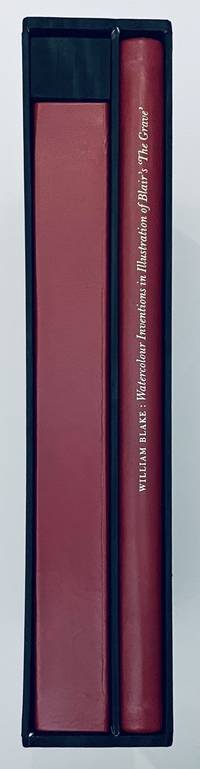
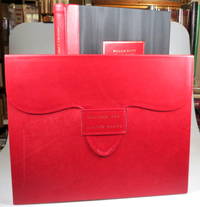
6633London: William Blake Trust 2009. Limited Edition. Hardcover. Fine in Fine Slipcase and Fine Portfolio. Limited Edition. Hardcover. "Bound in gilt-lettered quarter deep scarlet calf over black moiré silk covered boards deep scarlet leather label blocked in gilt to the centre of the upper board; 96pp. illustrated throughout with colour and b/w reproductions of Blake's drawings and watercolours. Contents: Morton D. Paley William Blake and Robert Blair's 'The Grave'. Martin Butlin The History of Blake's Illustrations to 'The Grave' and The Newly Discovered Water-colours. Blake's twenty watercolour designs with a Catalogue and illustrated Commentaries by Martin Butlin. Robert Blair's The Grave from Cromek's edition 1808. Schiavonetti's engravings of twelve of Blake's designs from the 1808 edition. Blake's rejected engraving of 'Death's Door'. Printed throughout in black and white and colour on 200 gsm archival acid-free paper. With A portfolio 35x28x2.8 cm bound in maroon calf with tongue-and-strap closure blocked in gold flap blind-embossed with double rule border lined in red; all in close replication of the portfolio made sometime after 1822 to contain: 19 of 20 watercolour inventions by Blake in illustration of Blair's The Grave mounted on thick beige paper within ruled and tinted borders and trimmed to 33.3x26.7 cm; here reproduced in facsimile. One of 36 copies of the Portfolio Plates and Book in cloth-covered double slipcase numbered I-XXXVI." Tight bright and unmarred. Black cloth red leather matching slipcase gilt lettering. Small fo. Illus. color plates. William Blake Trust hardcover
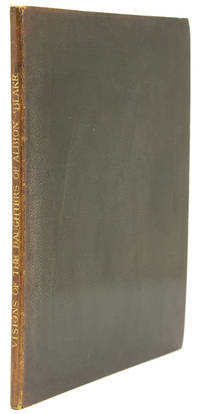
1885303029Edmonton 1885. No. 39 of 50 copies on Hodgkinson wove paper. William Muir facsimile. Preface and 11 hand-colored plates. 1 vols. 4to. Full dark green levant preserving wrappers with an unrecorded folding announcement from Muir bound in at front. No. 39 of 50 copies on Hodgkinson wove paper. William Muir facsimile. Preface and 11 hand-colored plates. 1 vols. 4to. Bentley 249c unknown
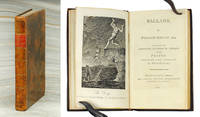
18051228731805. Chichester: J.Seagrave for Richard Phillips 1805. <br /> <br /> Small 8vo 6 212 1 indexpp. with 5 plates designed and engraved by Blake. Overall a clean and very pleasing copy in contemporary calf skillfully rebacked retaining the original backstrip and red label. Bookplate of Benjamin Dickinson ink signature of J.W. Dickinson dated Oct. 9th 1824 later bookplate of Walter Hirst.<br /> <br /> § First edition with plates 1-3 in the first state. An important book in the Blake canon being his second version of the Ballads after the extremely rare 1802 edition see above for the frontispiece. "For this 1805 volume Hayley added twelve ballads to the four first published in 1802. Blake engraved new plates of his designs for three of the 1802 ballads plates 1-3 and both designed and engraved new illustrations for two of the additional ballads plates 4-5. Blake and Phillips were to "go equal shares . . . in the expense and the profits" Blake's letter to Hayley of 22 January 1805 Erdman page 763. Robert Southey's mocking review of Hayley's poems and Blake's illustration to "The Dog" Plate 1 appeared in the Annual Review for 1805." Bentley BB 465. Easson and Essick WBBI Vol. I VIII. Bindman Complete Graphic Works of Blake 403-407. unknown
20038260221st Editions Steven Albahari 2003-01-01. Hardcover. Like New. As new; fine in all aspects. One of 65 copies. A fine copy of the book a fine example of the signed and numbered platinum print. in clamshell as issued. No flaws. oversized and overweight. Please email for photos. 21st Editions, Steven Albahari hardcover
1935355490723672London: Collins Crime Club 1935. First Edition. Hard Cover. Dust Jacket. London: Published for THE CRIME CLUB LTD. by W. Collins Sons & Co Ltd 1935. First UK Edition in First Issue dustwrapper priced 7/6 net to the spine in the 'formal' font as opposed to the 'handwritten' style which is also noted. Publisher's orange boards lettered in black to the spine and front board. Boards exceptionally bright and clean. Just a hint of spine fade to the head and tail of the spine matching chips in the dustwrapper. Overall a near fine copy with offsetting/toning to both sets of end-papers. The VG dustwrapper has 6 mm of loss at the head of the spine and the slightest of further loss to the corners of the front panel. The dustwrapper has a long closed tear to the front panel that has been stabilised on the verso and has a small repaired chip to the bottom/middle of the front panel both undertaken by a skilled paper conservationist. There is a before-and-after photograph showing this repair. NB: The 7/6 font on this copy accords with that held in the British Library which supports its first issue status. "A quintessential Golden Age mystery complete with boys' boarding school upper class eccentric detective man torn between love and honour and a pivotal cricket match" GoodReads. Published in 1935 while he was a schoolmaster himself this is the first detective novel by Cecil Day-Lewis the noted man of letters who went on to become Englands poet laureate. The first of the 16 Nicholas Strangeways mysteries. Photographs/scans available upon request. Collins Crime Club hardcover
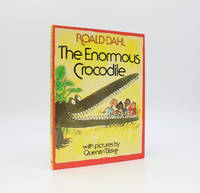
25671London: Jonathan Cape. 1978. First edition first printing. First edition first printing. Signed by the author. Publisher's original laminated boards. Illustrated in colour by Quentin Blake throughout. An excellent near fine copy the binding square and firm with minor bumping to the spine tips. The contents are clean throughout and without previous owner's inscriptions or stamps. Signed by Roald Dahl in blue ink to the verso of the front endpaper. An important book in Roald Dahl bibliography. The Enormous Crocodile was the first of Dahl's books to be illustrated by Quentin Blake beginning one of the most notable partnerships of author and illustrator in late 20th century children's literature. "The combination of Roald Dahl as storyteller with Quentin Blake as illustrator must be the recipe for a bestseller" - Times Literary Supplement 29 September 1978. Further details and images for any of the items listed are available on request. Lucius Books welcomes direct contact with our customers. London: Jonathan Cape. 1978 hardcover
42249Lavenham: The William Blake Trust 2009. Limited edition one of 36 special copies from a total edition of 150 copies. Folio. 95 1 pp. Publisher's wine red half calf over black moiré silk gilt lettered to the spine with a matching gilt lettered label to the upper board slipcase in matching moiré silk. Illustrated in colour and black and white; slipcase also housing a matching red full calf portfolio enclosing a card wallet holding fine reproductions of Blake's original watercolours mounted on card as per the originals. Just some slight dustiness to the slipcase a sumptuous production. An out-of-series set marked as such on the watercolours wallet being John Commander's own copy. Although not inscribed by him directly the set was acquired from Commander's estate. Loosely inserted is a 12 page typescript of a review of the work by his fellow Blake scholar Robert N. Essick with Commander's pencilled annotations at intervals concerning some of Essick's observations. Also enclosed is an original 6" x 4" colour photograph captioned in pencil on the rear "John Commander Bob Essick Detto unknown" dated "October 21 1991". Commander spent his life in publishing and for many years headed the Scolar Press. An expert on Blake he was heavily involved in the refounding of the William Blake Trust and was appointed as secretary and executive director of the organisation. He also wrote about Blake and is credited with the design and production of this work on the verso of the title page. The story of the origins and subsequent disappearance of William Blake's designs for "The Grave" are long and complicated. Blake had been commissioned by Robert Hartley Cromek to produce illustrations for Blair's poem in late 1805 intending for a published edition. Blake assumed he would also be employed to engrave the images and be paid accordingly. However Cromek had other ideas and gave the work to the Italian engraver Luigi or Louis Schiavonetti. Various miscommunications and provocations ensued causing Blake and Cromek to fall out. The published work eventually appeared in 1808 and Cromek passed away four years later at the age of 42. The whereabouts of Blake's designs for the next two decades are broadly known but after their sale in 1836 they completely disappeared. Nineteen of the watercolours in their original red portfolio reproduced faithfully here eventually turned up in Glasgow in 2001. Originally offered for sale together as a collection the ownership passed to a London art dealer who failed to find a buyer. They were subsequently individually lotted up including the case and sold at Sotheby's New York in 2006. Now split between "four different countries and two continents" the auction was the last time the collection was held in one place. Lavenham: The William Blake Trust unknown
18051277681805. BLAKE William HAYLEY William. Ballads founded on Anecdotes Relating to Animals with Prints Designed and Engraved by William Blake. London: Richard Phillips 1805. Octavo early 20th-century full blue morocco raised bands elaborately gilt-decorated spine top edge gilt uncut. $6000.Expanded second editionthe only obtainable editionof this poetry collection with five engravings by William Blake handsomely bound by Bedford.""These Ballads were originally intended to have been issued separately in fifteen quarto parts with numerous illustrations by Blake and for the benefit of the artist. Four parts were issued in 1802 but the series did not meet with success and was discontinued. Later it was arranged to issue them in the present again for Blake's benefit"" Keynes. This 1805 edition is an expanded version with additional poems of the extremely rare 1802 first edition which last appeared at auction 70 years ago. Blake reengraved the first three plates and added two more to illustrated the additional poems. The first three plates are in first state. Easson & Essick 41-44. Bookplates.Fine condition. hardcover
198186297Centre / Yale University Press. As New. 1981. Hardcover. 0300025505 . FREE UPGRADE to Courier/Priority Shipping Upon Request - IN STOCK AND IMMEDIATELY AVAILABLE FOR SHIPMENT - AS NEW THE TEXT BLOCK IS PRISTINE CLEAN UNMARKED AND IN EXCELLENT CONDITION - - Corresponds to ISBN: 0300025505. TWO 2 VOLUME SET. Volume 1: Text 668 pages; Volume 2: Illustrations1193 plates. Catalogue Raisonné Catalogue Raisonne Catalog Raisonnee Complete Paintings & Drawings -- with a bonus offer . Centre / Yale University Press hardcover
51-5393London: Messrs. Boydell & Co. circa 1803-1804 . Folio 31.5 x 43 cm. New half goatskin and marbled boards binding by the artisan binder Sasha Mosalov. 99 engraved plates a few with marginal defects.Provenance: Presentation copy from Hector John Graham-Toler 2nd Earl of Norbury; b. 27 June 1781 d. 3 January 1839. Hector John Graham-Toler 2nd Earl of Norbury was born on 27 June 1781.1 He was the son of John Toler 1st Earl of Norbury and Grace Graham Baroness Norwood of Knockalton. He married Elizabeth Brabazon daughter of William Brabazon and Elizabeth Phibbs on 1 January 1808. He died on 3 January 1839 at age 57 at Durrow Abbey Tullamore County Offaly Ireland shot dead by his butler.OCLC Number : 82919611.Engraved t.p. partly in script signed: Tomkins script.; Halliwell sculptA descriptive index and alphabetical list of the plates are prefixed. More than half the plates which are dated 1791-1803 are by R. Smirke W. Hamilton R. Westall F. Wheatley and James Northcote with a few each by Reynolds Opie Stothard and others. Among the engravers who contributed most work are James Parker Anker Smith and James HealthOn p. 4: Advertisement. Portrait of the late John Boydell . ; speculated imprint date based on his death date London: Messrs. Boydell & Co., circa 1803-1804 hardcover
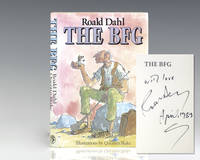
130928London: Jonathan Cape 1982. First edition early printing of this Dahl classic which has sold over 20 million copies. Octavo original cloth illustrated by Quentin Blake. Boldly signed by the author on the half-title page "with love Roald Dahl April 1989." Near fine in a near fine dust jacket bookplate. Roald Dahl is now considered one of the most beloved storytellers of the twentieth century. Dahl's ability to twist words into a clever and creative new language is fascinating to children and is evident in BFG. The gruesome descriptions of the horrid giants and the subtle allusions to other stories will entertain children young and old. An animated adaptation was released in theatres in 1987 with David Jason providing the voice of the BFG and Amanda Root as the voice of Sophie. It was also the basis for the 2016 film directed and co-produced by Steven Spielberg written by Melissa Mathison and starring Mark Rylance Ruby Barnhill Penelope Wilton Jemaine Clement Rebecca Hall Rafe Spall and Bill Hader. Jonathan Cape hardcover
1960136893Los Angeles: Twentieth Century-Fox 1960. Archive of scripts and revision pages for 56 episodes of the detective television series dated variously between 1958 and 1960. Copies belonging to screenwriter Lewis Reed with his manuscript name on the front wrapper of each episode.<br /> <br /> 36 scripts contain pink blue white and yellow revision pages many bound separately and laid in at the rear.<br /> <br /> Included are screenplays for nearly half of the 114-episode run of the series starring the sophisticated sharp-dressed jazz-loving private eye Peter Gunn played by Craig Stevens. Probably the only television show to ever rival the best films noir of the big screen with minimalist dialogue and bleak open-ended conclusions that challenge even the best of television today. <br /> <br /> Creator Blake Edwards would use the success of the series to jump start his film career going on to direct "Breakfast at Tiffany's" 1961 and the "Pink Panther" film series starring Peter Sellers.<br /> <br /> Noted composer Henry Mancini won an Emmy and two Grammy Awards for the show's well-loved theme song including the first Grammy ever awarded for Album of the Year.<br /> <br /> Scripts in Very Good to Near Fine condition. Mimeograph on eye-rest green or white stock. Twentieth Century-Fox unknown
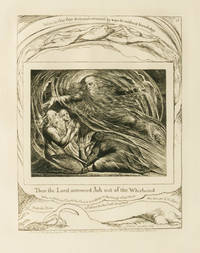
1825122290London: William Blake for John Linnell 1825. Fine. London William Blake for John Linnell 'Published as the Act directs March 8: 1825' in fact 1826. An original engraving printed surface 195 × 148 mm plus the credits paper size 377 × 271 mm matted with archival board and behind glass in a simple but apposite polished wooden frame visible image size 237 × 187 mm external dimensions 540 × 448 mm. Paper lightly cockled with a tiny closed tear to the bottom margin of the sheet well clear of the printed surface; essentially in fine condition. 'William Blake's "Illustrations of the Book of Job" primarily refers to a series of twenty-two engraved prints published 1826 by Blake illustrating the biblical Book of Job. It also refers to two earlier sets of watercolours by Blake on the same subject 1806 and 1821. The engraved "Illustrations" are considered to be Blake's greatest masterpieces in the medium of engraving and were also a rare commercial and critical success for Blake' Wikipedia. Plate 13 quotes Job 38:1-2 and 28 'Then the Lord answered Job out of the whirlwind / Who is this that darkeneth counsel by words without knowledge . Hath the Rain a Father & Who hath begotten the Drops of the Dew' and Psalms 104:3 'Who maketh the Clouds his Chariot & walketh on the Wings of the Wind'. The Blake authority G.E. Bentley Jr 'Blake Books. Annotated Catalogues of William Blake's Writings in Illuminated Printing .' Clarendon Press 1977 records that 'According to Linnell's "Job" accounts 150 "Proof" sets on India paper watermarked J WHATMAN TURKEY MILL 1825 and 65 on French paper watermarked J WHATMAN 1825 were printed by Lahee in March 1826. Then the word "Proof" was removed from the plates though it is still faintly visible on the copperplates and in some pulls and 100 sets were printed on drawing paper'. The example we have for sale is one of the latter group printed after the word 'Proof' was removed from the original copperplate. William Blake [for John Linnell] unknown
12702London: Jonathan Cape. 1988. First edition first printing. First edition first printing. Inscribed by the author. Publisher's original red cloth with gilt titles to the spine in dustwrapper. A lovely near fine copy the binding square and firm the cloth and gilt bright and fresh. The contents are clean throughout and without foxing or previous owner's inscriptions or stamps. Complete with the lightly creased dustwrapper which remains without fading loss or tears. A beautiful example of one of Dahl's most popular titles. Housed in a bespoke half morocco solander case. Inscribed by Roald Dahl in black ink on the front free endpaper "Johanna / Love / Roald Dahl". Provenance: Signed by Roald Dahl for the previous owner at Waterstones in Bath 1988. Further details and images for any of the items listed are available on request. Lucius Books welcomes direct contact with our customers. London: Jonathan Cape. 1988 hardcover
16423London: Jonathan Cape. 1980. First edition first printing. First edition first printing. Signed by the author and the illustrator. Publisher's original red cloth with gilt titles to the spine in dustwrapper. An excellent very near fine copy the binding square and firm with a hint of bumping at the spine tips. The contents are clean throughout and without previous owner's inscriptions or stamps. Complete with the lightly spine faded dustwrapper which remains without loss or tears and retains the correct £3.50 net publisher's price to the front flap. A lovely copy. Inscribed by the author in black ink on the half title "Best wishes / Roald Dahl / 7 March 1981 underlined" inscribed by the illustrator in black ink on the title page "Best wishes from / Quentin Blake / Dec 1983". Further details and images for any of the items listed are available on request. Lucius Books welcomes direct contact with our customers. London: Jonathan Cape. 1980 hardcover
198323841London: Jonathan Cape 1983. First edition first printing. published by Jonathan Cape in London 1983. This is a very good copy. The dust wrapper has some mild wear to the top and tail of the spine with some slight tearing to the top. There is slight rubbing at the edges. It has not been price clipped. The text blocks are toned and a little foxed at the side and top edges. Accompanied by one of a limited edition of 360 this being 21 published by the Roald Dahl Story Company of Dahl's manuscript for his alternate ending to the book. Designed by Laura Coppolaro the very good folder is a little stained and much of the string is missing. This is exceptionally scarce The "alternate ending" for Roald Dahl's The Witches exists in a special 360-copy edition of the book containing a version where the hero stays a mouse and he and his grandmother become witch hunters. In this version after the witches are defeated he and his grandmother use the Grand High Witch's machine to find and eliminate witches world-wide accepting his short mouse life-span to continue the fight. This is a variation of the book's original darker ending which differs from the happier conclusion of the 1990 movie adaptation. Jonathan Cape unknown
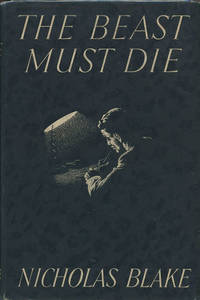
193851427London: Collins Crime Club 1938. 1938. First U.S. edition. Original fine bright orange cloth is tight and square in a bright fresh dust jacket with minor wear to the spine ends. The book is divided into three parts. The first section deals with the death of Martie a young boy killed by a hit-and-run driver. The father grieves and blames himself for having sent the boy out at dusk. At the same time he plans to kill the driver if and when he learns the identity. The second section deals with the father coming to grips with his son's death and devotes his energies to tracking down his son's killer. As he searches for the killer he develops a profile of the killer and looks for the right person to fill the bill as driver and killer. He decides upon a man named George Rattery whose life fits the bill of the father's mental picture of the killer. He decides to kill Rattery in a boating accident. Section three reveals that George Rattery is dead by poisoning the father's diary comes to light and the police accuse him of murdering Rattery. He calls in Nigel Strangeways to clear his name. After much investigation Strangeways brings the case to a stunning conclusion. A Haycraft-Queen Cornerstone title. Highly recommended and an exceptional copy. Housed in a clamshell case with titles stamped in silver on the spine. Collins Crime Club, [1938]. hardcover
180576378Chichester and London:: J. Seagrave; for Richard Phillips 1805. First edition. old full straight-grain morocco; gilt spine; all edges gilt. Some inoffensive very slight tanning to a couple of leaves; contents almost entirely clean and fine. Some scuffing to the spine and extremities of the leather but tight sound and attractive. . 12mo. With Prints Designed and Engraved by William Blake. The five plates are in the first state. Keynes 74. There are two old pencil notes of provenance: one that this copy was in the "Hy. White sale" and the other a 1902 ownership signature. J. Seagrave; for Richard Phillips, hardcover