18 344 résultats
186918495Boston: J.E. Farwell & Co. 1869. 12pp. Stitched partly uncut. Light wear title and last page dustsoiled Good. <br /> <br /> Blake seeks subscribers for $2000000 of the capital stock of his new Company which intends to purchase "a line of American Steamships between Boston and Liverpool." $1.5 million will be used for purchasing the steamers and the other half million for this and that. He anticipates profitable traffic in passengers and freight. He includes a Form of Subscription estimates of profit and other useful material including a description of the steamer Ontario which "is already fully ship-rigged." OCLC records many many microform copies but only one of the real thing. <br /> FIRST EDITION. Not in Sabin Eberstadt or Decker. OCLC: WRes. Hist. Soc. J.E. Farwell & Co. unknown
32639Printed broadside 5" x 8" with salutation in ink manuscript. Some margin browning and light margin chipping else Very Good.<br /> <br /> Blake was Pastor of the First Congregational Church in Waupun. Beneath his printed signature is written in ink "Pastor Cong. Ch". Professor Conatty was T.J. Conatty a public school teacher in Kenosha and a prominent figure in the Wisconsin Teachers' Association. He was later implicated in a bribery scheme with James Rood Doolittle Senator from Wisconsin 1857-1869. On Conatty's behalf Doolittle was to use his influence with President Lincoln to obtain cotton permits during General Banks's occupation of New Orleans; in return Doolittle would receive 25% of the profits. We haven't ascertained whether Senator Doolittle is the "Br. Doolittle" to whom this printed letter is addressed. <br /> This unusual ephemeral Civil War broadside is unrecorded. Waupun is in southeastern Wisconsin about sixty miles northwest of Milwaukee.<br /> Not located on OCLC as of October 2023 or anywhere else. unknown
1023970651.Ghardcover. Good. Access codes and supplements are not guaranteed with used items. May be an ex-library book. hardcover
1359171185.Ghardcover. Good. Access codes and supplements are not guaranteed with used items. May be an ex-library book. hardcover
18161068091816. London: Henry Colburn 1816. <br /> <br /> 8vo viii 449 pp. With 2 leaves of ads at the front and another 2 at the back dated 1818. Original boards paper backstrip slightly rubbed with loss of label some wear to boards a very fine copy entirely uncut and in original state as issued.<br /> <br /> § First edition of a fascinating contemporary reference work. It includes one of the earliest biographical references to William Blake "an eccentric and very ingenious artist" as well as a large number of writers such as Wordsworth Coleridge and Byron and hundreds of other authors forgotten today but amazingly no Shelley Mary or Percy no Keats and no Jane Austen. Bentley Blake Books 2929: "references to Blake under William Hayley W. Blake and William Blake". Some claim Watkins authored A-K and Shoberl the rest. unknown
elala2395London: Trianon Press for The William Blake Trust 1970. No. 567 of an Edition Limited to 662 copies. 4to. ff. 4. 10 collotype plates printed in colour with some water-colour washes added by hand. printed on Arches rag paper. original quarter morocco hand-marbled paper sides. matching slipcase London: Trianon Press for The William Blake Trust, 1970 unknown
18761029001876. London: Spottiswoode & Co. 1876. <br /> <br /> 4to 71pp. Tipped-in illustrations between pages 14 & 15. Original wrappers worn contents good.<br /> <br /> § An astonishing exhibition catalogue of 333 entries with a 9pp. introduction by William B. Scott. Bentley Blake Books 571. unknown
1880140947503London: Macmillan and Co 1880. Second Edition. Very Good. Second edition A New and Enlarged Edition Illustrated from Blake's Own Works with additional Letters and a Memoir of the Author. Plates Portraits and Facsimiles. xxi 2 1-431; ix 4 1-383 pp. Bound in the publisher's dark green cloth boards ornately stamped in gilt. Complete in two volumes. Very Good. Light wear to cloth with some rubbing through at joints and tips light rubbing to gilt. Foxing and light offsetting to endsheets and preliminaries contemporary ownership notation to both volumes and light toning to contents. The exceptional second edition of Blake's life and prose a true apex of late Victorian decorated bindings. Macmillan and Co unknown
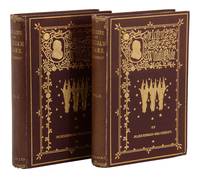
1863140947684London: Macmillan and Co 1863. First Edition. Near Fine. First edition first printing. xiv 2 389 1; viii 268 pp. Additional 38 photolithographic plates reproducing Blake's engravings bound in at rear of second volume. Bound in publisher's maroon pebbled cloth with decorative gilt stamping to front boards and lettering to spines. Complete in two volumes. Near Fine with fading and slanting to spines light rubbing to extremities and slight bumping to corners. Front hinges starting front joints starting at head of spine L-shaped split to top of rear joint of Volume I advancing across the spine panel and Volume II binding exposed at page 268. The binding by Burn & Co. their ticket to Volume II back pastedown is an unusually attractive example of High Victorian design and the gilt remains bright against the maroon cloth. <p>Alexander Gilchrist's biography and selected works of William Blake established Blake's place in the Western canon and remains a standard reference work. The artist and poet a peripheral figure at the time of his death in 1827 was taken up by the pre-Raphaelites several of whom completed the second volume of Gilchrist's work after he died suddenly of a fever. Chief among the secondary authors was Dante Gabriel Rossetti who had purchased Blake's annotated sketchbook at the age of nineteen and added his own pages. An important work with a powerful influence on the art and literature of the late 19th century. Macmillan and Co unknown
178353851783. London: Printed in the Year 1783. London: Noel Douglas 1926. <br /> <br /> 8vo original paper over boards. Very good.<br /> <br /> § Trade edition of this handsome facsimile of the very rare original edition of 1783. Bentley 132. "The original 1783 copies were seventy-two pages in length printed in octavo by John Flaxman's aunt who owned a small print shop in the Strand and paid for by Anthony Stephen Mathew and his wife Harriet dilettantes to whom Blake had been introduced by Flaxman in early 1783. Each individual copy was hand-stitched with a grey back and a blue cover reading "POETICAL SKETCHES by W.B." It was printed without a table of contents and many pages were without half titles. Of the extant copies eleven contain corrections in Blake's handwriting. Poetical Sketches is one of only two works by Blake to be printed conventionally with typesetting; the only other extant work is The French Revolution in 1791 which was to be published by Joseph Johnson. However it never got beyond the proof copy and was thus not actually published.<br /> <br /> Even given the modest standards by which the book was published it was something of a failure. Alexander Gilchrist noted that the publication contained several obvious misreadings and numerous errors in punctuation suggesting that it was printed with little care and was not proofread by Blake thus the numerous handwritten corrections in printed copies. Gilchrist also notes that it was never mentioned in the Monthly Review even in the magazine's index of "Books noticed" which listed every book published in London each month signifying that the publication of the book had gone virtually unnoticed. Nevertheless Blake himself was proud enough of the volume that he was still giving copies to friends as late as 1808 and when he died several unstitched copies were found amongst his belongings." Wikipedia. unknown
178392461783. London: Printed in the Year 1783. London: Noel Douglas 1926. <br /> <br /> 8vo original paper over boards. Gift inscription in front endpaper. Very good.<br /> <br /> § Trade edition of this handsome facsimile of the very rare original edition of 1783. Bentley 132. "The original 1783 copies were seventy-two pages in length printed in octavo by John Flaxman's aunt who owned a small print shop in the Strand and paid for by Anthony Stephen Mathew and his wife Harriet dilettantes to whom Blake had been introduced by Flaxman in early 1783. Each individual copy was hand-stitched with a grey back and a blue cover reading "POETICAL SKETCHES by W.B." It was printed without a table of contents and many pages were without half titles. Of the extant copies eleven contain corrections in Blake's handwriting. Poetical Sketches is one of only two works by Blake to be printed conventionally with typesetting; the only other extant work is The French Revolution in 1791 which was to be published by Joseph Johnson. However it never got beyond the proof copy and was thus not actually published.<br /> <br /> Even given the modest standards by which the book was published it was something of a failure. Alexander Gilchrist noted that the publication contained several obvious misreadings and numerous errors in punctuation suggesting that it was printed with little care and was not proofread by Blake thus the numerous handwritten corrections in printed copies. Gilchrist also notes that it was never mentioned in the Monthly Review even in the magazine's index of "Books noticed" which listed every book published in London each month signifying that the publication of the book had gone virtually unnoticed. Nevertheless Blake himself was proud enough of the volume that he was still giving copies to friends as late as 1808 and when he died several unstitched copies were found amongst his belongings." Wikipedia. unknown
17831008001783. London: Printed in the Year 1783 i.e. London: Noel Douglas 1926. <br /> <br /> 8vo 70pp. Original paper over boards with worn printed glassine wrapper. Pages unopened. Very good.<br /> <br /> § Trade edition of this handsome facsimile of the very rare original edition of 1783. Bentley 132. "The original 1783 copies were seventy-two pages in length printed in octavo by John Flaxman's aunt who owned a small print shop in the Strand and paid for by Anthony Stephen Mathew and his wife Harriet dilettantes to whom Blake had been introduced by Flaxman in early 1783. Each individual copy was hand-stitched with a grey back and a blue cover reading "POETICAL SKETCHES by W.B." It was printed without a table of contents and many pages were without half titles. Of the extant copies eleven contain corrections in Blake's handwriting. Poetical Sketches is one of only two works by Blake to be printed conventionally with typesetting; the only other extant work is The French Revolution in 1791 which was to be published by Joseph Johnson. However it never got beyond the proof copy and was thus not actually published.<br /> <br /> Even given the modest standards by which the book was published it was something of a failure. Alexander Gilchrist noted that the publication contained several obvious misreadings and numerous errors in punctuation suggesting that it was printed with little care and was not proofread by Blake thus the numerous handwritten corrections in printed copies. Gilchrist also notes that it was never mentioned in the Monthly Review even in the magazine's index of "Books noticed" which listed every book published in London each month signifying that the publication of the book had gone virtually unnoticed. Nevertheless Blake himself was proud enough of the volume that he was still giving copies to friends as late as 1808 and when he died several unstitched copies were found amongst his belongings." Wikipedia. unknown
1922641926The Studio Magazine 1922. Hardcover. Used-Very Good. Quarter vellum paper covered boards gilts stamp spine and front board with navy and gilt title inlay. ix 29 pp. plus 104 plates in b&w and color. Rough cut edges. Scuffing to vellum; shelf wear to boards including mild fraying at corners. Foxing to endpapers. In very good condition. The Studio Magazine hardcover
192679045London and New York:: Ernest Benn; Charles Scribner's Sons 1926. First edition; deluxe limited; No. 30 of 100 copies; with an extra plate color frontispiece; but lacking the separate portfolio. publisher's quarter vellum and decorated paper-covered boards; t.e.g. This copy lacks the portfolio containing a second set of all the color and collotype plates. Edges of boards rubbed and light soiling to the vellum spine; contents fine. Folio. Illustrated; 20 plates in colour and 62 in collotype. Additional postage applicable. Ernest Benn; Charles Scribner's Sons, hardcover
191272561Boston and New York:: Houghton Mifflin Company 1912. First edition. publisher's gilt-lettered cloth. Bookplate on pastedown; light rubbing to cloth; clean tight and sound. 4to. Illustrated. Houghton Mifflin Company, hardcover
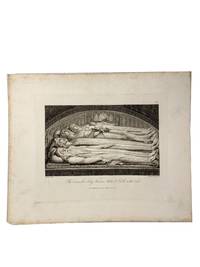
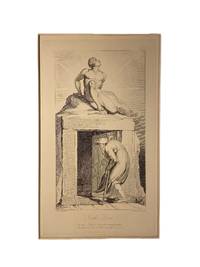
1808144601808. First Quarto Edition. Near fine. Single sheet 35.4 x 29.2cm : plate impression 21.4 x 26.7cm : text and image after the design by William Blake.<br /> <br /> Light toning to edges. From the First Quarto edition of Robert Blair's meditation on death and resurrection. Blair's poem is remembered today for having some of William Blake's most memorable designs. These were executed by Italian engraver Luigi Schiavonetti who was awarded the commission for executing the plates despite Blake having been asked to create the designs Blake Books 435 B. unknown
1870144611870. Third Edition. Fine. Single sheet 37.5 x 28.4cm : plate impression 29.7 x 17.5cm : text and image after the design by William Blake. From the third edition of Robert Blair's meditation on death and resurrection. Blair's poem is remembered today for having some of William Blake's most memorable designs. These were executed by Italian engraver Luigi Schiavonetti who was awarded the commission for executing the plates despite Blake having been asked to create the designs Blake Books 435 E. unknown
1974Q-038506053XAnchor Press/Doubleday 1974. Hardcover. New. In shrink wrap. Looks like an interesting title! Anchor Press/Doubleday hardcover
180372008Chichester:: Printed by J. Seagrave for J. Johnson 1803-1804. First edition. old full mottled calf.; gilt spines with red gilt-lettered spine labels. Some light marginal dampstaining in Vol. I; occasional inoffensive foxing. A dozen tiny wormholes to the front board of Vol. I; corners worn; some cracking to joints but cords still holding. Folio. Illustrated from engravings including four after William Blake. With an Introductory Letter to the Right Honourable Earl Cowper. Additional postage will be applicable. Printed by J. Seagrave, for J. Johnson, unknown
192772537London:: The Nonesuch Press 1927. First edition; No. 1224 of 1480 copies. publisher's quarter art vellum and marbled boards. . Very light soiling and use to the binding; contents clean; tight and sound. . Small folio. Illustrated. The Nonesuch Press, hardcover
37695Oxford At Ther Clarendon Press 1973. xv 105pp. N120 with accompanying transcripts. Original cloth in orange dustwrapper slightly rubbed chipped at top and bottom edges and sunbleached towards spine. A complete facsimile of William Blake's notebook on full-page b/w photograhic plates with each page's accompanying typographic reproduction on facing page. A beautiful copy in very good to near-fine condition. . First edition thus. Oxford, At Ther Clarendon Press, 1973. hardcover
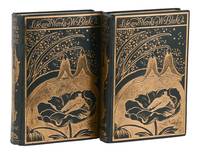
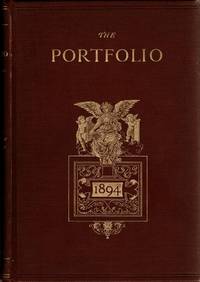
189432183AB1894. Original / First Edition. 21 Volumes bound in seven Volumes. London Seeley and Co. 1894-1896. Quarto 19.2 cm wide x 27.2 cm high. c. 1600 pages with a total of 37 Etchings / Engravings. Hardcover / All Volumes in their original very decorative Art Nouveau-Bindings with gilt lettering and ornament on spine and frontcover. All Bindings in protective Collectors-Mylar. Excellent actually stunning condition with only minor signs of wear and occasional foxing to some of the illustrations only. One layer loosened in the 1895-Volume. This collection of 21 Volumes Bound in seven Volumes includes: 1. 1894 - Annual Volume One 3 Volumes in 1: I. William Sharp - "Fair Women In Painting and Poetry" With Etchings by Alma-Tadema / Sir Peter Lely / Daniel Mytens etc. II. C.J.Cornish - "The New Forest" Illustrated by Lancelot Speed Alexander Ansted and John Fullwood III. Walter Armstrong - "Thomas Gainsborough" _______________________________________________________ 2. 1894 Annual Volume Two - 3 Volumes in 1: I. P.G.Hamerton - "The Etchings of Rembrandt" With Plates Etched in Facsimile by Amand Durand The four wonderful Rembrandt-Etchings are: a. Rembrandt with the Broad Hat and Embroiderd Mantle b. The Rat Killer c. Johannes Lutma d. Rembrandt's Mother seated looking to the right II. Rev. W.K.R.Bedford - "MALTA and the Knights Hospitallers" With Plates etched: a. "Isola Point" - Etched by A. Ansted b. "Rabato Gozo" - Drawn by T.H.Crawford and Engraved by Walter L. Colls c. "Citta Vecchia" - Etched by A. Ansted from a drawing by Edward Lear d. "Chapel of our Lady of Philermos" - Engraved by Walter L. Colls III. A.H. Church - "Josiah Wedgwood - Master-Potter" His Precursors / His Early Years / As Master-Potter / His Ceramic Improvements / His Invention of the "Jasper" Body / The Barberini or Portland Vase / Cameo His Cameos Medallions and Plaques / His Portrait Cameos / Vases in the Jasper Body / Miscellaneous Productions in Jasper / Later Years / Position as an Art-Potter / Collections and Collectors // Illustrations in the Wedgwood-Volume include: 1. Portland Vase / 2. Plaque Sacrifice of Iphigenia / 3. Two Medallions A Zephyr / 4. Medallion Portrait of Flaxman __________________________________________________ 3. 1895 - Annual Volume One - 3 Volumes in 1: I. C.J.Cornish - "The Isle of Wight" a. With an original etching by John Fullwood: "Freshwater Gate" Frontispiece b. With an original etching after E.Duncan: "Isle of Wight - The Fleet leaving Portsmouth" c. With an original etching by John Fullwood: "Bonchurch" d. With an original etching by Thomas Huson: "Sandown Bay" Also includes several text-illustrations of the Isle of Wight II. Julia Cartwright - "Raphael in Rome" III. L.Binyon - "Dutch Etchers" _____________________________________________________ 4. 1895 - Annual Volume Two - 3 Volumes in 1: I. Julia Cartwright Mrs. Henry Ady - "The Early Work of Raphael" Illustrated II. Walter Armstrong - "The Art of William Quiller Orchardson" WIth original engravings and text-illustrations III. George Grahame - "Claude Lorrain - Painter & Etcher" Illustrated _______________________________________________________ 5. 1895 - Annual Volume Three - 3 Volumes in 1: I. Richard Garnett - "William Blake - Painter and Poet" With an etching "The Sons of God" and several illustrations also in colour: a. "The Sons of God" From the Book of Job b. "The Lamb and Infant Joy" from Songs of Innocence c. "The Fly and the Tiger" From Songs of Experience d. "The Book of Thel Title-page in two facsimiles by W.Griggsl e. "America" With 19 further text-illustrations by William Blake including a rare portrait of Blake II. Olivier Georges Destree - "The Renaissance of Sculpture in Belgium" Illustrated III. W.H.James Weale - "Gerard David - Painter and Illuminator" Illustrated ______________________________________________________________________ 6. 1895 - Annual Volume Four - 3 Volumes in 1: I. W.J.Loftie - "Whitehall" With many interesting historical illustrations on Whitehall and Scotland-Yard II. Professor Anderson - "Japanese Wood-Engravings" Illustrated beautifully some in colour after Utagawa Toyokuni Utamaro Katsugawa Shuncho etc. III. Claude Phillips - Antoine Watteau Illustrated _______________________________________________________________ 7. 1896 - Annual Volume - 3 Volumes in 1: I. Claude Phillips - The Picture Gallery of Charles I. Illustrated II. Cecilia Waern - "John La Farge - Artist and Writer" Illustrated with a stunning engraving of "Prosperitas" an illustration of "The Wolf Charmer" etc. etc. III. Richard Garnett - Richmond on The Thames Illustrated with stunning engravings by a. John Fullwood "Richmond Hill" - Engraving b. Clough Bromley "The Thames from Buccleugh Gardens" - Engraving c. T.Huson "The View from Richmond Hill" - Engraving d. T.Huson "Richmond Bridge" - Engraving and many text-illustrations "The Portfolio" was a British monthly art magazine published in London from 1870 to 1893. It was founded by Philip Gilbert Hamerton and promoted contemporary printmaking especially etching and was important in the British Etching Revival. Early contributors included Francis Turner Palgrave 18241897 and Sidney Colvin 18451927. The mid-nineteenth century in France and Britain saw a rise in the interest in etching. Hamerton had spent the 1860s in France with his French wife Eugénie. The impetus for the launch of The Portfolio came in the wake of the foundation in Paris of the Société des aquafortistes in 1862 and to a lesser extent from the longer established Etching Club from 1838. Etchings by many French etchers such as Paul Rajon 18431888 and Alfred Brunet-Debaines 18451939 were a marked feature of the publication. Indeed The Standard remarked in 1874 that the publication's "speciality as probably most people know is the etchings with which it is adorned." Rajon published twelve etchings in the periodical before his untimely death. The New York Times lavished praise on the publication when in 1875 it remarked that it could not "eulogize too highly the merits of this periodical in all its departments. It is without question the most beautiful in regard to illustration which emanates from the press." The late nineteenth-century British author George Gissing wrote in his diary for December 1895 sic. that he took the magazine for his son because of its good pictures. In a survey of the etching revival in 1878 the Magazine of Art highlighted the centrality of Hamerton and his monthly magazine which had "so ably and unceasingly pleaded the cause of etching" in Britain. Wikipedia ______________________________________________________________________ Philip Gilbert Hamerton 10 September 1834 4 November 1894 was an English artist art critic and author. He was a keen advocate of contemporary printmaking and most of his writings concern the graphic arts. He was an important theorist of the English Etching Revival. Hamerton was born at Laneside a hamlet near Shaw and Crompton Lancashire England. His mother died giving birth to him and his father died ten years later. When he was about five he was sent to live with his two aunts at an estate called the Hollins1 on the edge of Burnley where he attended Burnley Grammar School. Hamerton's first literary attempt a volume of poems was unsuccessful leading him to devote himself for a time entirely to landscape painting; he camped out in the Scottish Highlands where he eventually rented the former island of Inistrynich in Loch Awe upon which he settled with his wife Eugénie Gindriez the daughter of a French republican magistrate in 1858. Discovering after a time that he was more suited to art criticism than painting he moved to Sens and later to Autun3 where he produced his Painter's Camp in the Highlands 1863 which was very successful and prepared the way for his standard work on Etching and Etchers 1866. In the following year he published Contemporary French Painters and in 1868 a continuation Painting in France after the Decline of Classicism. He had by now become art critic to the Saturday Review which necessitated frequent visits to England forcing him to give it up. He proceeded in 1870 to establish and edit an art journal of his own The Portfolio a monthly periodical each number of which included of a monograph upon some artist or group of artists often written by him. The journal championed printmaking especially etching. He selected and wrote the accompanying text for Etchings by French and English Artists London: Seeley 1874 which included work by Alphonse Legros and Léon Gaucherel. The discontinuation of his painting gave him time for writing and he successively produced The Intellectual Life 1873 perhaps the best known and most valuable of his writings; Round my House 1876 notes on French society by a resident; and Modern Frenchmen 1879 admirable short biographies. He also wrote two novels Wenderholme 1870 and Marmorne 1878. In 1884 Human Intercourse another volume of essays was published and shortly afterwards Hamerton began his autobiography which he brought down to 1858. In 1882 he issued a finely illustrated work on the technique of the great masters of various arts under the title of The Graphic Arts and three years later another splendidly illustrated volume Landscape which traces the influence of landscape upon the mind of man. His last books were: Portfolio Papers 1889 and French and English 1889. In 1891 he removed to Villa Clématis in the Parc des Princes district of Boulogne-Billancourt in the southwest suburbs of Paris. He died there suddenly on 4 November 1894 aged sixty occupied to the last with his labours on The Portfolio and other writings on art. In 1897 'Philip Gilbert Hamerton: an Autobiography 18341858; and a Memoir by his wife 18581894' was published. Wikipedia hardcover
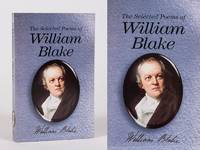
199460193AB1994. Hertfordshire Wordsworth Editions Limited 1994. 12.5 cm x 19.5 cm. XXII 384 pages. Original Softcover. Very good condition with only minor signs of external wear. Some annotations in pencil on pages V - VI and pages 191 - 196. Previous owners name in ink pen inside front cover. Includes for example the following chapter titles covering Blakes poems and other writings: Songs of Innocence and Experience / The Rossetti Manuscript / Poems from letters / The Marriage of Heaven and Hell / Milton / Jerusalem etc. paperback
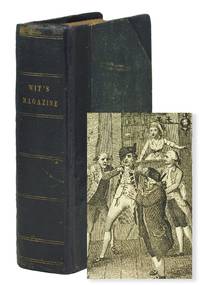
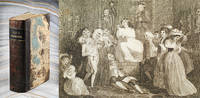
17841266411784. London: Harrison and Co. 1784-1785. <br /> <br /> 2 vols. in one 8vo 1-9 10-485 1; 1-5 6-193 1 pp. Lacking the folding frontispiece but with the 4 other plates engraved by Blake after Samuel Collings. Contemporary half morocco with pebbled cloth boards. A neatly restored copy plates with some closed tears and repairs.<br /> <br /> § Only edition quite scarce. "These are the only caricature prints engraved by Blake. The graphic style is appropriately broad and rugged particularly in the barnyard scene. 'Fun I love but too much fun is of all things most loathsom' Blake to Trusler 1799. Blake may have felt that the great rage for caricature prints in the 1790s was a hindrance to the sale of his own original graphic works." Essick CBE p. 37. Bentley Blake Books 513. Essick William Blake's Commercial Book Illustrations XVI. unknown
17841046721784. London: Harrison and Co. 1784-1785. <br /> <br /> 2 vols. in one 8vo 1-9 10-485 1; 1-5 6-193 1 pp. With a folding frontispiece second version and numerous folding engraved plates of which 5 are engraved by Blake one after Stothard and four after Samuel Collings. Contemporary marbled boards modern-calf backstrip and tips a very good set with good margins around the plates: rare. <br /> <br /> § Only edition. "These are the only caricature prints engraved by Blake. The graphic style is appropriately broad and rugged particularly in the barnyard scene. 'Fun I love but too much fun is of all things most loathsom' Blake to Trusler 1799. Blake may have felt that the great rage for caricature prints in the 1790s was a hindrance to the sale of his own original graphic works." Essick CBE p. 37. Bentley Blake Books 513. Essick William Blake's Commercial Book Illustrations XVI. unknown