46 412 résultats
201908071Paris, Zephyr editions , 2011 ; in-4, 48 pp., cartonnage de l'éditeur. Eo.
197644211976 P., Arthaud, 1976, grand in 8 broché, 351 pages
1943781943 Paris, Denoël, 1943, in 12 broché, 221 pages ; bande-annonce.
5349Paris, Réunion des musées nationaux, 1986. Fort in-4, broché, nombreuses illustrations.
5394Châteauroux (Indre). Indifférences. 1987. In-8° oblong en feuilles sous couverture à rabats. Non paginé [8 pages]. E.O. tirée à 154 exemplaires sur Rives. Une gravure hors texte sur contreplaqué, " percée par les sept lettres découpées de Georgia ", réalisée et tirée en violet nocturne par René Bonargent.
19413Neuilly sur Seine, S.F.A, 1979. In-8, 468 pp., broché, couverture originale imprimée.
1960LFA-126728013Un ouvrage de 94 pages, format 140 x 185 mm, illustré, broché, publié en 1960, Impr. Darantière, bon état
200801670Paris, Stock, 1999 ; in-8, 260 pp., broché, couverture illustr. Quand les actionnaires font la révolution.
1757168101757 basane marbrée, dos à nerfs., tr. r. in-4, (8ff.), LXIIpp., (1f.), 504pp.; XXIV-272pp., P. chez les Associés 1757
1982287751982 P., Fayard, 1982, in 8° broché, 398 pages ; carte hors-texte.
14731Nevers, Roch Fils, [1830] ; in-8, en feuilles sous couverture imprimée du titre-12 pp.
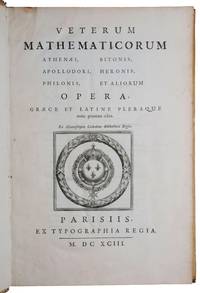
16936467Paris: Typographia Regia 1693. First edition. <p>First edition a very fine copy of this collection of early Greek writings on technology especially military technology and hydrostatics. It contains several treatises on the mechanics and siege operations or poliorcetica of the Hellenistic period the period between Alexander and Augustus including the construction and management of projectile engines.</p>. DIBNER 84: ANCIENT GREEK TECHNOLOGY. <p>First edition of this collection of early Greek writings on technology especially military technology and hydrostatics. It contains several treatises on the mechanics and siege operations or poliorcetica used in the Hellenistic period the period between Alexander and Augustus including the construction and management of their projectile engines. The first six works in the volume comprise the writings on the subject of military engines that were compiled by Athenaeus Apollodorus Biton Heron and Philon. These works include the first edition in both Greek and Latin of Biton's Construction of War Machines and Artillery of extant part of the Mechanike Syntaxis attributed to Philon of Byzantium and of the Poliorcetica of Apollodorus of Damascus. These are followed by the Greek and Latin texts of Hero of Alexandria's works on hydrostatics the Pneumatica and Automata which include what some regard as the first description of a steam-engine; this is the first printing of the Greek text of these works. Thévenot the King's librarian to Louis XIV prepared the present work from a rather defective secondary manuscript Codex Parisinus 2435. After Thévenot's death in 1692 it was revised by the mathematician La Hire with insightful annotations by Boivin an official in the King's library. It is one of three early publications of the French Academy of Sciences grouped together as Dibner 84. "Printed at the royal press in small editions they were intended as gifts for the King and Academy. In size binding and beauty of the plates they are among the most sumptuous books in science" Dibner. This is a rare book on the market only eight copies having appeared at auction in the last 40 years. The Evelyn copy was sold at Christie's in 1977.</p> <br /> <p>To gain access to the walls of a site under siege a siege tower or ram was brought into position and used to launch an attack onto the walkway aided by missile fire from the higher levels of the tower. Simultaneous attacks with scaling ladders took place. A siege tower is a specialized siege engine constructed to protect assailants and the ladders used when approaching the defensive walls of a fortification. The tower was usually rectangular with four wheels and a height roughly equal to that of the wall; it was sometimes higher to allow archers to stand on the top and fire into the fortification. The tower was made chiefly of wood but sometimes there were metal components as well. They were unwieldy to manoeuvre and slow to assemble and consequently were usually constructed at the siege site. Sometimes siege towers themselves incorporated other devices including artillery rams and dropbridges. Two main types of artillery equipment were used in this period: bolt-throwers ballistae: used for picking off prominent individuals and stone-throwers scorpiones onagri. Stone throwers could cause structural damage but were generally confined to firing at towers gates or siege machinery. Artillery might use incendiary ammunition when firing at gates or equipment.</p> <br /> <p>In common with much Byzantine literature poliorcetica draw heavily on earlier classical material. Since these were composed before the development of heavy artillery the poliorcetica are not so much concerned with large machines but rather with describing techniques for bringing men close to fortifications and then ways of undermining them. They also suggest various psychological tricks which might be used to outwit the enemy. Such ancient works on military machines were a source of fascination to the Italians of the late 15th and 16th centuries not only because of their historic interest but also as a source for modern inventions to be used in contemporary warfare and several of these works were first published in Renaissance Italy.</p> <br /> <p>The present volume begins with the De Machinis of Athenaeus a Cilician ex-statesman living in Rome in the 20s B.C. and a contemporary of the architect-engineer Vitruvius who like Vitruvius worked under the patronage of the Emperor Augustus Vitruvius devoted Book 10 of his De Architectura to machines. In addition to describing individual siege engines and theorizing on tactics Athenaeus draws on actual instances from history of the use of these machines in order to make various points and elucidate his text.</p> <br /> <p>The author of the next text is Apollodorus of Damascus who was a Roman architect and engineer of the late 1st to early 2nd century A.D. As Emperor Trajan's architect and military engineer he was responsible for Trajan's forum and possibly Trajan's column and produced designs for new siege machines. In his treatise Poliorcetica he describes a system of banks and ditches and also sheds that would be needed to protect the legionaries during undermining work or to carry battering rams against a tower gate or wall. Next he describes the construction of a siege tower followed by a system of interlocking ladders. He concludes his treatise with a description of a battlemented raft for river assaults. Although some of the elaborations are considered somewhat unrealistic − for example the addition of a torsion-powered truncheon to the end of a battering ram − and some of these are believed to have been added by a later editor the core of Apollodorus' text is believed to be authentic and to accurately describe highly effective machinery. Apollodorus dedicated Poliorcetica to the Emperor Hadrian perhaps an attempt to gain forgiveness for an earlier insult. On that occasion Trajan was discussing with Apollodorus the buildings which the great architect had built in Rome. Hadrian's assessment only demonstrated his ignorance which was bluntly pointed out by Apollodorus. Hadrian never forgot the insult and when he came to power banished Apollodorus accused him of several crimes and had him put to death.</p> <br /> <p>The third text in the volume is the Mechanike Syntaxis attributed to Philon of Byzantium who is believed to have been born about 280 B.C. in Byzantium and to have died around 220 B.C. Only the fourth and fifth books of this work have come down to us. Although there are few references to him in literature he is mentioned by Vitruvius. Amongst other weapons of siegecraft he describes the catapult recently invented by Ctesibius fl. 285-222 BC a Greek or Egyptian inventor and mathematician and probably the first head of the Museum at Alexandria. From this Philon's treatise can be dated fairly accurately to around 250 B.C. He describes journeys he made to Rhodes and to Alexandria to study catapults and it seems he may have earned his living advising military rulers.</p> <br /> <p>"The fourth book is headed κ τν Φιλνο βελοποιικν and the general subject is the manufacture of missiles. He mentions in it an invention of his own which he denominates ξυβλη p. 56. In the fifth book we are shocked to find that while recommending a besieging army to devastate the open country on the approach of an enemy he advises them to poison the springs and the grain which they cannot dispose of p. 103; and what renders this the worse he mentions his having treated of poisons in his book on the preparations that should be made for a war. What principally attracted attention to this work in modern times is his notice of the invention of Ctesibius p. 77. &c. The instrument described by him named εÏτονο acted on the property of air when condensed and is evidently in principle the same with the modern air-gun" A Dictionary of Greek and Roman Biography and Mythology<br /> William Smith ed. </p> <br /> <p>Philon's work is followed by the brief treatise of Biton of Pergamon 3rd or 2nd century B.C. about whom little is known; it is the only extant work to give a full description of advanced tension catapults. Biton's handbook describes four tension bow catapults a helepolis city-taker = siege tower and a sambuca mechanical scaling ladder. The bow catapults consisted of two stone throwers small and large and two bolt shooters a medium "belly bow" and mountain "belly bow". The latter took their name from the concave rest at their rear end against which the archer braced his stomach while drawing the bow. The work is dedicated to a King Attalus and was therefore composed between about 230 BC when Attalus I assumed the title of King and 133 BC death of Attalus III. As Biton mentions older types of catapults but not the torsion catapult that was otherwise well attested from the end of the 4th cent. BC the work probably belongs to the early years of the reign of Attalus I King of Pergamum 241-197 B.C. We do not know if Attalus employed the devices Biton described but they were definitely used in numerous later sieges and naval battles.</p> <br /> <p>The final two texts of siegecraft in the volume the Belopoeica and the Cheiroballistra are both attributed to Heron of Alexandria ca. 10-75 AD. Heron possibly taught at the Museum at Alexandria since many of his writings have the appearance of student lecture notes. The Belopoeica "On arrow making" describes the hand-held "belly bow" also discussed by Biton. The Cheiroballistra describes a small hand-held catapult. Some of Heron's designs derived from the works of Ctesibius none of whose works survive although they are mentioned by Vitruvius Athenaeus and Philo of Byzantium as well as Heron. In 1616 Bernardino Baldi 1553-1617 published a Latin translation of Heron's Belopoeica along with Heron's Greek text and a biography of Heron also written in Latin. Some of Baldi's commentary is appended to the present work.</p> <br /> <p>The volume concludes with the Pneumatica and Automata of Hero or Heron of Alexandria fl. 62 CE. "The Pneumatica in two books describes a menagerie of mechanical devices or "toys": singing birds puppets coin-operated machines a fire engine a water organ and his most famous invention the aeolipile the first steam-powered engine. This last device consists of a sphere mounted on a boiler by an axial shaft with two canted nozzles that produce a rotary motion as steam escapes" Britannica. "The introduction treats the occurrence of a vacuum in nature and the pressure of air and water . Some of the theory is right some is wrong for instance the horror vacui of nature but it was the best theoretical explanation to be had at the time . The first chapters most of them taken from Philo's Pneumatics describe experiments to show that air is a body and that it will keep water out of a vessel unless it can find an outlet and will keep water in if it cannot enter. Hero goes on to siphons . With very few exceptions it is evident that the chapters were written by Hero himself and without exception they are very clear: each instrument can be reconstructed from the description and the figure. While there is no order at all in the general arrangement of the chapters we find here and there a short series of related chapters in which it is clear that Hero is searching for a better solution to a mechanical problem. This shows unmistakably that he was an inventor; it is therefore probable that he himself invented the dioptra the screw-cutter and the odometer as well as several pneumatic apparatuses" DSB. The first appearance in print of Pneumatica was a Latin paraphrase in Giorgio Valla's De expetendis et fugiendis rebus 1501; the complete text was first published in Latin by Federico Commandino 1509-75 in 1575. The excellence of Commandino's translation persuaded the editors that it was unnecessary to include a further Latin translation in the present work and therefore only the Greek text of Pneumatica appears. Some of the commentary on Pneumatica from the 1589 Italian translation by Giovanni Battista Aleotti 1546-1636 is appended to the present work.</p> <br /> <p>"The Automata or Automatic Theater describes two sorts of puppet shows one moving and the other stationary; both of them perform without being touched by human hands. The former moves before the audience by itself and shows a temple in which a fire is lit on an altar and the god Dionysus pours out a libation while bacchantes dance about him to the sound of trumpets and drums. After the performance the theater withdraws. The stationary theater opens and shuts its doors on the performance of the myth of Nauplius. The shipwrights work; the ships are launched and cross a sea in which dolphins leap; Nauplius lights the false beacon to lead them astray; the ship is wrecked; and Athena destroys the defiant Ajax with thunder and lightning. The driving power in both cases was a heavy lead weight resting on a heap of millet grains which escaped through a hole. The weight was attached by a rope to an axle and the turning of this axle brought about all the movements by means of strings and drums. Strings and drums constituted practically all the machinery; no springs or cogwheels were used. It represents a marvel of ingenuity with very scant mechanical means" DSB. The Automata was first published in Italian by Baldi in 1589.</p> <br /> <p>"The design of this collection was formed by Thévenot 1620-92 deputy librarian of the Royal library in the reign of Louis XIV and after his death it was carried out by De la Hire 1640-1718. Thévenot's plan was to publish an accurate transcript of the MSS. of the several authors. The inevitable obscurity arising from the numerous corruptions which had crept into the manuscripts was to be remedied by an appendix of notes and a Latin translation. But for the Pneumatics of Hero it seemed sufficient to adopt the already well-known translation of Commandine; and in consequence of the eight MSS. of this treatise existing in the Royal Library that one was chosen which most nearly agreed with the Latin version" The Pneumatics of Hero of Alexandria translated and edited by Bennet Woodcroft 1851 preface.</p> <br /> <p>Brunet V 1163; Dibner Heralds 84; Norman 2148; Schweiger I 358. For a detailed account of the works contained in the present volume see Marsden Greek and Roman Artillery: Historical Development 1969.</p> <br/> <br/> Folio 432 x 288 mm pp. xvi including half-title 279 290-365 9 index & colophon occasional mostly light browning. Text in double columns Greek or parallel Greek and Latin many engraved diagrams and illustrations in text engraved head- and tail-pieces. Contemporary blind-stamped vellum. A very fine copy. Typographia Regia unknown
16934930Paris: Typographia Regia 1693. First edition. <p>First edition the Stanhope copy of this collection of early Greek writings on technology especially military technology and hydrostatics. It contains several treatises on the mechanics and siege operations or poliorcetica of the Hellenistic period the period between Alexander and Augustus including the construction and management of projectile engines.</p>. DIBNER 84: ANCIENT GREEK TECHNOLOGY. <p>First edition the Stanhope copy of this collection of early Greek writings on technology especially military technology and hydrostatics. It contains several treatises on the mechanics and siege operations or poliorcetica used in the Hellenistic period the period between Alexander and Augustus including the construction and management of their projectile engines. The first six works in the volume comprise the writings on the subject of military engines that were compiled by Athenaeus Apollodorus Biton Heron and Philon. These works include the first edition in both Greek and Latin of Biton's Construction of War Machines and Artillery of extant part of the Mechanike Syntaxis attributed to Philon of Byzantium and of the Poliorcetica of Apollodorus of Damascus. These are followed by the Greek and Latin texts of Hero of Alexandria's works on hydrostatics the Pneumatica and Automata which include what some regard as the first description of a steam-engine; this is the first printing of the Greek text of these works. Thévenot the King's librarian to Louis XIV prepared the present work from a rather defective secondary manuscript Codex Parisinus 2435. After Thévenot's death in 1692 it was revised by the mathematician La Hire with insightful annotations by Boivin an official in the King's library. It is one of three early publications of the French Academy of Sciences grouped together as Dibner 84. "Printed at the royal press in small editions they were intended as gifts for the King and Academy. In size binding and beauty of the plates they are among the most sumptuous books in science" Dibner. This is a rare book on the market only eight copies having appeared at auction in the last 40 years. The Evelyn copy was sold at Christie's in 1977.</p> <br /> <p>Provenance: Philip Stanhope 2nd Earl Stanhope 1714-86 bookplate on front paste-down. Stanhope was a Fellow of the Royal Society from 1735 and had a lifelong interest in mathematics. A student of Abraham de Moivre Stanhope made significant contributions to probability theory. He was also a patron of various mathematicians notably Thomas Bayes; Stanhope was responsible for Bayes's election to the Royal Society and probably also for Bayes taking up the study of probability Bellhouse pp. 190 & 201. </p> <br /> <p>To gain access to the walls of a site under siege a siege tower or ram was brought into position and used to launch an attack onto the walkway aided by missile fire from the higher levels of the tower. Simultaneous attacks with scaling ladders took place. A siege tower is a specialized siege engine constructed to protect assailants and the ladders used when approaching the defensive walls of a fortification. The tower was usually rectangular with four wheels and a height roughly equal to that of the wall; it was sometimes higher to allow archers to stand on the top and fire into the fortification. The tower was made chiefly of wood but sometimes there were metal components as well. They were unwieldy to manoeuvre and slow to assemble and consequently were usually constructed at the siege site. Sometimes siege towers themselves incorporated other devices including artillery rams and dropbridges. Two main types of artillery equipment were used in this period: bolt-throwers ballistae: used for picking off prominent individuals and stone-throwers scorpiones onagri. Stone throwers could cause structural damage but were generally confined to firing at towers gates or siege machinery. Artillery might use incendiary ammunition when firing at gates or equipment.</p> <br /> <p>In common with much Byzantine literature poliorcetica draw heavily on earlier classical material. Since these were composed before the development of heavy artillery the poliorcetica are not so much concerned with large machines but rather with describing techniques for bringing men close to fortifications and then ways of undermining them. They also suggest various psychological tricks which might be used to outwit the enemy. Such ancient works on military machines were a source of fascination to the Italians of the late 15th and 16th centuries not only because of their historic interest but also as a source for modern inventions to be used in contemporary warfare and several of these works were first published in Renaissance Italy.</p> <br /> <p>The present volume begins with the De Machinis of Athenaeus a Cilician ex-statesman living in Rome in the 20s B.C. and a contemporary of the architect-engineer Vitruvius who like Vitruvius worked under the patronage of the Emperor Augustus Vitruvius devoted Book 10 of his De Architectura to machines. In addition to describing individual siege engines and theorizing on tactics Athenaeus draws on actual instances from history of the use of these machines in order to make various points and elucidate his text.</p> <br /> <p>The author of the next text is Apollodorus of Damascus who was a Roman architect and engineer of the late 1st to early 2nd century A.D. As Emperor Trajan's architect and military engineer he was responsible for Trajan's forum and possibly Trajan's column and produced designs for new siege machines. In his treatise Poliorcetica he describes a system of banks and ditches and also sheds that would be needed to protect the legionaries during undermining work or to carry battering rams against a tower gate or wall. Next he describes the construction of a siege tower followed by a system of interlocking ladders. He concludes his treatise with a description of a battlemented raft for river assaults. Although some of the elaborations are considered somewhat unrealistic − for example the addition of a torsion-powered truncheon to the end of a battering ram − and some of these are believed to have been added by a later editor the core of Apollodorus' text is believed to be authentic and to accurately describe highly effective machinery. Apollodorus dedicated Poliorcetica to the Emperor Hadrian perhaps an attempt to gain forgiveness for an earlier insult. On that occasion Trajan was discussing with Apollodorus the buildings which the great architect had built in Rome. Hadrian's assessment only demonstrated his ignorance which was bluntly pointed out by Apollodorus. Hadrian never forgot the insult and when he came to power banished Apollodorus accused his of several crimes and had him put to death.</p> <br /> <p>The third text in the volume is the Mechanike Syntaxis attributed to Philon of Byzantium who is believed to have been born about 280 B.C. in Byzantium and to have died around 220 B.C. Only the fourth and fifth books of this work have come down to us. Although there are few references to him in literature he is mentioned by Vitruvius. Amongst other weapons of siegecraft he describes the catapult recently invented by Ctesibius fl. 285-222 BC a Greek or Egyptian inventor and mathematician and probably the first head of the Museum at Alexandria. From this Philon's treatise can be dated fairly accurately to around 250 B.C. He describes journeys he made to Rhodes and to Alexandria to study catapults and it seems he may have earned his living advising military rulers.</p> <br /> <p>"The fourth book is headed κ τν Φιλνο βελοποιικν and the general subject is the manufacture of missiles. He mentions in it an invention of his own which he denominates ξυβλη p. 56. In the fifth book we are shocked to find that while recommending a besieging army to devastate the open country on the approach of an enemy he advises them to poison the springs and the grain which they cannot dispose of p. 103; and what renders this the worse he mentions his having treated of poisons in his book on the preparations that should be made for a war. What principally attracted attention to this work in modern times is his notice of the invention of Ctesibius p. 77. &c. The instrument described by him named εÏτονο acted on the property of air when condensed and is evidently in principle the same with the modern air-gun" A Dictionary of Greek and Roman Biography and Mythology<br /> William Smith ed. </p> <br /> <p>Philon's work is followed by the brief treatise of Biton of Pergamon 3rd or 2nd century B.C. about whom little is known; it is the only extant work to give a full description of advanced tension catapults. Biton's handbook describes four tension bow catapults a helepolis city-taker = siege tower and a sambuca mechanical scaling ladder. The bow catapults consisted of two stone throwers small and large and two bolt shooters a medium "belly bow" and mountain "belly bow". The latter took their name from the concave rest at their rear end against which the archer braced his stomach while drawing the bow. The work is dedicated to a King Attalus and was therefore composed between about 230 BC when Attalus I assumed the title of King and 133 BC death of Attalus III. As Biton mentions older types of catapults but not the torsion catapult that was otherwise well attested from the end of the 4th cent. BC the work probably belongs to the early years of the reign of Attalus I King of Pergamum 241-197 B.C. We do not know if Attalus employed the devices Biton described but they were definitely used in numerous later sieges and naval battles.</p> <br /> <p>The final two texts of siegecraft in the volume the Belopoeica and the Cheiroballistra are both attributed to Heron of Alexandria ca. 10-75 AD. Heron possibly taught at the Museum at Alexandria since many of his writings have the appearance of student lecture notes. The Belopoeica "On arrow making" describes the hand-held "belly bow" also discussed by Biton. The Cheiroballistra describes a small hand-held catapult. Some of Heron's designs derived from the works of Ctesibius none of whose works survive although they are mentioned by Vitruvius Athenaeus and Philo of Byzantium as well as Heron. In 1616 Bernardino Baldi 1553-1617 published a Latin translation of Heron's Belopoeica along with Heron's Greek text and a biography of Heron also written in Latin. Some of Baldi's commentary is appended to the present work.</p> <br /> <p>The volume concludes with the Pneumatica and Automata of Hero or Heron of Alexandria fl. 62 CE. "The Pneumatica in two books describes a menagerie of mechanical devices or "toys": singing birds puppets coin-operated machines a fire engine a water organ and his most famous invention the aeolipile the first steam-powered engine. This last device consists of a sphere mounted on a boiler by an axial shaft with two canted nozzles that produce a rotary motion as steam escapes" Britannica. "The introduction treats the occurrence of a vacuum in nature and the pressure of air and water . Some of the theory is right some is wrong for instance the horror vacui of nature but it was the best theoretical explanation to be had at the time . The first chapters most of them taken from Philo's Pneumatics describe experiments to show that air is a body and that it will keep water out of a vessel unless it can find an outlet and will keep water in if it cannot enter. Hero goes on to siphons . With very few exceptions it is evident that the chapters were written by Hero himself and without exception they are very clear: each instrument can be reconstructed from the description and the figure. While there is no order at all in the general arrangement of the chapters we find here and there a short series of related chapters in which it is clear that Hero is searching for a better solution to a mechanical problem. This shows unmistakably that he was an inventor; it is therefore probable that he himself invented the dioptra the screw-cutter and the odometer as well as several pneumatic apparatuses" DSB. The first appearance in print of Pneumatica was a Latin paraphrase in Giorgio Valla's De expetendis et fugiendis rebus 1501; the complete text was first published in Latin by Federico Commandino 1509-75 in 1575. The excellence of Commandino's translation persuaded the editors that it was unnecessary to include a further Latin translation in the present work and therefore only the Greek text of Pneumatica appears. Some of the commentary on Pneumatica from the 1589 Italian translation by Giovanni Battista Aleotti 1546-1636 is appended to the present work.</p> <br /> <p>"The Automata or Automatic Theater describes two sorts of puppet shows one moving and the other stationary; both of them perform without being touched by human hands. The former moves before the audience by itself and shows a temple in which a fire is lit on an altar and the god Dionysus pours out a libation while bacchantes dance about him to the sound of trumpets and drums. After the performance the theater withdraws. The stationary theater opens and shuts its doors on the performance of the myth of Nauplius. The shipwrights work; the ships are launched and cross a sea in which dolphins leap; Nauplius lights the false beacon to lead them astray; the ship is wrecked; and Athena destroys the defiant Ajax with thunder and lightning. The driving power in both cases was a heavy lead weight resting on a heap of millet grains which escaped through a hole. The weight was attached by a rope to an axle and the turning of this axle brought about all the movements by means of strings and drums. Strings and drums constituted practically all the machinery; no springs or cogwheels were used. It represents a marvel of ingenuity with very scant mechanical means" DSB. The Automata was first published in Italian by Baldi in 1589.</p> <br /> <p>"The design of this collection was formed by Thévenot 1620-92 deputy librarian of the Royal library in the reign of Louis XIV and after his death it was carried out by De la Hire 1640-1718. Thévenot's plan was to publish an accurate transcript of the MSS. of the several authors. The inevitable obscurity arising from the numerous corruptions which had crept into the manuscripts was to be remedied by an appendix of notes and a Latin translation. But for the Pneumatics of Hero it seemed sufficient to adopt the already well-known translation of Commandine; and in consequence of the eight MSS. of this treatise existing in the Royal Library that one was chosen which most nearly agreed with the Latin version" The Pneumatics of Hero of Alexandria translated and edited by Bennet Woodcroft 1851 preface.</p> <br /> <p>Brunet V 1163; Dibner Heralds 84; Norman 2148; Schweiger I 358. For a detailed account of the works contained in the present volume see Marsden Greek and Roman Artillery: Historical Development 1969.</p> <br/> <br/> Folio 432 x 284mm pp. xvi including half-title 279 290-365 9 index & colophon occasional mostly light browning. Text in double columns Greek or parallel Greek and Latin many engraved diagrams and illustrations in text engraved head- and tail-pieces. Eighteenth-century mottled calf spine richly gilt in compartments with red lettering-piece. Bookplate of Philip Earl Stanhope on front paste-down. This is a very large copy 10mm taller than the Norman copy. Typographia Regia unknown
1989775431989 Rennes, Ouest France, 1989, in 8° broché, 320 pages ; nombreuses illustrationns in et hors-texte ; couverture illustrée en couleurs.
62710Chatillon-sur-Chalaronne, Editions La Taillanderie, 2002, in 8° à l'italienne, cartonnage illustré de l'éditeur, jaquette illustrée, 96 pages ; très nombreuses reproductions en couleurs.
2009854292009 Paris, City, 2009, in 8° broché, 233 pages ; figures dans le texte ; couverture illustrée.
1998111599Saint-Malo, Centre régional d'archéologie d'Alet, coll. « Les dossiers du Centre régional d'archéologie d'Alet. Suppléments 1997-1998. N° T - U » 1998 2 volumes. In-4 29,5 x 21 cm. Brochés, couvertures noires, titre en blanc sur les dos et les premiers plats illustrés, 167-230 pp., 59-82 illustrations, sommaire, bibliographie, index. Exemplaires en bon état.
227950Amsterdam, aux dépens de la Compagnie, 1752 6 tomes en un vol. in-12, titre, 74 pp., [2] ff. n. ch., 82 pp., [3] ff. n. ch., 75 pp., [2] ff. n. ch., 58 pp. (manque la fin), titre, 52 pp., titre, 84 pp., demi-basane noire, dos lisse orné de filets dorés et de larges fleurons à froid, tranches mouchetées (reliure du XIXe siècle). Coiffe supérieure rognée, mors abîmés, des mouillures angulaires.
200820773Rennes , Ouest france, 1997 ; in-4, 142 pp., cartonnage d'éditeur avec jaquette.
lc_72679Chez Mourer, 1782
183218125H. Fournier jeune 1832 In-8 demi-basane, dos lisse orné de filets, roulettes et fers spéciaux, XXIII- 350 pp. Humidité à la charnière int. en début et fin de volume, sinon bon exemplaire.
1942837311942 Lyon, Lardanchet (Collection "Les Tables Claudiennes"), 1942, petit in 8° broché, 114 pages ; couverture rempliée.
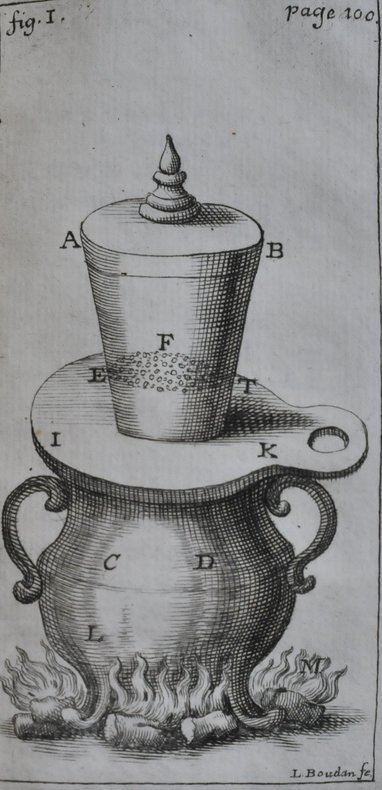
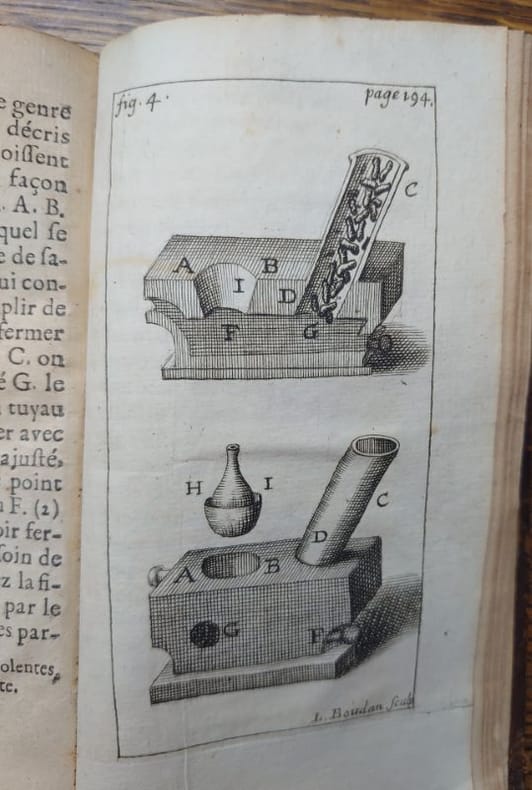
172346405349Paris, Laurent d’Houry, 1723 ; in-12, veau brun, dos orné. (Reliure de l’époque) 6 ff., 206 pp., 1 f. errata - 4 planches gravées hors-texte.ÉDITION ORIGINALE de cette traduction de l’italien du P. Buonanni, un jésuite, par A. J. DEZALLIER D’ARGENVILLE ou par DUFAY (du Jardin des Plantes) Barbier IV 790 qui signale deux rééditions de ce traité en 1780 et 1802.Philippe BUONANNI est né à Rome en 1638 et mort dasn la même ville en 1725. Il est l’auteur de plusieurs ouvrages d’histoire naturelle. On lui doit aussi la description du cabinet de curiosités du célèbre Père Kircher. L’édition originale italienne du traité sur les vernis a paru à Rome en 1720. Sommervogel I, 383 cite d’autres réimpressions de ce traité, rapidement devenu un classique. La laque de Chine est évoquée dès 1655 dans l’Atlas Chinois publié par le missionnaire Martino Martini. Le traité de Buonanni donne toutes les recettes de laques et vernis transparents ou en couleurs de Chine, du Japon et autres, la manière de les cuire, de les orner. Cette première édition est rare.
6774A Paris, Chez Laurent d'Houry, 1723. 16,5 x 9 cm, 6 ff -206 pp.-1 f. errata et 4 planches gravées hors-texte. Relié plein veau d'époque, dos à nerfs, caissons ornés, pièce de titre en cuir rouge. Un mors fendu, coins émoussés, manque une page de garde, des rousseurs, ex-libris manuscrit sur la page de titre, sinon bon exemplaire.