"[MACQUER, PHILIPPE].Livre Rare Book
314 résultats
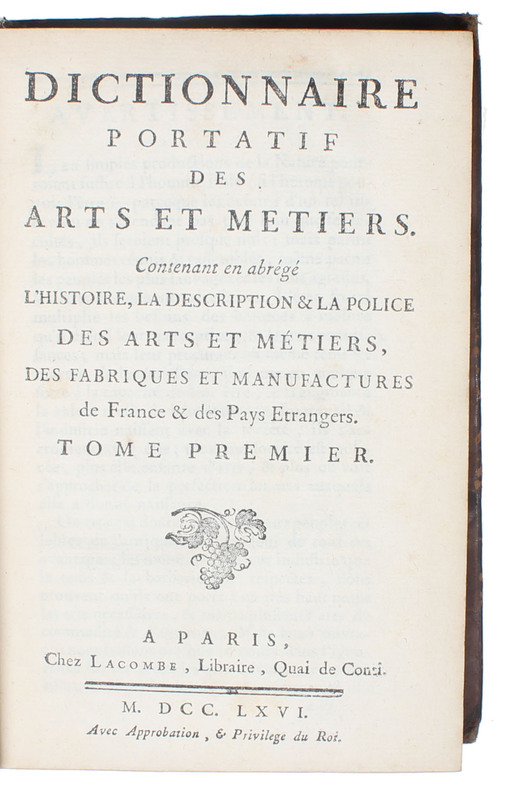
176652783Paris, Lacombe, 1766. 8vo. In two nice contemporary full calf bindings with richly gilt spines and royal coat of arms [""Honi soit qui mal y pense""] to front and back board of both volumes. Wear to extremities and front board of volume 1 party detached. Part of tome-label on both volumes missing. Internally fine. XXIII, (1), 588 pp."" (4), 715, (1) pp.
1746CLL-317La Haye, 1746 In-12 de XXIV, 182 pp., (1) f. bl., (2) ff., 128 pp., (1) f. d'errata, maroquin rouge, triple filet gras et maigres doré en encadrement sur les plats, dos lisse orné de caissons de fleurons dorés, pièce de titre de maroquin vert, filet doré sur les coupes, roulette intérieure dorée, tranches dorées (reliure de l'époque).
171844404(Paris, L'Imprimerie Royale, 1718). 4to. Without wrappers. Extracted from ""Mémoires de l'Academie des Sciences. Année 1716"". Pp. 322-325 and 1 folded engraved plate.+ pp. 326-328 and 1 folded engraved plate. The first plate depicts the double-pump.
174546589(Paris, L'Imprimerie Royale, 1745). 4to. Without wrappers. Extracted from ""Mémoires de l'Academie des Sciences. Année 1742"". Pp. 371-378 and 3 folded engraved maps (1. Premier Plan Cours de la Seine dans l'etendue de Paris (20x23 cm) - 2. Second Plan ou l'on voit les Rues dont on à les pentes....les diverses Quartiers de Paris (19,5x22 cm) - 3. Coupe de la Ville de Pars... Plan des Rues... (22,5x30 cm)). Clean and fine.
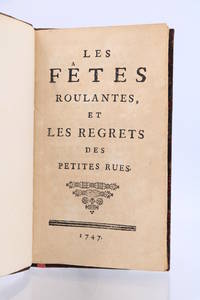
174791802s. n. | s. l. 1747 | 10 x 16.8 cm | Relié
170395641703 Paris, Ches les Associez choisis, 1703; in-4°, plein veau brun granité de l'époque, dos à nerfs orné de larges fleurons et petits fers dorés, titre doré sur étiquette de maroquin vieux rouge, tomaison dorée, tranches mouchetées de rouge; (16), 591pp. Ex-libris manusctit au titre.
178258332BBLausanne, Chez Mourer. 1782. 8°. 247 p., 1 p. errata. Avec un frontispice et deux vignetters gravés. Halblederband der Zeit mit rotem goldgeprägtem Rückenschild.
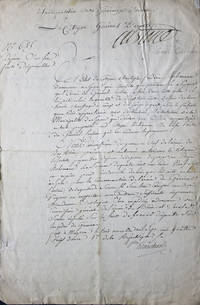
1792304899Speyer Austria 1792. 4 pp. pen and ink on paper in French in various hands with embossed seal. Old folds and light soiling paper repairs at folds. 4 pp. pen and ink on paper in French in various hands with embossed seal. Document payorder for firewood for the French Army encamped at Speyer "pour le chauffage de l'armée au Camp et Corps de Gardes" signed by General Adam Philippe Comte de Custine and Claude Blanchard. Both Custine 1740-1793 and Blanchard 1742-1802 fought in the American Revolution. Custine who lead the French forces in the Rhine campagins that seized Speyer and Mainz was guillotined in 1793 during the Reign of Terror. unknown
174791802n. l.: s. n. 1747. Fine. s. n. n. l. 1747 10 x 16.8 cm Relié First edition of this work published by the Société du Bout-du-Banc the celebrated literary salon presided over by Mademoiselle Jeanne-Françoise Quinault and the Comte de Caylus. This intimate circle originally comprising eight members would gather on Mondays at dinner to exchange ideas and to write; at the close of each meal every distinguished guest was required to set down a few lines whether in the coarse poissard style or in a more refined vein on paper. It was in this context that Les Fêtes roulantes ou les regrets des petites rues came into being in the wake of the celebrations held in Paris in honour of the Dauphin's second marriage to Marie-Josèphe de Saxe. Pastiche binding in plum half-shagreen spine with five raised bands framed by gilt dotted fillets and six compartments decorated with gilt fillets and fleurons marbled paper boards gilt top edge pastedowns and endpapers in shell-pattern marbled paper. Some minor rubbing to the paper of the lower board corners slightly bumped. ""In his youth the Comte de Caylus had paid considerable tribute to the literature of fairy tales which the translations from Arabic and Persian by Galland and Pétis de la Croix had brought into fashion; one does not find him again in these artificial creations to which he returned when he was nearly seventy. But in the intervening years his character as a writer emerged and declared itself in accordance with his manners and tastes and in how propitious a milieu! The Société du bout du banc that academy of Gallic ribaldry presided over by Mademoiselle Quinault; those suppers at which an inkwell served as centrepiece and which La Chaussée d'Armenonville Voisenon Moncrif the Grand Prior of Vendôme Duclos Salley and Crébillon fils enlivened with their bawdy and bantering wit. All men of letters with little taste for philosophy all content to let the world go its own way and finding it perfectly satisfactory as it was all of that sacred flock of Epicurus somewhat transformed by Circe in which each member is satisfied or very nearly with what their presiding lady declared sufficient for Duclos the least fastidious among them. The popular literature of the eighteenth century that is to say literature which took the common people as the subject of its observations and tableaux was born within this company of mirth and folly and the Comte de Caylus was its natural father and its foster father; it took its first lively flights in those ""Écosseuses"" 1739 those ""Étrennes de la Saint-Jean"" 1742 those ""Mémoires de l'Académie des colporteurs"" those ""Avantures des bals des Bois"" those ""Fêtes roulantes"" 1748 a veritable magic lantern of Parisian popular life ."" Avertissement ""Mémoires et réflexions du comte de Caylus"" 1874 s. n. hardcover
1737KJ7670Avignon 1737. First Edition. HB. Full leather double gilt border front and back covers gilt lettering and designs on spine 5 raised bands 12mo 321 pp table de matieres at rear. Marbled end papers rear endpaper needs reglueing. Lallemant 1660-1748 a French Jesuit wrote series of books from 1734-1743 attempting to refute the Jansenists. Book shows edge wear 2 corners worn through to boards 1" split head of spine 1/2" split heal of spine owners name ffep minor foxing minor moisture stain last few pages not affecting text. Binding tight no marks in text. Book condition VG-. (Avignon) hardcover
175227718Paris 1752. In French. 1 page. 1 vols. 6 1/2 x 8 3/4 inches. Paper. Some light marginal browning small marginal hole else very good. In French. 1 page. 1 vols. 6 1/2 x 8 3/4 inches. As Marêchal des Camps recognizing that the Sieur Jean Etienne David had remitted a sum for rents. Louis XIV's General. <br/><br/> unknown
1796369233 in 1 Bd. Paris 1796. Mit gest. Porträt. Tit., XVI, 304 S.; 2 Bl., 392 S.; 2 Bl., 304, 8, 4 S. Hldr.d.Zt. mit wenig Rückenvergold. u. Rückenschild; etw. berieben. [4 Warenabbildungen]
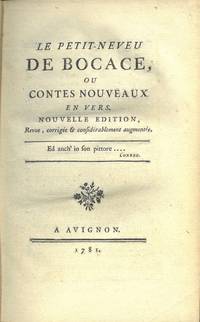
178148379Avignon. 1781. 8vo. Noe senere skinnryggbind. xi 256 s. Med kobberstukket frontispiece en kobberstukket plansje og fire vignetter. Fransk. <br/><br/><em>Cohen s. 372.Meget pent eksemplar. Plancher-Valcour 1751-1815 fransk skuespiller og dramaturg. </em> unknown
175657659Amsterdam, (Paris, Lambert), 1756. Uncut in contemp. blank boards. Stamp on foot of title-page. IV,213 pp. Clean and fine, printed on good paper.
175657659Amsterdam Paris Lambert 1756. Uncut in contemp. blank boards. Stamp on foot of title-page. IV213 pp. Clean and fine printed on good paper. <br/><br/><em>First edition. Written in reply to the book "The Commercial Nobility" of the Abbe Coyer. </em> hardcover
1750111394London: J. & J. Rivington 1751; 1750. Leather_bound. Very good . 191; 148 p. 18 cm. Full leather binding is softened at spine head and rear corners slightly bumped. Bookplate of former owner and some pencil notations on front endpapers. <br/><br/>The first work in this book is a guide to Latin language pronunciation the main author being Philippe Labbe 1607-1667 a French Jesuit writer on historical geographical and philological issues. The second part of the book is on the Greek language compiled by Ludolf Kuster 1670-1716 German philologist. J. & J. Rivington hardcover
1779GF264151779 Paris - Delalain - 1779 - 1 volume in12 - Reliure d'époque pleine basane mouchetée - Double filet doré sur les plats - tranches rouges - pièces de titre en maroquin rouge - dos lisse - Coupes et mors un peu frottés - Bon exemplaire -
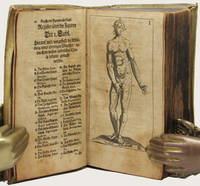
170434368Leipzig: Thomas Fritsch 1704. First German Edition. Illustrated with an engraved frontispiece of the author and 31 additional full-page engravings depicting various anatomical views. 8vo bound in the original contemporary vellum the spine with calligraphic titling by hand. viii 742 26 Register pp. A very good copy the binding still strong and well preserved the text with the usual mellowing and aging still crisp and very usable. FIRST GERMAN EDITION of this important work on anatomy partnered with the work of Philippi Verheyen Anmerckungen In Die Anatomiam Blancardi. Brieff An den weitberühmten Hrn. Friedrich Ruyschium.<br> 'Verheyen was a prolific writer including several books and manuscripts. His main work published originally in Latin the “Corporis Humani Anatomiae†was translated into multiple languages as here. This book became one of the most used anatomy books of the time.<br> The following excerpt of his book "Corporis Humani Anatomiae Liber Primus" reads : " . QuintusAuricularis quia cum minimum sit auribus expurgandis est aptissimus" translates as".the fifth finger called Auricularis because how small it is is most suitable to clean the ears". Incredibly anatomists at that time called the fifth digit "digitus auricularis".<br> Verheyen is credited with the creation of the eponym the “Achilles tendon†which denominates the common tendon for the gastrocnemius and soleus muscle although at the time he called it the “Chorda Achillisâ€. He also described the kidneys in detail especially the arterial “stars†found on the surface of the kidney which are today known as the “Stars of Verheyen†'. E. A. Miranda 2014 M.T.D. Thomas Fritsch hardcover
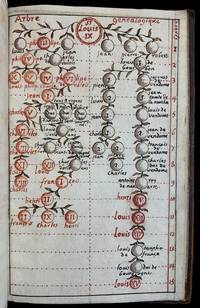
17304557N/A N/A 1730 Belle copie manuscrite de cette sélection d'ordonnances royales, attribuée à André Barrigue de Montvalon. Cet ouvrage n'a existé que sous forme de manuscrit copié de 1724 à 1752, date à laquelle il fut finalement publié. Notre exemplaire est un manuscrit ancien. Titre manuscrit attrayant avec des armoiries en dessous. (Il semble qu'il s'agisse des armoiries d'un marquis). L'ouvrage contient les lois royales, ainsi que le commentaire de Philippe Bornier. L'auteur est assez critique à l'égard du travail de Bornier, dont il corrige les erreurs et les datations. Comme indiqué dans la préface, le contenu à l'encre rouge se réfère à l'ouvrage de Bornier. Les dates des ordonnances sont indiquées dans les notes annexes. Il y a également deux tableaux. L'un les présente dans l'ordre chronologique. L'autre par ordre alphabétique. Le texte est rédigé d'une main soignée de secrétaire français. Cet ouvrage est presque identique à une version de 1728, trouvée à la Bibliothèque de Droit Schuman à Aix-en-Provence, et à une édition légèrement antérieure (1724) actuellement en vente aux Etats-Unis. Notre exemplaire est légèrement plus grand, car il contient un bel arbre généalogique de la famille royale française et 8 pages (4 feuilles) d'une liste rouge et noire des rois et de leurs dates significatives. Condition. La reliure d'époque en plein cuir est en bon état, solide, avec juste un peu de frottement et une légère perte à la tête de la colonne vertébrale. La décoration et les titres dorés au dos sont attrayants. Papiers de fin marbrés. L'intérieur des pages est en bon état, propre, avec juste un peu de mouvement à la reliure. Les derniers feuillets (avec les détails généalogiques) sont légèrement fendus à la reliure et se détachent du reste du bloc de texte. Dans l'ensemble, l'ouvrage est en excellent état. Collation : 236, 7, 1, 8, 1 ff. / 472 (ordonnances et index), 14 (vierges), 2 (réglées seulement), 16 (généalogies), 1 (1 vierge) pages. 170 par 110mm (6Ÿ par 4Œ pouces). Conforme au numéro Worldcat OCLC : 18455885. Barrigue de Montvalon était conseiller juridique au Parlement de Provence. Il fut envoyé pour défendre physiquement le roi lorsqu'un différend éclata entre le parlement et la cour d'Aixes. Il était un grand partisan des Jésuites. Barrigue vécut jusqu'à l'âge de 101 ans. P. Girard, notant son dévouement, dit de lui qu'il "ne connaissait que le Palais et la retraite. Une longue vie est la récompense des bonnes murs". Bornier était conseiller du roi, servant comme conseiller du roi et lieutenant principal à la cour présidiale de la ville.
17304557N/A: N/A 1730. A lovely manuscript copy of this selection of Royal ordinances attributed to Andre Barrigue de Montvalon. This work existed only in copied manuscript form from 1724 to 1752 when it was finally published. Our copy is an early manuscript. Attractive manuscript title with a coat of arms beneath. It appears to show the arms of a Marquis. The work contains the Royal Laws along with the commentary of Philippe Bornier. The author is quite critical of Bornier's work and corrects his errors and dating. As stated in the preface content in red ink refers to Bornier's work. Dates of ordinances are indicated in side notes. There are also two tables. One shows them in chronological order. The other in alphabetical. Text is throughout in a neat French secretarial hand. This work is almost identical to a 1728 version found in the Bibliotheque de Droit Schuman in Aix-en-Provence and a slightly earlier 1724 edition currently on sale in the USA. Our copy is slightly enlarged as BOUND IN is a lovely genealogical tree of the French Royal family and 8 pages 4 leaves of a red and black list of the kings and their significant dates. Condition. The full leather period binding is in good strong condition with just a little rubbing and slight loss to the head of the spine. Attractive gilt decoration and titles to spine. Marbled end papers. Internally the pages are in good clean condition with just a touch of movement to the binding. The final gathers with the genealogical details are slightly cracked to the binding and "sit proud" of the rest of the text block. Overall in excellent condition. Collation: 236 7 1 8 1 ff. / 472 ordinances & indexes 14 blank 2 ruled only 16 genealogies 1 1 blank pages. 170 by 110mm 6¾ by 4¼ inches. Conforms to Worldcat OCLC Number: 18455885. Barrigue de Montvalon was a legal advisor to the Parlement of Provence. He was sent to defend the King physically when a disputed broke out between the parlement and the court at Aixes. He was a great supporter of the Jesuits. Barrigue lived to the age of 101. P. Girard noting his devotion said of him that he "knew only the Palace and retirement. A long life is the reward of good morals". Bornier was an Advisor to the King serving as a counselor to the king and lieutenant principal at the présidial court of the city. . Belle copie manuscrite de cette sélection d'ordonnances royales attribuée à André Barrigue de Montvalon. Cet ouvrage n'a existé que sous forme de manuscrit copié de 1724 à 1752 date à laquelle il fut finalement publié. Notre exemplaire est un manuscrit ancien. Titre manuscrit attrayant avec des armoiries en dessous. Il semble qu'il s'agisse des armoiries d'un marquis. L'ouvrage contient les lois royales ainsi que le commentaire de Philippe Bornier. L'auteur est assez critique à l'égard du travail de Bornier dont il corrige les erreurs et les datations. Comme indiqué dans la préface le contenu à l'encre rouge se réfère à l'ouvrage de Bornier. Les dates des ordonnances sont indiquées dans les notes annexes. Il y a également deux tableaux. L'un les présente dans l'ordre chronologique. L'autre par ordre alphabétique. Le texte est rédigé d'une main soignée de secrétaire français. Cet ouvrage est presque identique à une version de 1728 trouvée à la Bibliothèque de Droit Schuman à Aix-en-Provence et à une édition légèrement antérieure 1724 actuellement en vente aux Etats-Unis. Notre exemplaire est légèrement plus grand car il contient un bel arbre généalogique de la famille royale française et 8 pages 4 feuilles d'une liste rouge et noire des rois et de leurs dates significatives. Condition. La reliure d'époque en plein cuir est en bon état solide avec juste un peu de frottement et une légère perte à la tête de la colonne vertébrale. La décoration et les titres dorés au dos sont attrayants. Papiers de fin marbrés. L'intérieur des pages est en bon état propre avec juste un peu de mouvement à la reliure. Les derniers feuillets avec les détails généalogiques sont légèrement fendus à la reliure et se détachent du reste du bloc de texte. Dans l'ensemble l'ouvrage est en excellent état. Collation : 236 7 1 8 1 ff. / 472 ordonnances et index 14 vierges 2 réglées seulement 16 généalogies 1 1 vierge pages. 170 par 110mm 6¾ par 4¼ pouces. Conforme au numéro Worldcat OCLC : 18455885. Barrigue de Montvalon était conseiller juridique au Parlement de Provence. Il fut envoyé pour défendre physiquement le roi lorsqu'un différend éclata entre le parlement et la cour d'Aixes. Il était un grand partisan des Jésuites. Barrigue vécut jusqu'à l'âge de 101 ans. P. Girard notant son dévouement dit de lui qu'il "ne connaissait que le Palais et la retraite. Une longue vie est la récompense des bonnes mœurs". Bornier était conseiller du roi servant comme conseiller du roi et lieutenant principal à la cour présidiale de la ville. N/A hardcover
1757168101757 basane marbrée, dos à nerfs., tr. r. in-4, (8ff.), LXIIpp., (1f.), 504pp.; XXIV-272pp., P. chez les Associés 1757
172346405349Paris, Laurent d’Houry, 1723 ; in-12, veau brun, dos orné. (Reliure de l’époque) 6 ff., 206 pp., 1 f. errata - 4 planches gravées hors-texte.ÉDITION ORIGINALE de cette traduction de l’italien du P. Buonanni, un jésuite, par A. J. DEZALLIER D’ARGENVILLE ou par DUFAY (du Jardin des Plantes) Barbier IV 790 qui signale deux rééditions de ce traité en 1780 et 1802.Philippe BUONANNI est né à Rome en 1638 et mort dasn la même ville en 1725. Il est l’auteur de plusieurs ouvrages d’histoire naturelle. On lui doit aussi la description du cabinet de curiosités du célèbre Père Kircher. L’édition originale italienne du traité sur les vernis a paru à Rome en 1720. Sommervogel I, 383 cite d’autres réimpressions de ce traité, rapidement devenu un classique. La laque de Chine est évoquée dès 1655 dans l’Atlas Chinois publié par le missionnaire Martino Martini. Le traité de Buonanni donne toutes les recettes de laques et vernis transparents ou en couleurs de Chine, du Japon et autres, la manière de les cuire, de les orner. Cette première édition est rare.
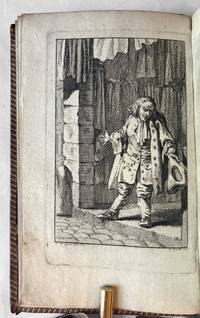
17464391The Hague i.e. Paris: s.n. 1746. 8vo 168 x 101 mm. 2 parts separately titled and paginated: 3-vi-xxiv 182 pages 1 blank leaf; 2 leaves 128 pages. Engraved frontispiece by Fessard after Cochin fils apparently included in the pagination typographic title ornaments head- and tailpieces. An attractive copy stain to fols. A2-3 in second part 2 or 3 minor marginal tears some spotting. Contemporary red morocco triple gilt fillet on sides smooth spine sparingly gold-tooled and lettered board edges gilt gilt edges scuffing to lower board edges and extremities of spine corners a bit bumped. Provenance: early purchase note on lower flyleaf; John Wodehouse 3rd Earl of Kimberley 1883-1941 bookplate; Leonard Forrer 1869-1953 his bookshop ticket of L. S. Forrer Ltd. Numismatic Booksellers London; Charles Van der Elst 1904-1982 bookplate.<br /> <br /> Only Edition of an extended literary joke by the brilliant antiquarian engraver art patron and connoisseur the Comte de Caylus. He exercised his stylistic muscles in this peculiar collection of two dozen literary pieces revolving around the word manteau: in part 1 racy anecdotes short stories fairy tales and a chivalric tale written in pseudo-archaic French; and in part 2 tongue-in-cheek erudite essays in several styles — the religious history the antiquarian disquisition the etymological or bibliographical analysis — all laced with fictional and a few real references including imaginary medieval manuscripts.<br /> <br /> A glance at the entry for manteau in the online Trésor de la Langue Française gives an idea of the semantic opportunities offered by this word whose appearances in many idiomatic expressions are exhaustively exploited by Caylus. In part 1 appear the manteau de fourrure fur coat the manteau de lit a short bed-jacket into which a jealous husband is metamorphosed by his fairy mother-in-law to teach him a lesson the long and short coat the chimney mantel same word in French and a portrait of a remarkable old man presented as the fictional originator of the term “sous le manteau†clandestine or clandestinely.<br /> <br /> In part 2 which its title notes with a wink “one doesn’t need to read†the author delves into the Roman pallium a cloak the coats of saints and clerics those both heraldic and actual of Dukes and Peers and the order of the Blancs-Manteaux. Completing the picture are a florilegium of dictionary extracts and a satirical etymological comparison of the French manteau with other languages containing sentences like: “As for the letter L which is found at the end of words like Mantel and Mantello one can very well understand it to be a diminutive of the Arabic word Allah meaning God†p. 103. <br /> <br /> The self-imposition of arbitrary constraints onto one’s writing while an ancient practice viz. poetic meter have been associated more recently with a French literary movement from the 1960s known as Oulipo short for Ouvroir de littérature potentielle â€workship of potential literature†which included the great French authors Raymond Queneau and Georges Perec whose wry humor and doggedness in pursuing the conceit to the end Caylus foreshadowed. <br /> <br /> Cochin’s frontispiece shows a rather shifty-looking merchant in the doorway of his shop filled with coats. <br /> <br /> OCLC locates 4 copies in North American libraries. Cohen-De Ricci 210; Gay-Lemonnyer 3:23; Barbier III: 34 a 1775 edition not seen elsewhere. s.n. unknown
1751367521751 3 parties reliées en un volume in-12, plein veau marbré de l'époque, dos lisse orné de caissons fleuronnés, pièce de titre de maroquin rouge, chasses et coupes filetées, tranches rouges, (6) p., 112, 175, et 171 p. Londres [i.e. Paris], 1751.
177620599Paris Chez les Libraires Associés 1776 in-12 plein-veau un volume, reliure plein veau marbré havane in-douze (binding full calfskin in-12) (17,5 x 10,3 cm), dos long (spine without raised bands), décoré or, à roulette et filet perlé or, titre frappé or, pièce de titre sur fond rouge (red label of title) avec filet perlé or, roulette or avec filet perlé or de part et d'autre en place des nerfs et en tête et en pied, entre-nerfs à fleurons soleil, vase antique et coupe antique "or", dos légèrement frotté et épidermé, plats décorés à froid d'un filet à froid en encadrement, roulettes sur les coupes avec manque de dorure, sans illustrations, texte avec manchettes (marginal note), (XXIV + 502 + 2 p. d' approbation, & privilége du Roi) pages, 1776 Paris Chez les Libraires Associés Editeurs,