949 résultats
1898135331898 P., Librairie Commerciale, sans date (1898), fort in 8° relié pleine percaline rouge éditeur, plat supérieur illustré dune plaque polychrome, XII-645 pages ; infimes frottis.
18525184A Paris, chez J.-B. Baillière, 1852. Un fort vol. in-8 (213 x 133 mm) de 2 ff. n.fol., iii - 812 pp. et 9 planches litographiées.
182288740Paris, chez J.-B. Baillière, 1822, in-8, 30 ff, 433 pp, Demi-basane fauve, dos lisse orné (rel. de l?époque). Quelques rousseurs, Edition originale. Rare ouvrage dans lequel on indique les précautions que doivent prendre, sous le rapport de la salubrité publique et particulière, les fabricants, les manufacturiers, les chefs d'ateliers, les artistes, et toutes les personnes qui exercent des professions insalubres Couverture rigide
180189800Richard, Caille et Ravier | Paris 1801 (An IX) | 12.5 x 20.8 cm | 2 volumes reliés en 1
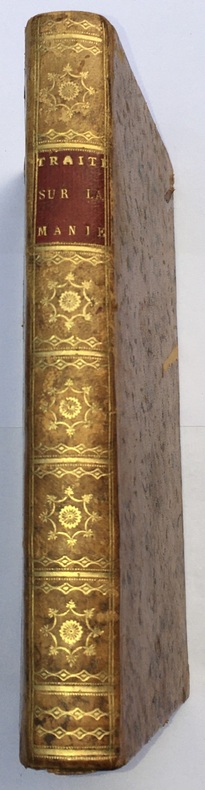
1831116171831 1831 Paris. Richard, Caille et Ravier. A IX. 1 volume in-8, plein veau, dos lisse orné, pièce de titre en maroquin rouge. Discrètes épidermures sur les plats. LVI pp. ; 318 pp.
1809565651809 Paris, Brosson, 1809, in 8° relié demi-veau bleu foncé, dos lisse orné de triples filets dorés, XXII-496 pages ; signature ancienne raturée sur le titre ; très rares rousseurs ; mouillure ancienne aux 4 premiers feuillets.
184044796Paris, Carillan-Goeury, 1840, in-8, 2 vol. de I. VIII, XXIX, (1bl), 466pp. - II. (5), de 468 à 750pp, 6pl, demi-basane rouge, dos à nerfs orné (Rel. de l'ép.), 6 planches dépliantes gravées par Adam. PREMIERE EDITION. Ouvrage peu commun "destiné aux personnes peu versées dans l'étude des sciences mathématiques et qui désirent acquérir, sans leur secours, des notions exactes sur la constitution de l'univers". Gustave Doulcet, comte de Pontécoulant, après Polytechnique embrassa la carrière militaire qu'il quitta pour se livrer entièrement à son goét pour les sciences. Livre de prix de l'école St-Michel à Saint-Etienne. Accroc sur le dos du t.1, mais néanmoins bon exemplaire Couverture rigide
184080123Paris, Carillan-Goeury, 1840, in-8, 2 parties en 1 volume, VIII-XXIX-750 pp. en numérotation continue, 6 pl. dépliantes, demi-basane tabac de l'époque, dos lisse, pièce de titre rouge, 6 planches dépliantes gravées par Adam. Première édition. Ouvrage peu commun "destiné aux personnes peu versées dans l'étude des sciences mathématiques et qui désirent acquérir, sans leur secours, des notions exactes sur la constitution de l'univers". Gustave Doulcet, comte de Pontécoulant (1764-1853), après Polytechnique embrassa la carrière militaire qu'il quitta pour se livrer entièrement à son goût pour les sciences. Envoi signé de l'auteur en tête du faux titre : "Témoignage de l'amitié de l'auteur à M. ?" Cachets de l'Institut catholique de Paris et étiquette en pied du dos. Dos épidermé. Houzeau & Lancaster, 9287 Couverture rigide
18628054P., Rouvier, 1862, un volume in folio relié en demi-chagrin marron à coins (reliure de l'époque), (rousseurs aux feuillets d'explications uniquement), 1 PORTRAIT DE RICORD, (3), 201pp. d'explication des planches, 66 PLANCHES EN COULEURS
183816625Ou Recherches critiques et expérimentales sur l'Inoculation appliquée à l'Étude de ces maladies, suivies d'un Résumé thérapeutique et d'un Formulaire spécial.Édition originale. Paris, Librairie des Sciences Médicales de Just Rouvier et E. Le Bouvier - 1838 - 808 pages.Reliure demi basane de l'époque. Dos lisse à filets et fleurons dorés. Pièce de titre noir. Petits frottements sans gravité. Quelques rousseurs. Bon état. Format in-8°(21x14).
189152598Librairie F. Savy 1891 2 tomes. In-8. Reliure de l’époque demi-basane bordeaux, dos lisse orné de filets dorés, auteur et titre dorés, XXXI + 1855 pp. en pagination continue, 1215 figures dans le texte. Dos insolés, coiffes et coins frottés, sinon exemplaire en bon état.
186413458Paris: Dusacq & Cie. Editeurs 1864. Hand-coloured lithograph after a painting by Linder. Very good condition apart from some mild rippling a small loss in the top margin and a few skillfully repaired tears in the bottom margin. A beautifully coloured humorous plate that was most likely part of a series published by Dusacq of images by various artists depicting railway related scenes.<br/> <br/> During the mid-nineteenth century the technological advancement and financial prosperity of France under Napoleon III hastened the development of the railway and other modern modes of transportation such as the omnibus. These improvements brought about a culture of mass tourism as members of various classes flocked to the railroad to take day trips. An archetypal symbol of modern life the railway station became a popular subject during the period and was represented and parodied by artists such as Honoré Daumier and William Powell Frith. It was an ideal place to observe a varied cross-section of society and the idiosyncrasies of human behavior. In the tradition of Daumier's satiric railway scenes from the 1840s and 1850s Linder exploits the comic possibilities of this bustling modern subject in this charming print. The title 'Pleasure Train' was most likely intended as an ironic play on words since pleasure is the last thing enjoyed by the swelling crowd of people on the platform many of whom scream in frustration as they are pushed and prodded in an effort to exit and enter the train. A pupil of the celebrated artist Charles Gleyre Philippe Jacques Linder was a genre and portrait painter who regularly exhibited works at the Salon between 1857-1880.<br/> <br/> Cf. Benezit Dictionaire des Peintres Sculptteurs Dessinateurs et Graveurs vol. 8 p. 679. Dusacq & Cie. Editeurs unknown
186413458Paris: Dusacq & Cie. Editeurs 1864. Hand-coloured lithograph after a painting by Linder. Very good condition apart from some mild rippling a small loss in the top margin and a few skillfully repaired tears in the bottom margin. A beautifully coloured humorous plate that was most likely part of a series published by Dusacq of images by various artists depicting railway related scenes.<br/> <br/>During the mid-nineteenth century the technological advancement and financial prosperity of France under Napoleon III hastened the development of the railway and other modern modes of transportation such as the omnibus. These improvements brought about a culture of mass tourism as members of various classes flocked to the railroad to take day trips. An archetypal symbol of modern life the railway station became a popular subject during the period and was represented and parodied by artists such as Honoré Daumier and William Powell Frith. It was an ideal place to observe a varied cross-section of society and the idiosyncrasies of human behavior. In the tradition of Daumier's satiric railway scenes from the 1840s and 1850s Linder exploits the comic possibilities of this bustling modern subject in this charming print. The title 'Pleasure Train' was most likely intended as an ironic play on words since pleasure is the last thing enjoyed by the swelling crowd of people on the platform many of whom scream in frustration as they are pushed and prodded in an effort to exit and enter the train. A pupil of the celebrated artist Charles Gleyre Philippe Jacques Linder was a genre and portrait painter who regularly exhibited works at the Salon between 1857-1880.<br/> <br/>Cf. Benezit Dictionaire des Peintres Sculptteurs Dessinateurs et Graveurs vol. 8 p. 679. Dusacq & Cie. Editeurs unknown books
18514328Paris: Rouvier 1851. First Edition. Hardcover. Very Good. Small folio. 1/4 leather and marbled boards rubbing along the spine corners bumped. Handcolored plates one more challenging to look at than the next. "Ricord's extensive work with veneral diseases at the Hopital du Midi is chronological here in sixty-six superb colored lithographs illustrating a multitude of conditions at various levels of infection in both sexes. The illustrations were drawn from nature by Bion and Beau and are accompanied by case histories and treatment modes". Complete with the portrait often lacking. <br/><br/> Rouvier hardcover
1851139808Paris: Rovier 1851. hardcover. very good. Clinique Iconographique de l'Hopital des Veneriens. Extra illustrated title portrait & 67 superb chromolithographic plates with descriptive letterpress. Large 4to rebound in brown cloth leather spine label; some pages darkened and foxed. Paris: Rovier 1851. Very good.<br/> <br/> Fine atlas illustrating the case histories and the effects of venereal disease recorded at the hospital. Ricord born in Baltimore established the error of John Hunter's belief that gonorrhoea and syphilis were identical.Ricord was the first to establish the characteristic phenomena of the three stages of syphilis. Castiglioni pp. 735-6; Pusey the History and Epidemiology of Syphilis pp.559; The History of Dermatology pp. 120-23. GM 5202; 2381 Paris 1838 First Edition.<br/> <br/> Rovier unknown
1851139808Paris: Rovier 1851. hardcover. very good. Clinique Iconographique de l'Hopital des Veneriens. Extra illustrated title portrait & 67 superb chromolithographic plates with descriptive letterpress. Large 4to rebound in brown cloth leather spine label; some pages darkened and foxed. Paris: Rovier 1851. Very good.<br/><br/> Fine atlas illustrating the case histories and the effects of venereal disease recorded at the hospital. Ricord born in Baltimore established the error of John Hunter's belief that gonorrhoea and syphilis were identical.Ricord was the first to establish the characteristic phenomena of the three stages of syphilis. Castiglioni pp. 735-6; Pusey the History and Epidemiology of Syphilis pp.559; The History of Dermatology pp. 120-23. GM 5202; 2381 Paris 1838 First Edition.<br/><br/> Rovier unknown books
18514328Paris: Rouvier 1851. First Edition. Hardcover. Very Good. Small folio. 1/4 leather and marbled boards rubbing along the spine corners bumped. Handcolored plates one more challenging to look at than the next. "Ricord's extensive work with veneral diseases at the Hopital du Midi is chronological here in sixty-six superb colored lithographs illustrating a multitude of conditions at various levels of infection in both sexes. The illustrations were drawn from nature by Bion and Beau and are accompanied by case histories and treatment modes". Complete with the portrait often lacking. <br/><br/> Rouvier hardcover books
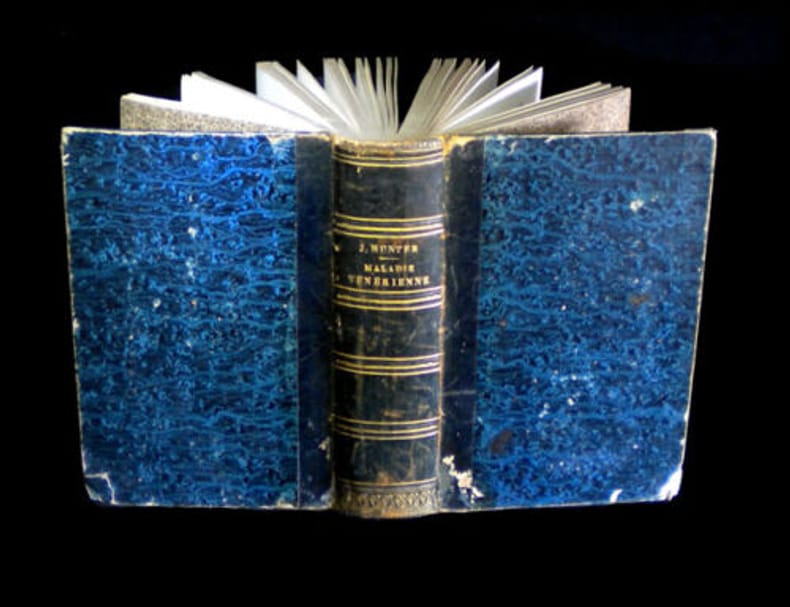
1852798P32Paris: J. B. Bailliere 1852. Leather. Good. 8.5" by 5.5". Not Stated. The second edition in French of John Hunter's important treatise on venereal diseases an influential work with late additions by Philippe Ricord. Illustrated with nine folding plates. The second edition of this work on French.Originally written in English by John Hunter.Hunter's important treatise on venereal diseases. He was considered to be the leading authority on the subject at the time. This work details his research and medical opinions on venereal diseases such as his advice for gonorrhea and syphilis being treated with mercury and cauterization. Illustrated with nine folding plates.Collated complete.Translated into French by Gustave-Antoine Richelot.With notes and additions by Philippe Ricord who disproved Hunter's research finding that syphilis and gonorrhea were not the same disease. In a half calf binding with marbled paper to the boards. Externally generally smart. Cracks to the joints. A little chip and loss to the head of the spine. Minor marks and rubbing to the boards and spine. Light bumping to the spine and extremities. Front hinge is a little strained. Prior owner's ink inscription to the recto to the front endpaper. Stamp to the verso to the rear endpaper. Internally firmly bound. Pages are bright and clean with a few odd spots. Good J. B. Bailliere hardcover
18019656Paris: Chez Richard Caille et Ravier 1801. First Edition. Half calf. Very good. lvi318pp. Illustrated with 2 copper engraved plates and a folding table. Cont. mottled calf calf spine label over paste paper boards lightly rubbed. Front pastedown with bookplates of Psychiatrist Clements Collard Fry 1892-1955 and the Yale Medical Library. Small round rubber stamp "Duplicate. Withdrawn from the Yale Medical Library" on the pastedowns. Garrison Morton #4922. Norman 100 BOOKS FAMOUS IN MEDICINE #54. Chez Richard, Caille et Ravier unknown books
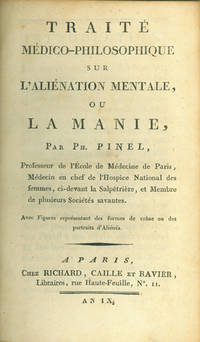
180134528Paris: Richard An IX 1801. <p>Foundation of Modern Psychiatry</p> <p> Pinel Philippe1745-1826. Traite medico-philosophique sur l'alienation mentale ou la manie. 8vo. lvi 318pp. Fold. printed table 2 engraved plates. Paris: Richard Caille & Ravier An IX 1800/1801. 193 x 118 mm. Quarter mottled sheep paste paper boards vellum corners slightly worn at spine. Light browning & foxing but a fine copy.</p> <p> First Edition. Garrison-Morton 4922. Pinel was one of the first to treat the insane humanely striking the chains from the lunatics at the Bicetre Hospital and implementing his "traitement moral" a compassionate form of psychiatric therapy that identified insanity with illness rather than moral perversity or demonic possession. In his Traite Pinel replaced the theorizing and speculation characteristic of earlier works on mental illness with his own practical observations of the Bicetre's mental patients whose behavior could now be observed undistorted by cruel treatment. He retained the old classifications of mental illness but distinguished mania from delirium and recognized the relationships between periodic mania melancholy and hypochondria. He recognized emotional disorders to be the main cause of intellectual dysfunction but also took into account heredity predisposition and hypersensitivity and attempted to find relationships between insanity and cranial deformity. Pinel founded the Salpetriere's famous school of psychiatry and trained a generation of psychiatrists the most important of whom was Esquirol. Norman 1701. Hunter & Macalpine pp. 602-10. Zilboorg pp. 319-41. </p> . Richard (An IX) unknown books
185251841852. A Paris chez J.-B. BailliÂre 1852. Un fort vol. in-8 213 x 133 mm de 2 ff. n.fol. iii - 812 pp. et 9 planches litographiÂŽes. Edition en partie originale recelant 9 planches dÂŽpliantes lithographiÂŽes. "Cette ÂŽdition prÂŽsente non seulement dans toute sa puretÂŽ et avec toute l'exactitude possible le TraitÂŽ de la maladie vÂŽnÂŽrienne du grand Hunter mais encore gr‰ce aux additions des docteurs Babington et Ricord l'exposÂŽ des progrÂs les plus rÂŽcents de cette branche de la pathologie en Angleterre et surtout en France." in Avis de l'Editeur. ''Hunter donna une grande impulsion aux ÂŽtudes de physiologie et de pathologie dont il fut le fondateur en Angleterre. Son nom est restÂŽ au tiers infÂŽrieur de la gaine des vaisseaux fÂŽmÂoraux canal de Hunter''. ''Jamais chirurgien n'eut sur l'urologie - un siÂcle avant sa crÂŽation - et sur la qualitÂŽ de contribution de ses disciples une influence aussi magistrale que John Hunter''. Les MÂŽdecins cÂŽlÂbres p. 315. Angles ÂŽmoussÂŽs. Coiffes ÂŽlimÂŽes. Frottements ÂŽpars affectant la reliure. Quelques rousseurs dans le texte. b42961 unknown
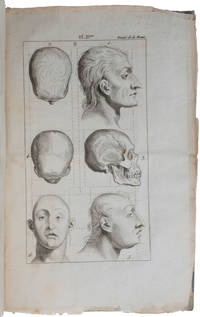
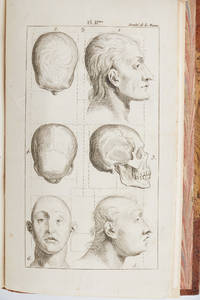
180166795The Textual Foundation of Psychiatry PINEL Philippe. TraitÈ mÈdico-philosophique sur lÃaliÈnation mentale ou la Manie.Avec figures reprÈsentant des formes de cr‚ne ou des portraits d'aliÈnÈs. Paris: Chez Richard Caille et Ravier An IX 1800/1801. First edition. Octavo. lvi 318 pp. Folding letterpress table between pp. 250 and 251 and two engraved plates. Contemporary French quarter mottled sheep over paste paper boards. Smooth spine ruled in gilt with gilt red morocco lettering label. Occasional very light spotting. Housed in a custom brown cloth clamshell. Overall a superb copy. ìPhilippe PinelÃs TraitÈ mÈdico-philosophique sur lÃaliÈnation mentale ou la manie which presented the textual foundation of psychiatry stands as the first great publication of the nineteenth century in clinical medicineî Grolier Medicine. ìIn October 1793 while serving as mÈdecin des infirmeries at BicÃtre Hospital Pinel 1745-1826 had the chains struck off from forty-nine male psychiatric patients in order to substitute for this cruel oppression his ëtraitement moraleà a humane form of psychiatric therapy that identified insanity with illness rather than moral perversity or demonic possession. This dramatic act performed in the liberating spirit of the American and French Revolutions found immediate and enduring favor in the popular imagination as a symbol of a new attitude toward the insane and ignited a general desire for more humane treatment of the mentally ill that culminated in the English non-restraint movement of the mid-nineteenth century. Yet humanitarian treatment of the insane although crucial to PinelÃs psychiatric work was not that workÃs sole focus for Pinel also devoted himself to establishing psychiatry as a scientifically based branch of medicine. His TraitÈ replaced the speculation and theorizing characteristic of earlier discussions of insanity with his own practical observations of the lunatics of the BicÃtre whose illnesses could now be observed undistorted by cruel treatment. He retained the old classifications of mental illness stating that contemporary medicine was as yet too primitive for more precise categories but did introduce some subdivisions isolating mania from delirium and recognizing the relationships between periodic mania melancholy and hypochondria. He recognized emotional disorders to be the main cause of intellectual dysfunction but also took into account heredity predisposition and hypersensitivity and attempted to find relationships between insanity and cranial deformityî Norman Library. Cushing P286. Garrison and Morton 4922. Grolier Medicine 54. Heirs of Hippocrates 668. Hunter & Macalpine pp. 602-610. Norman Library 1701. Waller 7456. Wellcome IV p. 388. HBS 66795. $3250 Chez Richard, Caille et Ravier hardcover books
18347065JB1834. Zweite Auflage. Paris Baillière 1834. Mit 1 gefalteten Übersichtstabelle XXXII 680 S. Leinenband der Zeit mit rotem Rückenschild und goldgeprägtem Rückentitel angeschmutzt und Ecken mäßig bestoßen. Tafel-Atlas fehlt. Mit Besitzeintragung und Anmerkung von alter Hand auf dem Vorsatzblatt. Durchgehend leicht braunfleckig und Ränder etwas gebräunt sonst ein sehr schön erhaltenes Exemplar. unknown
18015631Paris: Chez Richard Caille et Ravier 1801. First edition. <p>First edition of a landmark work on the treatment of the insane and mentally ill. "Pinel's psychiatric work effectively transformed the prison for the insane into a hospital. He did not merely initiate better treatment for the mentally ill however but rather concerned himself with establishing psychiatry as a discrete branch of medicine" DSB. "Pinel was among the first to treat the insane humanely; he dispensed with chains and placed his patients under the care of specially selected physicians" Garrison-Morton.</p>. A LANDMARK WORK ON PSYCHIATRY. <p>First edition of a landmark work on the treatment of the insane and mentally ill. It presented the textual foundation of psychiatry stands as the first great publication of the nineteenth century in clinical medicine and at the same time as one of the paradigmatic expressions of the medical and scientific revolution that was taking place in the late eighteenth and early nineteenth centuries. In 1793 Pinel newly appointed physician at the Bicêtre Hospital the Paris asylum for men ordered the chains and shackles removed from 49 patients an event commemorated at the time in paintings and popular prints in order to try his new more humane methods of treatment. He did the same for the female inmates of Salpêtrière when he became the director there in 1794. "Pinel's psychiatric work effectively transformed the prison for the insane into a hospital. He did not merely initiate better treatment for the mentally ill however but rather concerned himself with establishing psychiatry as a discrete branch of medicine . Pinel's classification of mental diseases retained the old divisions of such illnesses as manic melancholic demented and idiotic. He presented these classes with a disclaimer-it was necessary to retain them 'for the time being' since medicine was not advanced enough for subtler distinctions as late as 1812. He nevertheless made finer distinctions isolating mania from delirium and pointing out that in this state the intellectual functions might be intact and in his description of idiocy citing stupor the first stage of some types of mental disease. Pinel recognized the relationship between periodic mania and melancholy and hypochondria and stressed the danger of suicide by the melancholic patient. He also mentioned the possibility of altruistic homicide. In establishing the cause of mental illness Pinel was wary of 'metaphysical discussions or certain ideological ramblings' and he categorically rejected the notion of demonic possession or sorcery. Faithful to the doctrines of Locke and Condillac he considered emotional disorders to be the primary factor in precipitating intellectual dysfunctions; he also took into account heredity morbid predisposition and what he called individual sensitivity. Pinel's psychiatric therapeutics his 'traitement morale' represented the first attempt at individual psychotherapy. His treatment was marked by gentleness understanding and goodwill. He was opposed to violent methods-although he did not hesitate to employ the straitjacket or force-feeding when necessary. He recommended close medical attendance during convalescence and he emphasized the need of hygiene physical exercise and a program of purposeful work for the patient. A number of Pinel's therapeutic procedures including ergotherapy and the placement of the patient in a family group anticipate modern psychiatric care" DSB. "Pinel was among the first to treat the insane humanely; he dispensed with chains and placed his patients under the care of specially selected physicians" Garrison-Morton.</p> <br /> <p>"Pinel was born in the rolling hills of Jonquières France. He was the son and nephew of physicians. After receiving a degree from the faculty of medicine in Toulouse he studied an additional four years at the Faculty of Medicine of Montpellier. He arrived in Paris in 1778. Pinel did much to establish psychiatry formally as a separate branch of medicine. He made notable contributions to the classification of mental disorders and has been described by some as 'the father of modern psychiatry'. Pinel was also one of the first clinician who believed that medical truth was derived from clinical experience. Pinel considered migrating to America. In 1784 he became editor of the not very prestigious medical journal the Gazette de santé a four-page weekly. He was also known among natural scientists as a regular contributor to the Journal de physique. He studied mathematics translated medical works into French and undertook botanical expeditions.</p> <br /> <p>"At about this time he began to develop an intense interest in the study of mental illness. The incentive was a personal one. A friend had developed a 'nervous melancholy' that had 'degenerated into mania' and resulted in suicide. What Pinel regarded as an unnecessary tragedy due to gross mismanagement seems to have haunted him. It led him to seek employment at one of the best-known private sanatoria for the treatment of insanity in Paris. He remained there for five years prior to the Revolution gathering observations on insanity and beginning to formulate<br /> his views on its nature and treatment. Pinel was an Ideologue a disciple of the abbé de Condillac. He was also a clinician who believed that medical truth was derived from clinical experience. Hippocrates was his model. During the 1780s Pinel was invited to join the salon of Madame Helvétius. He was in sympathy with the French Revolution. After the revolution friends he had met at Madame Helvétius' salon came to power. In August 1793 Pinel was appointed 'physician of the infirmaries' at Bicêtre Hospital. At the time it housed about four thousand imprisoned men-criminals petty offenders syphilitics pensioners and about two hundred mental patients. Pinel's patrons hoped that his appointment would lead to therapeutic initiatives. </p> <br /> <p>"Pinel rejected the prevailing popular notion that mental illness was caused by demonic possession. He stated that mental disorders could be caused by a variety of factors including psychological or social stress congenital conditions or physiological injury psychological damage physical conditions and heredity. He observed and documented the subtleties and nuances of human experience and emotion. He identified predisposing psychosocial factors of mental ill such as an unhappy love affair domestic grief devotion to a cause carried to the point of fanaticism religious fears the events of the revolution violent and unhappy passions exalted ambitions of glory financial reverses religious ecstasy and outbursts of patriotic fervor. He noted that a state of love could turn to fury and desperation can cause mania or 'mental alienation'. He also spoke of avarice pride friendship bigotry and vanity.</p> <br /> <p>"Pinel proposed a new nonviolent approach to the care of mental patients came to be called moral treatment in the sense of social and psychological factors. He strongly argued for the humane treatment of mental patients including a friendly interaction between doctor and patient. His treatment was marked by gentleness understanding and goodwill. He was opposed to violent methods - although he did not hesitate to employ the straitjacket or force-feeding when necessary. Pinel expressed warm feelings and respect for his patients: 'I cannot but give enthusiastic witness to their moral qualities. Never except in romances have I seen spouses more worthy to be cherished more tender fathers passionate lovers purer or more magnanimous patriots than I have seen in hospitals for the insane'.</p> <br /> <p>"Pinel visited each patient often several times a day. He engaged them in lengthy conversations and took careful notes. He recommended close medical attendance during convalescence and he emphasized the need of hygiene physical exercise and a program of purposeful productive work for mental patients. He further contributed to the development of psychiatry through his establishment of the practice of maintenance and preservation of detailed case histories for the purpose of treatment and research. Pinel also made the introduction of hospital treatment doctor's rounds medical procedures unchained the insane. Pinel petitioned to the Revolutionary Committee for permission to remove the chains from some of the patients as an experiment and to allow them to exercise in the open air. When these steps proved to be effective he was able to change the conditions at the hospital and discontinue the customary methods of treatment which included bloodletting purging and physical abuse. In 1798 Philippe Pinel cut chains from the limbs of patients called 'madmen' at the Bicêtre Hospital a Parisian insane asylum emphasized the need of hygiene physical exercise and a program of purposeful productive work .</p> <br /> <p>"Soon after his appointment to Hôspital Bicêtre Pinel became interested in the seventh ward where 200 mentally ill men were housed. He asked for a report on these inmates. A few days later he received a table with comments from the 'governor' Jean-Baptiste Pussin 1745-1811. In the 1770s Pussin had been successfully treated for scrofula at Bicêtre; and following a familiar pattern he was eventually recruited along with his wife Marguerite Jubline on to the staff of the hospice. While at Bicêtre Pinel did away with bleeding purging and blistering in favor of a therapy that involved close contact with and careful observation of patients. Pinel visited each patient often several times a day and took careful notes over two years. He engaged them in lengthy conversations. His objective was to assemble a detailed case history and a natural history of the patient's illness.</p> <br /> <p>"In 1795 Pinel became chief physician of the Hospice de la Salpêtrière a post that he retained for the rest of his life. The Salpêtrière was at the time like a large village with seven thousand elderly indigent and ailing women an entrenched bureaucracy a teeming market and huge infirmaries. Pinel missed Pussin and in 1802 secured his transfer to the Salpêtrière. It has also been noted that a Catholic nursing order actually undertook most of the day-to-day care and understanding of the patients at Salpêtrière and there were sometimes power struggles between Pinel and the nurses. Pinel created an inoculation clinic in his service at the Salpêtrière in 1799 and the first vaccination in Paris was given there in April 1800.</p> <br /> <p>"In 1794 Pinel made public his essay 'Memoir on Madness' recently called a fundamental text of modern psychiatry. In 1798 Pinel published an authoritative classification of diseases in his Nosographie philosophique ou méthode de l'analyse appliquée à la médecine. Pinel's classification of mental disorder simplified Cullen's 'neuroses' down to four basic types of mental disorder: melancholia mania insanity dementia and idiotism. Later editions added forms of 'partial insanity' where only that of feelings which seem to be affected rather than reasoning ability. In his book Traité médico-hilosophique sur l'aliénation mentale; ou la manie published in 1801 Pinel discusses his psychologically oriented approach.</p> <br /> <p>"The central and ubiquitous theme of Pinel's approach to etiology causation and treatment was 'moral' meaning the emotional or the psychological not ethical. He observed and documented the subtleties and nuances of human experience and behavior conceiving of people as social animals with imagination. Pinel noted for example that: 'being held in esteem having honor dignity wealth fame which though they may be factitious always distressing and rarely fully satisfied often give way to the overturning of reason'. He spoke of avarice pride friendship bigotry the desire for reputation for conquest and vanity. He noted that a state of love could turn to fury and desperation and that sudden severe reversals in life such as 'from the pleasure of success to an overwhelming idea of failure from a dignified state - or the belief that one occupies one - to a state of disgrace and being forgotten' can cause mania or 'mental alienation'. He identified other predisposing psychosocial factors such as an unhappy love affair domestic grief devotion to a cause carried to the point of fanaticism religious fears the events of the revolution violent and unhappy passions exalted ambitions of glory financial reverses religious ecstasy and outbursts of patriotic fervor" Sushma et al.</p> <br /> <p>En français dans le texte 203; Garrison-Morton 4922; Grolier Medicine 54; Heirs of Hippocrates 1070; Hunter & Macalpine pp. 602-610; Waller 7456; Wellcome IV p. 388; Norman 1701. Sushma Meghamala & Tavaragi 'Moral treatment: Philippe Pinel' International Journal of Indian Psychology 3 2016 pp. 165-170.</p> <br/> <br/> 8vo 213 x 135mm pp. i-v vi-lvi 318 with printed folding table and two engraved plates. Uncut in original blue interim boards. A fine copy. Chez Richard, Caille et Ravier unknown
180189800Paris: Richard Caille et Ravier 1801. Fine. Richard Caille et Ravier Paris 1801 An IX 12.5 x 20.8 cm 2 volumes reliés en 1 Rare first edition illustrated with one table and two plates showing cranial shapes and portraits of the insane. See Garrison Morton 4922. En français dans le texte 203. Kelly p. 326. Foucault Histoire de la folie 523. Jan Goldstein Console and classify 65. Bariéty & Coury 882. Half calf binding with corners smooth spine decorated with gilt floral and ornamental motifs marbled paper boards marbled endpapers and pastedowns sprinkled edges; modern pastiche binding. Some foxing mainly affecting the second volume. Bound at the end of the volume is Jean-Etienne Esquirols ""Des Établissemens consacrés aux aliénés en France et des moyens de les améliorer. Mémoire présenté au ministre de l'Intérieur en septembre 1818"" published in Paris undated by Renouard 35 pp. On the verso of the title page: ""Cet opuscule est extrait de l'ouvrage que l'auteur publiera à la fin de janvier 1838 sous le titre: Des maladies considérées sous les rapports médical hygiénique statistique et médico-légal."" A rare offprint of the text that led to the adoption of the law of 30 June 1838 which established the creation of one psychiatric institution per department and made confinement subject to medical advice. ""This Mémoire to the Minister of the Interior on conditions in Hospitals and Prisons is one of the ablest and most influential documents in the history of administrative psychiatry"" Zilboorg & Henry p. 391 cited in Haskell F. Norman Library III 1062. A judicious pairing of two fundamental texts. Philippe Pinel was the great reformer of mental medicine: he was among the first to treat the insane humanely removing their chains and placing them under the care of carefully selected physicians. Garrison considered his book one of the foremost medical classics which gave a major impetus to the humanitarian treatment of the mentally ill. ""Ce traité . procède à la description d'une entité clinique à la codification du traitement moral de la folie à l'amorce de la définition et de la glorification de l'institution asilaire à la consécration de la psychiatrie comme discipline médicale à part entière . Il ouvre la voie à Broussais qui dans De l'irritation et de la folie en 1828 donnera une analyse pénétrante trop injustement décriée du fait mental élémentaire et à Esquirol élève favori de Pinel qui . achèvera la fondation de la psychiatrie moderne"". Cf. Serge Wasersztrum in: En français dans le texte. Michel Foucault also revealed another aspect of the new asylum system: ""L'asile de l'âge positiviste tel qu'on fait gloire à Pinel de l'avoir fondé n'est pas un libre domaine d'observation de diagnostic et de thérapeutique; c'est un espace judiciaire où on est accusé jugé et condamné et dont on ne se libère que par la version de ce procès dans la profondeur psychologique c'est à dire par le repentir. La folie sera punie à l'asile même si elle est innocentée au-dehors. Elle est pour longtemps et jusqu'à nos jours au moins emprisonnée dans un monde moral"". Richard, Caille et Ravier hardcover