75 résultats
158787613Chez Mamert Patisson | A Paris 1587 | 8.50 x 15 cm | relié
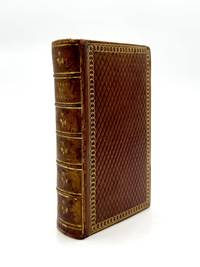
158787613A Paris: Chez Mamert Patisson 1587. Fine. Chez Mamert Patisson A Paris 1587 8.50 x 15 cm relié New edition following the original of 1573. A handsome edition well printed in italics. It contains the Christian poetry absent from the 1600 edition. Copy enhanced with a portrait of the author from around 1820. Full glazed blonde calf Restoration binding signed at foot F. Bozérian jeune. Spine with raised bands decorated with 5 fleurons fillets and roulettes on the bands. Date at foot in blind. Boards ruled in blind with frame roulette composed of interlaced circles. Interior Greek key border. Edges gilt. A small fragment missing from head. Some traces of rubbing. Paper very fresh the engraving has caused slight uniform foxing on the title page. A handsome copy. The volume contains: Les amours de Diane; Les amours d'Hippolyte; Les dernières amours de Cléonice; Les Elégies; Les imitations de l'Arioste; Les meslanges contenant Les diverses amours les bergeries et masquarades les épitaphes les prières et oeuvres chrétiennes. Desportes' poetry was durably influenced and shaped by Italian literature. The author indeed returns to France after a journey to Italy where he underwent the influence of Petrarch - his first poems are moreover criticized as neo-Petrarchan. His first book appeared in a collective collection and gathered his poetry imitated from Ariosto. His clear frank mannerist and refined poetry court poetry eclipsed that of Ronsard at the court of Henri III. It was in turn criticized and replaced by that of Malherbe. Desportes' literature nonetheless constitutes an important aspect of Renaissance poetry. Chez Mamert Patisson hardcover
1561CLL-378Paris, Galliot du Pré, 1561 In-folio de (6) ff., 341 pp., (9) pp. de table, maroquin rouge, plats ornés d'un décor à la Duseuil doré, dos à nerfs très finement orné d'un décor à feuillage doré, coupes et bordures décorées, tranches dorées sur marbrure (Petit).
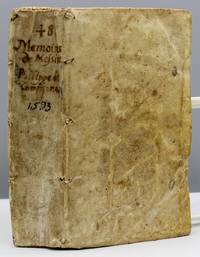
159398621593 veau orné XIXe, dos à n., tr. dorées. fort in-12, (13ff. dont titre et trois portraits sur cuivre v° du 12 f. et r° et v° du 13e f.), 881pp., (14ff. de tables), (Genève) Pour Iaques Chouët 1593,
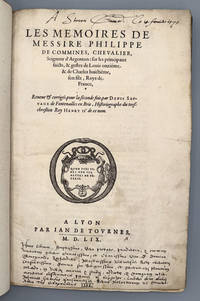
1559new2<p><em> EX-DONO FROM THE XVIth CENTURY </em></p><p><em> COPY OF SIMON GIRARD DES BERGERIES</em></p><p><em>PROFESSOR OF GREEK IN LAUSANNE </em></p><p><em> LATER GIVEN BY HIS SON TO A COUNCILOR IN BERNE TO "REPAY HIS DEBT OF AFFECTION AND STUDY" </em></p><p><em>-</em></p><p><strong>COMMYNES Philippe de </strong></p><p><em><strong>Les Mémoires . sur les principaux faicts et gestes de Louis onziéme et de Charles huictiéme son filz Roys de France</strong></em></p><p><strong> Lyon Jean de Tournes 1559.</strong></p><p>Folio 6 ff. 264 p. 4 ff. Modern tan half calf elegantly decorated spine old red title label. Dimensions: 32.9 x 20.9 cm.</p><p>References: Cartier Tournes II 436. Tchemerzine-Scheler II 464c.</p><p>Provenance: 1. Simon Girard des Bergeries c. 1545 -1598 originally from Bourges refugee in Lausanne after the St. Bartholomew's Day massacre professor of Greek at the Académie de Lausanne handwritten bookplate "À Simon Girard ce 18 février 1575". 2. Jean Girard with a long dedication dated Bern November 27 1599 to Marquard Zehender 1542-1610/11 State Councilor of Bern former bailiff of Lausanne. 3. Jean Estève engraved bookplate.</p><p><strong>Commynes' Memoirs were intended to serve as material for the Archbishop of Vienne Angelo Cato for a history of Louis XI that he planned to write in Latin. </strong>They recount the complexities of this reign without skimping on the numerous intrigues and political bargaining. The six original books by Commynes which end with the death of Louis XI in 1483 are followed by a continuation books VII-VIII covering the reign of Charles VIII. According to Marc Fumaroli this project was part of an "offensive against the 'Ciceronian' conception of an eloquent history à la Paul Émile and Paul Jove" 1994 pp. 218-219.</p><p><strong>A remarkable copy from the libraries of the Protestant Girard des Bergeries family. The work was acquired in 1575 by Simon Girard des Bergeries a Hellenist from Bourges </strong>who fled to Switzerland after the St. Bartholomew's Day massacres and taught Greek in Lausanne until his death in 1598 see De l'Académie à l'université de Lausanne pp. 54 59 263. In his will he bequeathed to his children a library estimated to be worth 1700 florins "Lettre de Partages entre Nobles Jehan Nicolas et Jehanne Girard frères et soeur / En datte du 2. Hapvril / 1599" Bibl. Cant. et Univ. de. Lausanne Ms. Fonds Constant II/6bis cited by C. Abraham 2020 p. 40 n. 149.</p><p><strong>This volume was part of the bequest to his son Jean who decided to dedicate it immediately in the same year 1599 to the man he called his patron </strong>the Bernese councillor Marquard Zehender 1542-1610/11 as indicated in the dedication on the title page. He presented the work to him <strong>"to repay his debt of affection and study and as a pledge and token of his enduring esteem" </strong> in debiti amoris et studii addictae et numquam intermoriturae observantiae pignus kai sumbolon. <strong>Zehender playedan important role in the suppression of the conspiracy led by the mayor of Lausann</strong>e Isbrand Daux in 1588 which aimed to hand over the city to the Duke of Savoy see Vuilleumier vol. II p. 17.</p><p><strong>Bibliography:</strong></p><p>H. Vuilleumier Histoire de l'Église réformée du Pays de Vaud sous le régime bernois History of the Reformed Church of the Vaud Region under Bernese Rule Lausanne 1927. De l'Académie à l'université de Lausanne 1537-1987 From Academy to University of Lausanne 1537-1987 Lausanne 1987. C. Abraham "La Bibliothèque de l'Académie de Lausanne au XVIe siècle" The Library of the Academy of Lausanne in the 16th century master's thesis Lausanne 2020. M. Fumaroli "Les mémoires ou l'historiographie royale en procès" Memoirs or royal historiography on trial in La Diplomatie de l'esprit 1994.</p> Jean de Tournes
1580CLL-502Paris, Abel l'Angelier, 1580 In-folio de (6) ff., 341, (6) pp., vélin ivoire à rabats, dos lisse, titre et filets dorés, tranches nues (reliure de l'époque).
159316171Geneva: Pour Jaques Chouet De l'imprimerie de Antoine Blanc 1593 A new edition of the revised version of Commines' work edited by Denis Sauvage. Contemporary limp vellum with hand lettered spine and beveled edges. . Twelvemo. Woodcut border on title page; three copper engraved portraits with descriptive text on two leaves it is worth noting that these two leaves are often lacking in other copies but are present in this copy. Some staining to covers and lacking the leather ties. Some soiling on the title page in addition to some staining from an old ink armorial stamp on the verso which has bled through. Intermittent foxing and overall light browning. Contemporary ownership signature at bottom of the title page. A very good copy. Philippe de Commines was a writer and diplomat in the courts of Burgundy and France. He has been called "the first truly modern writer" Charles Augustin Sainte-Beuve and "the first critical and philosophical historian since classical times" Oxford Companion to English Literature. His analyses of the contemporary political scene are what made him virtually unique in his own time. The Mémoires are divided into "books" the first six of which were written between 1488 and 1494 and relate the course of events from the beginning of Commines' career 1464 up to the death of King Louis. The remaining two books were written between 1497 and 1501 printed in 1528 and deal with the Italian wars ending in the death of King Charles VIII of France. Denis Sauvage 1520-1587 is known for his four-volume edition of Froissart's Chronicles 1559-1561. Pour Jaques Chouet [De l'imprimerie de Antoine Blanc], hardcover
1552180861552 broché - 17x22 - 152pp - éditions ALPINA - 1933- illustrations en couleurs de PHILIPPE TASSIER
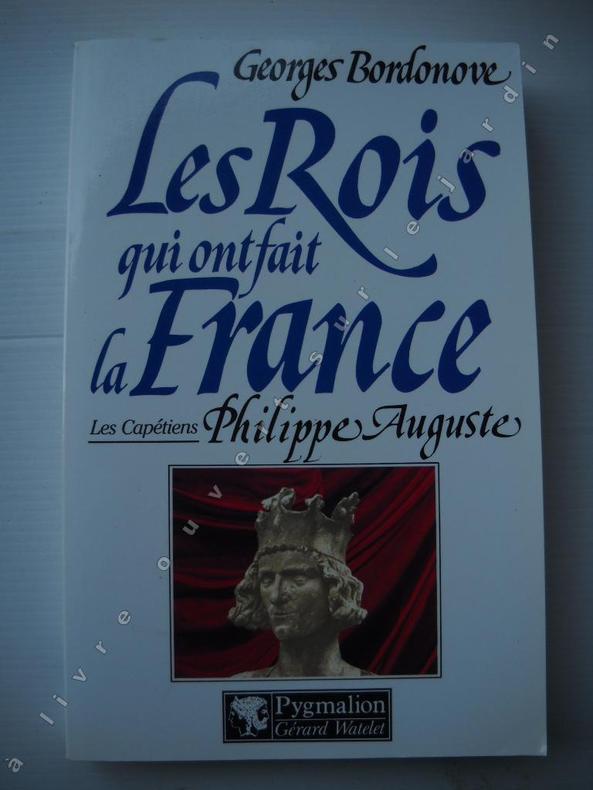
1552170981552 Broché - 15,5 x 24 - 315 pp - année 2006 - Editions Pygmalion -
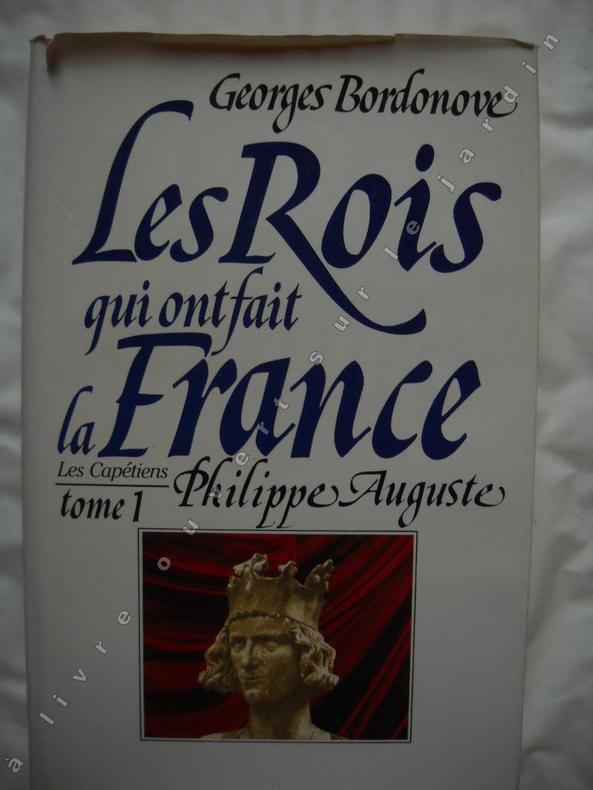
1552168461552 Broché - 15,5 x 24 - 317 pp - année 1983 Editions Pygmalion Gérard Watelet - illustratrions -
1552177291552 Broché - 15,5 x 24 - 317 pp - année 1983 Editions - illustratrions - le grand livre du mois - illustrations
1552168311552 Broché - 15,5 x 24 -311 pp - année 1990 - Editions Pygmalion Gérard Watelet - illustratrions -
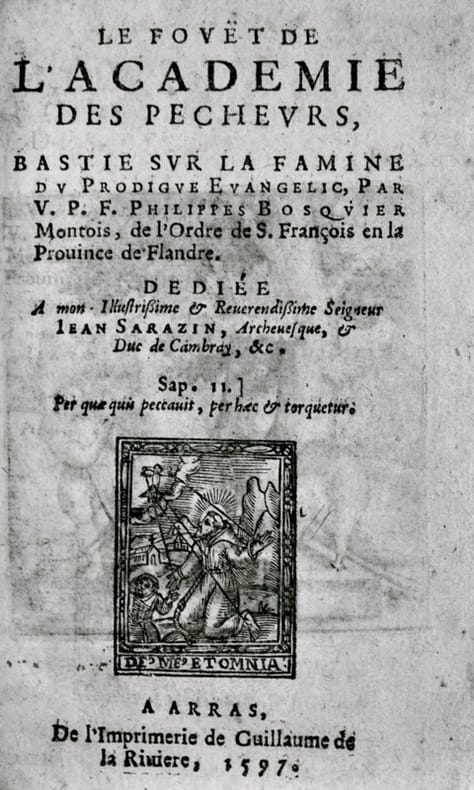
15971510A Arras, De l'imprimerie de Guillaume de la Riviere, 1597. Petit in-8 de (16)-354-(6) pp. [*8 A-Y8 Z4], veau havane, dos lisse orné, pièce de titre en veau bleu, filet doré sur les coupes, tranches mouchetées (reliure de la fin du XVIIIe siècle).
159032524S. n. | s. l. fin XVIe début XVIIe | 34 x 25.50 cm | une feuille
159032524s. l.: S. n. 1590. Fine. S. n. s. l. fin XVIe début XVIIe 34 x 25.50 cm une feuille Authentic original engraving executed with burin after a 16th-century drawing by Johannes Stradanus. Proof on watermarked laid paper work from the late 16th or early 17th century. Artists' signatures in the plate. Latin legend in the lower portion of the engraving. Manuscript translation in old handwriting below the plate mark: ""Le désert d'Appulie nourrit de couleuvres les grues et aussi les cigognes attaquent leurs nichées. Elles engagent le combat avec vigueur de leurs becs et les mordent. Le spectacle est très divertissant pour les colons"" ""The desert of Apulia feeds cranes with snakes and also storks attack their broods. They engage in combat vigorously with their beaks and bite them. The spectacle is very entertaining for the colonists"". Watermark visible by transparency. The margins of the engraving have been reinforced with small pieces of old laid paper glued to the edges on the verso otherwise fine condition for this very rare engraving. Johannes Stradanus known as Giovanni Stradano or Jan van der Straet was a Flemish painter and engraver born in Bruges in 1523 and died in Florence on February 11 1605. After beginning to learn painting with his father and following his father's death he continued his training in the workshop of Maximiliaan Frank from 1535 to 1537 then in that of Pieter Aertsen in Antwerp from 1537 to 1540. In 1545 he was received as a master in the Antwerp painters' guild. He then began a journey across Europe: to France then to Italy where he first stayed in Venice before settling in Florence. There he worked for Cosimo I de' Medici and collaborated with Giorgio Vasari on the decoration of the Studiolo of Francesco I de' Medici and on that of the Clement VII hall in the Palazzo Vecchio. In 1565 he was part of the teams of painters and sculptors charged under Giorgio Vasari's direction with creating the gigantic decoration planned for the entry into Florence of Joanna of Austria on the occasion of her marriage to Francesco I de' Medici. Greatly influenced by the Mannerists including Michelangelo Johannes Stradanus contributed to the development of grand Italian history painting. He painted several altarpieces for Florentine churches. He also stayed in Rome from 1550 to 1553 and in Naples in 1576. After a stay in Antwerp in 1578 he devoted a large part of his activity to engraving. Philippe Galle born in Haarlem in 1537 and died in Antwerp in March 1612 was a Flemish engraver member of a famous family of engravers. He practiced copper engraving drawing the print trade publishing and writing. He trained with Hieronymus Cock in Antwerp where he engraved drawings by Pieter Bruegel the Elder notably the series of the Seven Deadly Sins. He then became the engraver of Maarten van Heemskerck. From 1557 he had his own workshop which would be frequented by his sons Theodoor and Cornelis as well as by his son-in-law Adriaen Collaert the Wierix brothers Hendrick Goltzius Crispijn de Passe the Elder and other members of the Collaert family. His workshop was at the center of Antwerp engraving production. Philippe Galle created some of his most admirable works on designs by Pieter Bruegel the Elder The Alchemist 1558 Jan van der Straet Frans Floris The Daughters of Lot and Gillis Congnet Aenevm Saecvlvm and the four ages of humanity 1575. S. n. unknown
159032522S. n. | s. l. fin XVIe début XVIIe | 34 x 25.50 cm | une feuille
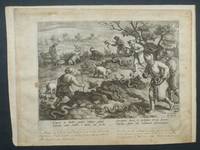
159032522s. l.: S. n. 1590. Fine. S. n. s. l. fin XVIe début XVIIe 34 x 25.50 cm une feuille Authentic original engraving executed with burin after a 16th-century drawing by Johannes Stradanus. Impression on watermarked laid paper work from the late 16th or very early 17th century. Artists' signatures within the plate. Latin caption in the lower portion of the engraving. Manuscript translation in old handwriting below the plate mark: ""Souvent un chasseur tombe sans prendre garde dans des cavernes ou des grottes couvertes d'herbes par dessus d'où ses compagnons ne peuvent le retirer mais il meurt malheureusement et demeure la pature des serpents qui y sont et des hydres"" ""Often a hunter falls unawares into caverns or grottoes covered with grass above from which his companions cannot retrieve him but he dies miserably and remains food for the serpents and hydras dwelling there"". Watermark visible by transparency. The margins of the engraving have been backed with small pieces of old laid paper pasted along the edges on the reverse otherwise fine condition for this very rare engraving. Johannes Stradanus called Giovanni Stradano or Jan van der Straet is a Flemish painter and engraver born in Bruges in 1523 and died in Florence on February 11 1605. After beginning to learn painting with his father and following the latter's death he continued his training in the workshop of Maximiliaan Frank from 1535 to 1537 then in that of Pieter Aertsen in Antwerp from 1537 to 1540. In 1545 he was admitted as master to the guild of Antwerp painters. He then began a journey across Europe: to France then to Italy where he first stayed in Venice before settling in Florence. There he worked for Cosimo I de' Medici and collaborated with Giorgio Vasari on the decoration of the Studiolo of Francesco I de' Medici and on that of the Clement VII room in the Palazzo Vecchio. In 1565 he was part of the teams of painters and sculptors charged under the direction of Giorgio Vasari with creating the gigantic decorations planned for the entry into Florence of Joanna of Austria on the occasion of her marriage to Francesco I de' Medici. Greatly influenced by the Mannerists including Michelangelo Johannes Stradanus contributed to the development of grand Italian history painting. He painted several altarpieces for Florentine churches. He also stayed in Rome from 1550 to 1553 and in Naples in 1576. After a stay in Antwerp in 1578 he devoted a large part of his activity to engraving. Philippe Galle born in Haarlem in 1537 and died in Antwerp in March 1612 is a Flemish engraver member of a famous family of engravers. He practiced copperplate engraving drawing print dealing publishing and writing. He trained with Hieronymus Cock in Antwerp where he engraved drawings by Pieter Bruegel the Elder notably the series of the Seven Deadly Sins. He then became the engraver of Maarten van Heemskerck. From 1557 he owned his own workshop which was frequented by his sons Theodore and Cornelius as well as by his son-in-law Adriaen Collaert the Wierix brothers Hendrick Goltzius Crispin de Passe the Elder and other members of the Collaert family. His workshop was at the center of Antwerp print production. Philippe Galle created some of his most admirable works based on designs by Pieter Bruegel the Elder The Alchemist 1558 by Jan van der Straet by Franz Floris The Daughters of Lot and by Gillis Congnet Aenevm Saecvlvm and the four ages of humanity 1575. Adrian Collaert born in Antwerp in 1565 and died in 1618 was part of a great family of engravers. Trained in the workshop of his father-in-law Philippe Galle he began with copperplate engraving before specializing in burin work. S. n. unknown
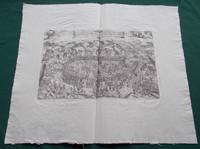
1558014637Rome 1558. Print measures 26x43.cm plus wide margin. A very nice clean print. Very Good Plus. Illus. by Philippe Thomassin. unknown
159032525S. n. | s. l. fin XVIe début XVIIe | 34 x 25.50 cm | une feuille
159032502S. n. | s. l. fin XVIe début XVIIe | 34 x 25.50 cm | une feuille
159032521S. n. | s. l. fin XVIe début XVIIe | 34 x 25.50 cm | une feuille
159032501S. n. | s. l. fin XVIe début XVIIe | 34 x 25.50 cm | une feuille
159032521s. l.: S. n. 1590. Fine. S. n. s. l. fin XVIe début XVIIe 34 x 25.50 cm une feuille Authentic original engraving executed with burin after a 16th-century drawing by Johannes Stradanus. Impression on watermarked laid paper work from the late 16th or very early 17th century. Artists' signatures within the plate. Latin caption in the lower portion of the engraving. Manuscript translation in old handwriting below the plate mark: ""On dit que la Barbarie produit de très bons chameaux que chassent les soldats de la marine pressés par la faim. Cette viande quoique très dure les rassasie."" ""It is said that Barbary produces very good camels which are hunted by sailors pressed by hunger. This meat although very tough satisfies them."". Watermark visible by transparency. The margins of the engraving have been backed with small pieces of old laid paper pasted along the edges on the reverse otherwise fine condition for this very rare engraving. Johannes Stradanus called Giovanni Stradano or Jan van der Straet is a Flemish painter and engraver born in Bruges in 1523 and died in Florence on February 11 1605. After beginning to learn painting with his father and following the latter's death he continued his training in the workshop of Maximiliaan Frank from 1535 to 1537 then in that of Pieter Aertsen in Antwerp from 1537 to 1540. In 1545 he was admitted as master to the guild of Antwerp painters. He then began a journey across Europe: to France then to Italy where he first stayed in Venice before settling in Florence. There he worked for Cosimo I de' Medici and collaborated with Giorgio Vasari on the decoration of the Studiolo of Francesco I de' Medici and on that of the Clement VII room in the Palazzo Vecchio. In 1565 he was part of the teams of painters and sculptors charged under the direction of Giorgio Vasari with creating the gigantic decorations planned for the entry into Florence of Joanna of Austria on the occasion of her marriage to Francesco I de' Medici. Greatly influenced by the Mannerists including Michelangelo Johannes Stradanus contributed to the development of grand Italian history painting. He painted several altarpieces for Florentine churches. He also stayed in Rome from 1550 to 1553 and in Naples in 1576. After a stay in Antwerp in 1578 he devoted a large part of his activity to engraving. Philippe Galle born in Haarlem in 1537 and died in Antwerp in March 1612 is a Flemish engraver member of a famous family of engravers. He practiced copperplate engraving drawing print dealing publishing and writing. He trained with Hieronymus Cock in Antwerp where he engraved drawings by Pieter Bruegel the Elder notably the series of the Seven Deadly Sins. He then became the engraver of Maarten van Heemskerck. From 1557 he owned his own workshop which was frequented by his sons Theodore and Cornelius as well as by his son-in-law Adriaen Collaert the Wierix brothers Hendrick Goltzius Crispin de Passe the Elder and other members of the Collaert family. His workshop was at the center of Antwerp print production. Philippe Galle created some of his most admirable works based on designs by Pieter Bruegel the Elder The Alchemist 1558 by Jan van der Straet by Franz Floris The Daughters of Lot and by Gillis Congnet Aenevm Saecvlvm and the four ages of humanity 1575. Adrian Collaert born in Antwerp in 1565 and died in 1618 was part of a great family of engravers. Trained in the workshop of his father-in-law Philippe Galle he began with copperplate engraving before specializing in burin work. S. n. unknown
159032525s. l.: S. n. 1590. Fine. S. n. s. l. fin XVIe début XVIIe 34 x 25.50 cm une feuille Authentic original engraving executed with burin after a 16th-century drawing by Johannes Stradanus. Proof on watermarked laid paper work from the late 16th or early 17th century. Artists' signatures in the plate. Latin legend in the lower portion of the engraving. Manuscript translation in old handwriting below the plate mark: ""En Italie les vipères se plaisent à se cacher dans les marais. Quand elles entendent un chien aboyer elles sortent des buissons. On les saisit alors avec une fourche et on les met dans un sac avec une pince. Elles sont préparées comme remède pharmaceutique"" ""In Italy vipers enjoy hiding in marshes. When they hear a dog barking they come out of the bushes. They are then seized with a fork and put in a bag with tongs. They are prepared as pharmaceutical remedy"". Watermark visible by transparency. The margins of the engraving have been reinforced with small pieces of old laid paper glued to the edges on the verso otherwise fine condition for this very rare engraving. Johannes Stradanus known as Giovanni Stradano or Jan van der Straet was a Flemish painter and engraver born in Bruges in 1523 and died in Florence on February 11 1605. After beginning to learn painting with his father and following his father's death he continued his training in the workshop of Maximiliaan Frank from 1535 to 1537 then in that of Pieter Aertsen in Antwerp from 1537 to 1540. In 1545 he was received as a master in the Antwerp painters' guild. He then began a journey across Europe: to France then to Italy where he first stayed in Venice before settling in Florence. There he worked for Cosimo I de' Medici and collaborated with Giorgio Vasari on the decoration of the Studiolo of Francesco I de' Medici and on that of the Clement VII hall in the Palazzo Vecchio. In 1565 he was part of the teams of painters and sculptors charged under Giorgio Vasari's direction with creating the gigantic decoration planned for the entry into Florence of Joanna of Austria on the occasion of her marriage to Francesco I de' Medici. Greatly influenced by the Mannerists including Michelangelo Johannes Stradanus contributed to the development of grand Italian history painting. He painted several altarpieces for Florentine churches. He also stayed in Rome from 1550 to 1553 and in Naples in 1576. After a stay in Antwerp in 1578 he devoted a large part of his activity to engraving. Philippe Galle born in Haarlem in 1537 and died in Antwerp in March 1612 was a Flemish engraver member of a famous family of engravers. He practiced copper engraving drawing the print trade publishing and writing. He trained with Hieronymus Cock in Antwerp where he engraved drawings by Pieter Bruegel the Elder notably the series of the Seven Deadly Sins. He then became the engraver of Maarten van Heemskerck. From 1557 he had his own workshop which would be frequented by his sons Theodoor and Cornelis as well as by his son-in-law Adriaen Collaert the Wierix brothers Hendrick Goltzius Crispijn de Passe the Elder and other members of the Collaert family. His workshop was at the center of Antwerp engraving production. Philippe Galle created some of his most admirable works on designs by Pieter Bruegel the Elder The Alchemist 1558 Jan van der Straet Frans Floris The Daughters of Lot and Gillis Congnet Aenevm Saecvlvm and the four ages of humanity 1575. S. n. unknown
159032502s. l.: S. n. 1590. Fine. S. n. s. l. fin XVIe début XVIIe 34 x 25.50 cm une feuille Authentic original engraving executed in burin after a 16th-century drawing by Johannes Stradanus. Proof on watermarked laid paper work from the late 16th or very early 17th century. Artists' signatures in the plate. Latin caption in the lower part of the engraving. Manuscript translation in old handwriting below the plate mark: ""Ceux qui s'occupent à surprendre les lions dans des filets portent une torche de la main gauche et un bouclier de la droite pour se garantir du feu: les lions fuyant les flammes se jettent dans les filets qu'on lui a tendu."" ""Those who busy themselves with surprising lions in nets carry a torch in the left hand and a shield in the right to protect themselves from fire: the lions fleeing the flames throw themselves into the nets that have been set for them."". Watermark visible by transparency. The margins of the engraving have been backed with small pieces of old laid paper glued to the edges on the verso otherwise fine condition for this very rare engraving. Johannes Stradanus known as Giovanni Stradano or Jan van der Straet was a Flemish painter and engraver born in Bruges in 1523 and died in Florence on February 11 1605. After beginning to learn painting with his father and following the latter's death he continued his training in the workshop of Maximiliaan Frank from 1535 to 1537 then in that of Pieter Aertsen in Antwerp from 1537 to 1540. In 1545 he was admitted as master to the Antwerp painters' guild. He then began a journey across Europe: to France then to Italy where he first stayed in Venice before settling in Florence. There he worked for Cosimo I de' Medici and collaborated with Giorgio Vasari on the decoration of the Studiolo of Francesco I de' Medici and on that of the hall of Clement VII in the Palazzo Vecchio. In 1565 he was part of the teams of painters and sculptors charged under the direction of Giorgio Vasari with creating the gigantic decoration planned for the entry into Florence of Joanna of Austria on the occasion of her marriage to Francesco I de' Medici. Greatly influenced by the Mannerists including Michelangelo Johannes Stradanus contributed to the development of grand Italian history painting. He painted several altarpieces for Florentine churches. He also stayed in Rome from 1550 to 1553 and in Naples in 1576. After a stay in Antwerp in 1578 he devoted a large part of his activity to engraving. Philippe Galle born in Haarlem in 1537 and died in Antwerp in March 1612 was a Flemish engraver member of a famous family of engravers. He practiced copperplate engraving drawing print dealing publishing and writing. He trained with Hieronymus Cock in Antwerp where he engraved drawings by Pieter Bruegel the Elder notably the series of the Seven Deadly Sins. He then became the engraver of Maarten van Heemskerck. From 1557 he owned his own workshop which was frequented by his sons Theodore and Cornelius as well as by his son-in-law Adriaen Collaert the Wierix brothers Hendrick Goltzius Crispijn de Passe the Elder and other members of the Collaert family. His workshop was at the center of Antwerp print production. Philippe Galle created some of his most admirable works on designs by Pieter Bruegel the Elder The Alchemist 1558 by Jan van der Straet by Franz Floris The Daughters of Lot and by Gillis Congnet Aenevm Saecvlvm and the four ages of humanity 1575. S. n. unknown